Last Updated on 17 Sept 2025
Synthetic Identity Fraud Prevention with Behavioral Biometrics and Device Fingerprinting
Share in
Key Notes
•
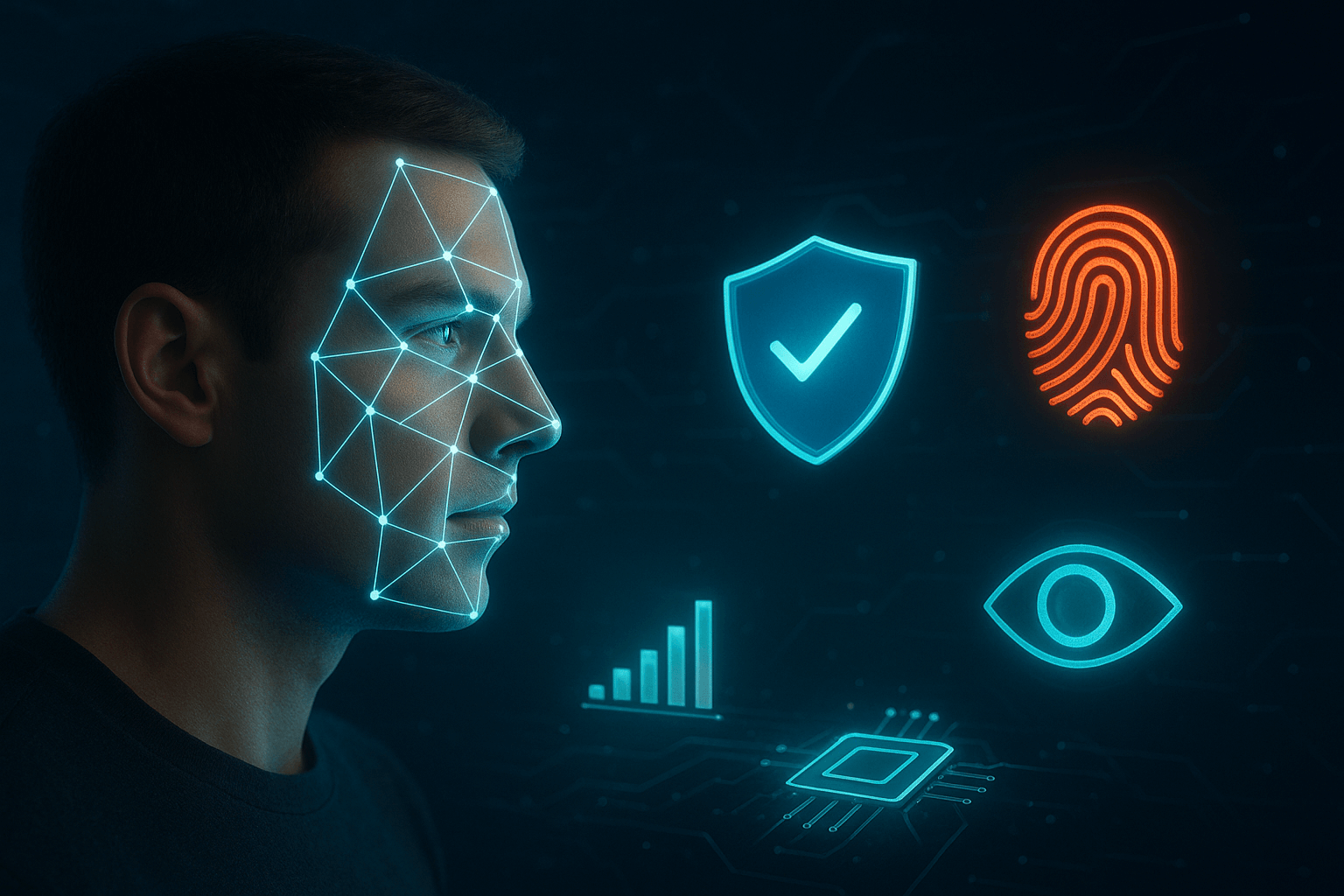
Behavioral signals expose what fraudsters can't mask. Unlike static identifiers, interaction patterns like keystroke rhythm, scroll velocity, and cursor drift remain uniquely human and difficult to replicate.•
Continuous authentication is stronger than one-time checks. Monitoring behavior throughout the session uncovers synthetic identities and bots that slip past onboarding or login.•
Privacy and compliance are built into effective deployments. Anonymized, encrypted, and transparent data collection balances fraud prevention with regulatory trust.
Introduction
The rise of synthetic identity fraud has become one of the most significant challenges for digital businesses in 2025. Unlike traditional identity theft, where criminals steal and use a real person's details, synthetic fraud combines stolen elements such as Social Security numbers with fabricated data to create new, "hybrid" identities. These synthetic identities can pass through standard onboarding checks, open accounts, apply for loans, and execute fraudulent transactions that remain undetected until it is too late.
Conventional methods like static KYC verification or one-time password checks are no longer sufficient. Fraudsters use anti-detect browsers, device emulators, proxy networks, and automated bots to hide their tracks. This is where behavioral data device fingerprints and behavioral biometrics come into play. These technologies go beyond surface-level identifiers and examine how a user behaves, interacts, and engages across digital platforms, making fraud detection far more accurate.
Conventional methods like static KYC verification or one-time password checks are no longer sufficient. Fraudsters use anti-detect browsers, device emulators, proxy networks, and automated bots to hide their tracks. This is where behavioral data device fingerprints and behavioral biometrics come into play. These technologies go beyond surface-level identifiers and examine how a user behaves, interacts, and engages across digital platforms, making fraud detection far more accurate.
Understanding Behavioral Data Device Fingerprints
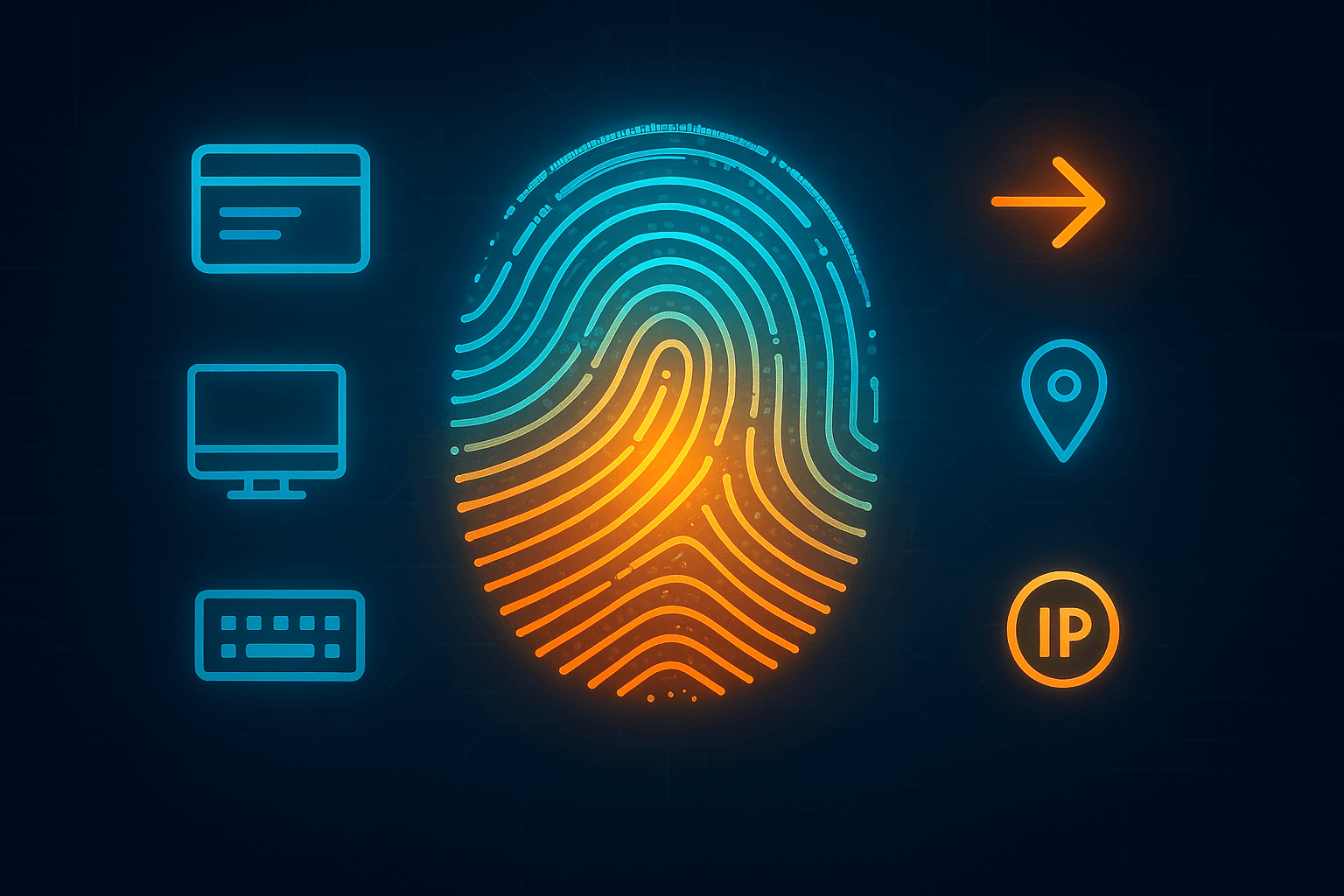
A behavioral data device fingerprint is not just a snapshot of a device's technical properties; it is a dynamic, continuously evolving profile that reflects both device intelligence and human interaction patterns. Unlike traditional device fingerprinting, which focuses only on static details like browser version or screen resolution, behavioral fingerprinting integrates signals such as typing cadence, mouse movements, scroll velocity, and even touch pressure on mobile devices.
When combined with contextual information like IP addresses, geolocation data, and session history, this approach creates a highly unique profile for each user. A fraudster may succeed in masking their IP or using a virtual machine to mimic an environment, but replicating natural behavioral biometrics such as hesitation when typing, subtle cursor drift, or the irregular rhythm of real human interaction is nearly impossible. This is what makes behavioral data device fingerprints so powerful in the fight against synthetic identity fraud.
If you want to dive deeper into how the underlying mechanism works, this guide on device fingerprinting explains the foundational technology.
When combined with contextual information like IP addresses, geolocation data, and session history, this approach creates a highly unique profile for each user. A fraudster may succeed in masking their IP or using a virtual machine to mimic an environment, but replicating natural behavioral biometrics such as hesitation when typing, subtle cursor drift, or the irregular rhythm of real human interaction is nearly impossible. This is what makes behavioral data device fingerprints so powerful in the fight against synthetic identity fraud.
If you want to dive deeper into how the underlying mechanism works, this guide on device fingerprinting explains the foundational technology.
Detection Methods for Synthetic Identity Fraud
The effectiveness of behavioral data device fingerprints lies in their ability to fuel new detection methods for synthetic identity fraud. By applying advanced analytics and machine learning to thousands of interaction points, fraud detection systems can recognize anomalies that static checks would miss.
For example, typing patterns are one of the most reliable behavioral indicators. Genuine users type with a rhythm that includes pauses, corrections, and variable speed, while synthetic identities operated by bots or fraud rings often demonstrate mechanical regularity. Navigation behavior offers another useful signal. Real users tend to move through websites unpredictably, hovering over elements, scrolling back and forth, or hesitating before making a decision. Fraudulent accounts, in contrast, usually follow rigid and repetitive scripts.
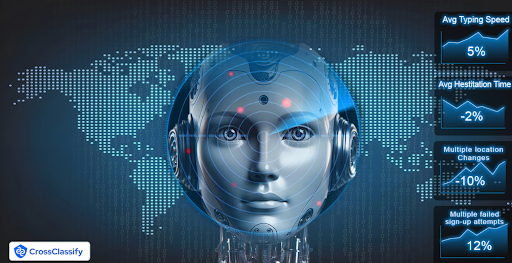
Continuous authentication adds another layer of protection. Instead of verifying identity only once at login, continuous authentication monitors the user's behavior throughout the entire session. If anomalies appear, such as sudden changes in typing cadence, abnormal geovelocity suggesting impossible travel, or unusual interaction sequences, the system can flag the session in real time. This proactive approach is particularly effective against synthetic identity fraud, where fraudsters cannot maintain perfectly consistent behavior over long periods. More insights into this approach are available in this resource on account fraud.
For example, typing patterns are one of the most reliable behavioral indicators. Genuine users type with a rhythm that includes pauses, corrections, and variable speed, while synthetic identities operated by bots or fraud rings often demonstrate mechanical regularity. Navigation behavior offers another useful signal. Real users tend to move through websites unpredictably, hovering over elements, scrolling back and forth, or hesitating before making a decision. Fraudulent accounts, in contrast, usually follow rigid and repetitive scripts.
Continuous authentication adds another layer of protection. Instead of verifying identity only once at login, continuous authentication monitors the user's behavior throughout the entire session. If anomalies appear, such as sudden changes in typing cadence, abnormal geovelocity suggesting impossible travel, or unusual interaction sequences, the system can flag the session in real time. This proactive approach is particularly effective against synthetic identity fraud, where fraudsters cannot maintain perfectly consistent behavior over long periods. More insights into this approach are available in this resource on account fraud.
Battling Bots with Behavioral Biometrics
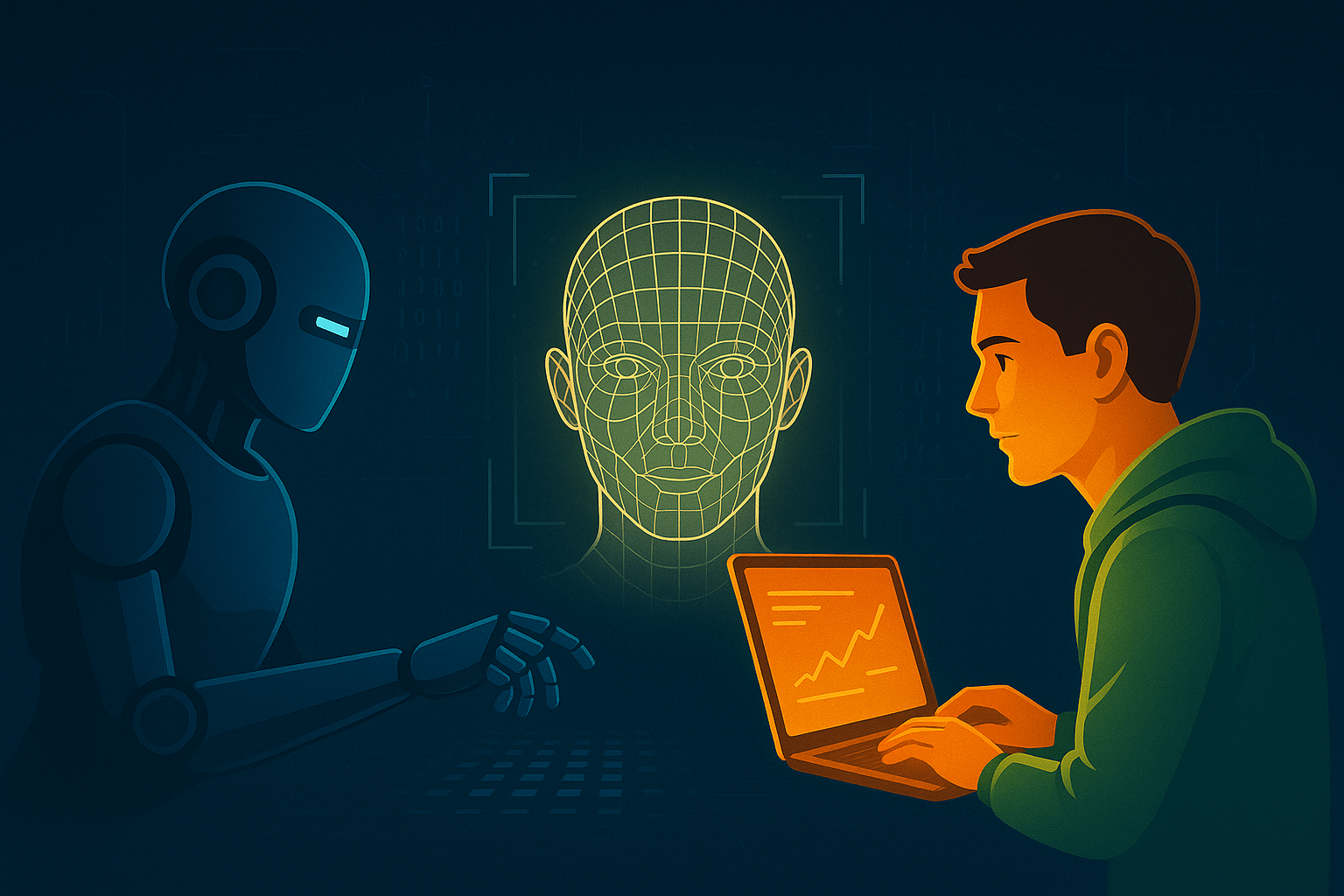
Another growing challenge is the rise of advanced bots designed to imitate human actions. These bots are increasingly capable of bypassing CAPTCHAs and traditional detection systems. However, behavioral biometrics still expose them. Even the most sophisticated scripts cannot replicate the microvariations of human input, the subtle differences in click pressure, hesitation before a keystroke, or the slight randomness of scrolling speed.
This is why bot detection techniques that leverage behavioral analysis are becoming essential. By studying these patterns, platforms can quickly differentiate between legitimate users and automated scripts. In practice, this means e-commerce sites can block automated scalping attempts, banks can prevent credential stuffing attacks, and online platforms can protect against fake account creation. You can explore detailed examples in this article on behavioral biometrics for fraud prevention.
This is why bot detection techniques that leverage behavioral analysis are becoming essential. By studying these patterns, platforms can quickly differentiate between legitimate users and automated scripts. In practice, this means e-commerce sites can block automated scalping attempts, banks can prevent credential stuffing attacks, and online platforms can protect against fake account creation. You can explore detailed examples in this article on behavioral biometrics for fraud prevention.
Real-World Applications Across Industries
The adoption of behavioral data device fingerprints and behavioral biometric authentication is accelerating across multiple industries.
In financial services, banks and fintechs use them to strengthen KYC and AML compliance while detecting fraudulent accounts during the onboarding process. By analyzing subtle behavioral signals, institutions can stop synthetic identity fraud before it escalates into large-scale financial losses. A deeper discussion of this threat can be found in this article on account opening fraud.
E-commerce businesses face challenges like promo abuse, fake account creation, and automated checkout bots. Device fingerprinting solutions combined with behavioral analytics allow platforms to identify fraudsters without blocking genuine customers. Healthcare organizations, meanwhile, use behavioral analysis to prevent medical identity theft, protecting patient records and ensuring the integrity of insurance claims.
In the gaming and gambling industries, behavioral monitoring is used to detect collusion, scripted play, and account sharing. Because fraudsters often attempt to manipulate outcomes with multiple coordinated accounts, device intelligence and behavioral profiling provide a strong defense.
You can see how these solutions are practically applied in CrossClassify's behavioral biometrics offering and its device fingerprinting technology.
In financial services, banks and fintechs use them to strengthen KYC and AML compliance while detecting fraudulent accounts during the onboarding process. By analyzing subtle behavioral signals, institutions can stop synthetic identity fraud before it escalates into large-scale financial losses. A deeper discussion of this threat can be found in this article on account opening fraud.
E-commerce businesses face challenges like promo abuse, fake account creation, and automated checkout bots. Device fingerprinting solutions combined with behavioral analytics allow platforms to identify fraudsters without blocking genuine customers. Healthcare organizations, meanwhile, use behavioral analysis to prevent medical identity theft, protecting patient records and ensuring the integrity of insurance claims.
In the gaming and gambling industries, behavioral monitoring is used to detect collusion, scripted play, and account sharing. Because fraudsters often attempt to manipulate outcomes with multiple coordinated accounts, device intelligence and behavioral profiling provide a strong defense.
You can see how these solutions are practically applied in CrossClassify's behavioral biometrics offering and its device fingerprinting technology.
Implementation Challenges and Best Practices
Deploying behavioral biometric authentication and device fingerprinting solutions is not without challenges. Businesses must balance fraud detection with user privacy, comply with regulations like GDPR, and ensure that additional security layers do not create friction for customers.
Best practices include rolling out solutions in phases, calibrating thresholds to minimize false positives, and building transparency into data collection policies. Equally important is ensuring that data is anonymized, encrypted, and only used for fraud prevention purposes. Organizations that follow these practices can strengthen customer trust while gaining the full benefits of advanced fraud detection.
Best practices include rolling out solutions in phases, calibrating thresholds to minimize false positives, and building transparency into data collection policies. Equally important is ensuring that data is anonymized, encrypted, and only used for fraud prevention purposes. Organizations that follow these practices can strengthen customer trust while gaining the full benefits of advanced fraud detection.
Navigating Privacy and Regulation
While behavioral biometrics are powerful, their implementation must align with data privacy regulations. In Europe, GDPR mandates user consent and data minimization, requiring transparency in behavioral data collection. Similarly, the PSD2 directive encourages the use of strong customer authentication, which behavioral biometrics can complement. In the U.S., the CCPA grants consumers the right to opt out of data collection, affecting how behavioral fingerprints are deployed in California. By anonymizing, encrypting, and restricting the use of behavioral data solely to fraud prevention, organizations can enhance security while maintaining user trust and regulatory compliance.
The Role of Machine Learning
Machine learning underpins modern behavioral fraud detection. Systems use unsupervised models to detect anomalies in typing, scrolling, or session duration, while supervised classification models evaluate the likelihood of fraud based on historical patterns. Graph-based approaches reveal connections between clusters of synthetic accounts, while multi-modal systems combine behavioral, device, and biometric signals to generate highly accurate risk scores. These models operate in real time, enabling organizations to respond immediately to emerging threats that traditional rule-based systems would likely miss.
Looking Ahead
The future of fraud prevention lies in the fusion of behavioral, contextual, and biometric signals, enhanced by continuously adapting machine learning models. Analysts predict that the behavioral biometrics market will surpass $13 billion USD by 2033, driven by adoption in banking, e-commerce, healthcare, and online platforms. Emerging technologies such as edge computing will allow local processing of behavioral data, reducing latency and increasing privacy. Innovations like multi-modal biometric fusion, combining behavioral, facial, and voice recognition, will further strengthen accuracy and resilience against synthetic identity fraud.
As AI-generated identities become more sophisticated, organizations will increasingly rely on behavioral fingerprints to maintain security and digital trust. These technologies are no longer optional tools; they have become integral to modern fraud prevention strategies.
For an overview of broader fraud risk management strategies, visit this resource on best practices.
As AI-generated identities become more sophisticated, organizations will increasingly rely on behavioral fingerprints to maintain security and digital trust. These technologies are no longer optional tools; they have become integral to modern fraud prevention strategies.
For an overview of broader fraud risk management strategies, visit this resource on best practices.
Industry Playbooks: Behavioral Biometrics in Action
Fintech
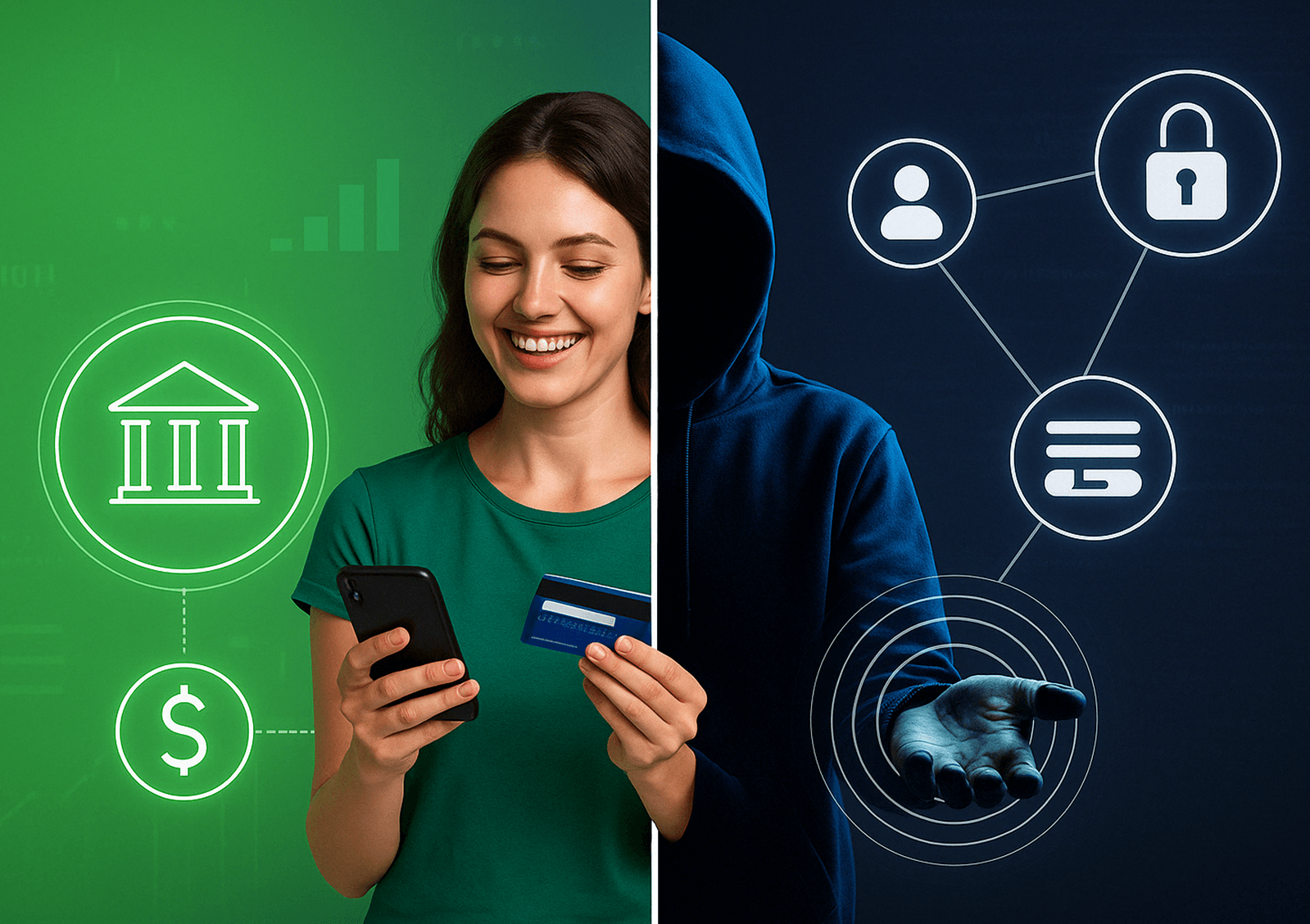
Financial services face constant risk from synthetic identities opening accounts or executing fraud during high-value transactions. Behavioral biometrics detects subtle deviations in interaction, like irregular typing on payee forms or unusual navigation flows, which often indicate impostor activity. Integrated with device fingerprints and geolocation checks, these systems prevent risky transfers while limiting friction for trusted users.
- Top threats we stop: account takeover, fraudulent payouts, synthetic account creation, refund or payment abuse.
- Behavioral signals we watch: typing rhythm on transaction forms, unexpected navigation paths, touch pressure at verification steps, rapid repeated attempts.
- What you get: fewer financial losses, smoother experience for legitimate users, faster fraud investigations.
Healthcare
In healthcare, protecting patient records and digital workflows is critical. Behavioral biometrics tracks how staff and patients interact with portals, telehealth, and EHR systems, flagging unusual typing, navigation, or touch patterns during sensitive actions like prescription updates, record exports, or insurance changes. When combined with device intelligence and geolocation checks, this approach detects session hijacking or shared device misuse without slowing legitimate care.
- Top threats we stop: unauthorized patient portal access, insider misuse, telehealth hijacking, prescription diversion, automated bot registrations.
- Behavioral signals we watch: keystroke timing on e-prescriptions, navigation sequences in patient charts, touch and swipe dynamics on mobile, improbable travel or location jumps.
- What you get: fewer sensitive data breaches, reduced manual review workload, compliance-ready evidence.
Crypto
Cryptocurrency exchanges and wallets are prime targets for automated and coordinated attacks. Behavioral biometrics monitors order entry, account edits, and withdrawal activity to detect unusual timing, machine-like sequences, or coached account usage. Coupled with device intelligence and network reputation analysis, it strengthens controls without blocking high-volume or professional traders.
- Top threats we stop: exchange account takeover, rogue trading bots, API key abuse, withdrawal manipulation, promotion exploitation.
- Behavioral signals we watch: navigation irregularities during withdrawals, mouse and touch patterns in 2FA, unusually fast transaction sequences, abrupt session transitions.
- What you get: secure withdrawals, reduced false positives, clear evidence trails for compliance teams.
Travel
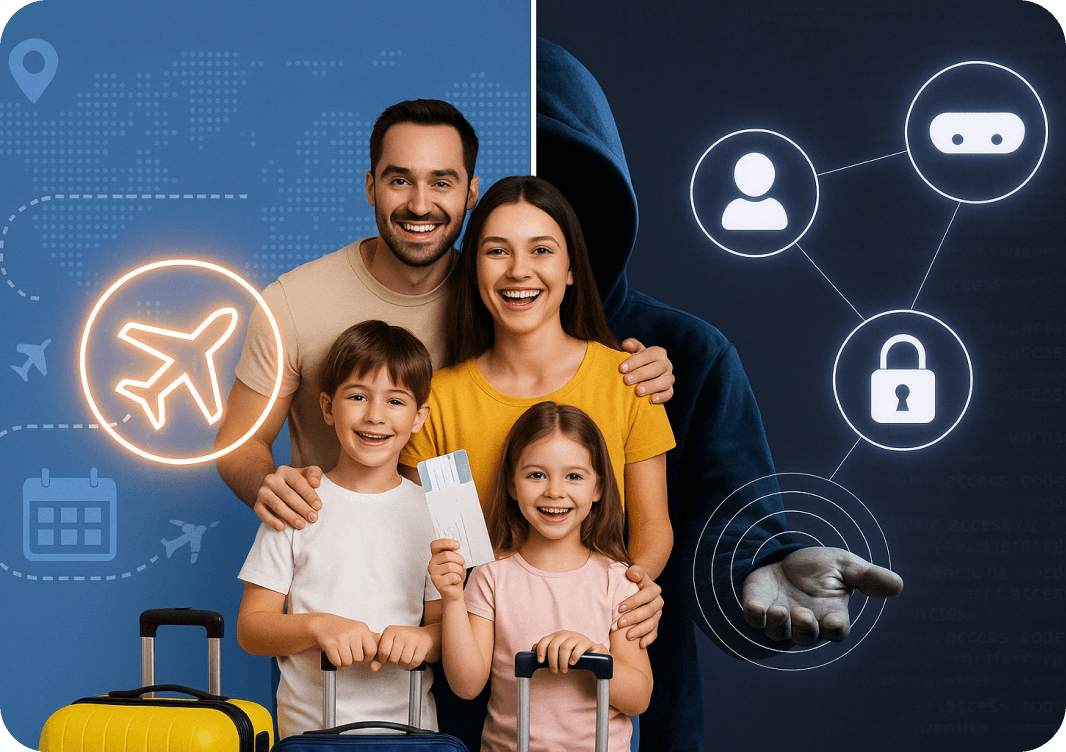
Travel platforms including OTAs, airlines, and hotels face credential stuffing, loyalty fraud, and automated scraping. Behavioral biometrics identifies unnatural session patterns, robotic input, and atypical navigation to sensitive pages like vouchers or refunds. Linking these insights with device fingerprints improves account protection while keeping legitimate travelers frictionless.
- Top threats we stop: loyalty account takeover, voucher abuse, refund exploitation, automated fare scraping.
- Behavioral signals we watch: session depth, pointer jitter during bookings, keystroke timing at payment, location anomalies in itineraries.
- What you get: protected loyalty balances, higher conversion rates, reduced support workload.
Online Gaming
Online gaming and gambling platforms must prevent bonus abuse, collusion, and automated play while preserving smooth gameplay. Behavioral biometrics tracks reaction timing, input variability, and session pacing to detect bots or coordinated rings. Combined with device and link analysis, it identifies multi-account farming or wallet abuse.
- Top threats we stop: automated gameplay, collusion, bonus exploitation, account takeover, self-exclusion evasion..
- Behavioral signals we watch: reaction time patterns, navigation paths to bonus actions, touch and keystroke changes at cash-out, improbable live session movements.
- What you get: fairer gameplay, fewer promotional losses, enhanced player protection.
Mining
Connected mining portals are vulnerable to insider fraud, contractor misuse, and configuration errors. Behavioral biometrics learns normal operator and vendor patterns, flagging anomalies during critical tasks like configuration updates, inventory adjustments, or payouts. Device intelligence and geolocation further reduce third-party and internal risk.
- Top threats we stop: contractor account misuse, unauthorized configuration changes, inventory manipulation, payout diversion.
- Behavioral signals we watch: keystroke rhythm during critical edits, navigation on OT dashboards, session timing against work schedules, unusual access paths to bank details.
- What you get: fewer safety and compliance incidents, tighter third-party control, audit-ready evidence.
Freight and Transportation
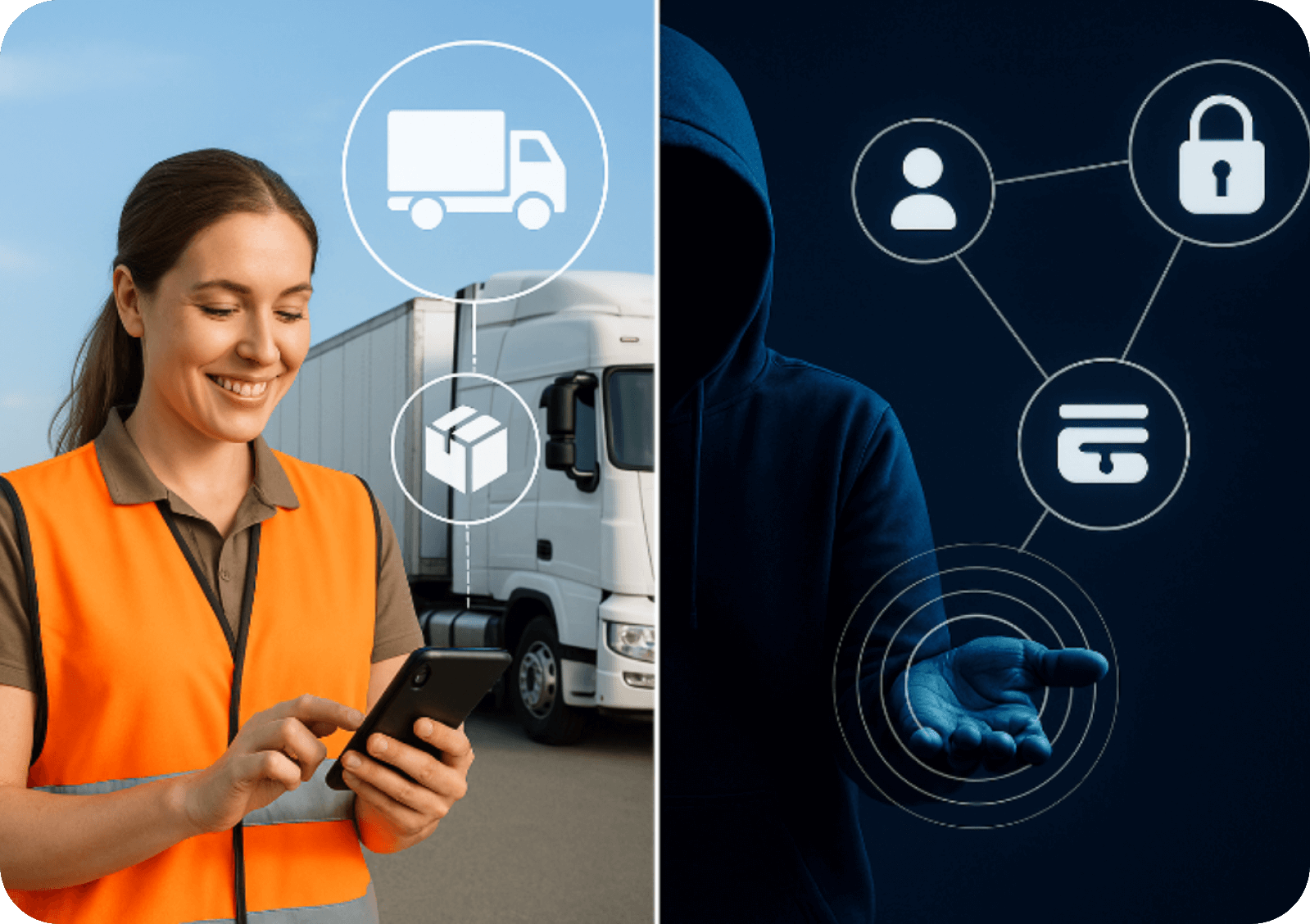
Broker, carrier, and shipper systems are prone to double brokering, dispatch tampering, and credential misuse. Behavioral biometrics detects abnormal patterns in session flow, document uploads, or repeated manipulations. When paired with device intelligence, it identifies orchestrated activity and payout manipulation.
- Top threats we stop: double brokering, impersonation, portal account takeover, payout fraud, ELD tampering.
- Behavioral signals we watch: session depth before tender acceptance, pointer behavior on uploads, cadence changes during bank edits, geo-velocity anomalies.
- What you get: cleaner networks, fewer claims and chargebacks, stronger marketplace trust.
Supply Chain and Logistics
Supply chain systems face synthetic onboarding, RFQ scraping, PO manipulation, and inventory fraud. Behavioral biometrics flags abnormal keystrokes, touch interactions, and session flows. Integrated with device and link analysis, it uncovers multi-account rings and shared payout targets before major losses occur.
- Top threats we stop: fake supplier onboarding, PO and invoice manipulation, payout diversion, warehouse fraud.
- Behavioral signals we watch: keystroke cadence on onboarding forms, session paths to approvals, timing anomalies near shipments, device reuse across accounts.
- What you get: more resilient procurement, reduced fraud loss, faster root-cause investigations.
Conclusion
The escalating threat of synthetic identity fraud demands defenses that go beyond traditional verification. Behavioral data device fingerprints, powered by behavioral biometrics, bot detection techniques, and continuous authentication, are among the most effective tools available today.
These technologies enable organizations to detect fraud in real time, minimize false positives, protect sensitive data, and provide seamless customer experiences. Whether in finance, e-commerce, healthcare, or gaming, adopting device fingerprinting solutions and behavioral biometric authentication is no longer optional. It has become a cornerstone of modern fraud prevention.
For practical guidance and solutions, explore:
CrossClassify Behavioral Biometrics Solutions
Device Fingerprinting Solutions
Bot Attack Prevention
Account Takeover Protection
Behavioral data device fingerprints are the foundation of digital trust in 2025 and will play an even greater role in the decade ahead.
These technologies enable organizations to detect fraud in real time, minimize false positives, protect sensitive data, and provide seamless customer experiences. Whether in finance, e-commerce, healthcare, or gaming, adopting device fingerprinting solutions and behavioral biometric authentication is no longer optional. It has become a cornerstone of modern fraud prevention.
For practical guidance and solutions, explore:
CrossClassify Behavioral Biometrics Solutions
Device Fingerprinting Solutions
Bot Attack Prevention
Account Takeover Protection
Behavioral data device fingerprints are the foundation of digital trust in 2025 and will play an even greater role in the decade ahead.
See How Protect Your Platform from Account Opening Fraud
CrossClassify uses AI and continuous behavior monitoring to detect and prevent Fake accounts, protecting your business processes

Explore CrossClassify today
Detect and prevent fraud in real time
Protect your accounts with AI-driven security
Try CrossClassify for FREE—3 months
Share in
Related articles


Frequently asked questions
Behavioral biometrics authentication examines how users interact (typing, swiping, navigation, scroll behaviour) over time. These patterns are hard to fake, especially when combined with device fingerprinting. A synthetic identity may pass static checks, but will often diverge behaviorally in live sessions. CrossClassify's Behavioral Biometrics for Fraud Prevention and Cybersecurity article explains how continuous behavioral signals detect impostors and bots.
Common signals include typing cadence, scroll or pointer movement, device fingerprinting (browser, OS, etc.), session history, network or geo anomalies, and drift in behavior over time. CrossClassify's Device Fingerprinting Explained: Methods, Scenarios, and Applications blog provides scenarios of how these signals are applied in fraud detection.
When device intelligence shows a device is known and trusted, and behavioral patterns match previous sessions, risk scoring can remain low. In such cases, the system may avoid triggering 2FA for those trusted flows, improving UX while keeping security strong. CrossClassify highlights this in its Behavioral Biometrics Authentication & Fraud Detection solution page, where continuous authentication and risk-based step-ups reduce friction.
Passive behavioral biometrics monitors user behavior continuously (mouse movements, dwell time, navigation flow etc.) behind the scenes. It helps catch fraud that happens after login, such as session hijacking or credential reuse, without requiring user actions or interruptions. CrossClassify's Behavioral Biometrics Authentication & Fraud Detection solution page discusses how passive checks are used to filter out noise, detect automation, and protect sensitive flows.
They are highly effective when multiple signals are used together. Device fingerprinting helps identify suspicious devices (new or reused across accounts), and behavioral biometrics spot unusual input or user interaction patterns. CrossClassify's Account Takeover Protection solution page shows how combining these methods leads to precise, low friction protection against credential stuffing and ATO.
You should seek systems that combine device fingerprinting, behavioral biometrics, real-time risk scoring, detection of promo abuse and fake accounts, and minimal disruption to gameplay. Operator experience in gaming, low latency, and privacy compliance are also key. CrossClassify's Fintech Fraud Hierarchy: From Signals to Evidence and Action article describes mechanisms (device behavior fusion, adaptive policies) that are applicable to high-velocity fraud environments like gambling.
Vendors like CrossClassify offer combined solutions that include behavioral biometrics, device fingerprinting, account takeover protection, and continuous risk scoring. Our Device Fingerprinting solution page provides details on device intelligence, unique device attributes, and its role in fraud defense.
In banking, behavioral biometrics is used not only at login but for ongoing monitoring of sensitive actions such as profile edits, payouts, and transaction changes. Systems observe behavior drift, geovelocity, and device anomalies during the session. CrossClassify's Behavioral Biometrics for Fraud Prevention and Cybersecurity article lays out these applications in financial services.
Best practices include combining multiple behavioral and device signals, calibrating baseline behaviors per user or cohort, retraining models to adapt to new patterns, using adaptive thresholds, monitoring model drift, and keeping clean and privacy-respecting data. CrossClassify discusses these in Behavioral Biometrics Authentication & Fraud Detection solutions, emphasising how they preserve user experience while maintaining accuracy.
Geovelocity anomaly detection flags impossible or highly improbable geographic shifts within short time intervals (for example, a login from one country then another far away shortly after). When combined with behavioral biometrics and device fingerprinting, it provides strong contextual risk signals that synthetic or fraudulent identities often fail to satisfy. CrossClassify describes geovelocity checks along with device and behavior signal fusion in its Behavioral Biometrics solution page.
Let's Get Started
Create your free
account today
Discover how to secure your app against fraud using CrossClassify
No credit card required