Last Updated on 27 Jul 2026
Explainable Fraud Signals for AI Assisted Hiring Workflows
Share in
Introduction
Recruitment platforms increasingly use AI to support job descriptions, candidate search, resume extraction, matching, outreach, reporting, and workflow automation. These capabilities can help recruiters organize information and complete repetitive tasks more efficiently. They can also make the platform harder to understand when every feature produces a score, recommendation, ranking, or automated action. Users may not know which system is influencing which decision.
Fraud detection introduces another group of signals. If those signals are not clearly separated from candidate evaluation, recruiters may not know whether a score refers to professional relevance, application trust, account security, suspected automation, or device risk. Candidates may also believe that a hidden fraud model affected their hiring outcome. This creates operational confusion and a serious trust problem.
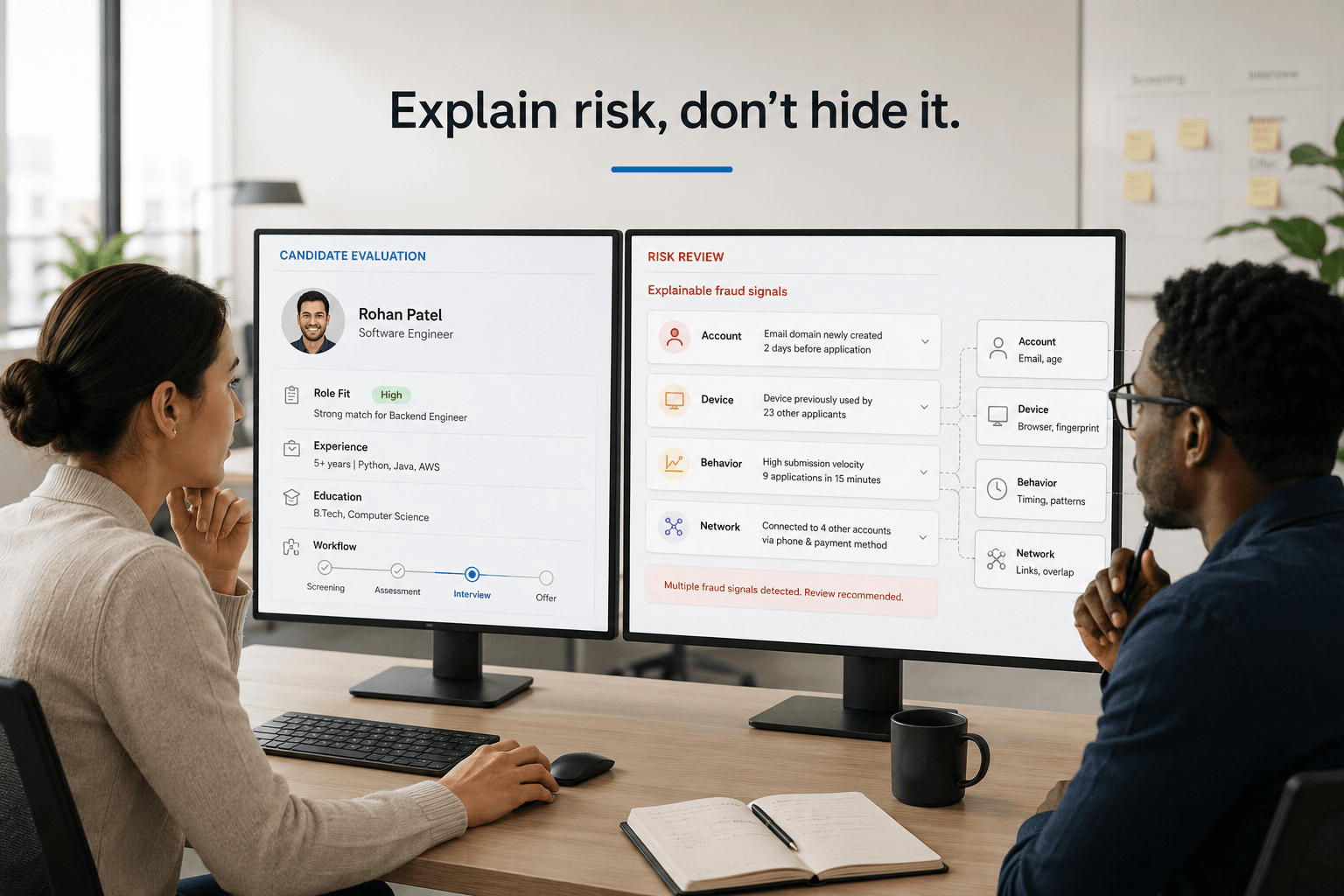
Explainable fraud signals address this problem by showing what activity created concern, how strong the evidence is, and what the signal is allowed to influence. They describe observable events such as device reuse, unusual submission velocity, access changes, or connected accounts. They should not make unsupported claims about a person’s honesty, ability, motivation, or suitability for employment.
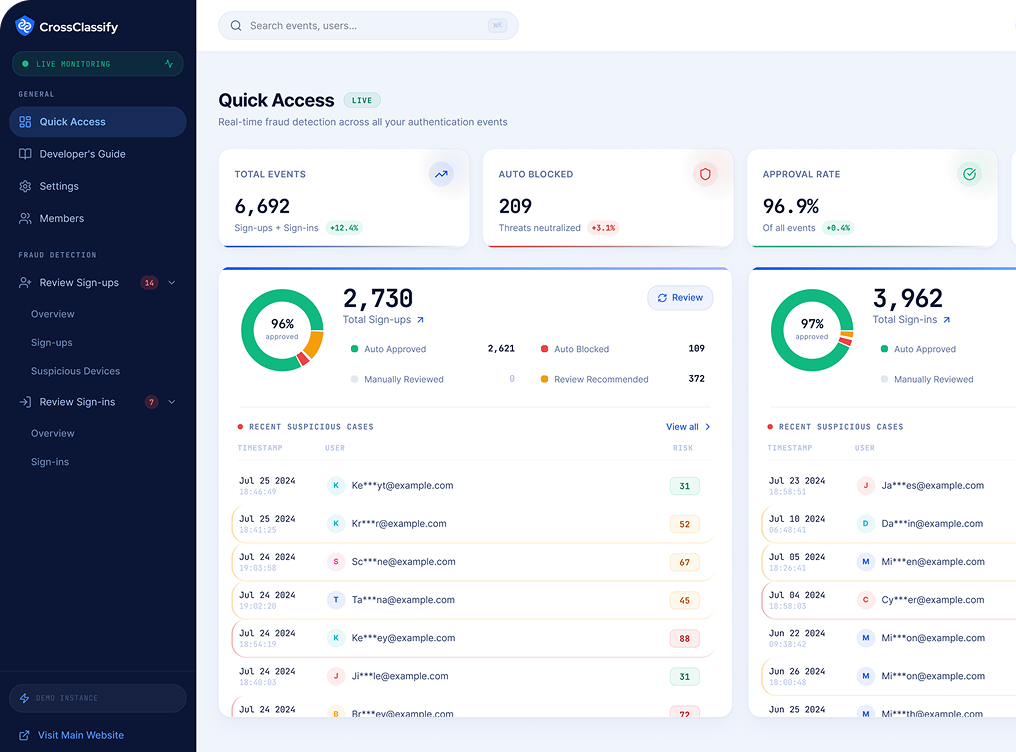
CrossClassify acts as a risk intelligence and decision support layer. It helps platforms connect account, device, behavior, network, bot, and relationship evidence without deciding who should be hired. This positioning is consistent with the need for human involvement and transparent evaluation highlighted in current Dice research on trust in AI influenced hiring.
Recruitment platforms contain different types of decisions
A modern recruitment workflow includes several systems that answer different questions. Matching tools assess whether experience or skills relate to a role. Workflow systems track application status and recruiter actions. Communication tools help employers engage candidates. Fraud systems evaluate whether accounts, devices, sessions, and activity appear trustworthy.
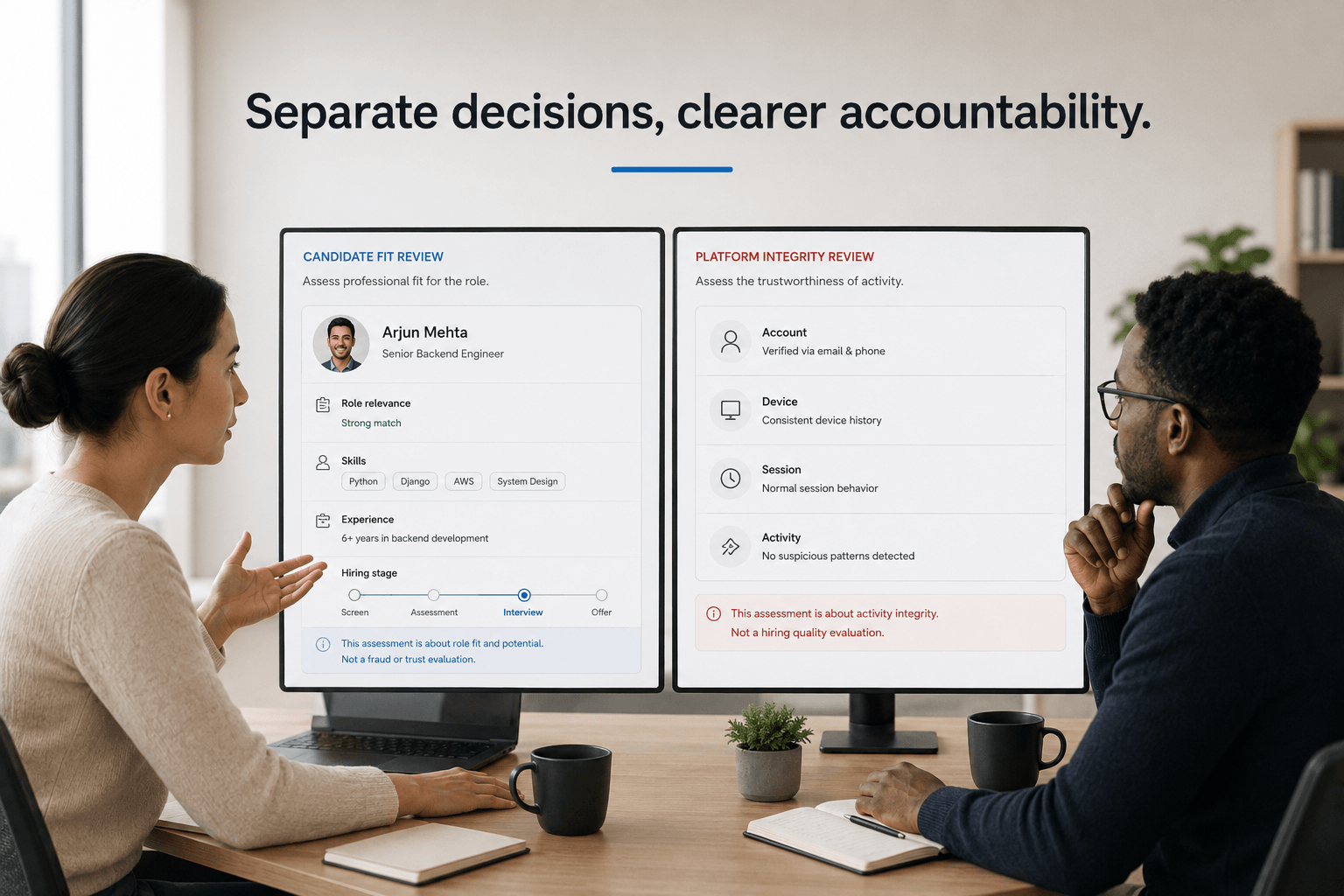
These decisions should not be blended into one unexplained score. A candidate may have strong role relevance while the application session deserves platform review because several accounts share the same device. Another candidate may have limited role relevance but completely normal account activity. The first situation concerns platform integrity, while the second concerns hiring evaluation.
When systems combine these dimensions, recruiters may interpret a fraud signal as a quality judgment. Trust teams may also receive candidate matching information that is irrelevant to their investigation. The result is poor governance because no team can explain what the final score represents. Separate outputs create clearer accountability.
CrossClassify focuses on the integrity of the account, device, session, network, behavior, and connected activity. Its recruitment fraud detection solution helps platforms keep risk context separate from candidate qualification. Recruiters and employers remain responsible for assessing professional experience and making hiring decisions.
What makes a fraud signal explainable
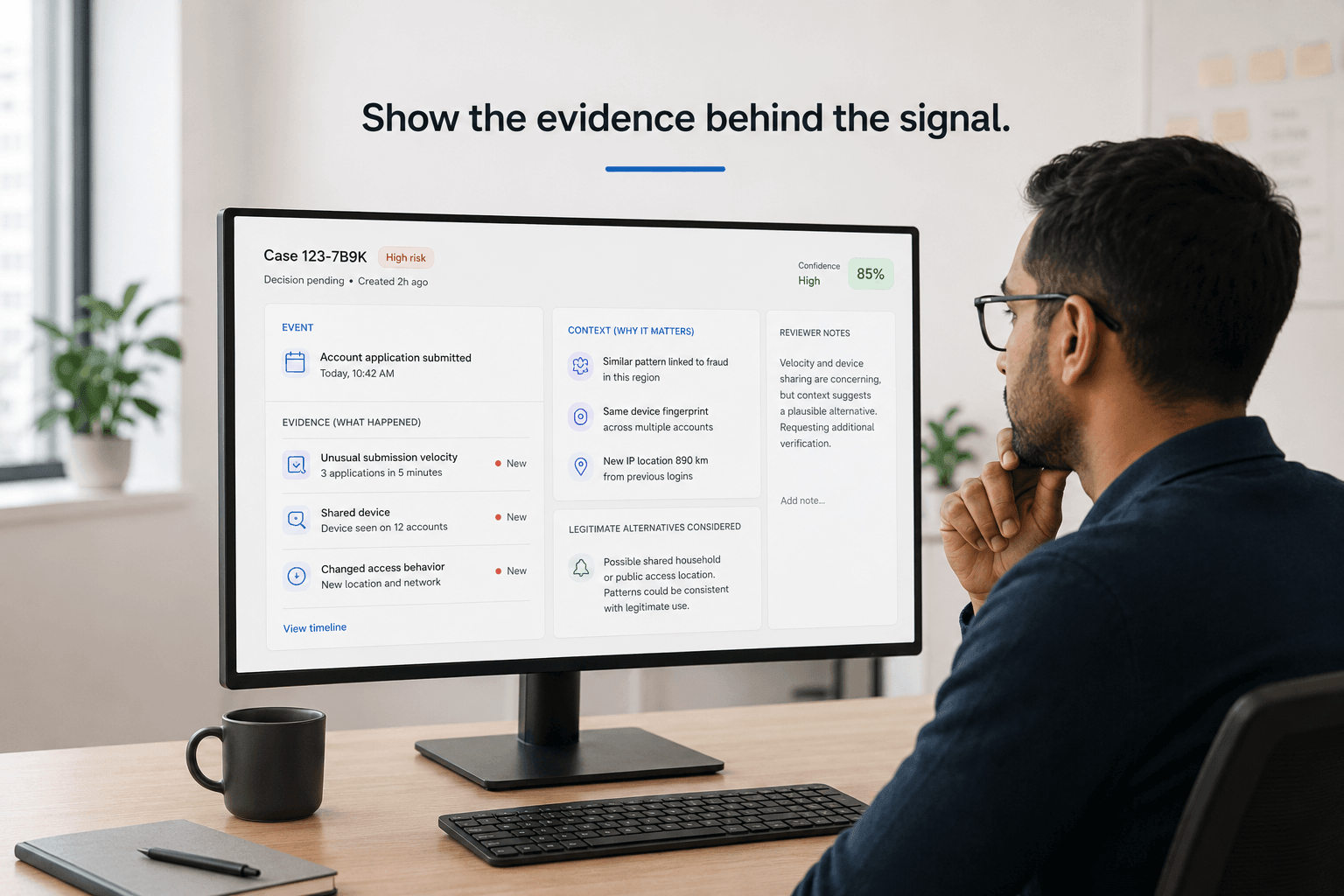
An explainable fraud signal identifies the event, evidence, context, and confidence behind the risk. It tells the reviewer what happened, when it happened, and how it differs from expected activity. It also shows whether the concern comes from one weak signal or several connected conditions. This makes the output useful for action rather than merely informative.
Instead of displaying a label such as suspicious candidate, the system might explain that an account submitted applications at unusual velocity, shares a device with several newly created accounts, or changed access behavior before a sensitive action. These statements describe platform events. They do not accuse the person of deception or imply that the candidate lacks professional value.
Context also explains legitimate alternatives. A shared device may belong to a public employment center, a university, or a household. A new location may reflect travel, and a behavior change may result from a different device or accessibility technology. Reviewers should see enough evidence to distinguish a plausible explanation from a repeated coordinated pattern.
CrossClassify combines multiple signal layers and can expose the reasons contributing to risk. The recruitment platform decides how those reasons are displayed and which actions they support. Explainability therefore exists at both the detection level and the workflow level, because users need to know not only why risk increased, but also what the platform will do next.
Why one universal risk score is not enough
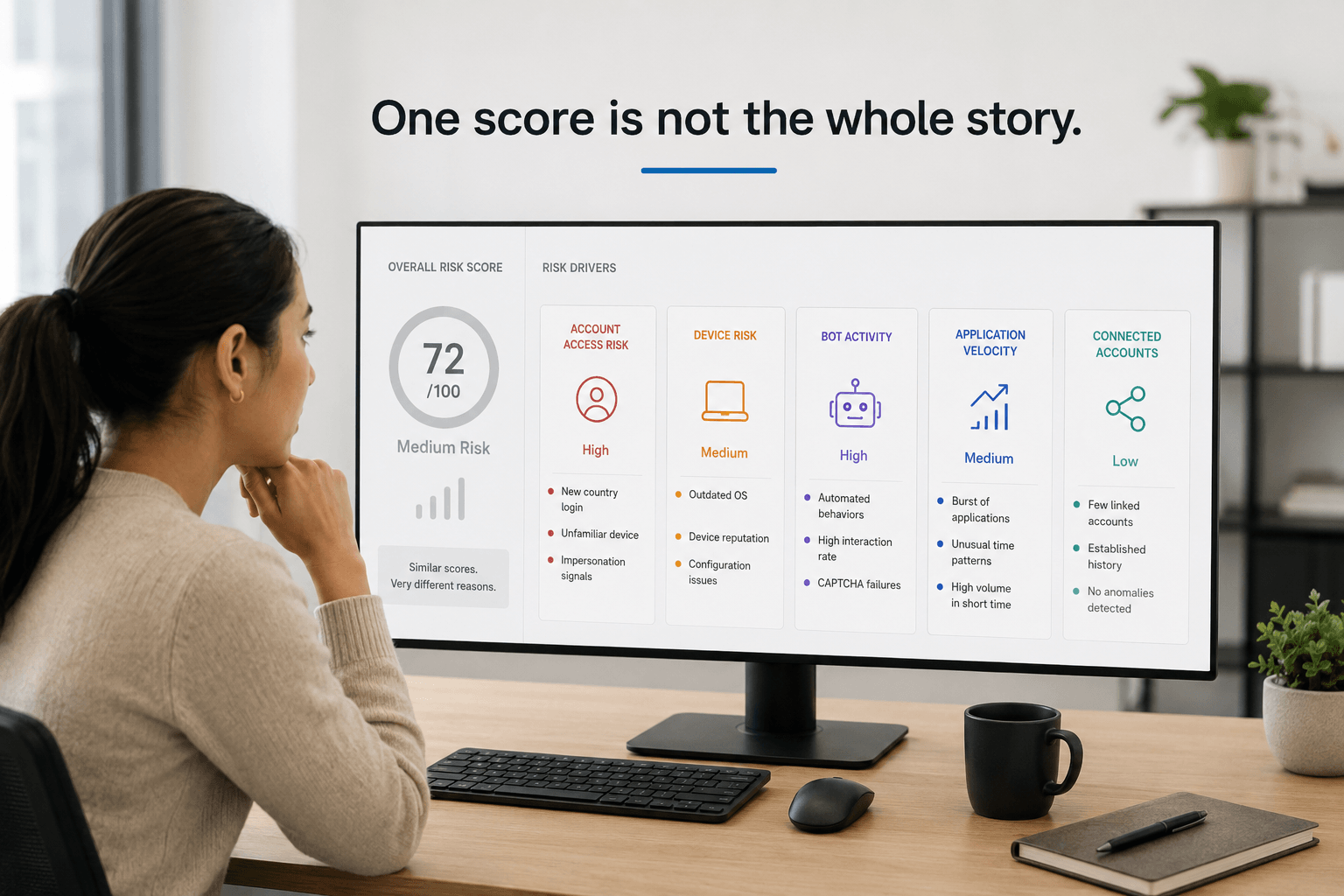
A single score can help route large numbers of events, but it can hide important differences. Two accounts may receive similar scores for completely different reasons. One may involve a compromised recruiter account that changes employer details, while another may involve candidate accounts connected through automated application behavior. Their operational impact and required response are not the same.
Risk output should include categories and reason codes. Account access risk, account creation risk, device risk, bot activity, application velocity, messaging behavior, and graph relationships can be presented separately. Reviewers can then understand which controls or teams are relevant. A security analyst may handle account takeover, while a trust analyst reviews coordinated application activity.
A universal score can also make tuning difficult. If reviewers clear many cases, the platform cannot improve unless it knows which underlying signals created the noise. Category level outcomes reveal whether device novelty, location change, velocity, or behavior contributes meaningful evidence. This supports more precise model and policy improvement.
CrossClassify combines several risk layers while allowing platforms to use the underlying evidence in their own workflows. A summary score may still support initial prioritization, but it should not replace reason codes, relationships, and event context. The score tells teams where to look, while the evidence helps them decide what to do.
Designing a risk taxonomy for recruitment
A risk taxonomy gives the platform a shared language for different types of fraud concern. Without one, teams may use the same label for fake accounts, account takeover, bot activity, identity inconsistency, or messaging abuse. This makes reporting and review inconsistent. A clear taxonomy separates the event type from the evidence and the response.
Useful categories may include account opening risk, account access risk, device manipulation, automated interaction, application velocity, identity inconsistency, connected account activity, and communication abuse. Each category can contain more specific reasons. For example, device risk may include a returning blocked device, emulator indicators, fingerprint mismatch, or unusual device sharing.
The taxonomy should also distinguish observation from conclusion. Device reuse is an observation, while coordinated account abuse is a possible interpretation that requires wider evidence. Unusual velocity is an observation, while bot activity may require behavior and device support. This distinction prevents weak signals from being presented with unjustified certainty.
CrossClassify can provide signal categories around device, behavior, network, account, and link evidence. The recruitment platform can map them to its own policies and operational language. A well designed taxonomy makes explanations consistent across product interfaces, review tools, reports, and audit records.
Designing the human review experience
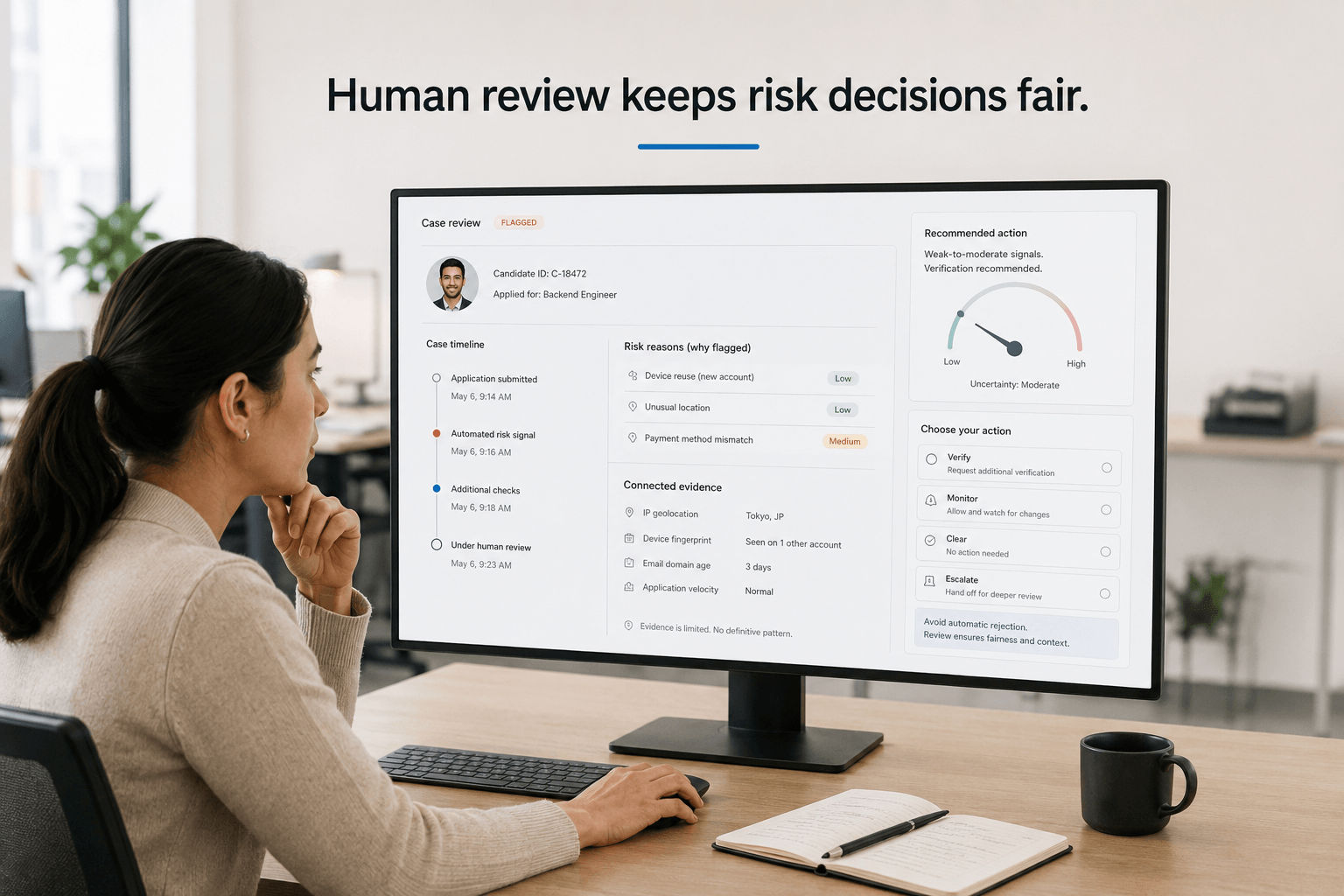
Human review should focus on decisions that require context. The reviewer needs a concise timeline, relevant relationships, reason codes, previous actions, and the business event affected. Raw technical details should remain available for deeper investigation, but they should not overwhelm the initial view. The first screen should explain the case rather than display every collected attribute.
The system should make uncertainty visible. A medium confidence event based on a new device and location change should not appear identical to a strong cluster involving repeated devices, mechanical behavior, and connected accounts. Reviewers need to know which signals are independent and which may describe the same underlying event. Confidence should reflect evidence quality, not just the number of alerts.
The interface should also support decisions and feedback. Reviewers may confirm abuse, clear the event, request verification, continue monitoring, or escalate the case. They should be able to record why they chose that outcome and which evidence mattered. This creates a learning loop and supports consistent policy application.
CrossClassify can send enriched risk information into platform review tools. Teams can explore how CrossClassify connects with existing applications before designing the reviewer experience. The recruitment platform controls how evidence is displayed, which teams receive it, and what actions are available.
Protecting candidate fairness
Fraud detection can create candidate harm when uncertain signals silently affect hiring outcomes. A device may be shared legitimately, a network location may change, and behavioral patterns may vary because of accessibility needs or environmental conditions. If these signals are converted into an unexplained hiring penalty, the candidate may never know what happened. The recruiter may also lose access to a credible person.
Fairness begins with purpose limitation. Fraud signals should influence platform integrity workflows such as review, monitoring, verification, or account controls. They should not directly rank candidate quality or predict professional performance. Keeping the purpose narrow reduces the chance that technical risk becomes a hidden employment decision.
Proportionality is equally important. Weak evidence may justify observation, while stronger evidence may justify verification. Automatic restrictions should require a higher confidence threshold and a clear recovery path. Genuine users need a way to resolve unusual conditions and continue through the platform.
CrossClassify provides fraud evidence around platform activity. The recruitment platform can keep that evidence within fraud, trust, and security workflows, request further verification when appropriate, and prevent it from becoming an unexplained candidate recommendation. This approach aligns with the preference for human involvement and clearer evaluation processes described in Dice’s trust research.
Explainability for recruiter workflows
Recruiters do not need to become security analysts. Their primary role is understanding hiring needs, evaluating professional relevance, and building candidate relationships. A technical alert filled with browser attributes, network values, and graph data would create more work without improving the hiring decision. Recruiters need concise, role appropriate information.
A recruiter facing a flagged submission might see that the platform is reviewing unusual account activity and that no action is currently required. A trust analyst might see the detailed device and session relationships. A security analyst might receive information about suspicious access, account recovery, or session changes. The same incident can therefore support different views.
Recruiter facing language must avoid accusation. It should not say that a candidate is fraudulent, unqualified, or deceptive unless the platform has completed an appropriate investigation and policy process. Safer language describes the status, such as account activity under review or additional verification requested. This protects candidate fairness and reduces the chance that uncertainty influences professional judgment.
CrossClassify supports the underlying detection through account takeover monitoring, device fingerprinting, behavioral biometrics, bot detection, and link analysis. The recruitment platform determines how much context each role receives. This role based presentation protects usability while preserving specialist access to detailed evidence.
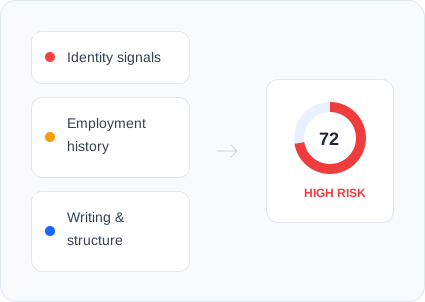
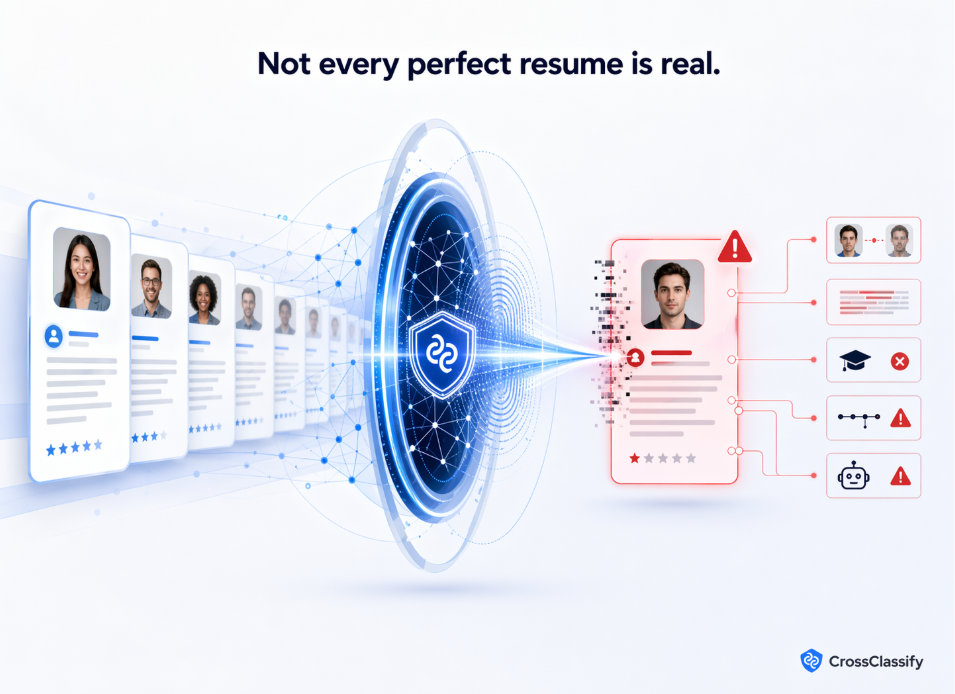
Turn CV Red Flags Into a
Documented Risk Score
A checklist tells you what to look for. CV Risk Checker scans any resume in seconds and shows you exactly where the fraud signals are — before you book the interview.
Explainability for candidates and account holders
Candidates and recruiters may need explanations when a platform requests verification, limits activity, or places an account under review. The explanation does not need to reveal detection methods that would help attackers evade controls. It should still communicate what type of action is required, why the platform is protecting the account or workflow, and what happens next. Silence creates distrust.
A candidate might be told that unusual account activity requires confirmation before additional applications can be submitted. A recruiter might be told that a new access pattern triggered account protection. These explanations describe the platform’s response without making an unsupported accusation. They also give genuine users a clear route to restore normal access.
Communication should be proportionate to the action. Passive monitoring may not require a visible notice. A temporary restriction or identity challenge requires clearer information. A permanent account decision needs a documented policy basis and an appropriate review process. The platform should determine these standards with legal, trust, product, and security input.
Explainability therefore extends beyond the analyst dashboard. It includes user communication, support processes, appeal or review paths, and internal documentation. CrossClassify provides the risk context, while the platform designs the communication and governance around any action.
Governance for AI assisted hiring workflows
Governance defines which systems can influence which decisions. Recruitment platforms should document whether a model supports matching, fraud review, messaging safety, account security, or another function. Teams should know what data enters the model, what output it produces, and which actions can follow. This prevents gradual expansion beyond the original purpose.
Access controls are part of governance. Recruiters may not need detailed device data, while security analysts may require it. Product teams may need aggregated patterns rather than individual cases. Limiting data and explanations according to role protects privacy and reduces the chance that fraud evidence is used inappropriately. Audit records should show who viewed and acted on a case.
Governance should also cover model and policy change. A new signal, threshold, or automation response can alter user outcomes. Teams should test for false alerts, review operational impact, and define rollback conditions. Reviewer feedback and support cases can reveal issues that technical accuracy tests miss.
CrossClassify provides configurable risk signals and integration options, but the recruitment platform remains responsible for governance. It defines purpose, access, thresholds, review ownership, and user communication. This separation keeps the product in control of how fraud intelligence influences real workflows.
Feedback loops and model improvement
Explainable workflows make feedback more useful. When reviewers confirm or clear an event, they can record which evidence mattered. Product teams can identify where alerts create friction, fraud teams can tune thresholds, and leadership can understand which types of abuse affect the platform. Each outcome becomes a structured learning opportunity.
A black box score makes this improvement difficult because teams cannot tell why a decision occurred. If many cases are cleared, the platform does not know whether the problem comes from device novelty, network location, behavior, or velocity. Reason codes allow teams to isolate noisy signals and understand which combinations produce strong evidence. This supports targeted changes instead of broad threshold adjustments.
Feedback should include more than confirmed fraud. Legitimate explanations, successful verification, candidate abandonment, support complaints, and recruiter impact all matter. A control that detects risk but causes excessive friction may need redesign. A signal that appears weak alone may become valuable when paired with another source of evidence.
CrossClassify supports configurable risk scoring and event based integration. The recruitment platform can return its own review outcomes and use them to improve operational rules. This creates a foundation for continuous tuning rather than static controls that become outdated as user behavior changes.
Measuring operational value
Fraud detection should be measured through operational outcomes, not only the number of alerts created. A growing alert count may reflect increasing abuse, wider coverage, or poor precision. Teams need measures that show whether the risk layer improves trust, reduces repeated incidents, and protects recruiter time. The measurement framework should also include candidate and user friction.
Useful measures include confirmed risk rate, review time, false alert rate, repeat incident reduction, successful verification, account recovery outcomes, and connected abuse clusters identified. Platforms can also measure how often recruiters encounter repeated suspicious profiles or communication incidents. These outcomes connect fraud operations with product and marketplace value.
Reason code performance should be measured separately. Teams can examine which signals contribute to confirmed cases, which create unnecessary review, and which become useful only in combination. This helps determine whether one universal score hides important variation. It also supports better explanations because the platform knows which evidence is reliable.
CrossClassify can provide event and signal context, while the recruitment platform records review, business, and user outcomes. Together, these data points show whether the risk layer improves trust without creating excessive friction. They also help teams decide where to expand monitoring and where to reduce unnecessary controls.
Integration without rebuilding the hiring platform
Recruitment platforms often already contain account systems, applicant workflows, messaging, dashboards, and review tools. Adding fraud intelligence should not require replacing these systems. The practical approach is to identify important events and attach risk context where it can influence a defined operational decision. This supports gradual implementation.
Teams may begin with account registration, login, account recovery, application submission, or recruiter messaging. CrossClassify can collect device and behavior signals through SDKs, then return risk context through APIs or other integrations. The platform can store reason codes, create review cases, or trigger verification according to its own architecture. High value events can be added before broader coverage.
Integration design should preserve separation between fraud and hiring data. Candidate matching systems do not need every technical risk attribute, and fraud systems do not need every professional evaluation. Event identifiers and controlled interfaces can connect the workflows without merging their purposes. This supports privacy and clearer governance.
CrossClassify’s current integration pages describe web, Android, iOS, and REST API options. This allows product and engineering teams to place monitoring around web and mobile journeys while keeping response logic inside the recruitment platform.
Conclusion
AI assisted hiring workflows need clear boundaries between candidate evaluation and platform risk detection. Matching, workflow automation, communication, and fraud protection answer different questions. When their outputs are blended into one unexplained score, recruiters, candidates, and reviewers lose confidence in the process. Explainability restores that distinction.
An explainable fraud signal shows what activity created concern, how strong the evidence is, and which operational workflow should respond. It describes device reuse, access changes, unusual velocity, automation, or connected accounts without making unsupported claims about a person. It also gives reviewers enough context to recognize legitimate exceptions and apply proportionate action.
CrossClassify helps recruitment platforms add account, device, behavior, network, bot, and relationship intelligence to existing workflows. It can send risk context through APIs and SDKs while the platform controls display, thresholds, review, verification, and communication. This provides stronger protection without creating a black box hiring authority.
The result is a more governable recruitment platform. Fraud teams receive useful evidence, recruiters remain focused on professional evaluation, candidates are protected from unexplained technical judgments, and product teams can measure operational value. Human judgment remains visible because technology supports decisions rather than hiding them.
See How CrossClassify Protects Recruitment Platforms
Detect fake recruiters, fraudulent resumes, and job scams instantly

Check a CV for Fraud Signals in 60 Seconds
Upload any resume and get an instant risk score, flagged signals, and a recruiter-ready action checklist.
Try the CV Risk CheckerNo credit card required
Share in
Related articles

Frequently asked questions
Let's Get Started
Create your free
account today
Discover how to secure your app against fraud using CrossClassify
No credit card required