Last Updated on 26 Apr 2026
The Smart Bot and Abuse Protection Layer for Indeed Style Job Applications
Share in

Introduction
Many hiring teams receive a high volume of applications, but not enough qualified or trustworthy candidates. Searches like “why so many unqualified Indeed apply candidates,” “does applying on Indeed work,” “do Indeed applications work,” and “how to screen candidates Indeed job applications” reflect frustration on both sides of the marketplace. Employers want better candidates, while candidates want their applications to reach real opportunities.
This article discusses Indeed related search behavior and similar recruitment platform issues, not a partnership with Indeed. The bigger issue is that hiring platforms must distinguish genuine candidate interest from bot application fraud, fake candidate accounts, low quality mass applications, and automated job application abuse. Without fraud aware controls, recruiters may waste time reviewing applications that were never created by genuine candidates.
CrossClassify adds bot and abuse protection to recruitment workflows by detecting application velocity, device reuse, suspicious behavior, repeated resume patterns, and linked fake accounts. The CrossClassify recruitment solution helps platforms protect candidate screening from fake applicant activity. This supports more trusted applications before they reach recruiters.
What Application Related Indeed Keywords Reveal
Searches such as “why so many unqualified Indeed apply candidates” and “does applying on Indeed work” show a quality and trust problem in online hiring. Employers may see many applicants, but volume does not always mean hiring value. Candidates may also feel ignored because genuine applications compete with automated, duplicated, or low quality submissions.
These keywords reveal that application quality is not only a recruiting problem. It is also a platform abuse problem when bots, fake accounts, repeated resumes, and scripted submissions create noise at scale. A hiring platform needs to know whether an application is genuine before it is counted as a meaningful lead.
CrossClassify helps solve this by adding risk scoring before applications reach recruiters. The bot and abuse protection solution is relevant because recruitment abuse often behaves like automation, even when it appears as normal application activity. This helps platforms protect recruiter time and improve the value of candidate pipelines.
How Bots and Abuse Hurt Hiring Platforms
Mass apply automation allows one user, script, or fraud network to submit many applications in a short period. These applications may not reflect real interest, real qualification, or real candidate effort. When mass apply behavior reaches recruiters, it reduces the usefulness of application volume as a hiring metric.
CrossClassify can detect suspicious application velocity and connect it with device, IP, and behavior signals. The bot and abuse protection page supports detection of automated activity and abnormal usage patterns. This helps recruitment platforms reduce application spam before it enters recruiter workflows.
Fake candidate accounts
Fake candidate accounts can be created to submit applications, collect recruiter responses, test platform controls, or support larger fraud campaigns. These accounts may use temporary emails, repeated devices, similar resumes, and scripted behavior. A platform that only evaluates resume keywords may miss the fact that the candidate profile itself is suspicious.
CrossClassify helps detect fake candidate accounts by analyzing signup risk, device reuse, geo mismatch, and behavior. The account opening protection solution is useful for stopping suspicious candidate accounts early. This reduces fake applicant detection gaps at the point of account creation.
Repeated resumes from different identities
Repeated resumes from different identities can indicate candidate fraud, content farming, or automated application abuse. Fraudsters may change names, emails, or phone numbers while reusing the same resume structure or experience claims. Recruiters may not notice the pattern if applications arrive across different jobs or time periods.
CrossClassify can connect repeated resume patterns with device fingerprinting and account relationships. The device fingerprinting solution helps detect when different identities are connected by the same technical environment. This gives platforms stronger visibility into fake candidate networks.
Low quality applications at scale
Low quality applications at scale create operational cost for recruiters and reduce platform trust for employers. Even when the applicants are not malicious, automated or careless submissions can flood job posts with poor matches. The result is high volume but low hiring value.
CrossClassify can help platforms separate trusted applicant activity from suspicious or low trust application behavior. The recruitment fraud protection solution supports risk based candidate screening that improves hiring workflow quality. This helps employers focus on applications that deserve attention.
AI generated application messages
AI generated application messages can improve candidate communication, but they can also create generic, misleading, or mass produced applications. When many accounts use similar messages, recruiters may struggle to identify genuine interest. The platform needs to detect repeated patterns, scripted timing, and suspicious submission behavior.
CrossClassify can analyze behavior and content patterns together to detect suspicious application abuse. The behavioral biometrics solution helps identify unnatural interaction patterns that often accompany scripted submissions. This gives platforms a stronger way to detect automated job application fraud.
Recruiter time wasted on non genuine candidates
Recruiter time is one of the biggest hidden costs of application abuse. Every fake applicant, bot submission, repeated resume, or low trust profile consumes review time that could be spent on real candidates. This reduces the return on job postings and can make employers question whether paid recruitment traffic is worth the cost.
CrossClassify helps protect recruiter time by scoring applications before they reach hiring teams. The CrossClassify recruitment solution connects fraud risk signals to candidate screening workflows. This supports higher quality pipelines and better employer trust.
Why ATS Filters Are Not Enough
ATS filters can rank resumes by keywords, experience, location, and job fit, but they usually do not detect shared devices, abnormal behavior, suspicious velocity, or linked fake accounts. A bot can submit a keyword optimized resume that passes an ATS screen while still being part of an abusive pattern. This is why fake candidate detection requires platform level fraud signals.
Application abuse is often visible in the behavior around the application, not only in the resume. The same device may submit many applications under different identities, or the same resume template may appear across many profiles. A pure ATS filter may rank these applications, but it may not understand the risk network behind them.
CrossClassify complements ATS systems by adding trust and fraud intelligence before recruiter review. The device fingerprinting solution helps reveal repeated fake applicant activity that an ATS may miss. This gives hiring platforms a better way to separate genuine candidates from automated abuse.
Turn CV Red Flags Into a
Documented Risk Score
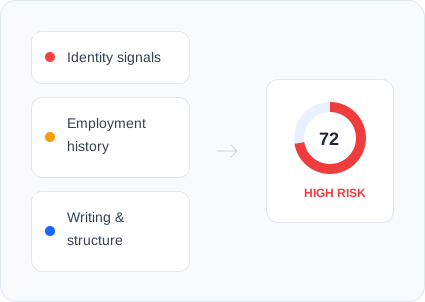
A checklist tells you what to look for. CV Risk Checker scans any resume in seconds and shows you exactly where the fraud signals are — before you book the interview.
How CrossClassify Adds Bot and Abuse Protection
CrossClassify adds bot and abuse protection by monitoring application velocity, device reuse, behavior anomalies, shared network links, and suspicious account relationships. These signals help detect whether applications are coming from genuine candidates or from abuse patterns. The platform can then route suspicious applications to review, add friction, block high risk activity, or notify teams.
Behavioral biometrics can detect unnatural interaction patterns during application submission. Device fingerprinting can identify repeated candidate accounts from the same device. Link analysis can reveal shared IPs, locations, contact details, resumes, and account relationships that suggest coordinated abuse.
The bot and abuse protection solution supports this kind of fraud aware application defense. When connected with the recruitment solution, it helps hiring platforms protect application quality, recruiter productivity, and employer ROI. This makes bot application fraud detection a key part of modern recruitment security.
Detection Signals for Application Abuse
Application velocity measures whether a candidate account submits too many applications in a short time. High velocity can indicate automation, mass apply tools, or careless low quality application behavior. It becomes more suspicious when combined with new accounts, repeated resumes, risky devices, or abnormal interaction patterns.
CrossClassify can score application velocity as part of a wider fraud model. The bot and abuse protection solution helps platforms detect when application behavior becomes automated or abusive. This reduces the number of suspicious applications that reach recruiters.
Device reuse
Device reuse occurs when many candidate accounts appear to come from the same device environment. This can indicate fake candidate networks, account farms, or repeated abuse by the same actor. It is especially important when the accounts use different names, emails, and resumes.
CrossClassify uses device fingerprinting to connect suspicious accounts that look separate on the surface. The device fingerprinting solution helps platforms identify fake applicant patterns hidden behind different identities. This improves fake candidate detection across the recruitment marketplace.
Resume similarity
Resume similarity can reveal cloned resumes, repeated templates, and reused experience claims. One similar resume may not be a problem, but repeated patterns across many accounts can suggest abuse. This is particularly important when applications are submitted at scale across many jobs.
CrossClassify can connect resume similarity with behavior, device, and account signals. The recruitment fraud protection solution helps platforms detect suspicious candidate profiles and repeated fake applicants. This improves the quality of applications that reach hiring teams.
Behavioral anomalies
Behavioral anomalies include copy and paste patterns, scripted timing, unnatural navigation, and repeated action sequences. These patterns can indicate automation even when the application form looks normal. Behavior signals are useful because bots and human users often interact with platforms in different ways.
CrossClassify can detect behavioral anomalies and add them to candidate risk scoring. The behavioral biometrics solution helps platforms identify abnormal interactions during application submission. This strengthens bot application fraud detection without relying only on visible content.
Network links
Network links include shared IPs, locations, contact details, device profiles, resumes, and account relationships. These links can reveal coordinated fake candidate activity that is invisible when reviewing applications one by one. A platform that connects network signals can detect abuse patterns much earlier.
CrossClassify uses link analysis to identify related suspicious accounts and application behavior. The CrossClassify recruitment solution supports this kind of recruitment fraud detection across candidate and recruiter workflows. This helps platforms move from isolated review to network based protection.
Conclusion
Recruitment platforms need fraud aware candidate screening before applications reach recruiters. High application volume can look successful, but it becomes costly when bots, fake accounts, repeated resumes, and low trust candidates fill the pipeline. ATS filters are useful, but they do not detect many abuse signals that live outside the resume.
CrossClassify helps platforms detect bot application fraud, fake candidate activity, suspicious devices, behavioral anomalies, and linked abuse patterns. The recruitment fraud protection solution gives hiring platforms a way to protect application quality and recruiter time. For employers asking why so many unqualified candidates apply, the answer may be stronger fraud detection before the application reaches the recruiter.
See How CrossClassify Stops Bot and Account Abuse
Detect suspicious automation, stop fake traffic, and reduce abuse at scale

Check a CV for Fraud Signals in 60 Seconds
Upload any resume and get an instant risk score, flagged signals, and a recruiter-ready action checklist.
Try the CV Risk CheckerNo credit card required
Share in
Related articles



Frequently asked questions
Let's Get Started
Create your free
account today
Discover how to secure your app against fraud using CrossClassify
No credit card required