Last Updated on 19 Oct 2025
Anti-Bot AI Solutions: Leveraging AI to Combat Sophisticated Cyber Threats
Share in

Key Notes
•
Anti-bot AI solution investments yield significant ROI by reducing operational costs and preventing revenue losses from automated threats.•
Bot attack prevention strategies can avert billions in annual damages, with effective mitigation leading to long-term financial stability.•
Bot protection platform budgeting should account for scalability to handle growing traffic without exponential cost increases.•
Bot attack protection failures often result in hidden expenses like compliance fines and reputational damage.•
Anti-bot AI solution ROI calculations highlight savings from averted fraud, with commercial tools often outperforming open-source in efficiency.•
Advanced cloud bot protection frameworks emphasize cost-effective hybrid models for sustained economic benefits in 2025.
Introduction
In 2025, the economic toll of bot attacks on global businesses has escalated dramatically, with automated threats costing organizations up to $116 billion annually, and climbing to $186 billion when combined with API exploits. As AI-powered bots become more sophisticated, they not only disrupt operations but also erode profits through fraud, data breaches, and downtime. Reports from Thales' 2025 Bad Bot Report reveal that bad bots now constitute 37% of internet traffic, amplifying financial risks across sectors.
While the upfront costs of anti-bot AI solutions may seem daunting, their long-term ROI far outweighs the expenses, offering proactive defense against these pervasive threats. This article delves into the economic perspectives of bot mitigation, exploring cost calculations, ROI analyses, and budgeting strategies. By leveraging insights from industry leaders like Radware, businesses can make informed decisions to safeguard their bottom line. Standardized frameworks from OWASP help align teams on quantifying these risks, ensuring a balanced approach to bot attack prevention.
While the upfront costs of anti-bot AI solutions may seem daunting, their long-term ROI far outweighs the expenses, offering proactive defense against these pervasive threats. This article delves into the economic perspectives of bot mitigation, exploring cost calculations, ROI analyses, and budgeting strategies. By leveraging insights from industry leaders like Radware, businesses can make informed decisions to safeguard their bottom line. Standardized frameworks from OWASP help align teams on quantifying these risks, ensuring a balanced approach to bot attack prevention.
Calculating the Cost of Bot Attacks on Businesses
Assessing the financial burden of bot attacks requires a comprehensive breakdown of direct and indirect losses. Direct costs include revenue erosion from fraudulent transactions and inventory denial, where bots manipulate stock levels or execute fake purchases. For instance, global cybercrime damages, heavily driven by bots, are projected to reach $10.5 trillion by the end of 2025. Indirect expenses encompass increased infrastructure strain, with bots consuming bandwidth and inflating cloud computing bills.
In fintech, a single day without bot attack protection can lead to millions in losses from account takeovers and data theft. Small businesses face median losses of $87,000 per attack, while larger enterprises see averages around $950,000 globally. To calculate these costs accurately, factor in metrics like attack frequency, average loss per incident, and recovery expenses. Tools from Imperva provide benchmarks for estimating these figures in real-time scenarios.

In fintech, a single day without bot attack protection can lead to millions in losses from account takeovers and data theft. Small businesses face median losses of $87,000 per attack, while larger enterprises see averages around $950,000 globally. To calculate these costs accurately, factor in metrics like attack frequency, average loss per incident, and recovery expenses. Tools from Imperva provide benchmarks for estimating these figures in real-time scenarios.
ROI Analysis for Investing in Anti-Bot AI Platforms
Evaluating the return on investment for anti-bot AI solutions involves comparing implementation costs against averted losses. Early adopters report ROI as high as 41% through enhanced threat detection and operational efficiencies. For example, AI-driven platforms reduce ticket volumes and response times, translating to substantial savings in customer support.
Key to ROI is quantifying benefits like prevented fraud and improved conversion rates. A study by Google Cloud highlights how agentic AI in security yields tangible results, with security improvements noted by 49% of users. Businesses should use formulas such as (Savings from Mitigated Attacks - Total Costs) / Total Costs to measure returns. Long-term analyses show that investing in bot protection platforms can yield multiples of the initial outlay within the first year, as per BizBot's guide.

Key to ROI is quantifying benefits like prevented fraud and improved conversion rates. A study by Google Cloud highlights how agentic AI in security yields tangible results, with security improvements noted by 49% of users. Businesses should use formulas such as (Savings from Mitigated Attacks - Total Costs) / Total Costs to measure returns. Long-term analyses show that investing in bot protection platforms can yield multiples of the initial outlay within the first year, as per BizBot's guide.
Budgeting for Scalable Bot Protection Solutions
Effective budgeting for advanced cloud bot protection demands a scalable approach that aligns with business growth. Start by allocating funds for core components like AI models and integration, with costs ranging from $5,000 for basic setups to higher for enterprise-grade solutions. Prioritize low-cost rules and scoped evaluations to optimize expenses, as recommended by AWS.
Incorporate buffers for ongoing management, as bot threats evolve rapidly. Software now commands 40% of cybersecurity budgets, emphasizing the need for AI defenses. Tools from Kasada guide CISOs in validating budgets against risks, ensuring scalability without overspending.
Incorporate buffers for ongoing management, as bot threats evolve rapidly. Software now commands 40% of cybersecurity budgets, emphasizing the need for AI defenses. Tools from Kasada guide CISOs in validating budgets against risks, ensuring scalability without overspending.
Long-Term Savings from Effective Bot Mitigation
Implementing robust bot attack prevention delivers enduring savings by minimizing recurring losses. Enterprises report annual revenue protection of up to $50,000 through improved bot management. Over time, these solutions reduce support costs from account lockouts and fraud investigations.
Advanced mitigation, like that from Radware Bot Manager, prevents sophisticated attacks, resulting in direct cost savings. Long-term benefits include lower insurance premiums and enhanced customer trust, leading to increased lifetime value. As per Forbes, the right anti-bot AI solution saves money in the long run by averting costly breaches.
Advanced mitigation, like that from Radware Bot Manager, prevents sophisticated attacks, resulting in direct cost savings. Long-term benefits include lower insurance premiums and enhanced customer trust, leading to increased lifetime value. As per Forbes, the right anti-bot AI solution saves money in the long run by averting costly breaches.
Comparing Costs of Open-Source vs. Commercial Tools
Open-source bot detection tools offer zero upfront licensing fees but incur hidden costs in customization and maintenance. Commercial options, while involving subscriptions, provide robust support and features, often proving more cost-effective long-term.
For instance, building in-house from open-source may exceed vendor costs due to development overheads. Comparisons from SEON show commercial tools like DataDome offering better ROI through scalability. Businesses should weigh community support in open-source against guaranteed updates in commercial, as highlighted in Aqua Cloud's analysis.

For instance, building in-house from open-source may exceed vendor costs due to development overheads. Comparisons from SEON show commercial tools like DataDome offering better ROI through scalability. Businesses should weigh community support in open-source against guaranteed updates in commercial, as highlighted in Aqua Cloud's analysis.
Financial Impact of Compliance Failures Due to Bots
Bot-induced breaches often trigger compliance violations, leading to hefty fines. Financial institutions face penalties up to $1.3 billion for failures in reporting suspicious activities. Legal risks from data exposures compound these costs, including lawsuits and remediation.
In financial services, bots exacerbate fraud, raising liability and operational expenses. Reports from Experian note extensive regulatory fines from bot attacks. Effective bot protection platforms mitigate these by ensuring adherence to standards like GDPR, avoiding millions in penalties.
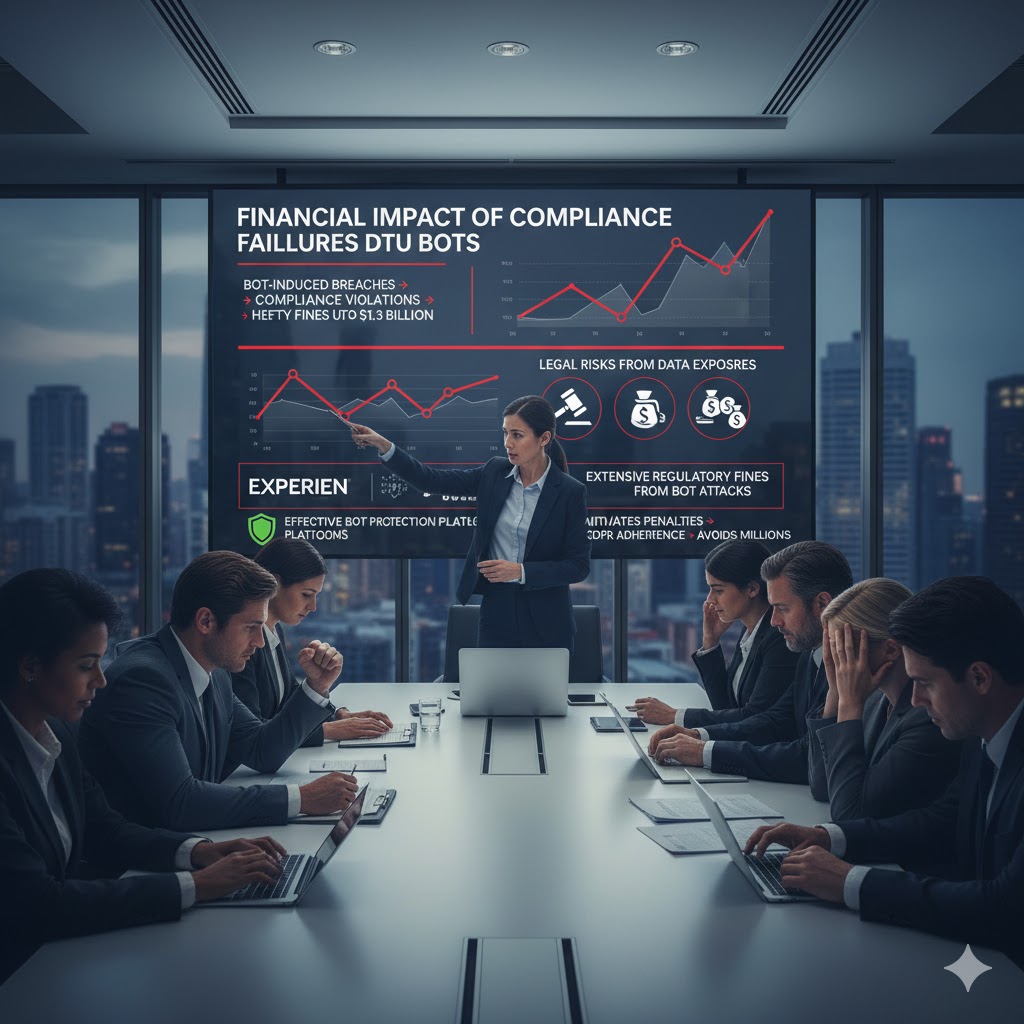
In financial services, bots exacerbate fraud, raising liability and operational expenses. Reports from Experian note extensive regulatory fines from bot attacks. Effective bot protection platforms mitigate these by ensuring adherence to standards like GDPR, avoiding millions in penalties.
Industry Playbook Section
Apply economic insights from anti-bot AI solutions to sector-specific strategies, referencing CrossClassify's tools for tailored implementations.
Freight Industry: Cost-Effective Supply Chain Security
Freight faces bots disrupting logistics, inflating operational costs. AI powered bot detection for APIs saves on inventory manipulation, with long-term ROI through scalable cloud solutions compliant with C-TPAT. Check out CrossClassify's Freight and Transportation Solutions for specialized insights.
iGaming: Balancing Budgets Against Cheating Losses
Gaming platforms lose revenue to bot cheating; bot protection platforms yield savings by preserving fair play, reducing refund demands while budgeting for commercial tools over open-source for reliability. Visit CrossClassify's iGaming Solutions for targeted strategies.
Fintech: Economic Agility in Rapid Scaling
Fintech startups benefit from advanced cloud bot protection to minimize onboarding fraud costs, achieving quick ROI through adaptive budgeting that scales with growth and avoids regulatory pitfalls. Discover more at CrossClassify's Fintech Quick Access for fintech applications.
Crypto: ROI from Securing Digital Assets
Crypto exchanges battle bots for wallet drains and market manipulation; anti-bot AI solutions provide high ROI by preventing theft and ensuring transaction integrity, with budgeting focused on real-time monitoring to comply with evolving regulations. Explore CrossClassify's Crypto Solutions for crypto-specific defenses.
Conclusion
The economic imperatives of 2025 demand strategic investments in anti-bot AI solutions to counter the escalating costs of bot threats. By calculating attack expenses, analyzing ROI, and budgeting wisely, businesses can transform security from a cost center to a value driver. Comparing tool options and mitigating compliance risks further enhance financial resilience. As bots evolve, embracing these perspectives ensures long-term savings and competitive advantage in a digital economy.
See How Protecting Customers from the Growing Threat of Account Takeover
Ensure Continuous Security with Real-Time Account Monitoring
Explore CrossClassify today
Detect and prevent fraud in real time
Protect your accounts with AI-driven security
Try CrossClassify for FREE—3 months
Share in
Related articles

Frequently asked questions
Bot attack prevention failures lead to direct losses like fraud and indirect ones like infrastructure strain, totaling up to $116 billion annually.
Anti-bot AI solutions can deliver up to 41% ROI through efficiency gains and loss prevention.
Allocate for scalable bot protection platforms, starting with core features and optimizing costs via low-overhead rules.
Effective bot attack protection reduces recurring fraud and support costs, saving thousands annually.
Open-source offers free entry but higher maintenance; commercial anti-bot AI solutions provide better long-term value.
Bot breaches trigger fines up to billions, as seen in financial reporting failures.
Factor frequency, per-incident losses, and recovery for advanced cloud bot protection planning.
Yes, AI powered bot detection for APIs boosts returns by predictive mitigation.
Prioritize software in cybersecurity budgets for bot protection platforms.
Long-term bot attack prevention averts revenue erosion and lowers premiums.
Commercial tools often outperform open-source in ROI for anti-bot AI solutions.
Explore Thales' Bad Bot Report for data on bot costs and savings.
Let's Get Started
Create your free
account today
Discover how to secure your app against fraud using CrossClassify
No credit card required