Last Updated on 25 Apr 2026
The Smart Resume Fraud Detection Engine for Indeed Style Candidate Screening
Share in
Introduction
Resume trust has become a serious recruitment security problem. Candidates search for “should I upload my resume to Indeed,” “is it safe to upload resume on Indeed,” and “how to upload resume to Indeed” because they want to know whether their personal information is safe. At the same time, employers worry whether the resume they receive is genuine, accurate, and connected to a real candidate.
This article discusses Indeed related search behavior and similar candidate screening concerns, not a partnership with Indeed. The key point is that resume upload and resume screening should not be treated as simple document submission. They should be part of a fraud aware trust workflow that protects candidates, employers, and hiring platforms.
CrossClassify supports resume fraud detection by analyzing CV consistency, candidate identity signals, device behavior, submission behavior, and suspicious account patterns. The CrossClassify recruitment solution is relevant because recruitment fraud often starts with documents, identities, and behavior that look normal until deeper signals are checked. This makes it useful for platforms that need fake CV detection, AI resume screening, and candidate identity verification.
What Resume Related Indeed Keywords Tell Us
Searches like “should I upload my resume to Indeed,” “is it safe to upload resume on Indeed,” “how to upload resume to Indeed,” and “should I use Indeed resume or my own” show two sides of the trust problem. Candidates want to share enough information to get hired, but they also worry about how their resume will be stored, used, and exposed. Employers want more applications, but they also need confidence that the candidate profile is real.
Resume related search intent is important because it appears at the moment where personal data enters the recruitment platform. A resume can include work history, education, phone number, email, location, certifications, and sometimes sensitive career details. If the platform cannot detect suspicious uploads or fake candidate profiles, it may expose employers to poor hiring decisions and candidates to data misuse.
CrossClassify helps turn resume submission into a smarter screening checkpoint. The recruitment fraud protection page supports workflows where candidate documents, identity signals, and behavior can be assessed together. This allows platforms to protect both resume safety and resume authenticity.
Why Resume Trust Is Now a Security Problem
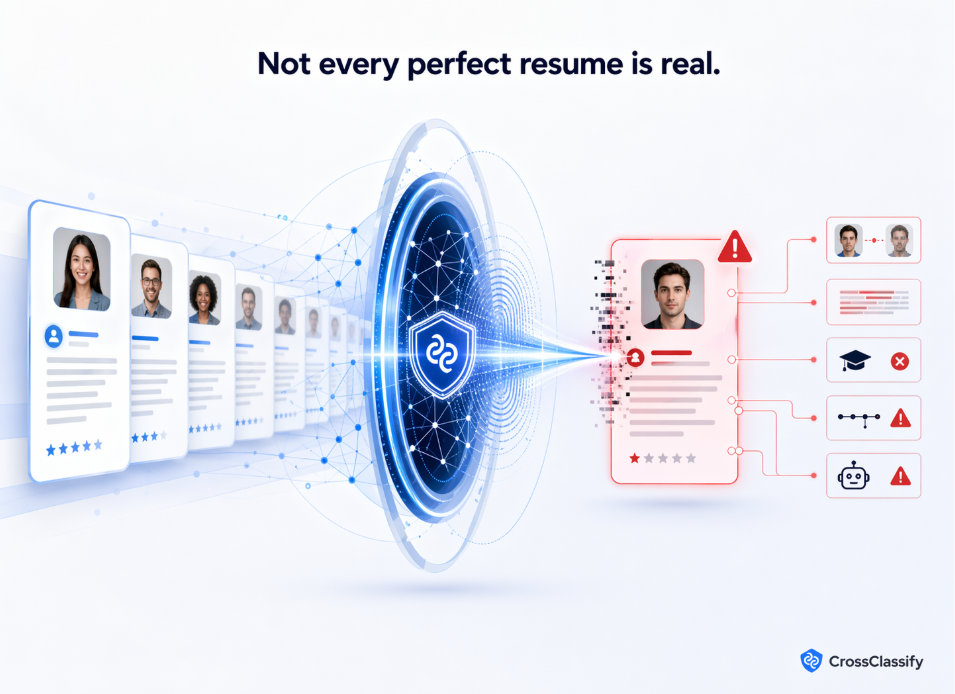
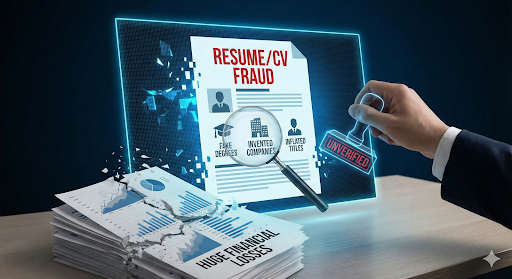
Resumes are no longer only hiring documents. They can include fabricated employment history, fake education claims, exaggerated skills, AI generated content, stolen identity details, and misleading career stories. When these documents enter hiring systems at scale, resume fraud becomes a platform trust problem.
Employers may waste time interviewing candidates who are not genuine or who misrepresent their experience. Recruitment platforms may see repeated fake accounts submitting similar resumes across many jobs. Candidates may also face risk if scammers use stolen resume details to create fake applicant profiles.
CrossClassify helps detect these risks by analyzing document signals and account behavior together. The device fingerprinting solution can reveal repeated fake applicants who submit different resumes from the same device. When combined with recruitment specific risk scoring, this supports stronger fake CV detection and candidate identity verification.
Common Resume Fraud Patterns
Fabricated employment history can include fake job titles, invented employers, false responsibilities, or exaggerated seniority. These claims may be hard to detect if a recruiter only reads the resume quickly. At scale, fake employment patterns may repeat across many applications and become visible through consistency checks and link analysis.
CrossClassify can help flag suspicious employment timelines, repeated company claims, and unusual patterns across candidate profiles. The CrossClassify recruitment solution supports screening workflows that look beyond keyword matching. This helps hiring teams focus on whether the resume is credible, not only whether it matches a job description.
Fake education claims
Fake education claims can include invented degrees, incorrect graduation dates, unverifiable institutions, or misleading certifications. These claims can influence screening decisions, especially in regulated or skill sensitive roles. If the platform does not check consistency, fake education details may pass through early hiring stages.
CrossClassify can help detect education history inconsistencies and connect them with other candidate risk signals. The account opening protection solution can also help when suspicious candidate accounts are created using questionable identity information. This strengthens candidate identity verification before employers spend time on risky profiles.
Skill exaggeration
Skill exaggeration happens when candidates claim tools, technologies, languages, or domain experience that do not match the rest of the resume. Some exaggeration is common in hiring, but extreme mismatch can create hiring risk. The problem becomes larger when platforms process high volumes of applications and recruiters cannot manually inspect every claim in depth.
CrossClassify can assess whether skills appear reasonable compared with employment history, education, experience level, and role context. The recruitment fraud protection solution helps platforms treat resume credibility as part of candidate trust. This supports better AI resume screening and reduces time spent on misleading profiles.
AI generated CVs
AI generated CVs can be useful when candidates need writing help, but they can also create misleading, generic, or fabricated profiles. A resume may sound polished while hiding weak evidence, inconsistent dates, or vague achievements. If many fake accounts reuse similar AI generated patterns, recruitment platforms need a way to detect repeated structure and suspicious behavior.
CrossClassify can analyze writing patterns, repeated templates, submission behavior, and account relationships. The behavioral biometrics solution can support this by detecting unnatural submission patterns and scripted interactions. This helps platforms distinguish normal resume improvement from suspicious resume fraud activity.
Repeated resume templates across fake accounts
Repeated resume templates across fake accounts can indicate organized candidate fraud. Fraudsters may reuse similar CV structure, phrasing, employment claims, or contact details while changing names and emails. A single resume may not look suspicious, but repeated patterns across many accounts can reveal a larger abuse network.
CrossClassify can connect repeated templates with device reuse, account behavior, IP patterns, and candidate profile similarities. The device fingerprinting solution helps identify when multiple candidate accounts are controlled from the same device environment. This gives recruitment platforms a stronger way to detect fake candidate networks.
Candidate identity mismatch
Candidate identity mismatch occurs when the resume, account details, device signals, and application behavior do not align. For example, a profile may claim one location, use a different access region, submit repeated resumes, or show behavior similar to known fake applicants. This does not automatically prove fraud, but it should increase review priority.
CrossClassify can combine identity and behavior signals into a candidate risk score. The account takeover protection solution can also help if a real candidate account is compromised and used for suspicious applications. This gives platforms a broader identity aware screening layer.
Turn CV Red Flags Into a
Documented Risk Score
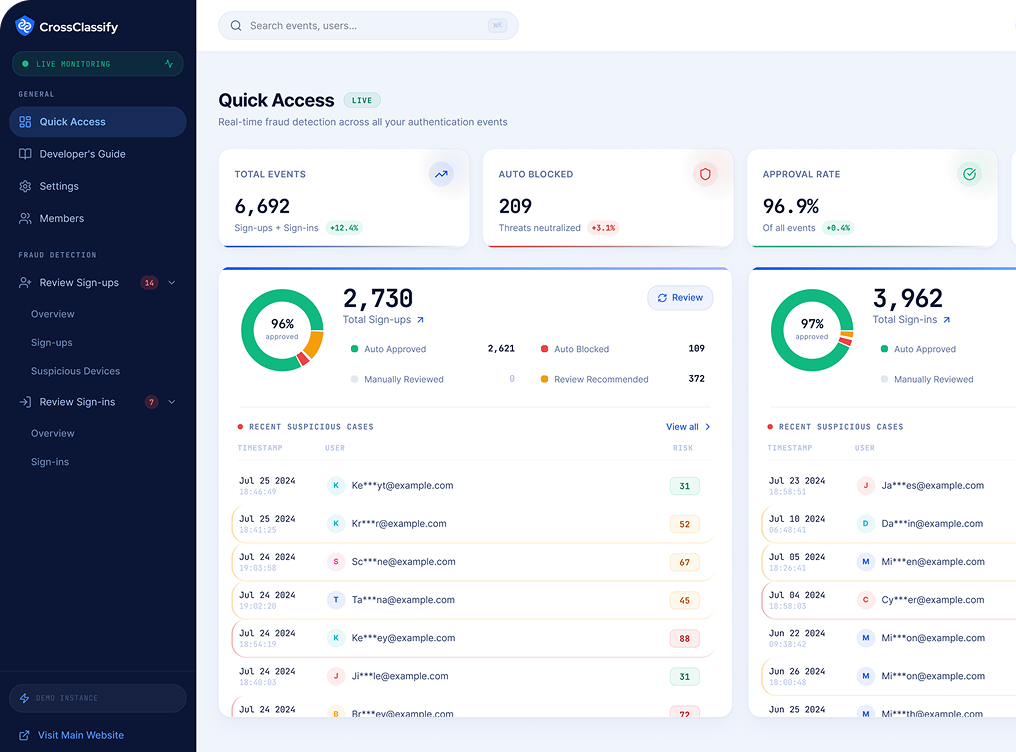
A checklist tells you what to look for. CV Risk Checker scans any resume in seconds and shows you exactly where the fraud signals are — before you book the interview.
How CrossClassify Screens CV Fraud at Scale
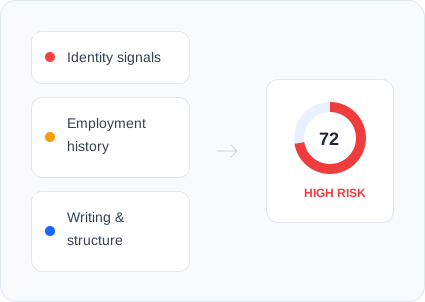
CrossClassify supports CV fraud screening by checking company legitimacy, date consistency, skill credibility, education history, contact information, and writing patterns linked to AI generated or manipulated content. These checks help identify resumes that may need closer review rather than automatically rejecting candidates. The goal is to help recruiters focus attention where risk is higher.
At scale, resume fraud detection software must connect document signals with platform signals. A suspicious CV becomes more meaningful if it is linked to a new account, risky device, unusual submission behavior, repeated profile template, or shared contact detail. This makes the screening process more accurate than a pure resume parser.
The CrossClassify recruitment solution supports this fraud aware hiring workflow. It helps platforms evaluate not only what the resume says, but also how the candidate account behaves. This is essential for AI resume screening, fake CV detection, and candidate identity verification.
Suggested Resume Trust Signals
Employment timeline consistency checks whether dates, roles, and career progression make sense together. Overlapping roles, unexplained gaps, unrealistic promotions, and inconsistent seniority can indicate a resume that needs review. These signals should be used to prioritize verification, not to unfairly reject candidates automatically.
CrossClassify can score timeline consistency alongside other candidate trust indicators. The recruitment fraud protection solution helps platforms use resume signals as part of a wider risk model. This improves screening quality while keeping the hiring process fair and explainable.
Skill and experience reasonability
Skill and experience reasonability checks whether the claimed skills match the candidate’s roles, years of experience, education, and project history. A junior profile claiming deep expertise across many unrelated tools may need additional validation. This signal is especially useful when AI generated resumes produce broad but shallow skill claims.
CrossClassify can identify profiles where skill claims do not align with the rest of the candidate record. The behavioral biometrics solution can add context by detecting unusual behavior during submission. This helps platforms identify suspicious candidate profiles without relying only on keyword filters.
Education and company validation
Education and company validation checks whether schools, employers, dates, and claims are credible. This does not always require full external verification at the first step, but obvious inconsistencies should raise risk. Platforms can use this signal to route candidates into additional review when needed.
CrossClassify can help compare resume claims with consistency patterns and risk indicators. The account opening protection solution is useful when suspicious candidate accounts are created with questionable identity signals. This supports safer candidate onboarding and more reliable screening.
Device fingerprinting for repeated fake applicants
Device fingerprinting can reveal repeated fake applicants who create multiple profiles with different resumes. This matters because candidate fraud is often organized across many accounts, not limited to one document. If many profiles come from the same suspicious device, the platform should treat them with higher review priority.
CrossClassify helps detect these hidden links through device intelligence. The device fingerprinting solution can identify repeated fake applicants even when visible profile details change. This strengthens fake candidate detection at scale.
Behavioral analysis during submission
Behavioral analysis during submission checks how a candidate interacts with the platform while uploading or editing a resume. Scripted timing, repeated copy and paste behavior, abnormal navigation, and bulk submissions can indicate automation or abuse. These signals help identify suspicious candidates before their applications reach recruiters.
CrossClassify can monitor candidate behavior and connect it with resume risk signals. The bot and abuse protection solution can help when resume submissions are automated or generated at scale. This prevents low trust applications from flooding hiring teams.
Risk score for each candidate profile
A risk score for each candidate profile helps recruiters and platforms prioritize review. The score can combine resume consistency, identity signals, device history, behavioral patterns, and linked account relationships. This approach is better than treating all resumes as equally trustworthy or equally suspicious.
CrossClassify can generate risk based insights that support review, verification, and safer hiring decisions. The CrossClassify recruitment solution helps platforms apply this scoring inside recruitment workflows. This makes resume screening more fraud aware and more useful for real hiring outcomes.
Conclusion
Resume upload and resume screening should become a fraud aware trust workflow, not just a document submission step. Candidates need confidence that sharing a resume is safe, and employers need confidence that the resume belongs to a real and credible applicant. Recruitment platforms that ignore resume fraud risk may waste recruiter time and expose users to identity abuse.
CrossClassify helps platforms detect fake CVs, suspicious candidate profiles, repeated fake applicants, AI generated resume patterns, and identity mismatches. The recruitment fraud protection solution gives platforms a dedicated way to improve candidate screening trust. For searches like “is it safe to upload resume on Indeed” and “fake CV detection,” the answer should be a stronger trust layer behind the hiring process.
See How CrossClassify Protects Recruitment Platforms
Detect fake recruiters, fraudulent resumes, and job scams instantly
Check a CV for Fraud Signals in 60 Seconds
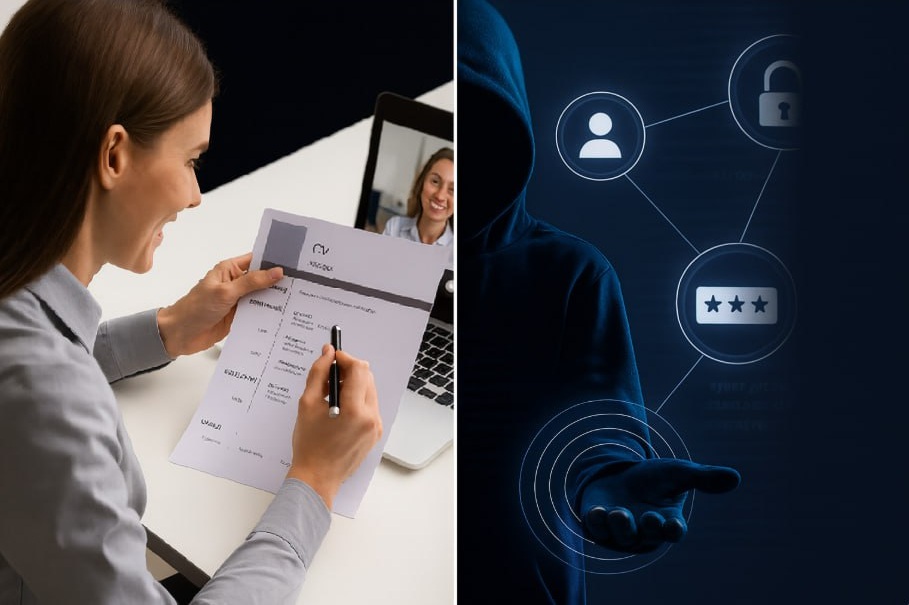
Upload any resume and get an instant risk score, flagged signals, and a recruiter-ready action checklist.
Try the CV Risk CheckerNo credit card required
Share in
Related articles

Frequently asked questions
Let's Get Started
Create your free
account today
Discover how to secure your app against fraud using CrossClassify
No credit card required