Last Updated on 05 Aug 2026
Assessment Continuity Signals: Detecting Proxy Test Takers and Shared Candidate Accounts Without Judging Ability
Share in

Introduction
Remote assessments help employers evaluate candidates across locations without requiring travel or physical testing centers. They can support technical exercises, language evaluations, job simulations, and structured screening. Their usefulness depends on confidence that the person completing the assessment is the same person who created the account and participated in earlier stages.
Assessment fraud can involve account sharing, proxy test takers, undisclosed assistance, automation, or identity substitution. A candidate account may behave normally during registration and application, then appear from a different device or operating pattern when the assessment begins. The result may look credible even when continuity has been broken.
Recruitment platforms must handle this risk carefully. Device or behavior changes can have legitimate explanations, and fraud signals should never become a hidden measure of intelligence, competence, or employability. The correct purpose is to identify whether account and session continuity deserves review, not to decide how well the candidate performed.
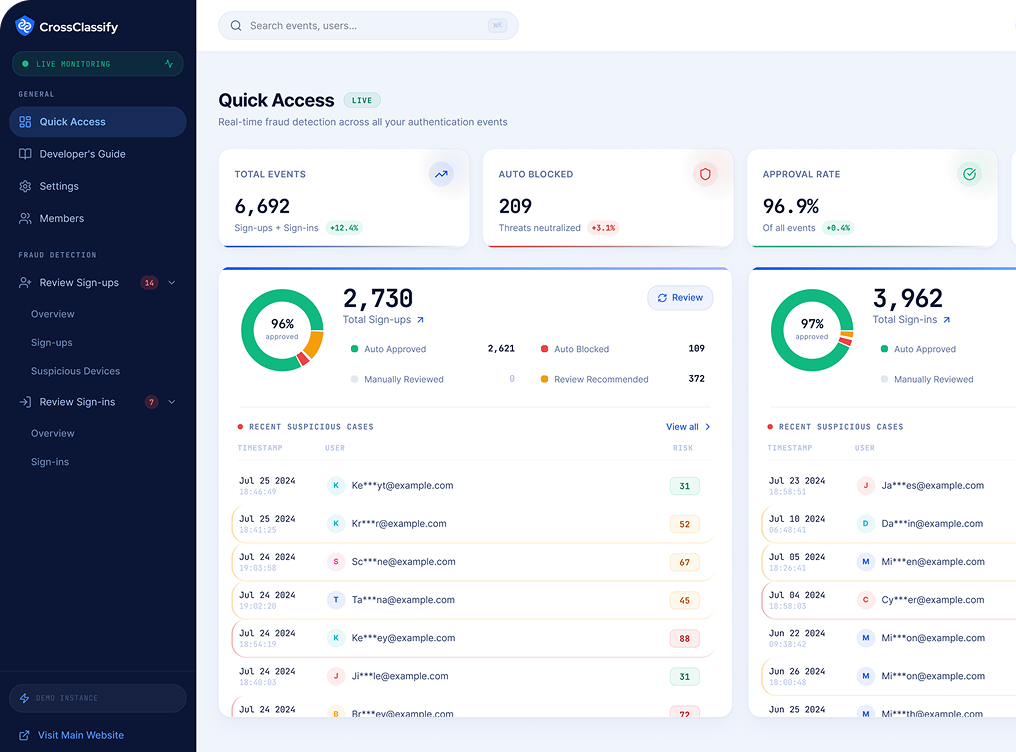
CrossClassify helps platforms connect device, behavior, network, account, and relationship evidence around sensitive events. Its behavioral biometrics and device intelligence capabilities support continuous monitoring while the recruitment platform controls assessment policy and human review.
Assessment integrity is different from performance scoring
Assessment performance asks whether the candidate completed tasks correctly or demonstrated relevant skills. Assessment integrity asks whether the session was conducted under the expected conditions and controlled by the expected account holder. These questions require different data and should remain operationally separate.
A candidate can perform well in a completely trustworthy session. Another candidate may perform poorly while still following every assessment rule. Fraud risk should not modify the professional interpretation of answers unless the platform has completed an appropriate integrity review. Blending the two dimensions creates an unexplained hiring score.
Integrity signals should describe observable activity. Examples include a device change immediately before the assessment, behavior that differs sharply from previous sessions, several candidate accounts using the same environment, or automated interaction with the assessment interface. These observations support review but do not establish why the activity changed.
CrossClassify focuses on session and account risk rather than candidate capability. The recruitment platform can keep integrity cases within trust, security, or assessment operations while recruiters and employers evaluate the actual work. This separation protects fairness and makes the purpose of each signal clearer.
Where continuity can break
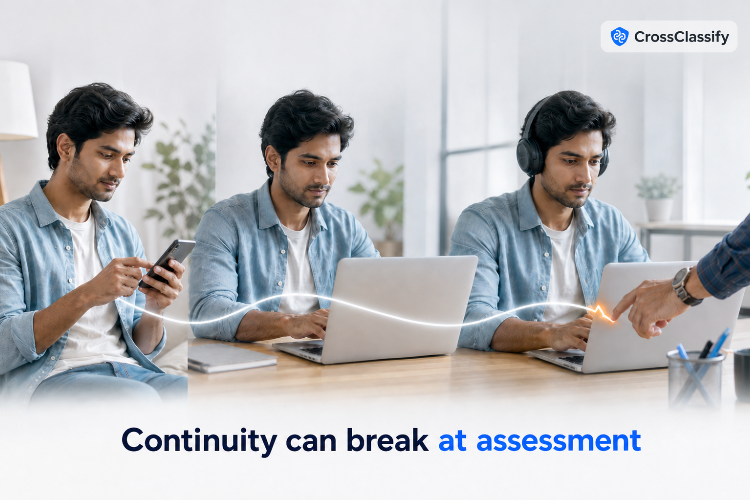
Continuity can break between account creation, application submission, scheduling, assessment access, and later interviews. A candidate may begin the journey on a familiar device and use a different environment during the assessment. Contact information or account recovery details may also change shortly before the event.
A device change is not automatically suspicious. Candidates may use a desktop computer for assessments, replace a damaged device, or access better internet in another location. The platform needs to understand whether the change fits the surrounding activity and whether it appears connected with other candidate accounts.
Behavior can also change at the assessment boundary. Earlier sessions may show natural navigation and typing variation, while the assessment session suddenly follows a different rhythm. This may indicate another person, an automated tool, or a different interaction environment. It may also reflect the pressure and structure of the test itself.
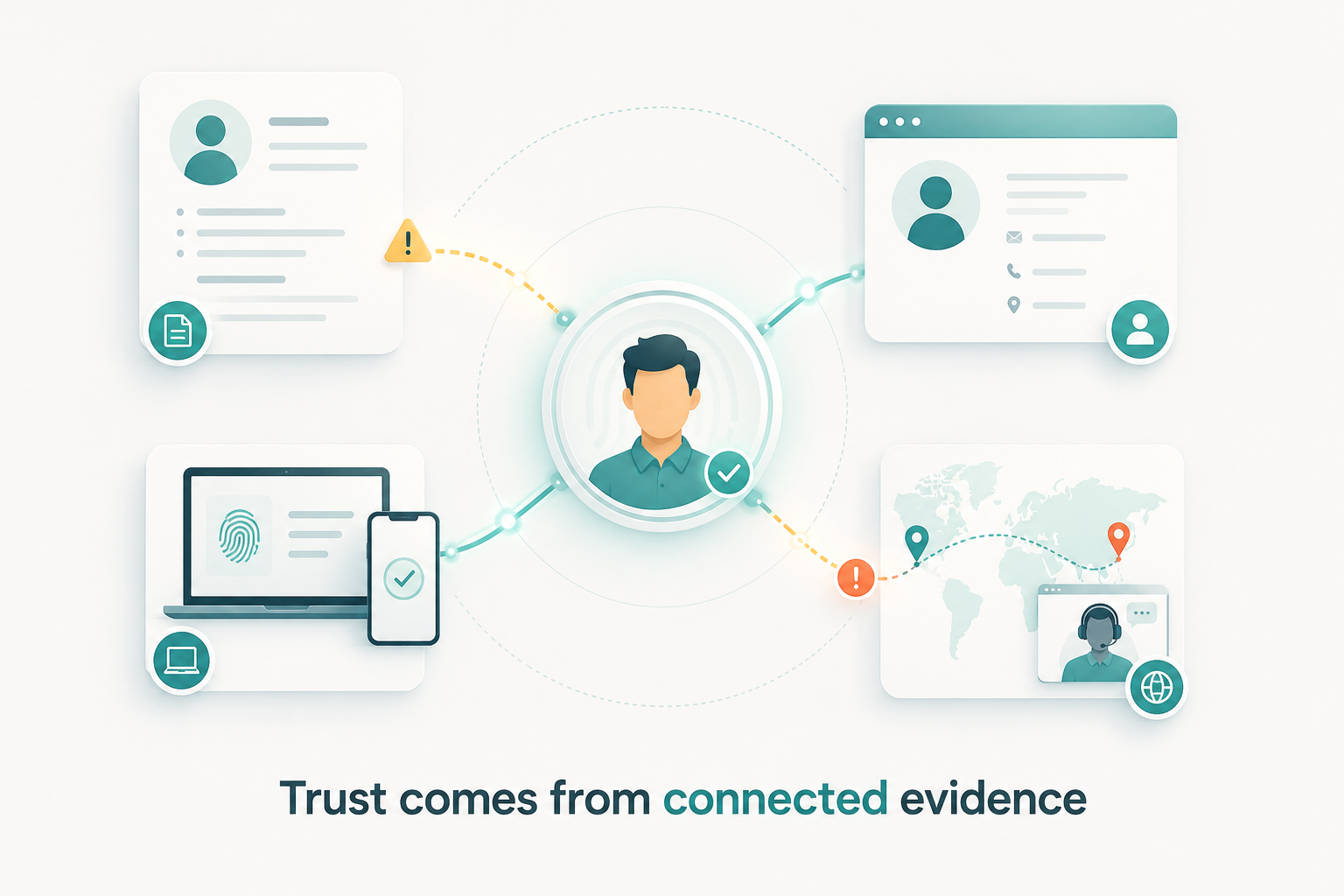
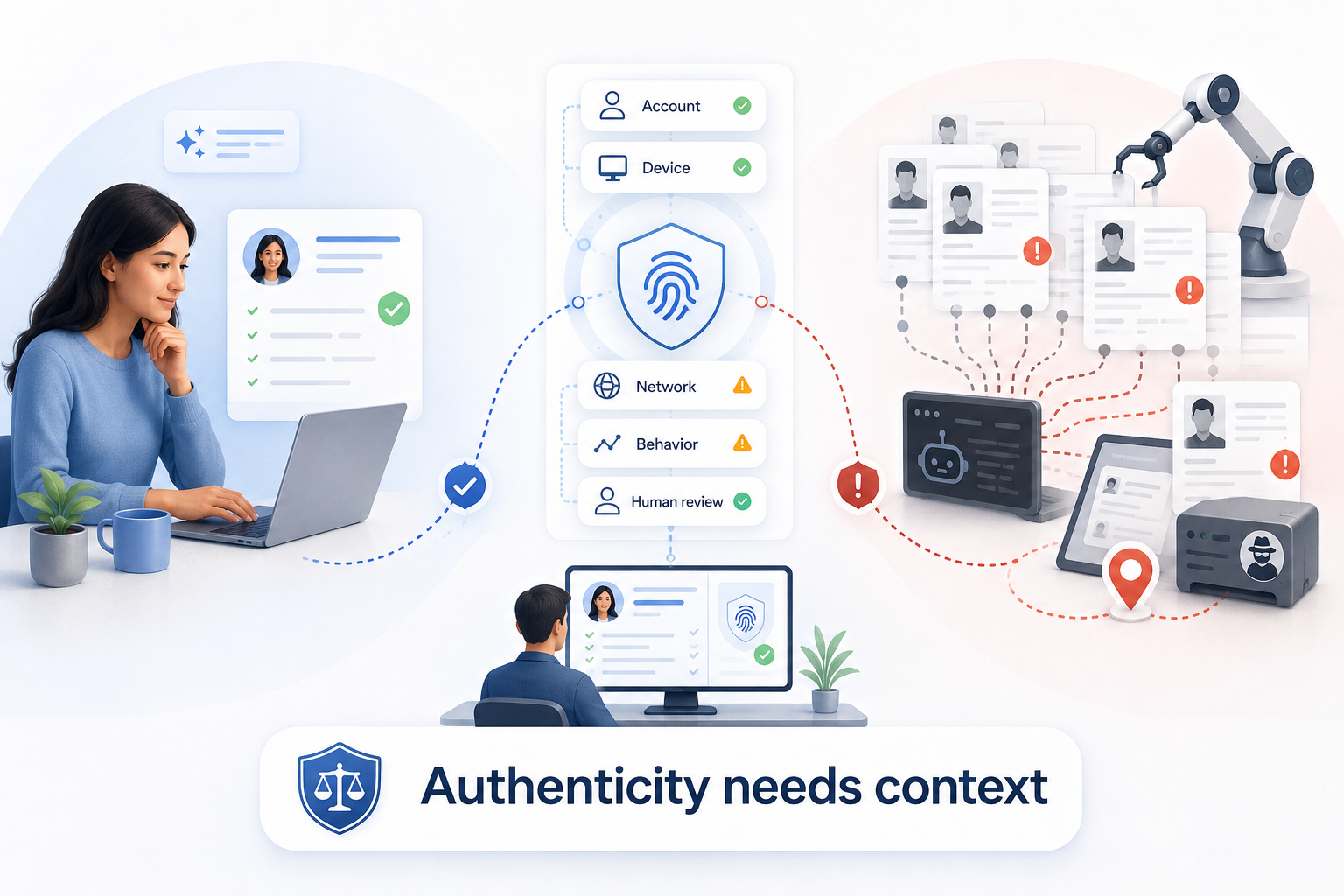
The strongest evidence comes from several independent signals. Device novelty, network change, behavior discontinuity, related accounts, and unusual account edits create more meaningful context together. Reviewers should see the sequence so they can distinguish a plausible change from a repeated identity pattern.
Proxy test takers and shared accounts
A proxy test taker completes an assessment on behalf of another person. The arrangement may involve credential sharing, remote access, account control transfer, or coordinated assistance. The candidate profile and assessment result then represent different people, which undermines employer trust in the recruitment process.
Shared candidate accounts can create similar concerns. More than one person may control the profile, update information, communicate with recruiters, or complete different stages. Account sharing may also occur for innocent reasons, such as assistance from a family member during registration. The sensitive question is whether another person controls an assessment or identity dependent event.
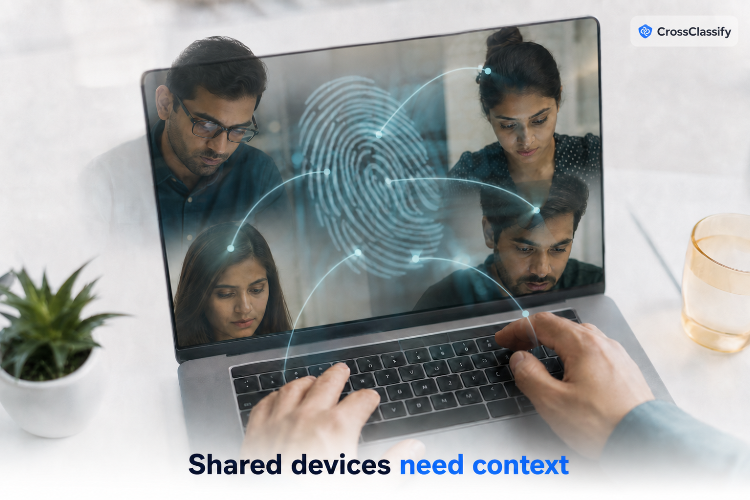
The platform can evaluate changes in device, behavior, network, and account access around the assessment. A sudden shift that also appears across several candidate accounts may deserve review. The same device completing assessments for multiple unrelated identities creates a stronger signal than one isolated device change.
CrossClassify’s device fingerprinting solution can help connect sessions and candidate accounts, while behavioral analysis adds continuity evidence. Formal identity confirmation and assessment decisions remain with the recruitment platform and its selected verification processes.
Behavioral biometrics during assessments
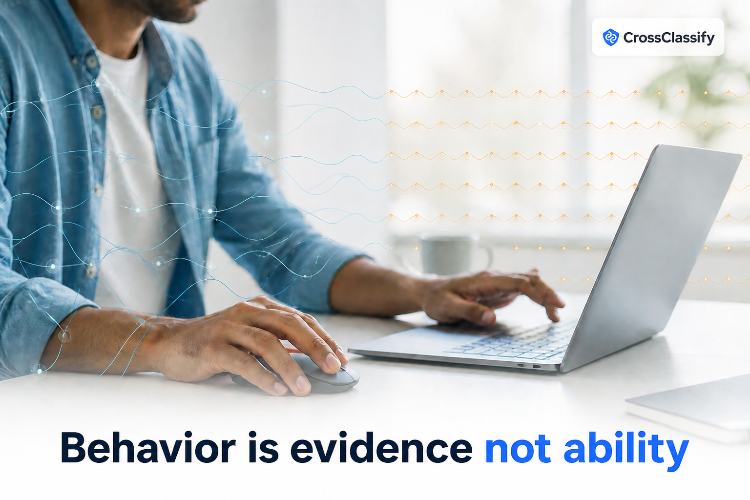
Behavioral biometrics can examine how users type, move a pointer, scroll, navigate, and interact with the assessment interface. The objective is not to interpret confidence, intelligence, or personality. It is to understand whether the current session resembles earlier account activity or displays mechanical patterns associated with automation.
Assessment structure affects behavior. Timed questions, coding environments, and unfamiliar interfaces can cause a genuine candidate to interact differently from ordinary profile pages. The platform should establish separate expectations for different workflow types rather than comparing every action with one universal baseline.
A meaningful concern may involve a major behavior shift combined with a new device, unrelated network, or account changes. Repeatedly identical field timing across several candidate sessions may also indicate automation or coordinated control. One unusual movement or typing pattern should not determine the result.
CrossClassify’s behavioral biometrics solution combines interaction patterns with device and session context. Platforms can use this evidence to request review or verification without allowing behavioral data to influence the score awarded for candidate performance.
Device continuity at sensitive events
Device context becomes more important when the action has higher impact. Browsing a job from a new device may require no response. Beginning a technical assessment, changing identity information, or recovering an account from a new environment may justify additional monitoring.
A familiar device can support continuity, but it does not prove who is present. Devices can be shared, remotely controlled, or accessed by another person. A new device can also be entirely legitimate. The platform should treat device information as one part of a wider evidence set.
Persistent fingerprints can help detect when visible browser details are reset or network addresses change. They can also reveal whether the same environment appears across several candidate assessments. The relationship becomes more meaningful when accounts have no plausible connection and behavior follows similar patterns.
CrossClassify combines device history with geo, behavior, network, and link evidence. The recruitment platform can use this context to determine whether the assessment should continue, receive additional verification, or enter a review queue. The candidate’s technical or professional score remains separate.
Automation inside assessment workflows
Automation may interact directly with an assessment interface, retrieve questions, generate answers, or submit responses. Some tools operate through browser scripts, while others assist a human user in real time. The platform may see normal looking output even when the interaction pattern is not fully human.
Mechanical navigation, repeated response timing, unusual request velocity, and device inconsistencies can reveal automation. The system may move through questions in identical intervals or access interface elements that normal users rarely trigger. These signals become stronger when similar sessions appear across accounts.
Not every fast or consistent candidate is using automation. Experienced users can complete familiar tasks quickly, and some assessments have structured timing. The platform should compare several signals and consider the type of assessment before taking action. Content correctness should not be used as proof that assistance occurred.
CrossClassify’s bot attack protection solution can help detect scripted sessions through behavior, device, velocity, and link analysis. The recruitment platform defines which forms of assistance are permitted and how suspected violations are reviewed.
Limits of visual monitoring and automated proctoring
Visual monitoring can provide useful evidence during remote assessments, but it has limitations. Poor lighting, network delay, camera quality, background movement, and accessibility needs can create unusual observations. Automated visual alerts should not become conclusive evidence without human review.
Strict monitoring can also create candidate discomfort and exclusion. Some candidates lack private rooms, reliable cameras, or stable connections. Others may use assistive devices or require accommodations. A universal visual control may introduce more friction than value for lower risk assessments.
A layered model can reduce dependence on one intrusive method. Account history, device continuity, behavioral evidence, network context, and event sensitivity can determine when stronger identity checks are appropriate. High impact assessments may justify additional verification, while lower risk events can use passive signals.
CrossClassify provides session risk context rather than visual identity confirmation. Recruitment platforms can combine this evidence with their chosen assessment and verification tools. Human reviewers should decide how different evidence sources affect the integrity case.
Designing risk based assessment checkpoints
Assessment protection should begin before the test starts. The platform can evaluate account history, recent device changes, recovery events, and relationships with other profiles when the assessment is scheduled or opened. This creates context before the candidate submits any answers.
Low risk candidates can begin normally. Medium risk may justify account confirmation, a session check, or additional monitoring. Stronger evidence may require manual review or formal identity verification before the assessment proceeds. The response should match the sensitivity of the role and assessment.
Checkpoints can also occur during and after the session. A sudden device binding change, automation pattern, or network shift may create a new risk event. Post assessment analysis can connect the session with other accounts and earlier activity before the result enters the recruiter workflow.
CrossClassify can integrate around login, assessment start, sensitive interaction, submission, and account changes. The CrossClassify how it works page outlines web, mobile, and API integration options. The recruitment platform retains full control of assessment rules.
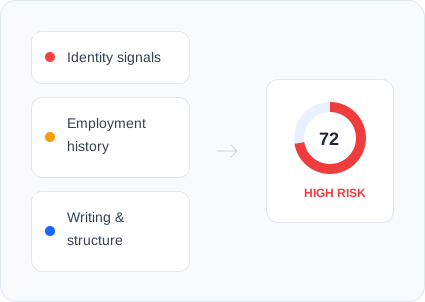
Turn CV Red Flags Into a
Documented Risk Score
A checklist tells you what to look for. CV Risk Checker scans any resume in seconds and shows you exactly where the fraud signals are — before you book the interview.
Building a fair human review process
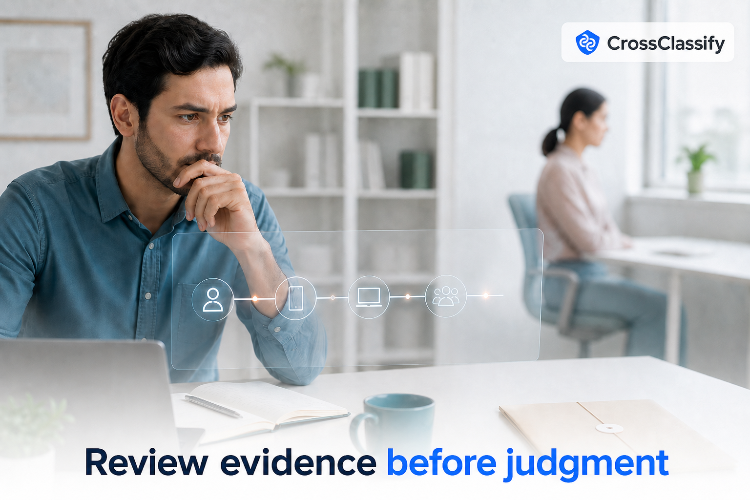
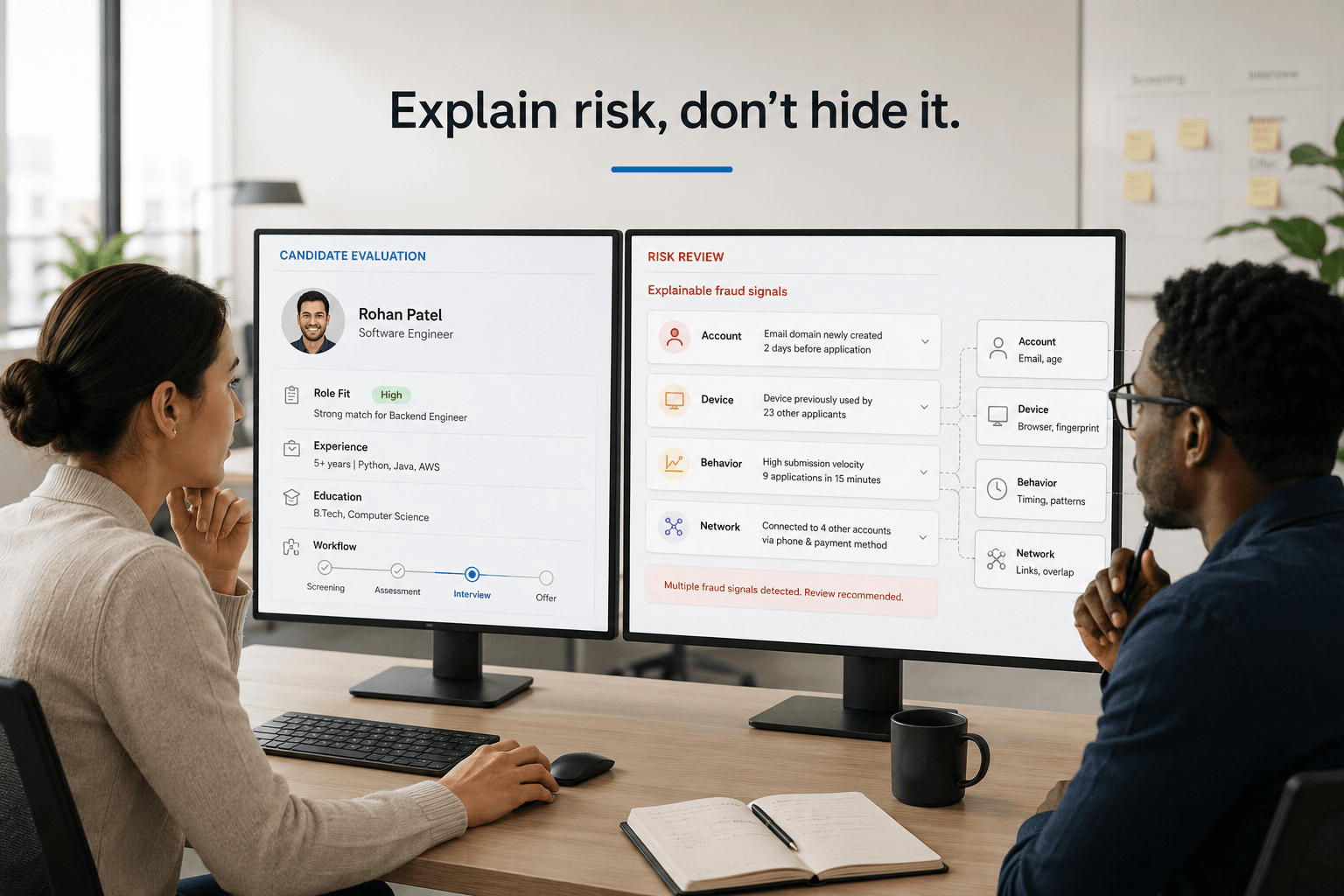
Reviewers need a concise timeline of the candidate journey. The case should show account creation, device history, assessment access, behavior changes, network context, and relationships with other accounts. The evidence should remain separate from the candidate’s assessment score and professional profile.
The review process should recognize legitimate explanations. A candidate may change devices to use required software, move to a better connection, or receive an approved accommodation. Reviewers need a way to document these conditions and clear the event. The system should not repeatedly penalize the same explained behavior.
Candidates may also need an opportunity to respond. When the platform requests verification or delays an assessment result, communication should explain the next step without making an unsupported accusation. A clear resolution path protects trust and reduces support confusion.
CrossClassify supplies explainable risk signals, while human teams evaluate policy and context. The system does not determine who passed an assessment or who should move forward. This keeps integrity protection from becoming a hidden candidate ranking mechanism.
Measuring assessment integrity controls
Assessment controls should be measured through confirmed outcomes, review quality, and candidate friction. A large number of alerts does not necessarily mean the program is effective. It may indicate that ordinary device or behavior changes are being interpreted too aggressively.
Useful measures include confirmed proxy cases, connected assessment clusters, verification completion, review time, false alert rate, candidate abandonment, and repeated device patterns. Teams can compare these outcomes across assessment types because a coding environment may produce different normal behavior from a questionnaire.
The platform should also measure whether integrity review changes employer confidence and reduces repeated incidents. Candidate support cases and accommodation requests can reveal where controls create unnecessary difficulty. These outcomes should influence threshold and workflow changes.
CrossClassify can provide event and risk context, while the recruitment platform records review and assessment outcomes. This feedback helps maintain a balanced model that protects assessment continuity without turning every unusual session into a fraud conclusion.
Conclusion
Remote assessments create access and flexibility, but they require confidence that one candidate journey remains connected across stages. Account sharing, proxy test takers, automation, and identity substitution can weaken that confidence. The risk should be addressed without treating every remote candidate as suspicious.
Assessment integrity is separate from candidate performance. Device, behavior, network, and relationship signals explain whether a session deserves review. They should not modify professional scores or determine whether someone is qualified for a role.
CrossClassify helps recruitment platforms evaluate continuity through device fingerprinting, behavioral biometrics, bot detection, and link analysis. Platforms can use this evidence to apply risk based verification and human review while maintaining a low friction experience for trusted candidates.
A fair assessment integrity program protects employers and candidates at the same time. It reduces opportunities for impersonation while ensuring that technical risk remains separate from hiring judgment and candidate ability.
See How CrossClassify Protects Recruitment Platforms
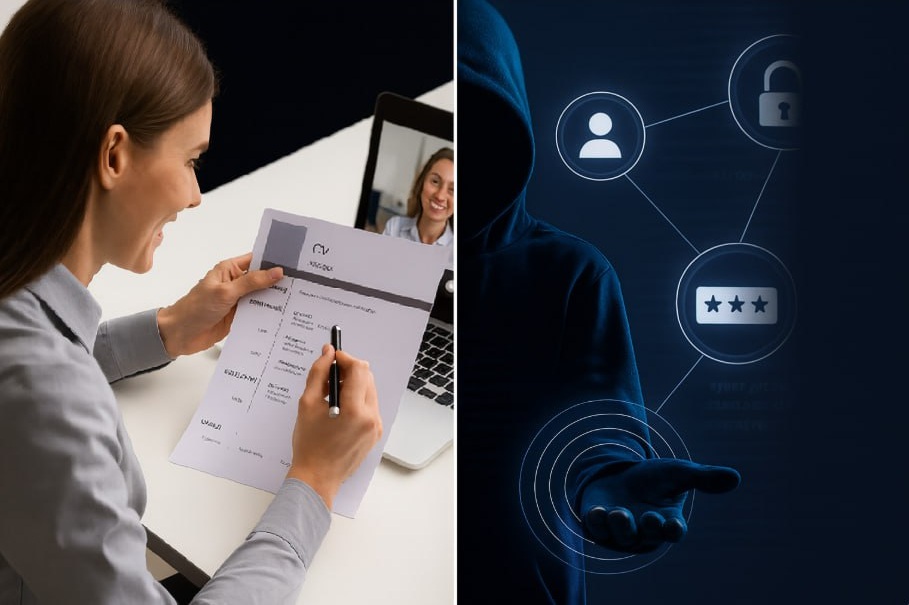
Detect fake recruiters, fraudulent resumes, and job scams instantly
Check a CV for Fraud Signals in 60 Seconds
Upload any resume and get an instant risk score, flagged signals, and a recruiter-ready action checklist.
Try the CV Risk CheckerNo credit card required
Share in
Related articles
Frequently asked questions
Let's Get Started
Create your free
account today
Discover how to secure your app against fraud using CrossClassify
No credit card required