Last Updated on 22 Jul 2026
Remote Candidate Identity Risk: Connecting Resume, Account, Device, and Session Evidence
Share in
Introduction
Remote hiring allows employers to reach candidates across regions and gives professionals access to opportunities that were once limited by location. Applications, screening calls, technical assessments, interviews, and onboarding preparation can all occur through digital channels. This flexibility has become an important part of modern recruitment, especially for specialized roles and distributed teams. It also changes how recruiters and platforms establish continuity between one stage and the next.
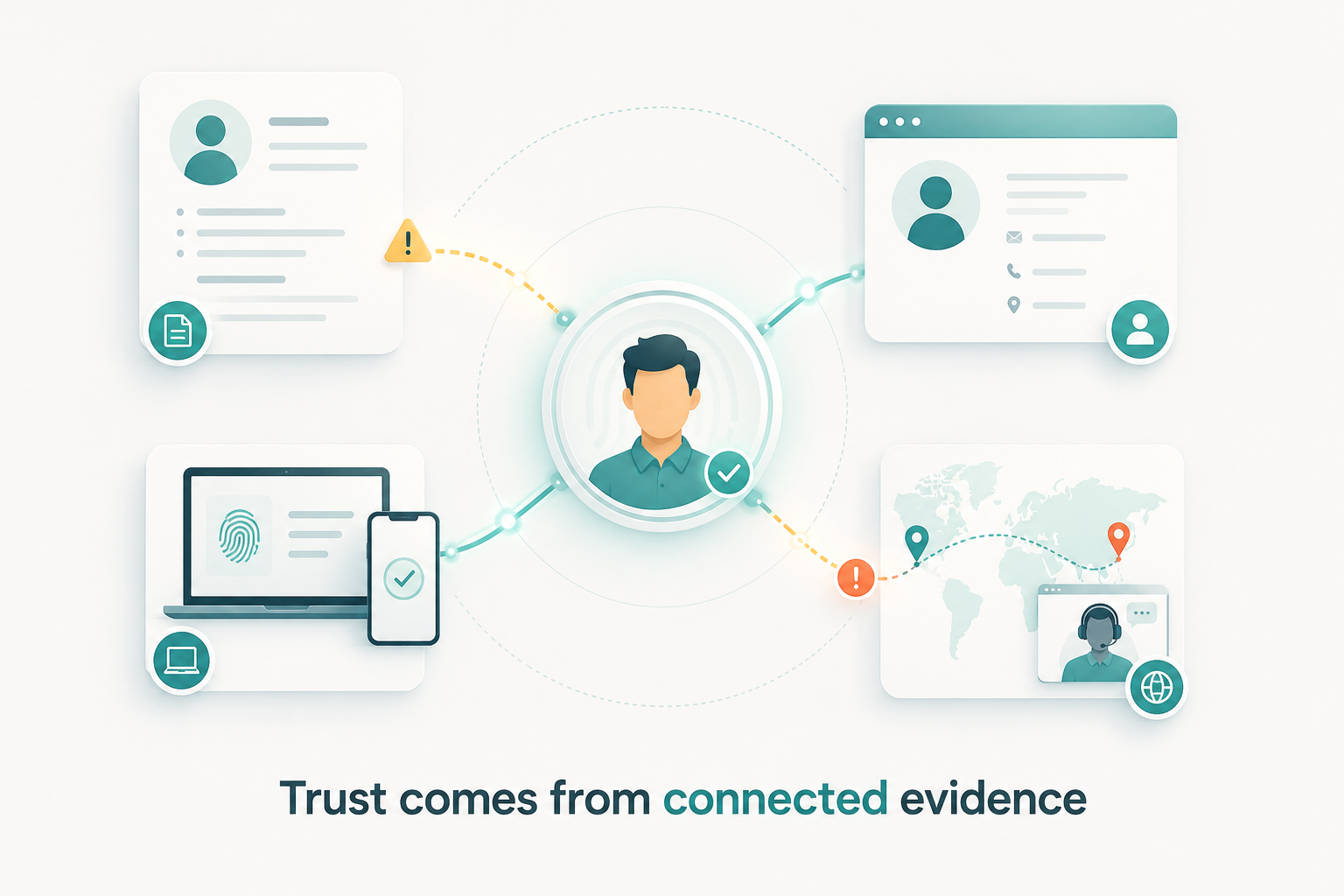
A recruiter may never meet a candidate in person before an offer is accepted. A convincing resume, professional profile, video interview, or technical result can provide useful evidence, but none of them automatically proves that the same person controlled every stage. An account may be created by one individual and used later by another. A candidate may receive undisclosed assistance during an assessment or present identity information that belongs to someone else.
The purpose of remote candidate identity risk detection is not to treat every remote applicant as suspicious. Legitimate candidates change devices, travel, use privacy tools, share networks, and receive reasonable help with applications. The platform needs to identify combinations of evidence that suggest discontinuity, impersonation, or coordinated activity. Dice has highlighted the growing concern around deepfake and fraudulent candidates, particularly in remote hiring where identity and location can be more difficult to establish through physical interaction.
CrossClassify helps recruitment platforms connect identity related evidence across accounts, devices, networks, sessions, and application behavior. These signals support targeted review and risk based verification, but they do not determine candidate suitability or replace formal identity checks. CrossClassify’s recruitment and device intelligence pages describe a layered model that combines device fingerprinting, behavioral analysis, account monitoring, and connected activity.
Candidate identity is a continuous relationship
Candidate identity should not be treated as a single field confirmed during registration. A name, email address, phone number, or uploaded document provides declared information at one moment. The platform must still understand whether account use remains reasonably consistent as the candidate moves through applications, assessments, interviews, account recovery, and profile changes. Trust develops through continuity across these events.
An account may be created by one person and later controlled by another. A resume may contain one set of contact details while the account is accessed from a device or location that does not fit earlier activity. A candidate may complete the first stages through one environment, then appear from unrelated infrastructure during a sensitive assessment or profile ownership change. Each event can have a legitimate explanation, but the combination may deserve review.
Continuous identity risk does not mean constant identity challenges. Most users should be able to continue through ordinary activity without interruption. The platform can passively evaluate changes in device, behavior, network context, and account relationships, then apply additional controls only when the evidence becomes meaningful. This reduces friction while giving teams more context than a one time registration check.
CrossClassify supports this model through its recruitment fraud detection solution. Platforms can use the resulting risk context to identify candidate journeys that require additional verification or internal review. Hiring teams still assess experience and suitability, while platform trust teams investigate whether the digital journey remains coherent.
Where identity inconsistencies appear
Identity inconsistencies can appear between resume details, profile information, contact data, device history, login geography, network context, and session behavior. A candidate may declare one location while repeatedly accessing the platform through another region. Several accounts may share the same device, phone information, or email pattern. An established account may suddenly change contact details shortly before a sensitive hiring event.
The timing of a change matters. A new device that appears during an ordinary browsing session may create little concern. The same device change may be more significant if it occurs immediately before a technical assessment, account recovery request, or profile ownership change. Risk also increases when the device is linked to several other candidate accounts or a history of suspicious activity.
Behavioral continuity can create additional context. A session may show a completely different typing rhythm, navigation pattern, or interaction sequence from earlier activity. This change might suggest that another person or automated tool is controlling the account. It may also reflect a new device, injury, accessibility technology, stress, or a different environment, so behavior should not become conclusive identity proof.
No single mismatch proves impersonation. Travel, remote work, shared equipment, changing contact details, and reasonable assistance can all produce legitimate inconsistencies. Risk becomes stronger when several independent signals appear together and connect the account to a broader pattern. The platform needs to show reviewers how the signals relate rather than presenting one unexplained identity label.
Why document analysis is not enough
Resume and document analysis can identify timeline inconsistencies, duplicated content, unusual contact information, repeated templates, and conflicting claims. These findings are useful because they can direct attention toward information that requires clarification. They may also reveal that apparently unrelated profiles share substantial portions of the same material. Document analysis therefore remains one part of identity risk review.
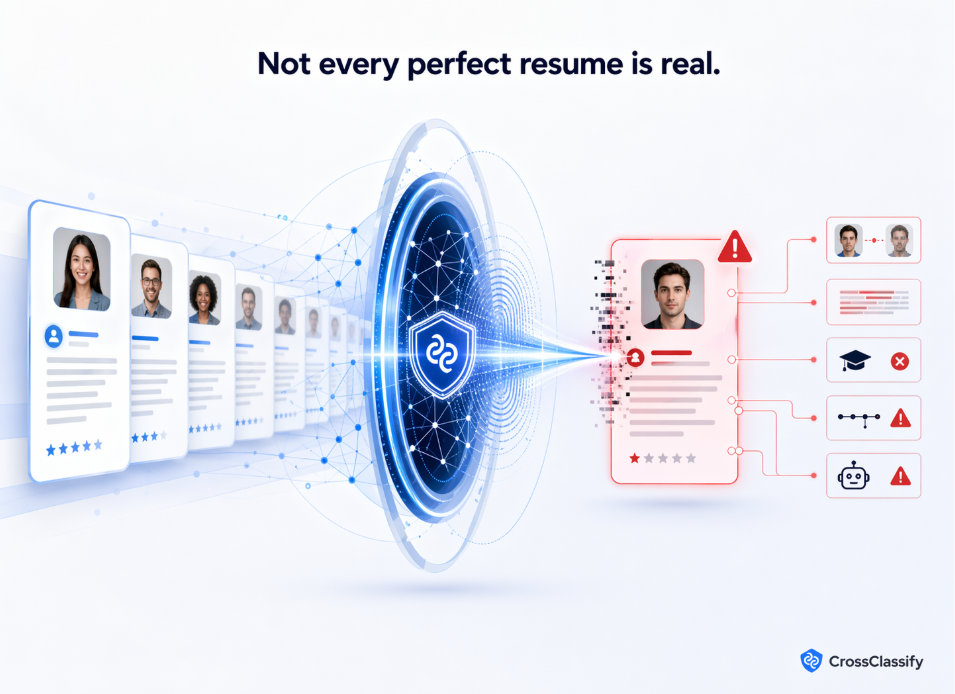
Documents cannot prove who created the account, who controls the current device, or whether the same person completes later stages. A genuine candidate can have a poorly formatted or inconsistent resume, while a sophisticated impersonator can present a polished document with plausible history. The quality of the document says little about the continuity of account control. Platforms need evidence from the activity surrounding the document.
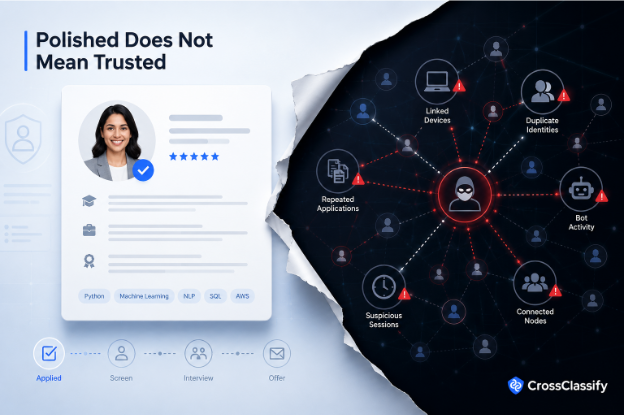
A strong identity risk program connects document findings with device, network, account, and session information. A repeated resume becomes more significant when it appears across accounts that share devices or behavior patterns. A location inconsistency becomes more relevant when it occurs with proxy infrastructure, sudden profile changes, and linked accounts. The combined evidence creates a clearer review question.
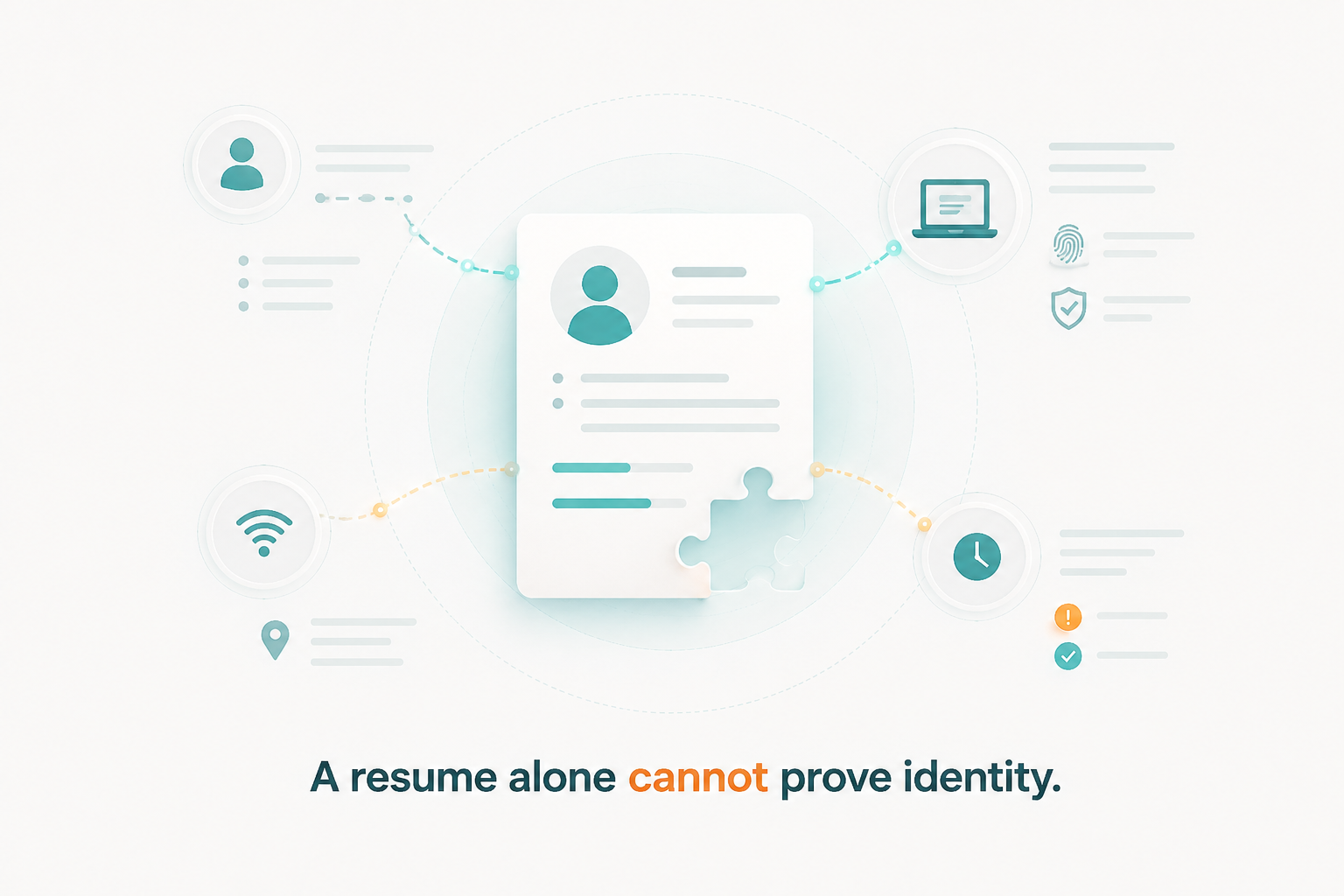
CrossClassify adds device and session evidence through its device fingerprinting solution. Persistent device context can help identify returning environments, configuration changes, device sharing, and spoofing attempts across sessions. This gives review teams more context than a document check alone while allowing the platform to keep formal identity verification as a separate function.
Device continuity across the hiring journey
Device continuity helps platforms understand whether account access remains reasonably consistent. A device fingerprint can connect sessions even when cookies, visible browser details, or network addresses change. This allows the platform to recognize familiar environments and detect when a new or manipulated device appears. The signal becomes especially useful around sensitive actions.
A familiar device does not guarantee legitimacy, because a device can be shared, stolen, or remotely controlled. A new device does not establish fraud, because candidates replace phones, use different computers, or access services while traveling. The important question is whether the device change fits the surrounding activity. Device evidence should always be evaluated with account history, behavior, network context, and the action being performed.
A new device that appears during a routine profile view may require no response. A new device that appears before an assessment, changes contact information, initiates account recovery, and connects to several other candidate accounts deserves more attention. The potential impact of the action affects how much weight the change receives. This supports a risk based workflow rather than universal friction.
CrossClassify creates persistent device context and combines it with behavioral and network evidence. Its device fingerprinting technology is designed to identify returning devices, configuration inconsistencies, spoofing attempts, and connected activity across sessions. Recruitment platforms can use this information to prioritize review without treating a device as proof of a person’s identity.
Network and location continuity
Network and location information can help explain whether candidate activity follows a plausible pattern. Repeated access from one region may establish a normal context, while sudden changes can indicate travel, privacy technology, remote access, or account sharing. Network intelligence can also identify data center infrastructure, proxy use, and rapid changes that would be difficult for a person to produce naturally. These details add context but require careful interpretation.
A location mismatch is not proof of deception. Internet routing can place users in unexpected regions, and remote workers may use company networks that obscure their physical location. Candidates can also use virtual private networks for privacy or security. The platform should therefore avoid comparing one declared location with one IP address and treating the result as a final conclusion.
The pattern becomes more meaningful when several events support the same concern. A claimed location may conflict with repeated access history, the account may switch between distant regions quickly, and the device may be connected to other profiles. The candidate may also change contact information or assessment activity at the same time. These combined conditions create a stronger basis for review.
CrossClassify can bring geographic and network context together with persistent device and behavior signals. Its device fingerprinting solution includes location intelligence that can help identify device and network mismatches, proxy usage, and unusual regional changes. The recruitment platform decides how these conditions influence risk and whether additional verification is appropriate.
Behavioral continuity and candidate impersonation
People interact with applications in individual ways. Typing rhythm, pointer movement, navigation sequence, dwell time, scrolling, and touch behavior can provide passive continuity signals across sessions. These patterns are not fixed identities, but they can help a platform understand whether current activity resembles earlier account use. Large changes may justify closer attention.
A major behavioral shift can suggest that a different person or automated system is controlling the account. For example, an account that previously showed slow, varied interaction may suddenly complete complex flows with highly repeated timing. The same new behavior may appear across several other accounts. That combination can support an impersonation or automation investigation.
Behavior can also change for innocent reasons. A user may switch from a phone to a desktop computer, use assistive technology, recover from an injury, or receive help completing a form. Stress and unfamiliar interfaces can alter normal interaction as well. Behavioral evidence should therefore contribute to review rather than make a final identity decision.
CrossClassify’s behavioral biometrics solution combines interaction patterns with device fingerprinting, velocity, and real time risk scoring. This helps platforms identify unusual session changes while keeping trusted journeys low friction. The platform can use the evidence for verification or review without inferring candidate ability or professional suitability.
Linking repeated identity patterns
Identity fraud becomes easier to investigate when platforms can see relationships across accounts. Individual profiles may look credible and contain different visible information. When placed in a graph, they may reveal shared devices, phone information, email patterns, networks, resume structures, behavior sequences, or account recovery methods. These relationships can expose coordinated activity.
Link analysis organizes these connections into a clearer risk picture. It helps reviewers answer whether an identity concern is isolated or part of a repeated pattern. A single shared device may be harmless, but a device connected to many new accounts with similar resumes and synchronized assessment activity creates a different level of concern. The graph makes that difference easier to understand.
Reviewers also need to know which relationship is strongest. Several accounts may share a public network but use different devices and behavior, which may not be meaningful. Other accounts may share persistent device attributes, interaction patterns, and contact changes, which creates stronger evidence. Explainable relationships prevent analysts from treating every connection as equally important.
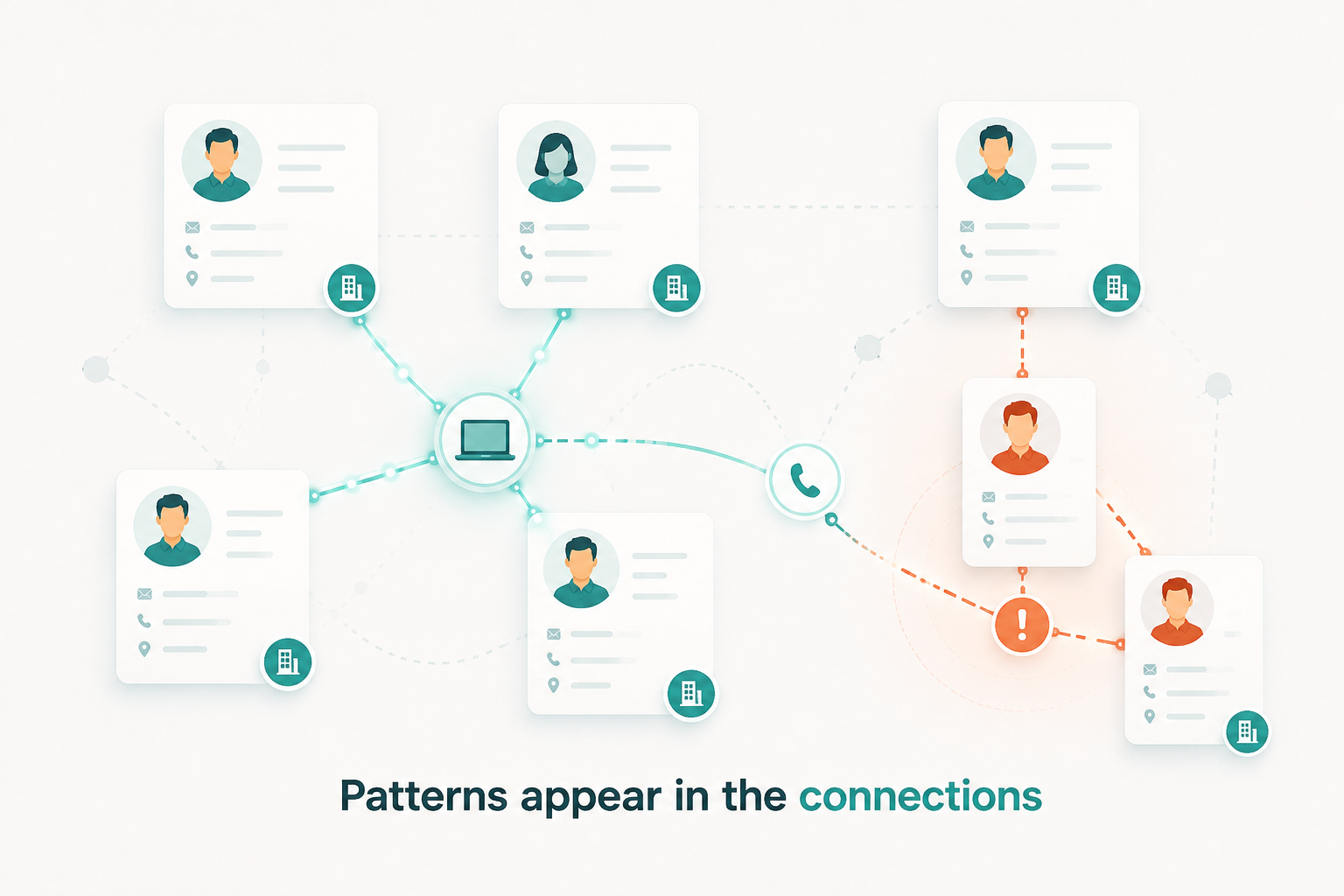
CrossClassify combines link analysis with device, behavior, network, and account intelligence so platform teams can prioritize clusters with stronger evidence. The objective is not to declare every connected profile fraudulent. It is to reveal relationships that would remain hidden inside separate candidate records and support a more informed review process.
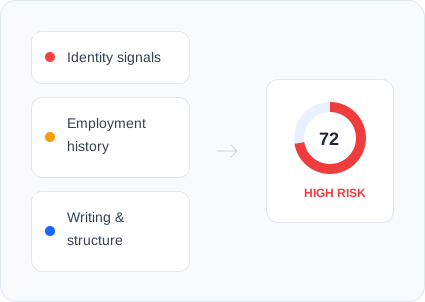
Turn CV Red Flags Into a
Documented Risk Score
A checklist tells you what to look for. CV Risk Checker scans any resume in seconds and shows you exactly where the fraud signals are — before you book the interview.
Remote interviews and deepfake risk
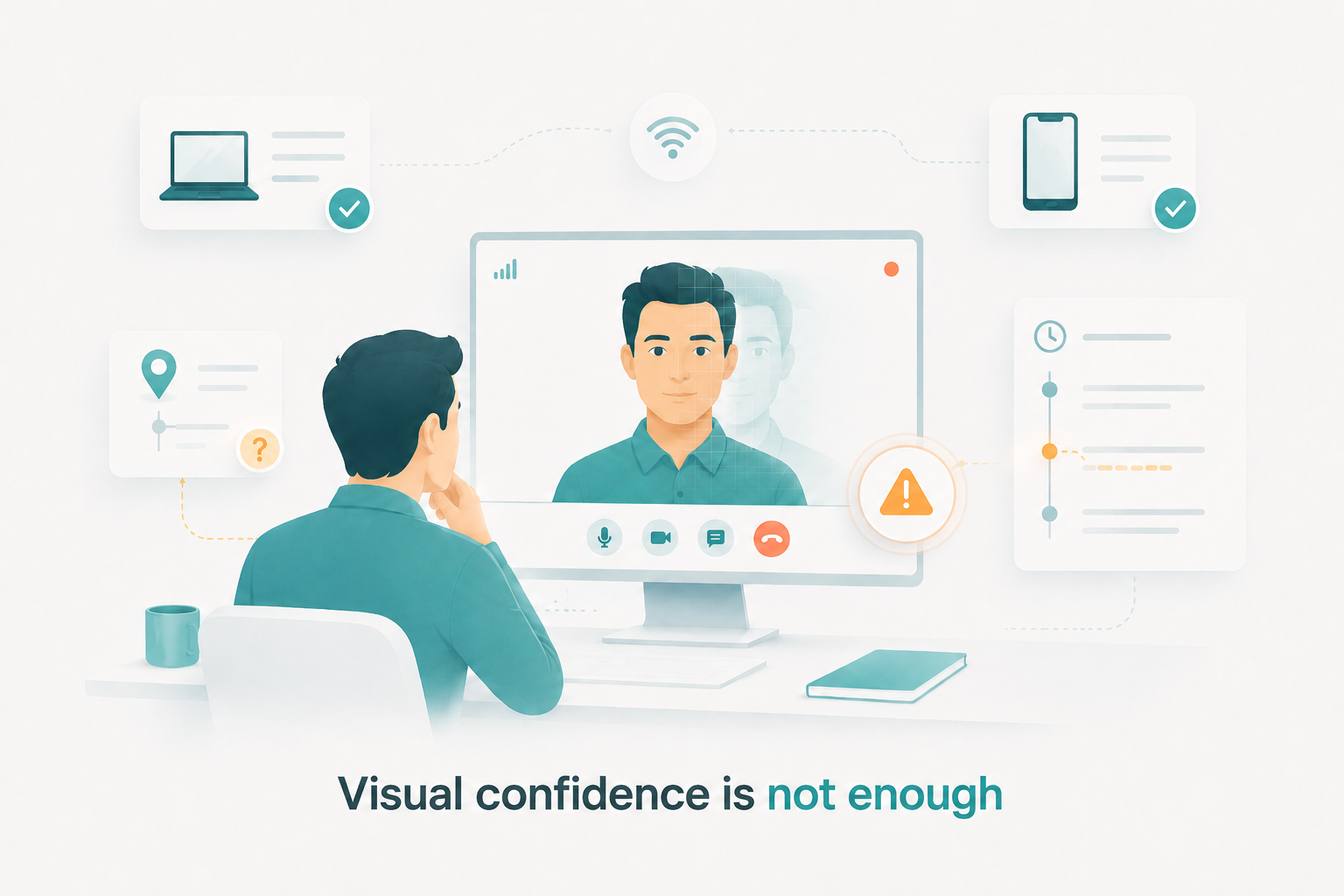
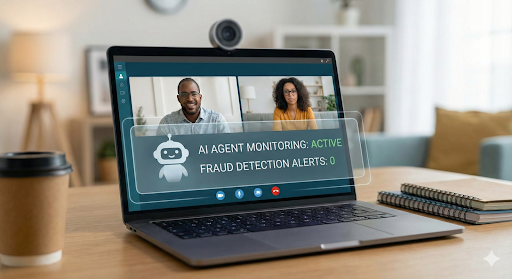
Remote interviews introduce another layer of identity evidence. Video, voice, and real time conversation can help recruiters understand a candidate, but advances in generated media and live assistance have made visual confidence less reliable. An apparently convincing interview may still involve identity substitution, manipulated media, or undisclosed coaching. Recruitment platforms and employers need several forms of evidence rather than one visual judgment.
Deepfake detection tools may help identify anomalies in video or audio, but they should not operate in isolation. Compression, poor lighting, network delay, camera quality, and accessibility technology can create unusual signals. A candidate should not be accused of fraud because one visual model reports uncertainty. Interview evidence becomes stronger when it aligns with account, device, network, and behavioral inconsistencies.
The wider hiring journey can reveal whether an interview belongs to the same account history. The device may change immediately before the call, the network may shift to unrelated infrastructure, or assessment behavior may differ sharply from earlier sessions. Several profiles may share contact information or operating patterns. These connections help teams decide whether formal identity verification is required.
Dice’s guidance on deepfake candidate fraud recommends a holistic approach that combines technology, stronger verification, interviewer training, location context, collaboration, and controlled access. That supports the broader principle that no single detector should carry the entire decision. Recruitment platforms can use CrossClassify as one risk context layer while specialist identity and media verification tools address their respective functions.
Using step up verification carefully
When identity risk increases, a platform may request additional verification. The response should match the sensitivity of the event and the quality of the evidence. A low impact profile update may require continued monitoring, while account recovery, assessment access, identity changes, or access to sensitive data may justify a stronger check. Risk based verification avoids challenging every user equally.
Universal verification can add cost, delay, and exclusion without improving every journey. Candidates may lack immediate access to documents, experience technical limitations, or abandon the process when controls feel disproportionate. A platform should reserve stronger verification for situations where the evidence and potential impact justify it. The reason for the request should be communicated clearly.
Verification should also be designed as a path to resolve uncertainty. A genuine candidate should be able to complete the requested step and continue. Reviewers should record the outcome so the same legitimate condition does not trigger repeated friction. Failed or inconsistent verification can add evidence, but it should still be evaluated according to policy and context.
CrossClassify provides risk signals that can inform when additional controls are appropriate. The platform decides which verification provider, document process, interview step, or account control to use. This separation keeps CrossClassify focused on risk intelligence while formal verification systems confirm identity through dedicated evidence.
Account recovery as a sensitive identity event
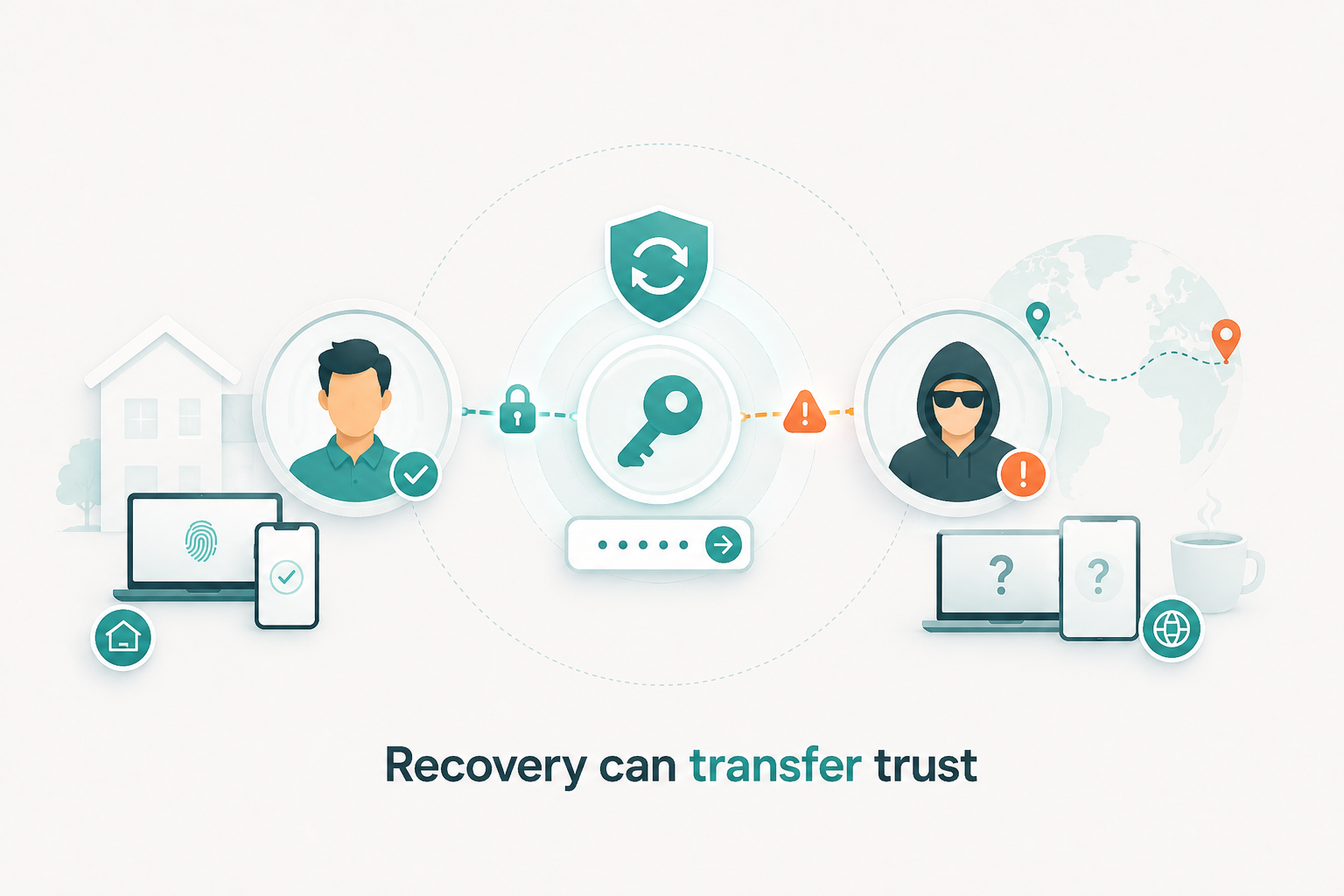
Account recovery deserves special attention because it can transfer control of an established candidate profile. A person requesting recovery may have forgotten credentials or lost access to an old email address. An attacker may use the same process to replace contact information and gain control of a trusted account. The workflow must therefore balance accessibility with protection.
Risk context can help distinguish ordinary recovery from unusual activity. The platform can examine whether the request comes from a familiar device, whether network and behavior resemble previous sessions, and whether contact changes follow a plausible history. It can also check whether the device is linked to other accounts or whether repeated recovery attempts occur across a cluster.
A successful recovery should not end monitoring. The platform can observe subsequent profile changes, applications, messages, and assessment activity for signs that control has shifted. An attacker may behave cautiously during recovery and become risky only after access is restored. Post recovery monitoring helps detect that transition.
CrossClassify’s account takeover technology combines device analysis, behavioral baselines, session validation, and continuous risk tracking. Recruitment platforms can apply these signals around recovery and later account activity, then decide when to request stronger verification or specialist review.
Shared responsibility across teams
Candidate identity risk is not owned by one department. Fraud teams investigate connected accounts and suspicious infrastructure. Security teams monitor access, recovery, and session misuse. Trust teams define evidence standards and escalation policies. Product teams design the candidate journey and decide where controls appear.
Recruiters also provide important operational feedback. They may notice that a candidate’s account history, resume, interview answers, and assessment behavior do not align. They should have a clear way to report concerns without being expected to perform technical investigations. Their observation becomes one source of evidence for the specialist team.
A shared escalation process helps these teams work from the same timeline and terminology. The case should show relevant account events, device changes, network context, relationships, and reviewer actions. Different teams may need different levels of detail, but they should not investigate separate fragments without a common incident view.
CrossClassify can route enriched risk context into existing systems through SDKs and APIs. Teams can review the available integration approach on the how it works page. This creates a common signal layer across product, fraud, security, and operational workflows without forcing recruiters to become fraud analysts.
Measuring identity risk controls
Identity controls should be measured by their ability to improve trust without creating excessive friction. Counting verification requests or flagged accounts does not show whether the program works. A high number may indicate effective coverage, or it may reveal rules that challenge too many legitimate users. Platforms need outcome based measurements.
Useful measures include confirmed impersonation cases, successful verification rates, account recovery outcomes, repeat device clusters, reviewer time, and the number of legitimate candidates cleared after review. Teams can also track abandonment caused by verification and whether certain user groups experience disproportionate friction. These measurements help balance protection with accessibility.
The platform should examine which signals contribute most to confirmed cases. Device continuity may be useful in one workflow, while account relationships or behavioral change may be stronger elsewhere. No signal should retain high influence simply because it is technically available. Reviewer feedback and incident outcomes should guide future weighting.
CrossClassify can provide event level risk context, while the recruitment platform records verification and business outcomes. Over time, this feedback can improve thresholds and determine where stronger controls are genuinely useful. The objective is a more reliable remote hiring journey, not the maximum possible number of identity challenges.
Conclusion
Remote hiring requires a wider understanding of candidate identity. A resume, account, interview, assessment, device, or location should not be evaluated in isolation. Trust becomes clearer when platforms connect evidence across the entire journey and understand whether account control remains reasonably continuous. This broader view supports remote access without assuming that every remote candidate creates risk.
Each signal has limitations. Documents can be polished or inconsistent for legitimate reasons. Devices can be shared, locations can change, and behavior can vary. Risk becomes stronger when several independent signals support the same concern and connect the account to a repeated pattern. Reviewers need that context before requesting additional verification or applying restrictions.
CrossClassify helps recruitment platforms identify identity inconsistencies through device intelligence, behavioral analysis, network context, account monitoring, and link analysis. These signals can inform account recovery protection, assessment review, post login monitoring, and risk based verification. Formal identity confirmation and hiring decisions remain with the appropriate tools and human teams.
A careful identity risk program protects employers, candidates, recruiters, and the recruitment platform itself. It can identify coordinated impersonation without turning remote hiring into a permanently suspicious experience. The strongest approach combines technical evidence, proportional verification, clear escalation, and meaningful human judgment.
See How CrossClassify Protects Recruitment Platforms
Detect fake recruiters, fraudulent resumes, and job scams instantly
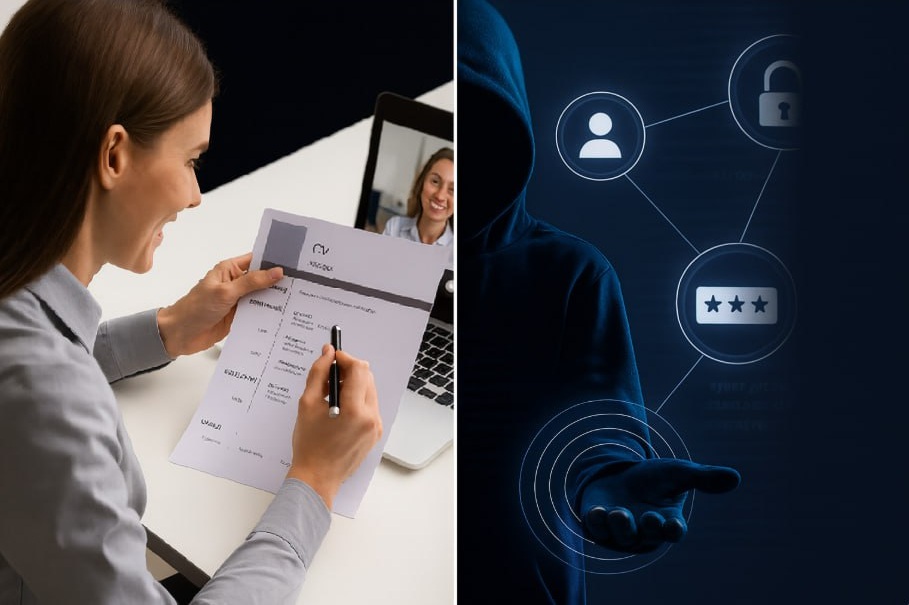
Check a CV for Fraud Signals in 60 Seconds
Upload any resume and get an instant risk score, flagged signals, and a recruiter-ready action checklist.
Try the CV Risk CheckerNo credit card required
Share in
Related articles
Frequently asked questions
Let's Get Started
Create your free
account today
Discover how to secure your app against fraud using CrossClassify
No credit card required