Last Updated on 02 Sept 2026
Securing RAG Applications Against Poisoned Knowledge, Cross User Data Leakage, and Manipulated Retrieval
Share in
Introduction
Retrieval augmented generation gives a language model access to information that was not contained in its original training. The application converts documents or records into searchable representations, retrieves material related to a question, and supplies that material to the model. This approach can improve relevance, but it also creates a new path between stored knowledge and generated output.
OWASP addresses this path through LLM08:2025 Vector and Embedding Weaknesses. The risk includes unauthorized access, cross context leakage, embedding inversion, poisoned knowledge, and changes to model behavior. These problems are not solved by choosing an accurate model. They arise from the way information is accepted, classified, stored, permissioned, retrieved, and presented to the model.
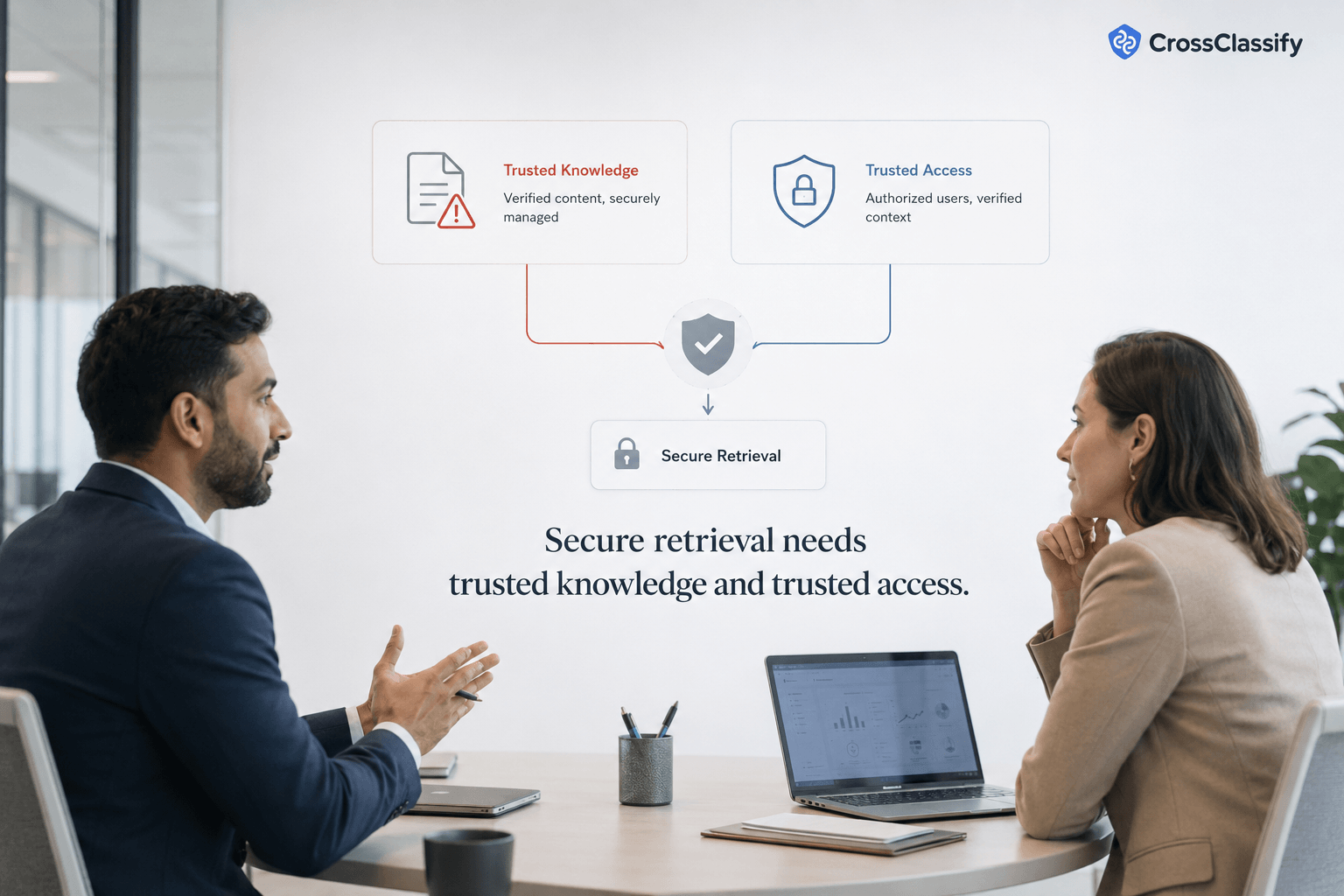
A secure design must answer two questions for every retrieval. Is the source trustworthy enough to influence the answer, and is the requester authorized to receive it? Many systems focus on the first question through ingestion controls while treating the second as a one time login decision. RAG security requires both source integrity and continuous access context.
Why RAG creates a distinct security boundary
A conventional search result is displayed to a user who can evaluate the source. A RAG system places retrieved content inside the model context, where it may influence wording, conclusions, and downstream actions. The model can blend several sources into one response, making it harder for the user to see which document introduced a claim or instruction.
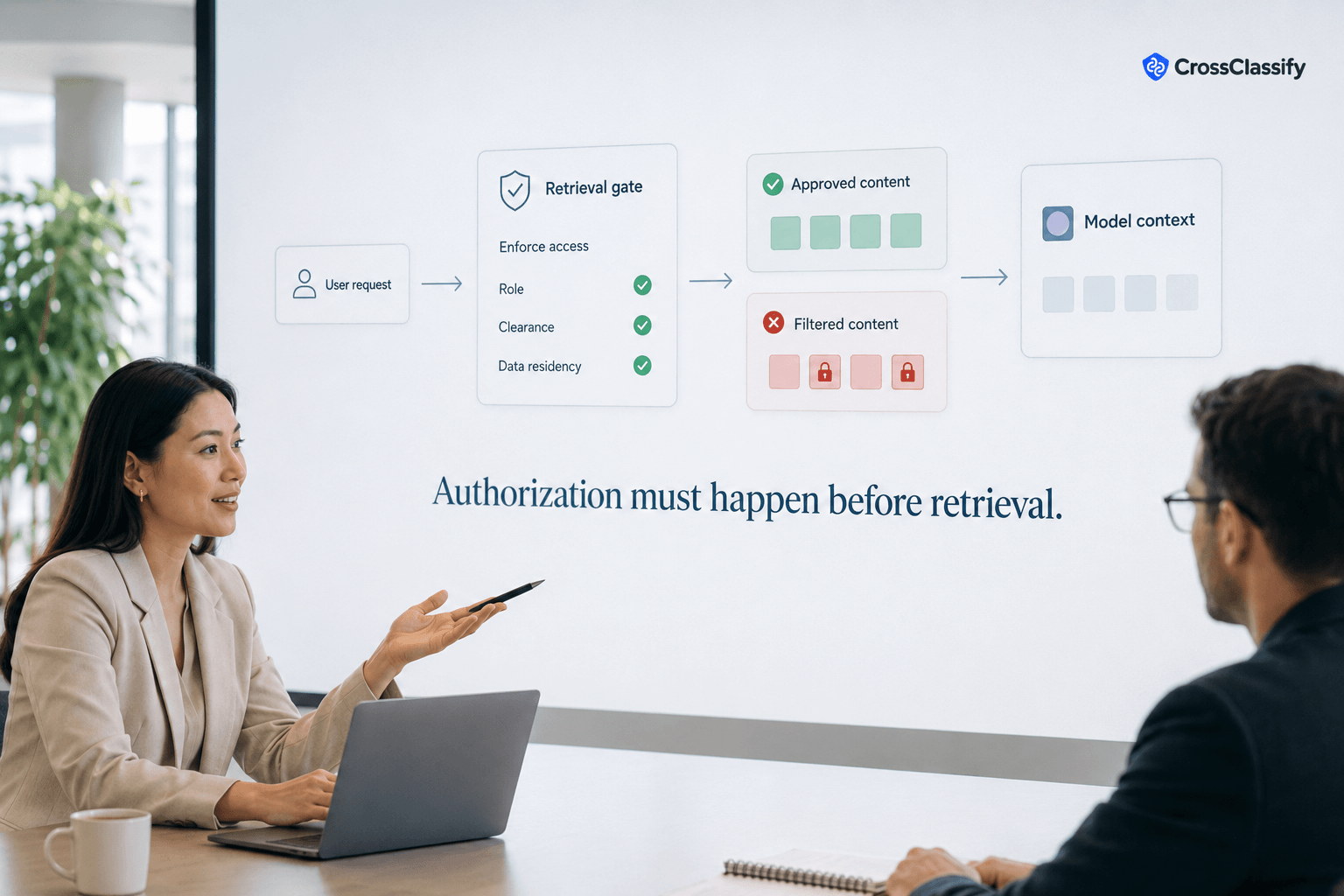
The vector store also changes how information is found. Similarity can retrieve material that does not share exact keywords, which is valuable for discovery but complicates access testing. A document may be semantically close to a query even when it belongs to another team, customer, or confidentiality level. Retrieval permissions must therefore be enforced before the content enters the model context.
The boundary extends beyond the database. Document loaders, text extraction, chunking, embedding models, metadata, indexes, caches, and reranking services all affect what is retrieved. A weakness in any component can change the answer. Security teams should treat the complete retrieval pipeline as an application subsystem with its own threat model, logs, and release controls.
Poisoned documents and manipulated embeddings
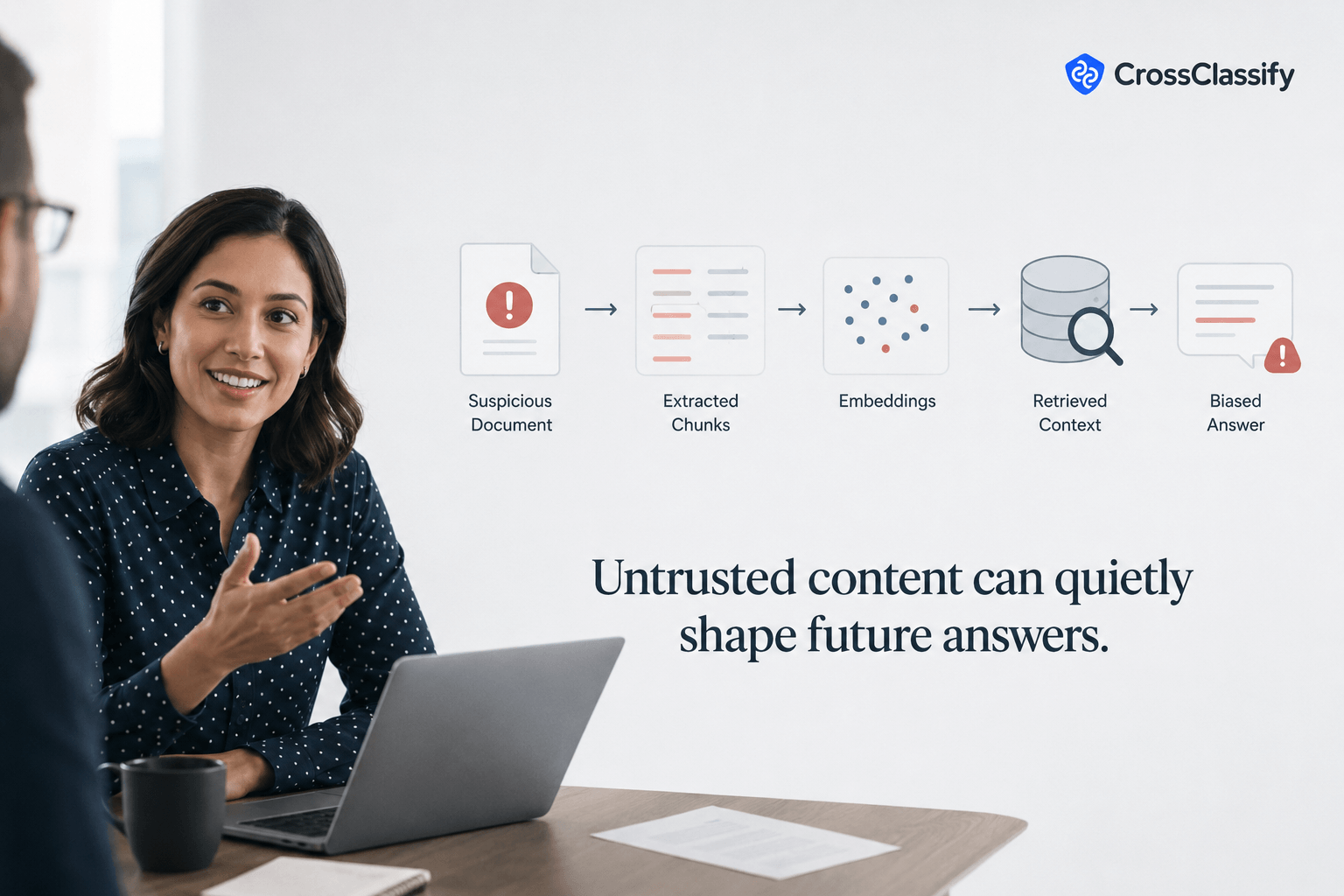
Knowledge poisoning occurs when untrusted or modified content is accepted into the retrieval corpus. The content may contain false facts, hidden instructions, adversarial text, or carefully repeated phrases designed to dominate similarity results. Once indexed, the malicious material can influence many later users without requiring the attacker to remain present.
The attack can be intentional or accidental. An employee may upload an outdated policy. An automated connector may ingest a compromised website. A customer may submit a document containing concealed text that survives extraction. The RAG system can treat each source as equally authoritative unless provenance and approval are attached to the content.
Defensive ingestion should include source authentication, file validation, malware scanning, hidden content detection, classification, ownership, and review rules. High authority collections should accept changes only through approved pipelines. Teams should also retain the original source, extraction result, chunk identifiers, embedding version, and approval record so a suspicious answer can be traced back to the material that influenced it.
Preventing cross user and cross tenant leakage
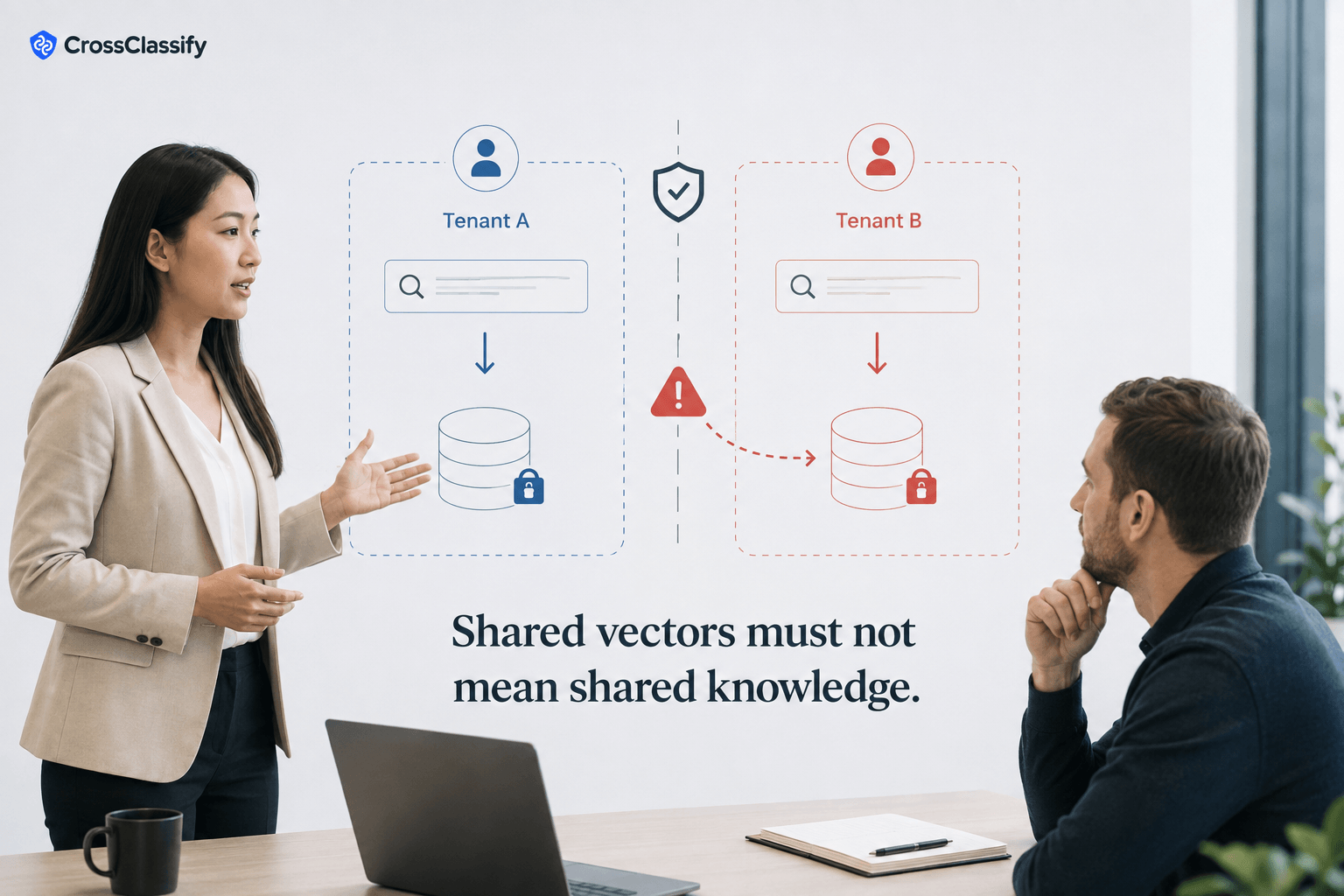
Shared vector infrastructure can serve many teams or customers, but shared storage must not imply shared retrieval. Every chunk should carry access metadata that reflects the source system, tenant, owner, role, sensitivity, and retention policy. The retrieval service must apply those permissions before similarity results are passed to the model.
Filtering after generation is too late. Once unauthorized content reaches the context window, it may appear directly, influence a summary, or be combined with other information. A response filter cannot reliably reconstruct which facts were permitted. Authorization must happen at retrieval time and should be tested with users who have different roles and overlapping queries.
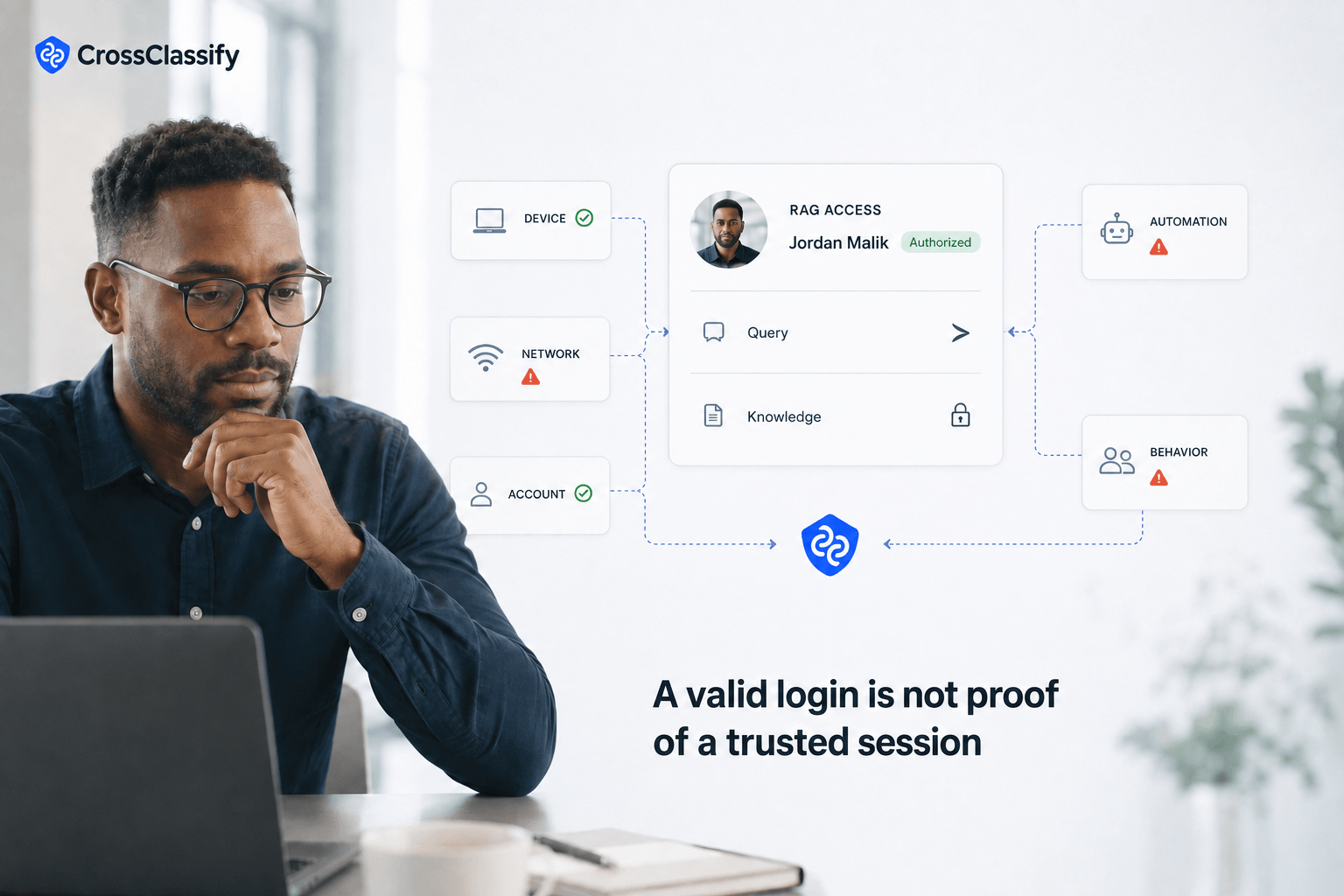
Account compromise adds another complication. A stolen account may possess legitimate permission to valuable collections. The query is technically authorized, but the session using that authorization may not be trustworthy. Continuous evaluation of device, network, behavior, and retrieval patterns can help distinguish expected research from an unfamiliar session attempting broad or systematic extraction.
Designing permission aware retrieval
Fine grained access control should begin with the source of truth. If a document is restricted in the original repository, the RAG index should preserve that restriction rather than replacing it with a simpler global permission. Changes and revocations must propagate quickly so deleted access does not remain available through an old embedding or cache.
The system should also minimize what it retrieves. A model rarely needs an entire document when a small approved passage can answer the question. Limiting the number and size of chunks reduces exposure and makes source review easier. Sensitive collections may require separate indexes or encryption boundaries instead of relying only on metadata filters.
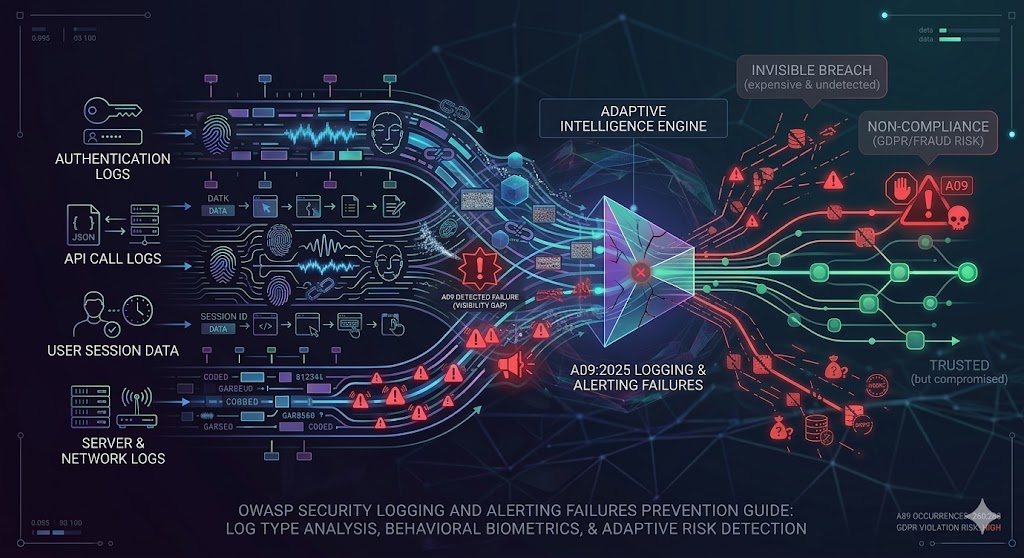
Monitoring should record who asked, which session and device were involved, which filters were applied, which chunks were returned, which sources were cited, and whether the answer led to another action. OWASP recommends detailed immutable retrieval logs. Those logs support incident response, access reviews, poisoning investigations, and tests for unexpected cross context results.
Evaluating retrieval quality and security together
Accuracy testing asks whether retrieved content helps answer the question. Security testing asks whether the content was permitted, current, authentic, and safe to place in the model context. A high relevance score cannot answer those questions. Product evaluation should therefore include security labels alongside relevance and groundedness measures.
Red teams should test uploads, connectors, hidden text, conflicting documents, revoked permissions, ambiguous tenant identifiers, and queries designed to cross collection boundaries. Tests should also cover multilingual content and file formats that extraction tools handle differently. A secure pipeline must produce predictable enforcement even when the model response remains probabilistic.
Human review is particularly important when retrieved content can trigger an external decision or action. The interface should show sources, dates, ownership, and confidence in a form that reviewers can understand. Citations support verification, but they do not prove authorization. The application must enforce access before the user sees the answer.
Where CrossClassify fits
CrossClassify does not scan embeddings, validate vector mathematics, or certify that a knowledge source is accurate. Those responsibilities belong to the RAG platform, data owners, and security controls protecting ingestion and retrieval. CrossClassify contributes evidence about the account and session requesting access to the application.
That evidence can include device history, network characteristics, automation signals, account relationships, and behavioral consistency. For example, a user who normally asks narrow questions from a known device may suddenly begin querying many sensitive topics through unfamiliar infrastructure. The permissions may be valid, but the surrounding context can justify additional verification or review.
The CrossClassify AI agent solution can classify activity around customer facing AI workflows while the RAG system continues to enforce document permissions. Used together, these layers help teams protect both sides of retrieval: the integrity and authorization of the knowledge, and the trustworthiness of the session asking to receive it.
Conclusion
RAG security is not simply a vector database configuration problem. It spans source trust, extraction, chunking, embeddings, metadata, access control, retrieval, generation, and runtime monitoring. A weakness at any stage can produce poisoned answers, cross context exposure, or unauthorized disclosure.
The strongest design validates sources before ingestion, preserves fine grained permissions, separates sensitive collections, minimizes retrieved content, and records immutable retrieval evidence. It also tests how permission changes, conflicting sources, hidden content, and compromised accounts affect the complete user journey.
OWASP provides a clear warning that embeddings and retrieval introduce their own attack surface. CrossClassify can complement those controls by assessing the account, device, network, automation, and behavior surrounding access. The result is a more complete security model that asks both whether the knowledge is trustworthy and whether this particular session should receive it.
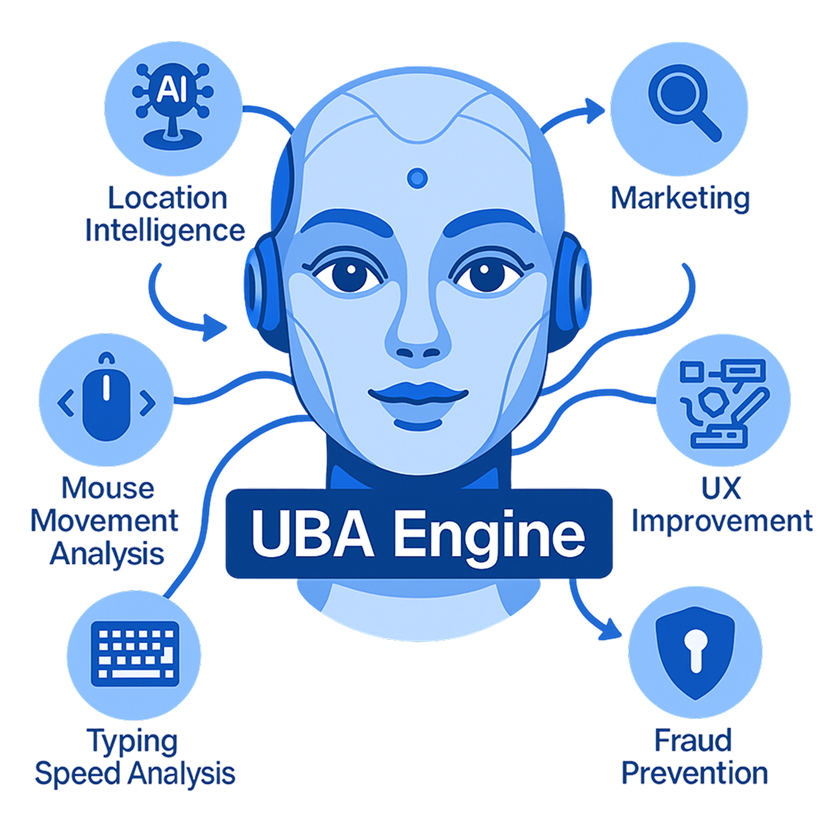
See How CrossClassify Uses Behavioral Biometrics to Detect Fraud
Analyze real user behavior patterns continuously to uncover suspicious sessions with less friction
Explore CrossClassify today
Detect and prevent fraud in real time
Protect your accounts with AI-driven security
Try CrossClassify for FREE—3 months
Share in
Related articles
Frequently asked questions
Let's Get Started
Create your free
account today
Discover how to secure your app against fraud using CrossClassify
No credit card required