Last Updated on 03 Jun 2026
No Code AI Agents: Business Productivity Gain or the Next Shadow AI Problem?
Share in
Introduction
No code AI agents are appealing because they promise speed. A business user can describe a workflow, connect knowledge, choose actions, and create an agent without waiting months for engineering.
That is exactly why companies should pay attention.
The same feature that makes no code AI agents useful also makes them risky. If many employees can create agents, then many employees can also create new paths into company data, customer workflows, and business systems.
Google Gemini Enterprise highlights this direction clearly. It says employees can build custom agents with a no code Agent Designer, add custom and third party agents, and manage access to apps and data. (Google Cloud) Microsoft Copilot Studio similarly presents agent creation, templates, autonomous capabilities, business data connections, and agent management as core features. (Microsoft)
This is not a future issue. It is already becoming the normal interface for business automation.
Watch the Video Summary
No Code AI Agents and Shadow AI Risk: Who Checks Every Request?

Why no code agents are useful
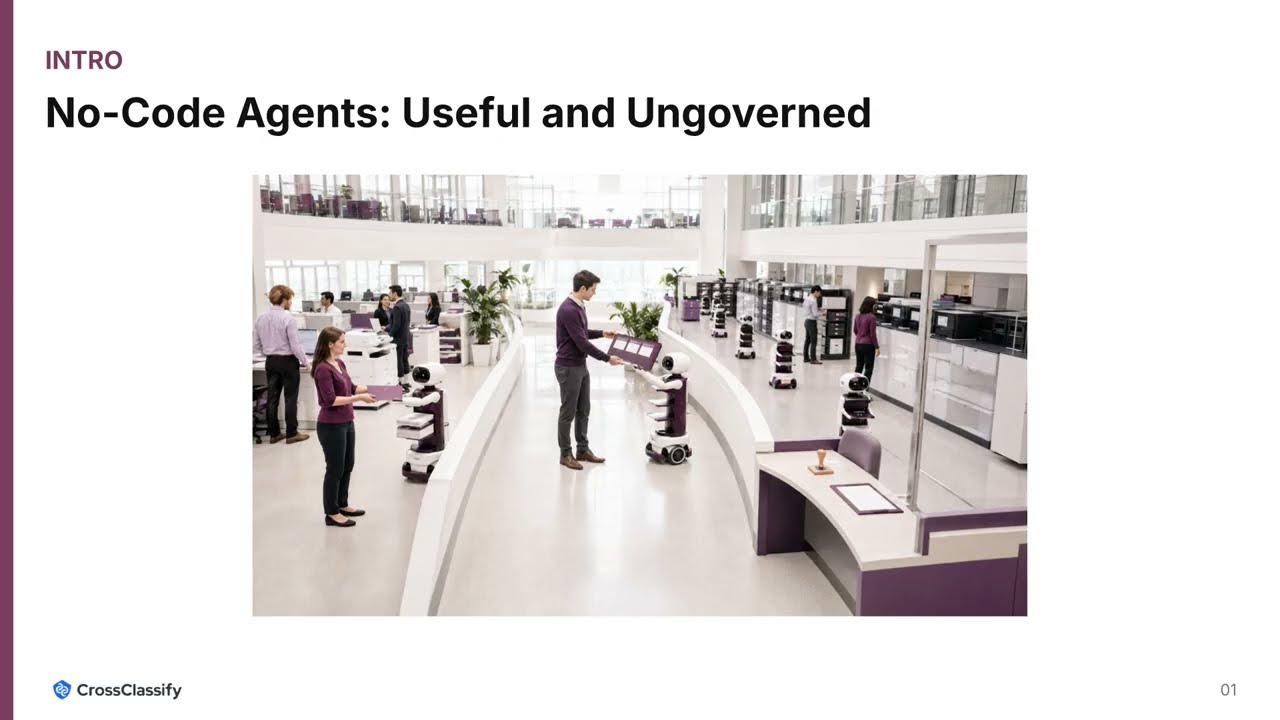
No code agents help teams automate routine work without turning every idea into a software project.
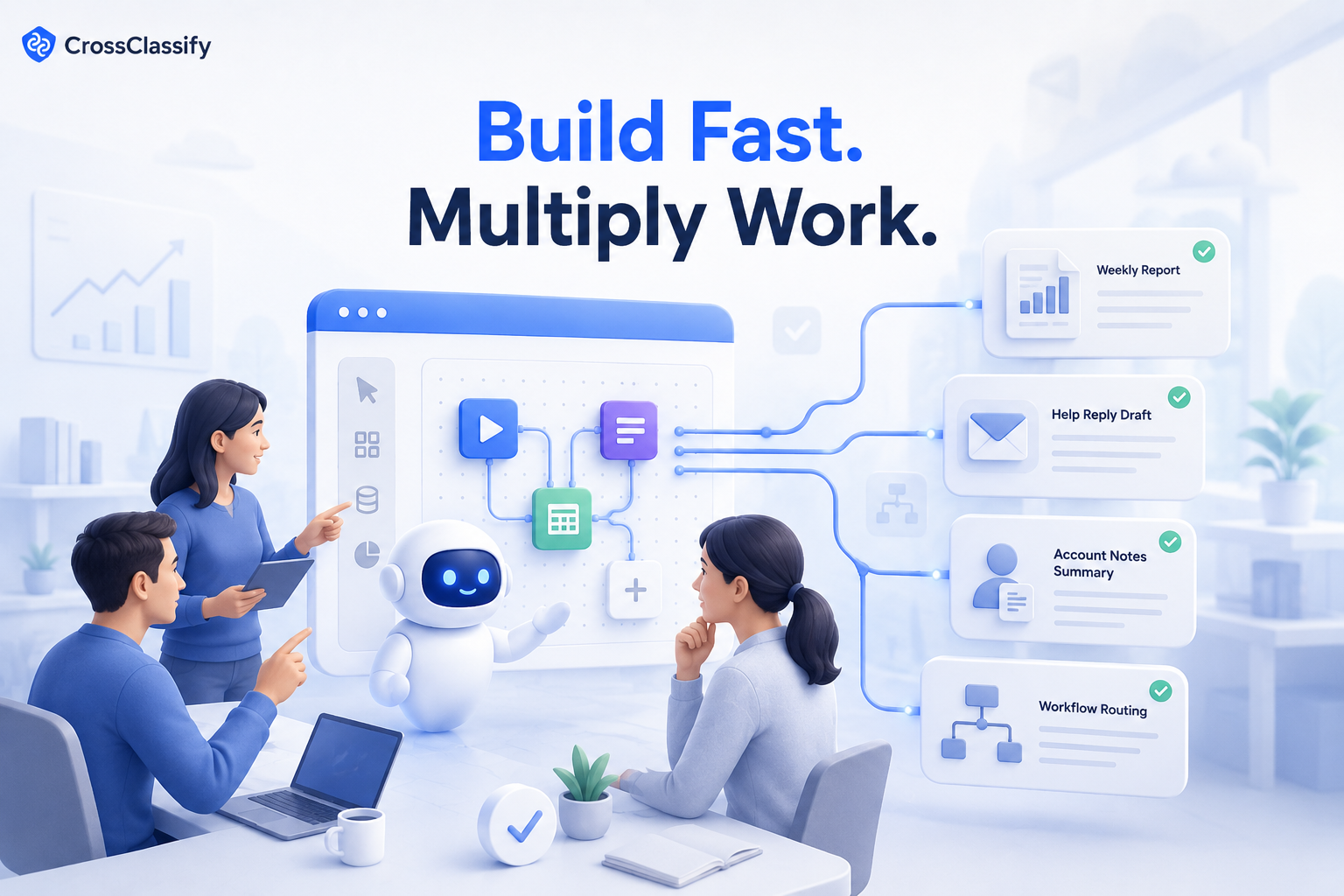
A support manager can create an agent that drafts responses from approved help content. An operations lead can create an agent that prepares weekly status updates. A sales operations team can create an agent that summarizes account notes. A risk team can create an agent that organizes suspicious account activity for review.
These are valuable use cases because they reduce repetitive work and improve consistency.
For smaller companies, no code agents can create leverage. For larger companies, they can help departments solve specific workflow problems without waiting for central teams to build everything.
The shadow AI problem
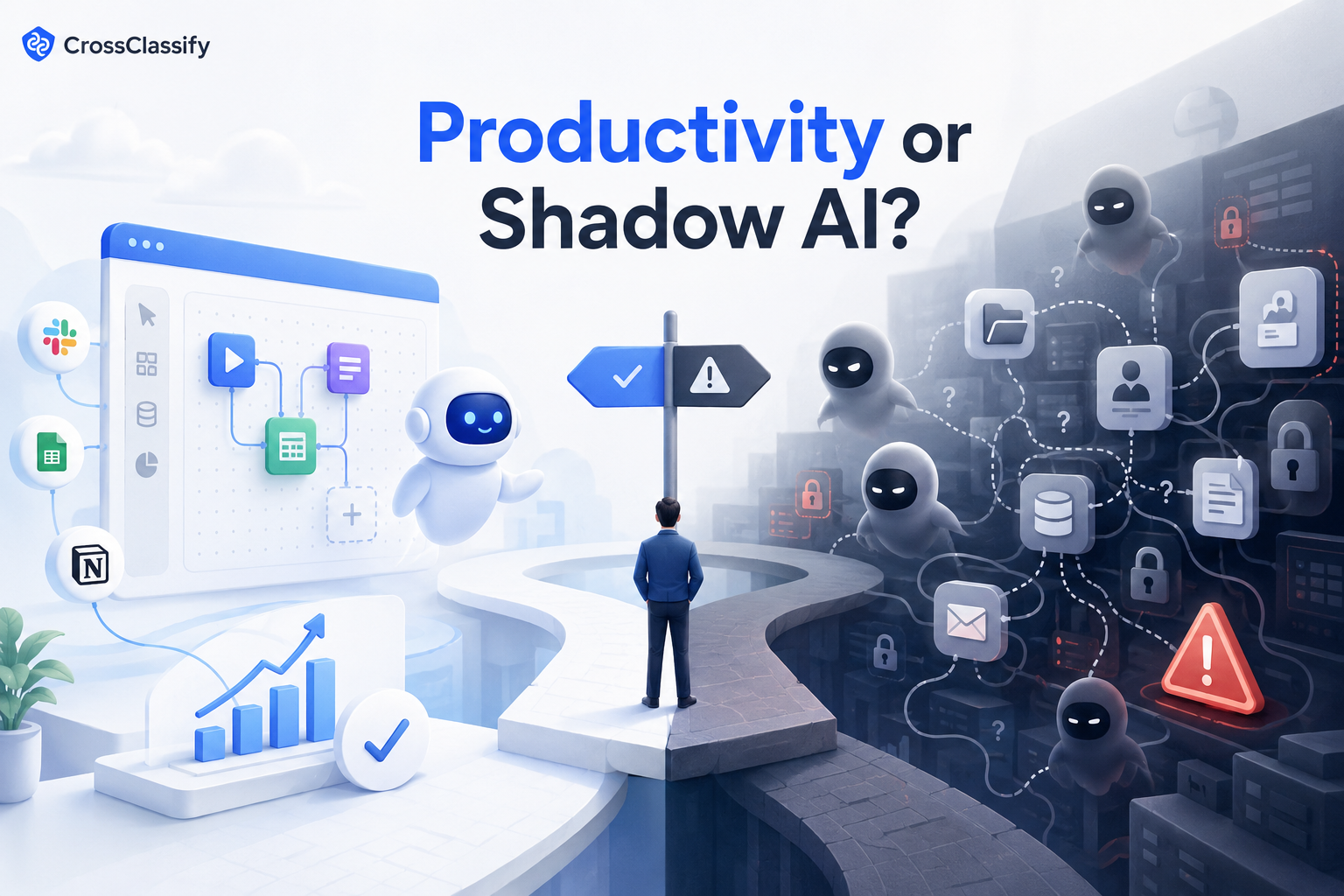
Shadow AI happens when employees use or build AI systems outside official visibility and governance.
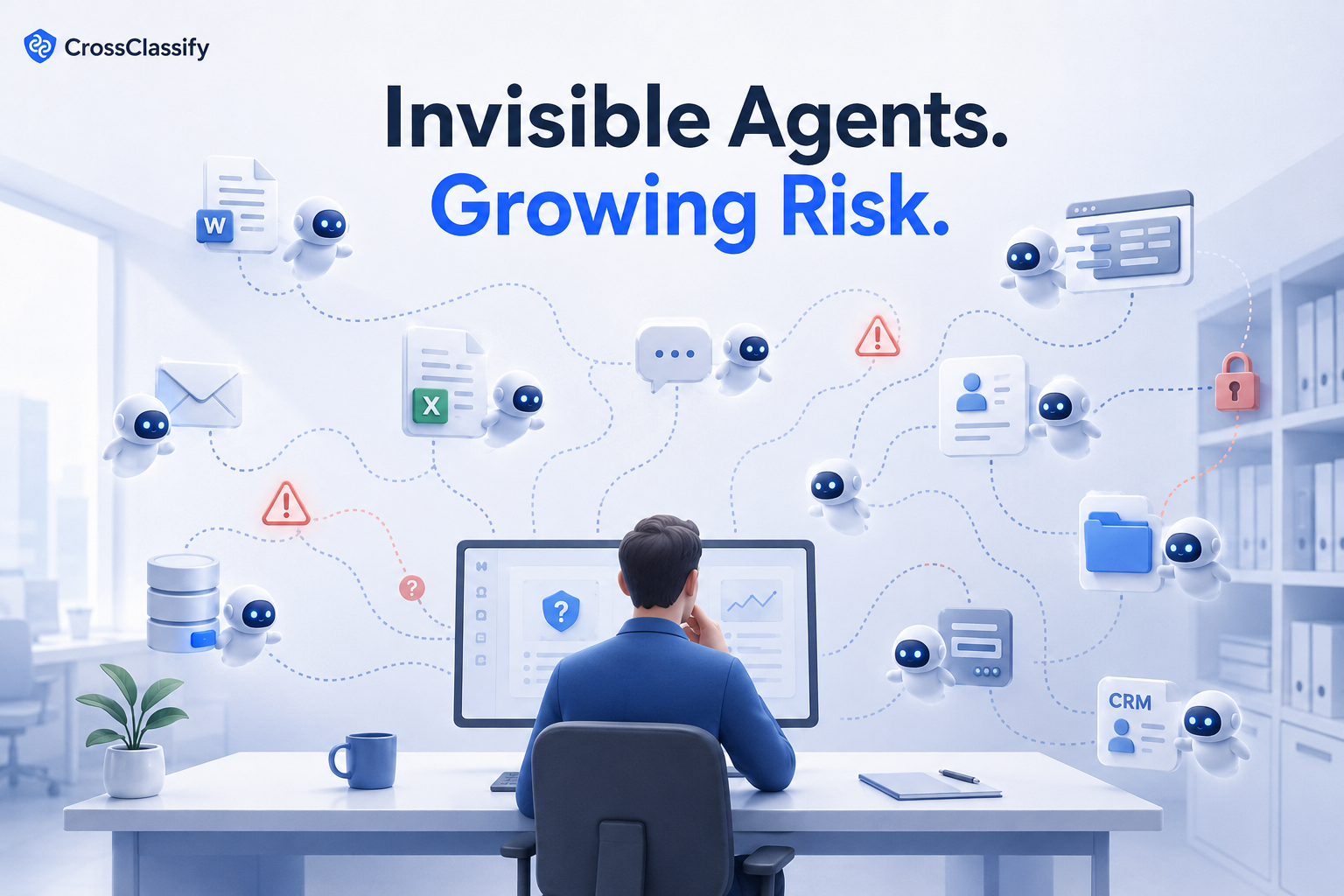
No code agent builders can intensify this problem. Instead of only asking AI questions, employees may create agents that connect to documents, spreadsheets, internal systems, customer records, email, chat tools, or workflow platforms.
The risk is not always malicious. Often, it is accidental.
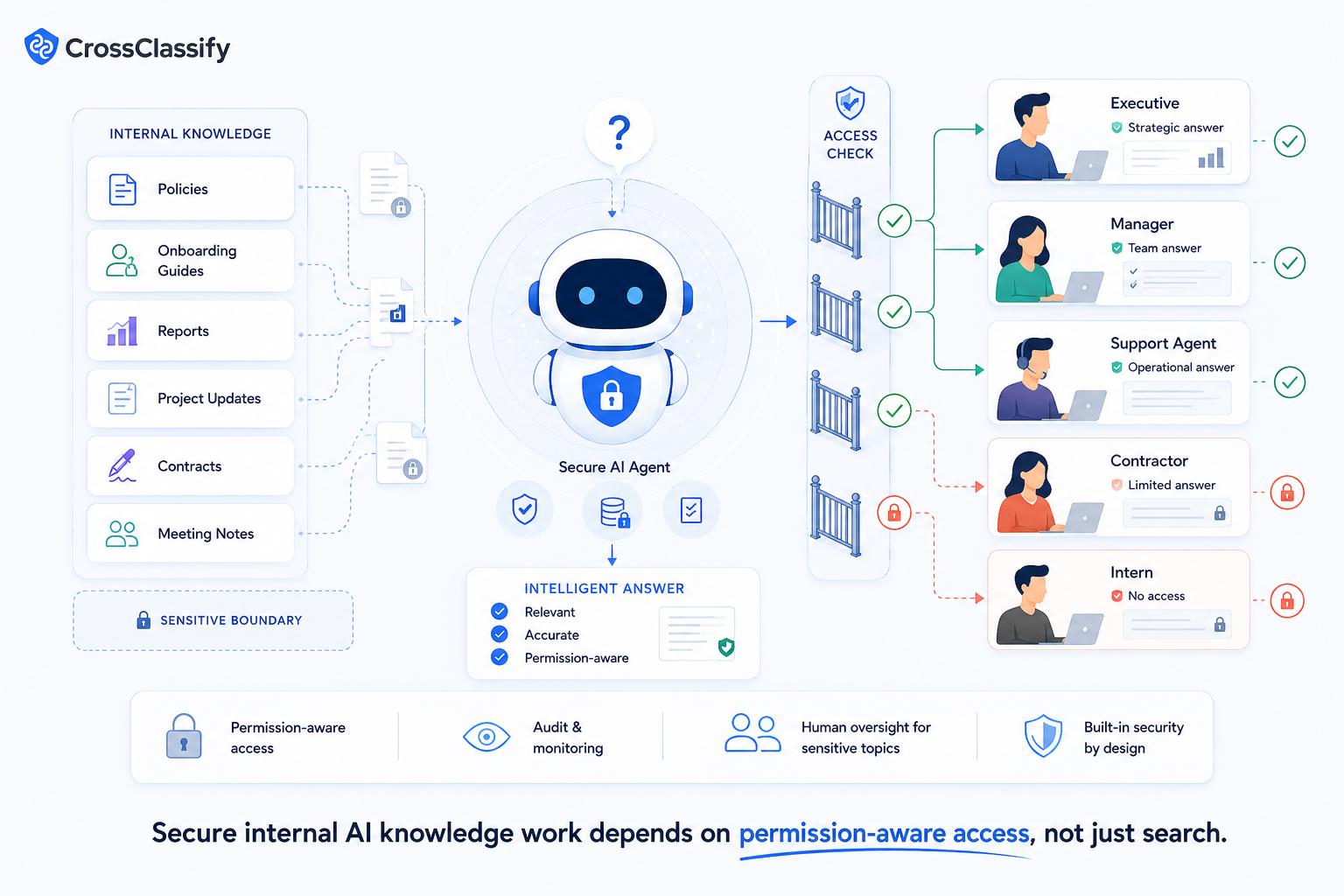
A team may give an agent access to too many files because it is convenient. A manager may build a customer support agent without considering account recovery risk. An operations team may let an agent send messages without review. A business unit may connect sensitive documents without checking whether the agent logs, stores, or shares content.
The result is a growing network of invisible automation.
Where cybersecurity risk appears
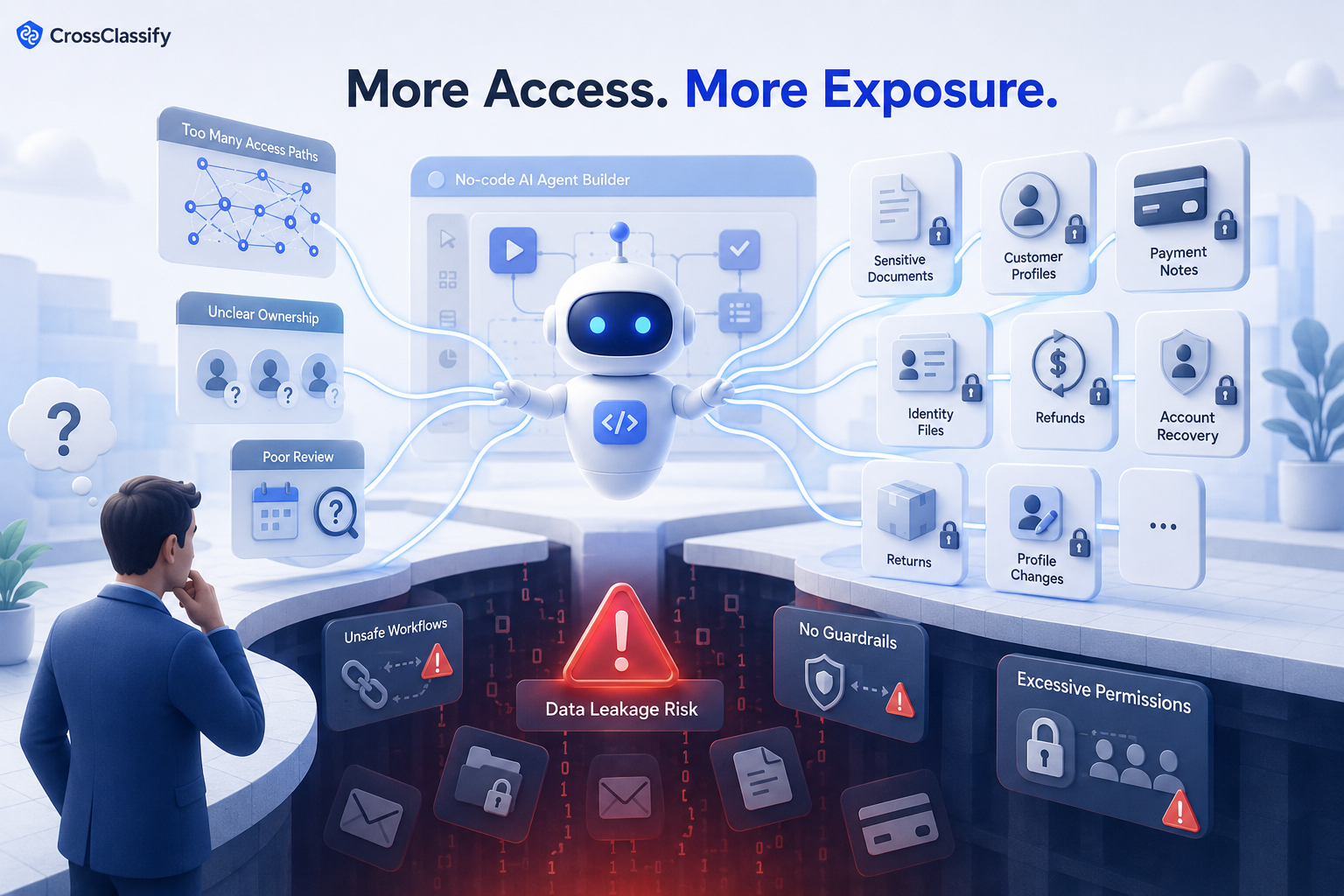
The major risks include data leakage, excessive access, unclear ownership, weak review, unsafe workflow actions, poor auditability, and prompt injection.
No code does not mean no risk. In some ways, it increases risk because the people building the agents may not think like security teams.
A no code agent that summarizes public FAQ content is low risk. A no code agent that reads customer support history, payment notes, account flags, identity documents, or internal incident reports is very different.
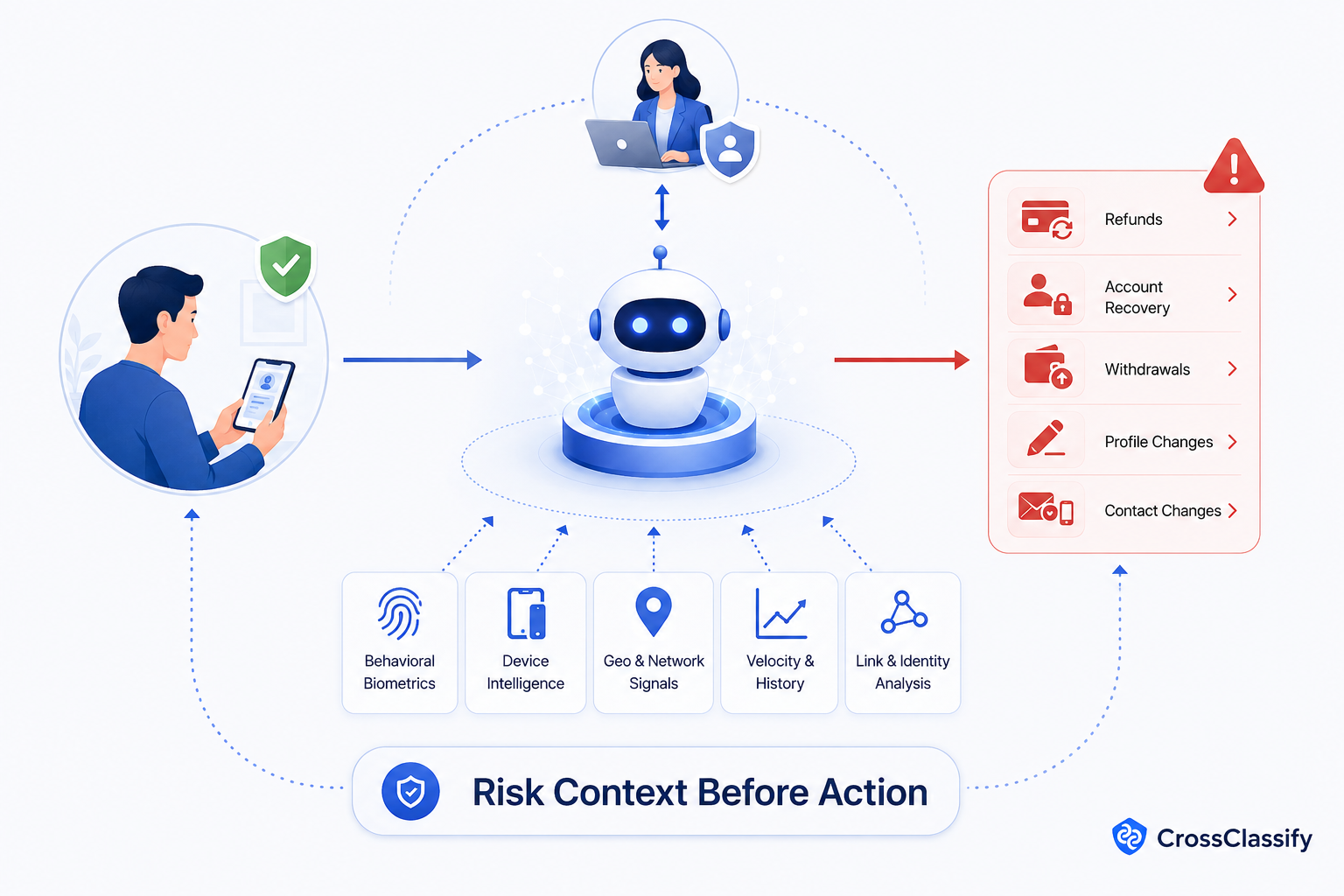
When agents touch customer actions, companies also need to consider fraud risk. A support agent may help with refunds. A marketplace agent may help resolve disputes. A fintech agent may help answer withdrawal questions. An ecommerce agent may route return requests. Each of these workflows can be abused.
What usually goes wrong
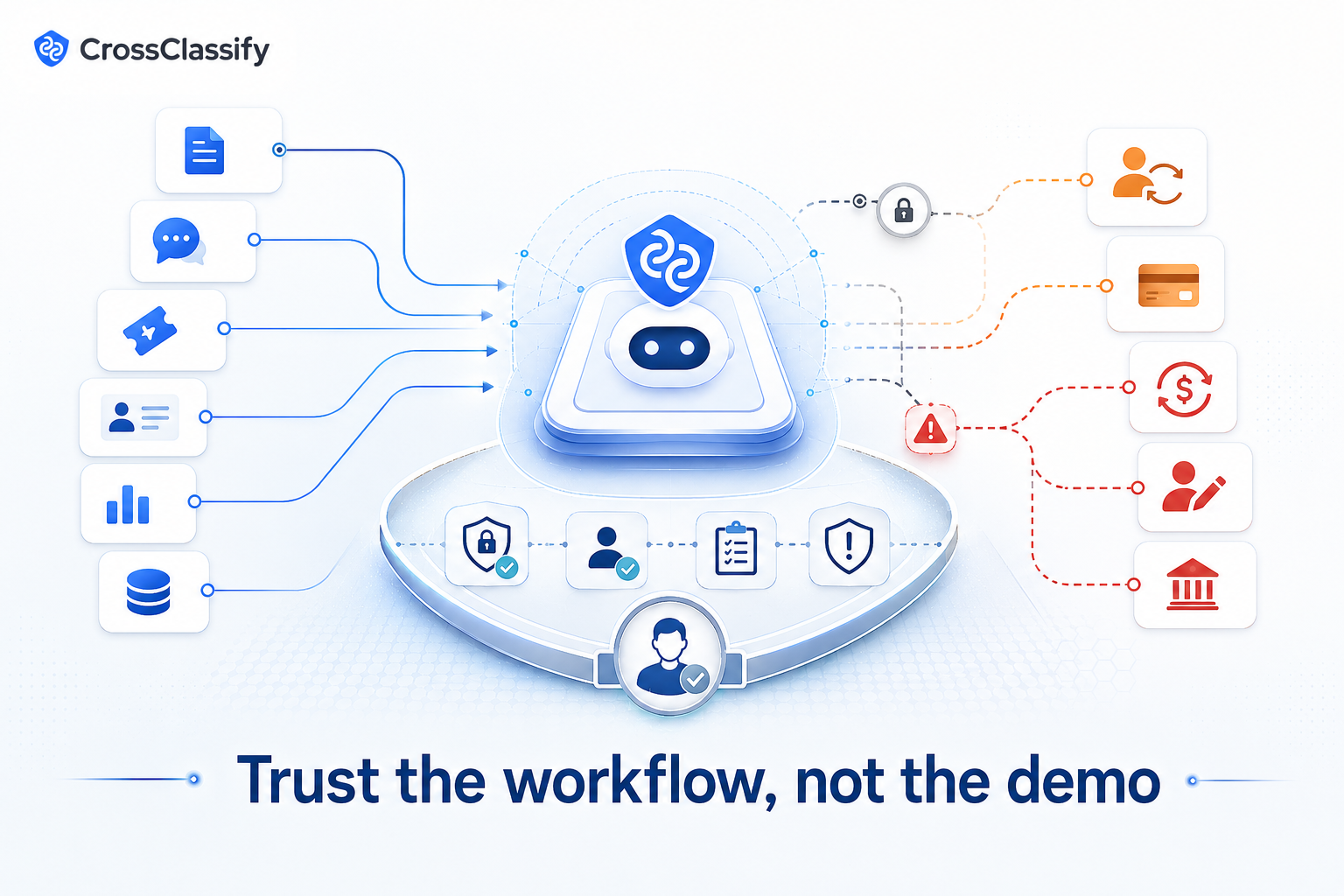
Companies often treat no code agent building as a productivity project only. They define the business value, but not the control model.
They do not ask who can create agents. They do not classify agents by risk. They do not separate internal knowledge agents from customer action agents. They do not require review before agents connect to sensitive data. They do not monitor whether agent assisted workflows are being abused.
The result is a gap between innovation and control.
A better operating model
A better model is not to ban no code agents. That would slow the business and push people toward unofficial tools.
Instead, companies should create simple rules.
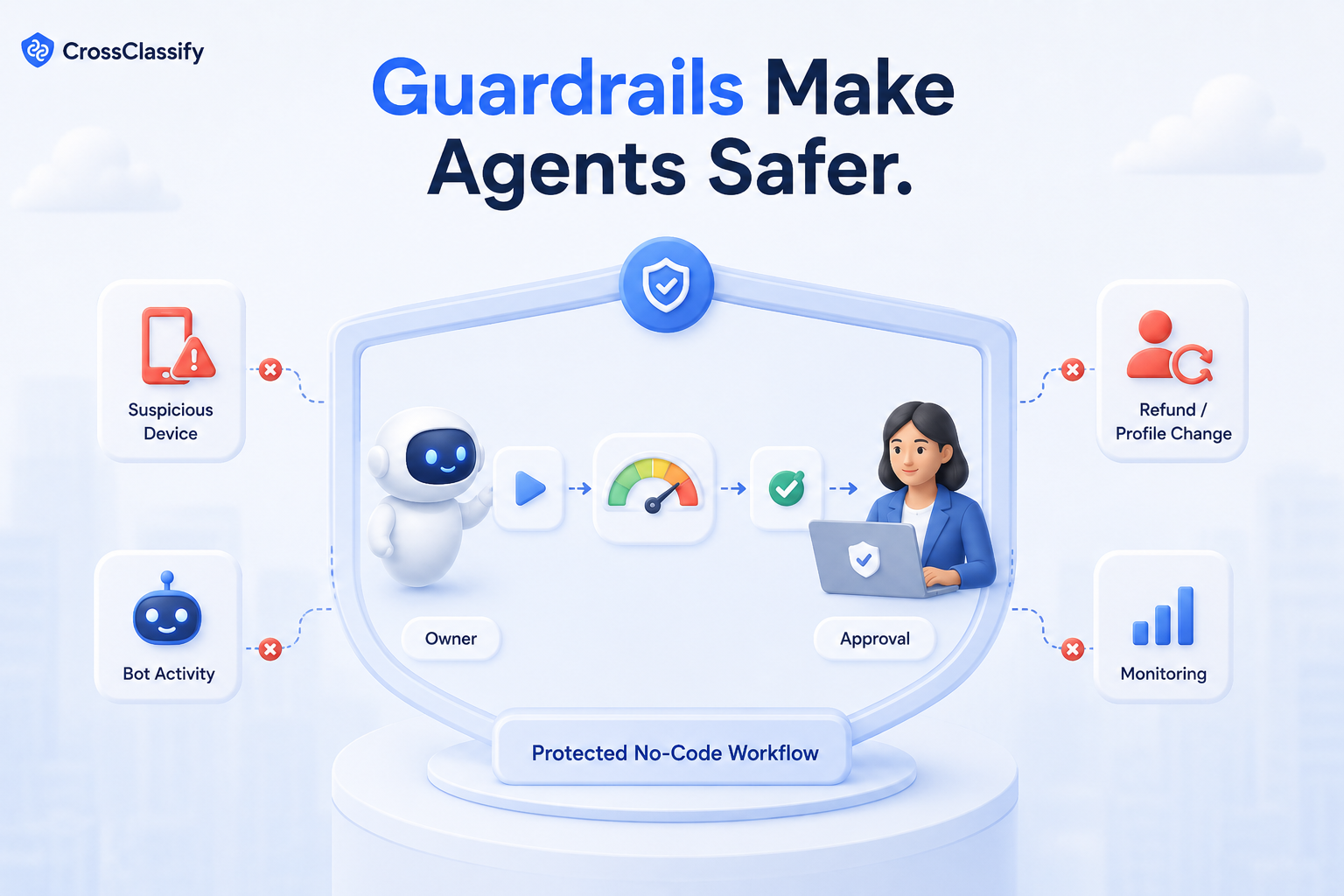
Every agent should have an owner. Every agent should have a purpose. Every agent should have a data boundary. Every agent should have an action boundary. High risk actions should require human approval. Customer facing workflows should be monitored for suspicious behavior. Security teams should be able to see which agents exist and what they can access.
This does not need to be complicated. It needs to be explicit.
Where CrossClassify fits
CrossClassify does not manage no code agent creation inside the company. Its role is more relevant when no code agents touch customer journeys.
For example, if a support team builds an agent to help with refund requests, account recovery, or profile changes, the business should still understand whether the request is coming from a trusted account owner, a suspicious device, a bot, or a session showing abnormal behavior.
Bot attack detection can help teams detect automated abuse patterns that may appear around customer facing workflows. When AI automation speeds up support and operations, bot detection and fraud risk scoring help prevent attackers from scaling abuse through the same channels.
Conclusion
No code AI agents will make business automation easier. That is good. But easier creation also means easier misuse, accidental exposure, and uncontrolled workflow expansion.
Companies should encourage experimentation, but not without visibility. The safest path is simple: let teams build, but classify risk, limit access, require ownership, review sensitive actions, and monitor customer behavior around agent assisted workflows.
No code AI agents are not only a productivity tool. They are a governance test.
See How CrossClassify Secures the New AI Agent Attack Surface
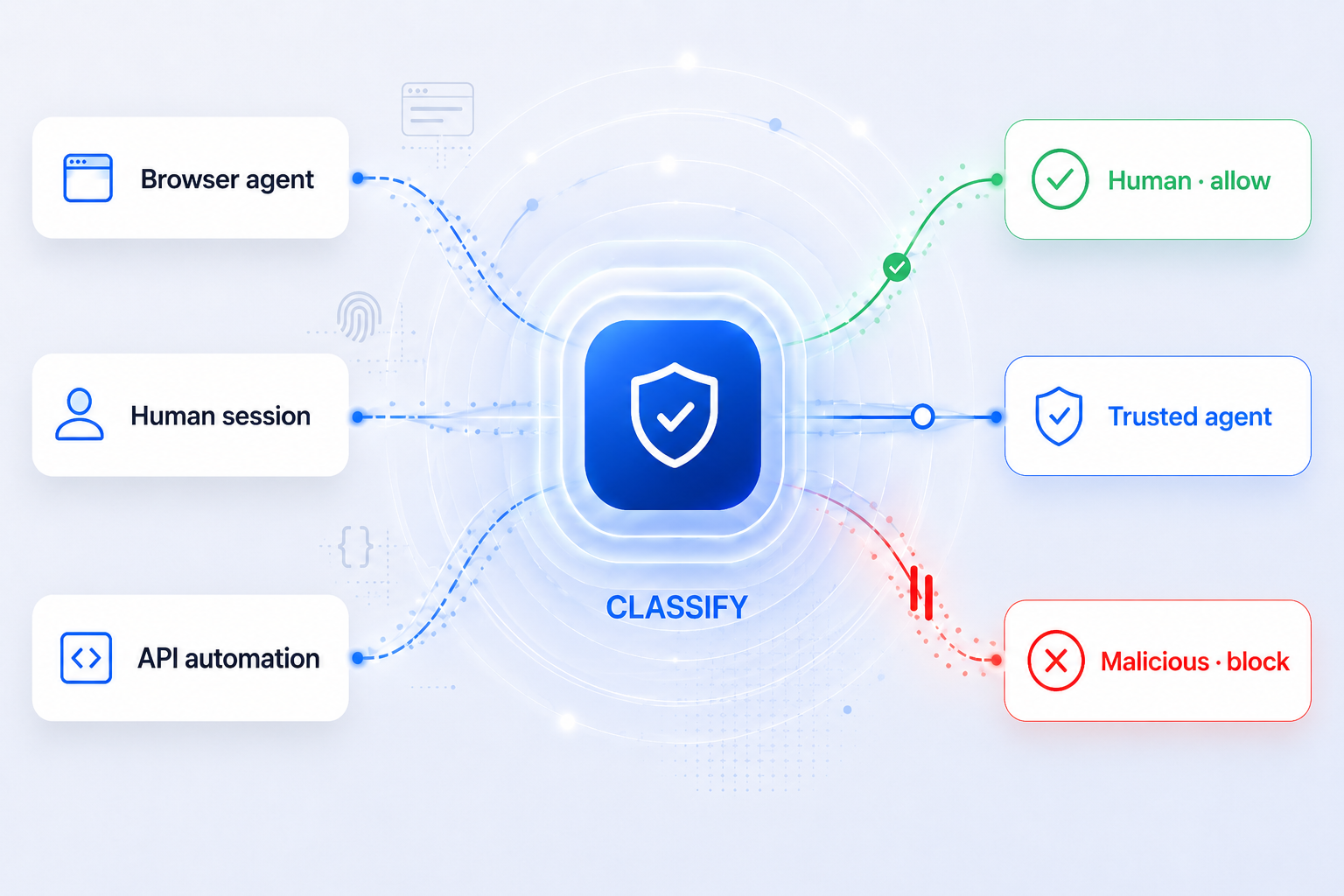
Classify human sessions, trusted agents, and malicious automation before requests turn into risk
Explore CrossClassify today
Detect and prevent fraud in real time
Protect your accounts with AI-driven security
Try CrossClassify for FREE—3 months
Share in
Related articles
Frequently asked questions
Let's Get Started
Create your free
account today
Discover how to secure your app against fraud using CrossClassify
No credit card required