Last Updated on 31 May 2026
AI Agents for High Risk Customer Actions: Refunds, Account Recovery, Withdrawals, and Profile Changes
Share in
Introduction
AI agents are moving from simple assistance to real action. They can draft responses, review tickets, check policies, summarize account history, route cases, and suggest next steps. For many companies, that sounds like the beginning of a faster support and operations model.
But the real test is not whether an AI agent can answer a question. The real test is whether it can safely support sensitive customer actions.
Refunds, account recovery, withdrawals, password resets, email changes, payout updates, address changes, and profile edits are not ordinary workflow steps. They are moments where fraud often hides. An attacker may not need to break into the entire company. They may only need to convince a support workflow to approve a refund, recover an account, or change a payout destination.
That is why AI agents for high risk customer actions need more than productivity thinking. They need digital trust thinking.
Watch the Video Summary
Why Your AI Agent Approves Refunds Without Checking Who's Asking


Why this topic matters now
AI agents are becoming more capable because they can use tools, connect to data, remember context, and complete multi step tasks. AWS describes Bedrock Agents as systems that can automate multistep tasks by connecting foundation models with company systems, APIs, and data sources. AWS also highlights memory retention, code interpretation, and multi agent collaboration as agent capabilities.
This matters because companies will naturally start using agents in places where support and operations teams already spend time. Customer service, fraud review, onboarding, account help, billing support, claims review, and marketplace dispute handling are obvious candidates.
The danger is that the highest value workflows are also the highest risk workflows.
An agent that only summarizes a help article is low risk. An agent that helps approve a refund or recover an account is different. It is closer to a business decision system. It can affect money, trust, identity, and customer access.
Where AI agents can help
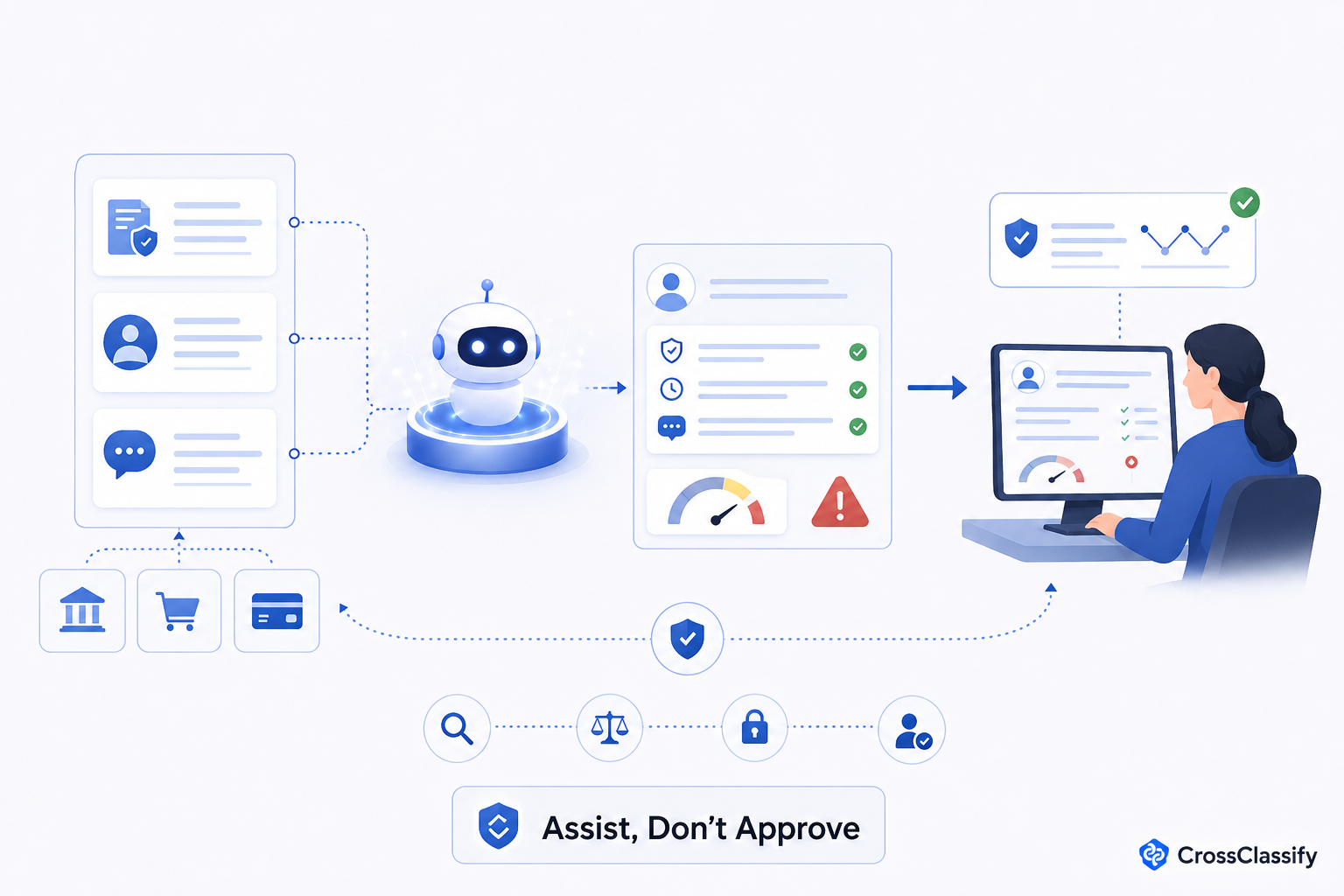
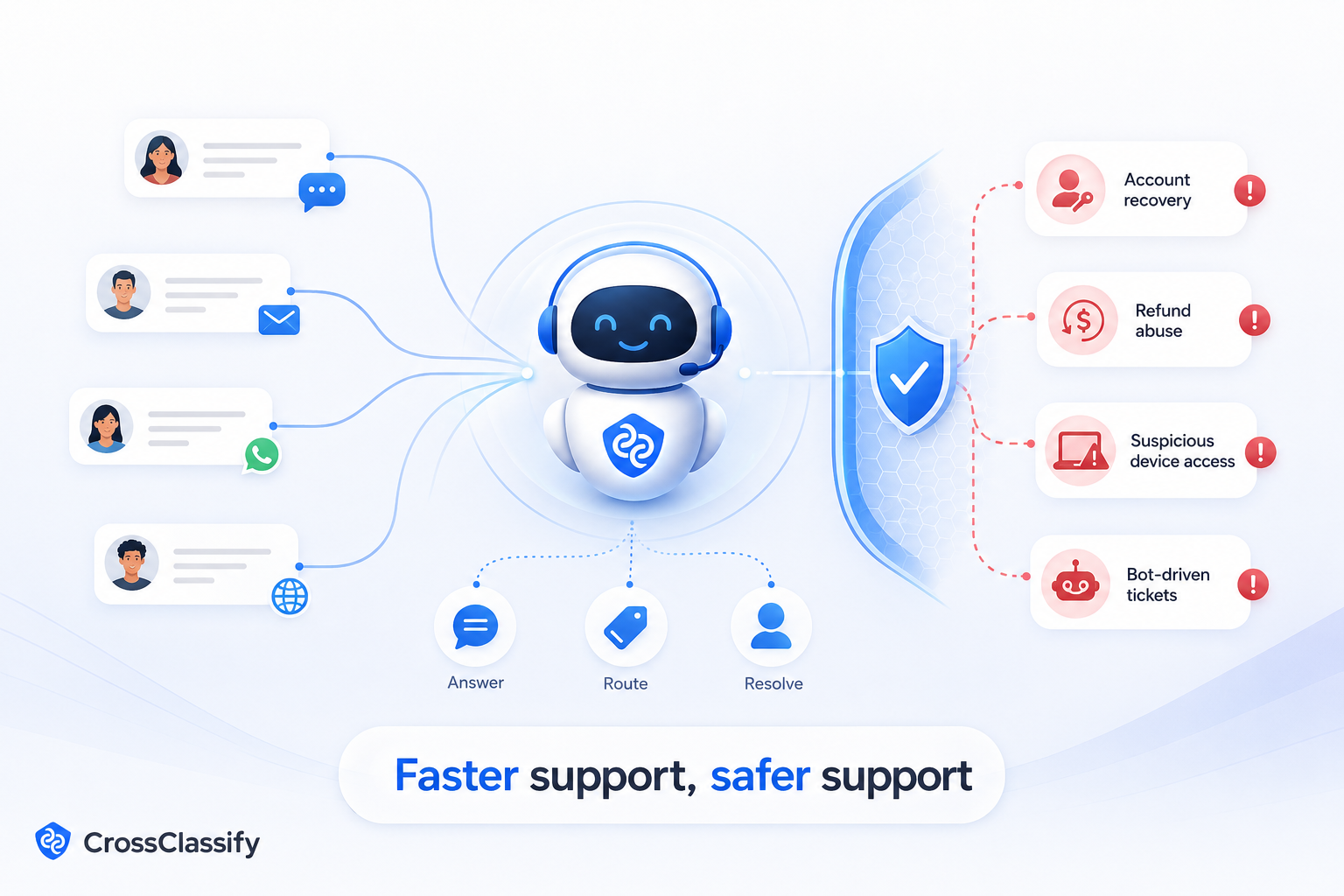
AI agents can be useful around high risk customer actions when they act as decision support, not blind automation.
They can summarize prior customer conversations. They can compare a request with company policy. They can identify missing information. They can prepare a draft response. They can route a case to the right team. They can highlight unusual timing, conflicting details, or repeated request patterns.
They can help support agents work faster without forcing them to read every historical ticket manually.
For example, in a refund workflow, an AI agent can collect order history, return policy, delivery status, past refund requests, support notes, and account age. It can prepare a case summary for a human reviewer.
In an account recovery workflow, an agent can organize evidence. It can show when the login pattern changed, whether the device is new, whether the customer recently changed email or phone number, and whether the request is consistent with prior behavior.
In a withdrawal workflow, an agent can help review risk signals before money leaves the platform.
Where risk begins
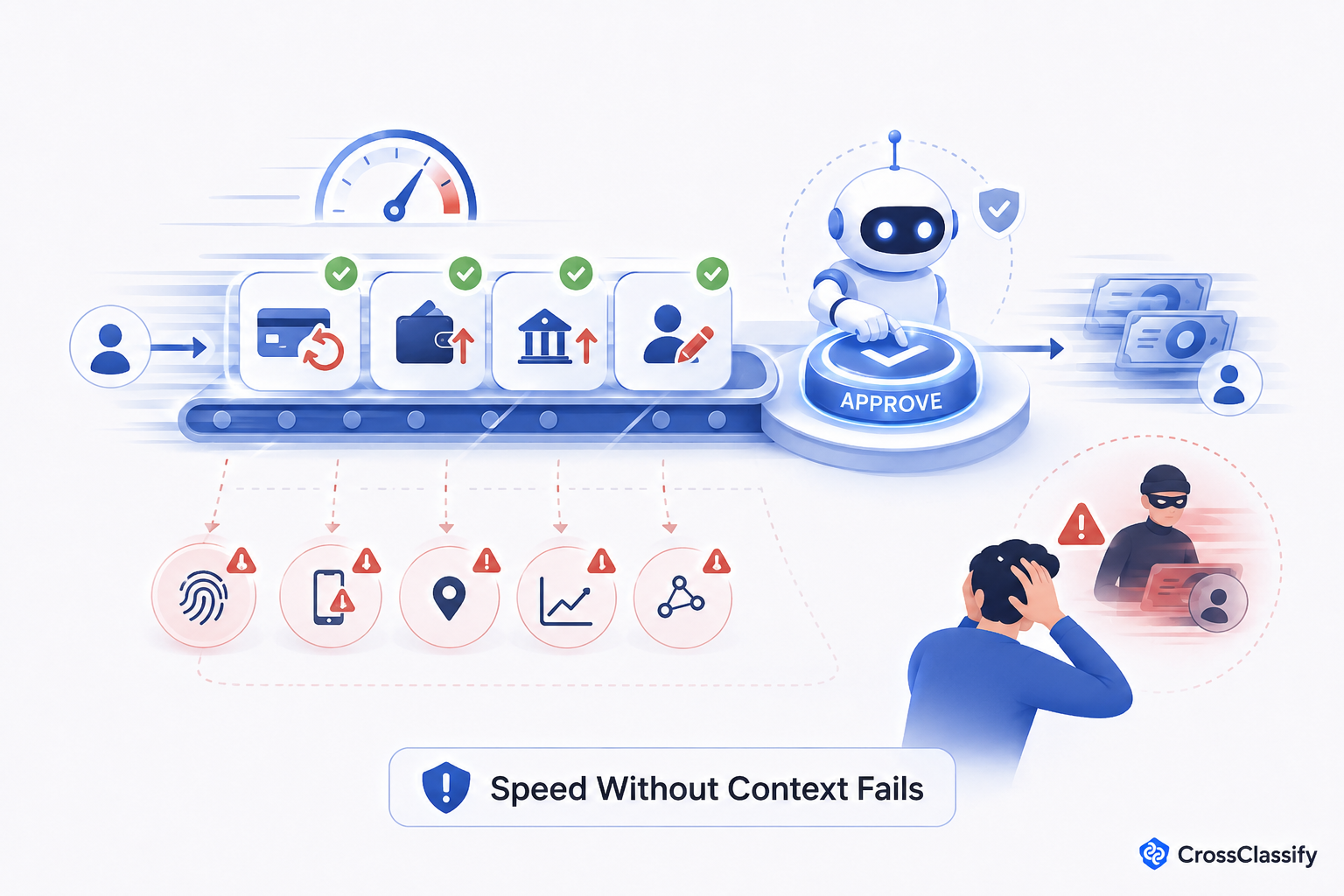
Risk begins when the agent is trusted more than the session, the user, or the behavior behind the request.
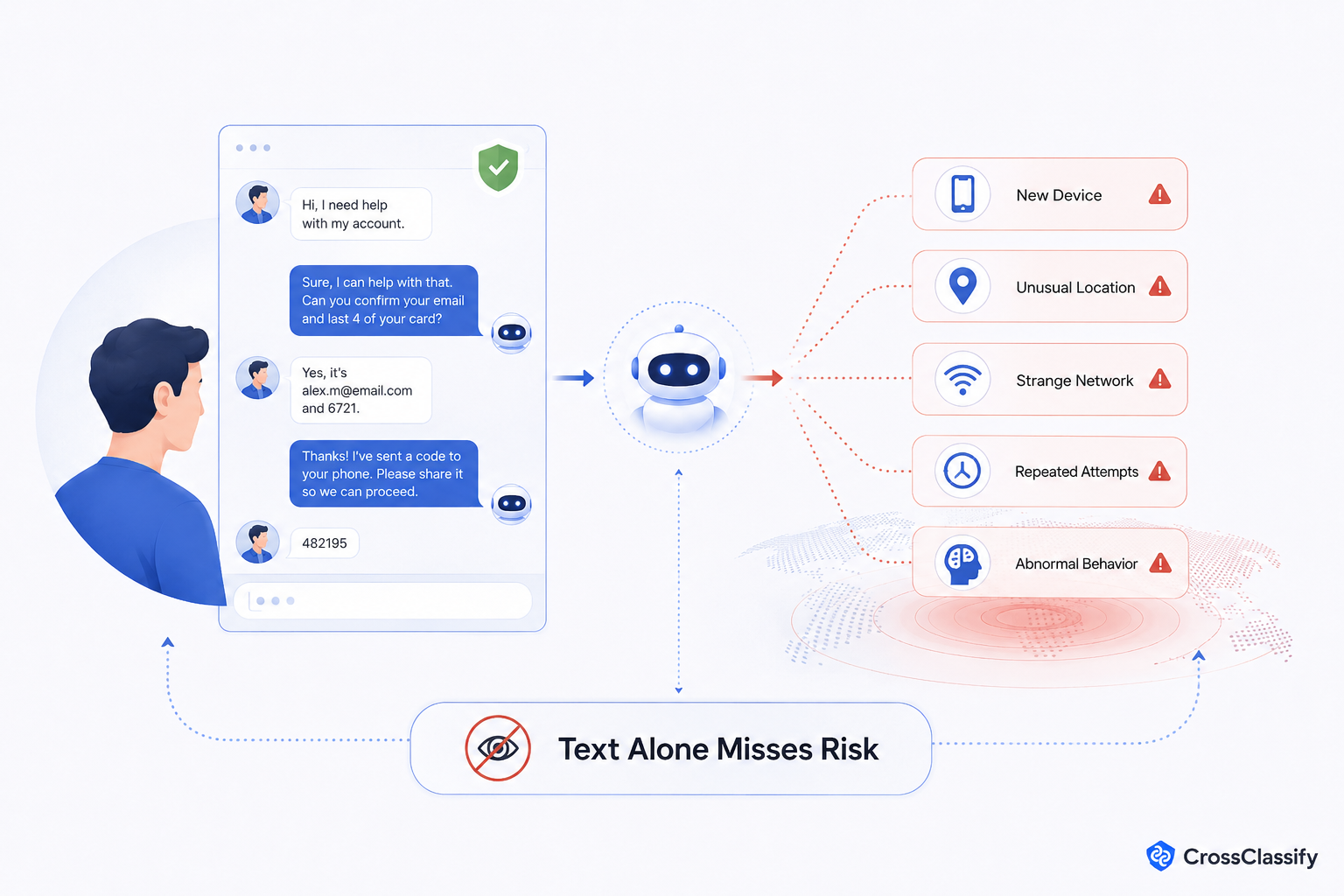
A customer may sound legitimate in a support conversation, but the session may come from a new device, unusual location, risky network, or behavior pattern that does not match the real account owner. A fraudster may use persuasive language, stolen personal information, and a believable story. If the AI agent only looks at text, it may miss the identity context.
High risk customer actions are attractive to attackers because they often combine urgency, emotion, and business pressure. Support teams want to help. Operations teams want speed. Customers want resolution. Fraudsters exploit that tension.
AI agents can make the process faster, but speed without risk context can make fraud easier.
What usually goes wrong
Companies often make four mistakes.
- They automate too close to the final decision and let the agent recommend approval without enough context.
- They treat all customer requests the same even when the risk is very different.
- They rely only on policy text instead of behavior, device, and session signals.
- They do not separate low risk actions from high risk actions.
An agent can answer a billing question with limited risk. It should not change a payout method without stronger checks.
A safer implementation path
A better path starts with classification.
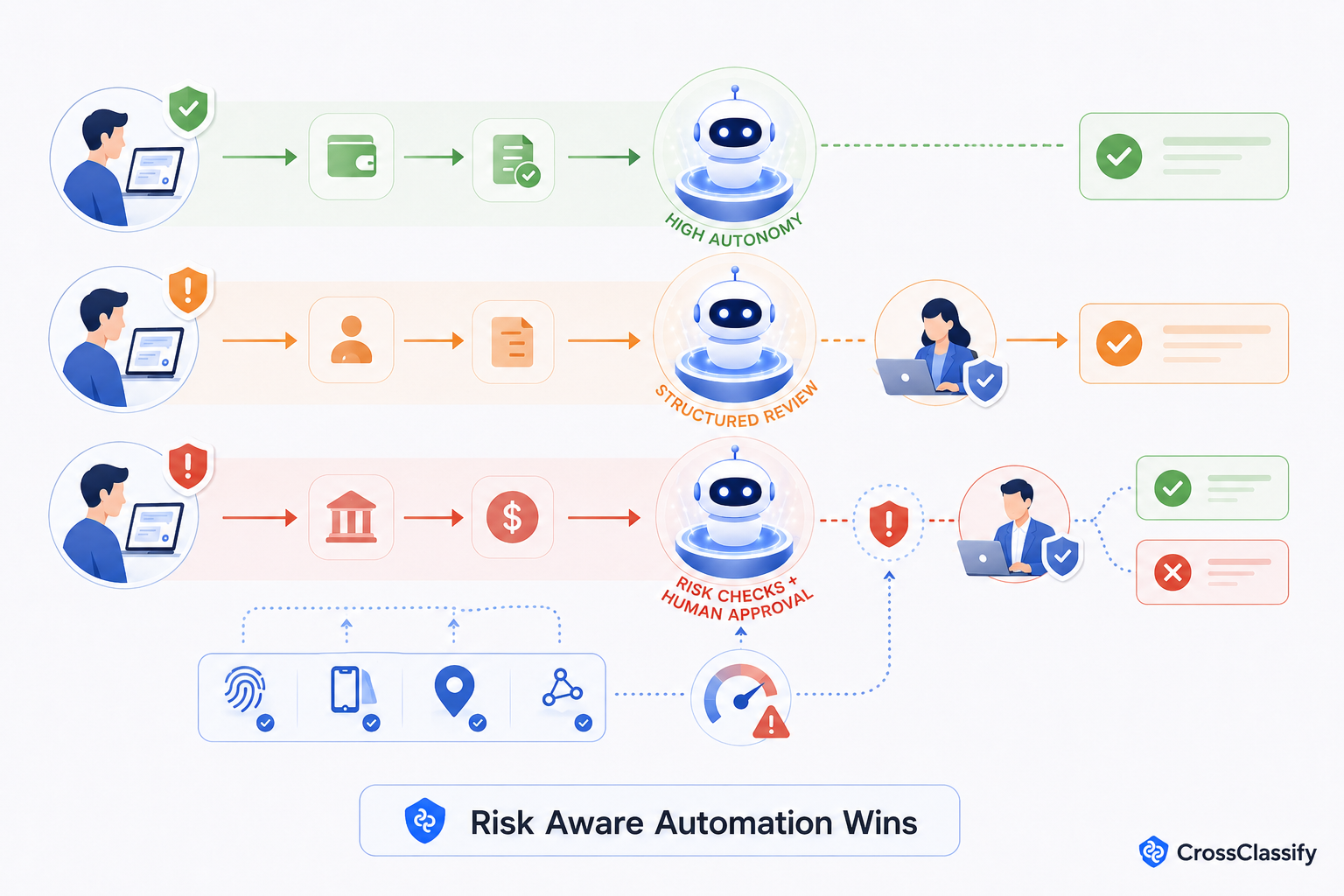
Divide workflows into low risk, medium risk, and high risk actions. Let AI agents handle low risk tasks with more autonomy. Let them assist medium risk tasks with structured review. Require human approval and risk checks for high risk actions.
For high risk actions, the agent should not be the only decision layer. It should receive risk context and present it clearly.
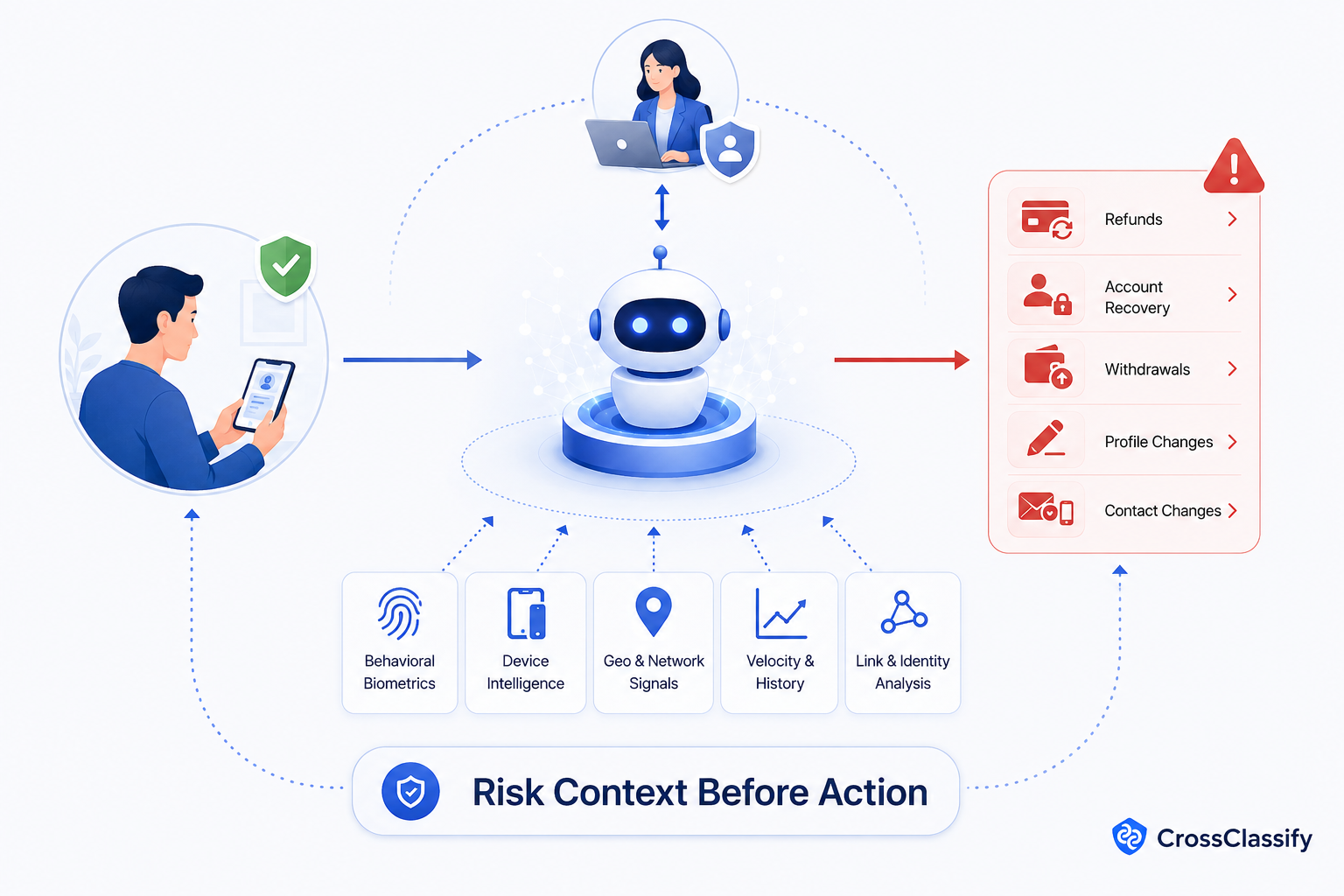
Useful signals include account age, device reputation, behavioral consistency, login history, geolocation changes, network signals, velocity, repeated attempts, bot indicators, account link patterns, and abnormal post login behavior.
The agent should explain what it found, what is missing, and what requires review. It should not quietly approve a sensitive action because the request sounds convincing.
Where CrossClassify fits
AI agents can support support teams, fraud teams, and operations teams, but they still need a way to understand whether the user journey looks trustworthy.
This is where account takeover protection can support the wider security layer by helping teams detect suspicious behavior around login, account recovery, profile changes, and other sensitive actions. When AI agents assist these workflows, risk signals can help decide whether to continue, add friction, escalate, or block a risky action.
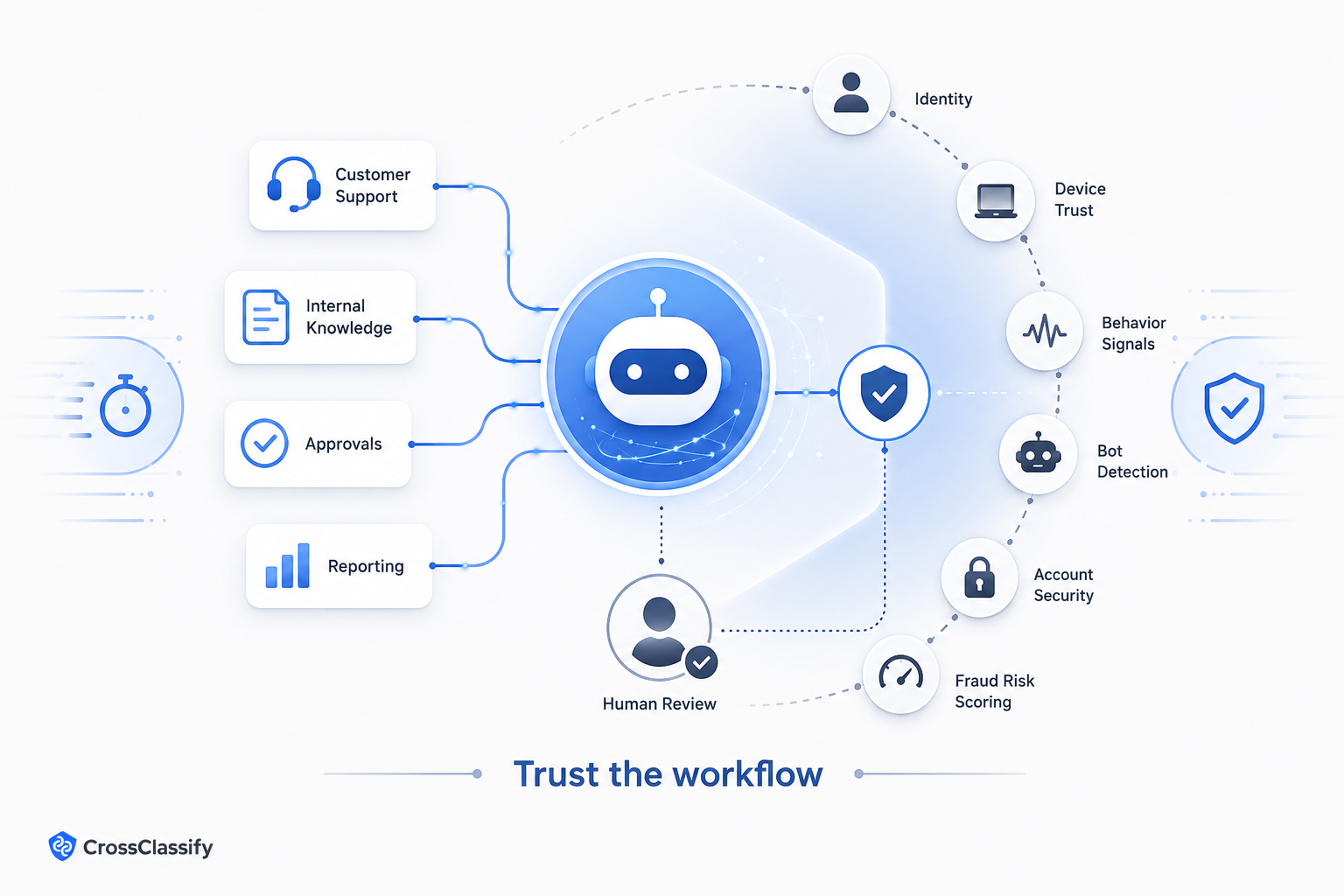
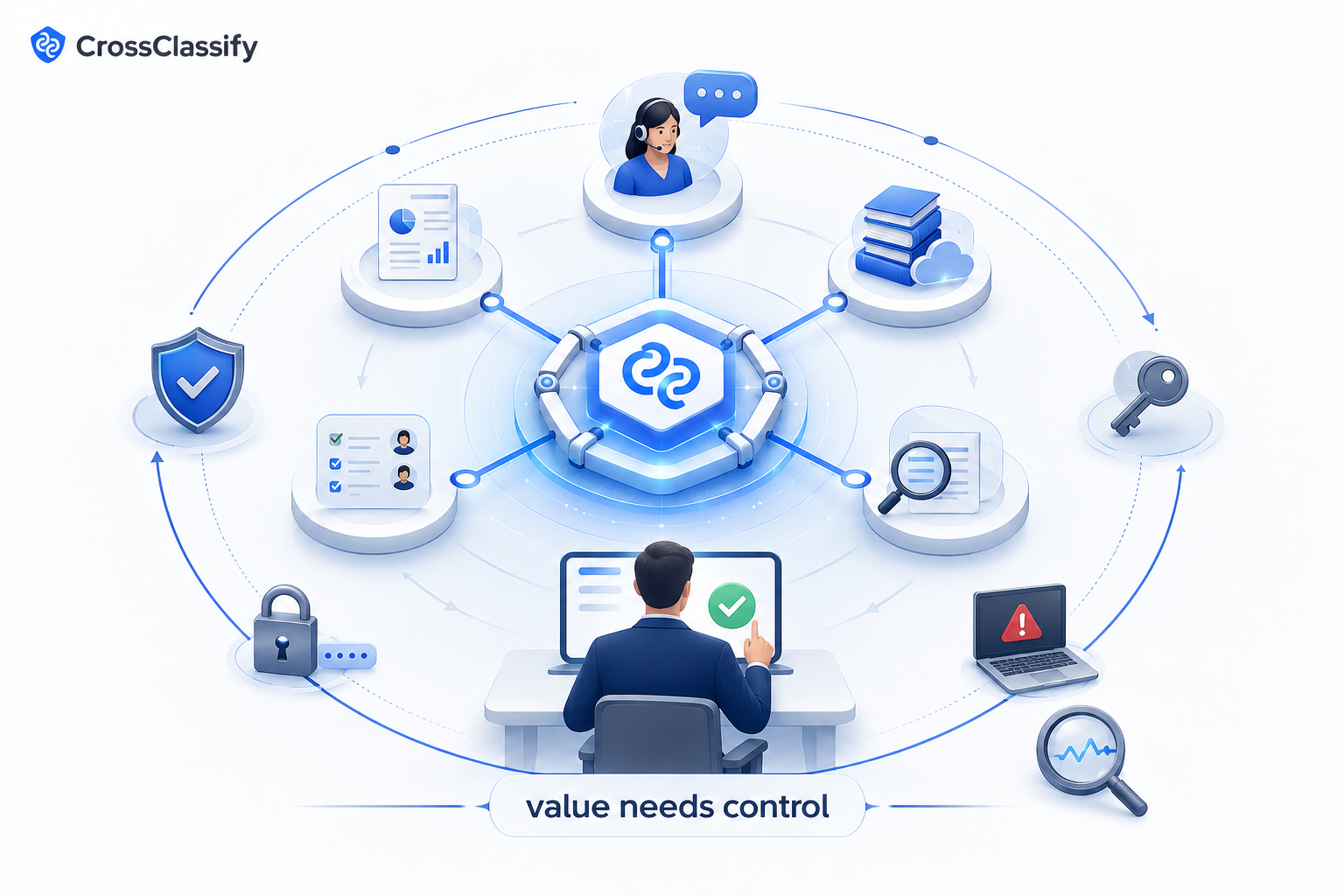
CrossClassify can also support high risk workflows with behavioral biometrics, device fingerprinting, bot detection, suspicious device detection, link analysis, geo analysis, and fraud risk scoring. The point is not to make the agent the fraud engine. The point is to give the business a stronger trust layer around the workflow the agent is helping with.
Conclusion
AI agents can make customer operations faster, but the most valuable workflows are often the most sensitive. Refunds, account recovery, withdrawals, and profile changes need stronger protection than simple chat automation.
The best approach is not full automation first. It is risk aware automation. Let agents summarize, route, explain, and assist. Let fraud signals, identity context, device intelligence, and human review protect the moments where money, access, and trust are at stake.
See How CrossClassify Secures the New AI Agent Attack Surface
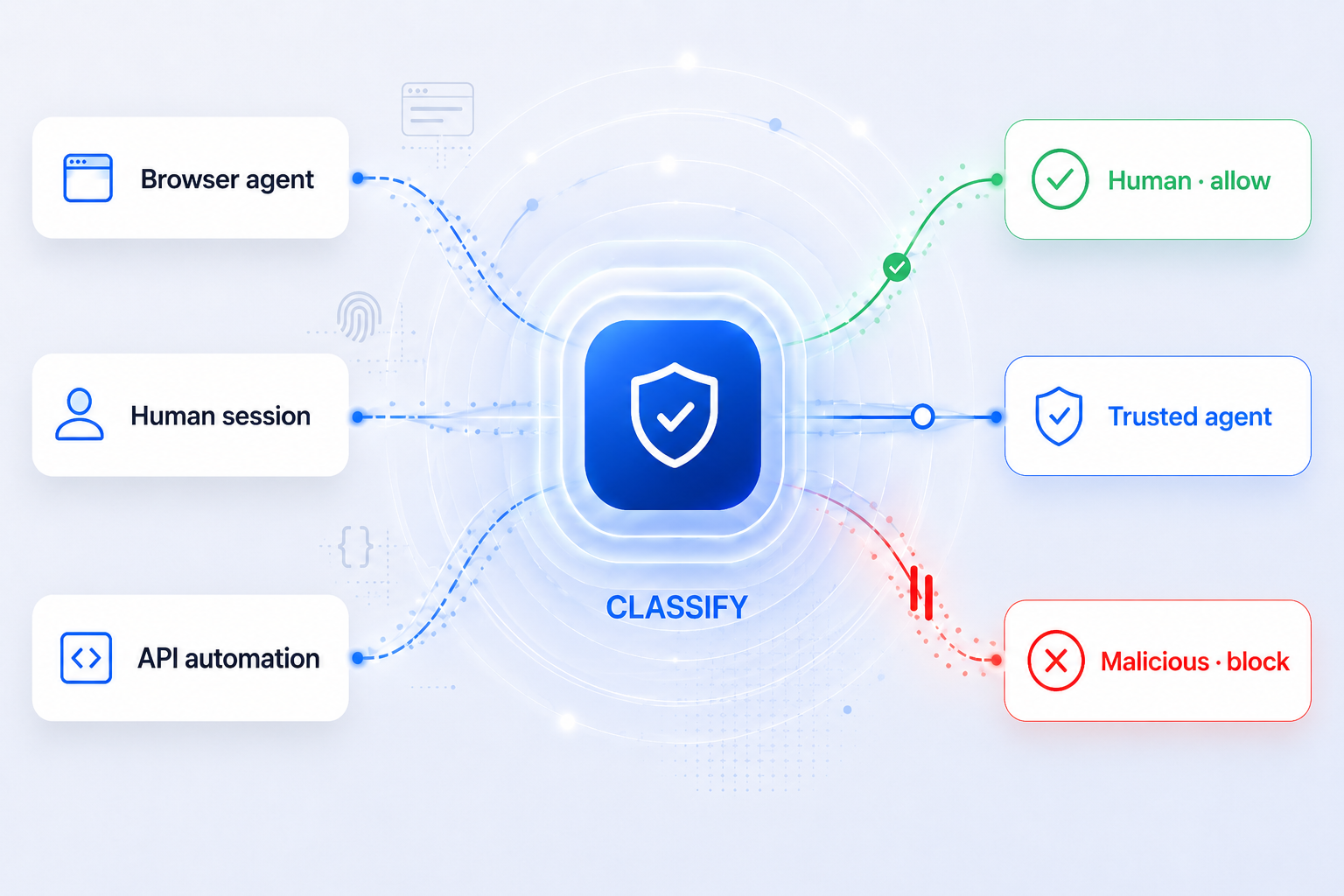
Classify human sessions, trusted agents, and malicious automation before requests turn into risk
Explore CrossClassify today
Detect and prevent fraud in real time
Protect your accounts with AI-driven security
Try CrossClassify for FREE—3 months
Share in
Related articles
Frequently asked questions
Let's Get Started
Create your free
account today
Discover how to secure your app against fraud using CrossClassify
No credit card required