Last Updated on 20 May 2026
Agentic AI for Business: What Leaders Should Know Before Adoption
Share in
Introduction
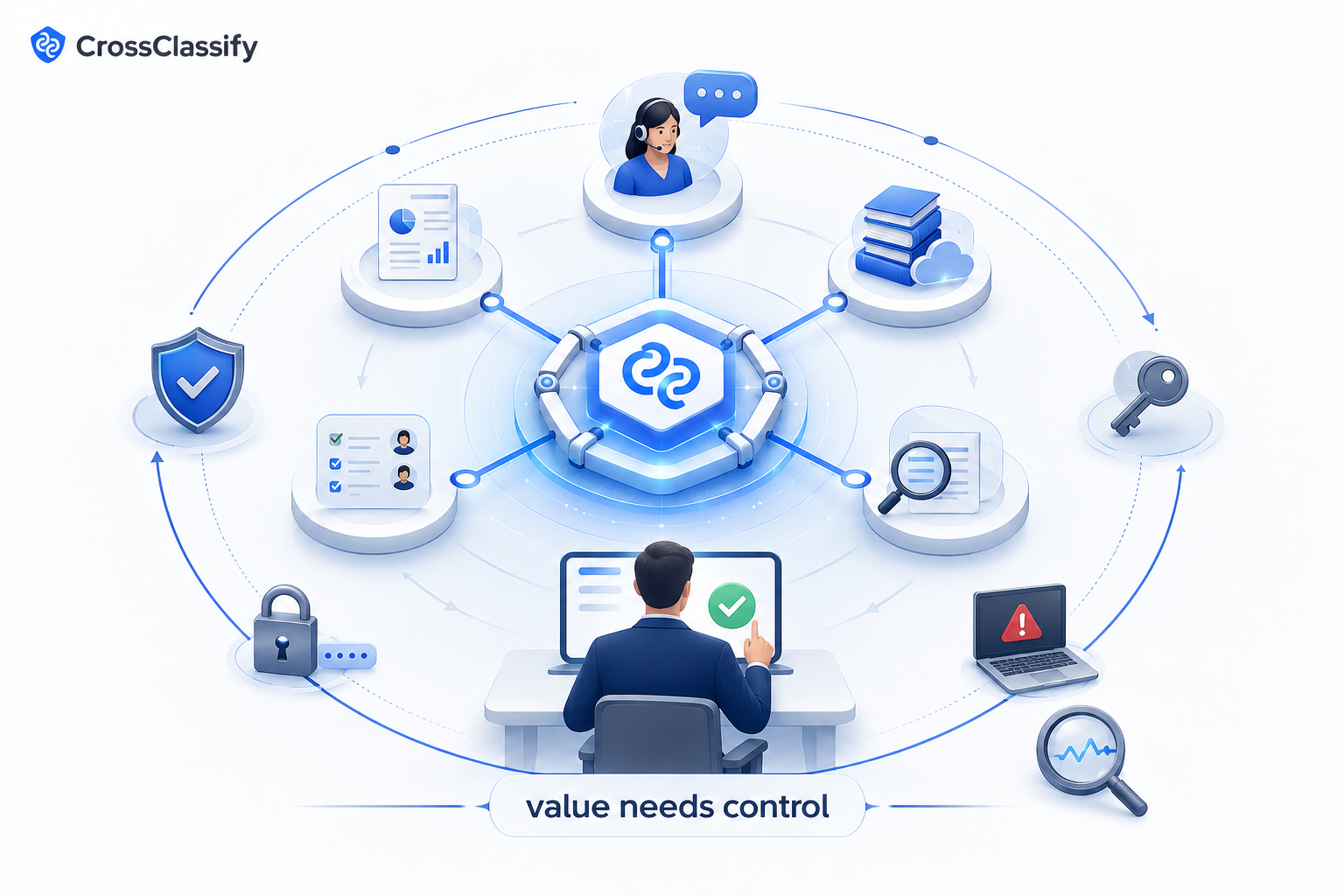
AI agents are moving business leaders from simple chatbot experiments toward systems that can plan, decide, and act across real workflows.
That is the opportunity.
It is also the risk.
A basic chatbot answers a question. An AI agent may read a customer record, check a policy, draft a reply, create a task, route a ticket, summarize a report, or trigger a workflow. Security guidance describes agentic AI systems as systems that rely on AI models to interpret information, reason, make decisions, and take actions through tools, data sources, memory, and planning workflows. It also explains that agentic AI differs from traditional generative AI because it can operate with more autonomy and pursue goals across multiple steps.
For business leaders, the important question is not whether AI agents are interesting. The important question is where they should be trusted first.
Watch the Video Summary
Agentic AI for Business: What Leaders Should Trust Before AI Agent Adoption

Why AI Agents Matter Now
AI agents matter because many business processes are not single tasks. They are chains of small decisions.
A customer support issue may require reading the ticket, checking the customer tier, reviewing previous orders, deciding whether a refund is allowed, drafting a message, and escalating if the request looks suspicious.
An operations workflow may require collecting information from several systems, summarizing status, assigning responsibility, and following up when something is missing.
An internal knowledge task may require searching policies, extracting the right answer, checking whether the employee should see the information, and creating a usable summary.
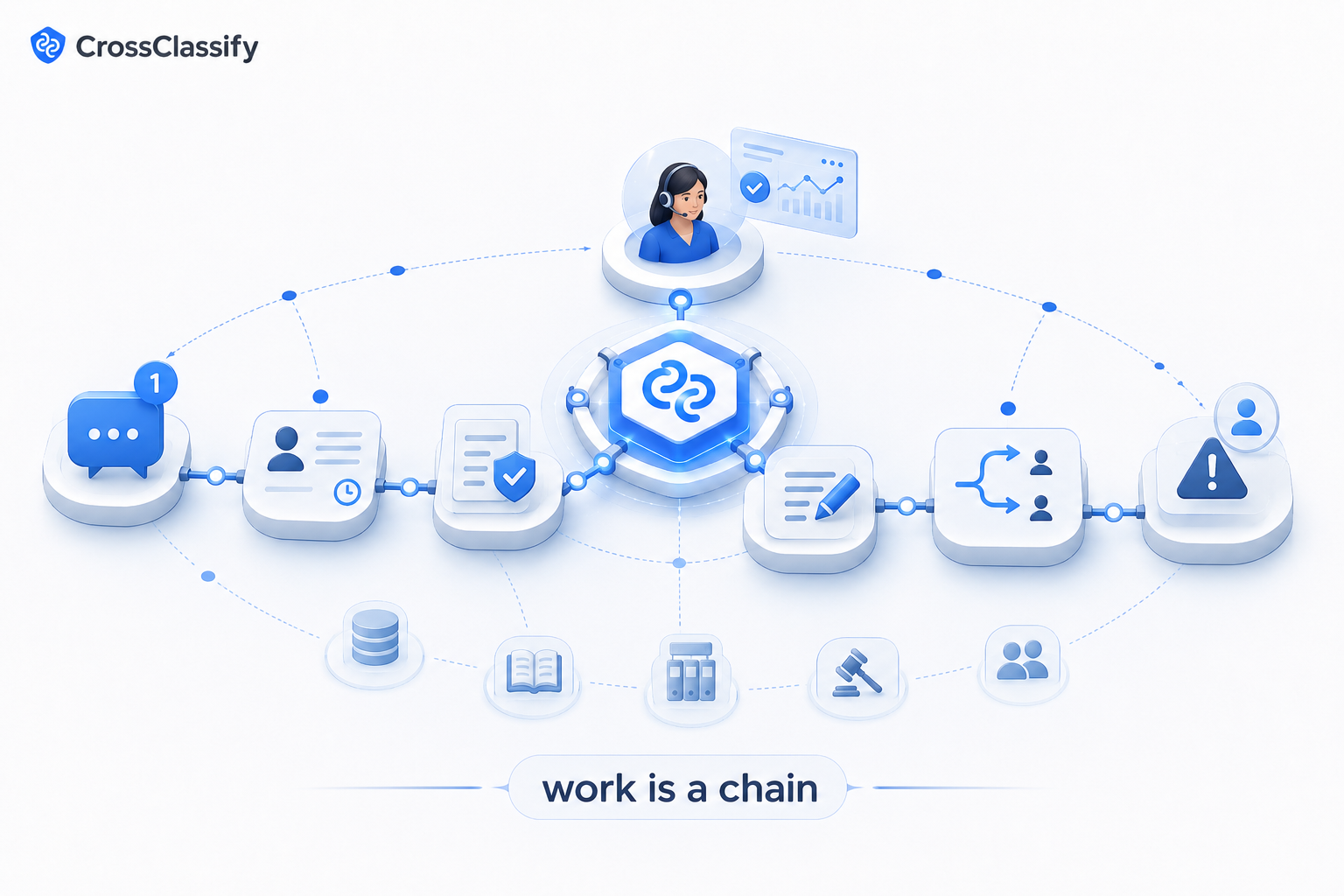
This is why AI agents for business are becoming more interesting than generic AI assistants. They can support the way work actually happens.
The value is not only faster writing. The value is faster routing, faster review, faster decision support, fewer repetitive tasks, and better use of company knowledge.
What Agentic AI Means in Business Language
Agentic AI is best understood as AI that can help complete a goal, not just answer a prompt.
For a business leader, an AI agent usually has four parts:
A goal
The goal might be to resolve a support ticket, prepare a sales brief, summarize customer complaints, route an invoice, or monitor operational exceptions.
Context
The agent needs information. That may include policies, customer history, internal documents, product data, order records, or previous messages.
Permissions
The agent may be allowed to read information, draft messages, create tasks, request approval, or trigger actions.
Controls
The business needs limits. Controls decide what the agent can access, what it can do alone, what requires human review, and what must be logged.
The mistake many companies make is treating AI agents as a productivity tool only. They are also an operating model change.
Practical AI Agent Workflows for Companies
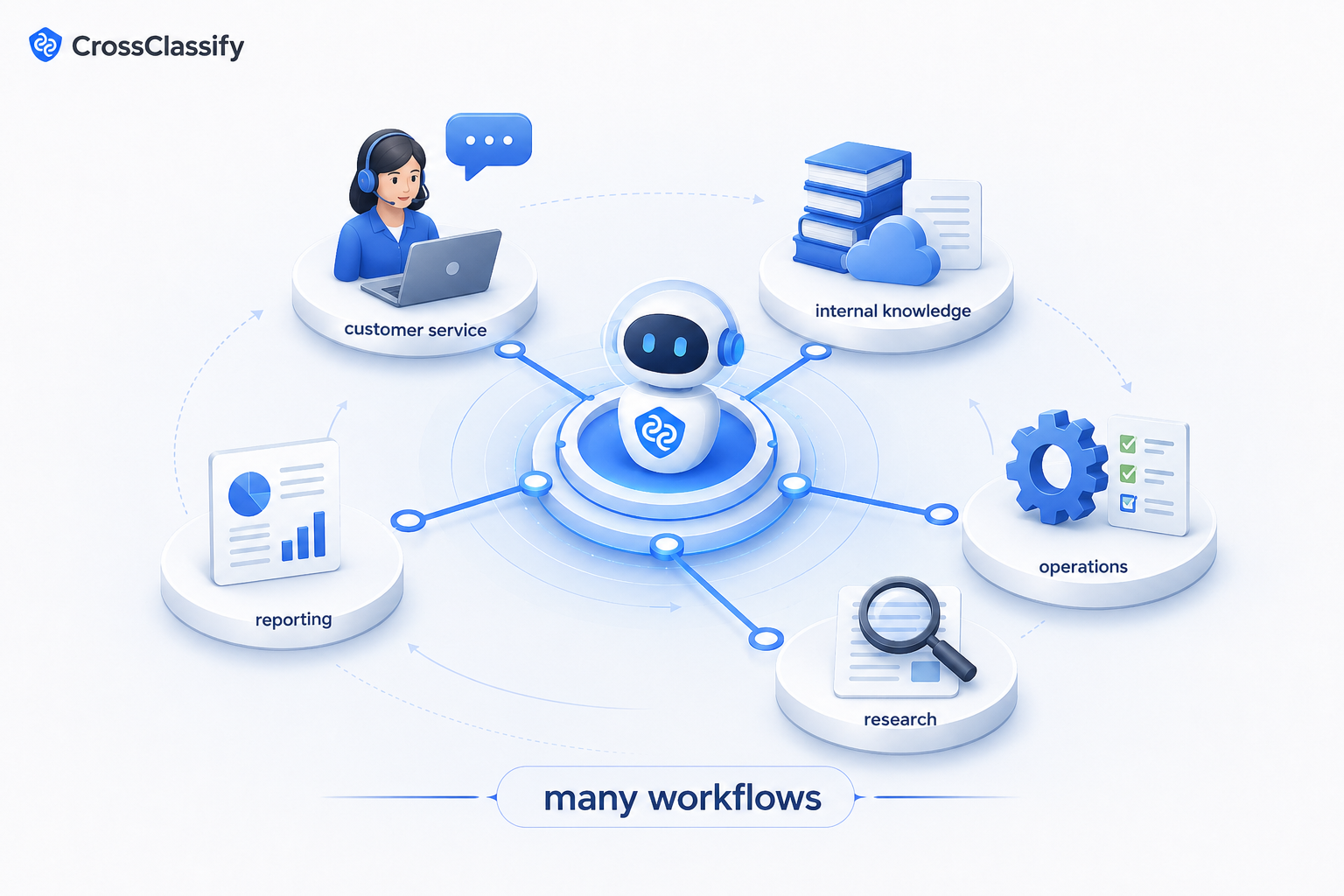
AI agents can support many workflows before they are trusted with sensitive actions.
Customer service
AI agents can triage tickets, draft responses, summarize customer history, classify complaints, prepare refund recommendations, and escalate risky requests.
Internal knowledge
AI agents can help employees search policies, onboarding documents, product notes, compliance guides, and internal procedures.
Operations
AI agents can route tasks, identify missing information, prepare status updates, track recurring delays, and summarize process exceptions.
Reporting
AI agents can turn raw updates into weekly summaries, management dashboards, executive briefs, and risk reports.
Research
AI agents can gather public information, compare options, summarize documents, prepare competitor notes, and support strategic planning.
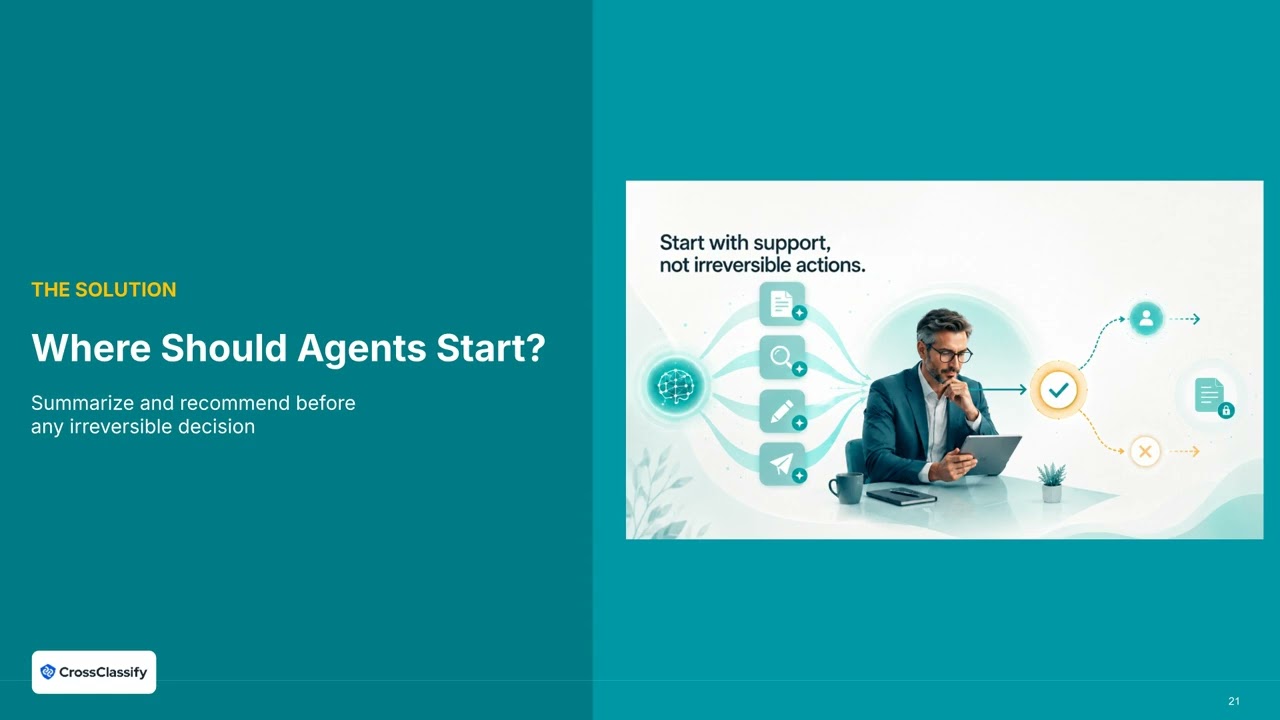
The safest starting point is usually decision support, not autonomous action.
Cybersecurity and Fraud Risks Created by Poor AI Agent Adoption
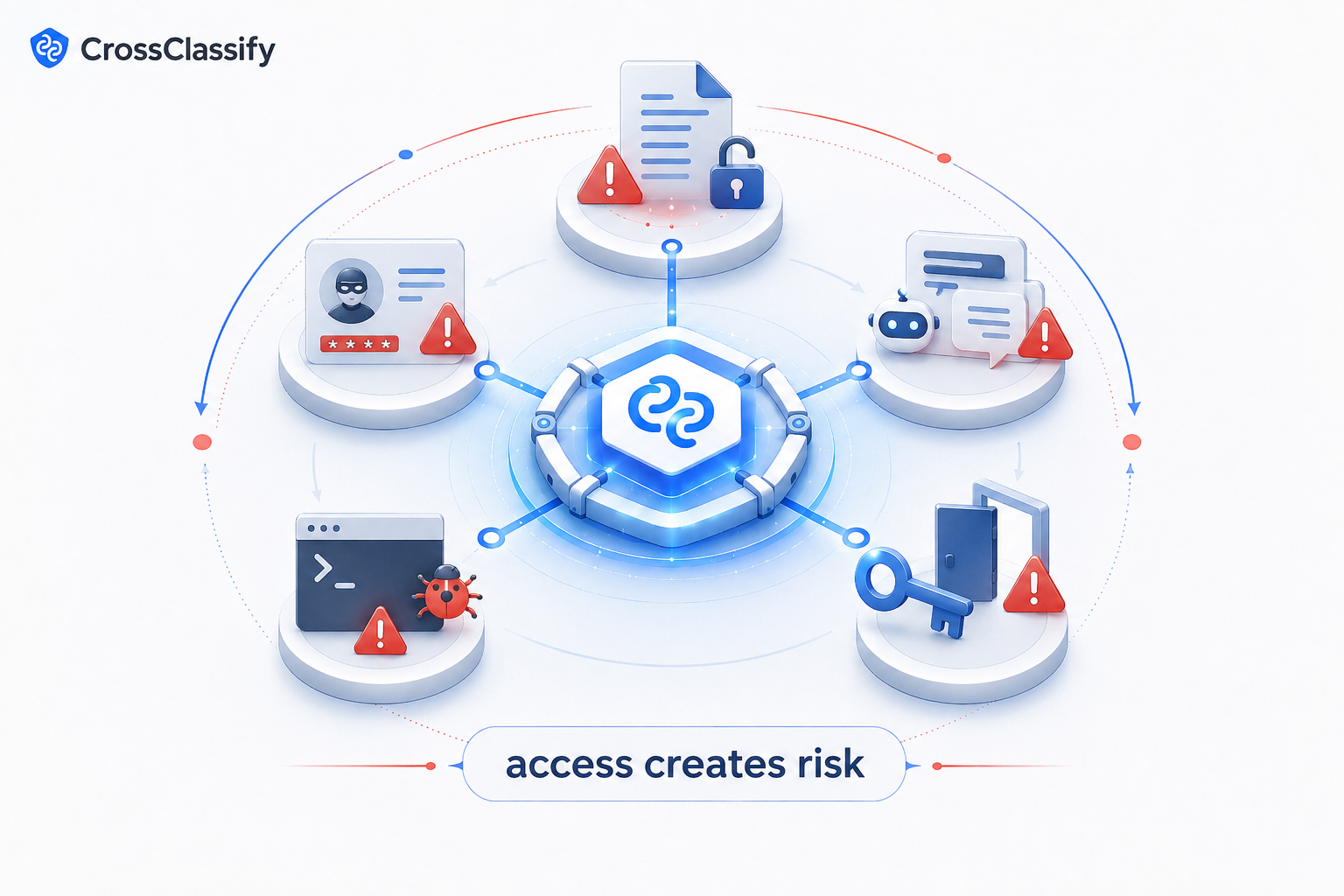
Agentic AI becomes risky when it receives too much access too early.
Joint guidance on agentic AI adoption recommends aligning agentic AI risks with an organization’s existing security model and never granting broad or unrestricted access, especially to sensitive data or critical systems. It also recommends using agentic AI first for low risk and non sensitive tasks.
The main risks are practical.
Data leakage
If an AI agent can search across internal documents without strong access rules, employees may see information they should not see.
Account abuse
If an AI agent helps with account recovery, refunds, profile changes, or customer identity questions, attackers may try to manipulate the workflow.
Bot driven abuse
Bad actors may use automated traffic to probe AI assisted support flows, create fake accounts, or test refund and recovery weaknesses.
Prompt manipulation
OWASP identifies prompt injection as a risk where crafted inputs can manipulate an LLM and lead to unauthorized access, data breaches, or compromised decisions. OWASP also highlights sensitive information disclosure and excessive agency as important LLM application risks. OWASP
Overreliance
If employees treat AI output as always correct, bad decisions can scale faster than before.
The risk is not that AI agents are bad. The risk is that companies give them real workflow influence without the same identity, fraud, access, and monitoring discipline used for other business systems.
What Usually Goes Wrong When Companies Adopt AI Agents Poorly
Poor adoption usually follows a familiar pattern.
A team starts with a promising demo. The demo works because the environment is clean, the data is simple, and the task is narrow.
Then the company expands the agent too quickly.
The agent gets access to more documents. It gets connected to more workflows. Employees begin using it for edge cases. Support teams ask it to help with account issues. Operations teams use it to move tasks forward. Leadership expects productivity gains before governance catches up.
That is when problems appear.
Nobody owns the workflow
AI agent adoption often fails when every team experiments independently. No one defines what the agent can access, what it can do, and who is accountable when it makes a poor recommendation.
Sensitive actions are automated too early
Refunds, account recovery, withdrawals, profile changes, payment changes, and access changes should not be early autonomous workflows.
There is no abnormal behavior monitoring
Companies may monitor the AI tool, but not the user behavior around it. This creates blind spots when attackers abuse accounts, devices, sessions, or support flows.
The business measures speed but not risk
If teams only measure ticket reduction or task completion, they may miss rising fraud, abuse, data exposure, or customer trust problems.
A Better Implementation Path
A better path starts with business value and risk together.
Step 1: Map useful but low risk workflows
Start with workflows where the agent helps employees, but does not make irreversible decisions. Examples include ticket summarization, knowledge search, meeting summaries, draft replies, and internal status reports.
Step 2: Define what the agent can read
Access control matters. An AI agent should not automatically inherit every document or system connection available inside the company.
Step 3: Define what the agent can do
Reading, drafting, recommending, routing, and executing are different levels of trust. Treat them differently.
Step 4: Keep humans in sensitive loops
Human review should remain in place for account recovery, refunds, financial actions, access changes, legal matters, compliance exceptions, and suspicious behavior.
Step 5: Monitor identity, device, behavior, and abuse signals
AI agent adoption should not weaken digital trust. When a customer, employee, or attacker interacts with an AI enabled workflow, companies still need to understand who is behind the action, whether the device is suspicious, and whether the behavior is normal.
NIST’s AI Risk Management Framework describes AI risk management through functions such as Govern, Map, Measure, and Manage. That is a useful mindset for business leaders because it keeps AI adoption connected to ownership, context, measurement, and controls. NIST AI Resource Center
Where CrossClassify Fits Naturally
CrossClassify is not an AI agent platform. It should not be positioned as a tool for building AI agents.
Its natural role is different.
AI agents can make workflows faster, but companies still need a digital trust layer around the accounts, sessions, devices, and behaviors that feed those workflows. CrossClassify supports that layer by analyzing identity, behavior, network, and device signals to detect suspicious behavior, bots, fake accounts, account takeover, and account abuse.
For example, when an AI enabled workflow touches customer accounts, account changes, support requests, payments, or high risk actions, risk teams may need stronger context about the user behind the request. CrossClassify’s behavioral biometrics capabilities can support that wider security layer by helping teams detect abnormal behavior across sensitive journeys. This matters because AI automation should improve workflow speed without making abuse easier.
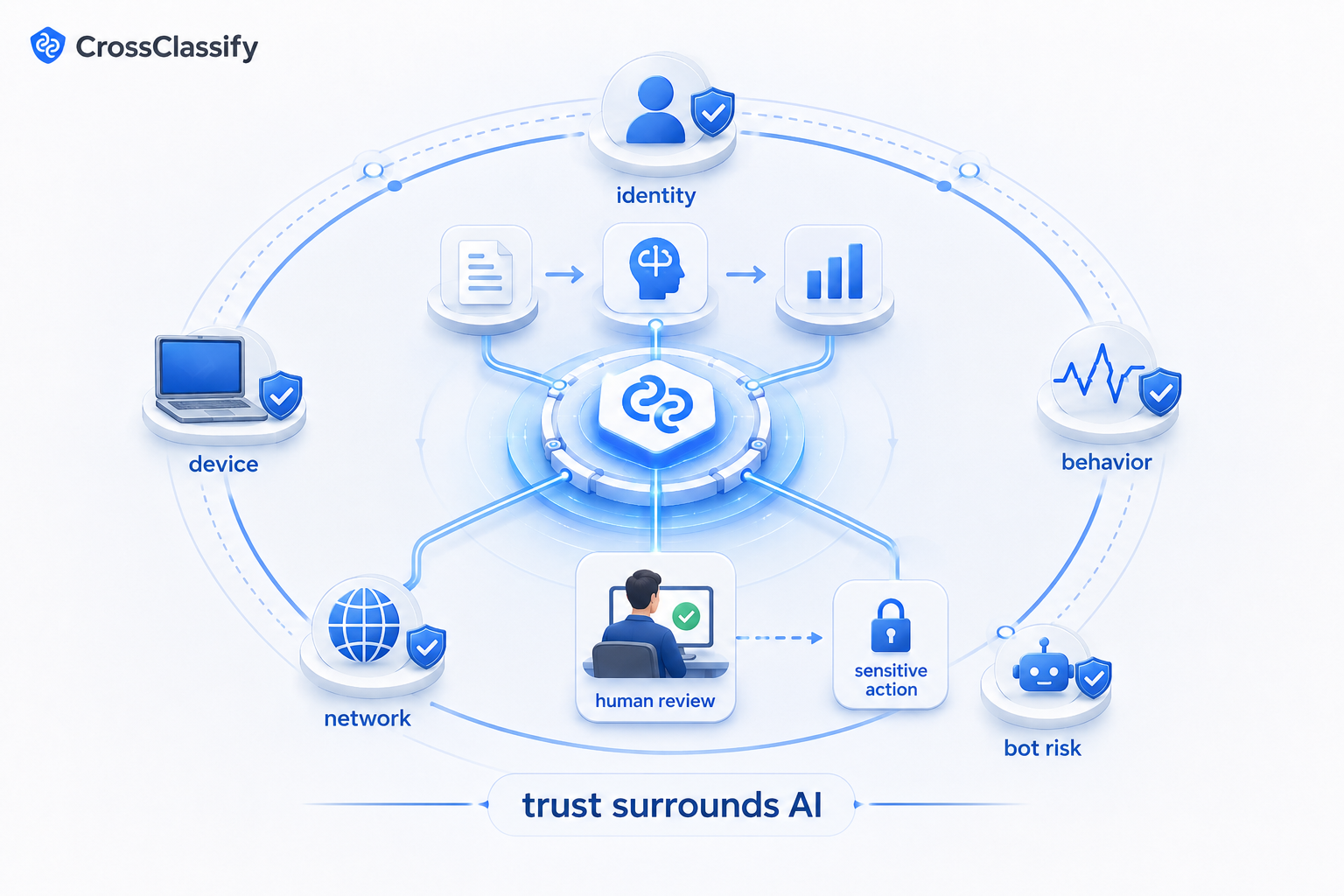
Device intelligence can also help. When companies automate more customer journeys, they need better visibility into suspicious devices, repeated account activity, and unusual access patterns. CrossClassify’s device fingerprinting solution supports this context without turning the AI agent itself into the center of the security strategy.
Conclusion
Agentic AI for business is not just another productivity trend. It is a new way to connect AI to work.
The companies that benefit most will not be the ones that automate everything fastest. They will be the ones that choose the right workflows, limit access, keep human review where it matters, and monitor identity, device, behavior, and fraud risk as AI becomes part of daily operations.
AI agents can create real business leverage. Secure adoption decides whether that leverage becomes durable.
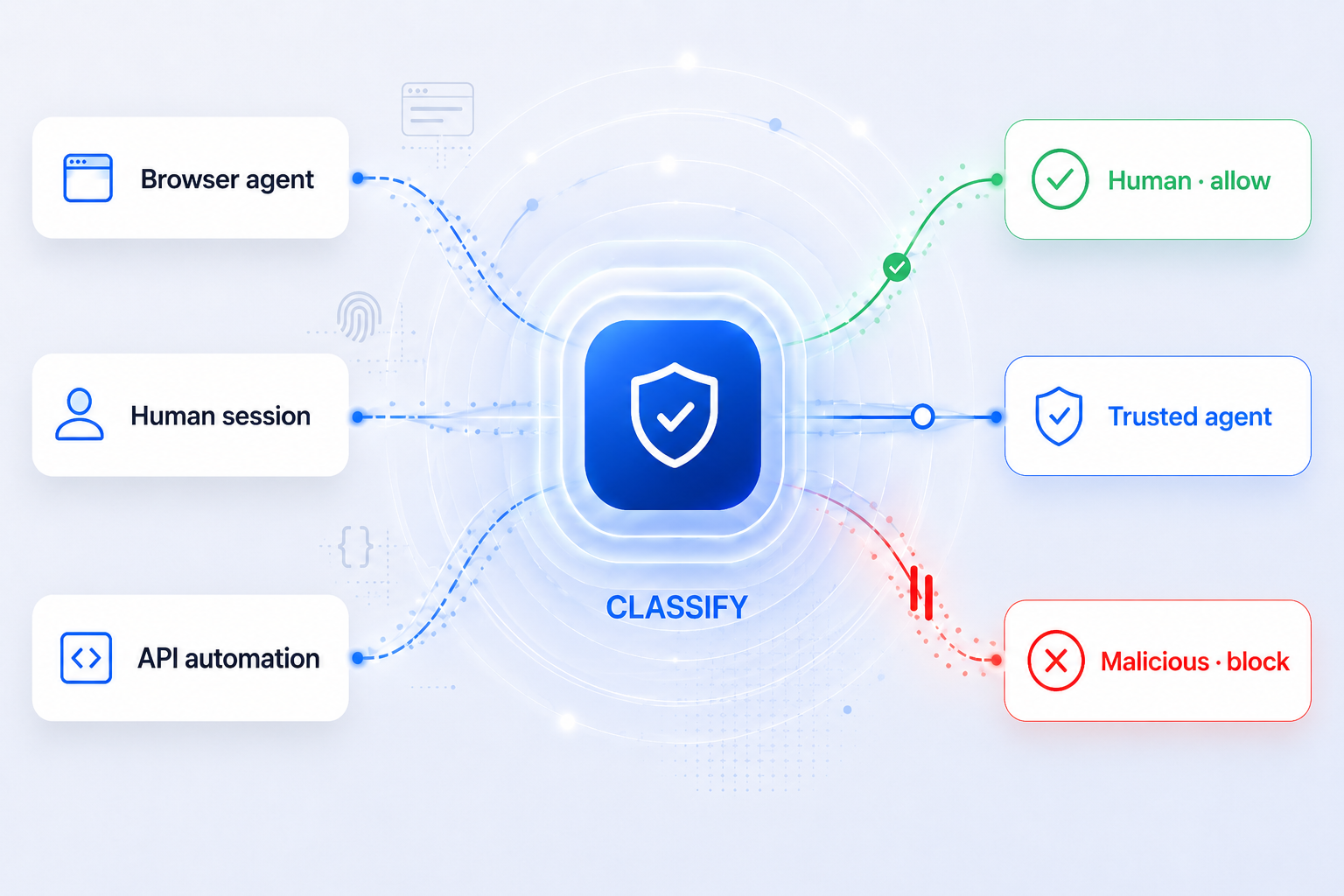
See How CrossClassify Secures the New AI Agent Attack Surface
Classify human sessions, trusted agents, and malicious automation before requests turn into risk
Explore CrossClassify today
Detect and prevent fraud in real time
Protect your accounts with AI-driven security
Try CrossClassify for FREE—3 months
Share in
Related articles


Frequently asked questions
Let's Get Started
Create your free
account today
Discover how to secure your app against fraud using CrossClassify
No credit card required