Last Updated on 21 May 2026
AI Agents for Customer Service: Automate Support Without Creating New Fraud Risk
Share in
Introduction
Customer service is one of the most attractive use cases for AI agents.
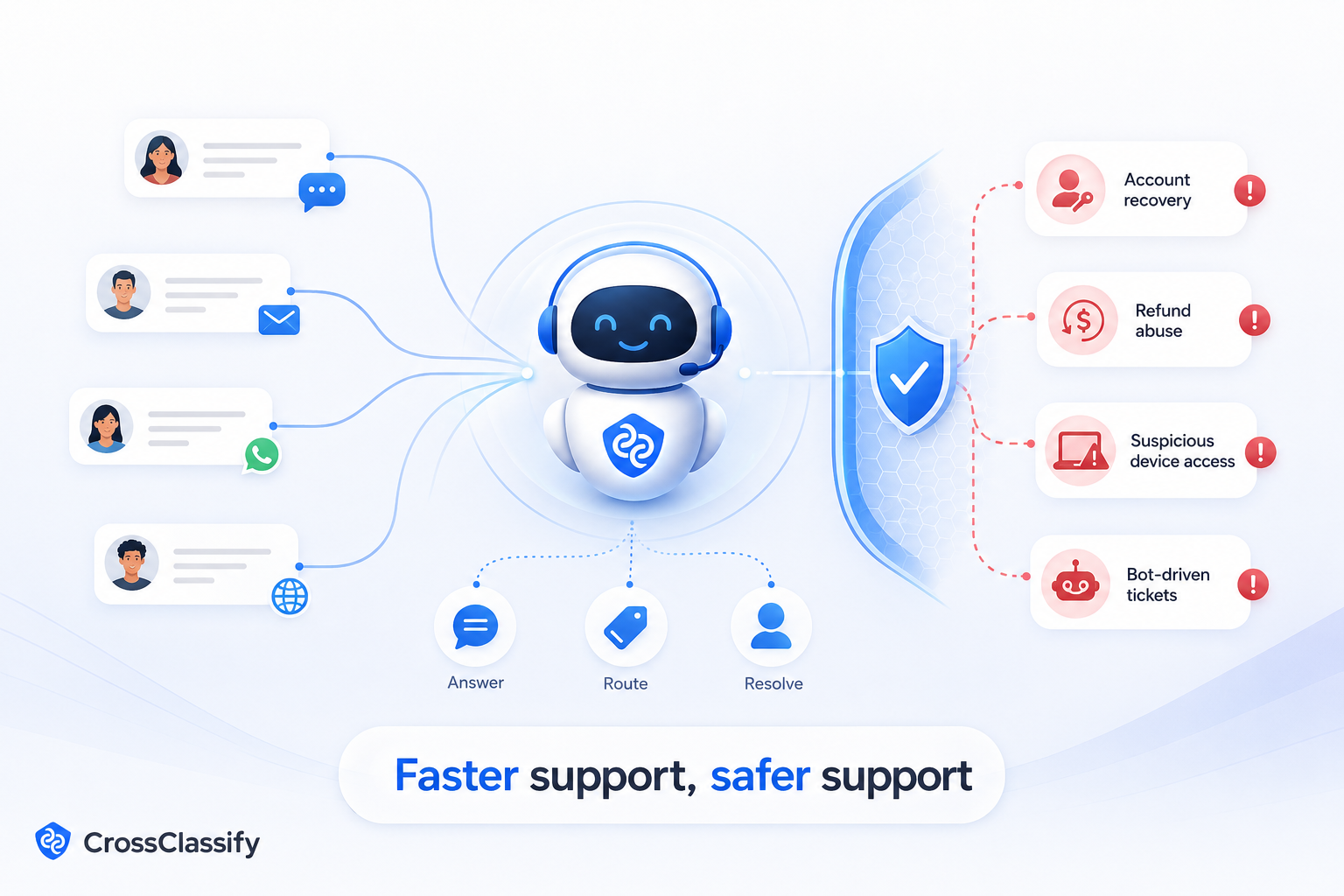
Support teams deal with repetitive questions, long queues, inconsistent answers, and pressure to resolve tickets faster. AI agents can help with triage, answer drafting, knowledge search, escalation, refund review, and account help.
But customer service is also where trust breaks easily.
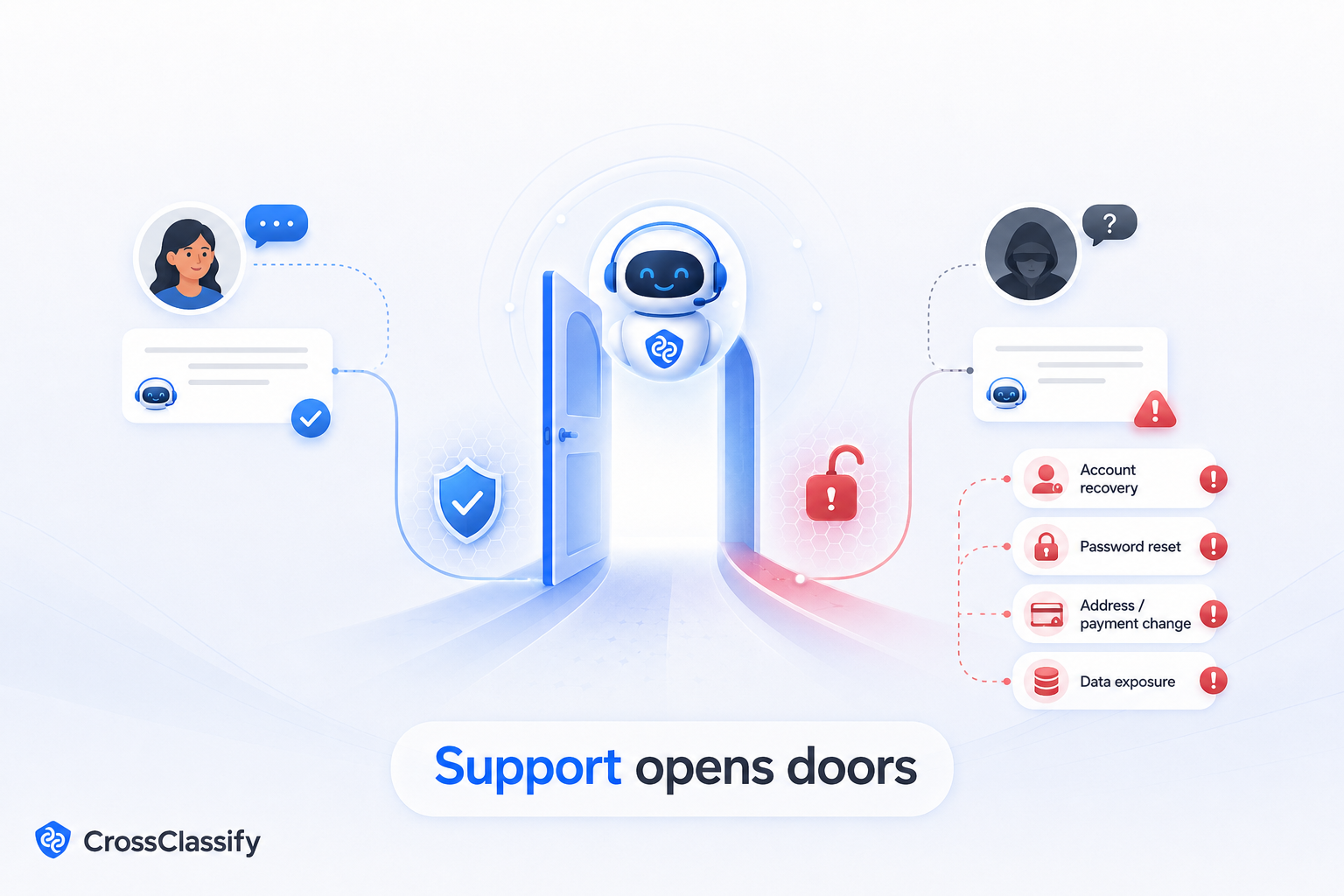
A support workflow may involve personal data, account recovery, refund decisions, address changes, payment questions, password resets, and angry customers. Attackers know this. They often look for the weakest path into an account, and customer support is frequently one of those paths.
AI agents can make support faster. Poorly controlled AI agents can also make support easier to manipulate.
Watch the Video Summary
AI Agents for Customer Service: Prevent Fraud Risk in Support Automation

Why AI Agents Matter Now in Customer Service
Most support teams have already tried chatbots. Many were useful for simple questions, but limited for real customer problems.
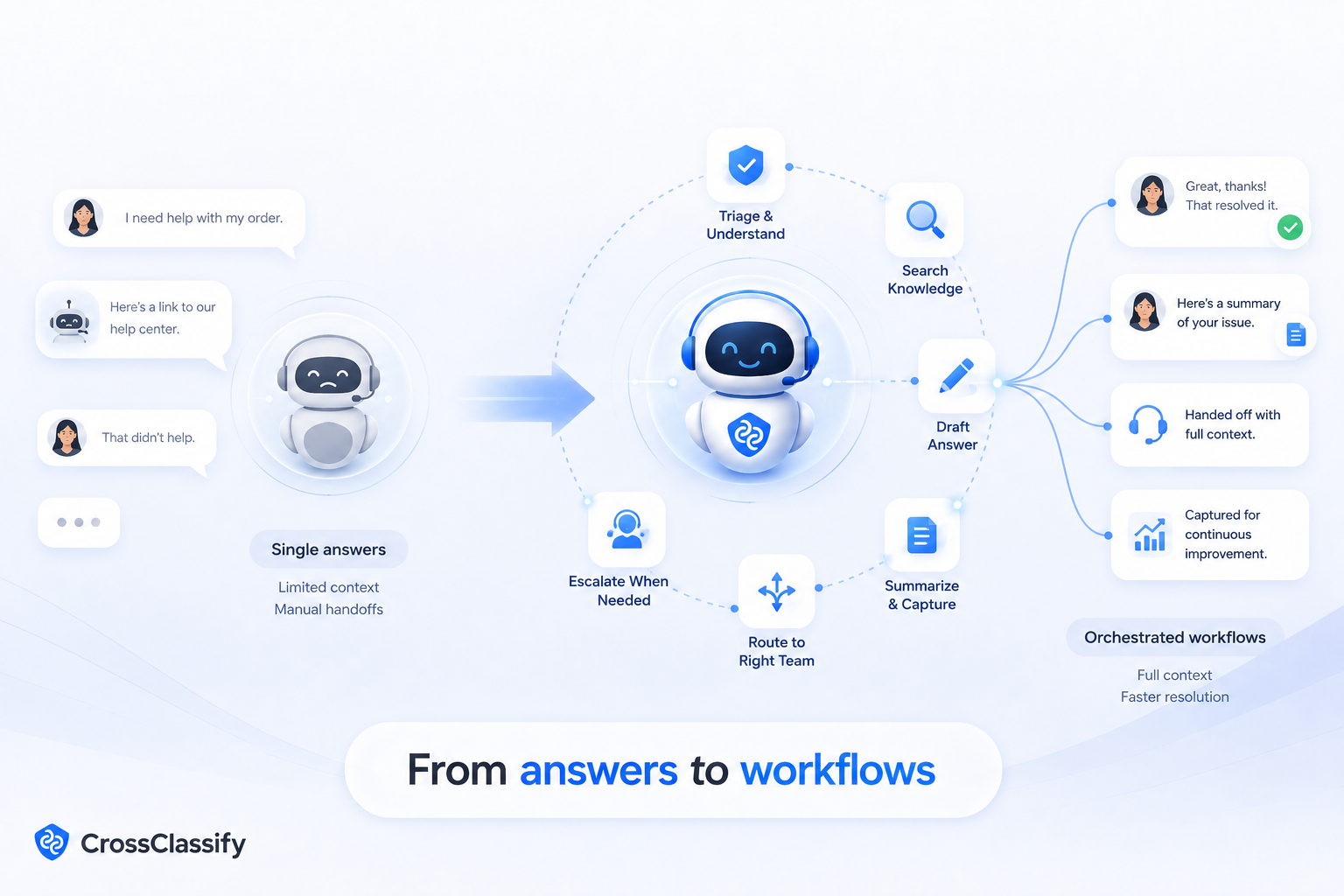
AI agents are different because they can support multi step work.
They can summarize the customer’s issue, search internal help content, check previous conversations, draft a reply, suggest the next action, route the ticket, and ask for human review when the request is sensitive.
That changes the value from deflection to workflow support.
For business leaders, the promise is clear:
- Faster first response.
- Better ticket routing.
- More consistent answers.
- Less repetitive work.
- More time for complex cases.
- Better support quality without only adding headcount.
OWASP notes that LLMs are being embedded more deeply into customer interactions and internal operations, which is why LLM application risks have expanded with adoption. (OWASP Gen AI Security Project)
Where AI Agents Help Support Teams Most
Ticket triage
AI agents can classify tickets by urgency, topic, sentiment, customer tier, product area, and risk level.
Answer drafting
Agents can draft replies based on approved knowledge sources, previous support patterns, and company policies.
Conversation summaries
When a ticket escalates, agents can summarize the issue so a human does not need to read a long thread from the beginning.
Refund recommendations
Agents can check policy rules and prepare a recommendation, while leaving final approval to a human for sensitive cases.
Account help
Agents can guide customers through common account questions, but identity sensitive actions need stronger review.
Escalation
Agents can detect when a case should move to security, fraud, compliance, billing, or a senior support specialist.
Where Customer Service Risk Begins
Support is not only a communication channel. It is often a pathway into customer accounts.
That means AI agents for customer service need security thinking from the start.
Account recovery abuse
If an attacker can persuade a support workflow to help reset access, change contact details, or bypass normal checks, AI automation can increase the speed of account takeover.
Refund and policy abuse
Fraudsters may test support responses to find refund patterns, exception language, or policy loopholes.
Data exposure
If an AI agent sees too much customer information, it may reveal sensitive details in a reply or summary.
Social engineering
Attackers may write persuasive messages that push the agent or support employee toward unsafe exceptions.
Bot driven ticket floods
Automated actors may create large volumes of tickets to test weaknesses or overwhelm support teams.
OWASP lists prompt injection, sensitive information disclosure, insecure plugin design, excessive agency, and overreliance among LLM application risks. For support leaders, these translate into practical concerns: manipulated requests, exposed data, unsafe actions, and employees trusting AI output without enough review. (OWASP)
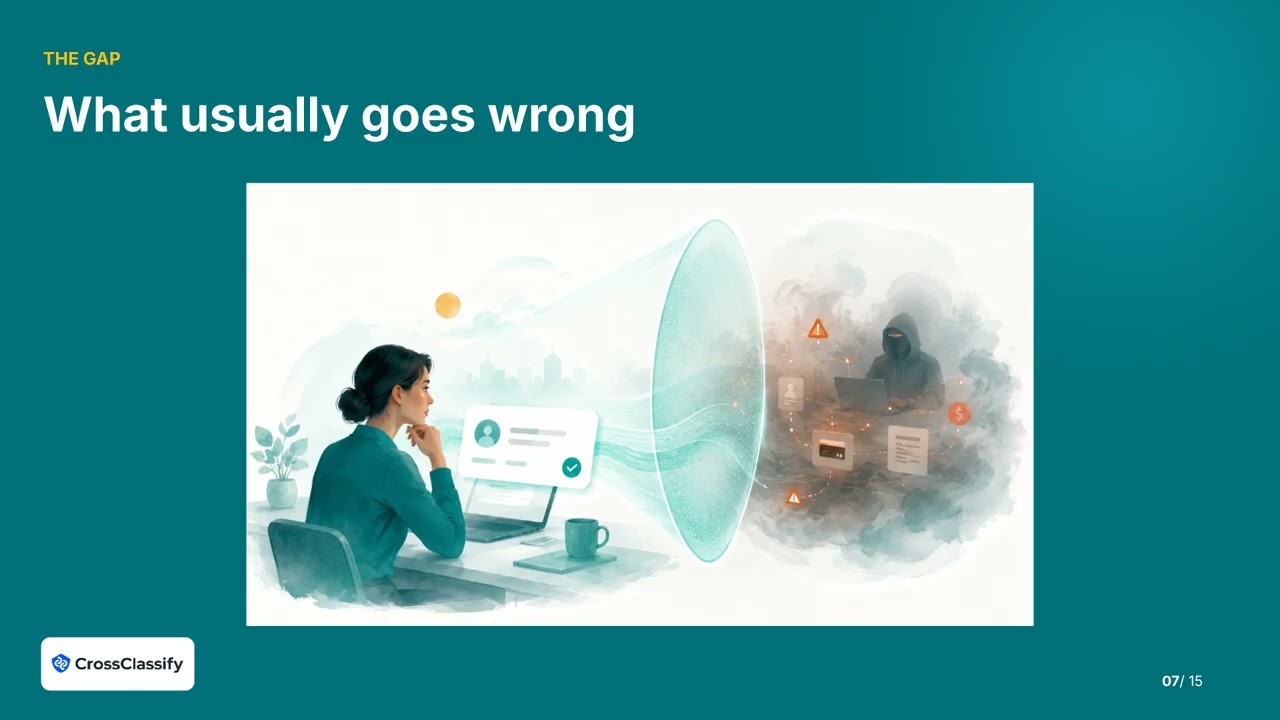
What Usually Goes Wrong When Companies Adopt Support Agents Poorly
They automate account help before defining identity risk
Customer support often handles identity sensitive issues. If the company does not clearly define which requests require stronger verification, the AI agent may make unsafe workflows feel routine.
They give the agent too much customer context
More data can improve answers, but it also increases exposure. Support agents should see the minimum information required for the task.
They treat all customers the same
A normal customer asking about shipping is different from a newly created account asking for a refund, a password reset, and a payment method change.
They optimize only for ticket volume
Lower ticket volume is useful, but it is not enough. Companies also need to monitor refund abuse, account takeover attempts, suspicious devices, bot activity, and abnormal behavior.
They remove human review from sensitive actions
AI agents should help humans make better decisions. They should not quietly approve risky account actions without review.
A Better Implementation Path for Customer Service AI Agents
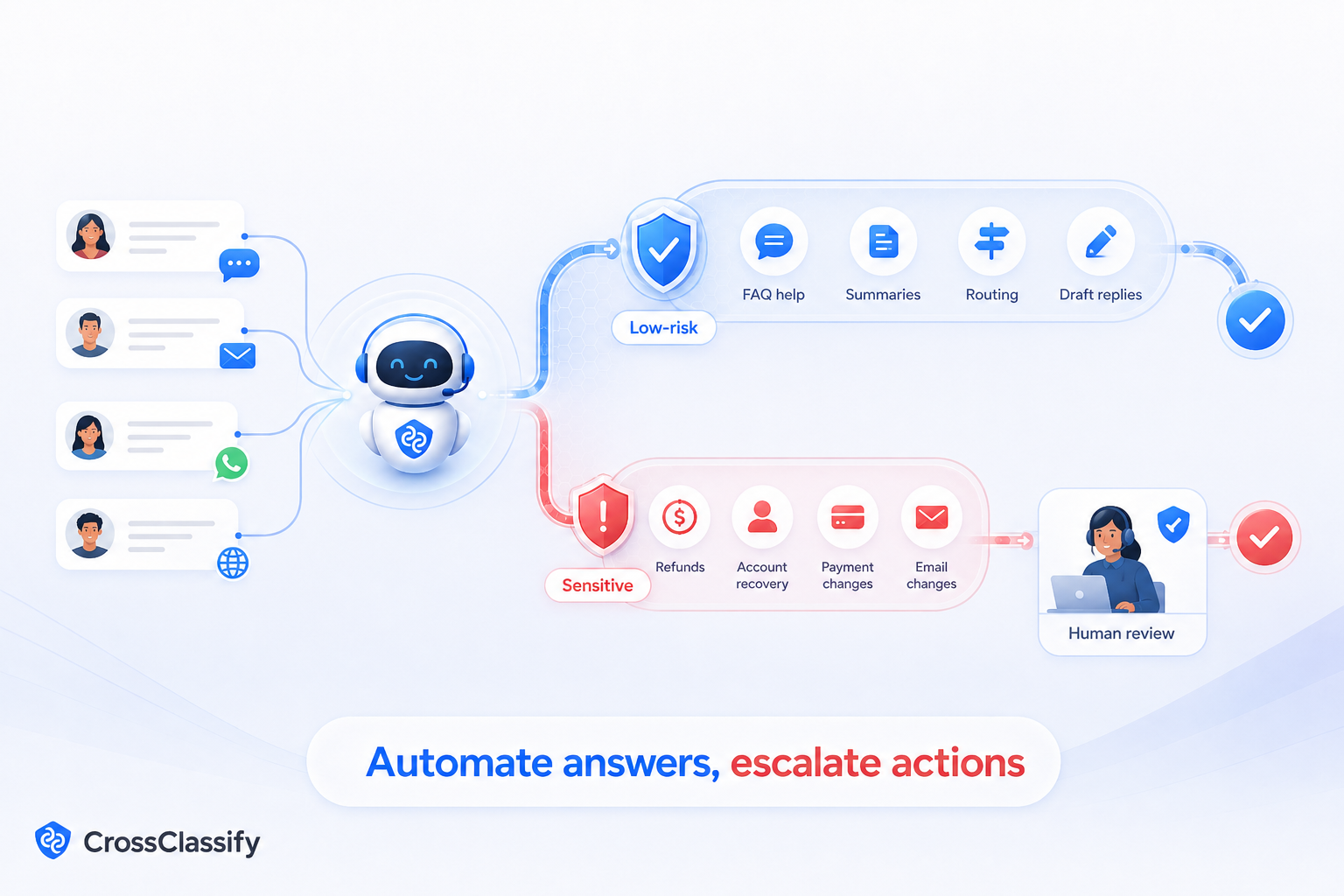
Start with low risk support workflows
Begin with FAQ answers, ticket summaries, routing, draft replies, and knowledge search.
Separate helpful answers from account actions
Answering a product question is different from changing an email address, resetting access, issuing a refund, or modifying payment details.
Create risk based escalation rules
Escalate when the customer requests identity sensitive changes, refund exceptions, high value account actions, or unusual combinations of requests.
Use approved knowledge sources
The agent should answer from trusted support content, not from random internal notes or unrestricted documents.
Monitor user behavior around support workflows
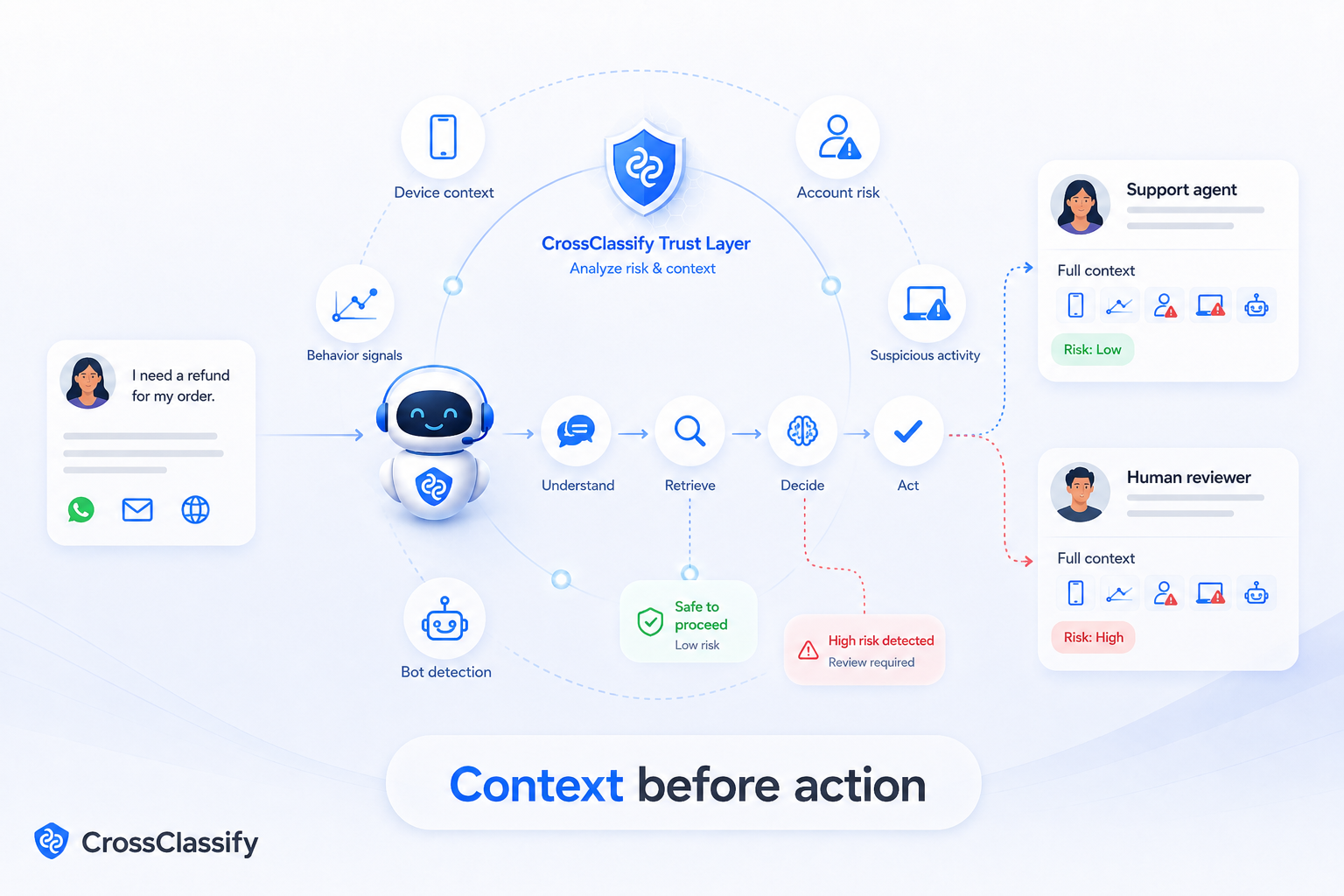
Support automation should include signals about the requester, device, session, account age, access pattern, and behavior history.
Keep human review for sensitive journeys
AI can draft, summarize, and recommend. Humans should still review high impact actions.
Practical Examples
Ecommerce
An AI agent can summarize an order issue and draft a response. But if a customer requests a refund to a new payment method from an unusual device, the case should be escalated.
Fintech
An AI agent can explain account verification steps. But it should not bypass checks for a user who appears to be logging in from a suspicious device.
Marketplace
An AI agent can help buyers and sellers with common questions. But repeated disputes, new accounts, or unusual behavior should trigger risk review.
Gaming and betting
An AI agent can answer wallet and game policy questions. But withdrawal issues, bonus abuse, and account recovery requests need fraud context.
Where CrossClassify Fits Naturally
AI agents can make customer service faster, but they also increase the need to understand who is behind each request.
That is where CrossClassify fits as a fraud prevention and digital trust layer, not as an AI agent builder.
When support workflows involve account recovery, refunds, profile changes, payment updates, or high risk actions, teams need more than the text of the support ticket. They need identity, device, behavior, and risk context.
Account takeover is one of the clearest support risks. A compromised account holder may contact support to change information, remove security checks, or recover access in a way that looks normal on the surface. CrossClassify’s account takeover protection can help teams detect suspicious account behavior before support automation makes risky actions easier. This allows AI agents to support service quality while fraud teams keep stronger visibility into abnormal journeys.
Bot detection is also relevant. If automated actors generate support requests, test refund rules, or probe identity workflows, CrossClassify’s bot attack detection can help identify suspicious automation patterns. That gives support teams a safer foundation for AI enabled service.
Conclusion
AI agents for customer service can reduce manual work and improve the customer experience. But support is also one of the most sensitive parts of the customer journey.
The right approach is not to avoid AI agents. The right approach is to separate low risk support automation from identity sensitive actions, build clear escalation paths, and monitor fraud, bot, device, and behavior signals around the workflow.
Support should become faster. It should not become easier to abuse.
See How CrossClassify Secures the New AI Agent Attack Surface
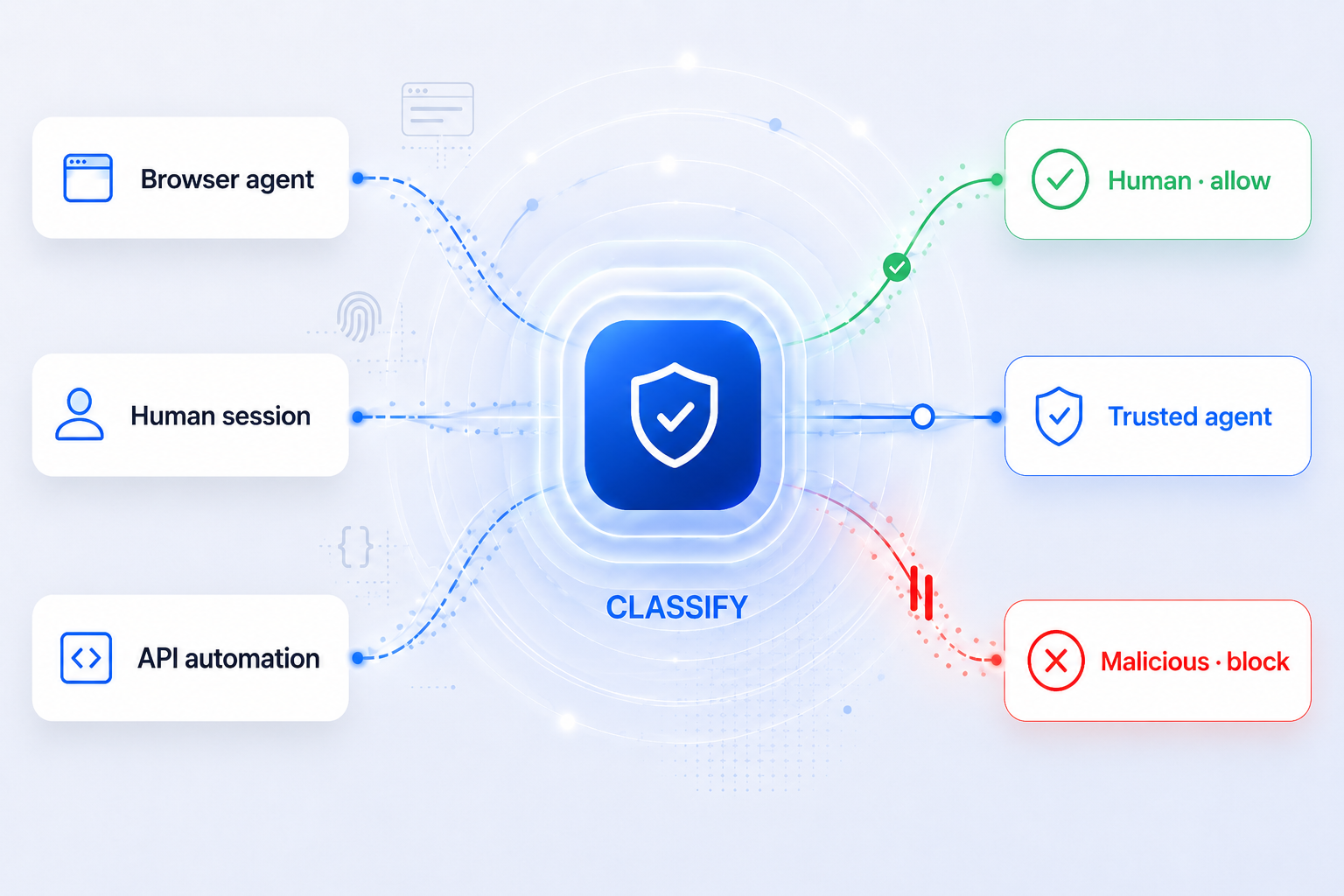
Classify human sessions, trusted agents, and malicious automation before requests turn into risk
Explore CrossClassify today
Detect and prevent fraud in real time
Protect your accounts with AI-driven security
Try CrossClassify for FREE—3 months
Share in
Related articles


Frequently asked questions
Let's Get Started
Create your free
account today
Discover how to secure your app against fraud using CrossClassify
No credit card required