Last Updated on 23 May 2026
AI Agents for Internal Knowledge: Automate Work Without Exposing Sensitive Data
Share in
Introduction
Internal knowledge is one of the strongest business cases for AI agents.
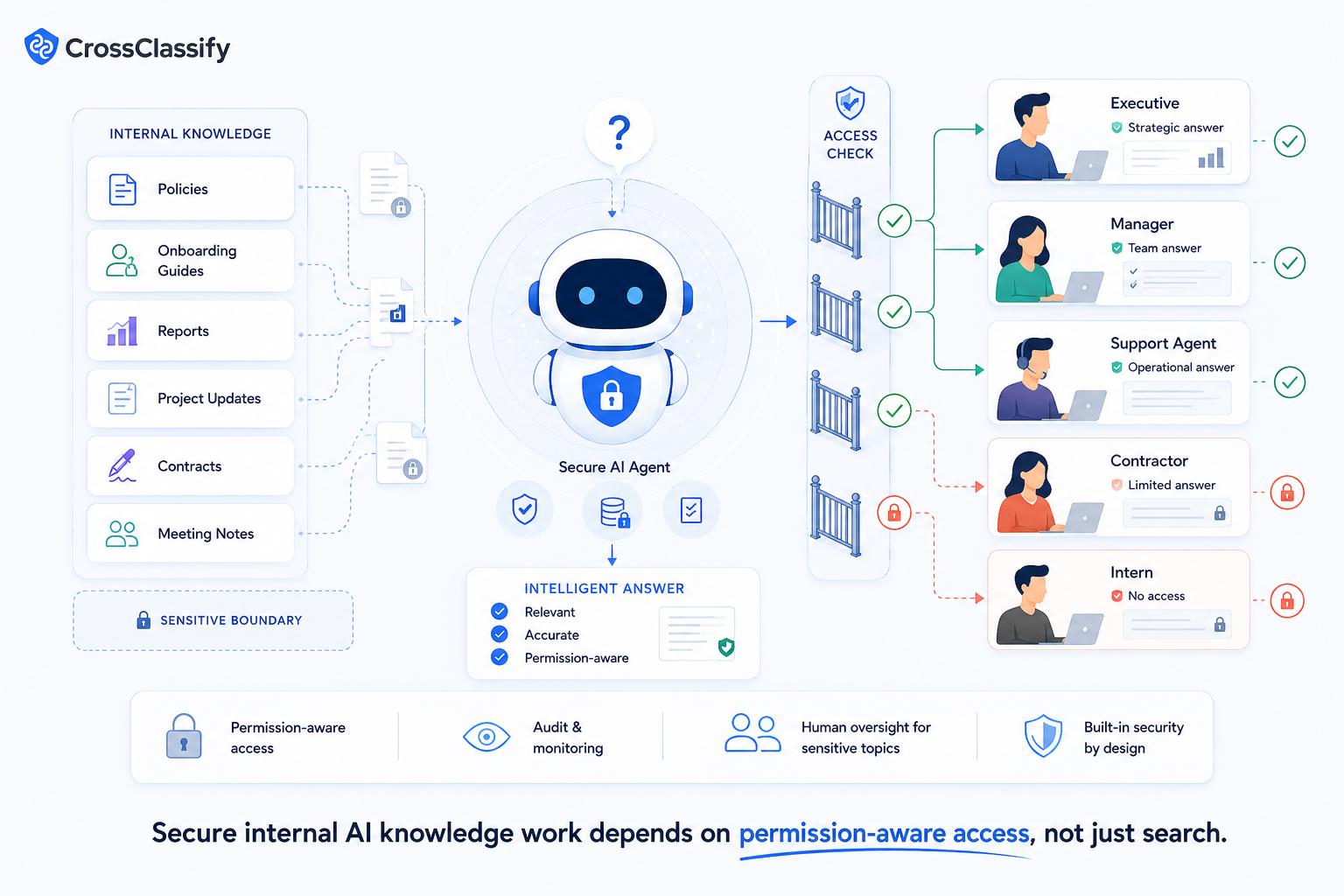
Every company has scattered information: policies, product notes, support playbooks, sales decks, compliance documents, onboarding guides, project updates, contracts, meeting notes, and operational procedures.
Employees waste time searching for answers. Managers repeat the same explanations. New hires struggle to find context. Teams make decisions with incomplete information.
AI agents can help.
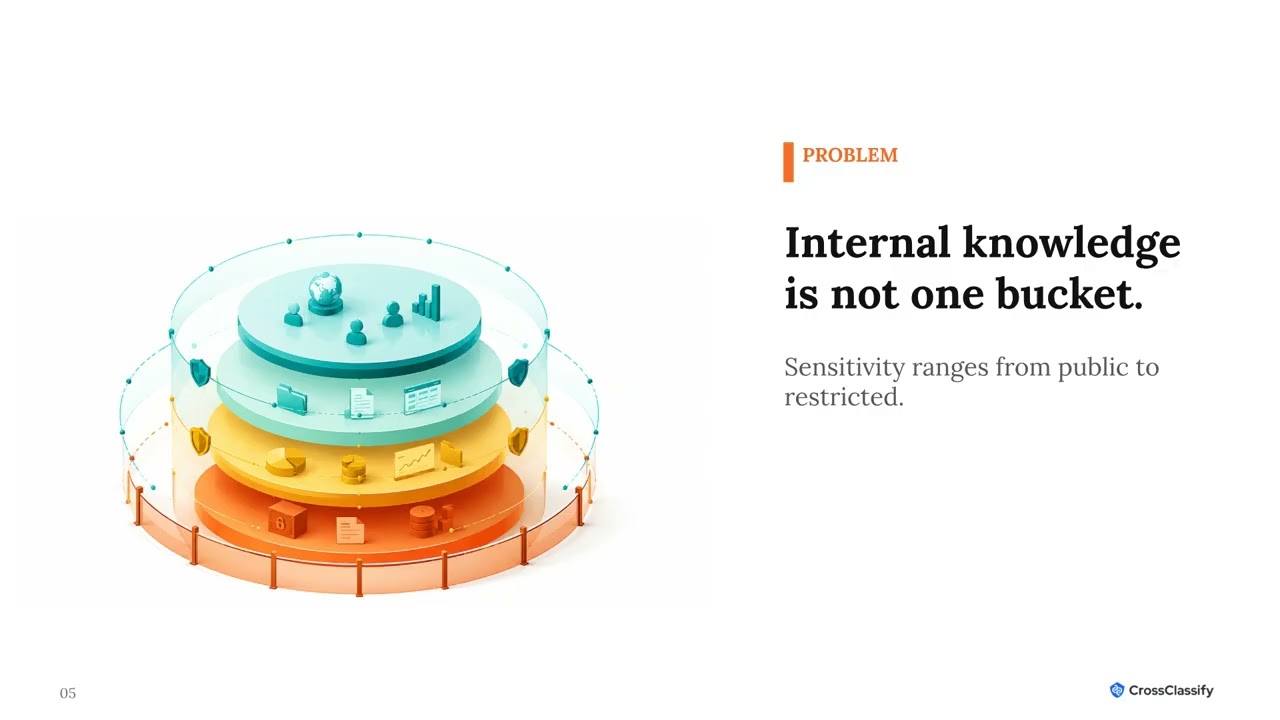
They can search internal knowledge, summarize documents, answer employee questions, prepare reports, route tasks, and turn scattered information into usable work.
But internal knowledge is also where data exposure begins.
The more useful the agent becomes, the more sensitive the access problem becomes.
Watch the Video Summary
AI Agents for Internal Knowledge: Automate Work Without Exposing Sensitive Data

Why AI Agents Matter Now for Internal Knowledge
Companies have already learned that simple search is not enough.
A person does not only need a document. They need the right answer, in the right context, with the right level of permission.
AI agents can improve internal knowledge work because they can do more than retrieve files. They can interpret a question, search multiple sources, compare information, prepare a summary, and suggest the next step.
That is useful for:
- Operations teams looking for process guidance.
- Support teams checking approved responses.
- Sales teams preparing account context.
- Product teams reviewing customer feedback.
- Executives summarizing weekly updates.
- Compliance teams checking internal policy references.
The business value is speed, consistency, and better use of existing company knowledge.
The Hidden Risk: Internal Knowledge Is Not All Equal
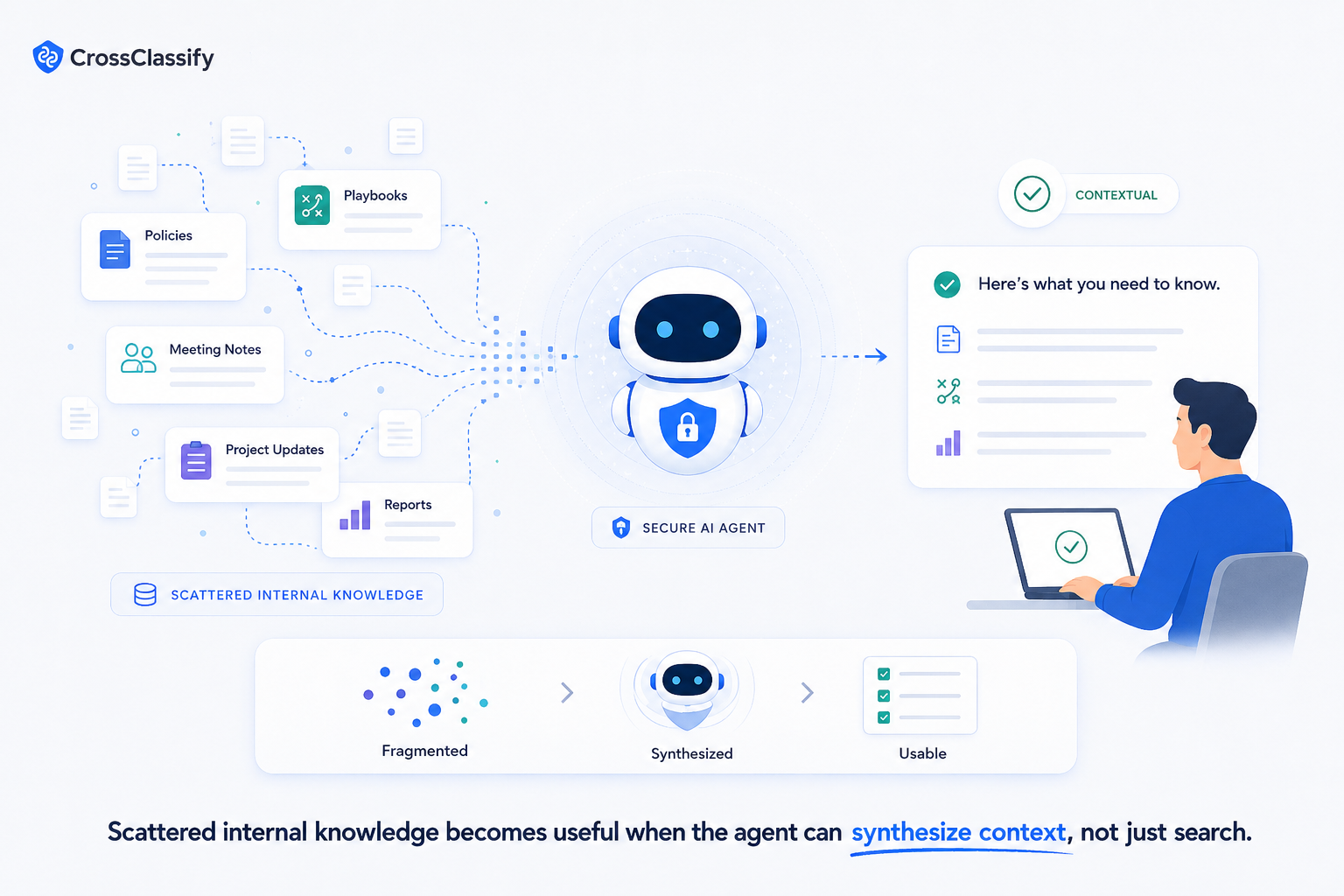
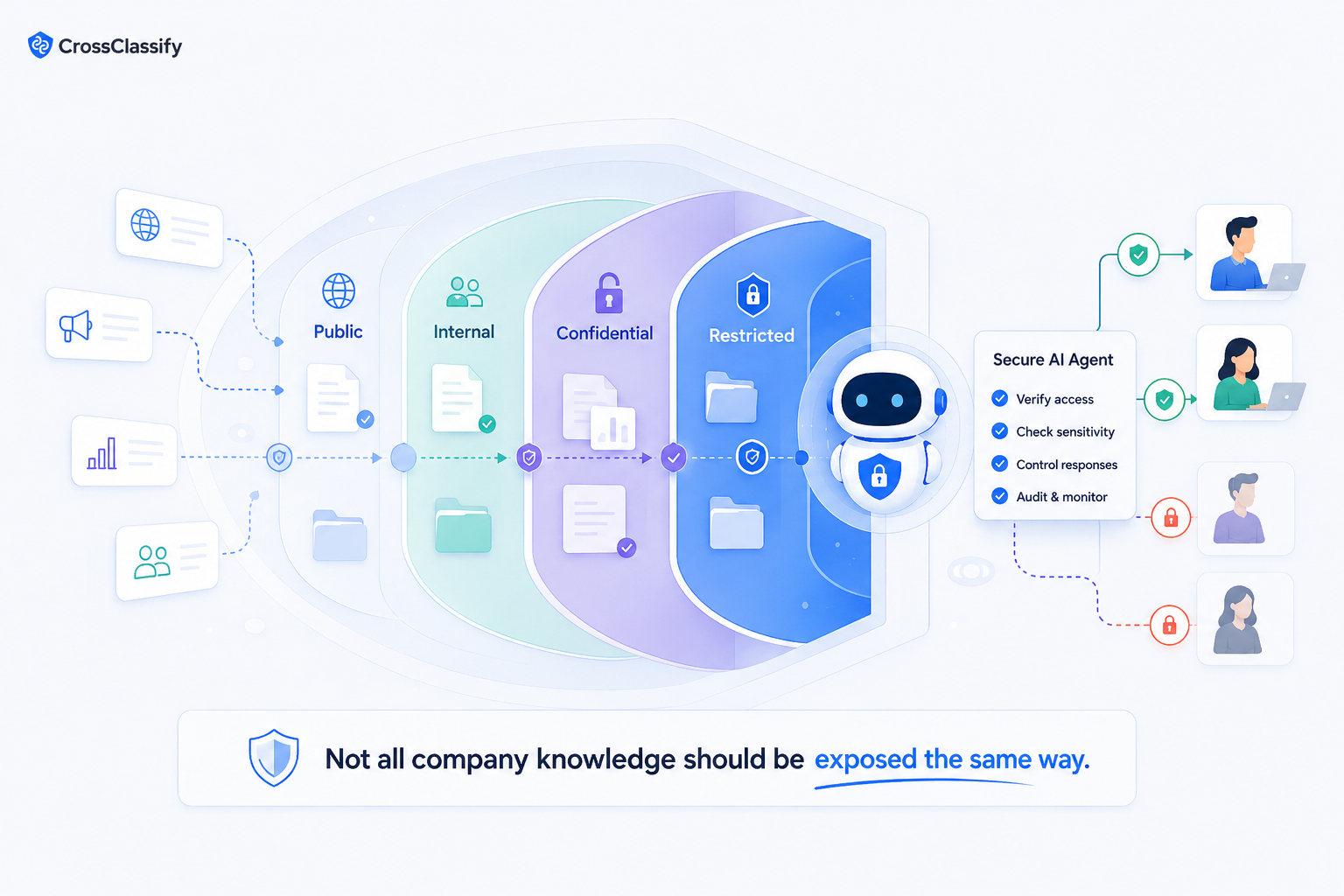
A company knowledge base is not one single bucket.
It contains different levels of sensitivity.
Public information
This includes marketing pages, help center content, public product descriptions, and published documentation.
Internal but low sensitivity information
This includes onboarding guides, general policies, team procedures, and basic operational notes.
Confidential business information
This includes pricing strategy, product roadmap, customer lists, contract details, financial performance, vendor terms, and board materials.
Restricted information
This includes employee records, customer personal data, payment information, security incidents, access credentials, legal matters, and regulated data.
An AI agent that treats all internal knowledge the same creates a data leakage problem.
IBM’s 2025 data breach report highlights the gap between fast AI adoption and governance, noting that ungoverned AI systems are more likely to be breached and more costly when they are. It also reports that many organizations lack AI governance policies and proper AI access controls. IBM
AI Agents and Access Control
Access control means deciding who can see what.
For AI agents, access control needs extra care because the user may not directly open a document. The agent may retrieve content and summarize it.
That creates new questions.
- Can an employee ask the agent about a document they cannot open?
- Can the agent summarize restricted information into a less restricted channel?
- Can a manager ask broad questions that reveal personal employee data?
- Can a support employee see customer information outside their role?
- Can the agent combine harmless pieces of information into a sensitive answer?
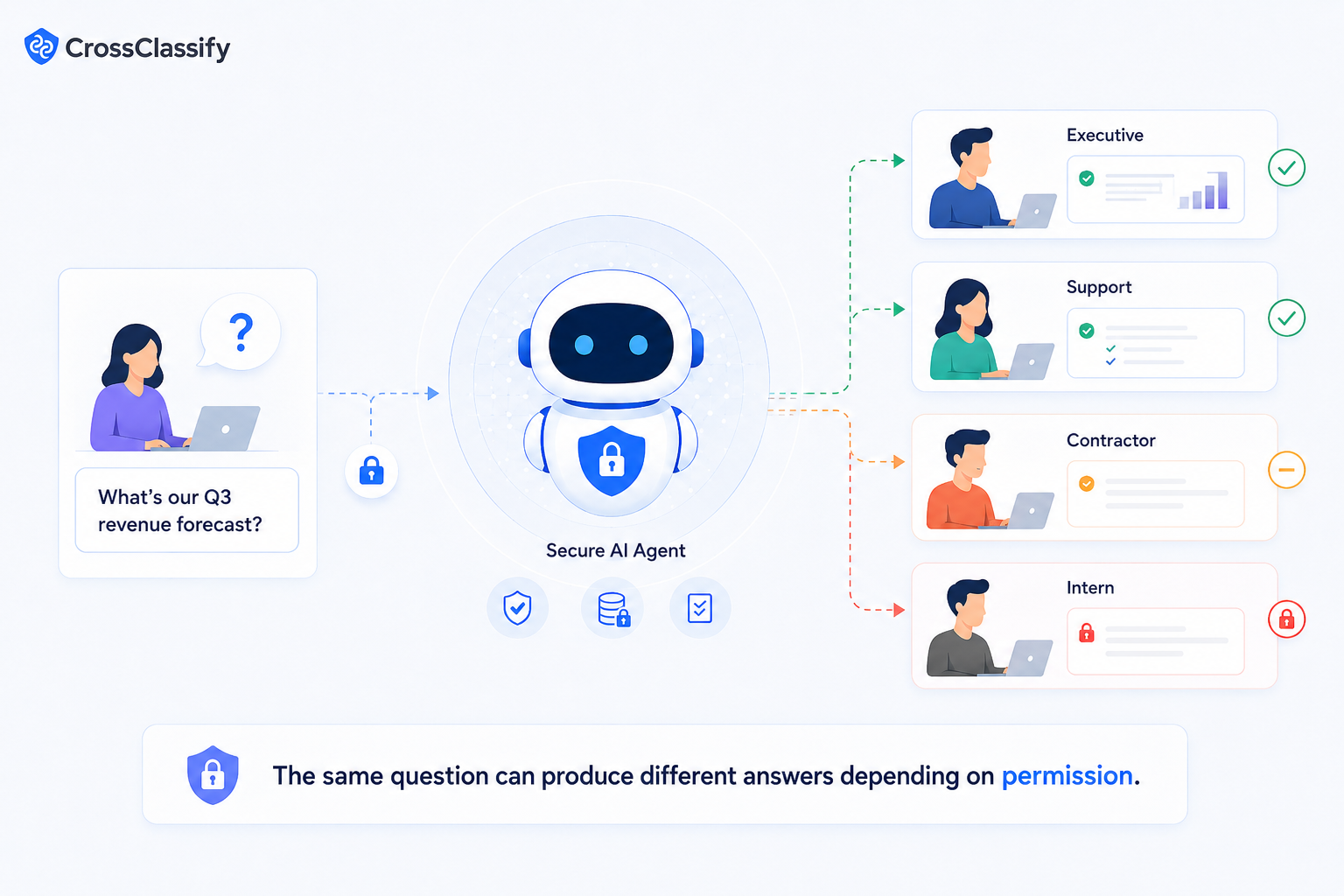
AI agents for internal knowledge need permission awareness, not just search ability.
What Usually Goes Wrong With Internal Knowledge Agents
The company connects too many documents too quickly
A broad knowledge connection feels powerful in a demo, but it can expose confidential information if permissions are not mapped carefully.
The agent ignores role boundaries
Employees in sales, support, finance, HR, product, and security do not need the same access.
Sensitive summaries appear in the wrong place
The agent may answer in chat, email, shared channels, or task systems. Each output location has its own exposure risk.
No one monitors abnormal internal use
If an employee account is compromised, an internal AI agent can become a fast way to search sensitive information.
The company forgets about insider misuse
Not every risky action comes from an external attacker. Internal misuse, excessive curiosity, and accidental exposure matter too.
Practical Internal Knowledge Workflows
Policy search
Employees can ask questions about travel, procurement, security, HR, or compliance policies. The agent should only answer from approved sources and show when human confirmation is needed.
Onboarding support
New hires can ask how systems work, where to find templates, and what steps to follow. This is usually a safe early use case when sensitive access is limited.
Meeting and project summaries
AI agents can summarize updates, extract blockers, and prepare action items.
Research briefs
Teams can ask agents to summarize market notes, customer feedback, or competitor research.
Operational reporting
Agents can prepare weekly summaries from approved operational updates.
Task routing
Agents can identify missing information and route work to the right team.
A Better Implementation Path
Start with knowledge categories
Before connecting an AI agent to company knowledge, classify information by sensitivity.
Match access to employee roles
The agent should respect the user’s role. A finance employee, support agent, contractor, and executive should not get the same answers.
Limit output channels
A sensitive answer should not appear in a shared channel just because the user asked from there.
Log high sensitivity queries
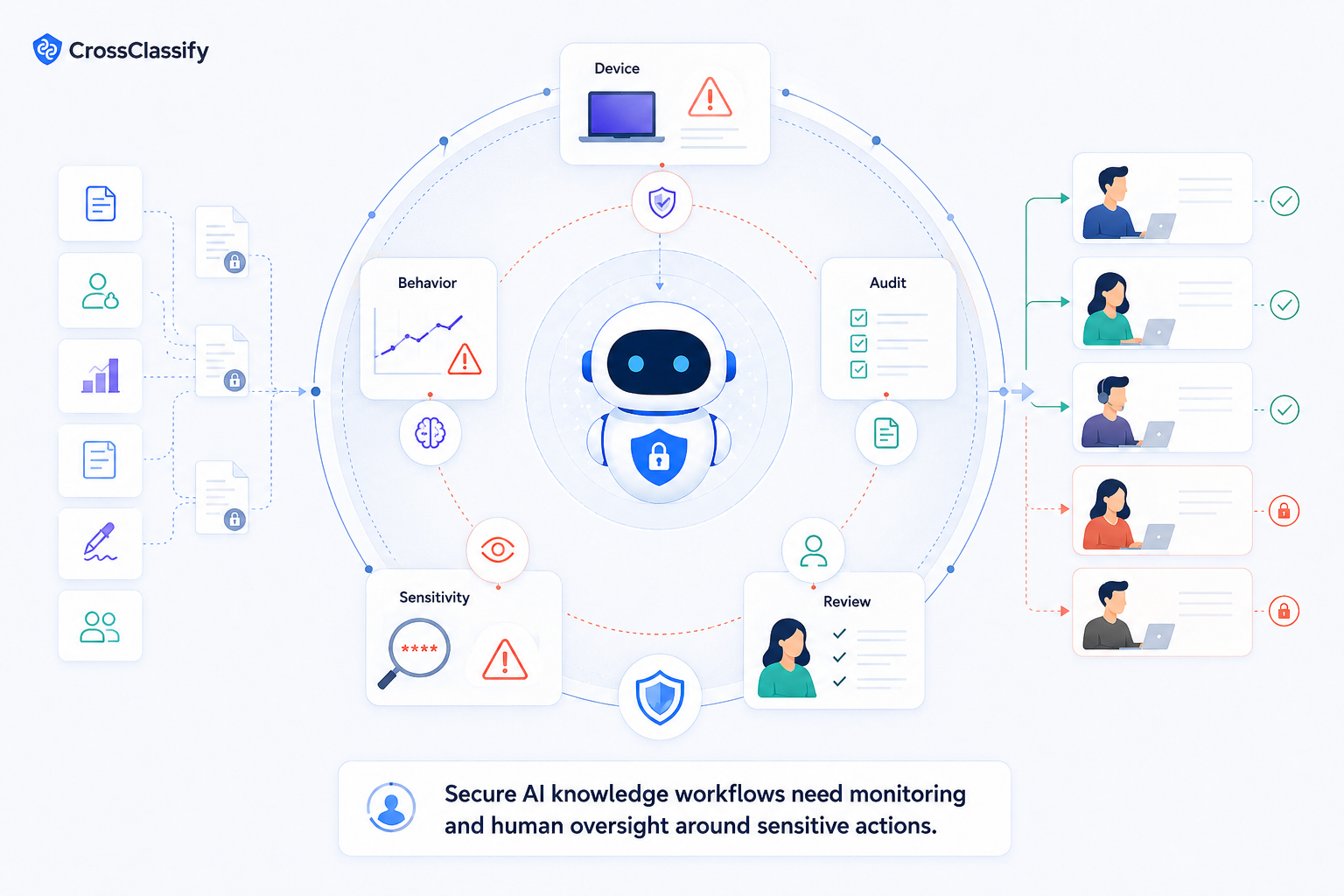
Companies should monitor unusual searches, repeated access to sensitive topics, and behavior that does not match the user’s role.
Keep restricted topics behind human review
Legal, HR, security, financial, customer personal data, and access related questions often need stronger controls.
Review results regularly
Internal knowledge changes. Policies change. People change roles. The agent’s access rules need maintenance.
Where CrossClassify Fits Naturally
Internal knowledge agents create productivity, but they also increase the importance of identity and behavior context.
CrossClassify does not build internal knowledge agents. Its role is to support the surrounding trust layer when AI enabled workflows interact with users, accounts, devices, and sensitive actions.
For example, if a compromised employee account begins searching unusual internal topics or accessing sensitive workflows from a suspicious device, companies need signals beyond the question typed into the agent. CrossClassify’s behavioral biometrics can support abnormal behavior detection by analyzing how users behave across digital journeys. That context can help security and risk teams think more clearly about misuse, account compromise, and suspicious activity.
Device context matters too. If internal or customer workflows are accessed from unfamiliar or suspicious devices, that signal should influence risk decisions. CrossClassify’s device fingerprinting can help businesses identify suspicious device patterns that may not be visible from the AI workflow alone.
Conclusion
AI agents for internal knowledge can make teams faster and more informed. They can reduce search time, improve reporting, support onboarding, and turn scattered knowledge into practical answers.
But companies should not confuse access to knowledge with permission to expose knowledge.
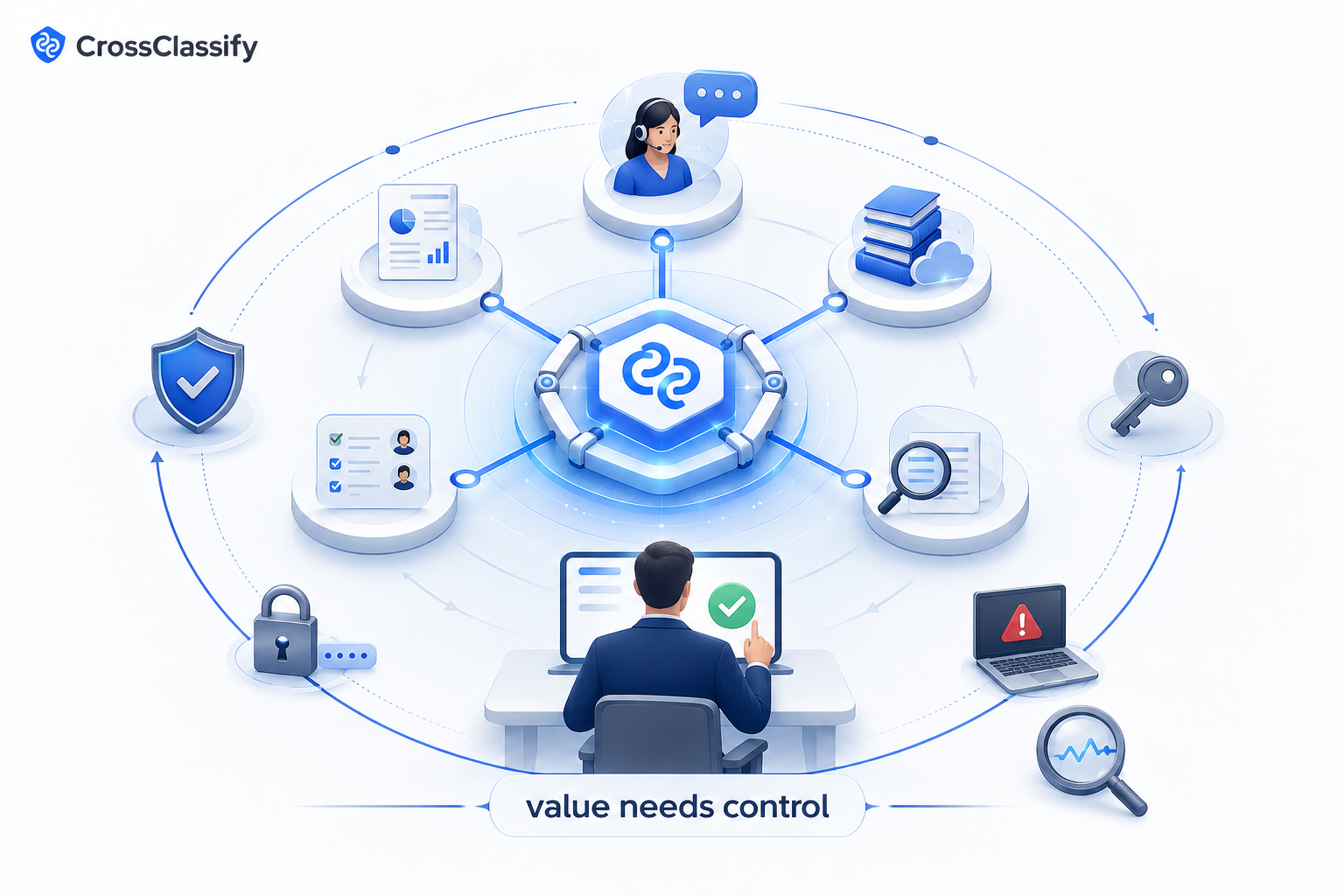
The best internal AI agents are useful because they are controlled. They respect roles, protect sensitive data, escalate restricted questions, and operate inside a wider trust and monitoring strategy.
Internal knowledge is valuable. That is exactly why it needs protection.
See How CrossClassify Secures the New AI Agent Attack Surface
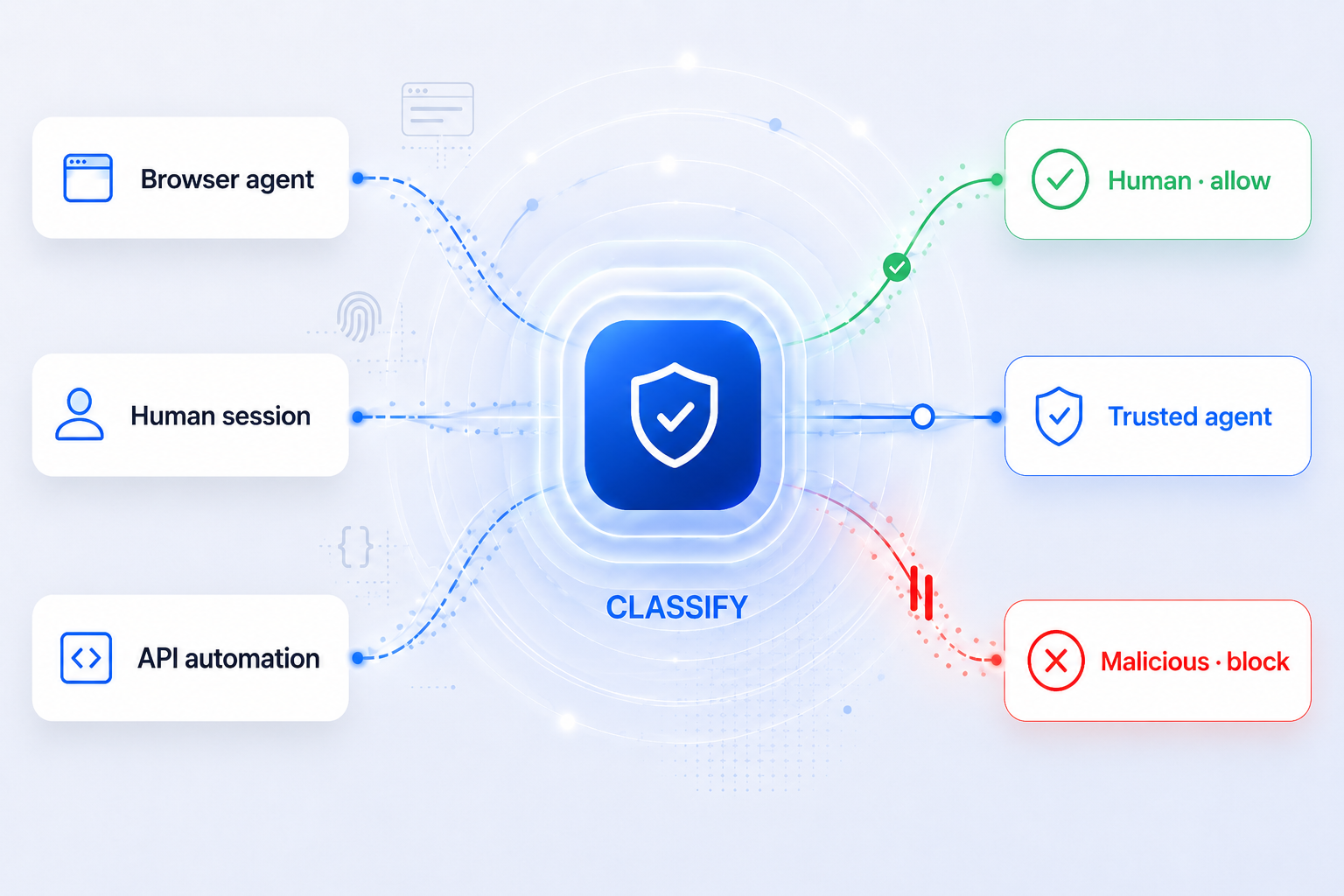
Classify human sessions, trusted agents, and malicious automation before requests turn into risk
Explore CrossClassify today
Detect and prevent fraud in real time
Protect your accounts with AI-driven security
Try CrossClassify for FREE—3 months
Share in
Related articles

Frequently asked questions
Let's Get Started
Create your free
account today
Discover how to secure your app against fraud using CrossClassify
No credit card required