Last Updated on 02 Jun 2026
Custom AI Agent Builders: What Companies Should Know Before Anyone Builds an Agent
Share in
Introduction
A year ago, many companies were experimenting with chatbots. Today, they are asking a more serious question: should we build our own AI agents?
That shift matters.
A chatbot answers. An AI agent can plan, use tools, trigger workflows, search documents, update records, route tasks, and sometimes act across business systems. The moment companies start building custom agents, the adoption question changes from “Can AI help our team?” to “What are we allowing this system to do?”
Custom AI agent builders are becoming more accessible. OpenAI Agents SDK, Microsoft Copilot Studio, LangGraph, CrewAI, AutoGen, n8n, Amazon Bedrock Agents, and other platforms make it easier to create agents that can use tools, delegate tasks, keep context, and automate multi step workflows. OpenAI describes its Agents SDK as a way to build agentic AI apps with agents, handoffs, guardrails, sessions, human in the loop controls, and tracing. OpenAI GitHub
That is powerful. It also means companies need a new adoption discipline.
Watch the Video Summary
Are AI Agents Acting On Your Customers Without You Knowing?


Why custom agent builders are attractive
Custom agents are attractive because they fit the way businesses actually work.
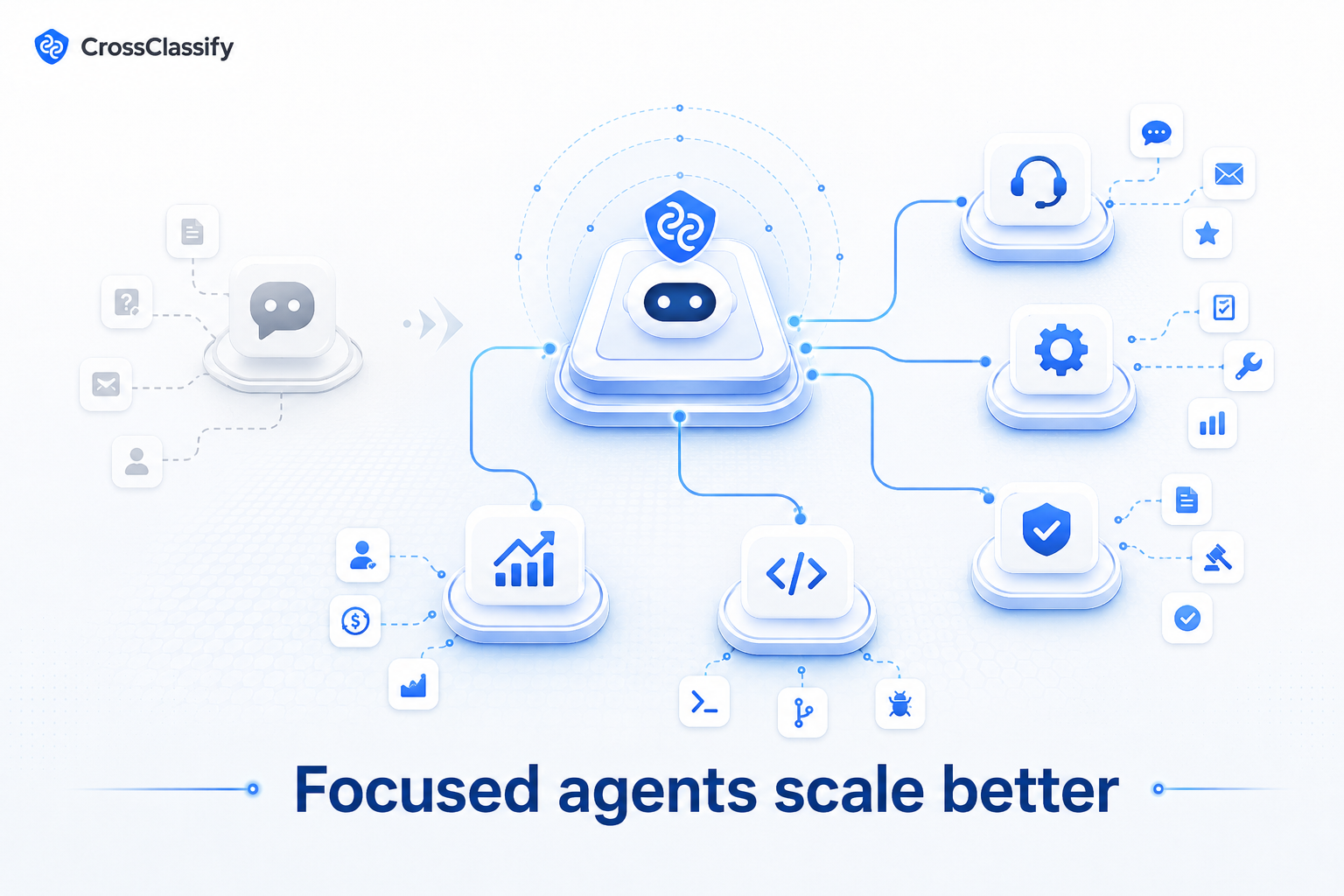
Most companies do not need one general AI assistant. They need many focused agents. A support agent that helps with refund cases. An operations agent that prepares weekly reports. A compliance agent that checks internal policies. A sales agent that updates CRM notes. A fraud review agent that summarizes suspicious activity. A developer agent that helps with code review.
Custom builders make these workflows easier to design. Instead of waiting for a vendor to build every use case, companies can create small agents around their own process.
That is where the opportunity sits: less manual work, faster reviews, better routing, better summaries, and more consistent process execution.
The hidden risk: anyone can build something that acts
The main risk is not that an employee asks AI a bad question. The bigger risk is that an employee builds an agent that has access to too much information or too much action.
A custom agent might connect to company documents, support tickets, customer records, financial data, internal chat, email, project tools, or identity systems. It may be allowed to summarize, update, send, escalate, or trigger workflows.
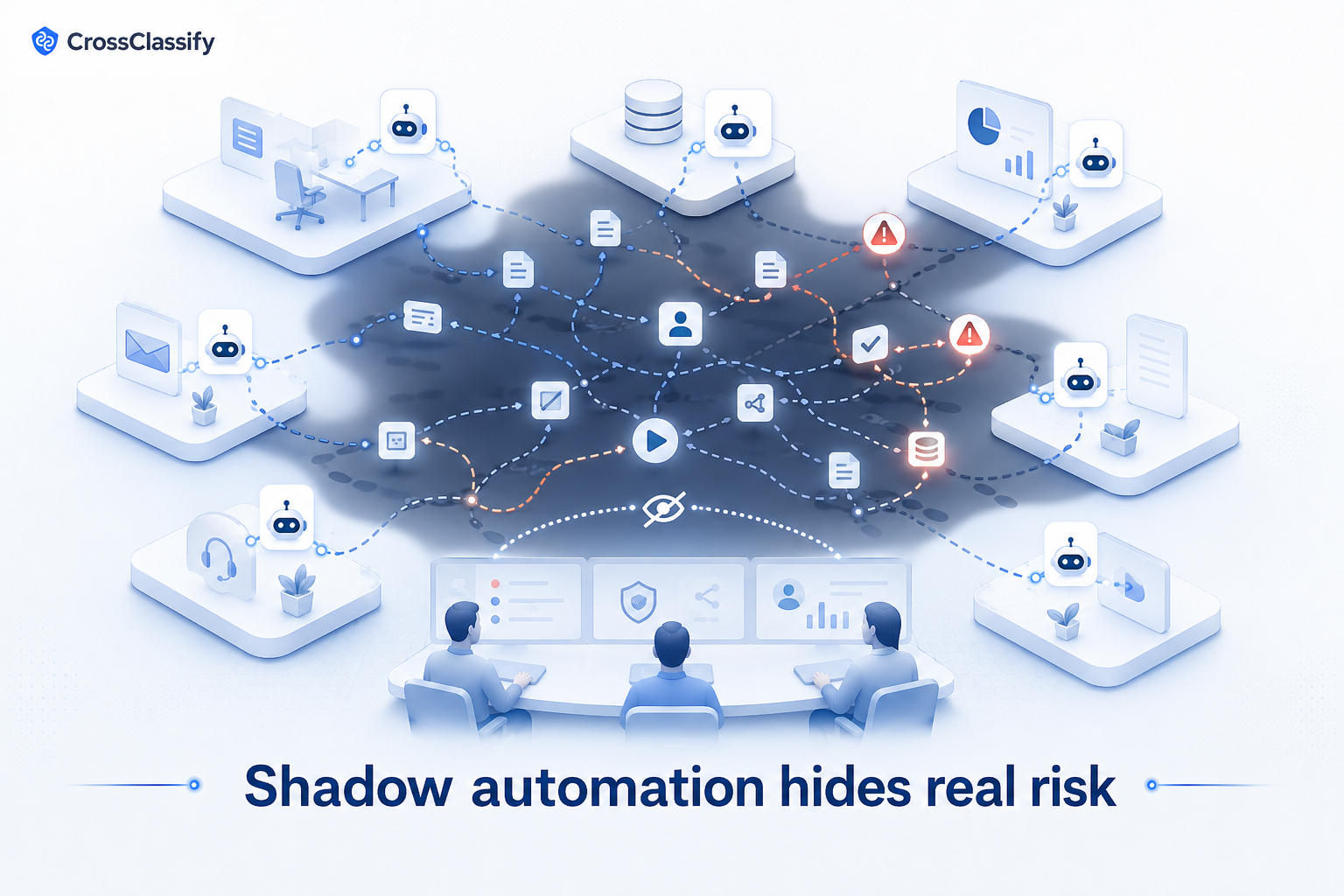
If the organization does not govern this, custom agent building can become shadow automation.
That means agents exist across the business, but security teams do not know who built them, what they can access, what they can do, what data they store, or whether they touch customer actions.
What usually goes wrong
The first mistake is starting with the most exciting workflow instead of the safest workflow.
The second mistake is giving agents broad access because it is easier than designing narrow access. Broad access may make demos look better, but it creates exposure.
The third mistake is skipping ownership. Every agent should have a business owner, a risk owner, and a review path.
The fourth mistake is treating agent failure like chatbot failure. If a chatbot gives a weak answer, the user may notice. If an agent triggers a workflow, sends a message, updates a record, or routes a sensitive case incorrectly, the damage can happen before anyone notices.
What companies should decide before building
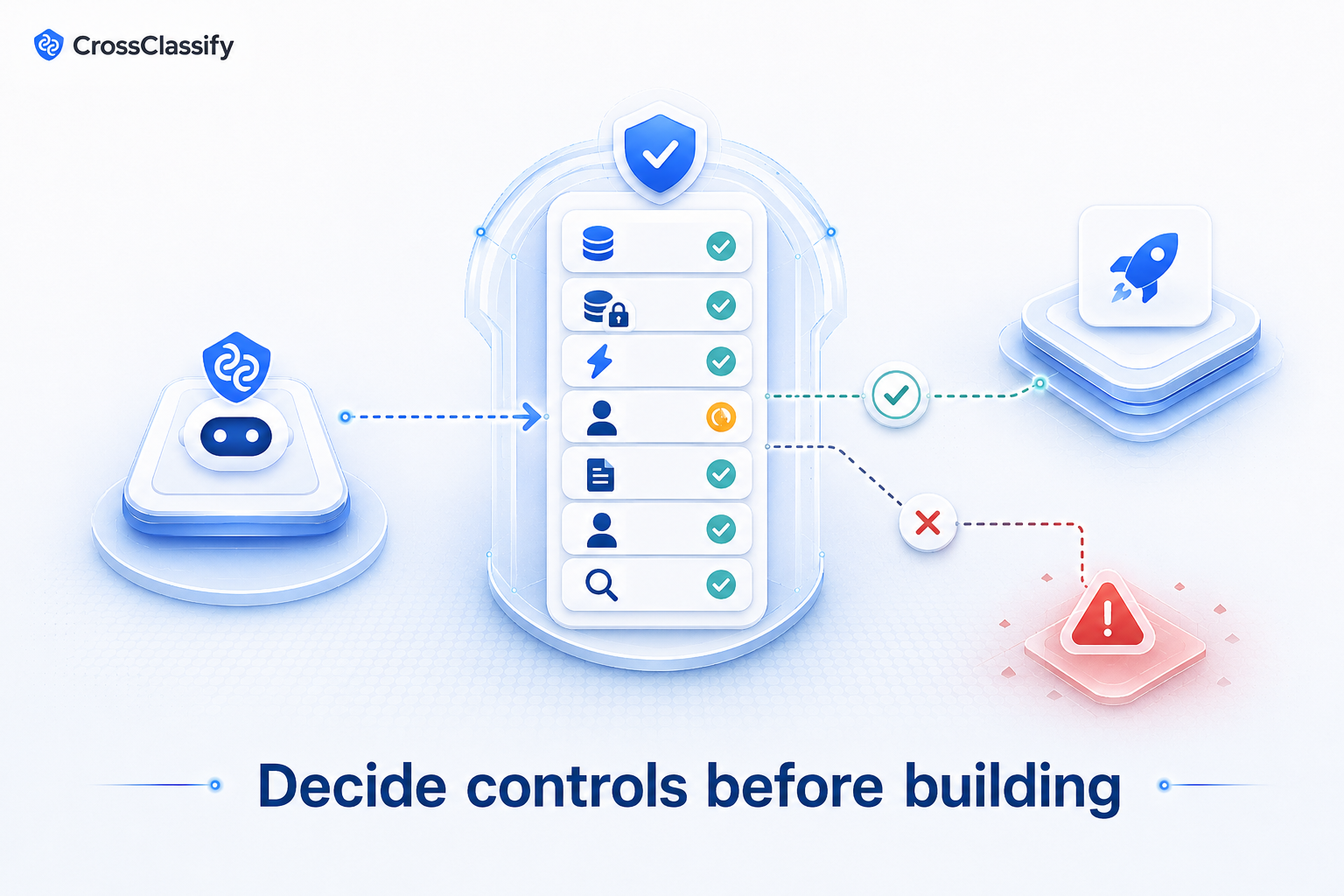
Before building custom agents, companies should answer practical questions.
- What problem does this agent solve?
- What data does it need?
- What data should it never access?
- What actions can it take?
- Which actions require human approval?
- What logs should be kept?
- Who reviews failures?
- Who can change the agent?
- What happens if the agent sees malicious content?
- What happens if the user behind the workflow is suspicious?
This last question is often missed. Many AI governance discussions focus on the agent itself. But customer facing workflows also depend on the identity and behavior of the person triggering the action.
A safer adoption path
Start with support roles where the agent prepares work rather than completes it. Good first use cases include case summaries, policy lookup, report preparation, routing suggestions, duplicate detection, and answer drafts.
Next, add limited workflow actions. Let the agent create a draft, assign a ticket, request missing information, or prepare a case for review.
Only later should companies consider sensitive actions such as account recovery, refunds, payment changes, withdrawals, or identity updates. These require stronger approval, monitoring, and risk scoring.
Where CrossClassify fits
CrossClassify is not a custom AI agent builder. It should not be positioned as one.
Its role is different: it helps protect the trust layer around customer actions and digital journeys.
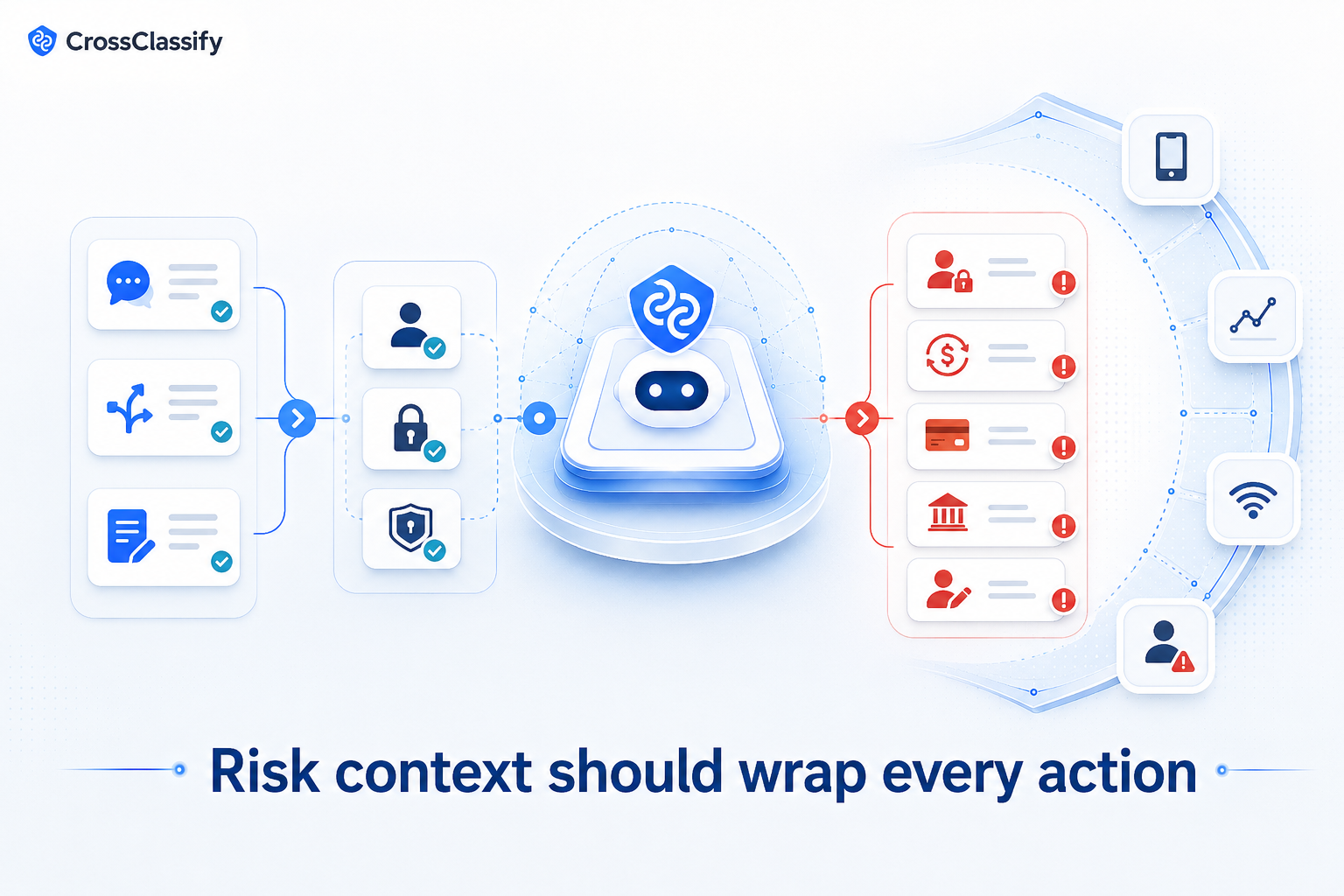
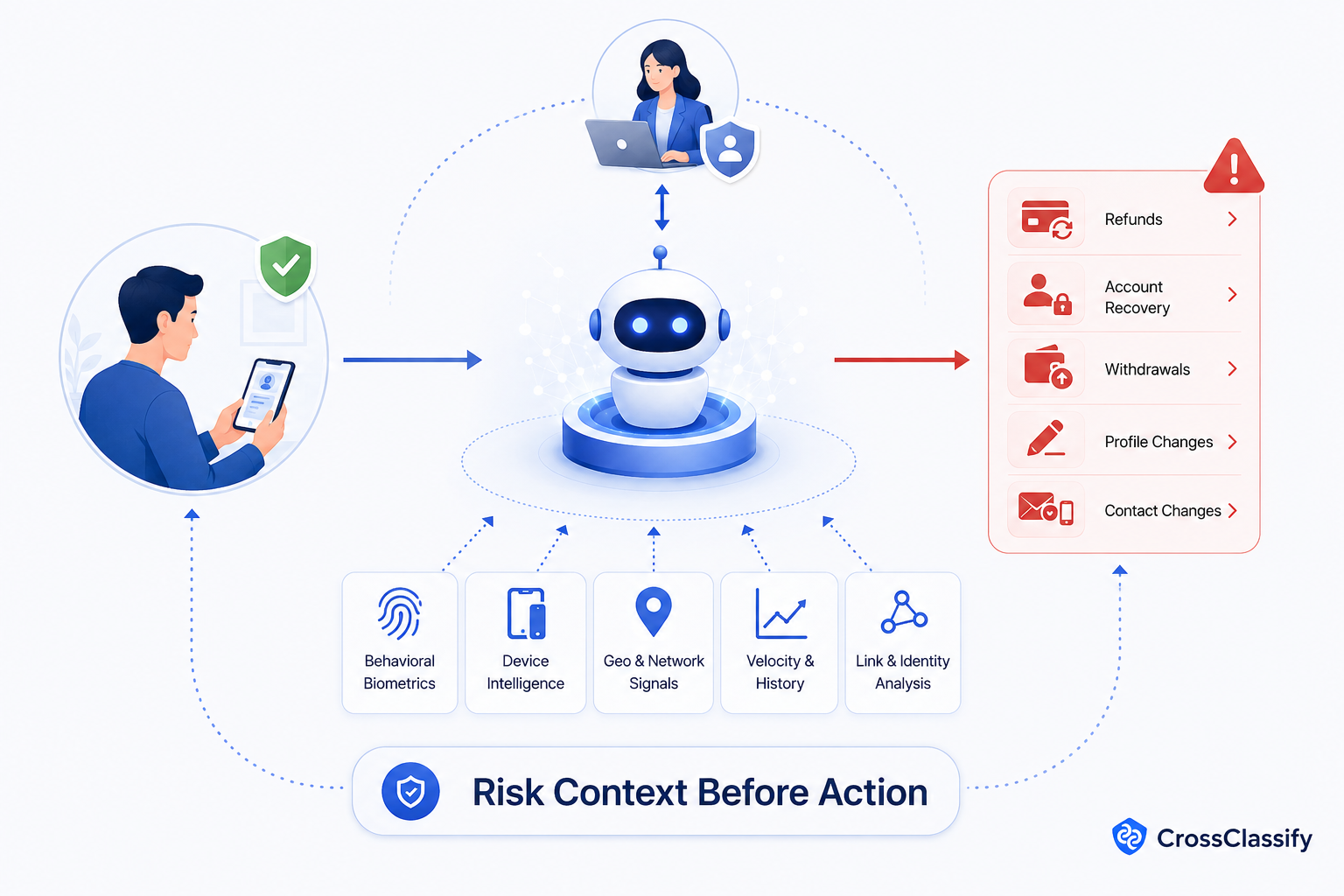
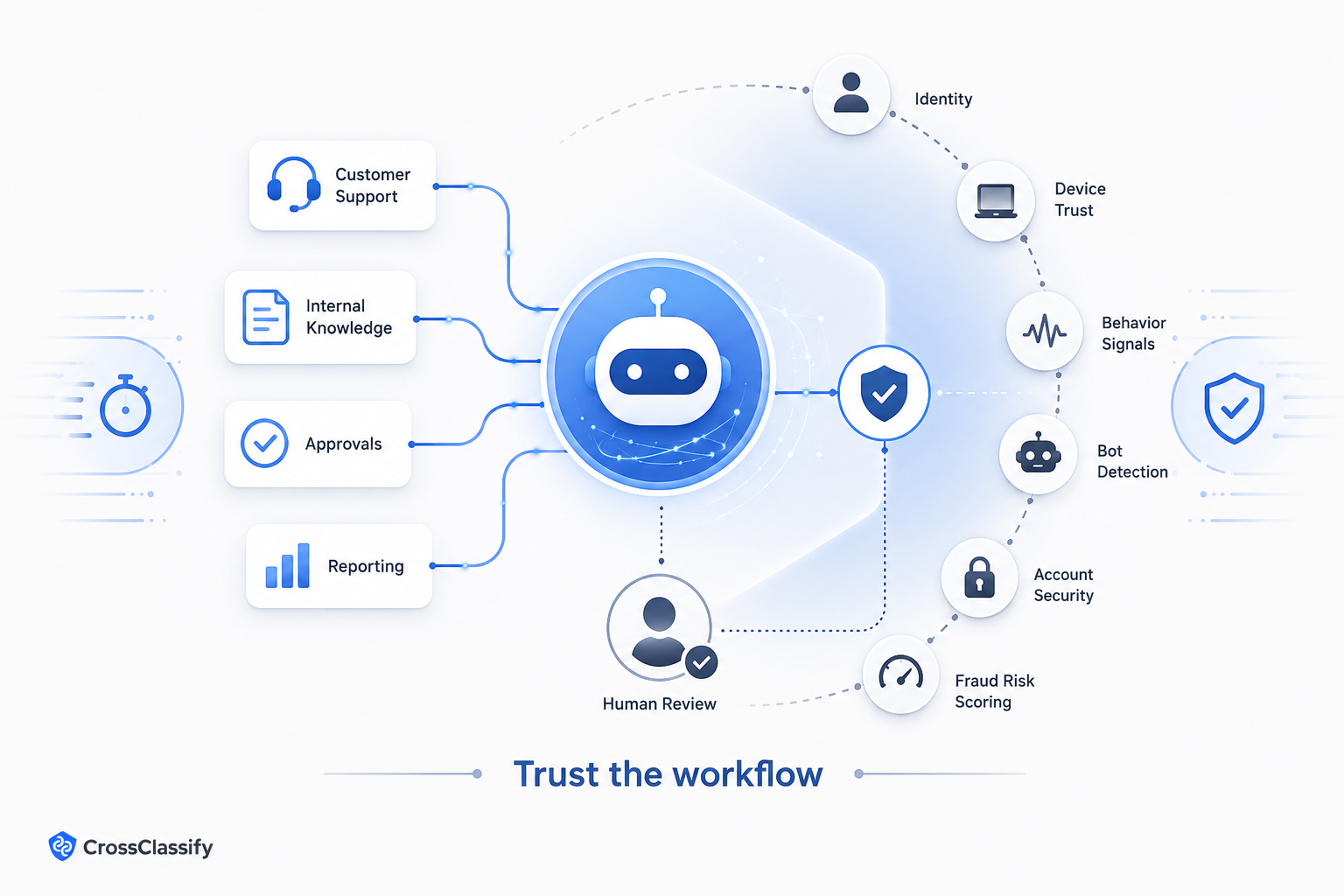
If a custom AI agent helps with account recovery, onboarding, fraud review, refunds, suspicious support requests, or marketplace workflows, the company still needs to know whether the user, device, behavior, network, and account pattern look trustworthy.
For companies building agents around customer workflows, device fingerprinting can help identify suspicious devices, repeated device reuse, risky session patterns, and abnormal access behavior. This matters because a custom agent should not make it easier for a bad actor to move through a sensitive process.
Conclusion
Custom AI agent builders will become part of normal business operations. They will help companies move faster, reduce repetitive work, and turn internal knowledge into action.
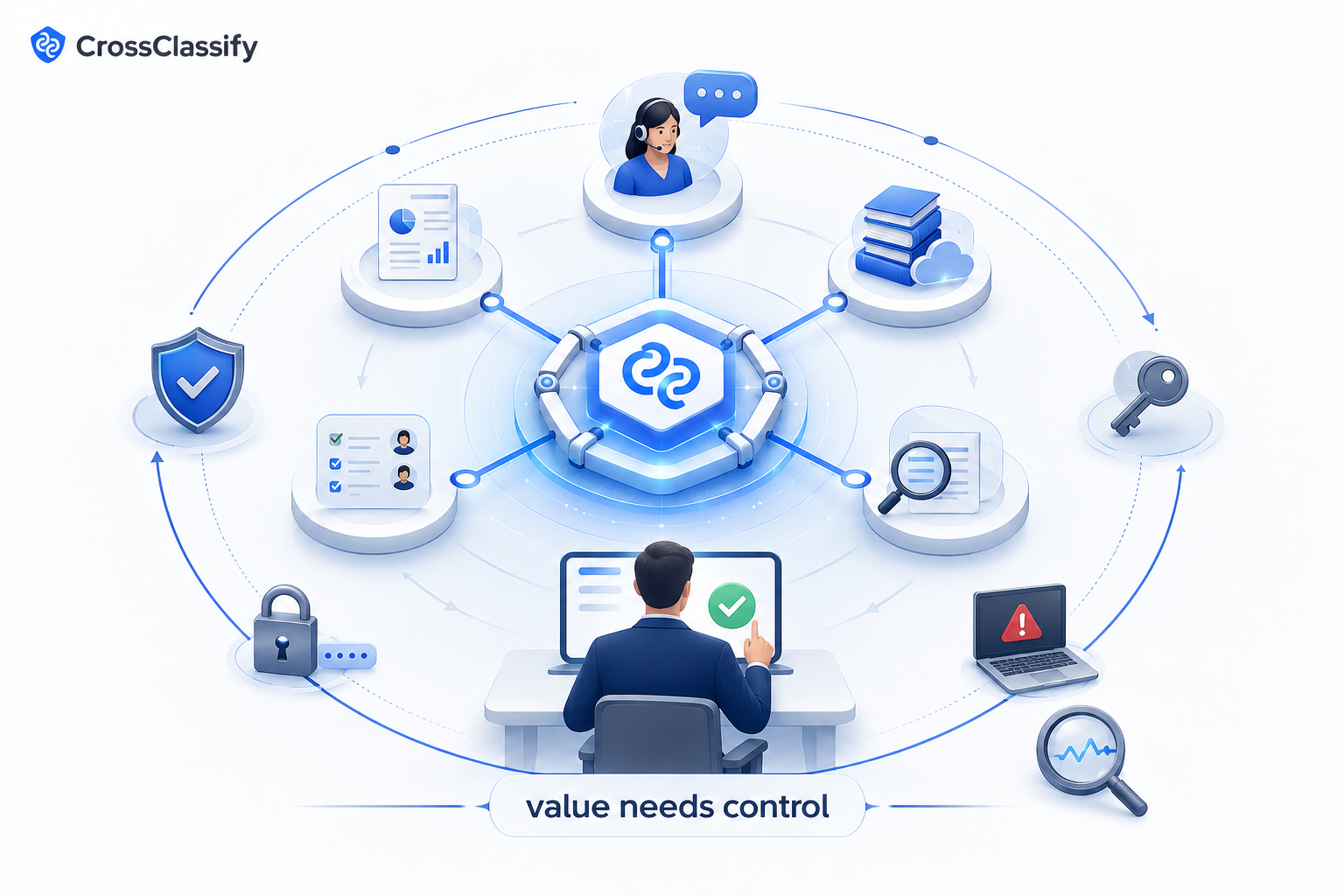
But the companies that win will not be the ones that build the most agents. They will be the ones that build agents with clear ownership, narrow access, human approval, monitoring, and risk context.
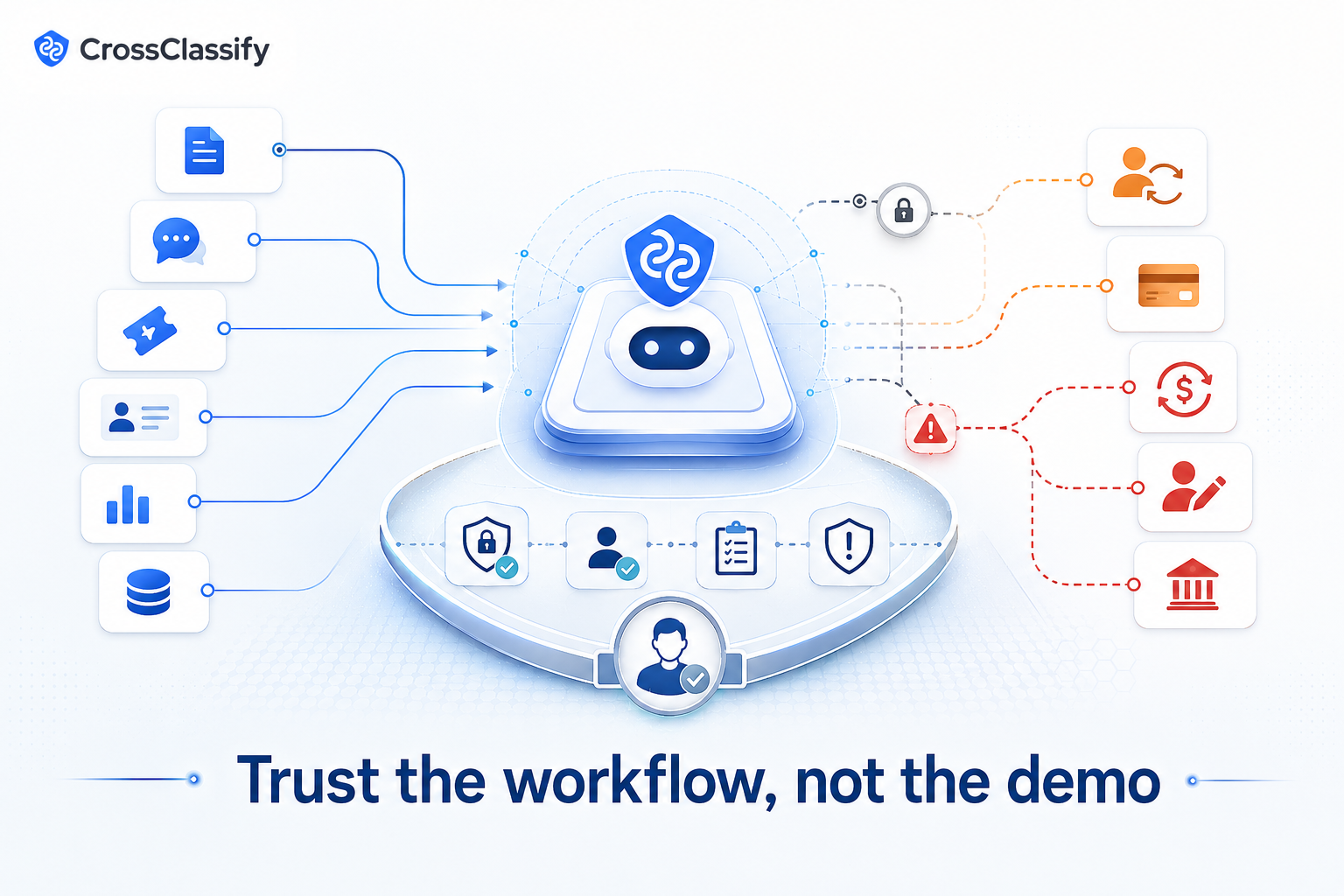
The question is not only “Can we build an agent?” The better question is “Can we trust the workflow around the agent?”
See How CrossClassify Secures the New AI Agent Attack Surface
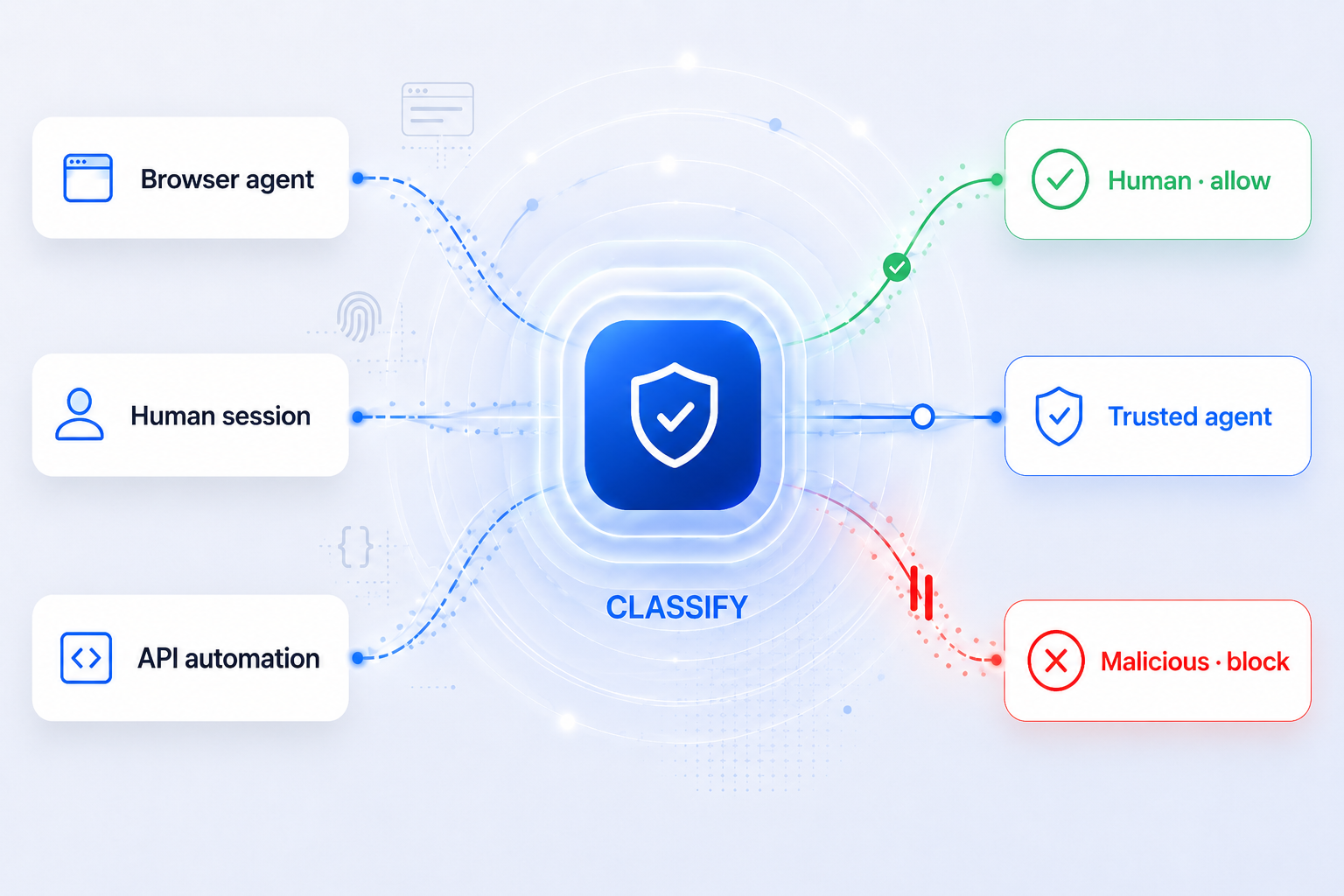
Classify human sessions, trusted agents, and malicious automation before requests turn into risk
Explore CrossClassify today
Detect and prevent fraud in real time
Protect your accounts with AI-driven security
Try CrossClassify for FREE—3 months
Share in
Related articles
Frequently asked questions
Let's Get Started
Create your free
account today
Discover how to secure your app against fraud using CrossClassify
No credit card required