Last Updated on 05 Jun 2026
AI Agent Governance: Who Can Build Agents, What Can They Access, and What Can They Do?
Share in
Introduction
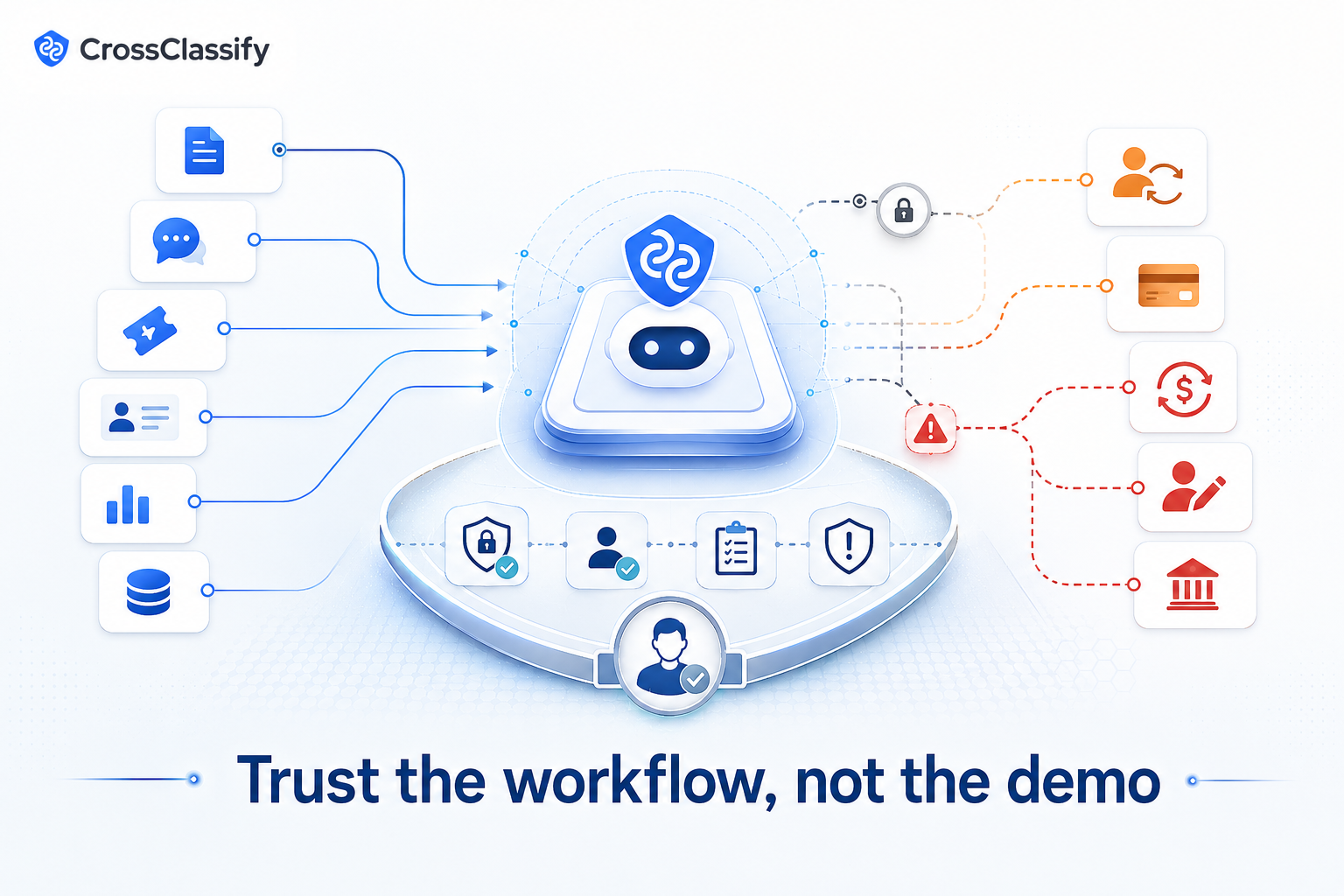
AI agent governance is the discipline companies need before agent adoption spreads across the business.
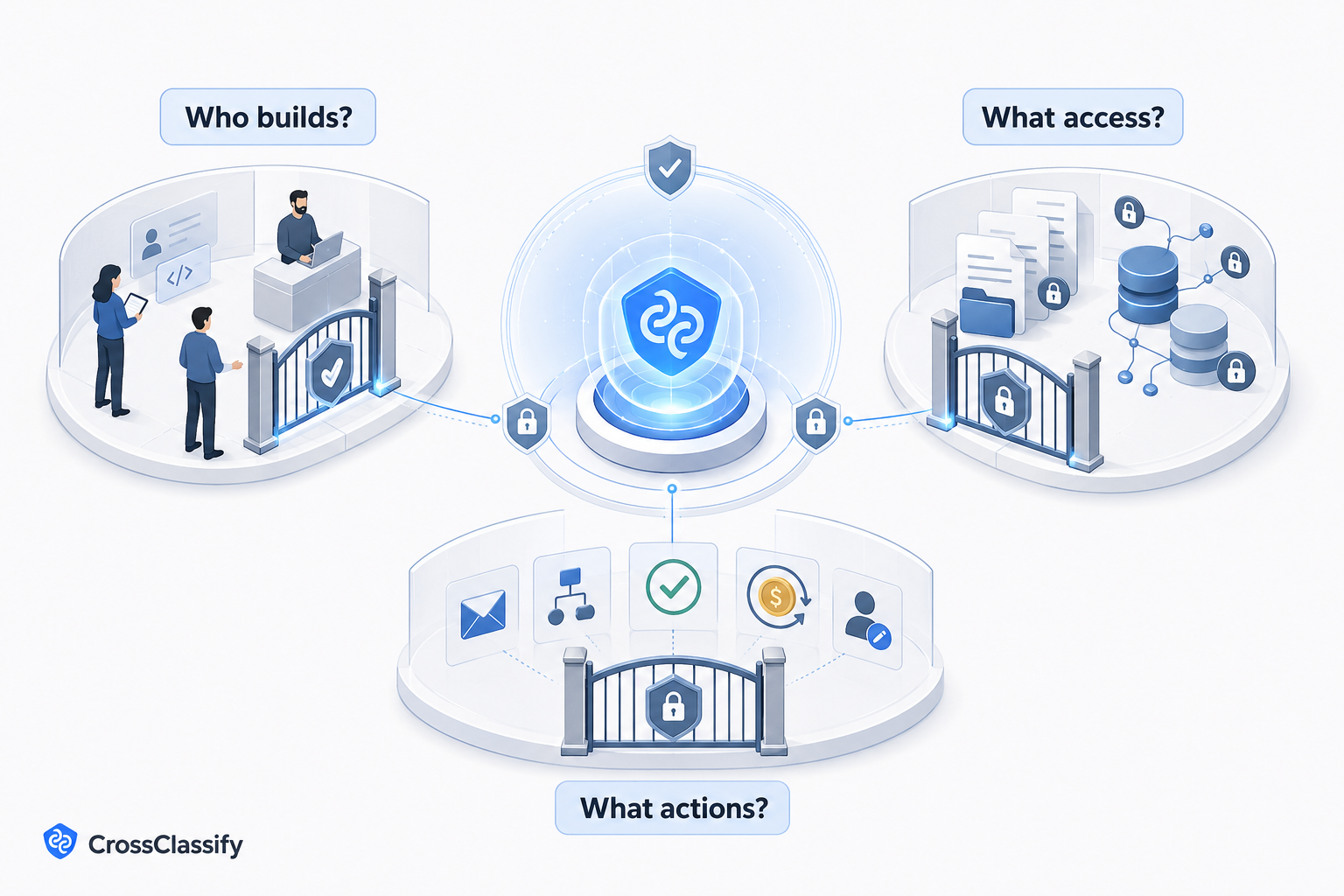
It answers three practical questions.
Who can build agents?
What can agents access?
What can agents do?
Without answers to these questions, AI adoption becomes uncontrolled. Teams may build useful agents, but the company may lose visibility into data access, customer workflow impact, sensitive actions, and business risk.
Governance is not about slowing AI adoption. It is about making adoption safe enough to scale.
Watch the Video Summary
How AI Agent Governance Controls Access and Actions

Why governance matters more for agents than chatbots
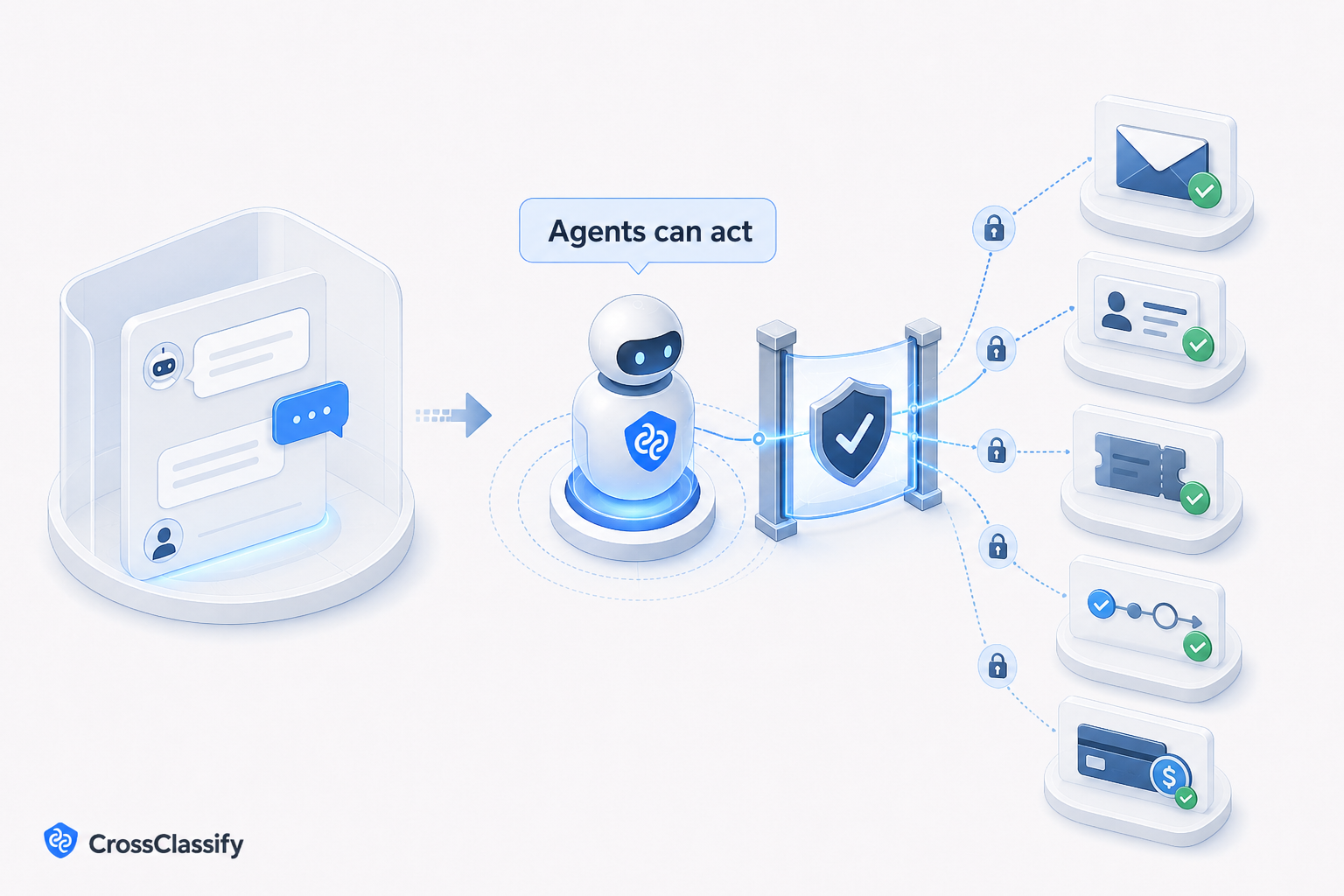
A chatbot usually produces text. An agent can take action.
That difference changes everything.
If a chatbot makes a poor suggestion, a human may ignore it. If an agent sends an email, updates a CRM record, creates a support ticket, changes a workflow status, or recommends account recovery, the result can affect the business directly.
OpenAI Agents SDK includes concepts such as tools, handoffs, guardrails, sessions, human in the loop, and tracing. These are useful because agent systems often require execution, delegation, memory, validation, and monitoring. (OpenAI GitHub)
Governance decides how those capabilities are used in the business.
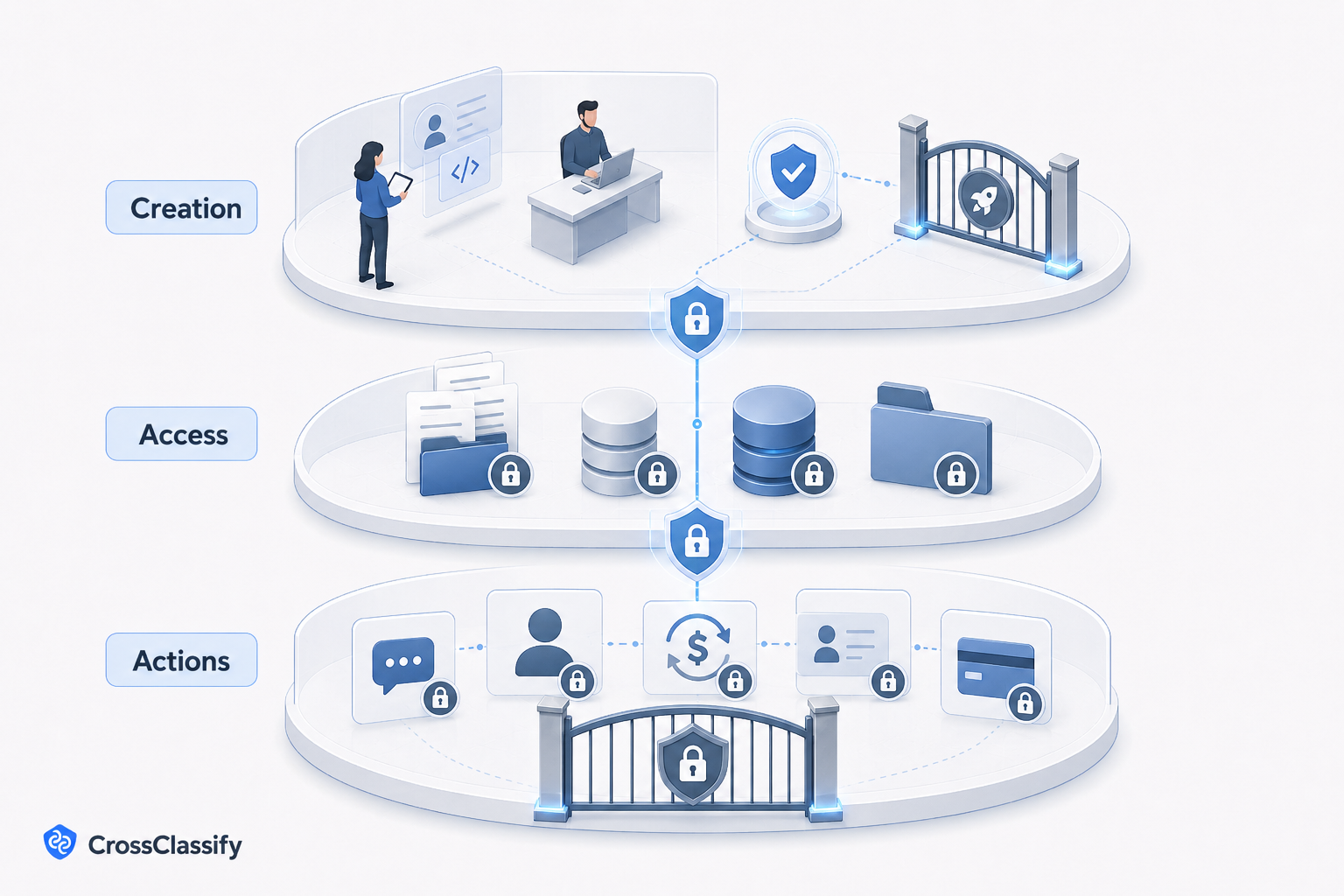
The three levels of agent governance
The first level is creation governance.
This defines who can create agents, which teams can publish them, and what review is required before an agent reaches real users or real data.
The second level is access governance.
This defines what data an agent can access. Internal policy documents are different from customer identity documents. Public marketing content is different from payment history. Support scripts are different from account recovery records.
The third level is action governance.
This defines what the agent can do. Answering a question, drafting a response, assigning a case, approving a refund, changing a profile, and initiating a withdrawal are very different levels of authority.
The biggest governance mistake
The biggest mistake is treating all agents the same.
A marketing content agent does not need the same controls as an account recovery agent. An internal reporting agent does not create the same risk as a customer support agent. A fraud review assistant should not be governed like a calendar helper.
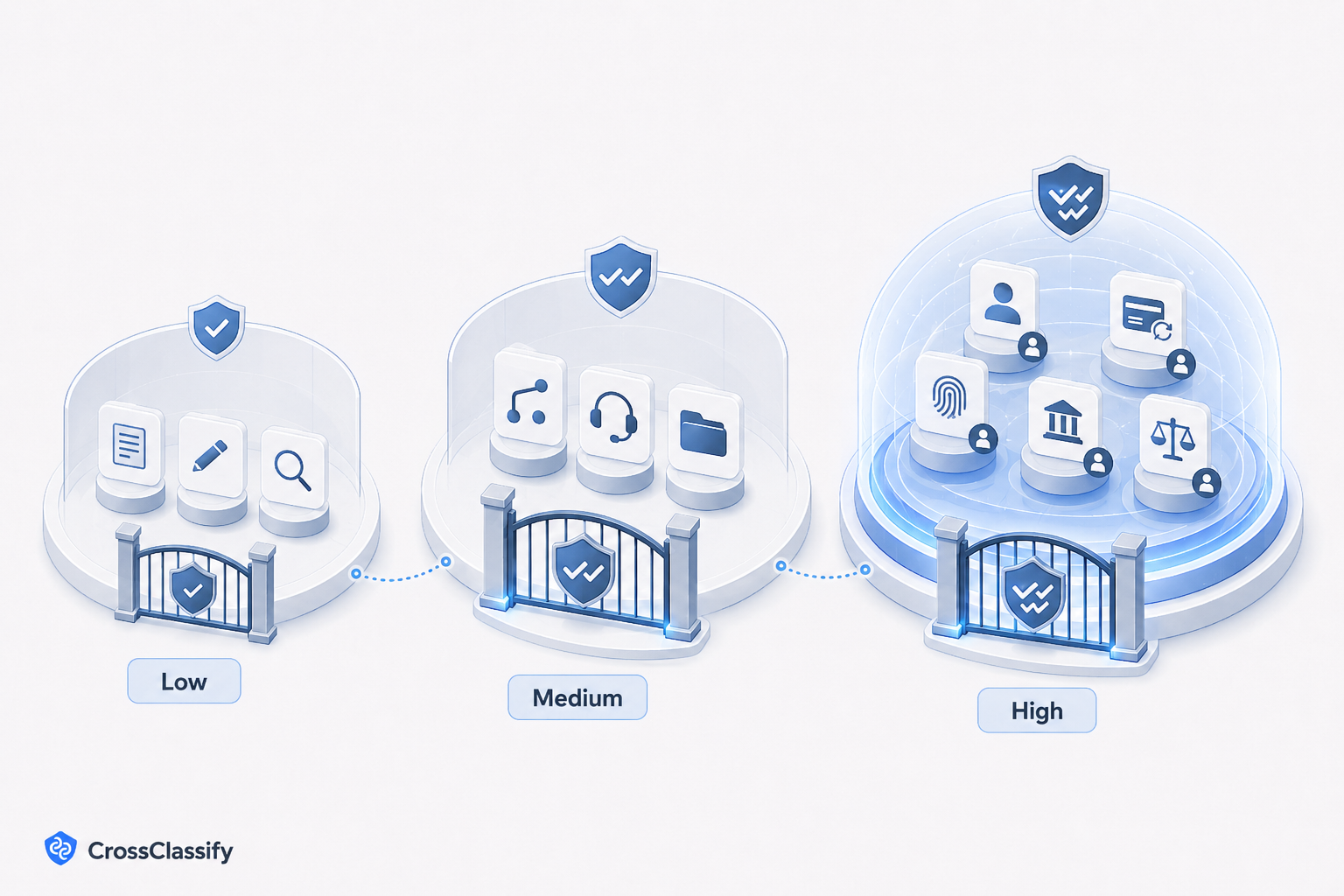
Companies should classify agents by risk.
Low risk agents help with summaries, drafts, internal search, and low sensitivity content. Medium risk agents support workflow routing, customer service preparation, and case organization. High risk agents touch account access, payments, withdrawals, identity, refunds, compliance decisions, or sensitive customer data.
Governance and prompt injection
Prompt injection makes governance more important.
OWASP explains that prompt injection can alter model behavior in unintended ways, including through external content such as websites and files. It recommends measures such as least privilege access, output validation, separation of external content, adversarial testing, and human approval for high risk actions. (OWASP Gen AI Security Project)
This means agent governance is not only a policy problem. It is a security control problem.
If an agent reads untrusted content and has access to sensitive actions, the company should assume that malicious instructions may appear somewhere in the workflow.
Governance for customer facing agents
Customer facing agents need special attention.
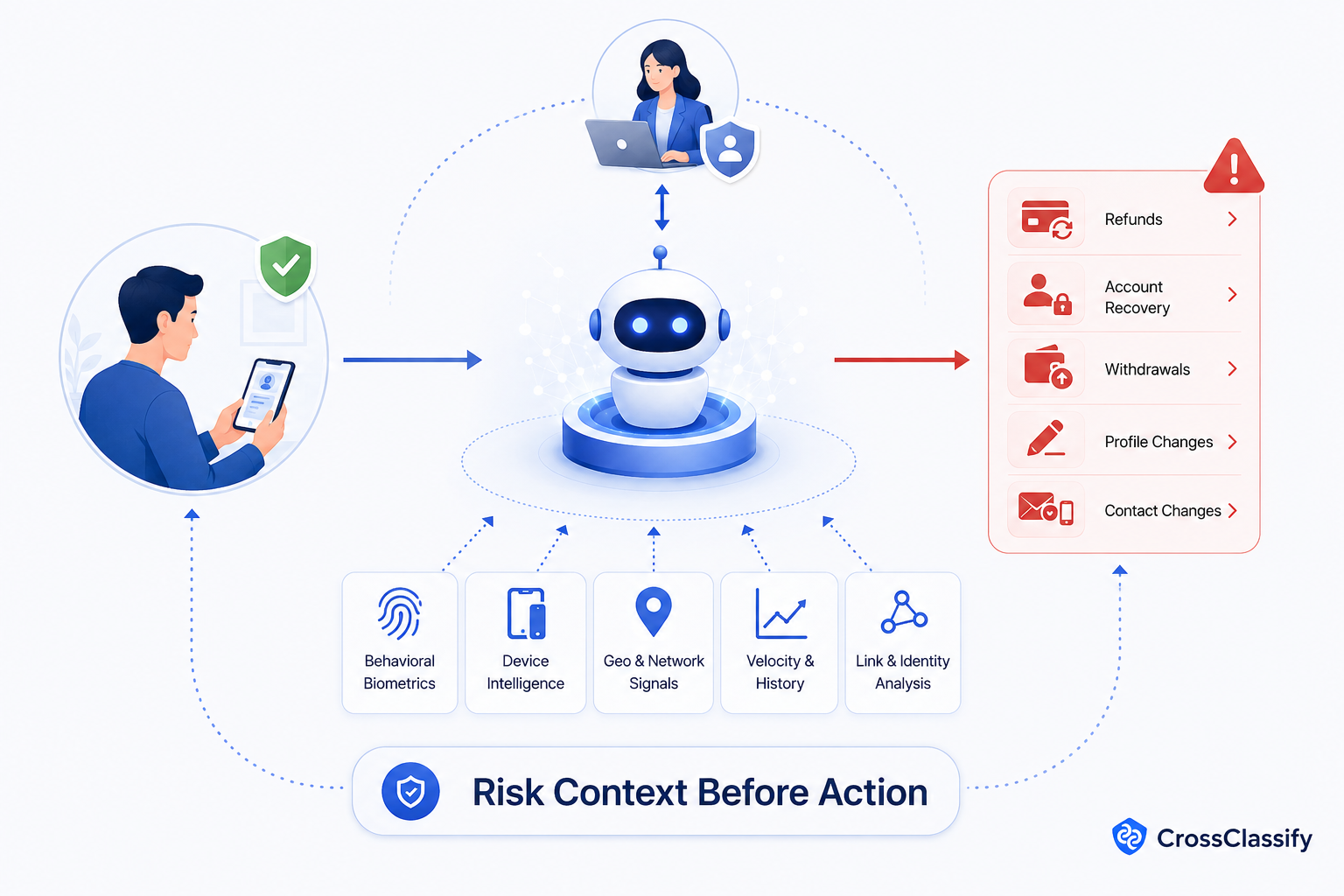
They may handle support questions, refund requests, account recovery, onboarding, disputes, payment questions, or profile updates. These workflows can attract fraudsters because they involve money, access, or identity.
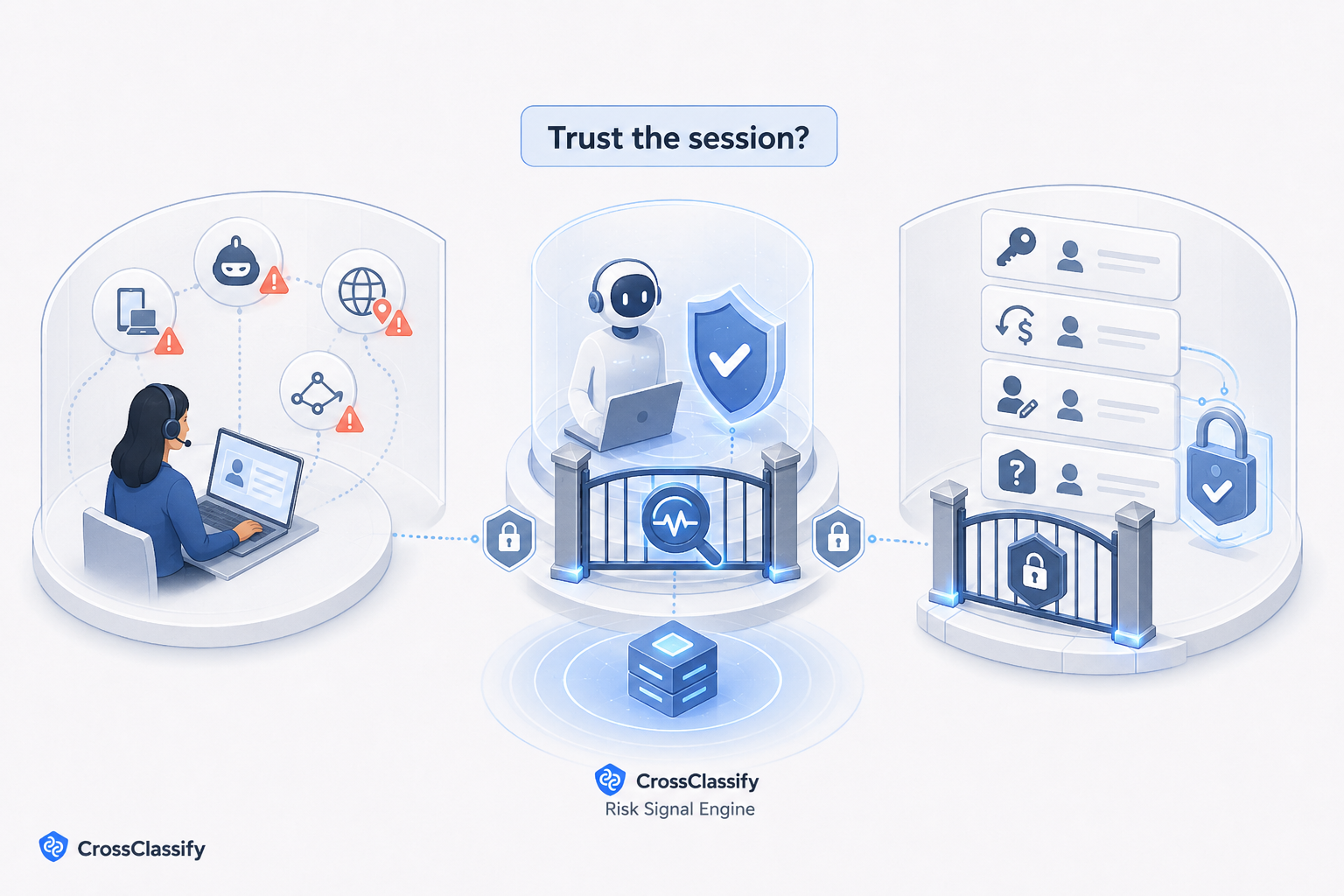
Governance should define what the agent can say and do. But it should also define what customer risk signals are checked before sensitive action is taken.
The question is not only “Can the agent do this?” It is also “Should this specific session be trusted enough to continue?”
Where CrossClassify fits
CrossClassify helps with the second question.
Agent governance controls what agents can access and do. CrossClassify helps companies evaluate whether the user, device, session, behavior, and account pattern around a sensitive customer action look risky.
For example, before a workflow supports account recovery, a company may want risk signals around device history, behavioral consistency, bot activity, account link patterns, geo changes, and suspicious behavior.
Suspicious behavior detection can help teams identify abnormal activity around customer journeys where AI agents may assist. This gives governance a stronger operational layer.
Conclusion
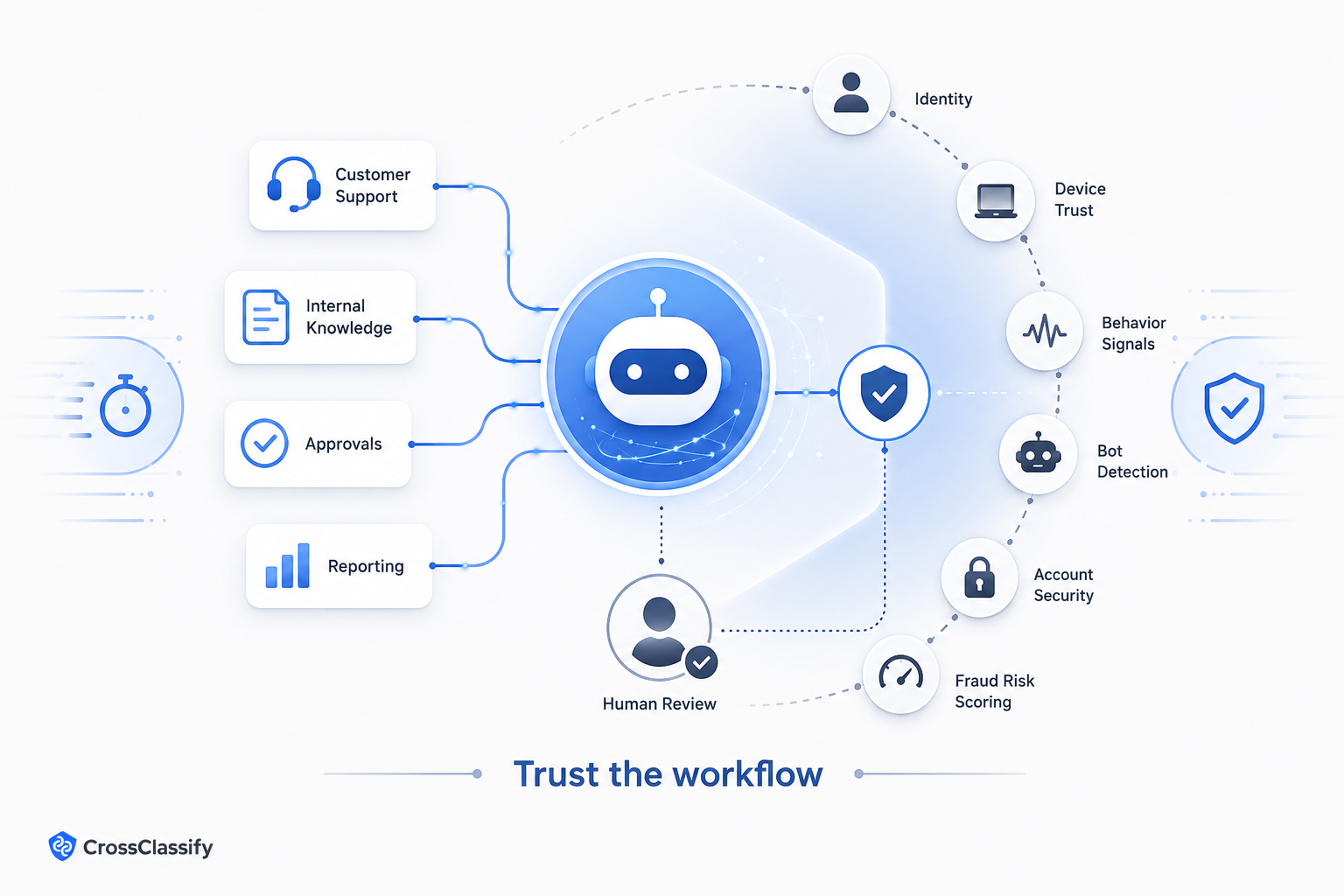
AI agent governance should be simple enough for business teams to follow and strong enough for security teams to trust.
The goal is not to stop teams from building agents. The goal is to let them build safely.
A good governance model answers who can build, what agents can access, what actions they can take, what requires approval, what gets logged, and how suspicious customer behavior is handled.
See How CrossClassify Secures the New AI Agent Attack Surface
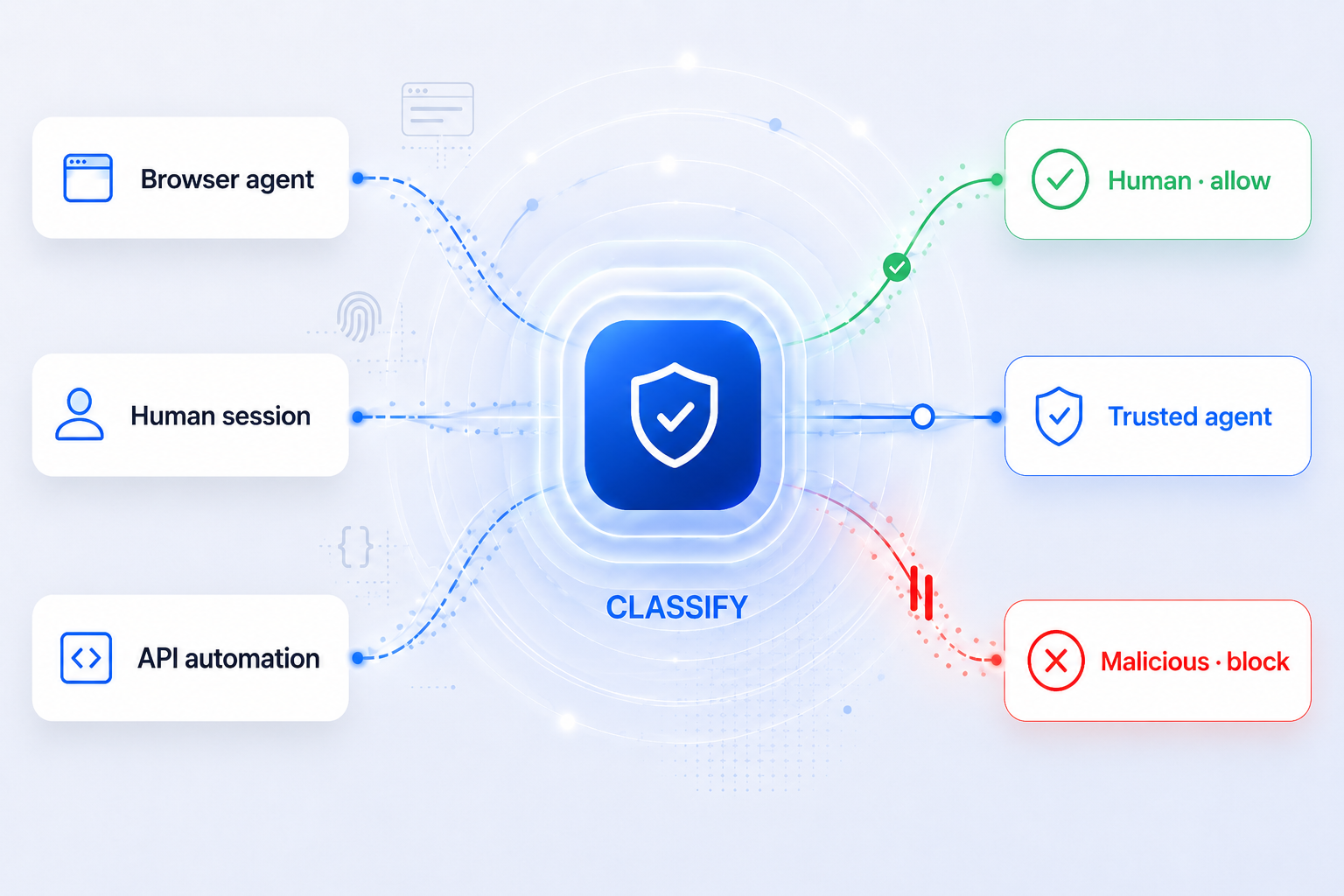
Classify human sessions, trusted agents, and malicious automation before requests turn into risk
Explore CrossClassify today
Detect and prevent fraud in real time
Protect your accounts with AI-driven security
Try CrossClassify for FREE—3 months
Share in
Related articles
Frequently asked questions
Let's Get Started
Create your free
account today
Discover how to secure your app against fraud using CrossClassify
No credit card required