Last Updated on 11 Jun 2026
AI Agent Access Control: The New Security Layer for Automated Business Workflows
Share in
Introduction
AI agent access control is one of the most important topics in secure agent adoption.
The reason is simple: agents become risky when they can access too much or do too much.
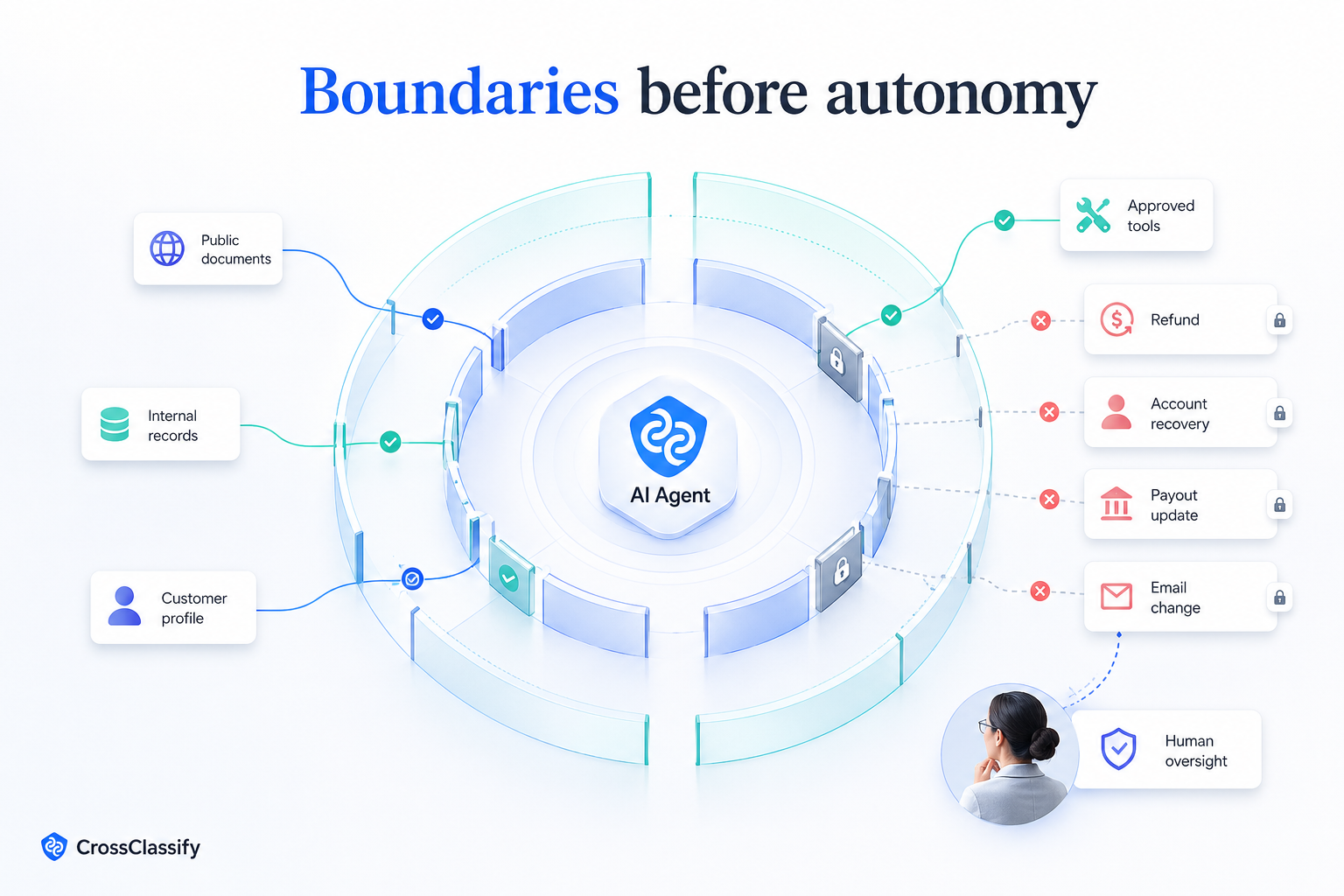
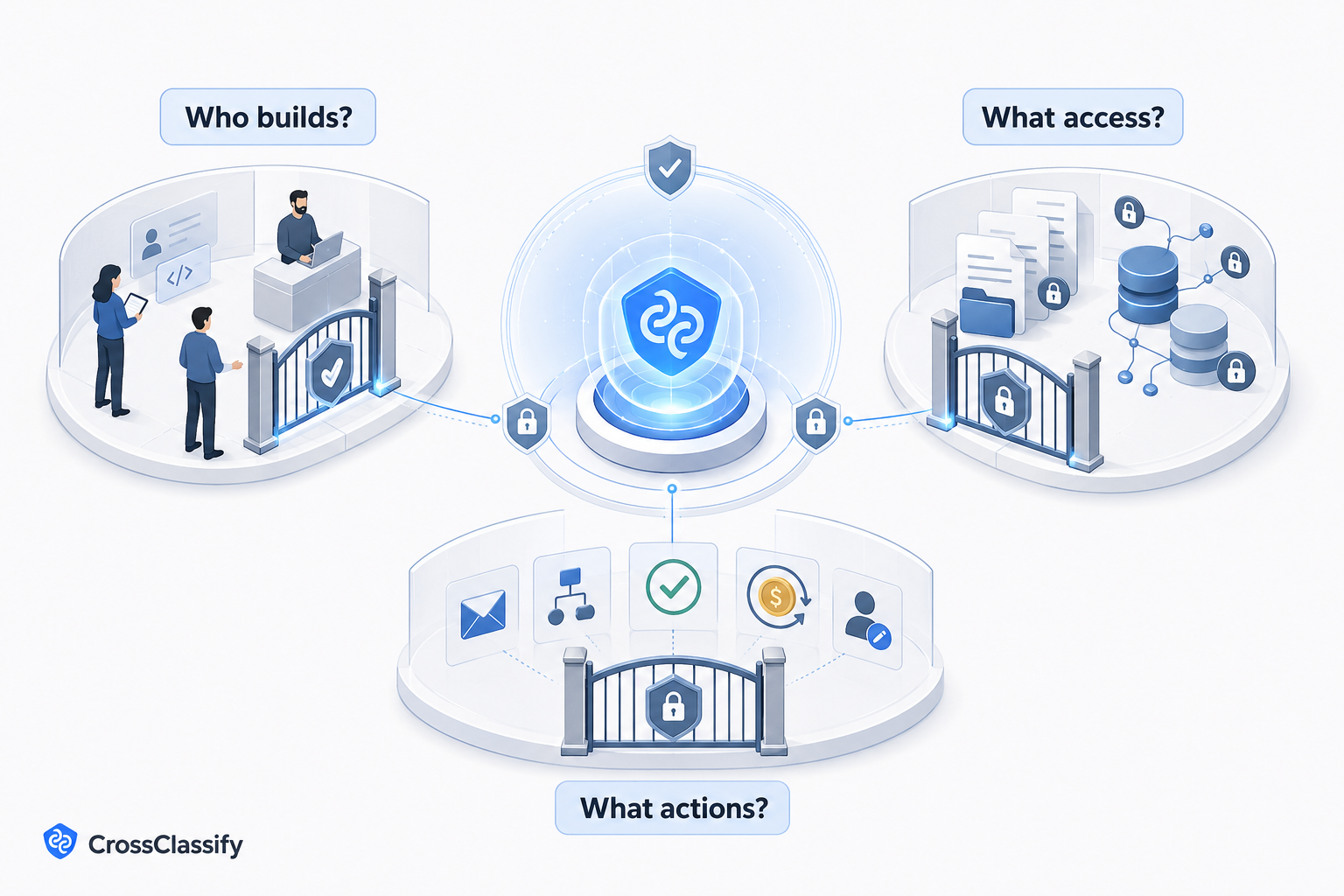
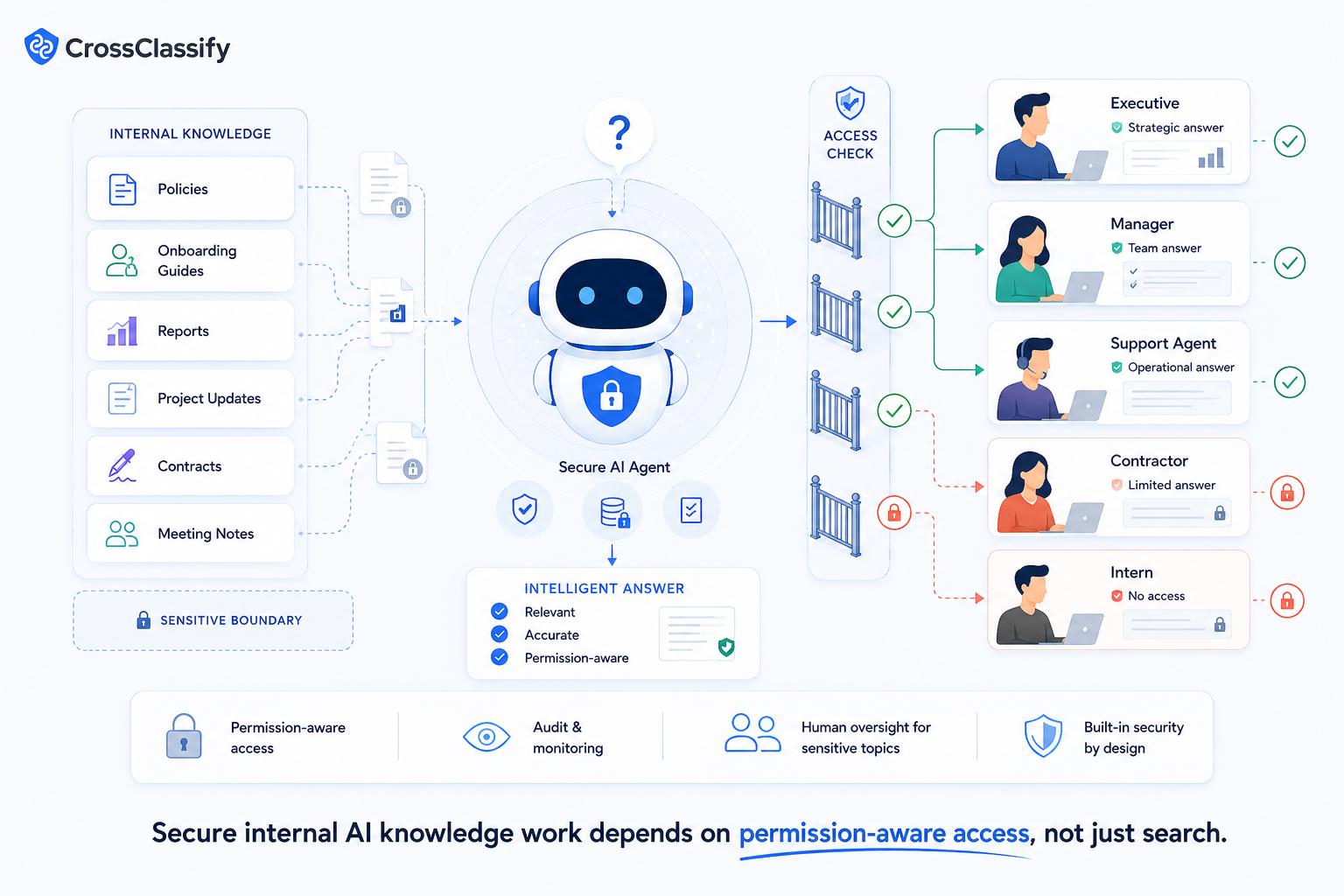
A human employee usually has a role, manager, permissions, training, and accountability. An AI agent also needs boundaries. It should know what data it can see, which tools it can use, which actions it can take, which actions require approval, and when it must stop.
Without access control, AI agents become unpredictable workflow actors.
Watch the Video Summary
Why Your Access Control Won't Stop a Fraudster


Why access control is different for agents
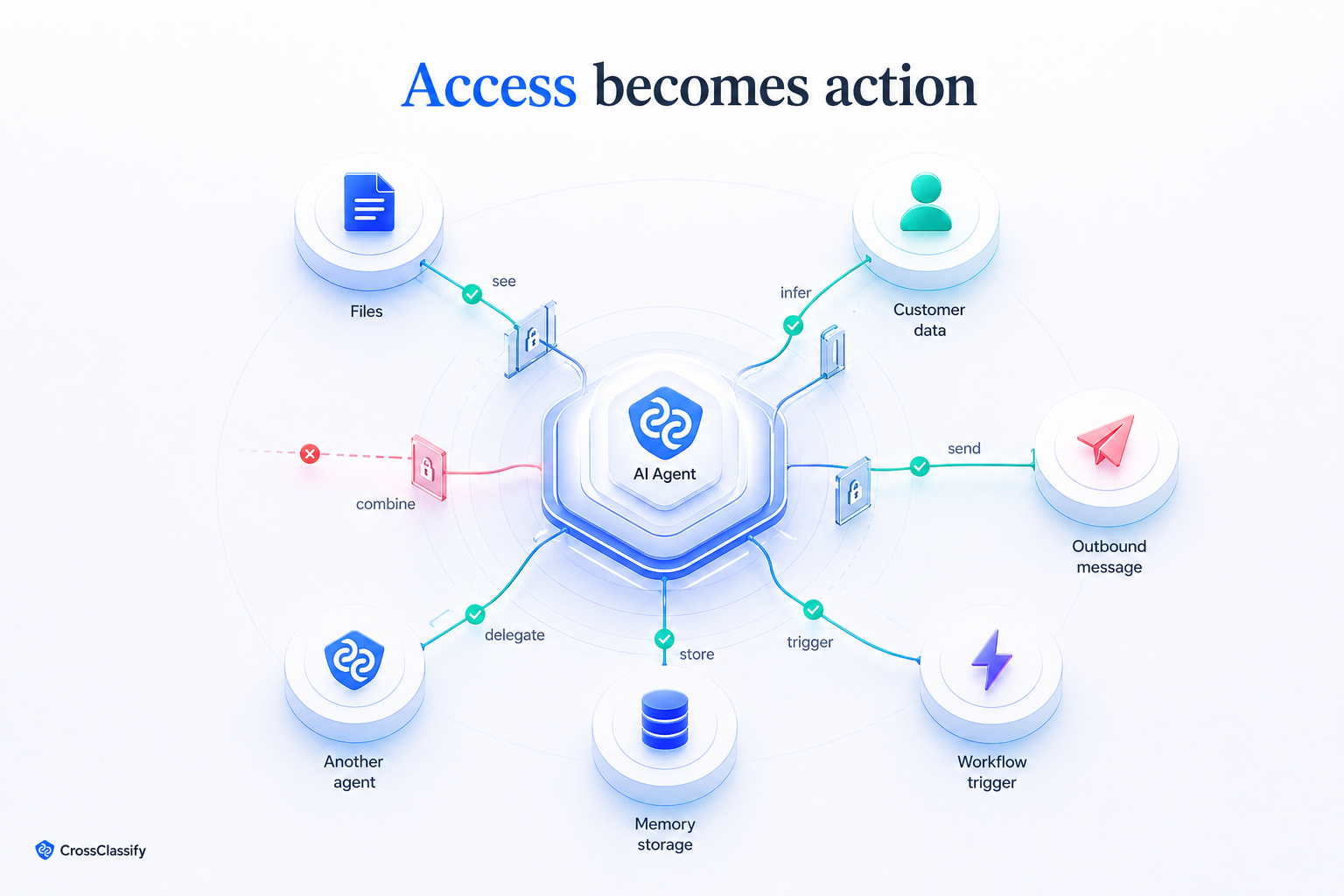
Traditional access control asks what a human user can access. Agent access control must ask more questions.
- What can the agent access?
- What can the agent infer?
- What can it send?
- What can it update?
- What can it trigger?
- Can it combine data from multiple sources?
- Can it pass information to another agent?
- Can it store memory?
- Can it act on behalf of a user?
AI agents create risk because they can connect data with action.
That means access control should not be designed only around files and systems. It should also be designed around business consequences.
The access control ladder
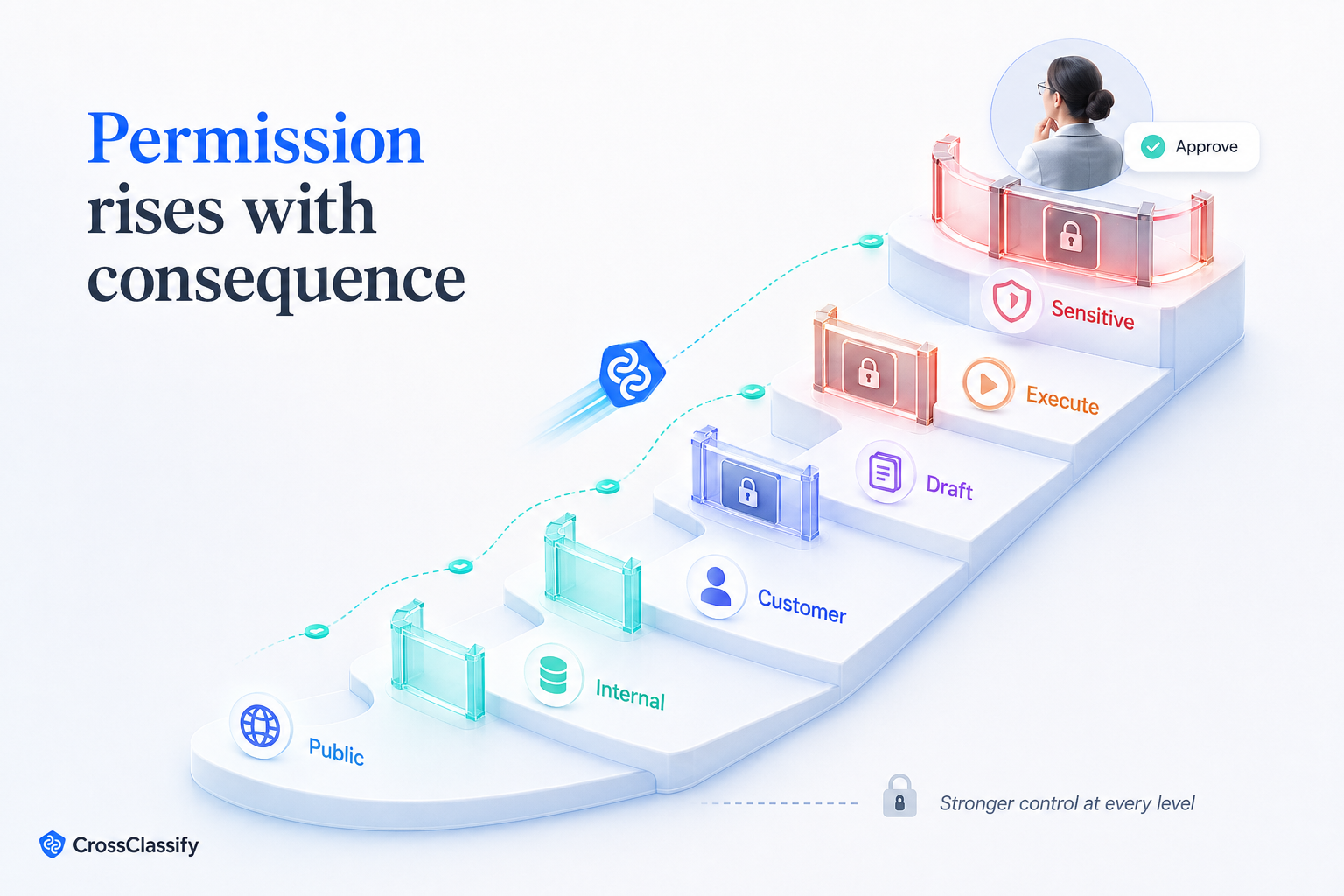
Companies can think about agent permissions as a ladder.
The lowest level is read only public information. The agent can summarize public pages or approved knowledge.
The next level is internal read only content. The agent can summarize internal documents, policies, or reports.
The next level is customer context. The agent can view support tickets, order history, or account details.
The next level is workflow preparation. The agent can draft messages, assign tickets, and prepare actions.
The next level is workflow execution. The agent can submit forms, update records, or trigger actions.
The highest level is sensitive action authority. The agent can influence refunds, recovery, payment changes, withdrawals, or identity related decisions.
Each step up the ladder requires stronger controls.
Common access control mistakes
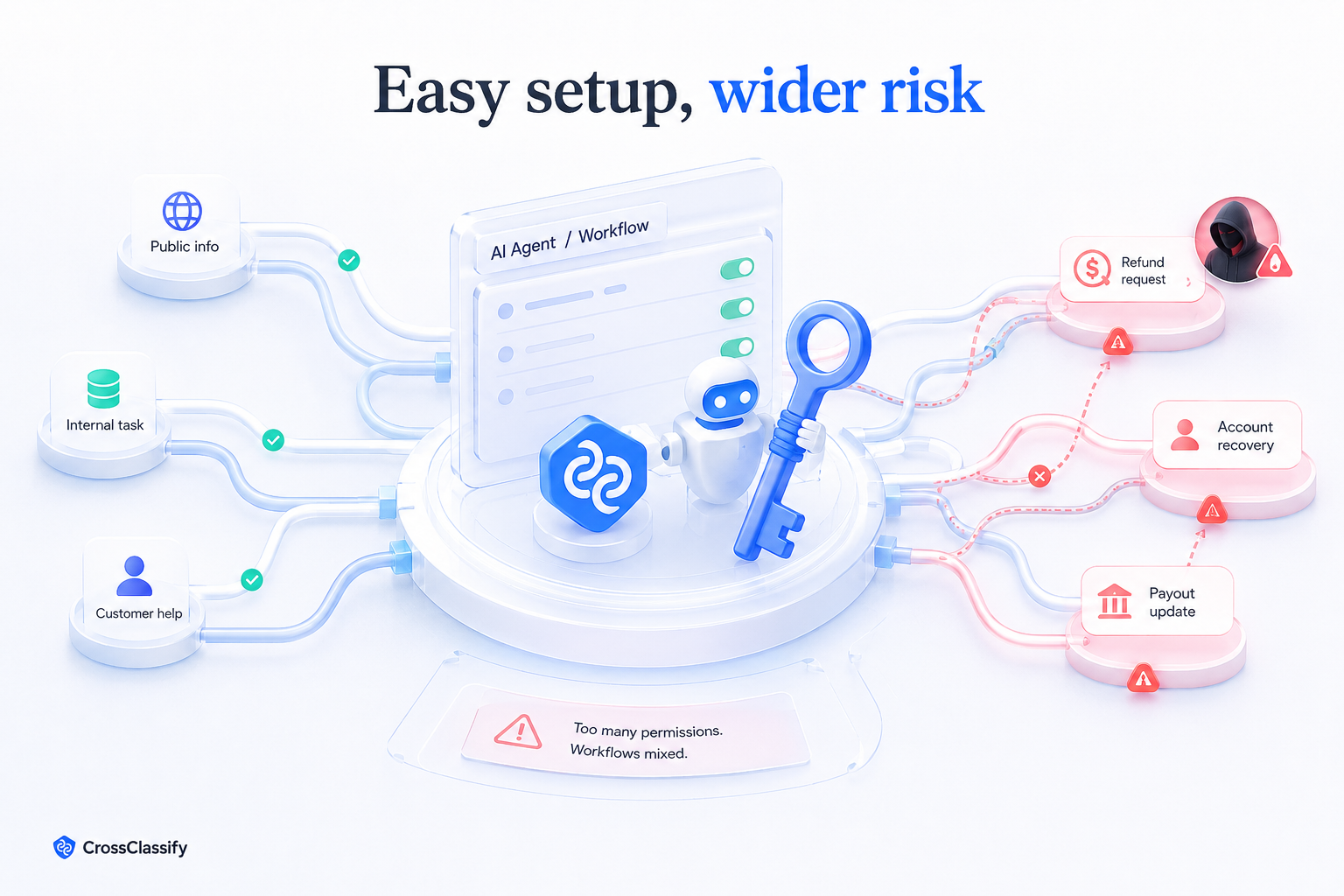
The first mistake is over permissioning. Teams give agents broad access because it makes setup easier.
The second mistake is mixing sensitive and non sensitive workflows. An agent that answers public product questions should not also handle account recovery.
The third mistake is failing to define action limits. Reading a refund policy is not the same as approving a refund.
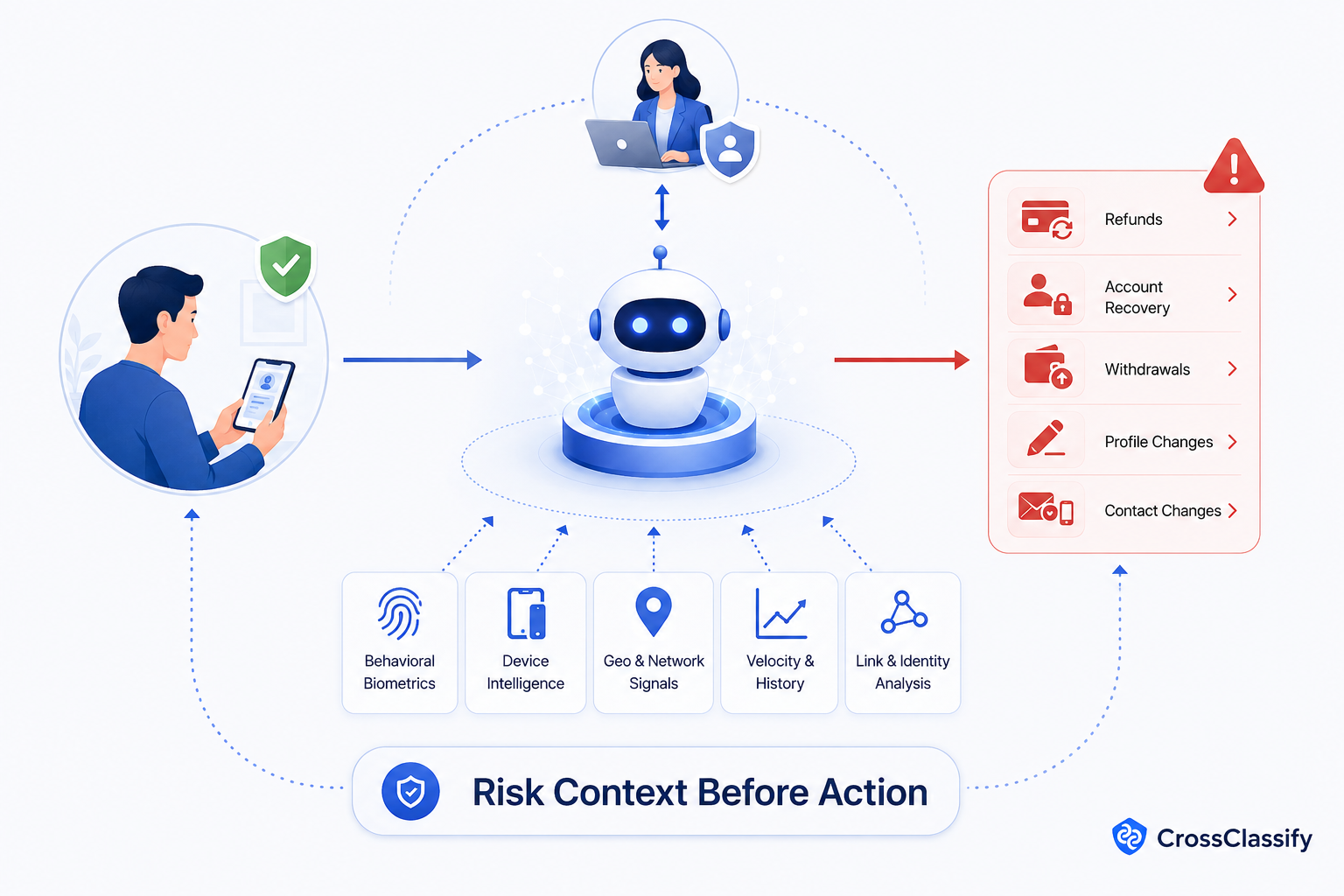
The fourth mistake is forgetting customer trust. Even if the agent has correct internal permissions, the person requesting action may be a fraudster.
Access control and high risk actions
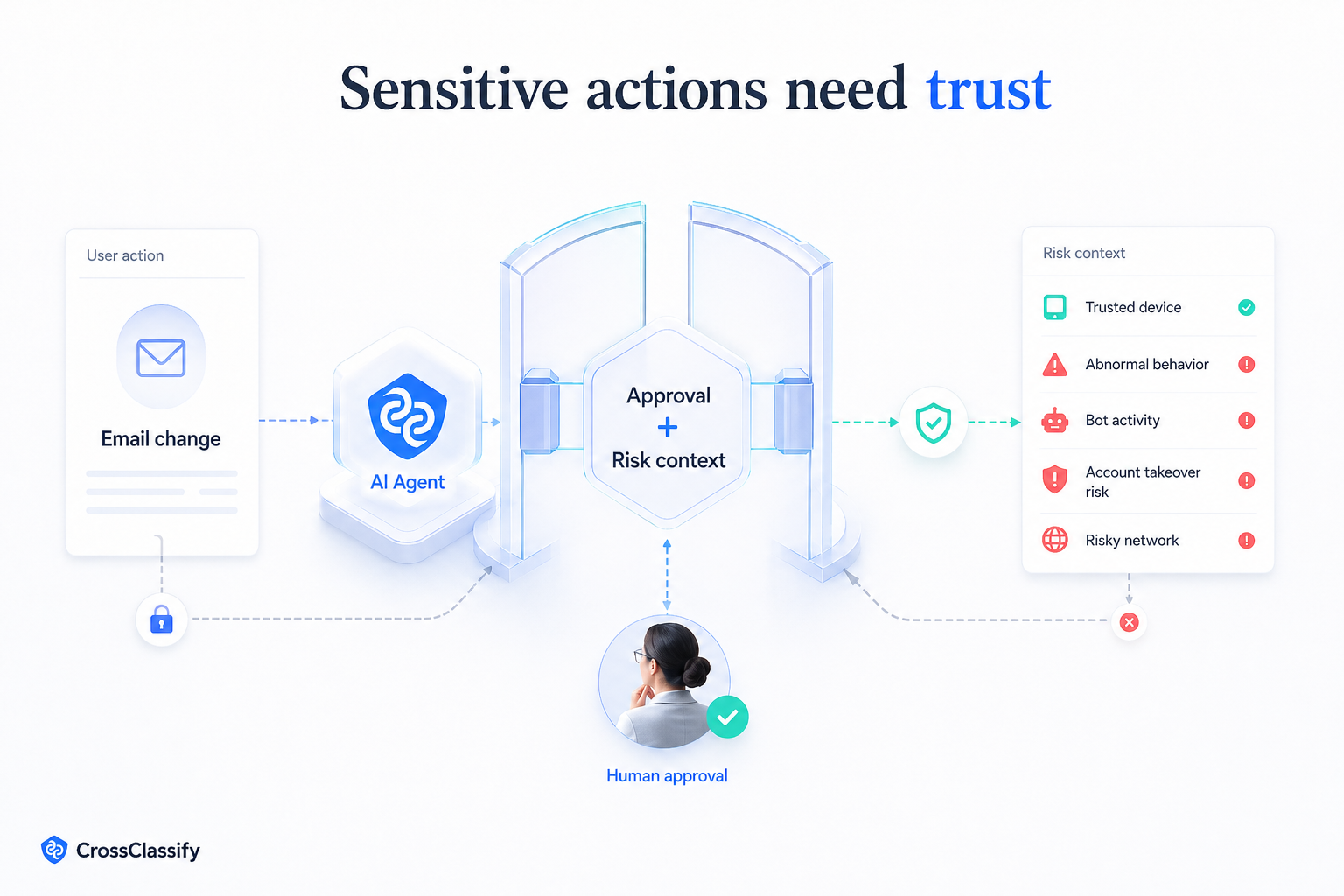
High risk actions should require human approval or stronger verification.
Examples include changing email, resetting authentication, updating payout details, approving large refunds, releasing funds, changing shipping address after purchase, modifying account ownership, and overriding fraud flags.
For these actions, access control should work with risk scoring.
The workflow should ask: does the session look normal? Is the device trusted? Is the behavior consistent? Is there bot activity? Are there signs of account takeover ? Has this account recently changed key details?
Where CrossClassify fits
CrossClassify supports the risk scoring layer around sensitive customer actions.
Access control decides what the AI agent is allowed to do. CrossClassify helps evaluate whether the customer action itself looks trustworthy.
For example, before an agent assisted workflow supports an email change or account recovery request, CrossClassify can help identify suspicious behavior, device anomalies, risky networks, bot signals, account links, and abnormal post login behavior.
This makes access control stronger because the decision is not based only on internal permissions. It also considers external trust signals.
Conclusion
AI agent access control is not just an IT topic. It is a business safety topic.
As agents become part of customer service, operations, finance, support, fraud review, and product workflows, companies need clear boundaries around data and actions.
The safest principle is simple: agents should only access what they need, only act where approved, and always escalate sensitive actions with risk context.
See How CrossClassify Secures the New AI Agent Attack Surface
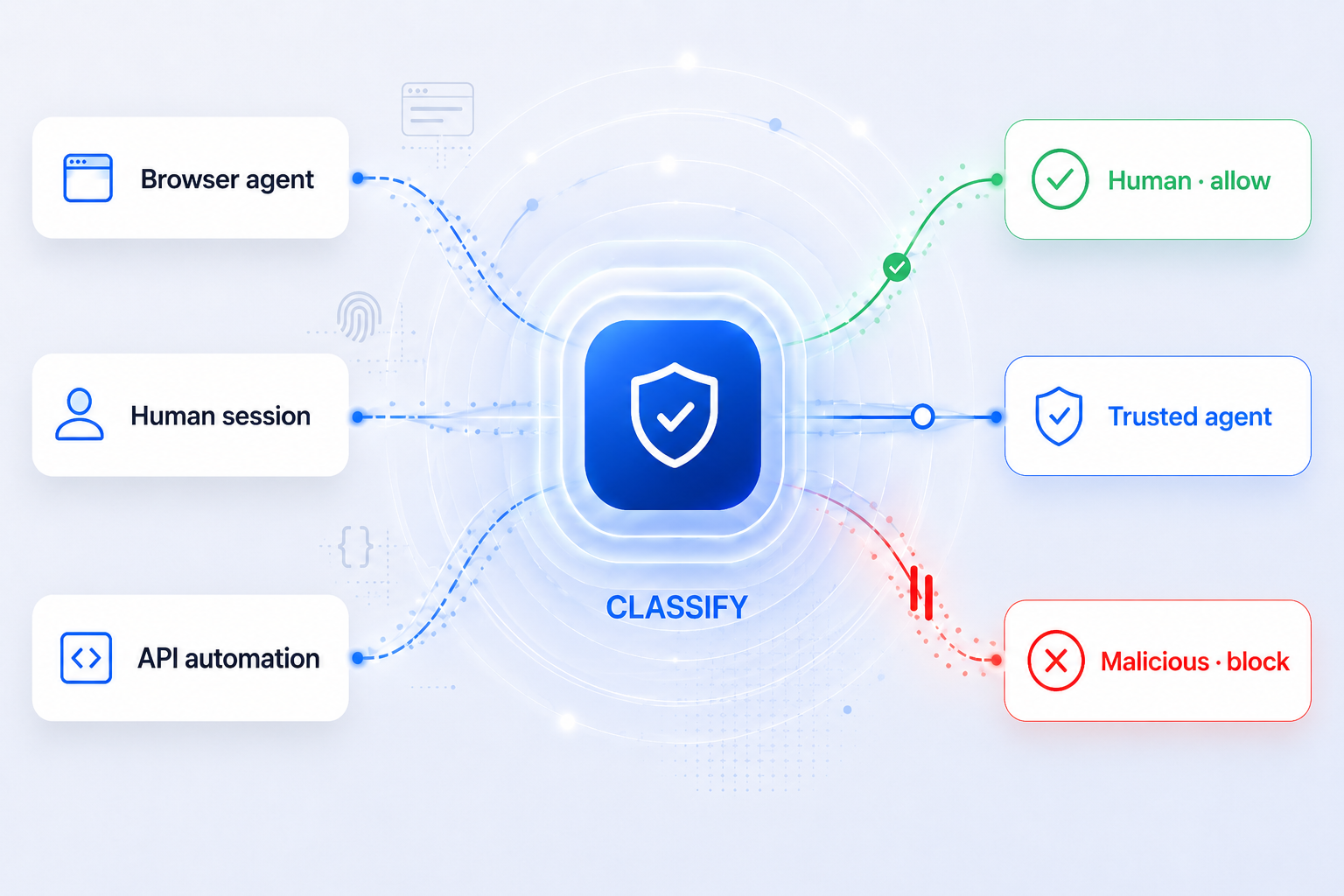
Classify human sessions, trusted agents, and malicious automation before requests turn into risk
Explore CrossClassify today
Detect and prevent fraud in real time
Protect your accounts with AI-driven security
Try CrossClassify for FREE—3 months
Share in
Related articles
Frequently asked questions
Let's Get Started
Create your free
account today
Discover how to secure your app against fraud using CrossClassify
No credit card required