Last Updated on 09 Aug 2026
Job Source Integrity: Verifying Authorized Listings Before Recruitment Brand Abuse Spreads
Share in
Introduction
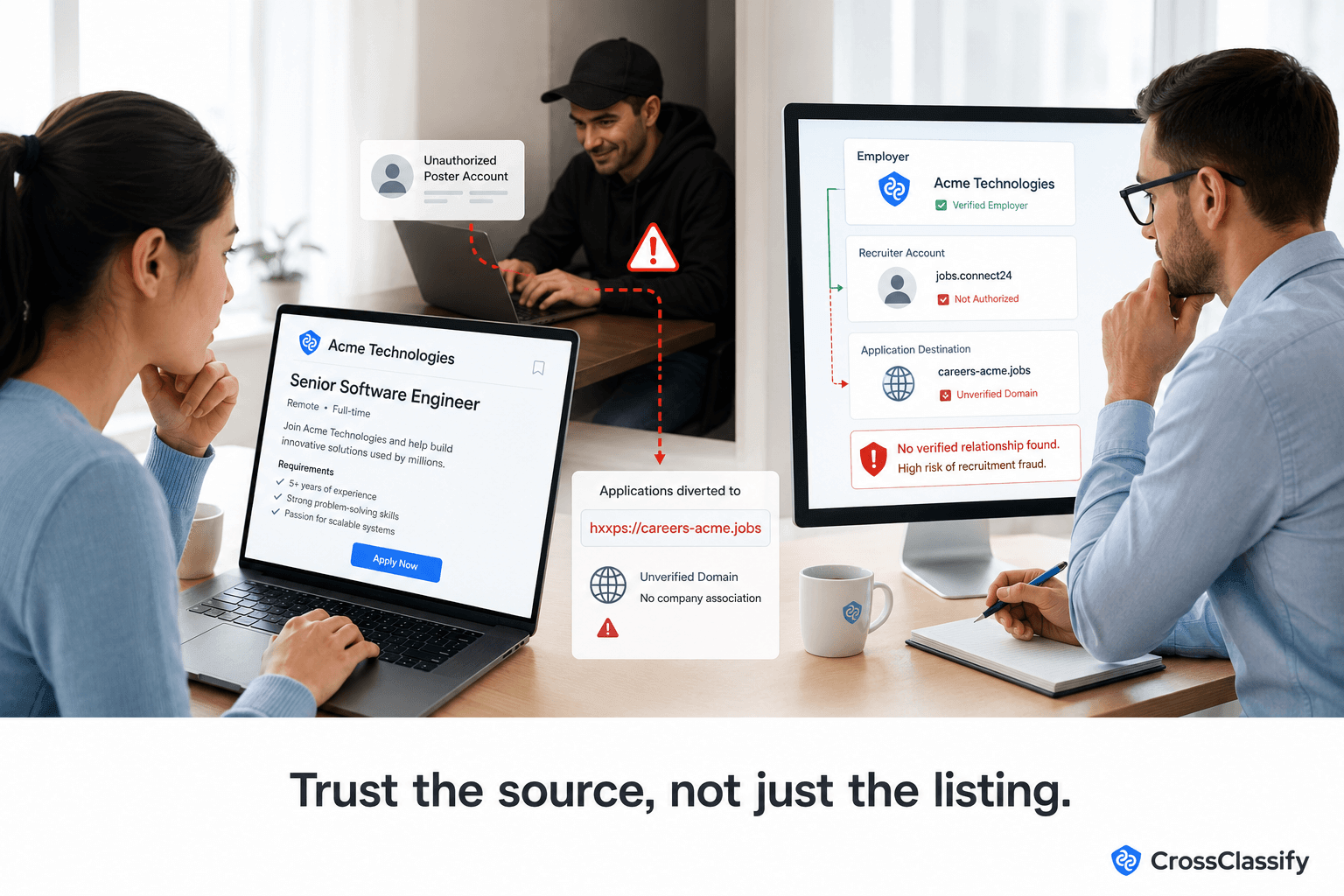
Candidates often judge a job listing by the employer name, role title, description, location, and platform where it appears. When those elements look familiar, the listing inherits trust from the organization and recruitment service. Attackers can exploit that trust without creating obviously suspicious content.
An unauthorized listing may copy a real role, employer description, office location, or hiring language. It can appear on a legitimate recruitment platform while directing candidates into an unapproved application path. The listing text may be accurate because it was copied from an authentic source.
This means fake job detection cannot depend only on whether the content sounds suspicious. Recruitment platforms also need to verify where the listing came from, which account created it, whether the employer authorized it, and where candidates are being sent. This wider concept can be described as job source integrity.
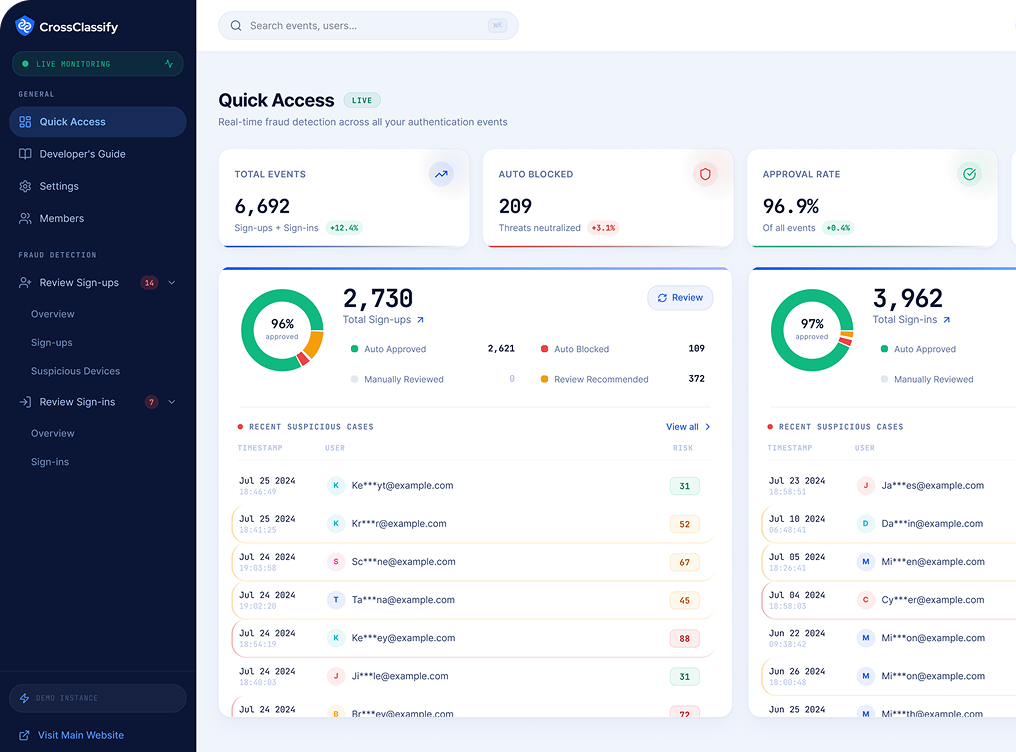
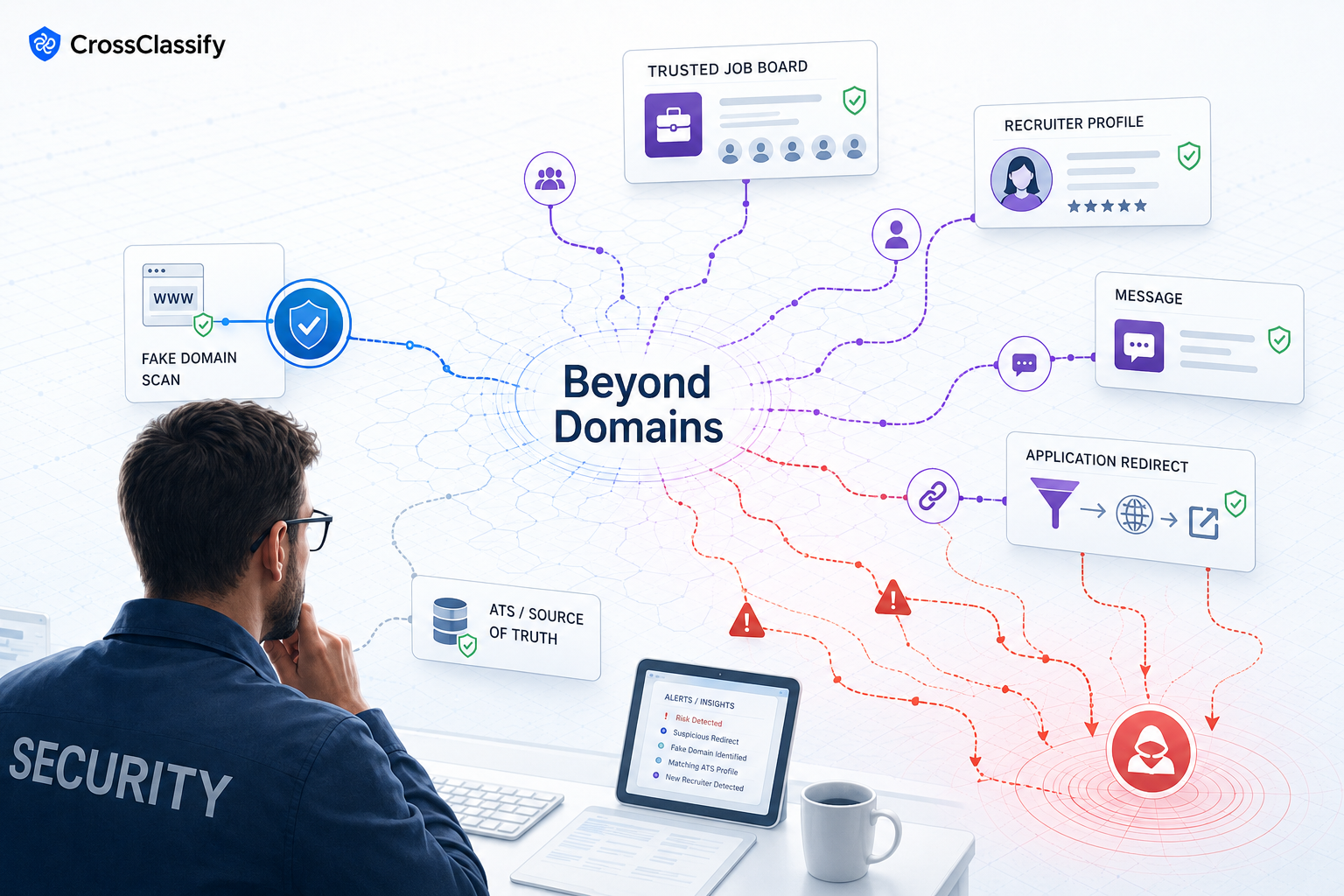
CrossClassify’s recent recruitment content emphasizes that fake jobs may use real company names, copied descriptions, recruiter profiles, and trusted job boards. Its official product positioning combines account, device, behavior, posting, and link evidence to support human review.
Why content moderation alone misses unauthorized jobs
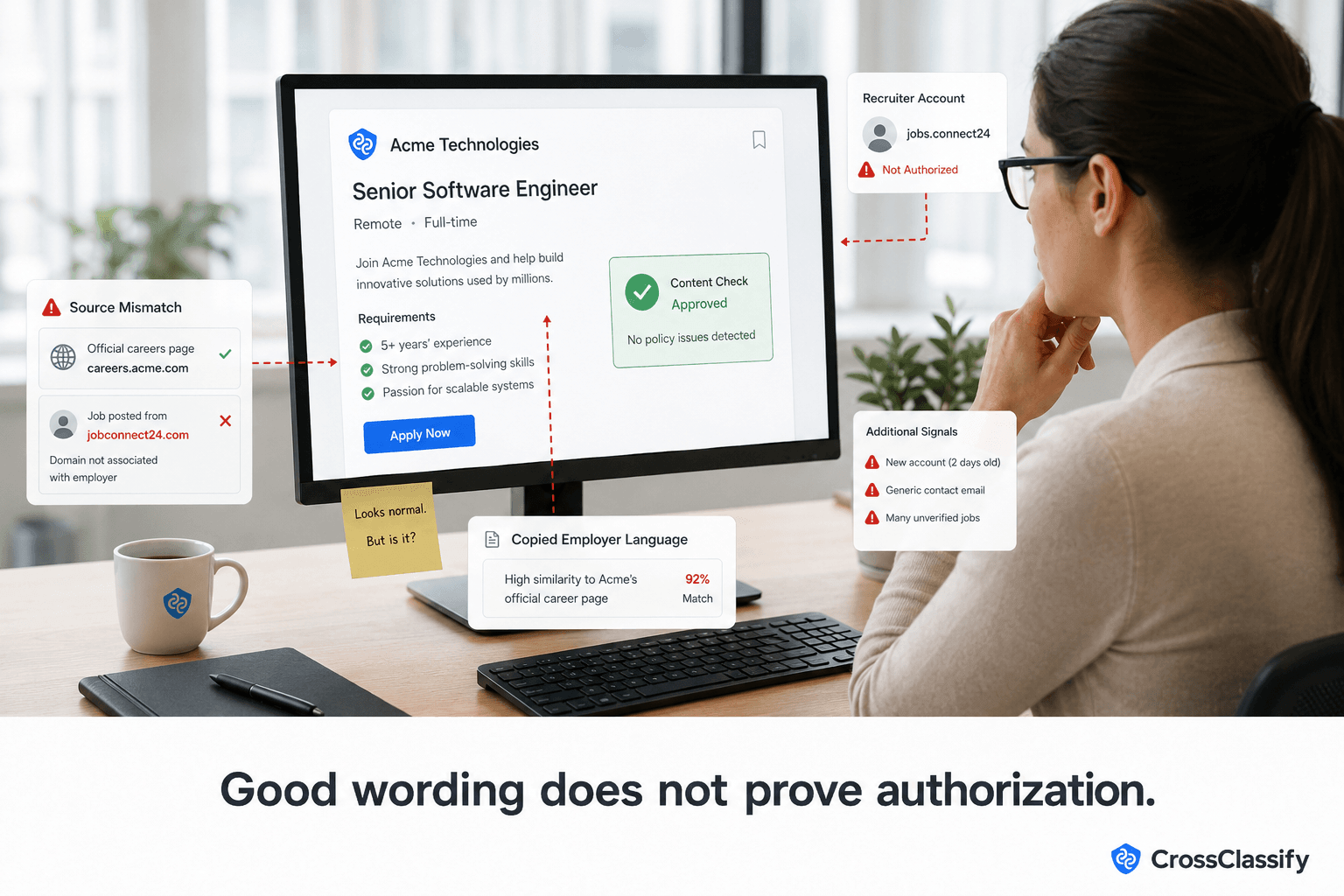
Content moderation can identify prohibited language, unrealistic promises, suspicious requests, and known scam phrases. These controls remain valuable because many fraudulent listings contain visible warning signs. They become less effective when the attacker copies an approved job description or carefully imitates normal employer language.
A copied listing may include the correct responsibilities, requirements, salary style, and company description. The content looks legitimate because most of it originally came from a legitimate source. The fraud appears in the account, posting origin, application destination, or recruiter behavior surrounding the listing.
Automated text analysis may also produce false confidence. A listing that passes language checks can still be unauthorized, while an unusual but legitimate role may be flagged because its wording differs from common patterns. Content should therefore contribute to review rather than act as the only source of truth.
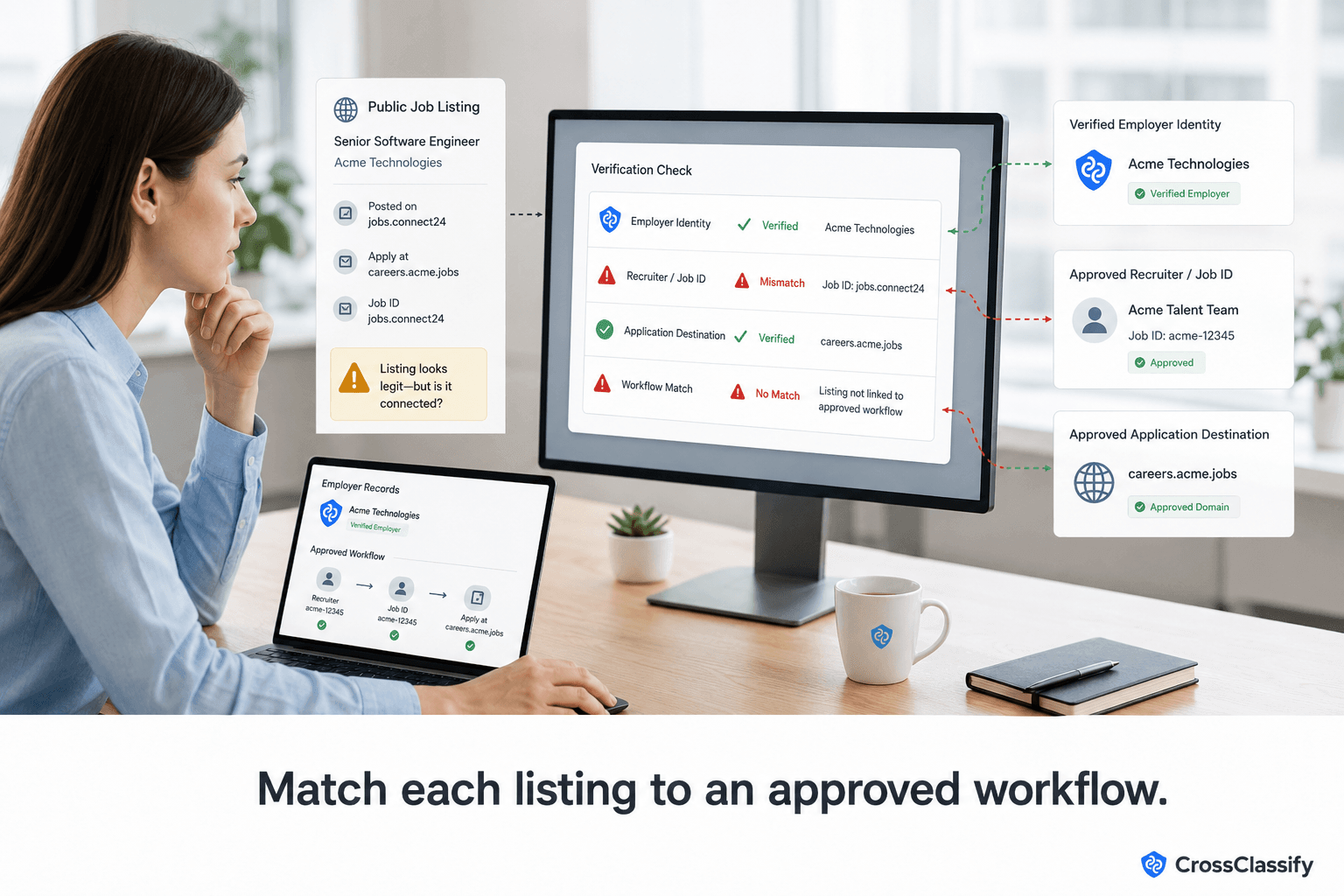
Job source integrity connects the listing with trusted employer records and platform activity. The platform can ask whether the job exists in an approved hiring system, whether the posting account is authorized, and whether the candidate journey remains inside expected destinations. This changes detection from text classification to relationship verification.
Verifying the source of a listing
Source verification compares a public job listing with trusted employer or platform records. These may include approved job identifiers, organization accounts, recruiter permissions, application destinations, and active hiring campaigns. The objective is to establish whether the listing belongs to a known and authorized hiring workflow.
A direct match provides stronger confidence, but real hiring environments can be complex. Employers may use agencies, regional teams, acquired brands, franchises, or several applicant systems. The platform needs a process for representing these relationships so legitimate variations do not appear unauthorized.
The timing of the listing also matters. An attacker may copy an expired role or publish a job before the employer has made it public. A previously valid description can become misleading when the application destination or recruiter account has changed. Source integrity should therefore be monitored throughout the listing lifecycle.
CrossClassify can support this model by connecting approved records with account, device, posting, and application path signals through the recruitment fraud detection solution. Human teams remain responsible for confirming authorization and deciding whether a listing should remain visible.
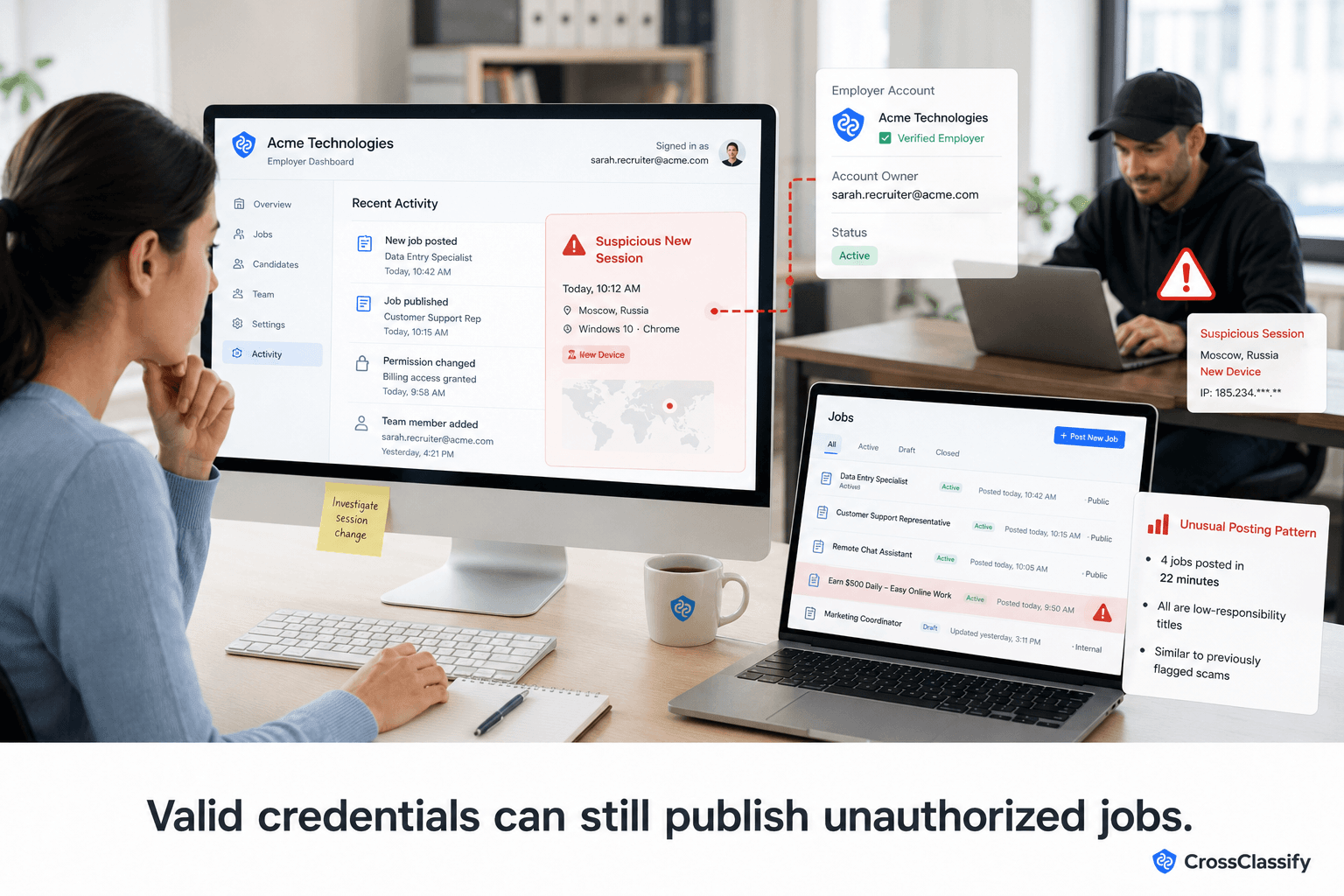
Employer account takeover and job posting risk
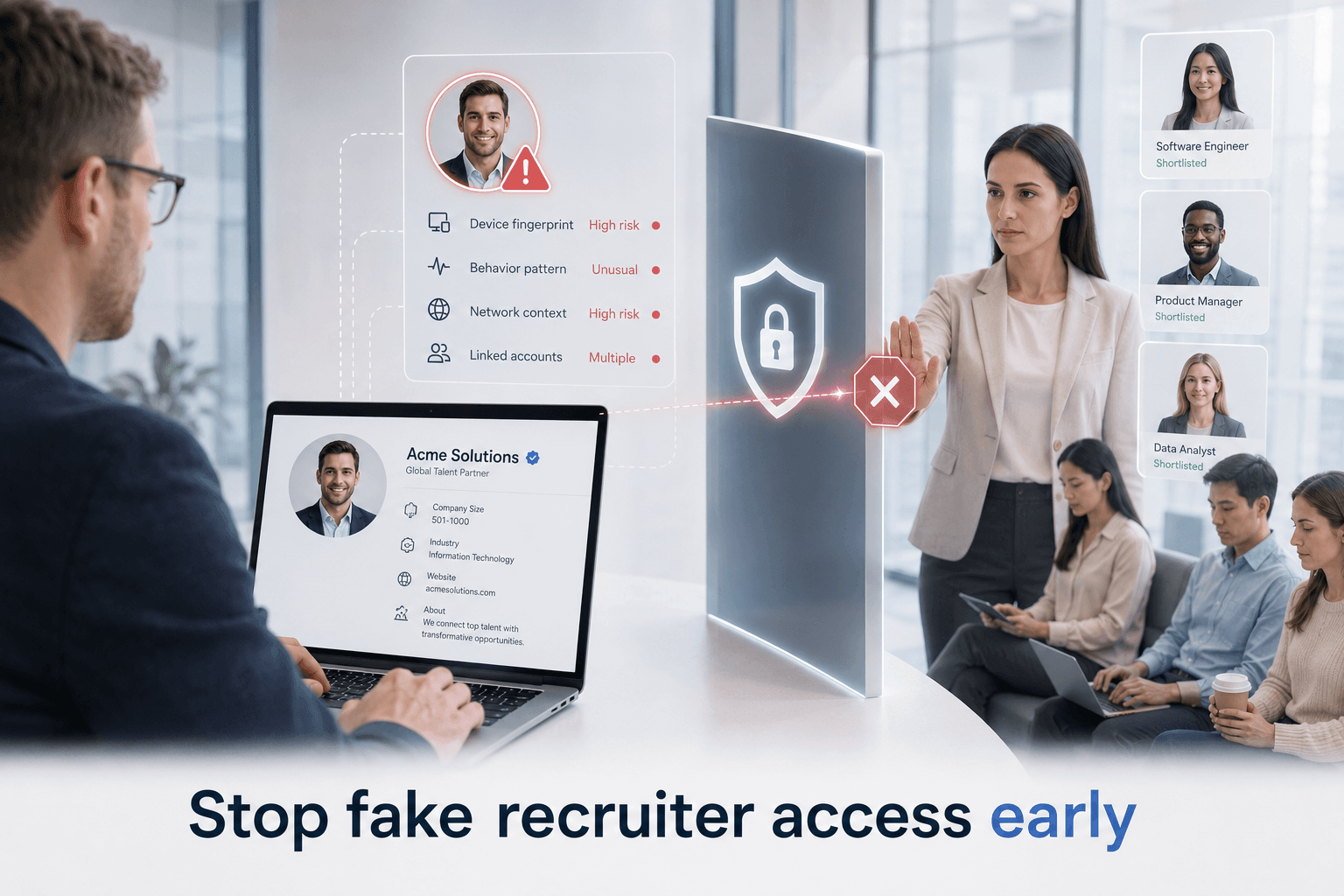
Some unauthorized listings originate from newly created fake employer accounts. Others come from compromised legitimate accounts, which can be more difficult to detect. The listing inherits the history, employer profile, and platform trust already associated with the account.
An attacker may gain access through stolen credentials or a hijacked session, then change company details, invite another recruiter, or publish a new role. The login may appear successful because the credentials are valid. Suspicious behavior becomes visible only after the session is active.
The platform should evaluate device changes, network context, behavior shifts, profile edits, permission changes, and posting activity together. A familiar employer account that suddenly uses a new environment and publishes several unusual roles deserves stronger review than the job text alone would suggest.
CrossClassify’s account takeover protection solution can add continuous device and behavior context around employer access and sensitive actions. Recruitment platforms can use these signals to review risky sessions before or shortly after an unauthorized listing becomes visible.
Application destination integrity
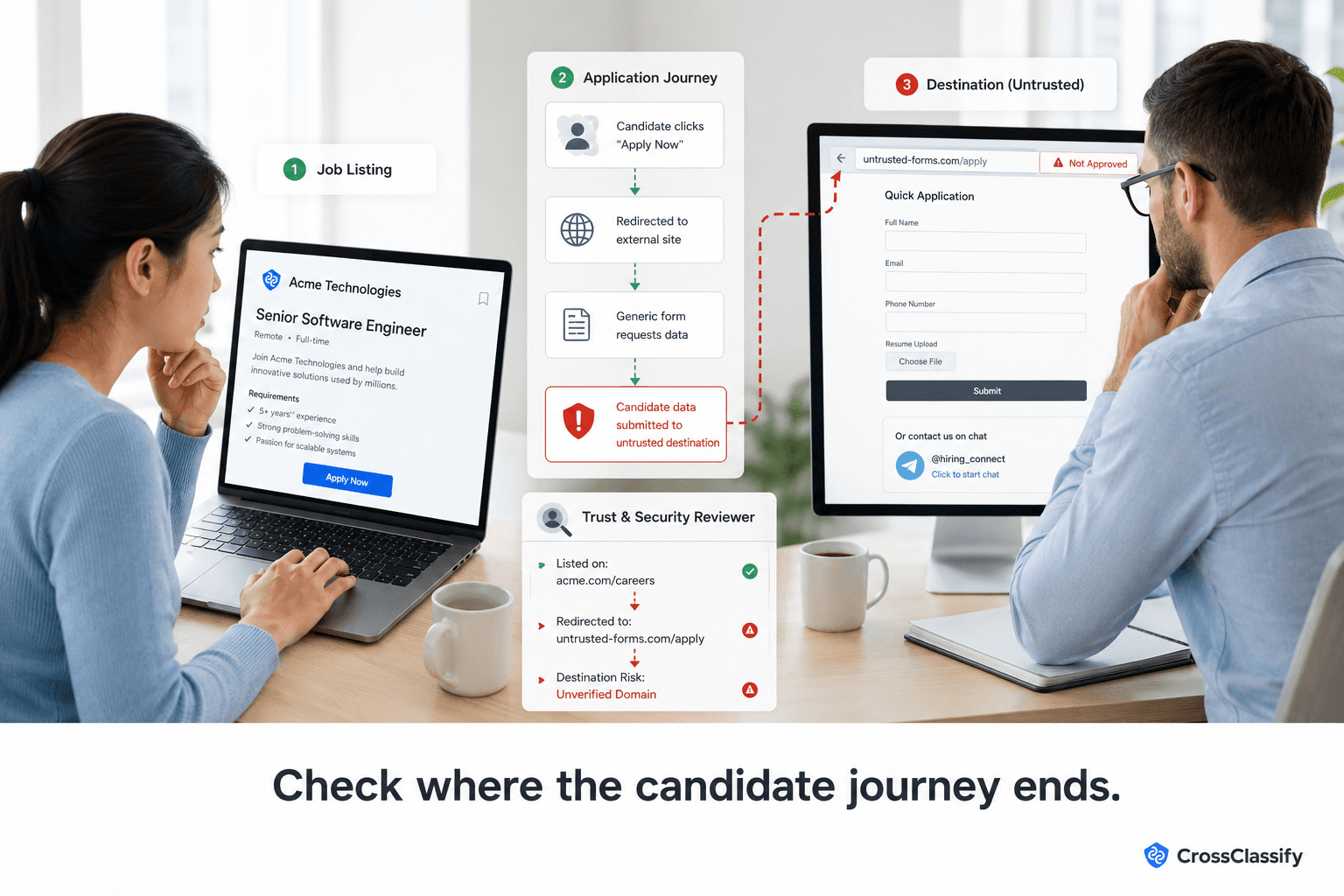
A job listing can appear legitimate while directing candidates to an untrusted destination. The application link may lead to a copied website, a common form service, an external chat account, or a page that collects personal information outside the employer’s approved process. The risk becomes visible only after the candidate decides to apply.
Destination integrity asks whether the application path belongs to the authorized employer workflow. The platform can compare domains, URLs, redirects, form ownership, and later communication instructions with approved records. A destination change may be legitimate, but it should be explainable through employer settings and account history.
Attackers may also begin with an approved platform application, then move candidates to email or chat. Messaging behavior, external links, and requests for sensitive information therefore remain part of job source integrity. The full candidate journey matters more than the initial listing page.
CrossClassify can connect account, posting, device, messaging, and destination risk into one review context. The platform remains responsible for URL policy, domain verification, content moderation, and takedown actions. Risk signals help teams identify which listing journeys deserve immediate attention.
Device and posting relationship signals
Device intelligence can reveal relationships between job listings that appear unrelated. Several employer accounts may use different organizations and job descriptions while sharing persistent device characteristics. The same environment may create listings, send recruiter messages, and respond to candidate reports.
Shared devices can be legitimate for agencies and employer teams. The platform should compare overlap with verified organization relationships and expected account roles. Risk increases when unrelated organizations share devices, networks, behavior, and similar application destinations.
Posting behavior provides additional evidence. Coordinated abuse may produce bursts of listings, repeated templates, rapid organization changes, or similar job creation sequences. The activity may move between accounts when one profile is restricted. Link analysis helps reviewers understand the wider campaign.
CrossClassify’s device fingerprinting solution can connect devices, sessions, and accounts even when visible identifiers change. Platforms can combine this evidence with posting records and employer verification before deciding whether listings are connected.
Turn CV Red Flags Into a
Documented Risk Score
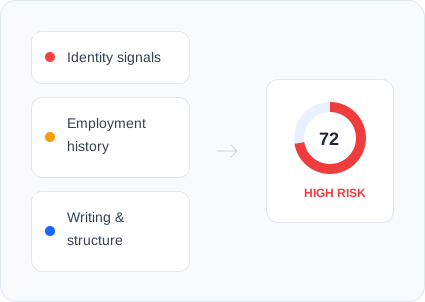
A checklist tells you what to look for. CV Risk Checker scans any resume in seconds and shows you exactly where the fraud signals are — before you book the interview.
Brand relationship graphs
Recruitment brands can include parent companies, subsidiaries, acquired businesses, agencies, franchises, and regional entities. This complexity makes authorization difficult to represent through one company name or domain. A graph model can show which organizations, recruiter accounts, posting channels, and application destinations are trusted.
The graph can also identify unexpected relationships. A recruiter account may publish jobs for several unrelated brands, or an application link may appear across many organizations. A device associated with one employer may suddenly create accounts for others. These connections can help teams prioritize investigation.
Not every unexpected relationship is fraudulent. Recruitment agencies and service providers may legitimately support many employers. The platform needs evidence of authorization and clear account roles. The graph should show both trusted and suspicious connections rather than treating every shared element as abuse.
CrossClassify uses link analysis to reveal relationships between accounts, devices, sessions, and activity. Recruitment platforms can combine this context with employer records to create a more complete job source integrity model. Human reviewers determine whether each relationship is approved.
Candidate reports as operational signals
Candidates often encounter suspicious behavior before platform teams do. They may notice requests for payment, unusual application destinations, inconsistent recruiter identities, or pressure to move communication elsewhere. Reporting tools provide an important source of operational evidence.
One report may reflect misunderstanding or dissatisfaction rather than fraud. The platform should examine the report with account, listing, device, and messaging context. Multiple independent reports connected to the same recruiter, device, destination, or posting pattern create stronger evidence.
Candidates need clear reporting categories and an understandable response process. They should be able to identify a suspicious listing or message without navigating a complex support workflow. The platform should also communicate when immediate protective action is necessary.
CrossClassify can enrich candidate reports with related account and device evidence. This helps review teams determine whether a complaint describes one confusing interaction or a broader abuse campaign. The platform controls investigation, candidate communication, and listing action.
Incident response for unauthorized listings
Unauthorized listing response requires coordination across trust, security, product, support, legal, and employer teams. The first objective is to reduce candidate exposure. The platform may temporarily hide the listing, restrict the account, or disable an application destination while evidence is reviewed.
The investigation should preserve a timeline. Teams need to know who created the listing, which device and session were involved, whether the account was compromised, which candidates interacted with it, and where applications were sent. Related accounts and listings should be identified before the incident is treated as isolated.
Employer communication is also important. A legitimate organization may need to confirm whether the listing and recruiter are authorized. If the account was compromised, access recovery and permission review may be required. Candidate communication may be necessary when personal information could have been exposed.
CrossClassify supplies risk and relationship context that can support this investigation. The recruitment platform and employer remain responsible for takedown, notification, recovery, and legal decisions. A prepared workflow reduces delay when a suspicious listing is discovered.
Measuring job source integrity
Job source integrity should be measured through prevention, detection speed, and candidate impact. Counting removed listings does not show whether the platform found them before candidates were exposed. Teams need to understand where the incident entered the workflow and how long it remained active.
Useful measures include authorization mismatch rate, time to review, candidate reports, suspicious destination reuse, compromised employer accounts, connected posting clusters, and repeat devices. Platforms can also track how often legitimate listings are delayed or challenged incorrectly.
Employer outcomes matter as well. Teams can measure account recovery time, brand impersonation recurrence, and the number of employer confirmations required. These results help improve organization records and authorization workflows.
CrossClassify can provide account, device, behavior, and relationship signals, while the recruitment platform records listing and incident outcomes. This feedback helps teams identify the controls that reduce real candidate exposure without making job publishing unnecessarily difficult.
Conclusion
A fake or unauthorized job does not need to contain obviously suspicious language. It can copy a real role, use a real employer name, and appear on a trusted platform. The risk may exist in the posting account, application destination, or recruiter behavior rather than the text.
Job source integrity verifies the relationships behind the listing. Recruitment platforms need to understand whether the role is approved, whether the account is authorized, and whether the candidate journey remains connected to trusted destinations. Content analysis remains useful but cannot answer these questions alone.
CrossClassify helps platforms connect account access, device history, behavior, posting activity, messaging, and related accounts. These signals give human teams stronger evidence for verifying listings and responding to coordinated brand abuse.
A source focused model protects candidates before trust becomes personal data exposure. It also protects employers from impersonation and allows legitimate listings to benefit from stronger marketplace confidence.
See How CrossClassify Protects Recruitment Platforms
Detect fake recruiters, fraudulent resumes, and job scams instantly

Check a CV for Fraud Signals in 60 Seconds
Upload any resume and get an instant risk score, flagged signals, and a recruiter-ready action checklist.
Try the CV Risk CheckerNo credit card required
Share in
Related articles

Frequently asked questions
Let's Get Started
Create your free
account today
Discover how to secure your app against fraud using CrossClassify
No credit card required