Last Updated on 29 Jul 2026
Employer Access Provenance: Stopping Fake Recruiter Accounts Before They Reach Candidates
Share in
Introduction
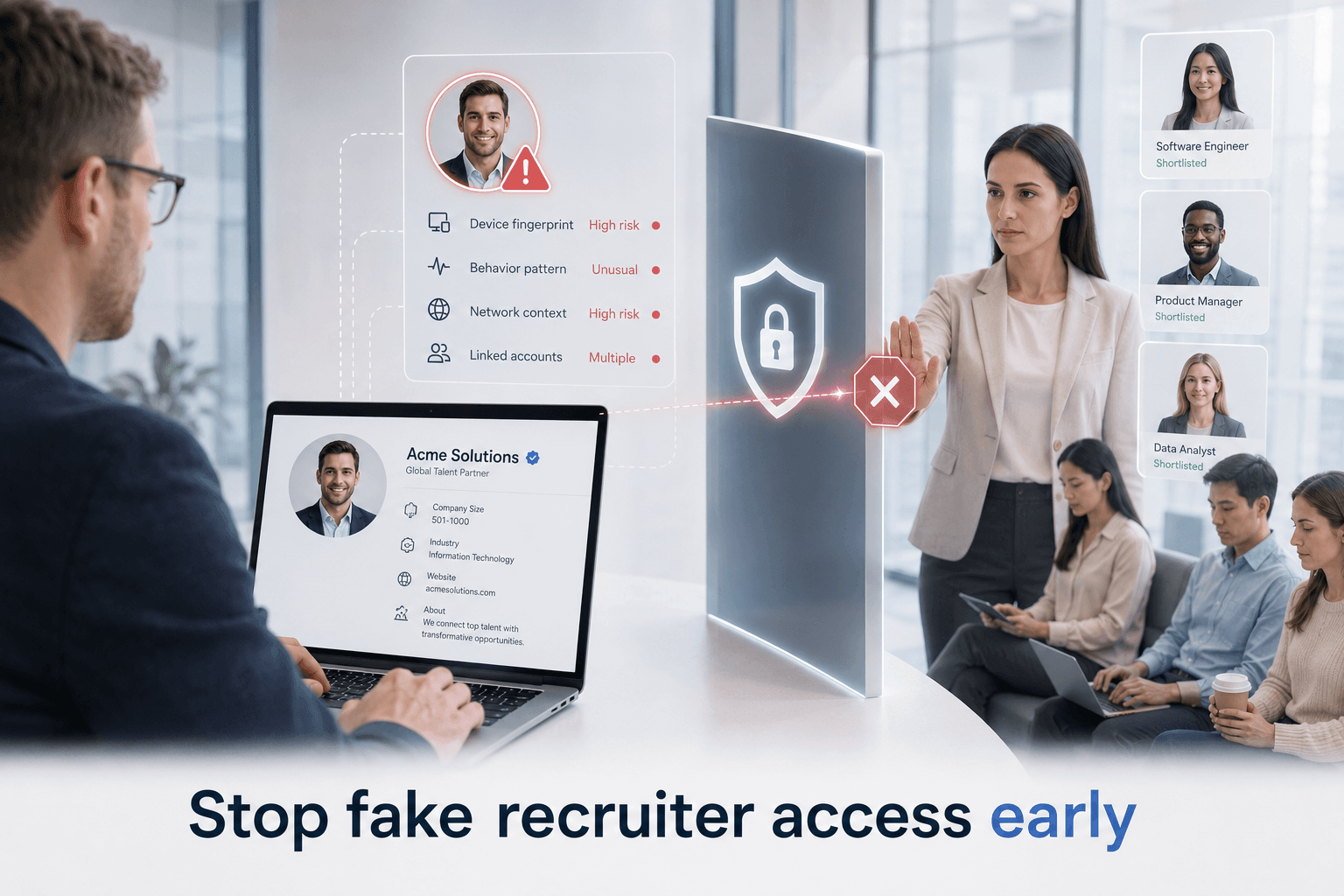
Employer onboarding is more than an account creation process. It is the point where a recruitment platform decides who may create job listings, contact candidates, represent an organization, and participate in a trusted professional marketplace. When that access is granted to the wrong person, the platform may expose candidates to misleading opportunities, suspicious communication, and requests for personal information. The initial signup therefore affects every workflow that follows.
A fake recruiter account does not always look incomplete or careless. The person creating it may use a real company name, a familiar job title, a copied company description, and professional contact language. The account may behave cautiously during registration and avoid obvious policy violations until posting or messaging permissions become available. A form that validates only visible information may approve the account without understanding the activity behind it.
The stronger question is not simply whether the submitted company information looks plausible. The platform also needs to understand where the account came from, which device created it, how the user moved through onboarding, whether related accounts already exist, and whether the first actions fit a legitimate employer journey. This wider evidence can be described as employer access provenance, meaning the context that explains how a recruiter gained and began using platform access.
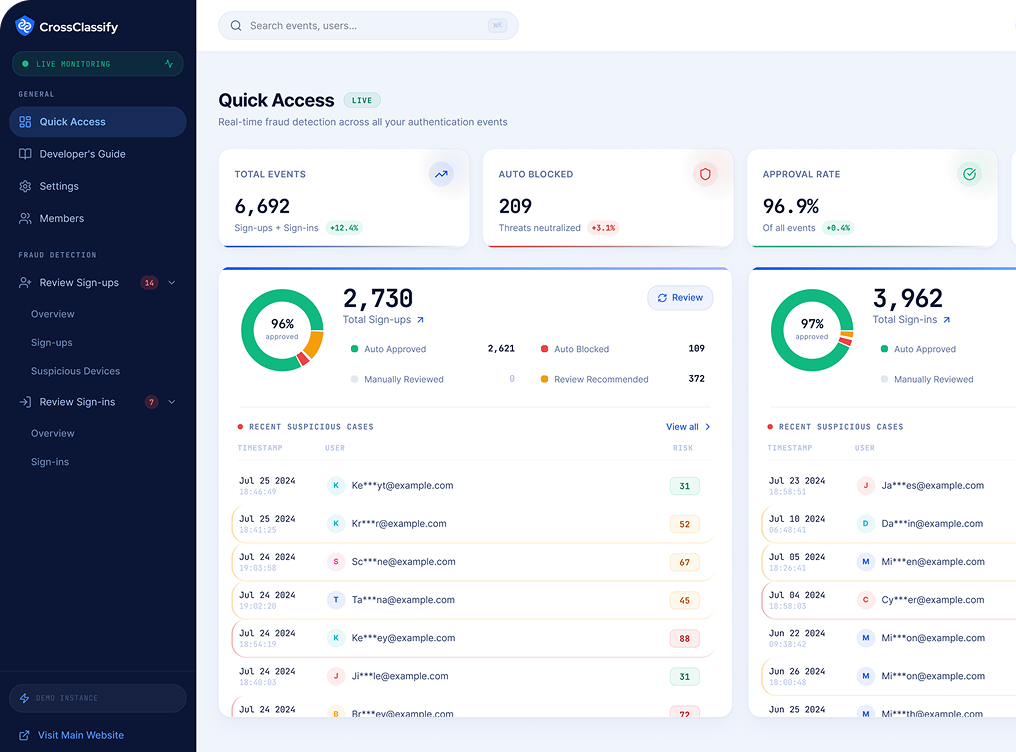
CrossClassify helps recruitment platforms evaluate employer onboarding through device fingerprinting, behavioral analysis, network context, identity signals, and relationships between accounts. The platform can use this evidence to prioritize review or request additional verification without allowing the risk system to make employment decisions. CrossClassify’s account opening capabilities are designed to detect fake signups, repeated devices, bot activity, and identity inconsistencies during onboarding.
Why employer onboarding is a marketplace trust decision
A recruitment platform creates an implied trust relationship when it activates an employer or recruiter account. Candidates generally assume that a person who can post jobs or send professional messages has passed some level of platform review. They may be more willing to submit resumes, discuss availability, or move forward with an application because the interaction occurs inside a recognized recruitment environment.
This implied trust creates value for legitimate employers. It reduces the effort required to establish credibility with every candidate and allows recruiters to begin conversations more quickly. The same trust becomes dangerous when an abusive account receives identical permissions. A fake recruiter can borrow the platform’s credibility before the candidate has enough information to question the interaction.
The consequences extend beyond one suspicious account. Candidate complaints create support work, employer brands may be impersonated, and legitimate recruiters may receive lower response rates because users become more cautious. Product and commercial teams may also find it harder to describe the platform as a trusted professional environment when onboarding controls do not explain who receives employer access.
Employer onboarding should therefore be treated as a marketplace protection workflow rather than a basic registration form. CrossClassify can add account, device, behavior, and network risk context at this stage. The recruitment platform remains responsible for deciding which evidence requires verification, which accounts enter review, and when posting or messaging permissions become available.
Why company information checks are not enough
Company information can help determine whether an employer appears plausible. A platform may review the company name, website, email domain, location, industry, and recruiter role. These checks are useful because they can identify incomplete or obviously inconsistent applications. They cannot always establish whether the person creating the account is authorized to represent the organization.
Attackers can copy accurate company information from public sources. They may use a real department name, office address, company description, or job listing. The visible information can appear convincing because much of it is factually correct. The risk sits in the relationship between the account creator and the organization rather than in the words entered into the form.

A person may also use a legitimate business email account that has been compromised or obtained without the right hiring authority. Domain ownership alone does not explain who controls the current device, whether the signup behavior is connected with other accounts, or whether the user begins acting in a way that matches normal employer onboarding. Static company checks therefore need operational context.
CrossClassify adds this context through its account opening fraud detection solution. Device history, interaction behavior, network information, and account relationships can help the platform understand whether a plausible company profile emerged from a trustworthy onboarding journey. The evidence supports human review rather than replacing organizational verification.
Signals that establish employer access provenance
Employer access provenance begins with account creation context. The platform can evaluate account age, email patterns, device reputation, network location, signup timing, form behavior, and earlier activity connected with the same environment. These signals help explain whether the account appeared through a normal business onboarding process or a repeated pattern associated with other suspicious registrations.
Device evidence is particularly useful when visible identity information changes. An operator can create new email addresses and alter company details, but the device environment may remain connected across attempts. A persistent device associated with several unrelated employer profiles can increase concern, especially when those accounts follow similar signup and posting sequences.
Behavior adds another layer. A legitimate recruiter may pause to review plan information, company settings, posting options, and team permissions. Automated or coordinated account creation may repeat the same field timing, navigation sequence, and submission behavior across registrations. This difference should not be treated as proof, but it can help determine which accounts deserve additional review.
Network and relationship signals complete the picture. Several employer accounts may use similar infrastructure, recover accounts through related contact methods, or share devices with candidate profiles involved in previous abuse. CrossClassify combines these layers into risk context that can be returned to platform workflows. The platform can then use its own verification rules and business knowledge to determine whether access should continue.
Device reuse and recruiter account networks
Device reuse can reveal recruiter account networks that appear unrelated in a normal account table. Several profiles may use different names, employers, domains, and locations while sharing deeper device characteristics. The pattern becomes more meaningful when the accounts also post similar roles, contact overlapping candidate groups, or begin activity shortly after one another.
Shared devices can have legitimate explanations. Recruitment agencies may use managed equipment, shared workstations, or centralized networks. Large employers may create several recruiter accounts from the same office. A platform should not interpret device overlap as automatic fraud without considering organization membership, account roles, behavior, and previous history.
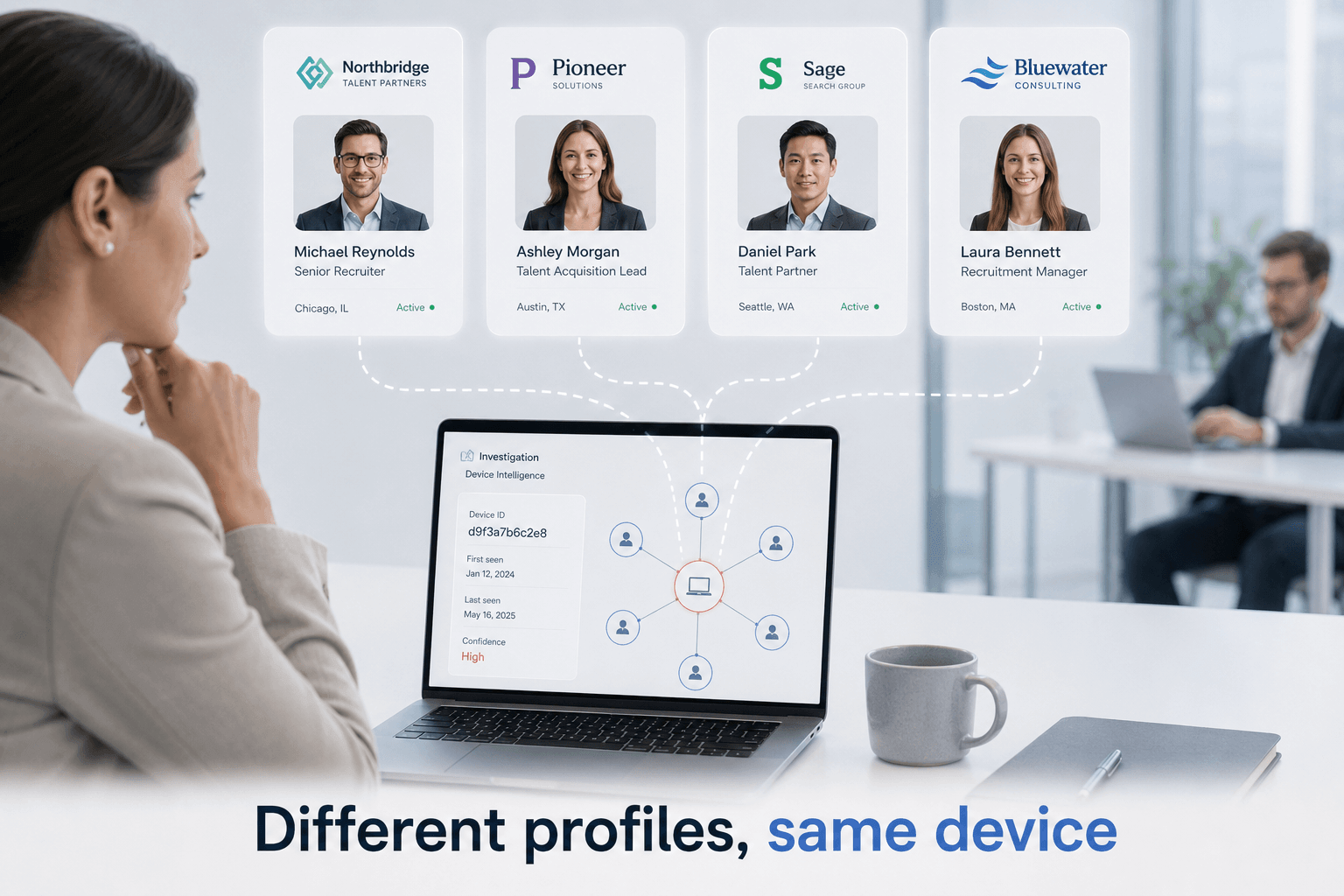
The risk increases when device reuse crosses unrelated organizations or appears with identity changes, proxy infrastructure, mechanical behavior, or policy violations. A device that creates several employer accounts and then shifts to candidate accounts may also deserve attention. Link analysis helps reviewers see whether the overlap fits a plausible business environment or a wider abuse pattern.
CrossClassify’s device fingerprinting solution connects devices, sessions, accounts, and behavioral evidence. The platform can use this context to identify returning devices and coordinated account creation even when cookies or visible browser details change. A specialist reviewer still determines whether the relationship is expected or suspicious.
Behavioral patterns during recruiter onboarding
Recruiter onboarding contains several opportunities for behavioral analysis. The user may enter company information, choose account settings, invite colleagues, review posting options, and prepare the first role. The timing and sequence of these actions can help establish whether the session resembles genuine business use or repeated account production.
Human interaction usually contains variation. Different recruiters spend time on different fields, correct information, move between settings, and review product guidance. Automated creation may follow highly consistent sequences, complete fields at repeated speeds, and move directly toward the permissions needed for posting or messaging. Coordinated human operators may also repeat learned workflows across many accounts.
Behavioral signals require careful interpretation. A recruiter using a password manager, saved business profile, accessibility tool, or familiar onboarding process may move quickly. The platform should combine interaction evidence with device, network, account, and relationship context before escalating the event. One fast session should not become a conclusion.
CrossClassify’s behavioral biometrics solution can evaluate typing, pointer movement, navigation, scrolling, and timing without asking every trusted user to complete an additional challenge. Recruitment platforms can use the resulting risk indicators for account review while keeping employer approval policies under human control.
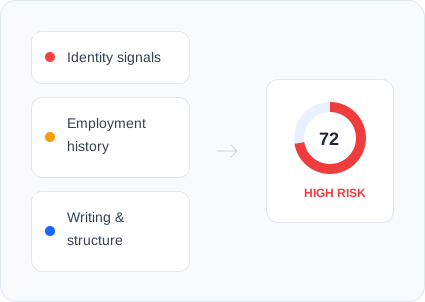
Turn CV Red Flags Into a
Documented Risk Score
A checklist tells you what to look for. CV Risk Checker scans any resume in seconds and shows you exactly where the fraud signals are — before you book the interview.
The first job post is a high risk transition
The first job post changes the impact of an employer account. Before posting, the account may have limited exposure to candidates. Once a listing becomes visible, the profile can attract applications, collect resumes, and create opportunities for direct communication. This transition deserves stronger context than a routine settings update.
A suspicious account may remain quiet during onboarding and reveal its purpose only when creating the first listing. The post may use copied language, a familiar employer brand, an external application destination, or instructions that move candidates away from platform controls. Content moderation can identify some warning signs, but accurate copied content may appear completely legitimate.
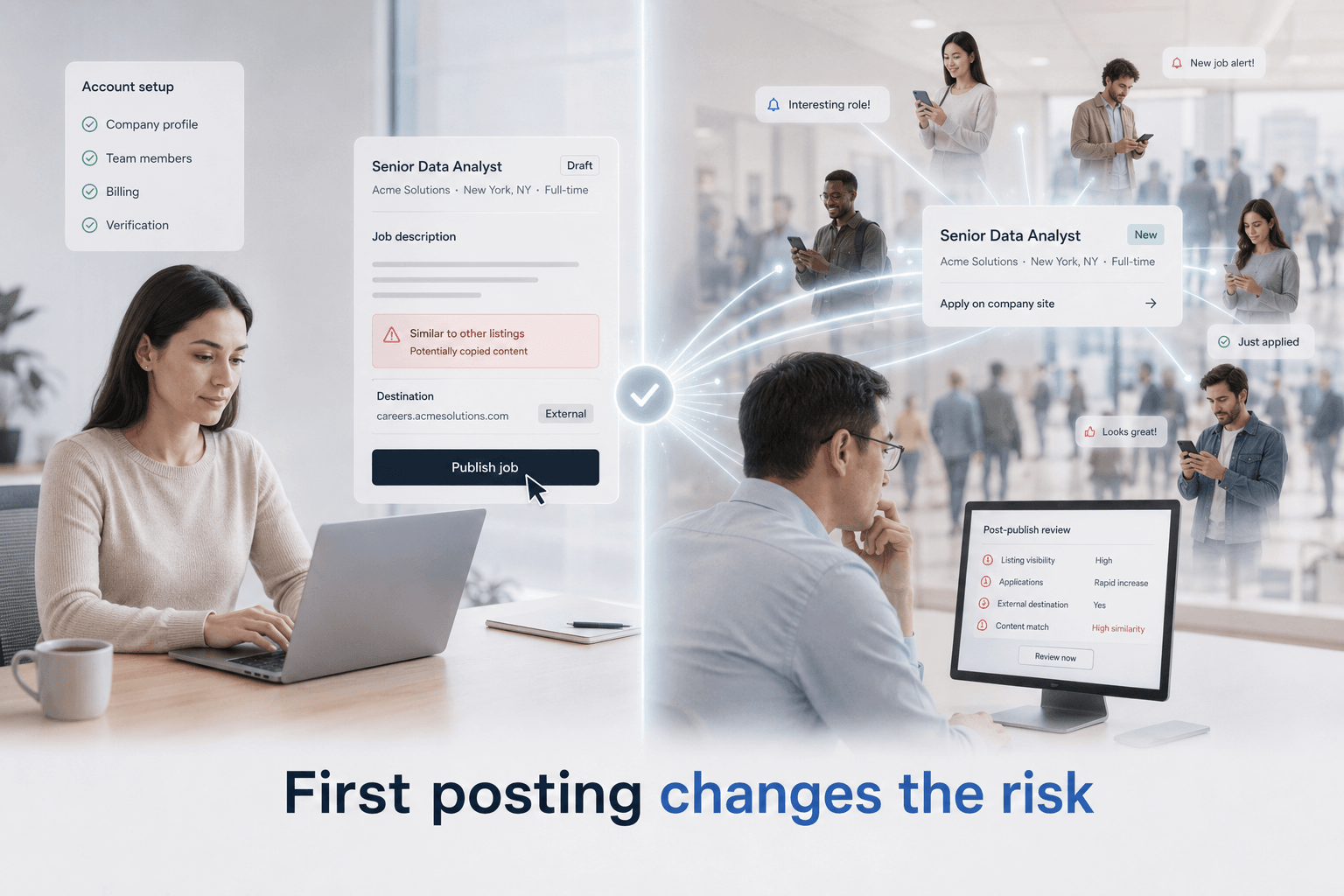
The platform should evaluate the listing together with the account that created it. Relevant evidence includes device continuity, recent profile changes, posting velocity, organization verification, destination links, recruiter invitations, and relationships with other accounts. A clean job description should not erase concerning account or session history.
CrossClassify can provide risk context around the transition from account creation to job posting. The platform may allow low risk employers to publish normally, request additional confirmation from medium risk accounts, or route stronger patterns to review. This protects candidates without forcing every legitimate employer through the same level of friction.
Messaging permission is another trust threshold
Messaging permission gives recruiter accounts direct access to candidates. Even when a job post is not visible, an account may be able to search profiles, send outreach, or respond to applications. The recipient often sees the message as more credible because it comes through a recruitment platform. This makes messaging activation another important trust threshold.
The platform can examine whether the account established a normal employer history before contacting candidates. A newly created account that immediately sends high volumes of similar messages may deserve more attention than an established recruiter using familiar devices and approved templates. Recipient spread, message timing, profile review behavior, and external link use can add context.
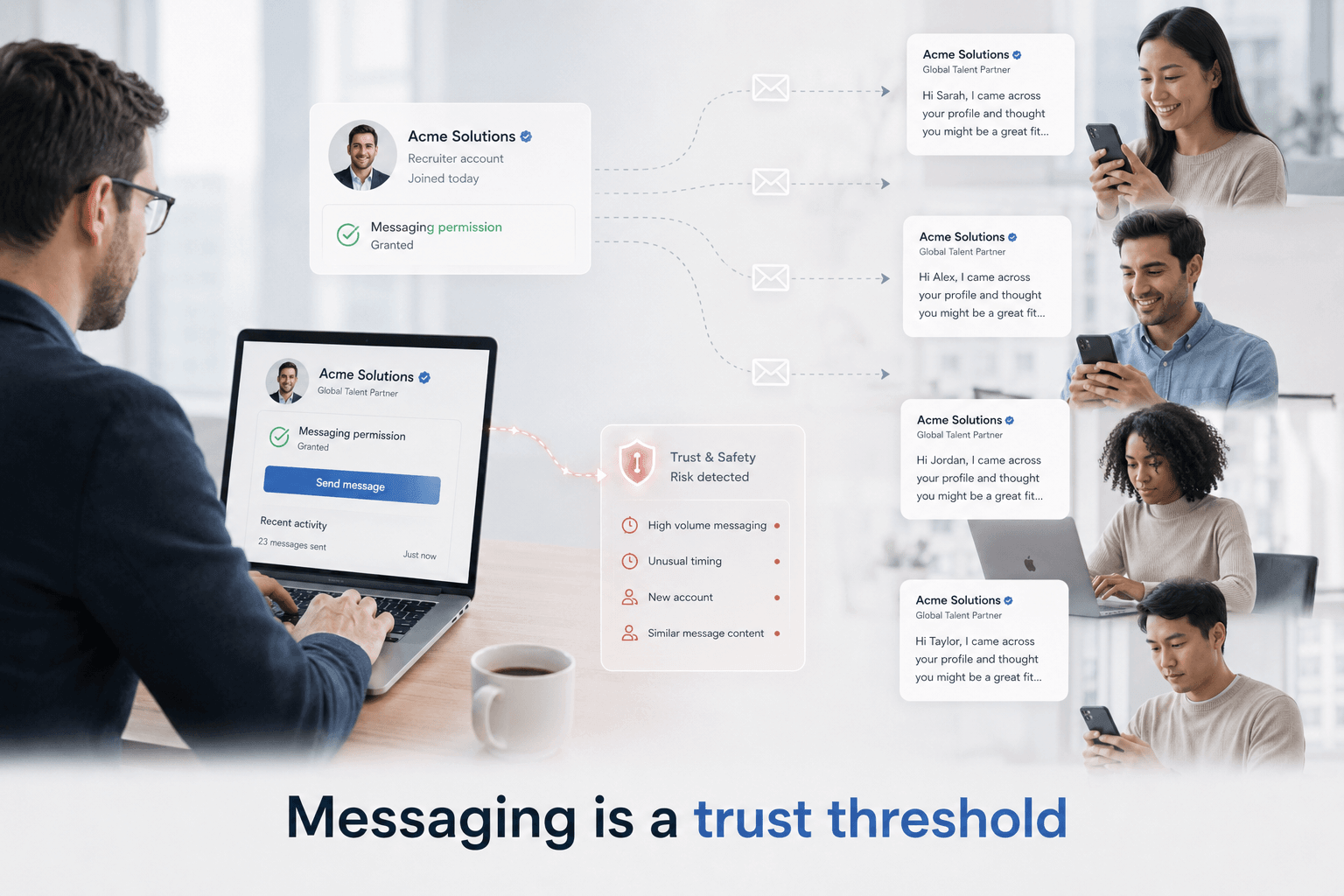
Restrictions should remain proportional. New recruiters may legitimately begin active sourcing soon after signup, and staffing businesses may contact many candidates. The platform should distinguish expected commercial use from suspicious account and device patterns. Organization type, subscription status, role, and verified employer relationships can help explain high activity.
CrossClassify can connect onboarding evidence with later messaging behavior and account access changes. This continuous view helps the platform understand whether a trusted signup journey remains trustworthy after permissions expand. It also supports investigation when suspicious communication appears after an account initially passed review.
Building a proportional employer review path
A proportional review path begins with passive risk collection. Most legitimate employers should complete onboarding without unnecessary interruption. The platform can collect device, behavior, network, and account relationship signals in the background, then decide whether the current evidence justifies further action.
Low risk accounts can receive normal access. Medium risk accounts may be asked to confirm their organization, verify a business contact, or wait for manual approval before posting and messaging. Stronger risk may justify a temporary hold while a specialist reviews connected accounts, devices, and earlier activity. The response should reflect both evidence quality and the permissions being requested.
Reviewers need understandable reasons. A label such as suspicious employer does not explain whether the concern involves device reuse, identity inconsistency, automated behavior, or connected accounts. Reason codes and timelines help teams choose the right verification step and recognize legitimate agency or enterprise account structures.
CrossClassify provides the signal layer while the recruitment platform controls policy. Teams can place monitoring around signup, organization creation, recruiter invitations, first posting, and first messaging through the CrossClassify integration model. This supports gradual implementation without rebuilding the entire employer experience.
Measuring employer onboarding quality
Employer onboarding quality should not be measured only by completed registrations. A high completion rate can look positive while allowing accounts that later create support cases, candidate complaints, or policy incidents. Platforms need measurements that connect onboarding decisions with later account behavior.
Useful measures include review rate, verification completion, confirmed fake account rate, time to approval, device cluster recurrence, first posting incidents, and messaging complaints linked to new accounts. Teams can also measure how often legitimate employers experience unnecessary delay. This balances marketplace protection with commercial conversion.
The platform should study which signals predict later harm. Device reuse may be useful in one market, while organization mismatch or posting behavior may be more important in another. Reviewer outcomes help teams tune thresholds and avoid depending on one rigid rule. Signals that create friction without improving confirmed outcomes should receive less influence.
CrossClassify can supply account, device, behavior, and network evidence, while the recruitment platform records business and review outcomes. Together, these measurements show whether employer access provenance improves candidate trust without making legitimate customer onboarding unnecessarily difficult.
Conclusion
Employer onboarding determines who receives the authority to represent organizations, publish opportunities, and contact candidates. Treating it as a simple registration process ignores the trust transferred by those permissions. A professional looking account can still emerge from a suspicious device, automated workflow, or coordinated account network.
Visible company information is only one part of employer trust. Recruitment platforms also need context about the account creator, device history, network environment, behavior, and relationships with earlier activity. These signals help teams understand how access was obtained and whether the first actions fit a legitimate employer journey.
CrossClassify helps platforms evaluate employer access provenance through account opening protection, device fingerprinting, behavioral biometrics, network intelligence, and link analysis. The technology provides explainable risk context while platform teams retain control of organization verification, review, permissions, and user communication.
A stronger onboarding model protects candidates before they encounter suspicious listings or messages. It also protects legitimate employers from impersonation and gives recruitment platforms greater confidence in the accounts that power their marketplace.
See How CrossClassify Protects Recruitment Platforms
Detect fake recruiters, fraudulent resumes, and job scams instantly

Check a CV for Fraud Signals in 60 Seconds
Upload any resume and get an instant risk score, flagged signals, and a recruiter-ready action checklist.
Try the CV Risk CheckerNo credit card required
Share in
Related articles


Frequently asked questions
Let's Get Started
Create your free
account today
Discover how to secure your app against fraud using CrossClassify
No credit card required