Last Updated on 15 Oct 2026
Staff Turnover Disrupts Patient Care: Build Healthcare Teams That Stay
Share in

Introduction
A healthcare service fills a vacancy, welcomes a new colleague, and starts the recruitment process again when that person leaves. Each departure requires another handoff, another induction, and more time from the people who remain. The employer may become effective at advertising while the reasons colleagues leave remain unresolved.
Retention deserves attention before the next appointment. Recruitment can set accurate expectations and identify support needs, while managers determine the working experience that follows. Connecting these responsibilities gives healthcare employers a more useful response to repeated vacancies than treating every departure as a new sourcing problem.
Understand what repeated departures change
Staff turnover changes the composition and experience of a care team. Colleagues may need to explain local procedures again, redistribute supervision, or introduce another professional to patients receiving ongoing care. These transitions require attention even when every incoming colleague is qualified.
The effects vary by setting. In a small community service, one departure may remove familiarity with local relationships. In a hospital department, frequent arrivals can increase orientation work. Ask managers to describe the specific disruption rather than assume all turnover has the same effect.
Avoid treating temporary staff or newcomers as inherently unsafe. Competence, support, communication, and staffing conditions all matter. AHRQ's nursing workforce review emphasizes the importance of the working environment, including for teams that use agency professionals.
Distinguish an expected contract ending from an unexpected resignation, and a move within the organization from leaving the employer entirely. Each affects a service differently. A department may lose local expertise when a colleague changes roles even though the wider organization retains them. Understanding that distinction helps leaders plan handovers and development without presenting every movement as a failure. The practical question is which transitions are foreseeable and what support they require.

Find the reasons people leave
Start with evidence about the employment experience. Compare what staff were told during recruitment with what they encountered after joining. Review departure reasons alongside staff conversations and observations from the receiving team. A short exit form may miss problems that people were reluctant to raise.
Separate issues that recruitment can address from those requiring service changes. An inaccurate description of the schedule needs a recruitment correction. Persistent workload concerns need attention from leaders responsible for staffing and working conditions.
Look for patterns across comparable roles without assuming one explanation applies to everyone. Some colleagues leave for personal circumstances or career opportunities. When several departures involve the same unresolved concern, assign an owner to investigate it and report what action is feasible.
Use several sources of information before drawing a conclusion. Departure records can identify a pattern, staff conversations can explain the experience, and managers can describe constraints affecting the service. Check whether the recorded reason is the person's explanation or an administrative category selected by someone else. Protect confidentiality when discussing small teams. A useful review seeks an actionable understanding of conditions, rather than create personal labels about colleagues who chose to leave.
Give candidates a realistic view of the role
Explain responsibilities, scheduling arrangements, supervision, and development opportunities before someone accepts. Discuss difficult aspects plainly, with enough detail for a candidate to understand what the job will involve. Attractive wording cannot compensate for a significant gap between the advertisement and daily work.
Consider a nurse who expects predictable daytime work but learns late in the process that regular rotation is essential. An early conversation allows both parties to assess the arrangement and consider alternatives where available. Discovering the mismatch after joining creates avoidable disappointment.
NHS Employers' retention guidance includes a realistic recruitment and onboarding experience. Apply that principle by asking candidates what remains unclear and having the receiving manager confirm the expectations recorded during selection.
Discuss what a typical working period involves, including how duties vary and how support is accessed. If flexible arrangements depend on local approval or service needs, make that condition clear. Invite questions about the actual responsibilities rather than asking only whether the candidate is happy with the offer. Recruiters should confirm that statements about development, scheduling, or supervision match what the receiving manager can deliver, and record relevant agreements through the employer's process.

Assess role fit through evidence and conversation
A CV can identify relevant experience, but it rarely explains every practical expectation. Assess the work someone has done, the responsibilities they are ready to assume, and the development they seek. Use role relevant questions, rather than treating similarity to existing staff as evidence of suitability.
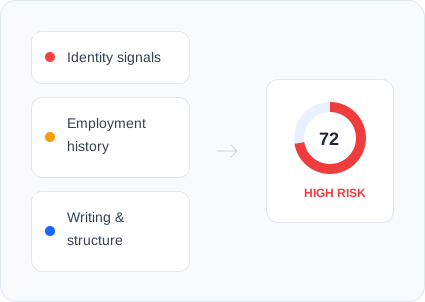
CrossClassify's Match Signals can highlight how CV information relates to an entered job description. Recruiters can review those findings and use unresolved points to guide a conversation with the candidate.
The tool cannot predict whether someone will stay, diagnose burnout, or establish their preferred schedule from incomplete text. Its contribution is document review. Retention decisions require information about the actual role and working environment, with the candidate able to explain what they need.
A structured conversation can also identify where the employer's offer and the candidate's expectations differ. Ask what responsibilities the person hopes to develop and what remains unclear about the position. Avoid interpreting willingness to accept difficult conditions as evidence of commitment. The objective is a workable arrangement supported by relevant evidence. If a mismatch emerges, consider feasible alternatives or clarify the limits honestly instead of treating the conversation as an objection to overcome.
Turn CV Red Flags Into a
Documented Risk Score
A checklist tells you what to look for. CV Risk Checker scans any resume in seconds and shows you exactly where the fraud signals are — before you book the interview.
Prepare onboarding before the start date
The recruitment handoff should give the receiving manager the information needed to welcome and support the new colleague. Confirm induction arrangements, the relevant supervisor, and any development needs agreed during selection. Share only information necessary for that purpose.
Practical preparation matters. Arrange required system access, introductions, and orientation through the appropriate teams. Check that the new starter knows how to seek assistance and that someone has time to respond. A named mentor offers little support if the workload prevents any contact.
For internationally recruited staff, unfamiliar systems and relocation can add transition needs. NHS Employers' International Retention Toolkit addresses support for these colleagues. Employers should discuss needs individually and follow local arrangements, rather than assume nationality determines what assistance someone requires.
Support needs can differ between a newly qualified colleague, an experienced professional changing specialties, and someone joining from another organization. Give each an appropriate transition plan. NHS England's nursing preceptorship framework provides a specific example of structured support for professional transition in England. Employers should consider the relevant local framework rather than use a single induction checklist as proof that every new colleague is ready for all responsibilities.

Listen while colleagues are still deciding to stay
Retention conversations should create an opportunity to understand the current experience. Ask what is working, what makes the role difficult, and what support or development the colleague would value. Explain what can change and what needs further review.
NHS Employers provides guidance on retention discussions, and NHS England identifies flexible working as a potential support for retention when it is designed and managed well. These approaches require practical follow through, including arrangements consistent with service needs.
For example, a staff member may value a more predictable schedule or time for supervised development. The manager should consider the request, involve the relevant team, and communicate the outcome. Repeatedly inviting feedback without responding can leave the underlying concern untouched.
Close the conversation with an agreed next action. If a request needs wider approval, tell the colleague who will consider it and how they will hear the outcome. If the proposed change cannot be offered, explain the reason and discuss any feasible alternative. A record of follow through helps managers distinguish completed improvements from intentions. Staff should also have a route to raise concerns when the immediate manager is part of the difficulty.
Connect recruitment measures with the staff experience
Evaluate recruitment beyond the date a vacancy closes. Track early departures, completion of induction, support that was promised and delivered, and recurring expectation gaps. Examine comparable roles and departments before drawing conclusions about the process.
Invite recruitment and service managers to review these findings together. If several new starters describe the same misunderstanding, change the advertisement or selection conversation. If expectations were accurate but the working conditions became unsustainable, assign the issue to the people able to address it.
CrossClassify's CV review tools can support assessment before appointment. They are not a staff retention monitoring system. Keep document findings within their proper context, and use employment experience evidence to assess whether retention efforts are helping.
Use a consistent definition of early departure and compare similar starting groups. A period with many temporary appointments can look different from one dominated by permanent hires. Small teams may show large percentage changes after a single departure, so review the underlying numbers and context. Recruitment data should help identify questions for discussion. It should not become a prediction about an individual colleague based only on their CV or contract history.
Treat supervision as work that needs capacity
Onboarding consumes time from the colleagues who explain local procedures, answer questions, and review progress. When a service regularly receives new starters, leaders need to account for that work in their staffing and support arrangements. Naming experienced colleagues as mentors does not create additional time in their schedules.
Ask the receiving team what a useful transition period requires. Identify who will provide support, when contact can happen, and how the arrangement will continue if the nominated colleague is unavailable. This makes the commitment practical and allows the service to recognize competing demands early.
Recruitment can contribute by communicating start dates and agreed needs in time for preparation. Managers should confirm that the planned support is feasible before it becomes a promise to the candidate. Otherwise, an appointment intended to ease pressure may introduce orientation work that the existing team has not been given capacity to manage.

Connect development with realistic career options
Some departures reflect a desire for different responsibilities or progression. Employers should understand whether suitable development can happen within the organization, and explain the available routes without promising opportunities they cannot provide. A credible conversation identifies what would need to change for a colleague to take the next step.
For example, someone may want supervised experience in another service or greater responsibility in their current role. The manager can discuss requirements, available support, and a possible review point. If no suitable route exists, acknowledging that constraint is more useful than repeating an undefined promise of future growth.
Internal movement also needs planning. It may retain experience within the employer while creating a vacancy in the original team. Recruitment and service leaders can coordinate the transition, transfer of knowledge, and replacement needs. Supporting careers and preserving local continuity are connected responsibilities that need an explicit handoff.
Build a retention action plan around one clear problem
Choose a problem that the organization can describe and influence. For example, new starters may report that the actual schedule differs from what was discussed. Review advertisements, interview conversations, and the receiving manager's arrangements to find where the misunderstanding develops.
Agree on a specific response, such as confirming scheduling expectations before the offer and checking them during induction. Name the people responsible and identify how the team will know whether the change was delivered. New starter feedback can show whether expectations became clearer even before enough time has passed to assess departures.
Review the result alongside other changes in the service. A different manager, altered workload, or new employment arrangements may also affect the experience. Keep successful actions, revise those that do not help, and acknowledge constraints that require broader decisions. A practical retention plan should connect evidence to follow through, rather than produce a list of initiatives with no owner.
Conclusion
Healthcare teams gain stability when recruitment expectations connect to the support colleagues actually receive. Employers should understand departure patterns, assess role requirements carefully, and respond to concerns during employment. Explore recruiter document review support for the screening stage, while investing equal attention in onboarding, management, and the working conditions that influence whether people stay.
See How CrossClassify Protects Recruitment Platforms
Detect fake recruiters, fraudulent resumes, and job scams instantly

Check a CV for Fraud Signals in 60 Seconds
Upload any resume and get an instant risk score, flagged signals, and a recruiter-ready action checklist.
Try the CV Risk CheckerNo credit card required
Share in
Related articles


Frequently asked questions
Let's Get Started
Create your free
account today
Discover how to secure your app against fraud using CrossClassify
No credit card required