Last Updated on 11 May 2026
Fake Job Posting Detection: How Enterprises Can Stop Recruitment Brand Impersonation
Share in
Introduction
A fake job post is not always easy to spot.
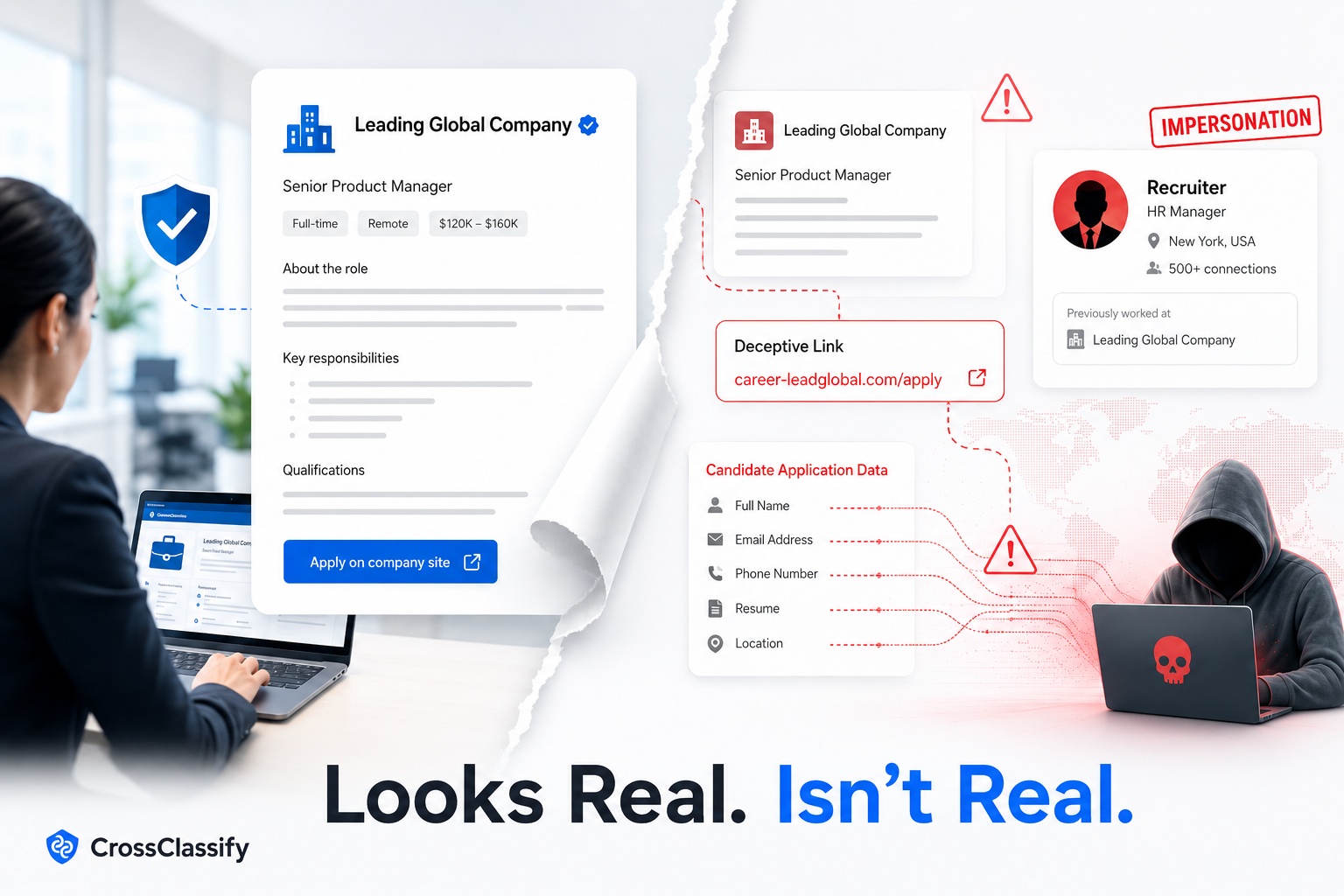
It may use the real company name. It may copy a real job description. It may mention a real branch, a real department, or a real hiring manager. It may appear on a trusted job board where candidates already expect to find legitimate roles.
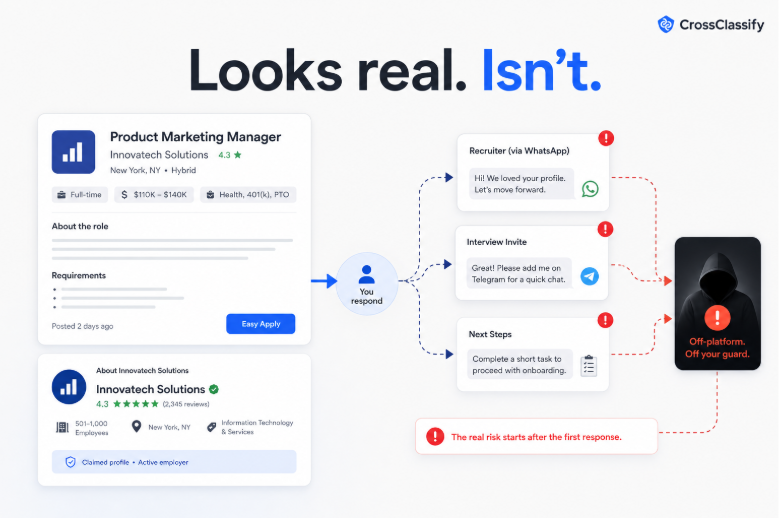
That is what makes fake job posting detection difficult. The scam does not always begin with a strange domain or obvious phishing email. Sometimes it begins with a job ad that looks normal enough to attract real applicants.
For enterprise security teams, this creates a new kind of brand risk. A company may have strong domain monitoring, email protection, and endpoint security, but still miss fake jobs posted on LinkedIn, Indeed, niche job boards, social channels, or fake recruiter profiles.
The FTC says reports about job scams nearly tripled from 2020 to 2024, while reported losses rose from $90 million to $501 million. That should change how enterprises think about recruitment brand protection. Job posting fraud is no longer only an HR issue. It is a trust, security, privacy, and brand protection issue. Consumer Advice
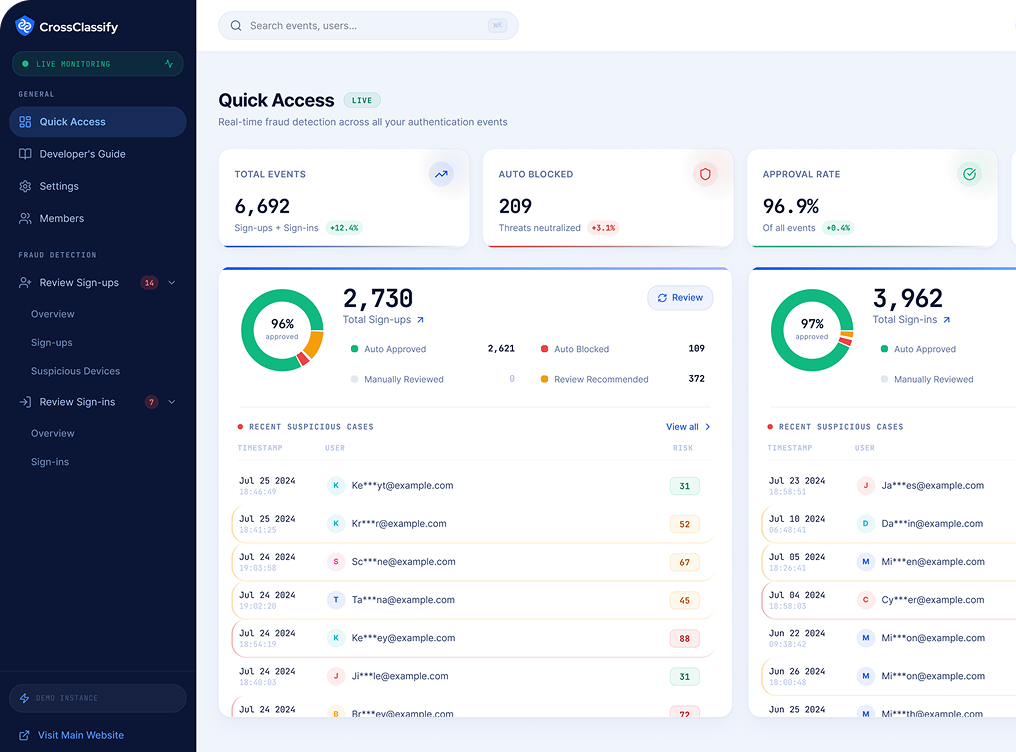
CrossClassify helps companies address this risk through recruitment fraud detection , device intelligence, behavior signals, job posting verification, and human review support. The goal is not to make hiring decisions. The goal is to help teams identify suspicious job posting activity before candidates lose trust or submit personal information to scammers.
Why fake job postings are hard to detect
Fake job postings are difficult because attackers often reuse legitimate material.
A scammer can copy a role from the company career site, change the application link, post it on a job board, then message applicants as if they represent the employer. The job description may look real because it originally was real. The fraud sits around the source, destination, and behavior behind the listing.
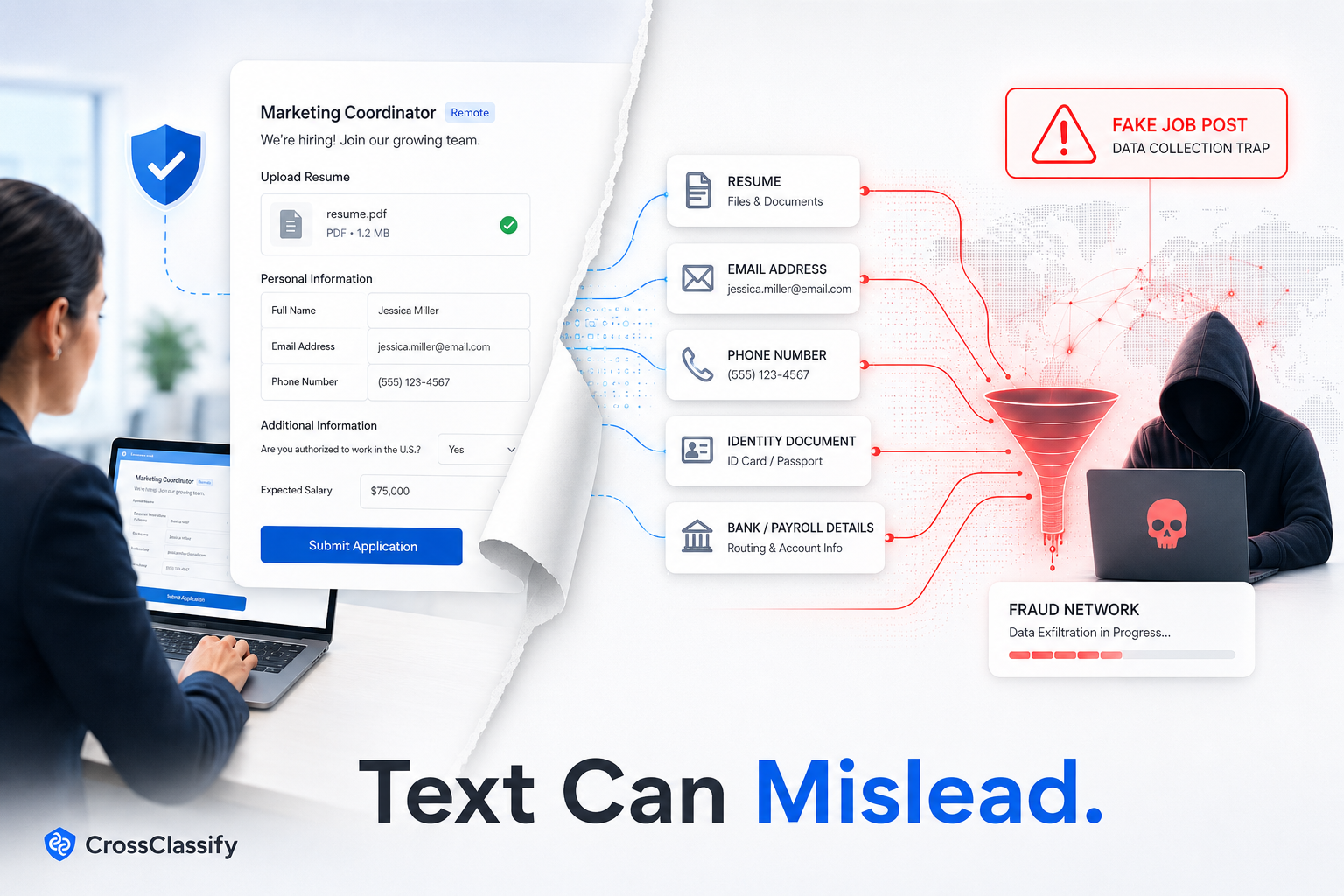
This is why content review alone is weak. A fake post can contain correct language. It can use the right title, salary style, department name, and company description. The suspicious signals may appear only when the listing is compared against trusted internal job records.
Enterprises also struggle because many companies are distributed. Large organizations may have acquired brands, local branches, franchise locations, business units, agencies, and recruiters using different channels. The more fragmented the hiring model, the harder it becomes to know whether an external job ad is authorized.
CrossClassify treats fake job posting detection as a trust graph problem. Instead of asking only whether the text looks suspicious, CrossClassify checks whether the posting source, application URL, recruiter account, brand usage, timing, device signals, and candidate flow match the trusted hiring environment.
The real risk is candidate PII theft
Fake job postings are not only reputation problems. They are often data collection traps.
Candidates may submit resumes, phone numbers, addresses, work history, identity documents, bank details, tax forms, and onboarding information. Once this information is collected, attackers can use it for identity fraud, phishing, account takeover, payroll scams, or further social engineering.
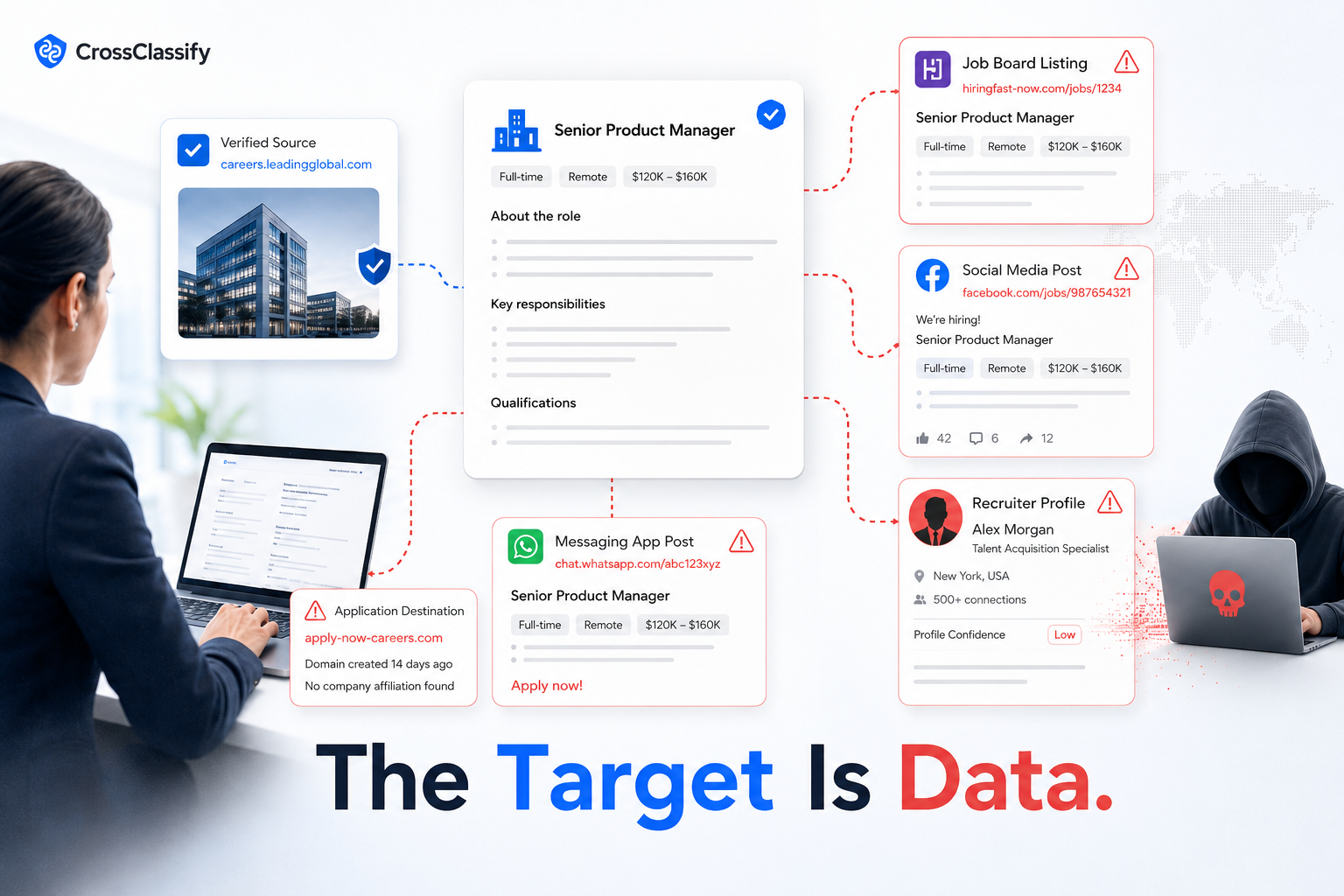
The FTC warns that job scammers advertise through job sites and social media, and often want personal information or money. Consumer Advice That makes fake job posting detection directly relevant to privacy, security, and candidate trust.
This is where CrossClassify recruitment fraud protection becomes important. The platform helps teams detect suspicious recruitment activity through risk signals, behavioral analysis, device fingerprinting, and explainable fraud indicators. This gives human reviewers the evidence they need to investigate without turning the system into an automated hiring decision engine.
Why enterprises need job source verification
A practical fake job posting detection system should answer one question quickly.
Did this public job ad come from an approved hiring source?
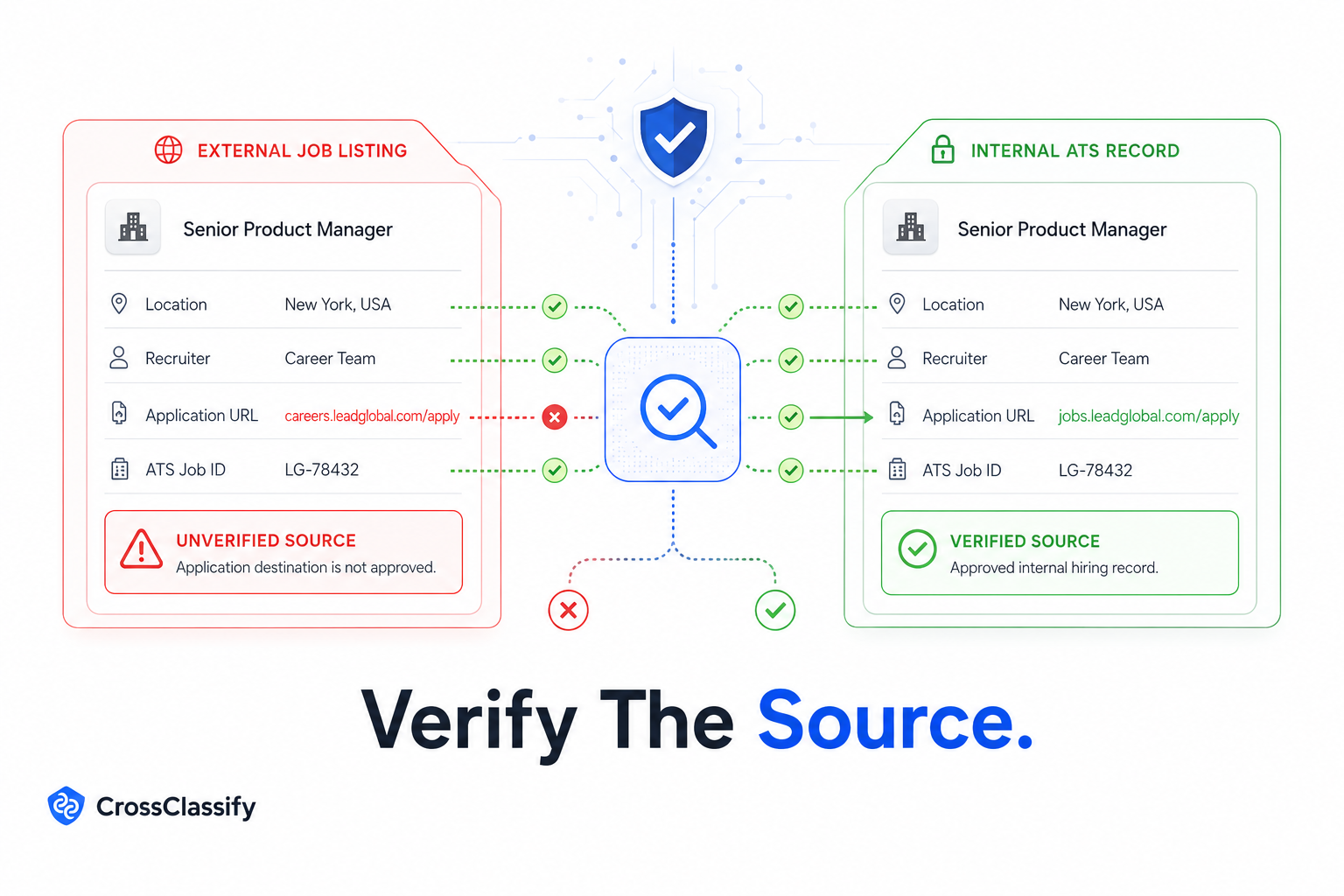
To answer that, the system needs access to the company source of truth. That may be an ATS, career site, hiring portal, approved agency feed, or internal job approval workflow.
CrossClassify’s Authorized Job Ad Verification checks whether an external job listing matches an approved internal job record. It compares job title, description, location, brand, application URL, ATS job ID, recruiter identity, posting channel, and timing.
This matters because a fake job can be almost identical to a real one. The difference may be a changed application link, an unapproved recruiter profile, or a posting channel that was never authorized.
A company that already uses CrossClassify device fingerprinting can extend the same trust logic into recruitment workflows. Device and browser signals help identify suspicious recruiter accounts, repeated abuse patterns, and hidden relationships between postings that look unrelated.
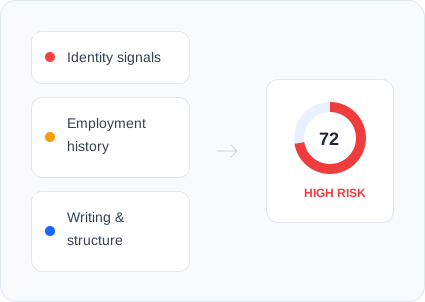
Turn CV Red Flags Into a
Documented Risk Score
A checklist tells you what to look for. CV Risk Checker scans any resume in seconds and shows you exactly where the fraud signals are — before you book the interview.
What strong fake job posting detection should monitor
A strong system should monitor more than keywords.
It should evaluate whether the job ad is connected to trusted hiring infrastructure. It should compare public listings against approved ATS records. It should detect copied descriptions that point to untrusted application forms. It should identify suspicious salary language, paid training scams, unrealistic remote work claims, and recruiter accounts with abnormal behavior.
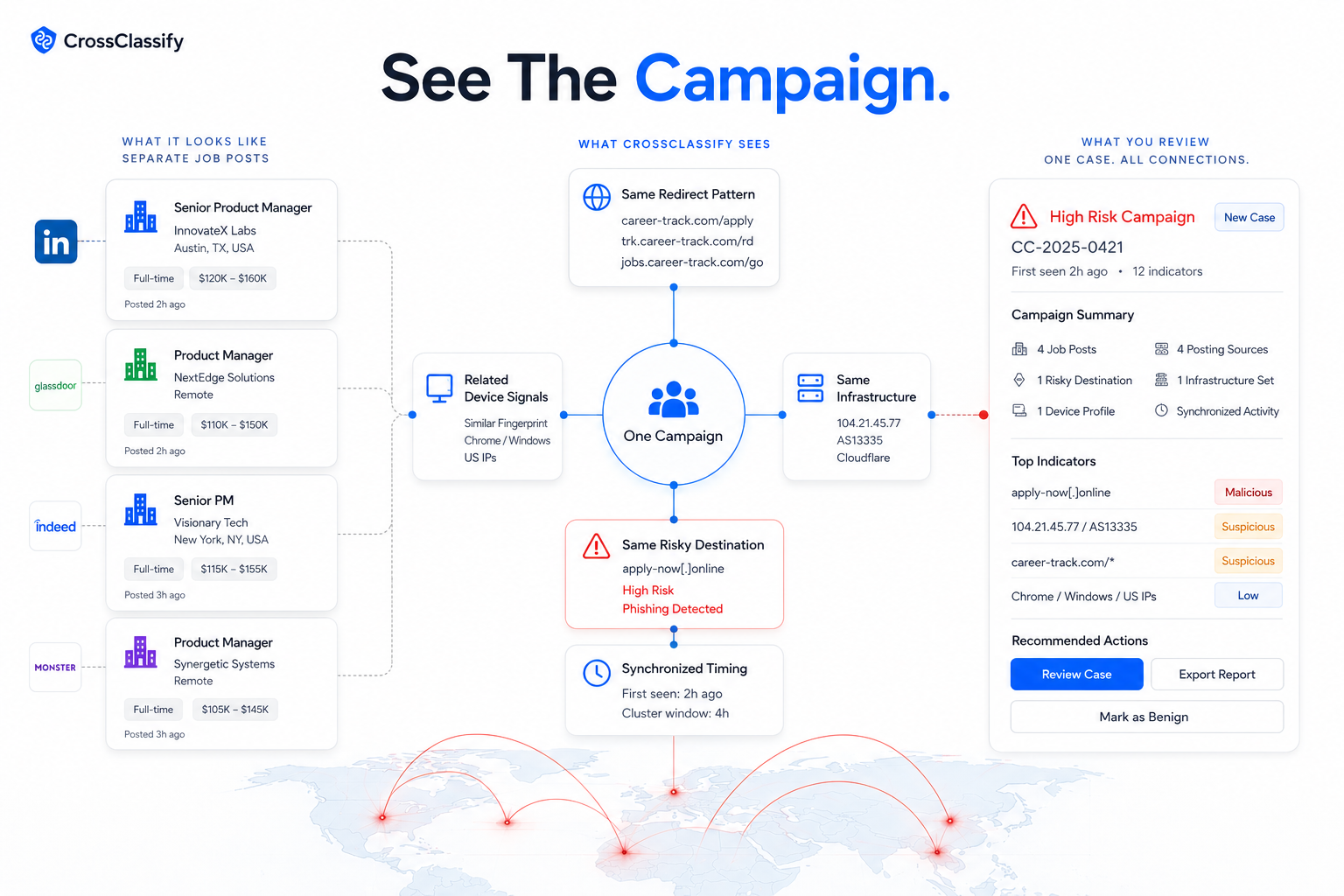
It should also connect related incidents. If five fake postings use different recruiter names but share the same redirect pattern, similar wording, same timing, or related infrastructure, the security team should see one campaign, not five isolated alerts.
CrossClassify’s Job Posting Fraud Intelligence Dashboard groups suspicious activity into reviewable cases. Human reviewers can see the evidence behind each alert, including copied content match, unauthorized brand usage, risky application destination, recruiter account risk, and related posting clusters.
Why this belongs to both security and recruitment operations
Fake job posting fraud sits between teams.
Security teams understand impersonation, phishing, data theft, and brand abuse. Recruitment operations teams understand ATS workflows, approved job inventory, recruiter relationships, and candidate communication. Legal and privacy teams care about candidate data exposure and consumer harm.
The right operating model brings these teams together.
Security should own risk monitoring and escalation. Recruitment operations should own job source truth and approved posting workflows. Brand protection should support takedown. Legal should support external escalation when the abuse is serious. CrossClassify should provide the evidence layer that helps everyone act from the same facts.
This is why CrossClassify account opening protection is relevant to recruitment platforms and job boards. Fraud often enters through account creation, when fake employers, fake recruiters, or suspicious actors create profiles that later post fraudulent jobs.
How CrossClassify helps
CrossClassify helps enterprises detect job posting fraud using multiple signal families.
It verifies whether external postings match approved hiring records. It monitors brand and job description abuse. It analyzes recruiter account behavior. It checks device, browser, network, and session consistency. It detects risky application destinations. It groups suspicious job ads into campaigns. It gives human reviewers explainable evidence.
For recruitment platforms and job boards, CrossClassify can also help detect suspicious employer accounts, fake recruiter behavior, repeated posting abuse, and candidate PII theft risk.
For enterprises, it becomes a recruitment brand protection layer.
For ATS systems, it becomes a job source verification layer.
For security teams, it becomes an alert and evidence layer.
For candidates, it helps preserve trust in the hiring journey.
Conclusion
Fake job posting detection is becoming a necessary part of enterprise brand protection.
Domain monitoring is still important, but it is not enough. Scammers can use legitimate job boards, copied descriptions, fake recruiter profiles, and unapproved application flows. The risk is not only that a fake job exists. The risk is that candidates believe it, submit personal information, and blame the real company when the scam becomes clear.
CrossClassify helps enterprises, job boards, ATS systems, and recruitment platforms detect this abuse earlier through job source verification, recruitment brand monitoring, behavioral signals, device intelligence, and explainable human review workflows.
The best way to stop fake job posting fraud is to verify the trust behind the post, not only the words inside it.
See How CrossClassify Protects Recruitment Platforms
Detect fake recruiters, fraudulent resumes, and job scams instantly

Check a CV for Fraud Signals in 60 Seconds
Upload any resume and get an instant risk score, flagged signals, and a recruiter-ready action checklist.
Try the CV Risk CheckerNo credit card required
Share in
Related articles

Frequently asked questions
Let's Get Started
Create your free
account today
Discover how to secure your app against fraud using CrossClassify
No credit card required