Last Updated on 17 May 2026
SOC Fraud Alert Enrichment: Adding Account Abuse Context to Security Monitoring
Share in
Introduction
SOC teams are good at investigating security events. They can review logs, correlate alerts, escalate incidents, and respond to threats. But many customer facing fraud patterns do not look like classic security incidents at first.
A fake account may look like a normal signup. A suspicious login may look like a successful authentication. A device farm may look like many separate users. A fraud ring may only become visible when accounts, devices, behavior, and network patterns are connected.
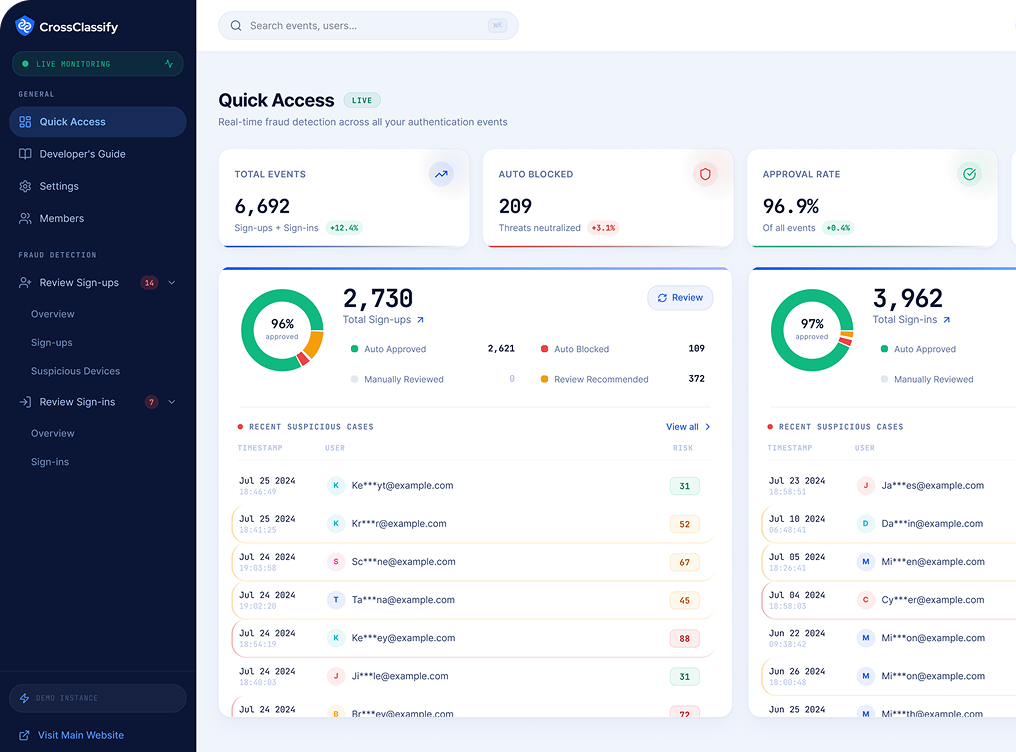
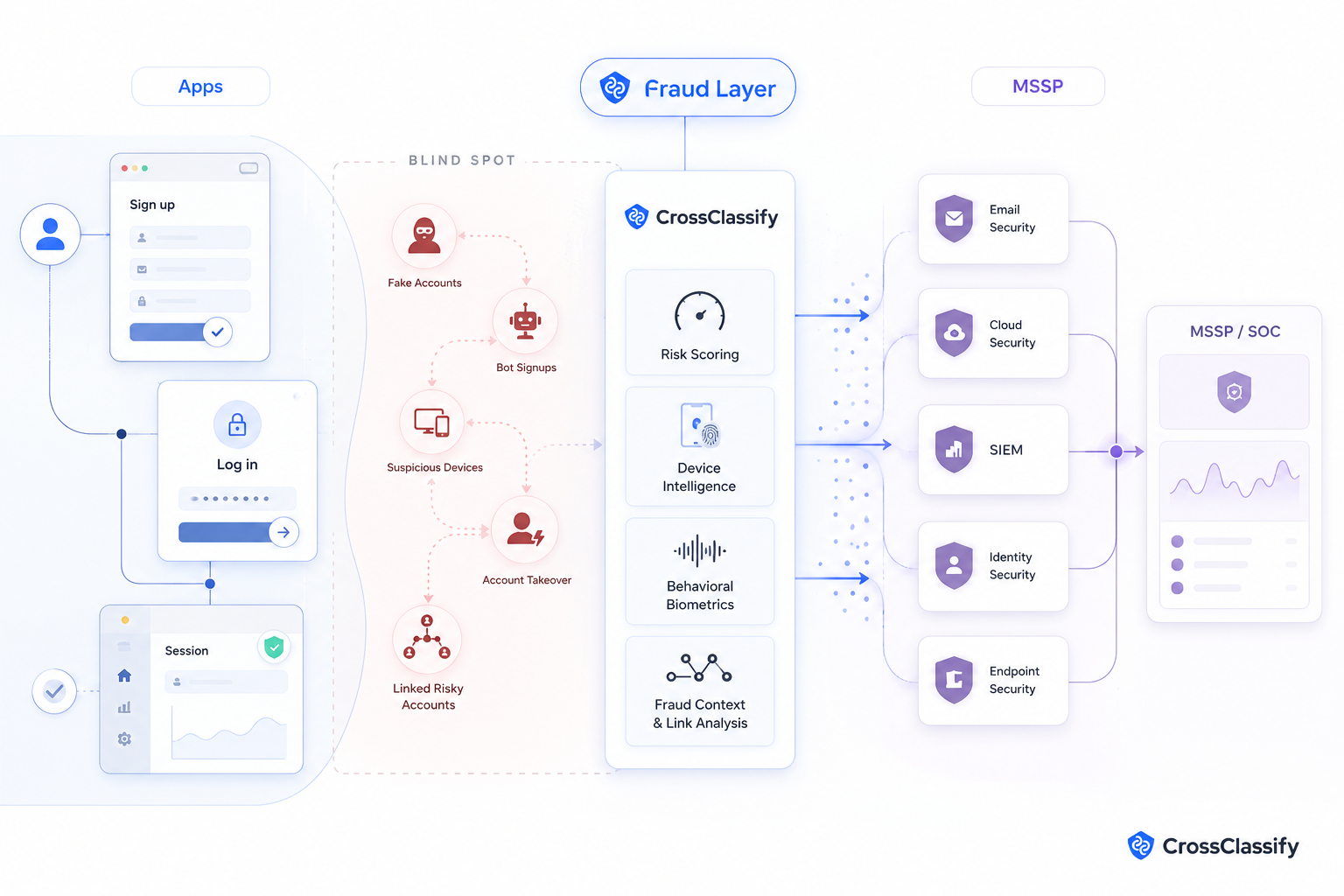
SOC fraud alert enrichment gives security teams the context they need to understand account abuse. CrossClassify adds device intelligence, behavioral biometrics, account risk scoring, bot detection, and suspicious device detection to security monitoring workflows.
The SOC visibility gap
Many SOC teams receive identity logs, web logs, application logs, cloud logs, endpoint events, and network telemetry. These events are valuable, but they often lack fraud meaning.
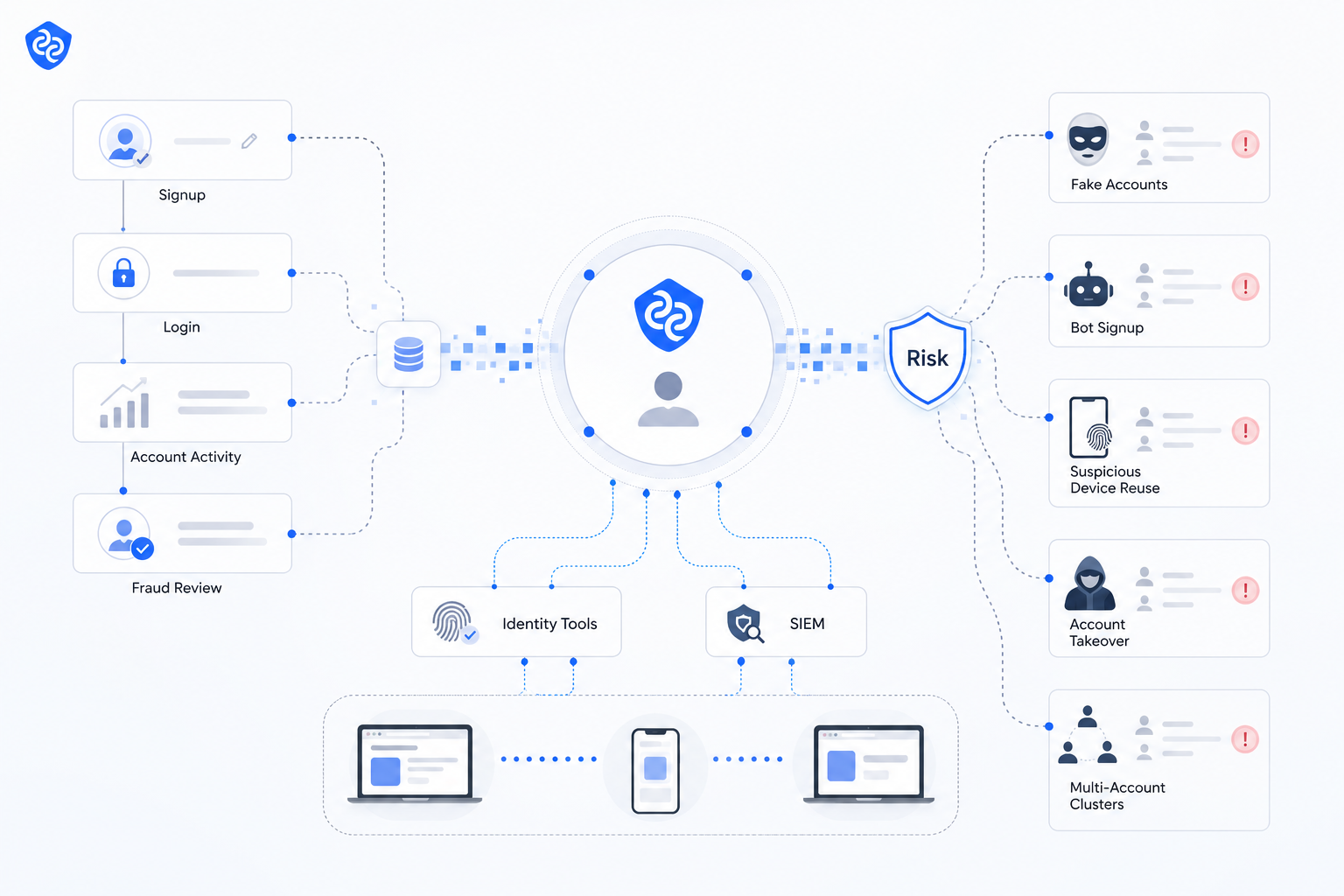
A SIEM may show that a user logged in. It may not show that the login came from a suspicious device, that the behavior changed after authentication, that the account is connected to other risky accounts, or that the same device has touched many failed signups.
This creates a visibility gap. Security teams can see activity, but not always abuse. They can see events, but not always intent. They can see authentication, but not always account risk.
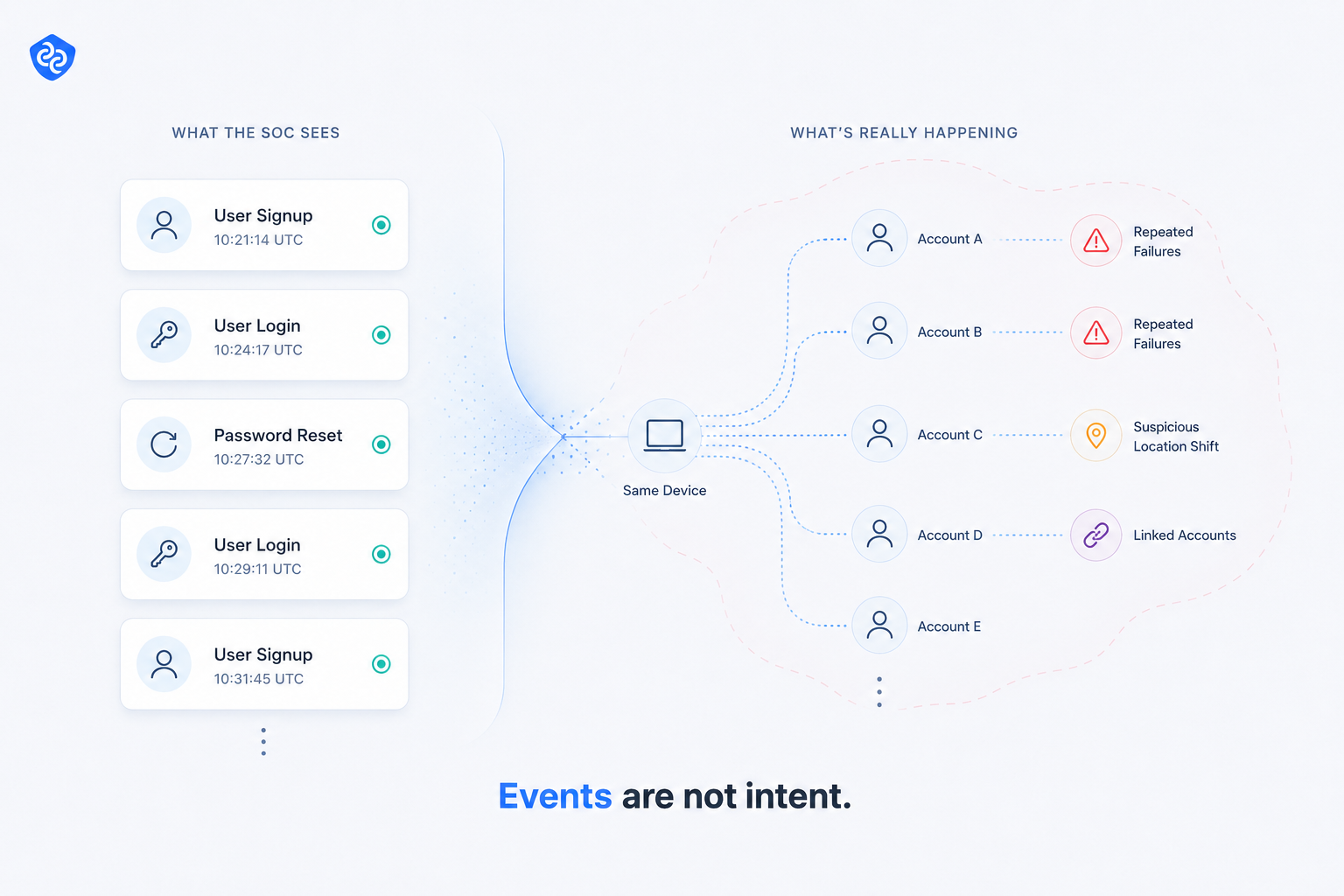
This is why fraud alert enrichment matters. It does not replace SIEM. It improves the quality of signals that reach the SOC.
CrossClassify’s SOC Alert Enrichment Pack provides structured fraud context for events such as high risk login, suspicious device reuse, bot signup cluster, impossible travel, device mismatch, account recovery anomaly, and multi account link.
How CrossClassify enriches alerts
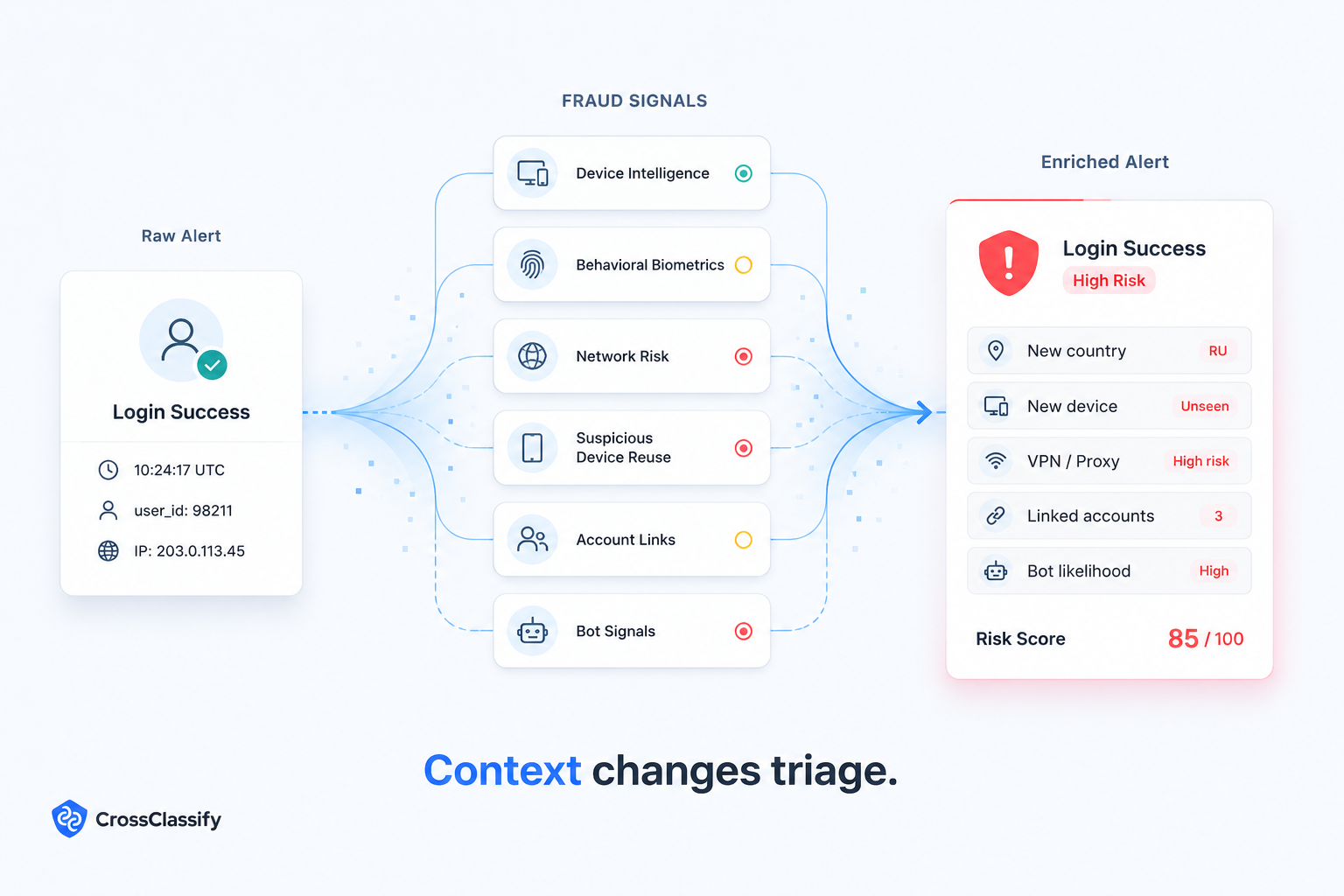
CrossClassify scores behavior, device, network, and account signals in real time. These scores can be attached to SOC events so analysts see not only what happened, but why it may be risky.
For example, an alert may show that a login succeeded. CrossClassify can add that the device is new, behavior does not match the account baseline, the location pattern is unusual, and the device is linked to several recently created accounts.
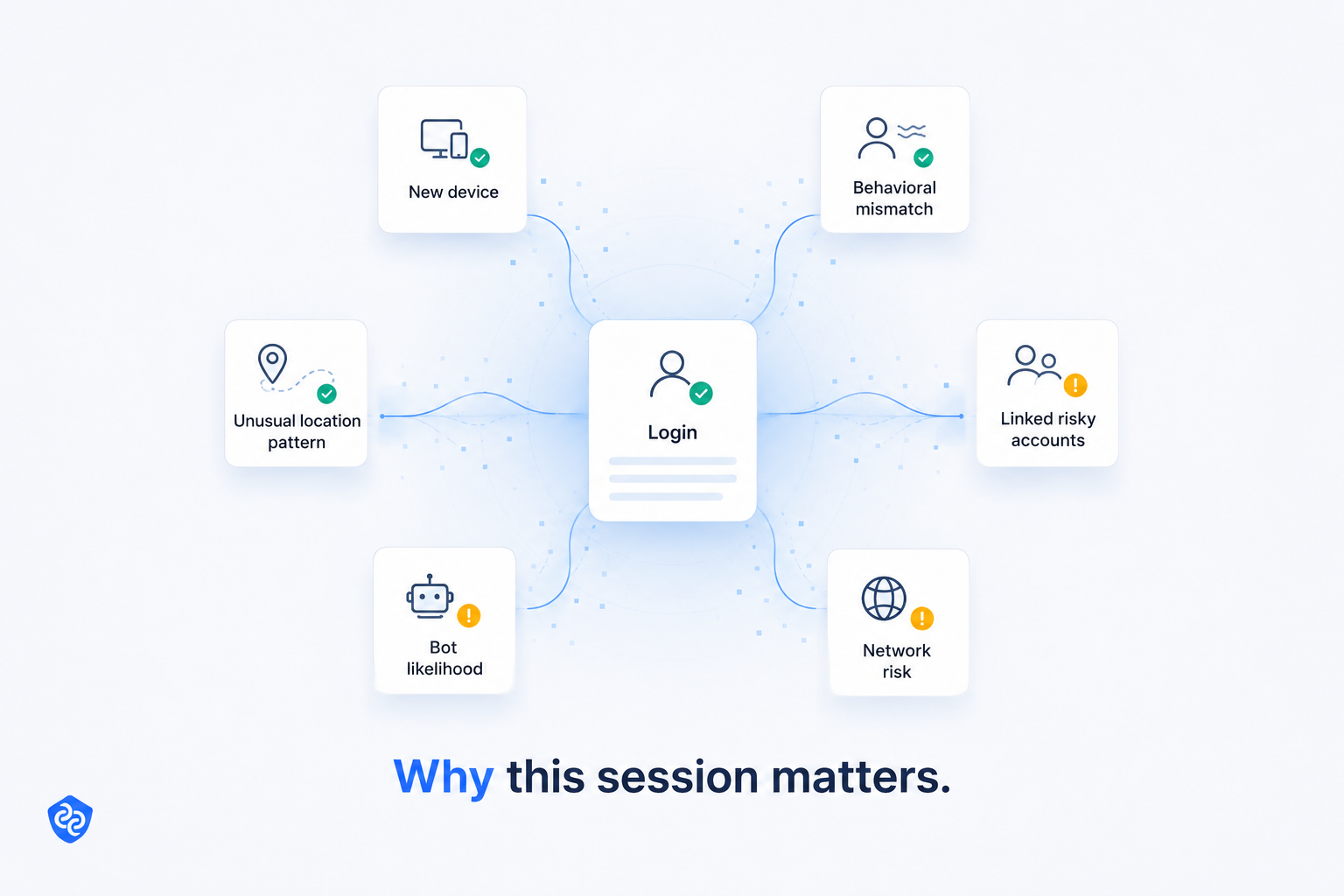
This makes investigation faster and clearer.
For high risk access patterns, CrossClassify connects with account takeover protection. This helps SOC and fraud teams detect risky sessions before damage spreads.
Why fraud context helps analysts
Analysts need evidence. A raw event can create noise. A risk explanation creates context.
CrossClassify’s Fraud Risk Explanation Layer helps analysts understand the reason behind a score. Instead of seeing only a severity number, analysts can see signal combinations. Suspicious device plus abnormal navigation plus unusual location plus account link is much easier to investigate than a generic login alert.
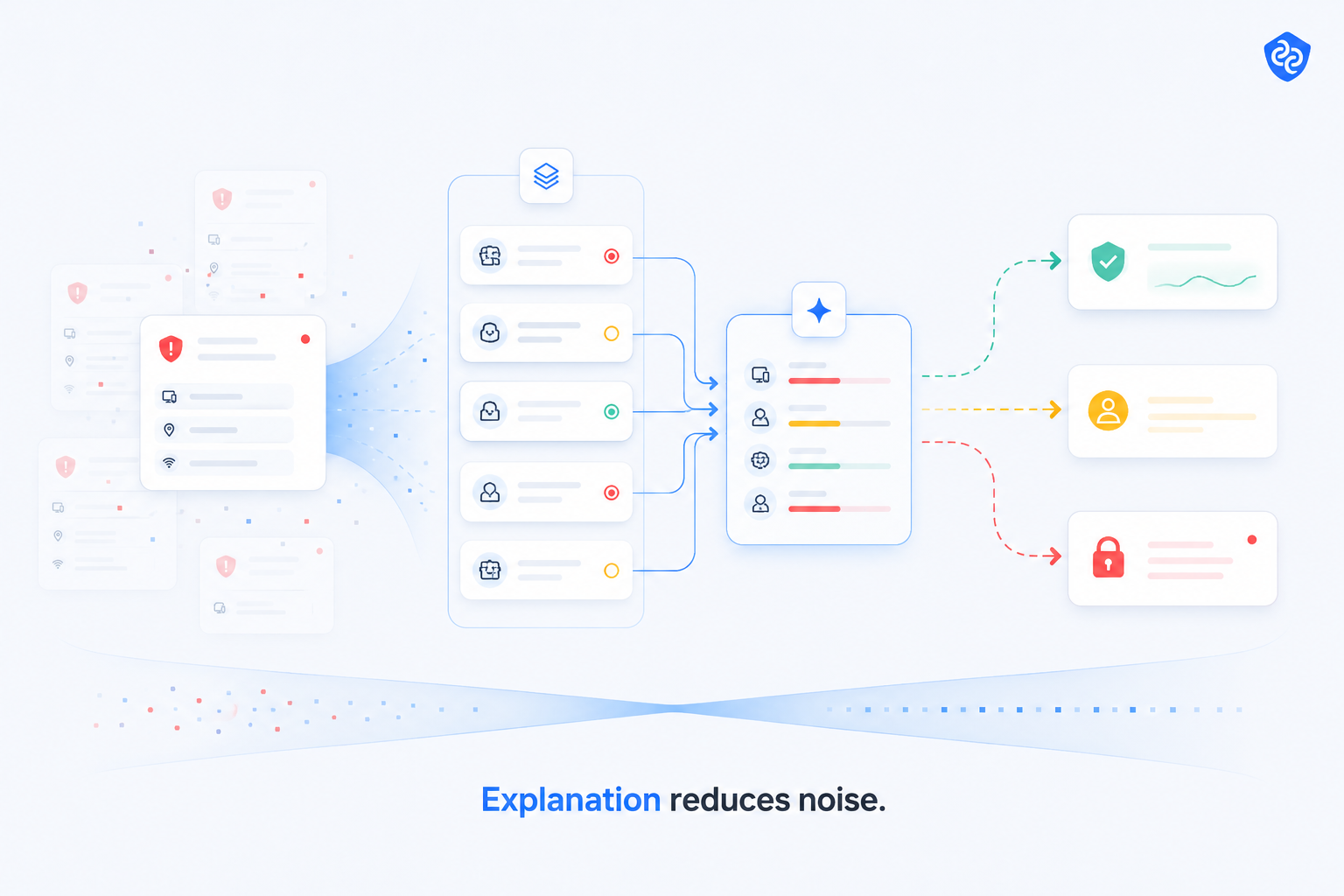
This also helps teams tune response. Low risk events may be monitored. Medium risk events may enter review. High risk events may trigger step up verification, session hold, or fraud team escalation.
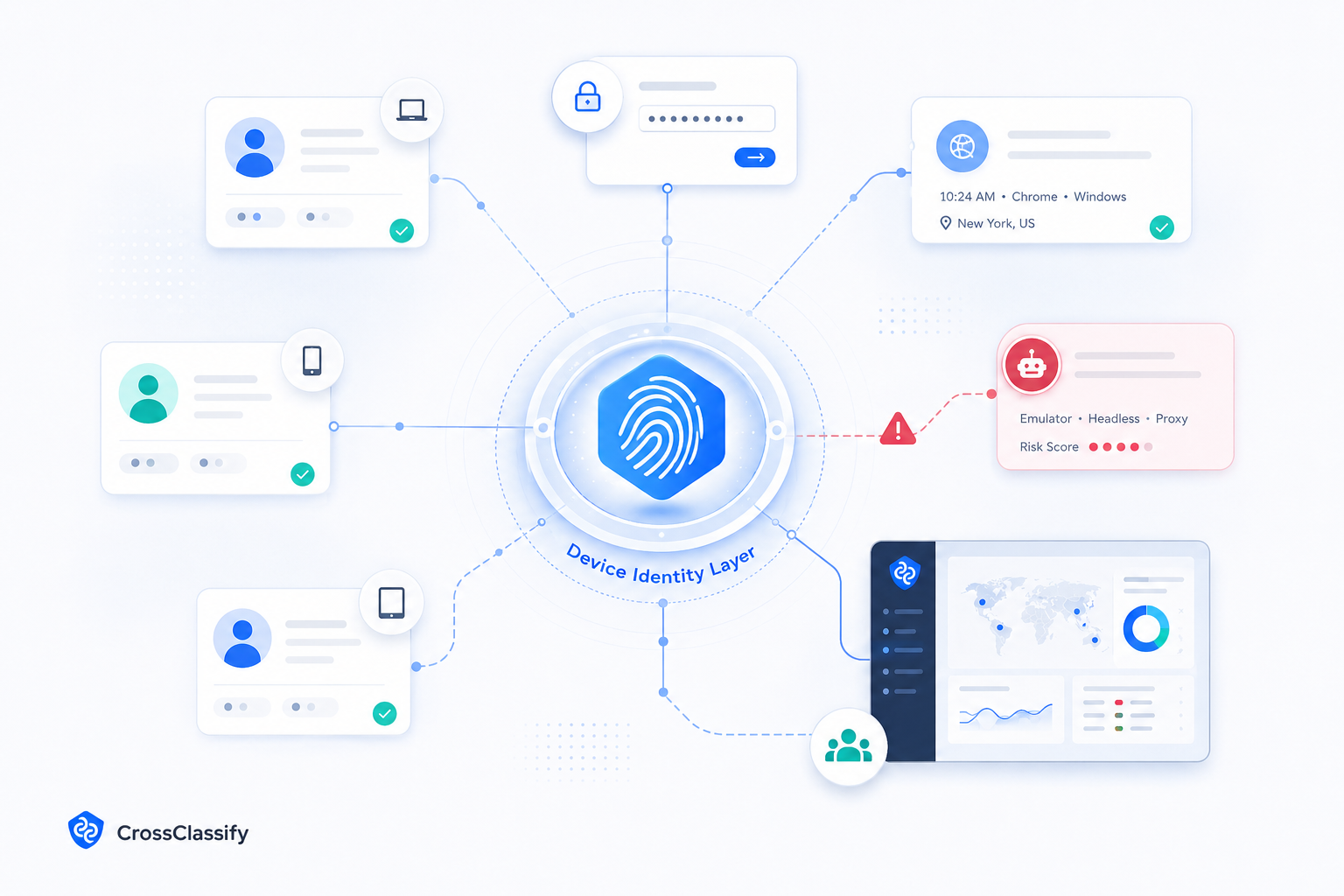
For suspicious device patterns, customers can use device fingerprinting to connect accounts, devices, sessions, and risk signals.
What SOC teams can monitor with CrossClassify
SOC fraud alert enrichment can support several high value event types.
A high risk signup alert can show whether a new account is linked to suspicious device reuse, bot like behavior, unusual network signals, or known abuse patterns.
A high risk login alert can show whether a session differs from trusted account behavior.
A suspicious device alert can show whether one device is connected to multiple accounts, repeated failures, emulator behavior, or risky session patterns.
An account recovery alert can show whether a recovery attempt comes from a device or behavior pattern that does not fit the account.
A sensitive action alert can show whether a payout change, shipping address update, recruiter profile edit, or account setting change deserves review.
These are not generic security alerts. They are account abuse signals made useful for security monitoring.
Partner service model
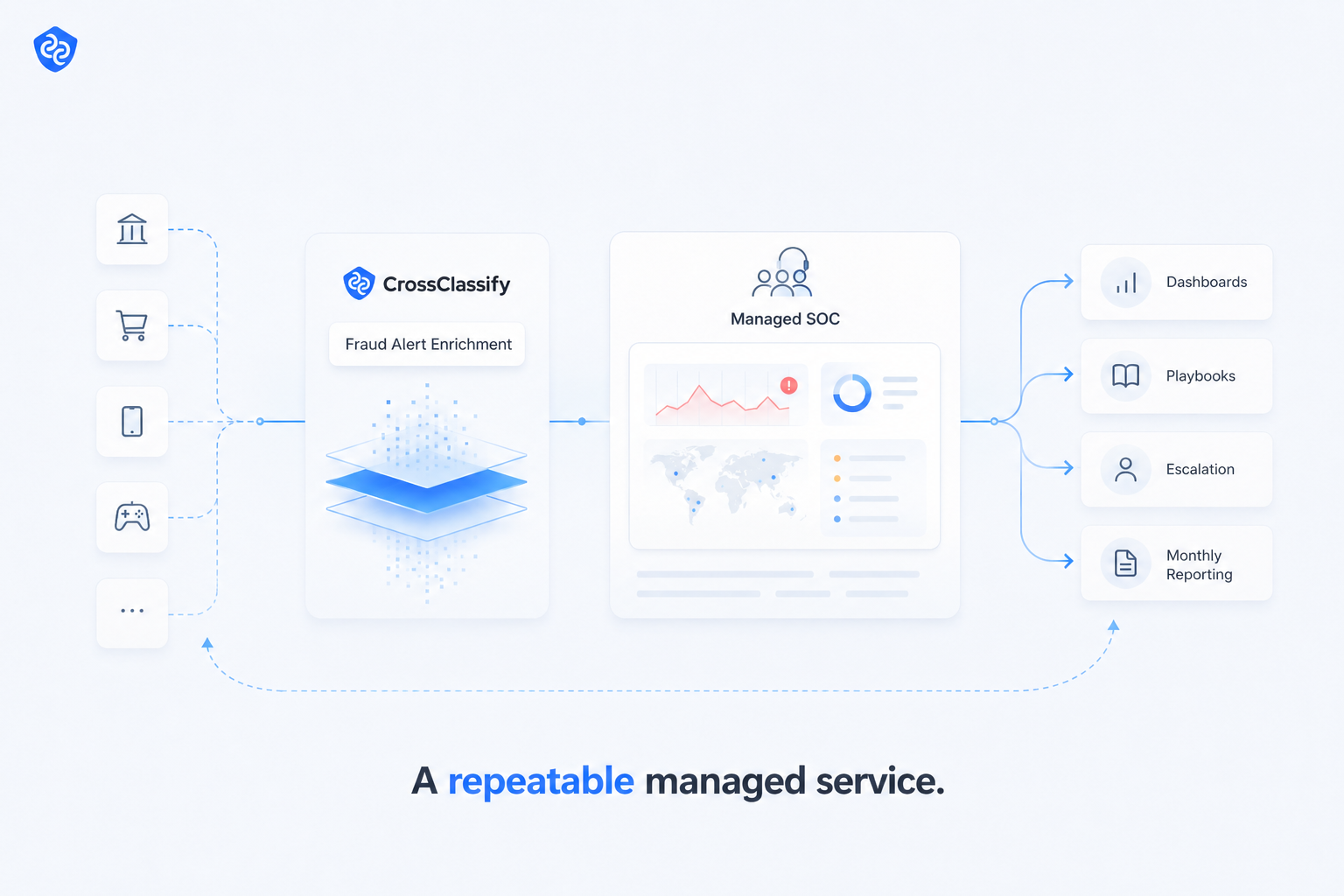
Cybersecurity partners can package SOC fraud alert enrichment as an add on for customers with customer facing platforms. The service can include event mapping, SIEM integration, alert rules, dashboards, escalation playbooks, analyst training, and monthly risk reporting.
For managed SOC providers, this creates a differentiated service line. The partner can monitor not only infrastructure threats, but also account abuse patterns that affect revenue, customer trust, and operational workload.
CrossClassify’s SIEM Integration Templates and Managed Fraud Detection Dashboard make this service repeatable across customers.
How SOC enrichment supports fraud and product teams
SOC teams are not the only beneficiaries. Fraud teams can use enriched alerts to prioritize review. Product teams can understand whether conversion issues are connected to abuse patterns. Customer support can better understand account complaints. Compliance teams can review how risk decisions are made.
This is important because account abuse is cross functional. It affects security, fraud, operations, customer experience, and trust. CrossClassify gives these teams a shared risk signal layer.
Conclusion
SOC teams do not need more noisy alerts. They need better context.
CrossClassify helps SOC teams understand account abuse by enriching alerts with device intelligence, behavioral biometrics, fraud risk scoring, and account relationship signals. For cybersecurity partners, this creates a practical managed service that sits beside SIEM, identity, and fraud operations.
See How Protecting Customers from the Growing Threat of Account Takeover
Ensure Continuous Security with Real-Time Account Monitoring

Explore CrossClassify today
Detect and prevent fraud in real time
Protect your accounts with AI-driven security
Try CrossClassify for FREE—3 months
Share in
Related articles
Frequently asked questions
Let's Get Started
Create your free
account today
Discover how to secure your app against fraud using CrossClassify
No credit card required