Last Updated on 19 May 2026
MSP Fraud Detection: How Cybersecurity Partners Can Add Account Abuse Protection
Share in
Introduction
Most cybersecurity partners already help customers protect endpoints, cloud accounts, identity systems, email, networks, and SIEM environments. That work is still essential. But many customer facing digital platforms now have a different kind of security problem.
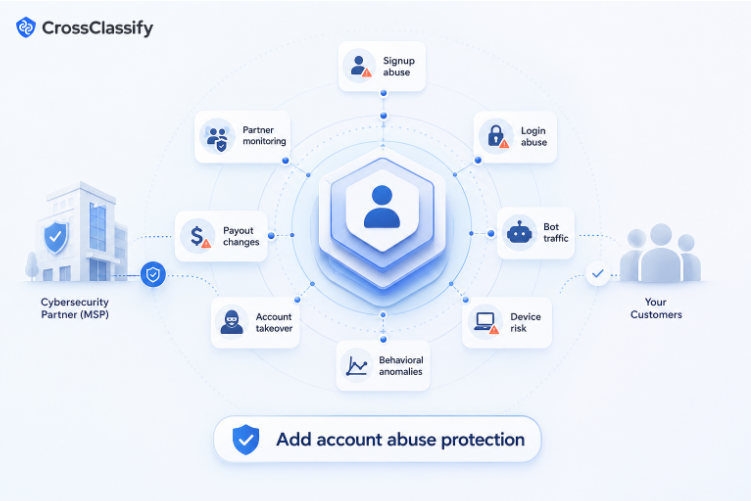
The attacker is not always trying to break into a server. Sometimes the attacker creates fake accounts, abuses signup bonuses, tests stolen credentials, changes payout details, rotates devices, hides behind VPNs, or runs scripted traffic through normal application flows.
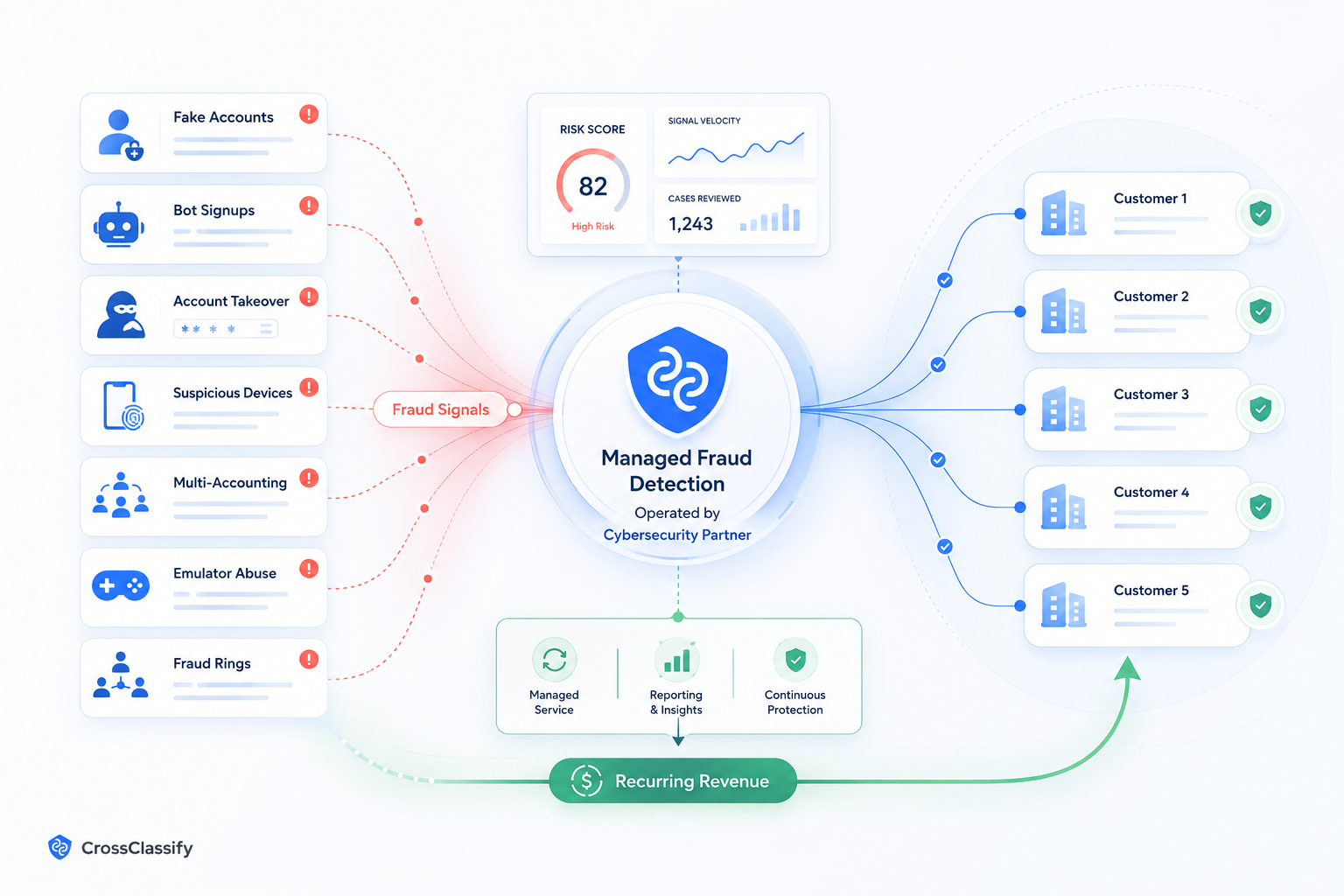
That creates a new opportunity for MSPs, MSSPs, managed SOC providers, system integrators, and cybersecurity VARs. Fraud detection can become a managed service line for customers that operate fintech platforms, trading platforms, gaming products, marketplaces, portals, and account based apps.
CrossClassify fits this opportunity as a fraud signal and decision support layer. It helps partners give customers visibility into account abuse, device risk, behavioral anomalies, bot traffic, signup abuse, signin abuse, and risky post login activity.
Why account abuse belongs in the cybersecurity partner portfolio
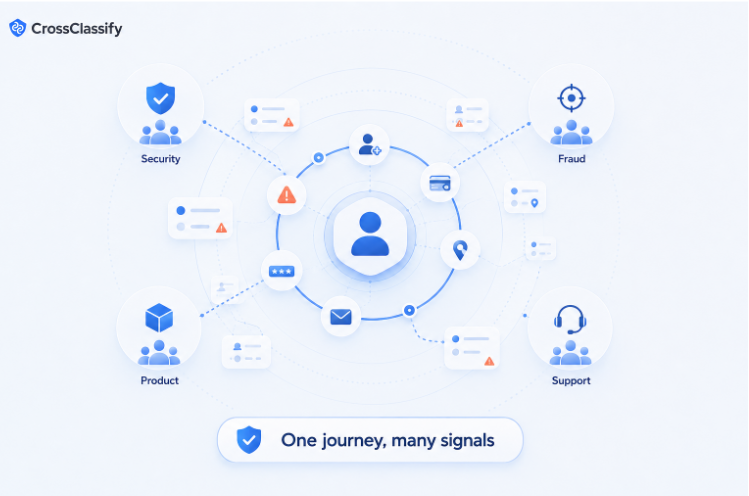
Account abuse often sits between security, fraud, product, and support. That is why many companies struggle to own it properly.
A security team may see suspicious logins. A fraud team may see payout abuse. A product team may see conversion friction. A support team may see complaints from real users. But no one has one clear view of the account journey.
For MSPs and MSSPs, this creates a practical service gap. Customers already trust partners to monitor systems and alerts. The next step is helping them monitor suspicious account behavior.
A managed fraud detection service can include:
- Signup risk monitoring
- Signin risk monitoring
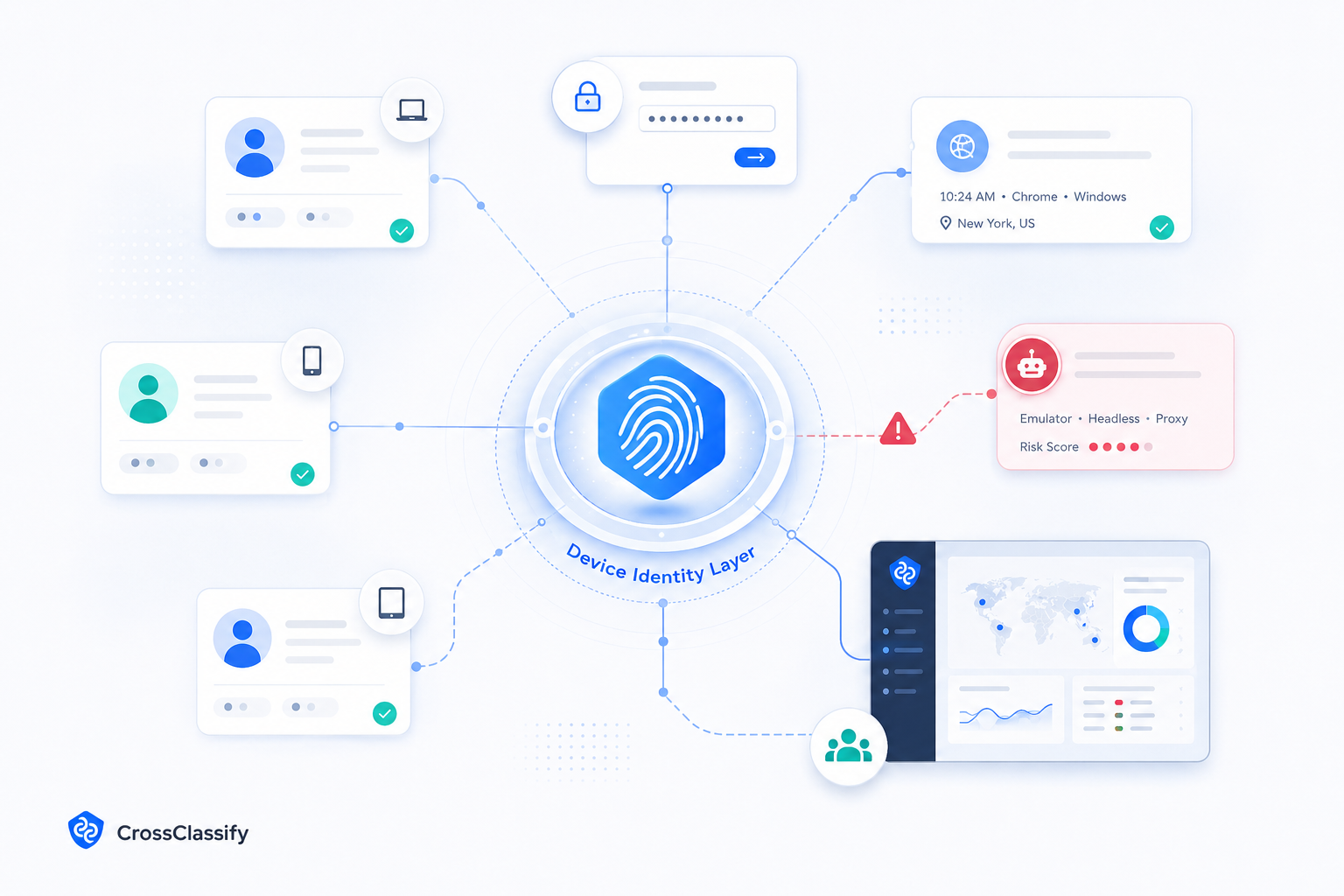
- Device abuse detection
- Bot and fake traffic visibility
- Account takeover indicators
- Bonus abuse patterns
- Risky account change alerts
- Fraud dashboard review
- Threshold tuning
- Manual review support
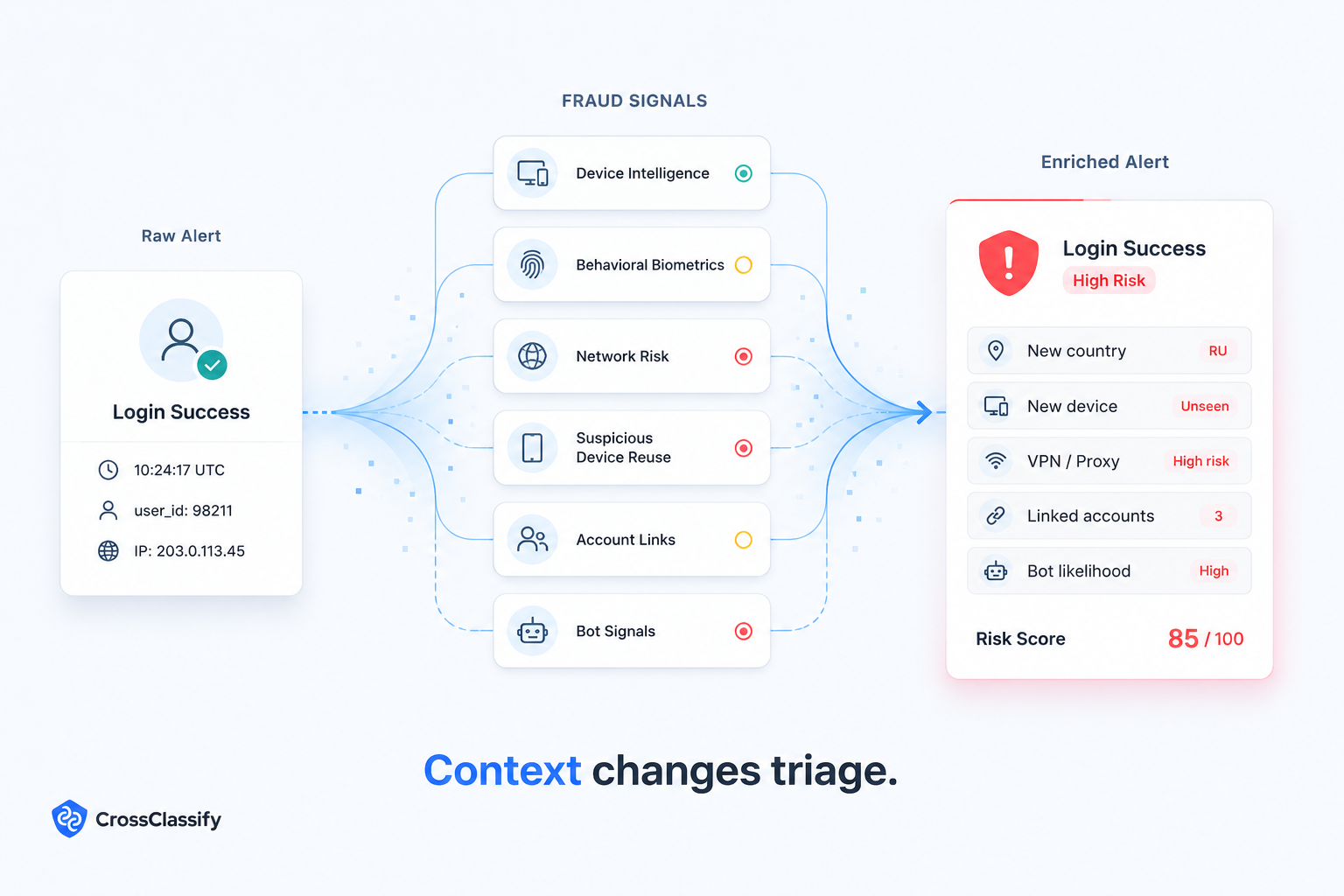
- SIEM or SOC alert enrichment
This is not about replacing the customer fraud team. It is about giving partners and customers better evidence.
What MSP fraud detection can look like in practice
A fintech customer may want to know whether repeated signups are coming from the same device cluster. A trading platform may want to detect suspicious logins followed by payout changes. A gaming operator may want to identify bonus abuse before promotional spend disappears into multi account rings.
In each case, the MSP can package CrossClassify as a managed account abuse visibility layer.
A practical partner package could include:
- Monthly fraud dashboard review
- Weekly account abuse reporting
- Risk score trend analysis
- Device cluster investigation
- ASN and IP abuse reporting
- Signup and signin pattern monitoring
- Threshold adjustment support
- Escalation rules for high risk actions
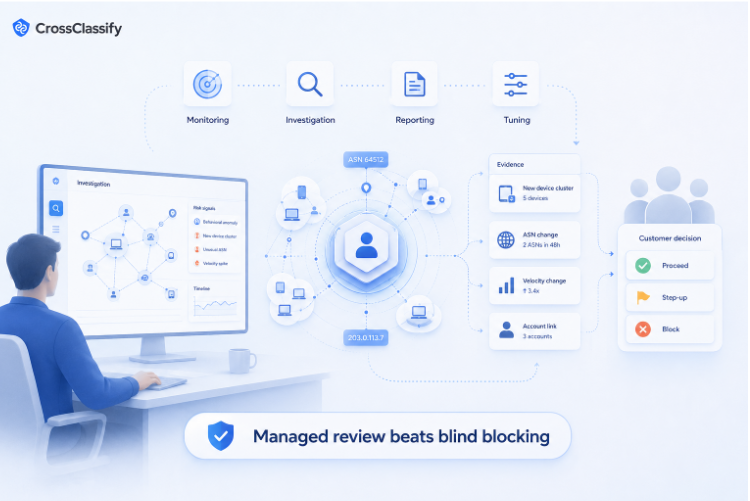
- Evidence packs for customer review
Partners that want a broader fraud intelligence foundation can position CrossClassify as the layer that connects device, behavior, account, network, and session signals. This gives customer facing platforms a better way to review suspicious activity before it becomes a larger operational problem.
The strongest service wedge: customer facing digital platforms
Not every customer needs the same fraud service. The strongest fit is usually a business with account creation, login, payments, profile changes, rewards, withdrawals, or promotional offers.
Good fit customers include:
- Fintech platforms
- Trading platforms
- Gaming platforms
- Marketplaces
- Subscription platforms
- Wallets and payment apps
- Customer portals
- High value SaaS products
- Digital services with promotional offers
These platforms often have abuse patterns that traditional infrastructure monitoring does not explain well. A WAF may show requests. An identity provider may show login events. A SIEM may show security logs. But the business still needs to know whether the account behavior looks trustworthy.

What usually goes wrong when companies adopt fraud detection poorly
Fraud detection fails when teams treat it as a simple block list.
The common mistakes are:
- Turning on strict controls too early
- Blocking users before understanding normal traffic
- Relying only on IP rules
- Ignoring device reuse
- Separating frontend behavior from backend events
- Sending too many alerts without context
- Using fixed thresholds that do not match customer risk
- Failing to define who reviews risky activity
- Treating fraud as only a login problem
These mistakes create false positives, user friction, internal distrust, and alert fatigue. The customer may then conclude that fraud detection is too noisy, when the real issue was poor rollout design.
A better implementation path for MSPs
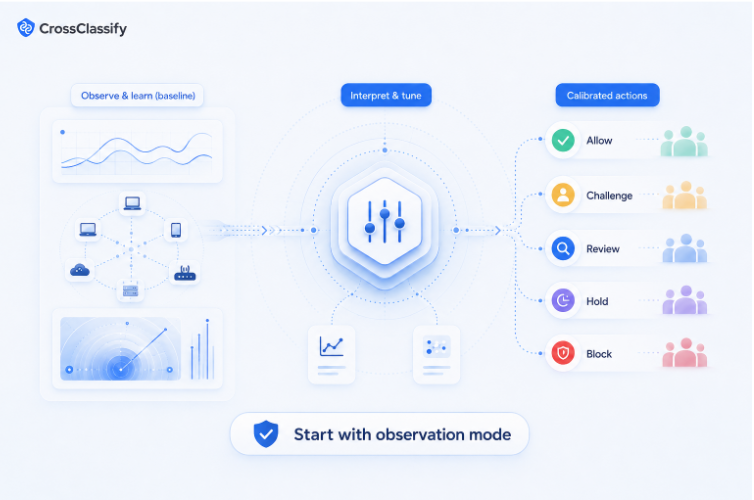
A stronger MSP rollout starts with observation mode.
For one to two weeks, CrossClassify can help the customer learn what normal traffic looks like. During this period, the partner can review signup risk, signin risk, device clusters, ASN patterns, IP concentration, bot signals, and risky post login actions.
The goal is not to enforce every decision on day one. The goal is to build a baseline.
After the baseline period, the partner and customer can define actions such as:
- Allow normal activity
- Challenge medium risk activity
- Hold high risk transactions
- Send suspicious cases to manual review
- Escalate account takeover indicators
- Block only when the customer policy says so
This gives customers more control and helps partners avoid selling fraud detection as a black box.
How CrossClassify fits into the managed service workflow
CrossClassify can sit across the customer facing journey.
At signup, it can help detect fake account creation, suspicious devices, VPN patterns, bot behavior, and repeated registration attempts.
At signin, it can help detect credential stuffing signals, unfamiliar devices, risky ASN patterns, and behavior that does not match the account history.
After login, it can help monitor sensitive changes such as email updates, address edits, bank account changes, payout changes, withdrawals, deposits, and bonus claims.
For the MSP, CrossClassify becomes the signal layer behind the managed service. The partner can package dashboards, risk reviews, alert enrichment, tuning sessions, and customer reporting around it.
Conclusion
MSPs and cybersecurity partners are in a strong position to bring fraud detection to customer facing platforms. They already understand monitoring, alerting, escalation, and customer risk.
The opportunity is to extend that trust into account abuse detection.
CrossClassify helps partners build a managed fraud detection service around device intelligence, behavioral biometrics, risk scoring, bot visibility, continuous monitoring, and manual review support. That creates a new service line for partners and better fraud visibility for customers.
See How CrossClassify Stops Bot and Account Abuse
Detect suspicious automation, stop fake traffic, and reduce abuse at scale

Explore CrossClassify today
Detect and prevent fraud in real time
Protect your accounts with AI-driven security
Try CrossClassify for FREE—3 months
Share in
Related articles
Frequently asked questions
Let's Get Started
Create your free
account today
Discover how to secure your app against fraud using CrossClassify
No credit card required