Last Updated on 18 May 2026
Managed Fraud Detection Service: A New Revenue Line for Cybersecurity Partners
Share in
Introduction
Cybersecurity partners are always looking for service lines that create recurring value, strengthen customer relationships, and solve problems customers already feel. Managed fraud detection is one of those opportunities.
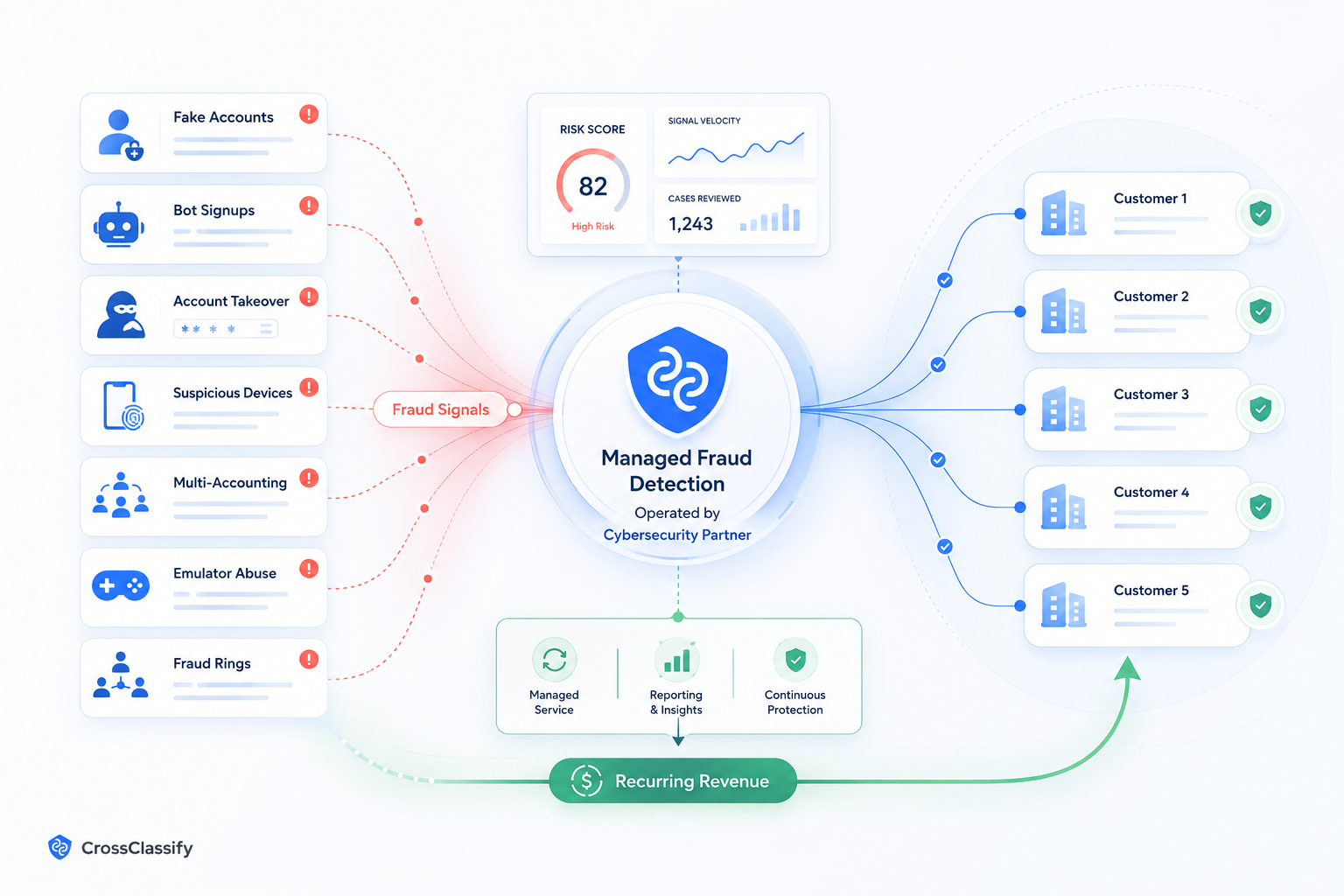
Many businesses now operate customer facing digital platforms. Their risk is not limited to infrastructure compromise. They face bot signups, fake accounts, account takeover, suspicious devices, multi accounting, emulator abuse, and fraud rings. These problems affect revenue, trust, operations, customer support, and security.
CrossClassify gives cybersecurity partners a way to offer managed fraud detection without building a fraud platform from scratch.
Why managed fraud detection is becoming relevant
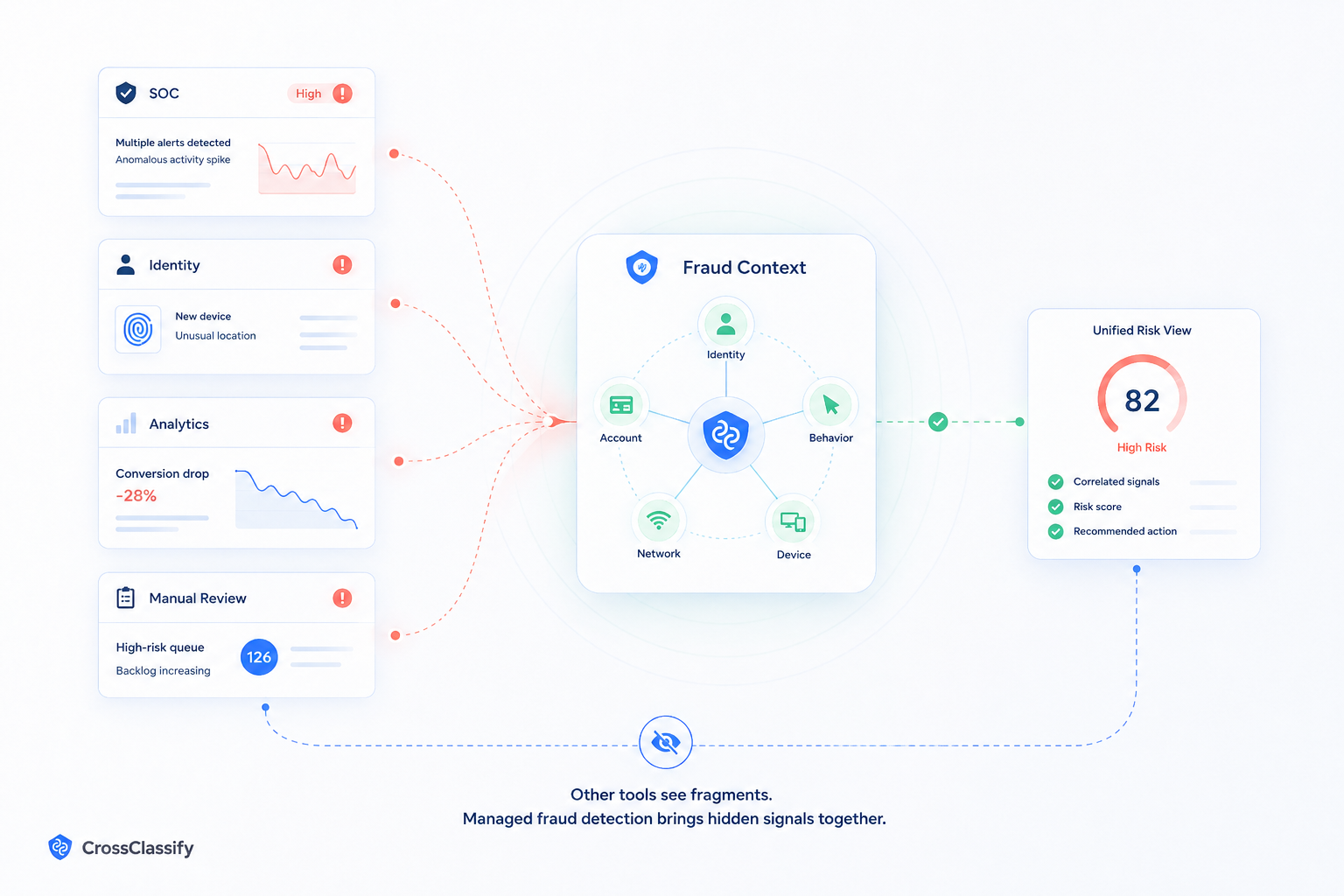
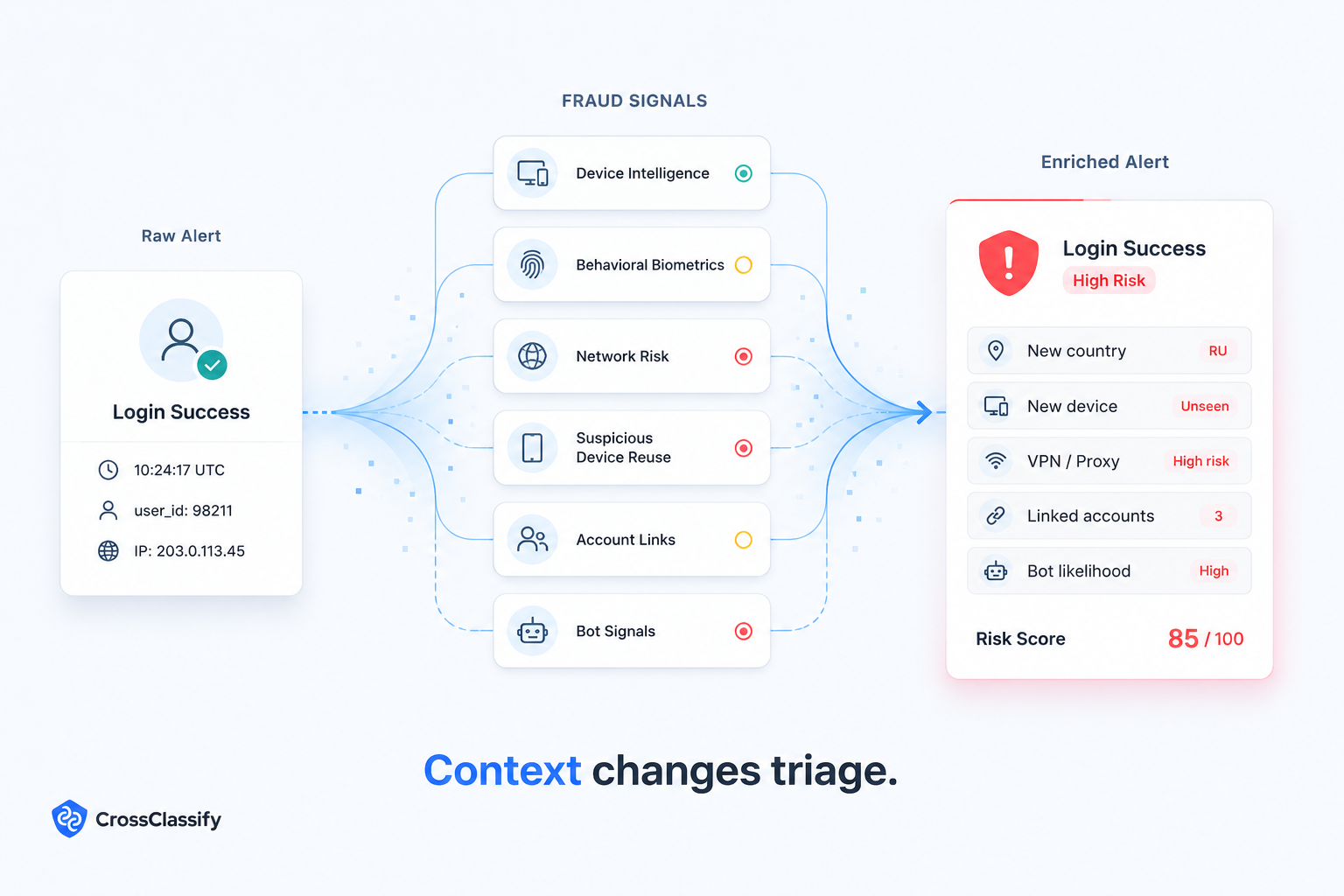
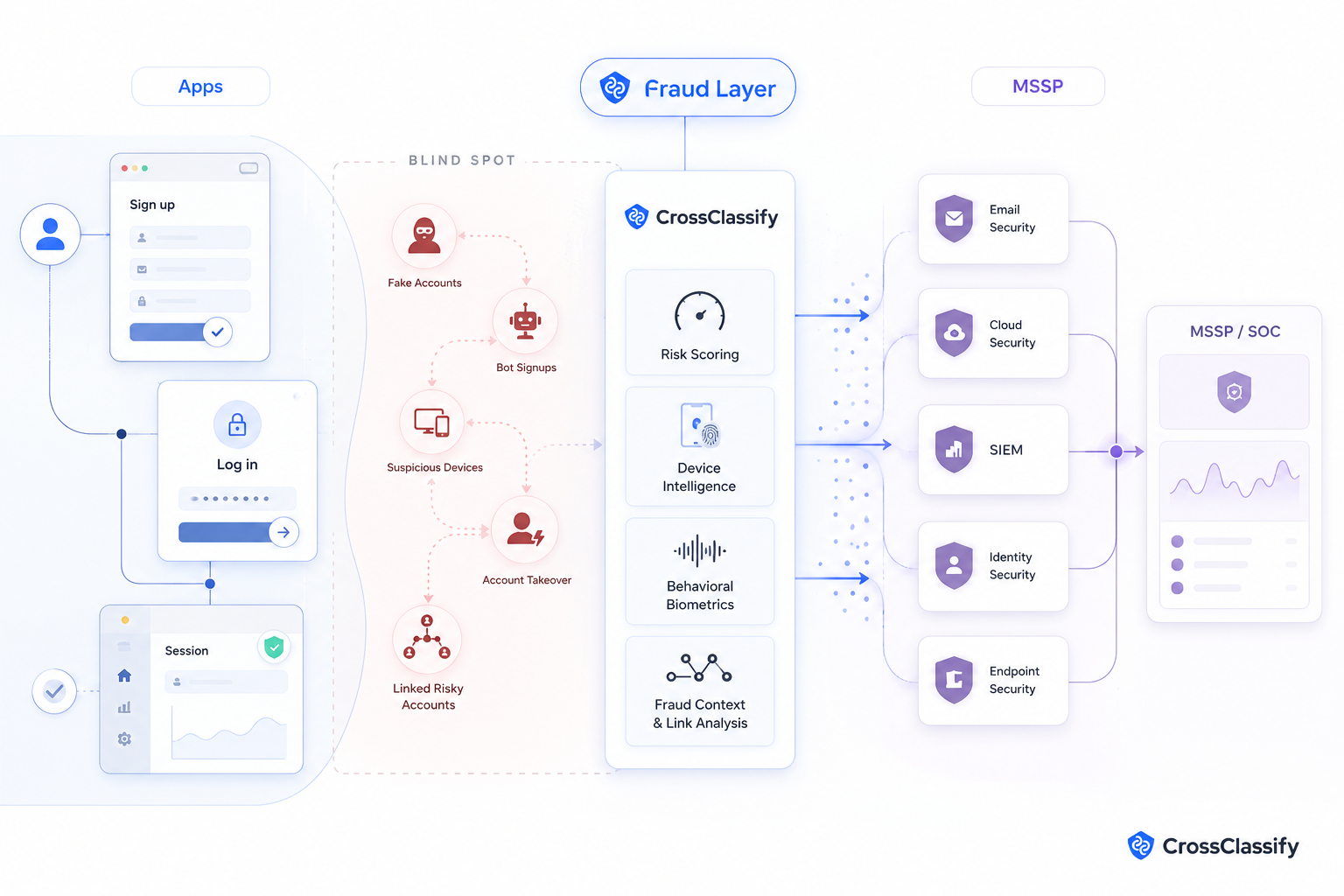
Customers often have security tools, but still lack fraud visibility inside digital journeys. A SOC may not see why a signup is suspicious. An identity tool may not know whether a device is reused across many accounts. A product dashboard may show conversion drops but not bot activity. A manual review team may see suspicious accounts but not the device graph behind them.
Managed fraud detection brings these signals together.
CrossClassify monitors identity, behavior, network, device, and account signals, then assigns risk scores for suspicious activity. Partners can manage the service through dashboards, playbooks, SIEM templates, and monthly reporting.
For fake account and signup abuse, CrossClassify’s account opening protection gives partners a clear starting point.
What the service includes
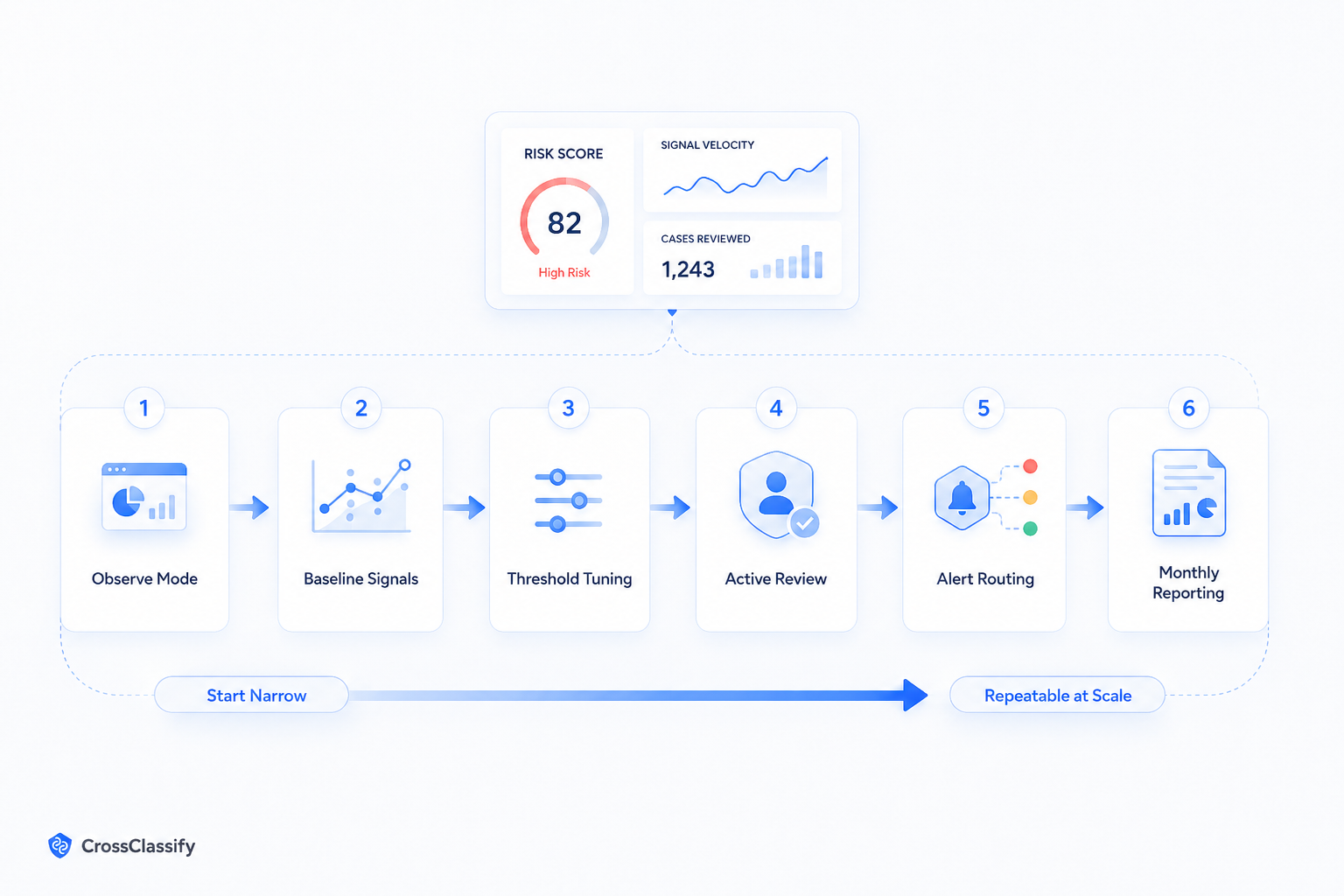
A managed fraud detection service can include onboarding, SDK deployment support, backend risk API setup, device intelligence monitoring, bot detection, account takeover alerts, suspicious device review, threshold tuning, alert routing, monthly reports, and customer risk workshops.
The partner can start with observe mode, collect baseline signals, tune policies, then move into active review and response workflows.
CrossClassify’s Managed Fraud Detection Dashboard helps partners track trends across accounts, devices, sessions, and alerts. The Partner Customer Health Dashboard helps partners identify which customers need tuning, expansion, or support.
Why partners can win with this model
Managed fraud detection gives partners a stronger business conversation than generic tool resale. It speaks to revenue protection, trust, customer experience, fraud workload, and security maturity.
A CISO may care about risk and monitoring. A fraud leader may care about fake accounts and manual review. A product owner may care about friction and conversion. A SOC leader may care about alert context. CrossClassify gives the partner a shared signal layer for all of them.
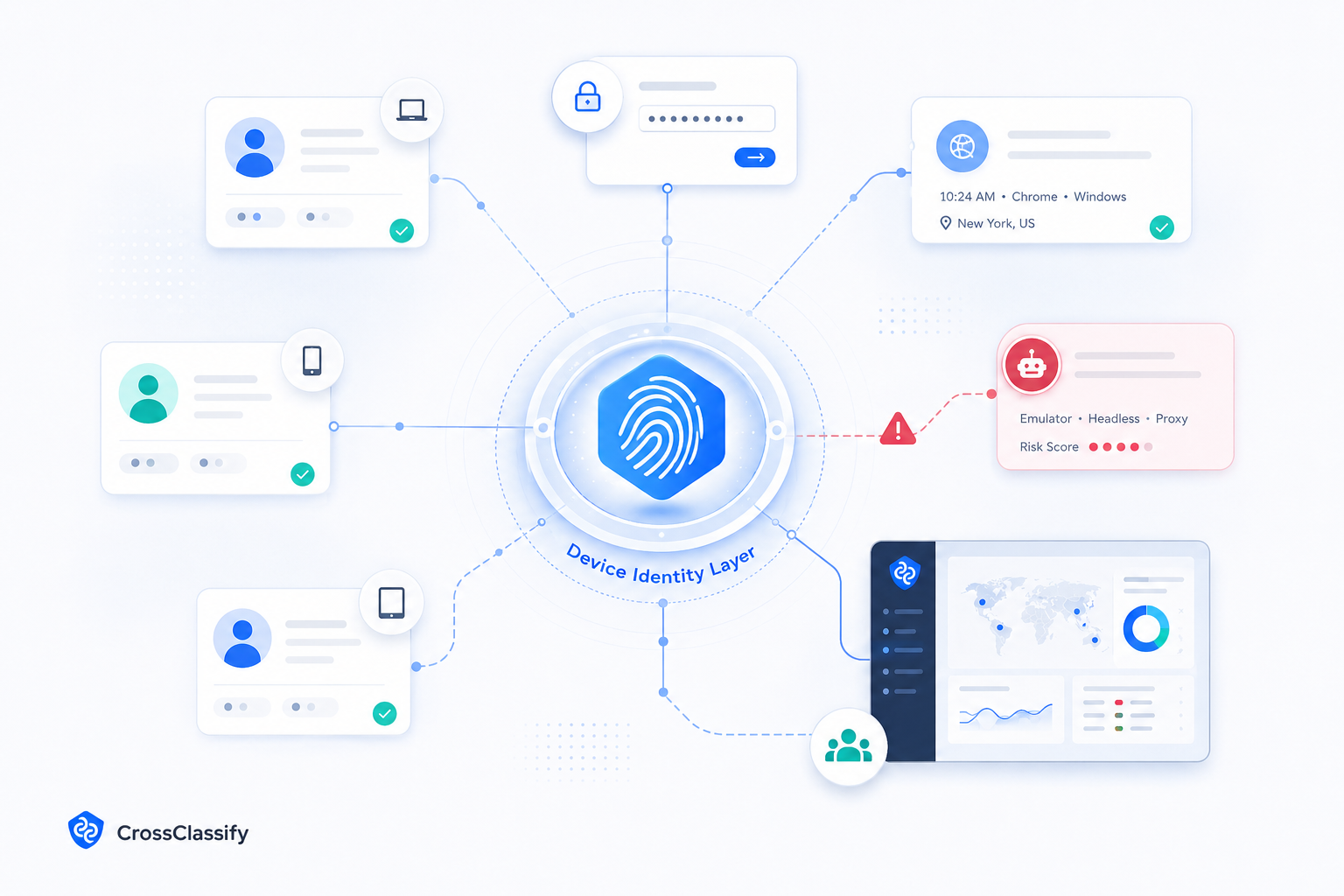
For device based abuse, partners can package device fingerprinting as suspicious device monitoring. That makes the service concrete and easier to explain.
The strongest managed service packages
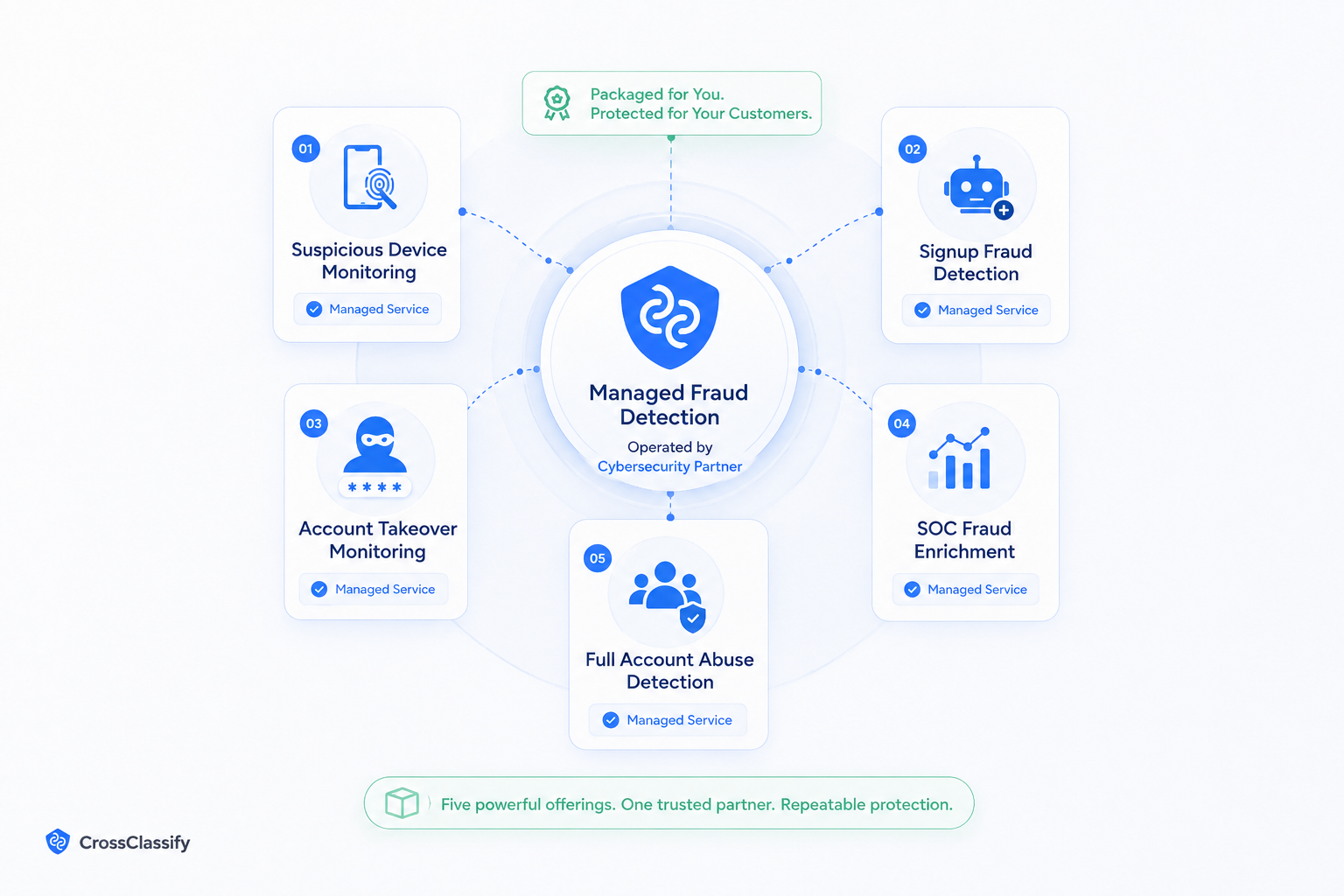
The first package can be suspicious device monitoring. It gives customers a clear view of repeated devices, emulator behavior, device evasion, and accounts connected through device intelligence.
The second package can be signup fraud detection. It helps customers reduce fake accounts before they create fraud workload, poor analytics, spam, promotion abuse, or platform trust issues.
The third package can be account takeover monitoring. It helps customers identify risky logins, abnormal session behavior, device changes, and suspicious sensitive actions.
The fourth package can be SOC fraud enrichment. It helps security teams receive fraud risk signals inside existing monitoring workflows.
The fifth package can be full account abuse detection. It combines signup, login, post login behavior, device intelligence, bot detection, and multi account analysis into a broader managed service.
For automation heavy abuse, CrossClassify’s bot attack protection helps partners show value quickly.
How to start
The best starting point is a narrow pilot with measurable signals. A partner should choose one customer facing journey, such as signup, login, account recovery, profile change, payout edit, or high risk transaction.
The pilot should track fake account detection rate, suspicious device detection rate, bot detection rate, account takeover risk, alert quality, false positive rate, time to review, and impact on manual workload.
After validation, the partner can expand into additional workflows and package the service as a monthly managed offer.
The partner should also decide how much service it will provide. Some customers may want CrossClassify integrated into their own fraud queue. Others may want the partner to monitor dashboards, tune rules, review alerts, and deliver monthly reports.
Pricing and revenue logic
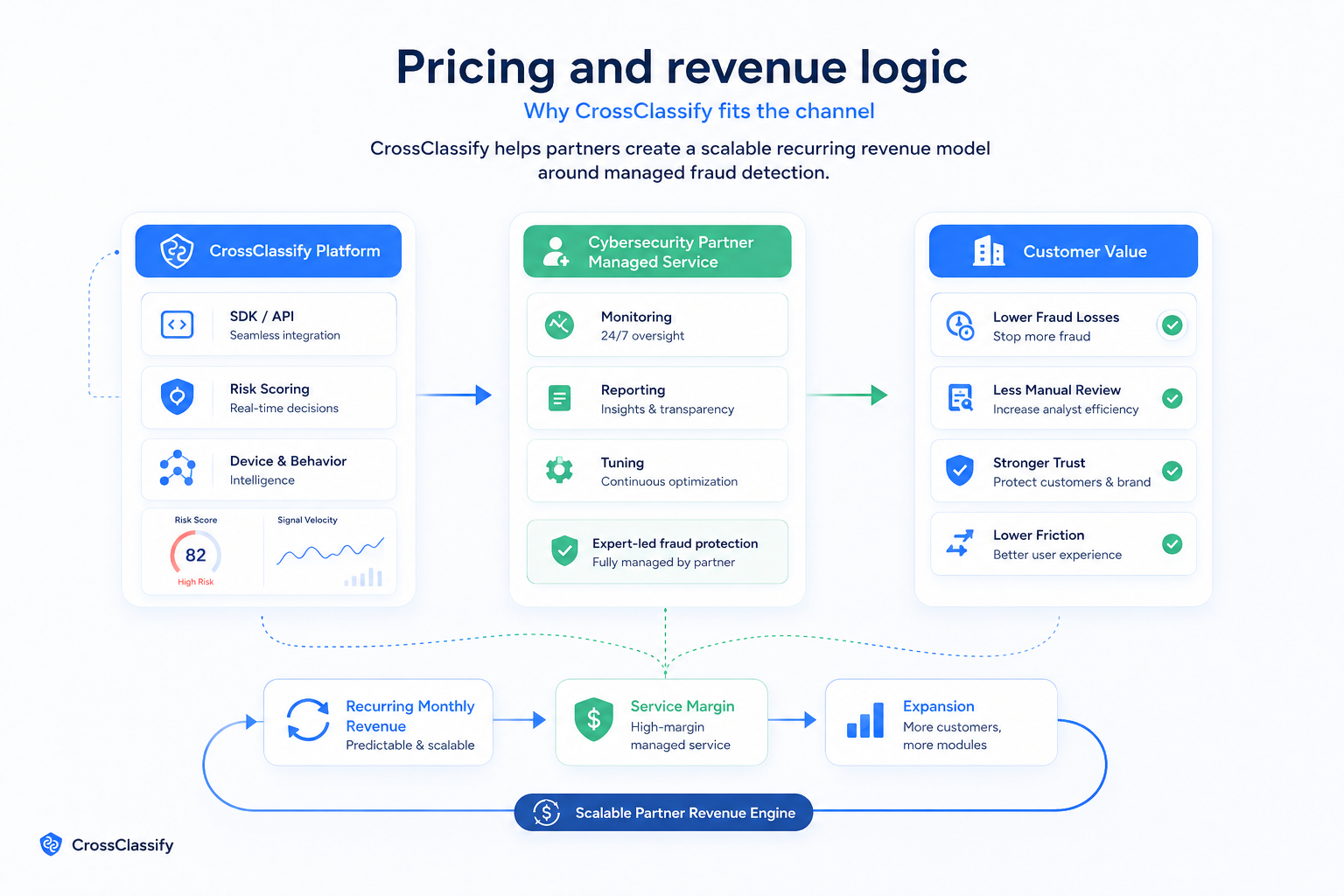
Managed fraud detection can be priced in several ways. The partner can charge an implementation fee, a monthly managed service fee, a usage based fee, or a bundle that includes monitoring, reporting, and tuning.
For smaller customers, the partner can package a focused service around one journey, such as signup fraud detection. For larger customers, the partner can price around event volume, number of applications, number of monitored journeys, SOC integration, and reporting depth.
The strongest commercial model combines CrossClassify subscription revenue with partner service revenue. This gives the partner margin, creates customer stickiness, and turns fraud detection into a repeatable practice.
Why CrossClassify fits the channel
Cybersecurity partners need products that can be explained, deployed, monitored, and expanded. CrossClassify fits because it is API first, supports SDKs for web and mobile environments, produces risk scores, gives fraud explanations, and can feed events into security and fraud workflows.
The product also supports multiple buyer conversations. For a CISO, it is a risk and visibility layer. For a SOC leader, it is alert enrichment. For a fraud leader, it is account abuse detection. For a product owner, it is a way to reduce fraud without adding blanket friction. For a partner leader, it is a new recurring revenue line.
Conclusion
Managed fraud detection gives cybersecurity partners a way to expand beyond traditional security monitoring into customer facing fraud protection.
CrossClassify makes the model practical with SDKs, APIs, risk scoring, behavioral biometrics, device fingerprinting, dashboards, SIEM templates, and partner enablement. The result is a repeatable service line that helps customers detect fake accounts, suspicious devices, bots, account takeover, and account abuse with less friction and better context.
See How CrossClassify Uses Behavioral Biometrics to Detect Fraud
Analyze real user behavior patterns continuously to uncover suspicious sessions with less friction

Explore CrossClassify today
Detect and prevent fraud in real time
Protect your accounts with AI-driven security
Try CrossClassify for FREE—3 months
Share in
Related articles
Frequently asked questions
Let's Get Started
Create your free
account today
Discover how to secure your app against fraud using CrossClassify
No credit card required