Last Updated on 18 Jun 2026
Signup Bonus Abuse Detection: Protect New Accounts Before Rewards Are Claimed
Share in

Introduction
Signup bonuses are powerful because they reduce hesitation. A welcome credit, free trial incentive, first purchase discount, wallet reward, or activation bonus can help a new user take action sooner.
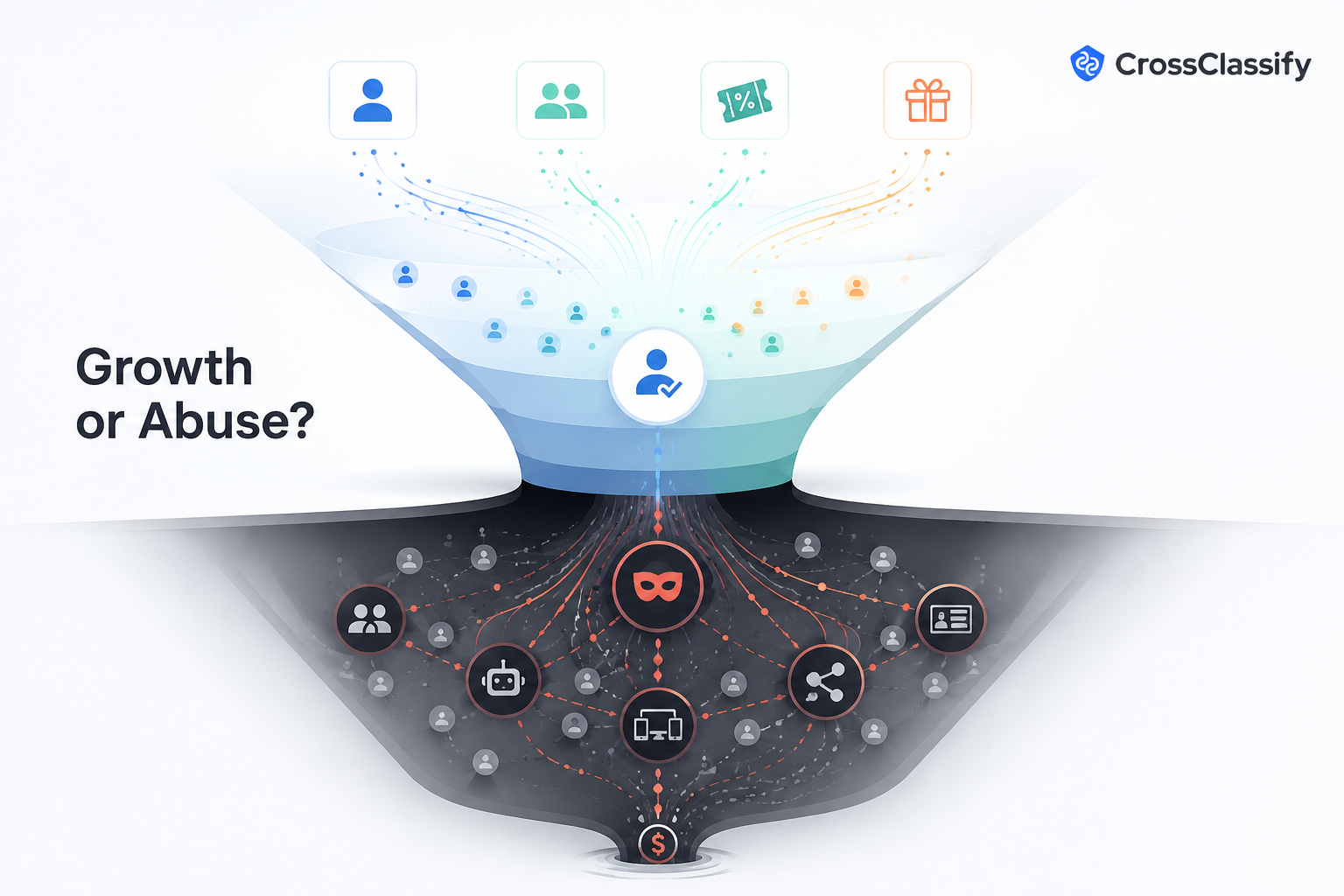
That same strength creates risk. Fraudsters are attracted to campaigns where value is available early, identity checks are light, and account creation is fast. The visible result is new user growth. The hidden risk is that some users are not new, not genuine, and not acting alone.
Signup bonus abuse detection helps companies understand which new accounts should be trusted, challenged, reviewed, delayed, or monitored before promotional value is released.
Why Signup Bonuses Matter Now
Customer acquisition is expensive. Businesses use signup incentives to reduce friction and compete in crowded markets. Fintech apps, ecommerce brands, marketplaces, gaming platforms, crypto services, SaaS products, and loyalty programs all use incentives to drive first action.
The challenge is that every early reward creates a decision point. Should the account receive value immediately, or should the business understand the risk first?
This decision becomes more important as automated traffic increases. Imperva reported that bad bots make up 37 percent of all internet traffic, and automated traffic reached 51 percent of all web traffic. (Imperva)
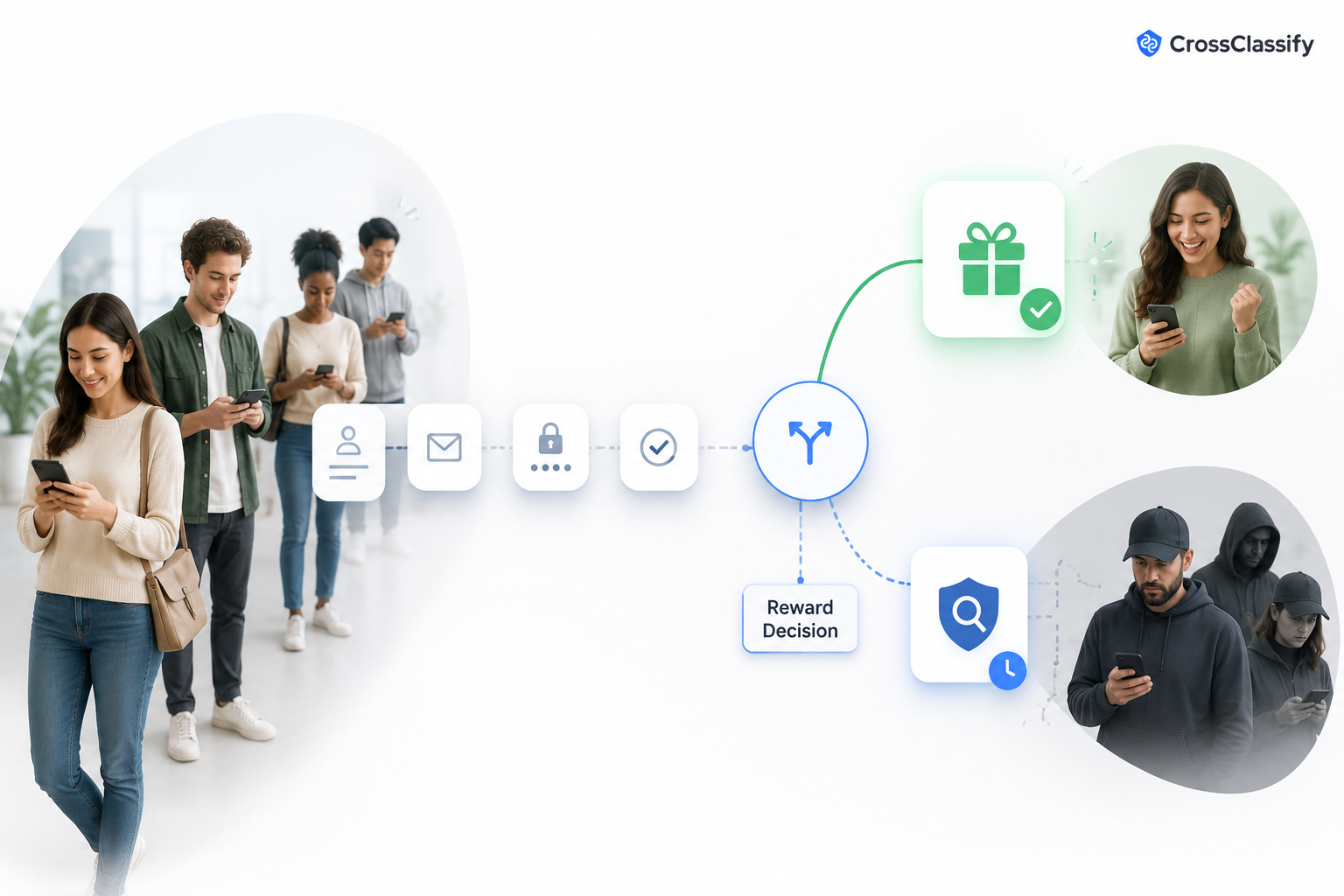
The Fraud Risks in Signup Bonus Abuse
Signup bonus abuse usually starts before the reward claim. The fraudster prepares the account to look normal enough to pass basic checks.
Common patterns include:
- Duplicate account creation
The same person creates multiple accounts to claim the same offer. - Disposable identity use
Fraudsters rotate emails, names, phone numbers, and payment clues. - Suspicious device reuse
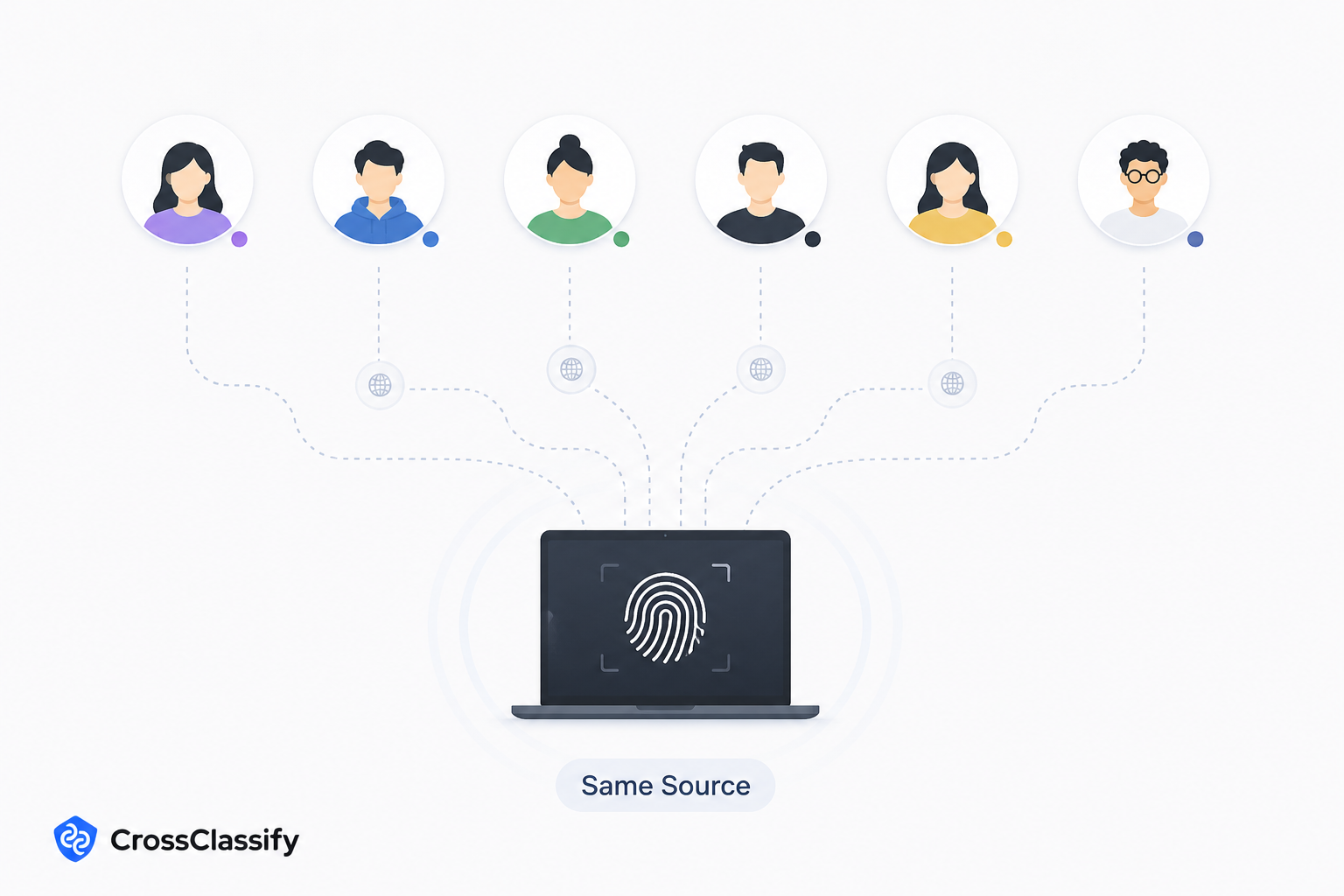
Many accounts are created from the same physical or virtual environment. - VPN and proxy activity
Traffic is routed through different locations to avoid basic region checks. - Bot generated signups
Scripts fill forms and create accounts at a speed no human team can review manually.
What Goes Wrong When Teams Scale Signup Offers Without Risk Visibility
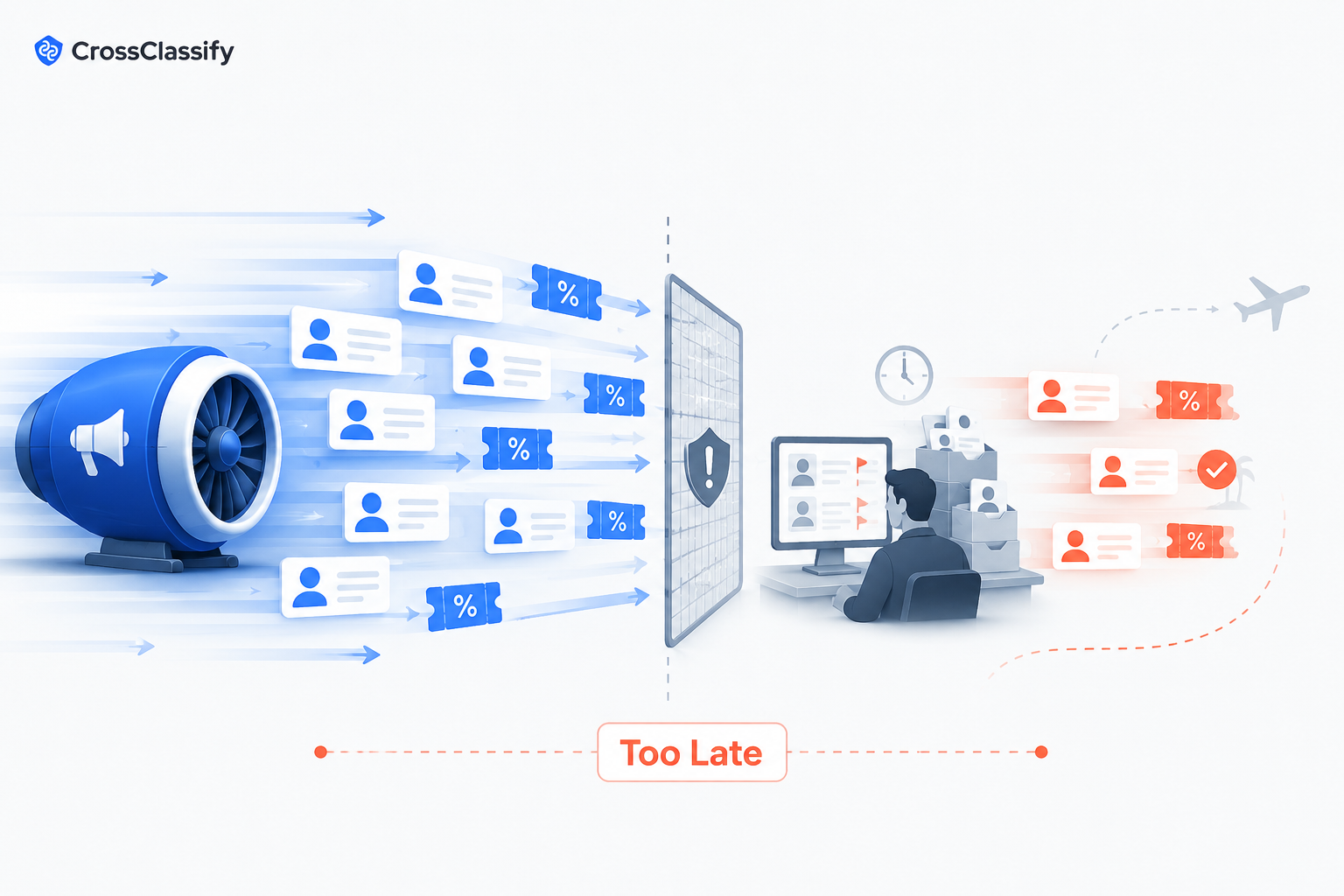
The main failure is speed mismatch. Marketing can launch a campaign quickly. Fraud teams may only see the abuse after suspicious claims are already redeemed.
Without risk visibility, teams often review accounts too late. They may also punish legitimate users because rules are too broad. For example, a same IP rule may catch a family, office, student housing, or public network. A device rule may catch shared devices. A velocity rule may catch genuine spikes from a successful campaign.
A better approach combines signals instead of depending on one rule.
What a Better Signup Bonus Protection Path Looks Like
Companies should map the full incentive journey:
- Signup
- First login
- Bonus eligibility
- Bonus claim
- Reward use
- Withdrawal, transfer, order, or redemption
- Post signup behavior
At each step, teams should decide which signals matter. Device reputation, behavior patterns, traffic source, referral relationship, geo consistency, account age, and velocity should work together.
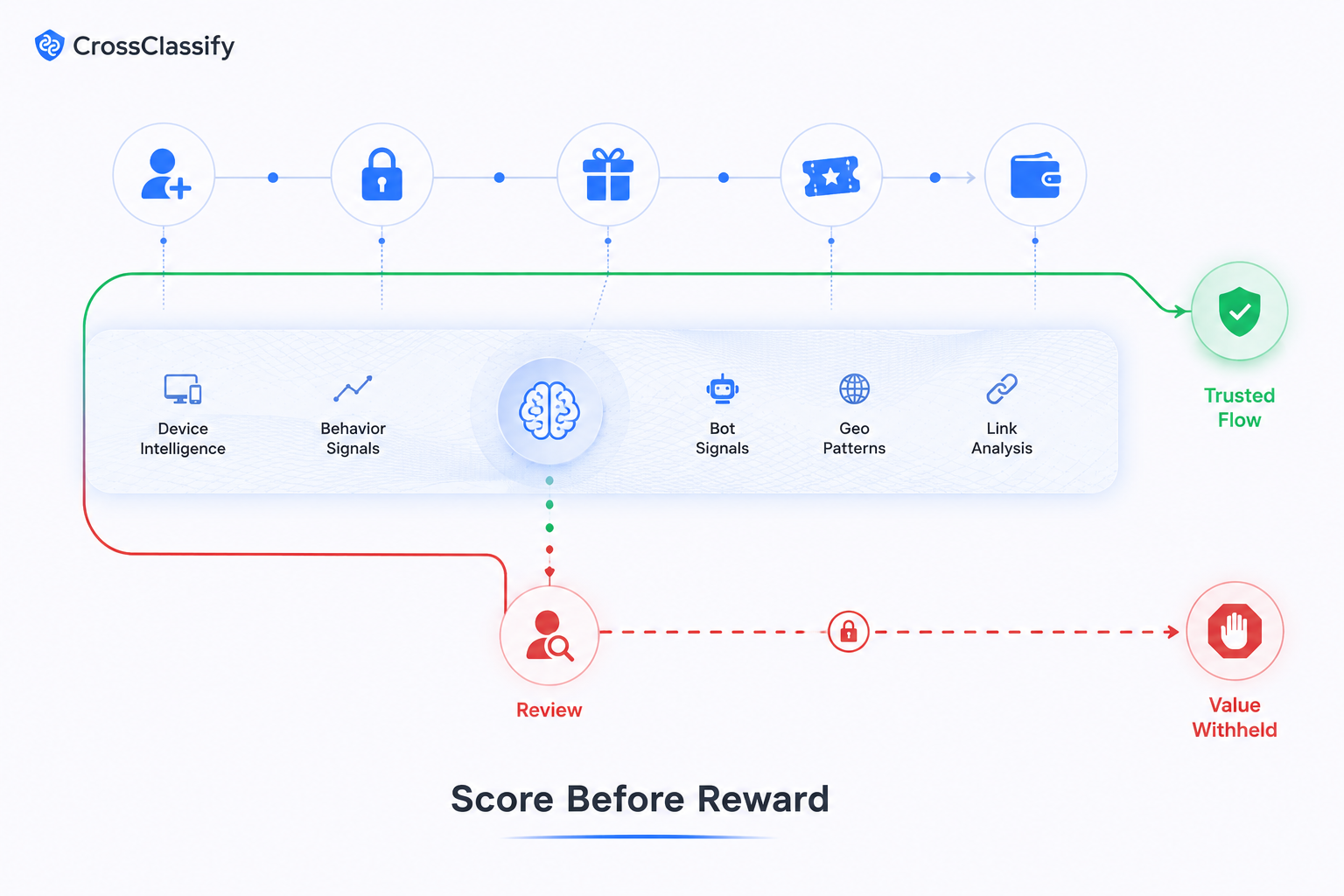
Use risk scoring before value release
Risk scoring helps teams review suspicious accounts before credits, coupons, or rewards become losses.
Keep trusted users moving
The goal is not more friction. The goal is smarter friction for users who show multiple risk signals.
Make review evidence explainable
Support and fraud teams need to know why an account looks risky.
Where CrossClassify Fits Naturally
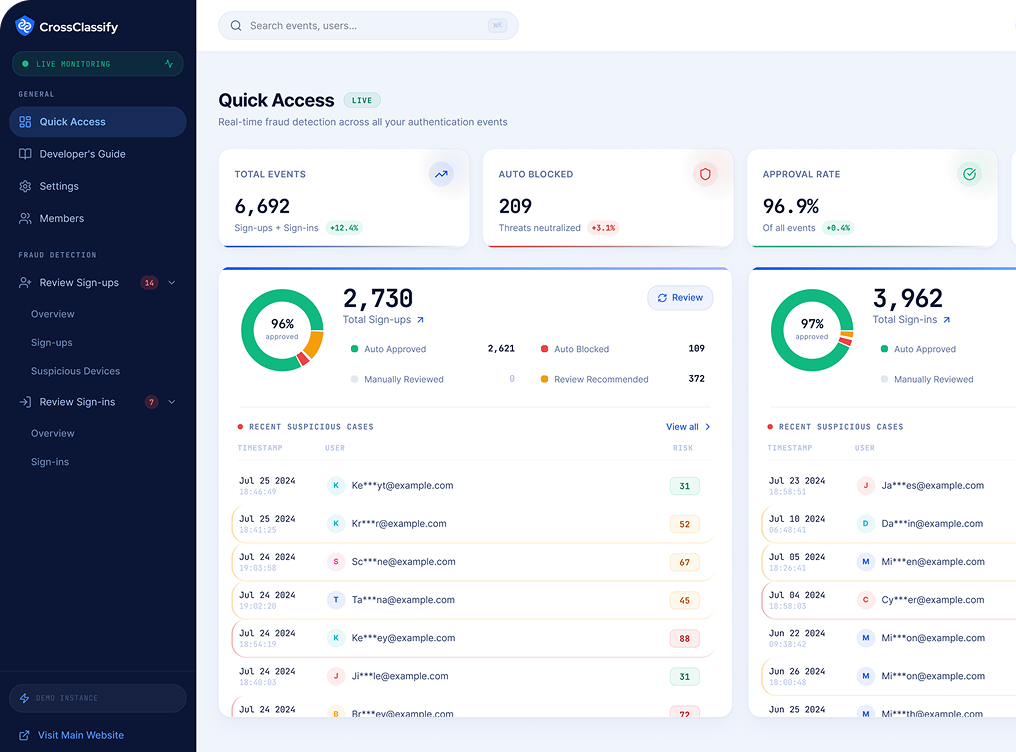
CrossClassify can support signup bonus abuse detection by analyzing device intelligence, behavioral signals, bot activity, geo patterns, link relationships, and risk scores across signup and early account activity.
When promotions attract fake new accounts, account opening fraud detection helps teams inspect risky signups before they mature into reward abuse. That gives growth and fraud teams a shared view of account quality.
CrossClassify does not replace human review. It helps teams prioritize suspicious accounts with clearer evidence.
Practical Example
A marketplace launches a first order discount. Many new users register with different emails but similar device characteristics. Orders are placed quickly, coupons are redeemed, and some users request refunds shortly after delivery.
Signup bonus abuse detection can help the team identify clusters before more credits are issued.
Conclusion
Signup bonus abuse is easiest to reduce before the reward is claimed. Once value leaves the business, review becomes recovery.
Companies that combine device intelligence, bot detection, behavior analysis, and risk scoring can protect signup incentives while keeping onboarding smooth for genuine users.
See How to Stop Bonus Abuse Before It Drains Your Growth Budget
CrossClassify detects suspicious reward claims before promotions turn into losses

Explore CrossClassify today
Detect and prevent fraud in real time
Protect your accounts with AI-driven security
Try CrossClassify for FREE—3 months
Share in
Related articles


Frequently asked questions
Let's Get Started
Create your free
account today
Discover how to secure your app against fraud using CrossClassify
No credit card required