Last Updated on 16 Jun 2026
Bonus Abuse Prevention: What Growth Leaders Should Know Before Scaling Promotional Campaigns
Share in
Introduction
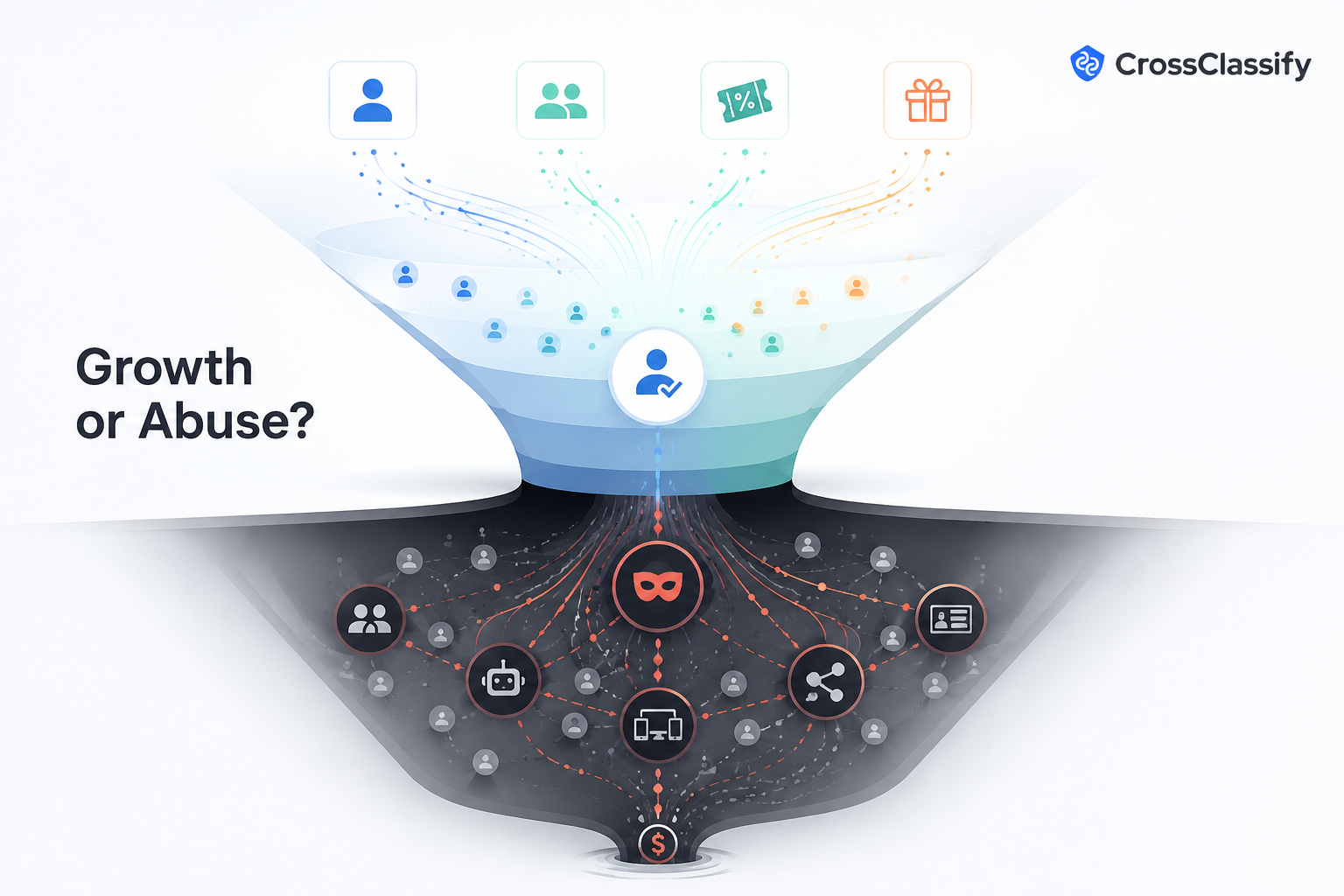
Promotional campaigns are built to accelerate growth. Signup bonuses, welcome offers, referral rewards, promo codes, free credits, cashback campaigns, and loyalty incentives can help companies attract new users and increase activation.
The problem starts when growth signals are polluted by abuse. A campaign may show strong signups, high referral activity, and fast reward claims, but a meaningful part of that activity may come from fake accounts, bonus hunters, bot generated users, duplicate accounts, or connected fraud rings.
That is why bonus abuse prevention should not be treated as a back office fraud issue. It is a growth quality issue, a campaign ROI issue, and a customer trust issue. MRC data shows that 57 percent of merchants report increasing refund and policy abuse, which reflects a wider pattern of customers and attackers exploiting business rules for financial advantage. (Merchant Risk Council)
Why Bonus Abuse Matters Now for Growth Workflows
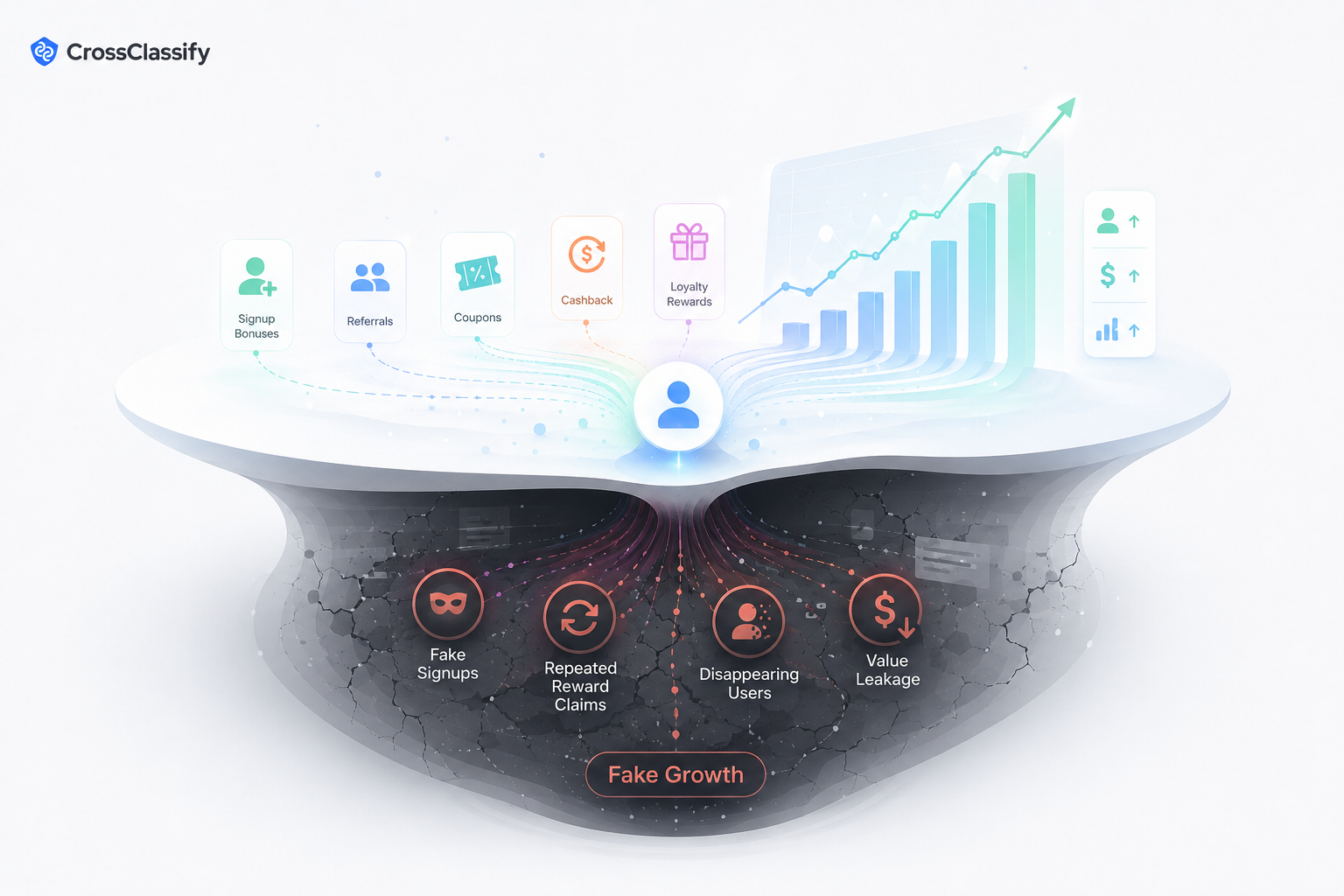
Promotions have become a core part of customer acquisition. Fintech apps use welcome credits. Marketplaces use referral rewards. Ecommerce brands use coupons and loyalty points. Gaming, betting, crypto, SaaS, and digital wallet businesses use incentives to move users from signup to first value.
As these campaigns scale, the business no longer needs only marketing analytics. It needs visibility into who is claiming rewards, whether those users are connected, whether devices are being reused, whether behavior looks human, and whether claims are happening too quickly.
Bonus abuse prevention matters because growth teams need to know whether campaign spend is producing real customers or just rewarding accounts that will disappear after extracting value.
The Fraud and Identity Risks Behind Bonus Abuse
Bonus abuse usually looks normal on the surface. One user signs up. Another enters a referral code. A third claims a coupon. A fourth activates a welcome offer.
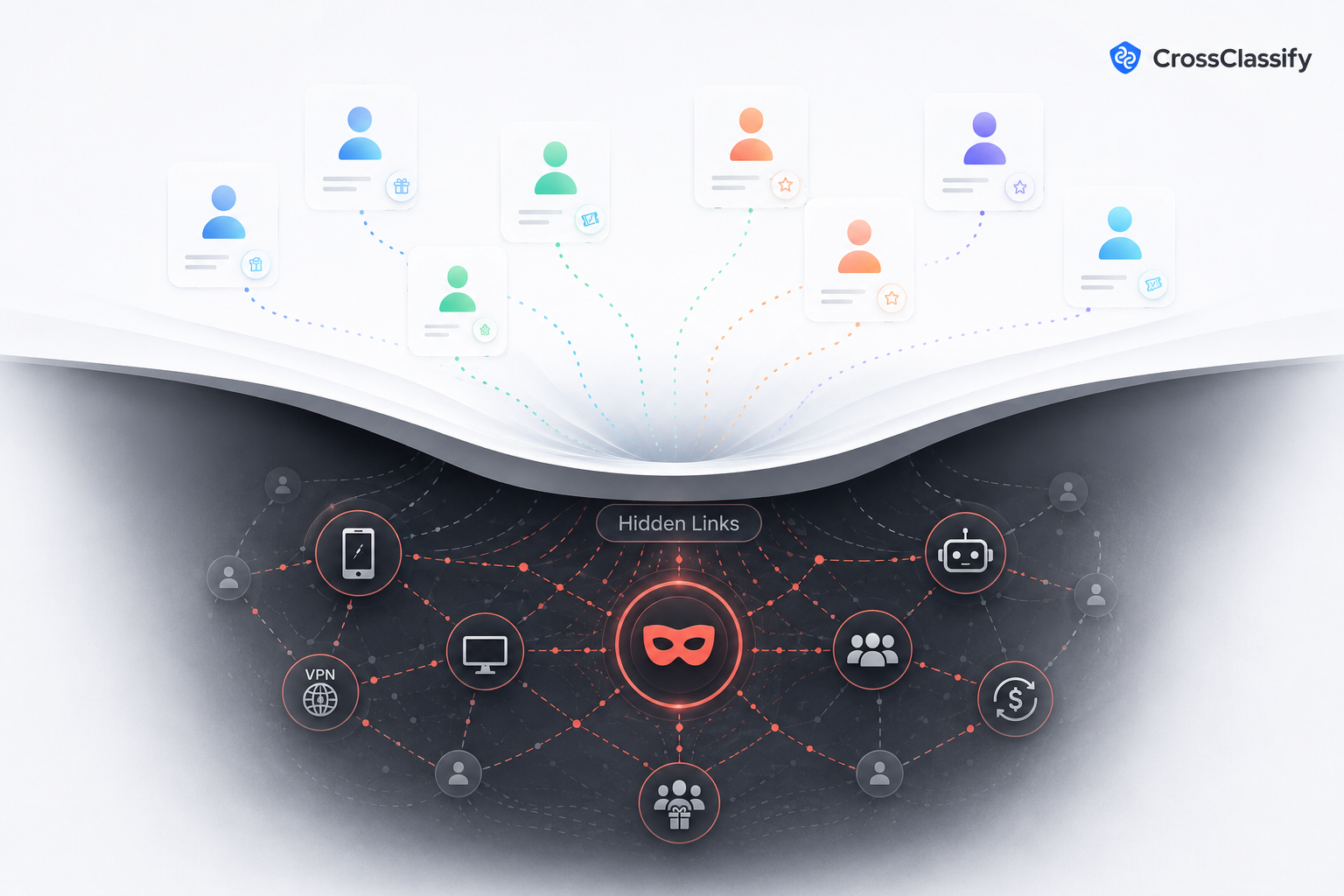
The risk is hidden in the pattern. Many accounts may share the same device family, browser setup, VPN source, behavioral rhythm, referral network, or redemption timing. Fraudsters may rotate emails, names, phone numbers, payment methods, and IP addresses to avoid basic rules.
Poor visibility creates several risks:
- Fake account creation
Fraudsters create new accounts to repeatedly claim the same incentive. - Multi accounting
One person or group controls many accounts that appear independent. - Referral farming
Connected users refer each other to manufacture reward payouts. - Bot driven bonus abuse
Scripts create accounts or test promo logic at scale. - Delayed abuse discovery
Teams find the fraud after credits, coupons, points, or cash value have already been used.
What Usually Goes Wrong Without Risk Visibility
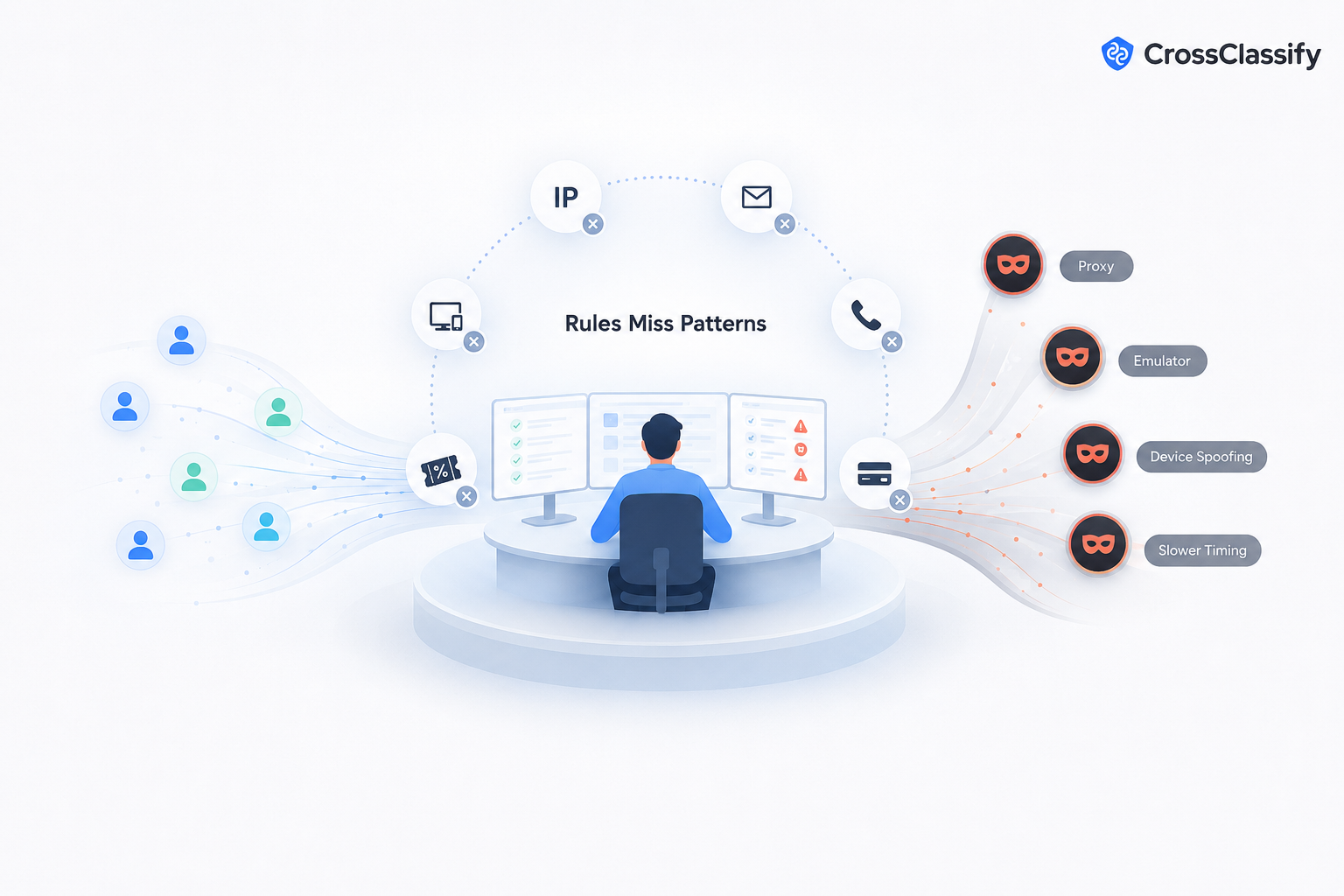
Many companies begin with simple rules. Same IP address. Same email domain. Same phone number. Same payment method. Same referral code pattern.
These rules help, but they are easy to bypass. Fraudsters use proxies, VPNs, disposable emails, emulators, device spoofing, synthetic identities, and slower timing to look more legitimate.
The operational problem becomes manual review. Teams export data, compare accounts, check devices, look at campaign sources, inspect account age, and debate whether to block, approve, or escalate. Meanwhile, genuine users may wait, fake users may move faster, and campaign data becomes less trustworthy.
What a Better Bonus Abuse Prevention Path Looks Like
A better path starts before the campaign scales.
Growth, product, fraud, and security teams should define what normal user behavior looks like for each incentive. They should decide which actions need review, which signals should increase risk, and which moments require step up verification or reward delay.
A strong bonus abuse prevention program should include:
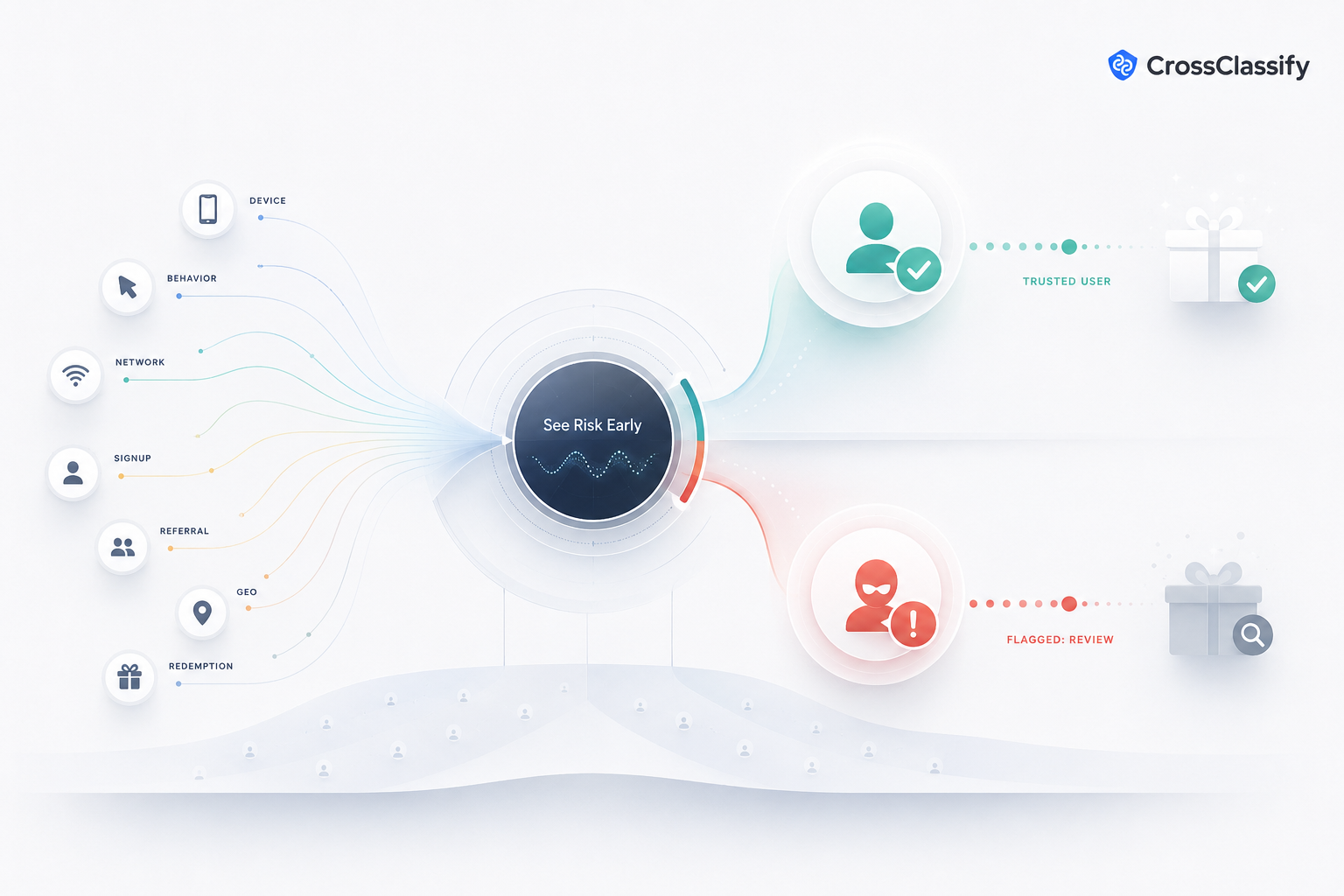
- Signal collection before reward release
Teams should collect device, behavior, network, signup, referral, and redemption signals before value is approved. - Risk scoring by campaign context
The same action may be normal in one campaign and suspicious in another. Risk scoring should adapt to offer type, geography, traffic source, account age, and reward value. - Connected account visibility
Fraud teams should see relationships between accounts, devices, behaviors, referral links, and repeated redemption patterns. - Human review support
The goal is not blind blocking. The goal is clearer review priority and better evidence.
Where CrossClassify Fits Naturally
CrossClassify can support bonus abuse prevention by helping teams analyze device intelligence, behavioral biometrics, bot signals, link analysis, geo patterns, and risk scores around signup, login, referral, reward, and redemption journeys.
For campaigns that attract suspicious signups, account opening fraud detection can help teams understand risk before a new account becomes a reward drain. This matters because bonus abuse often starts as account creation abuse before it becomes a campaign loss.
CrossClassify is not a coupon system, referral platform, or marketing analytics replacement. It is a fraud and trust layer that helps teams decide which accounts deserve attention before campaign spend becomes unrecoverable.
Practical Example
A fintech wallet launches a welcome credit. Signups increase quickly, but many users claim the reward and transfer value out within minutes. The growth team sees acquisition. The finance team sees cost. The fraud team sees repeated devices, abnormal signup speed, VPN activity, and similar behavior across accounts.
With better risk visibility, the business can keep the campaign live while reviewing the riskiest accounts first.
Conclusion
Bonus abuse prevention is not about stopping promotions. It is about making promotions safer to scale.
When companies connect signup behavior, devices, referral relationships, bot activity, and reward timing, they can protect campaign spend without punishing every genuine user. The strongest growth campaigns are not just attractive. They are measurable, explainable, and protected from abuse.
See How to Stop Bonus Abuse Before It Drains Your Growth Budget
CrossClassify detects suspicious reward claims before promotions turn into losses

Explore CrossClassify today
Detect and prevent fraud in real time
Protect your accounts with AI-driven security
Try CrossClassify for FREE—3 months
Share in
Related articles


Frequently asked questions
Let's Get Started
Create your free
account today
Discover how to secure your app against fraud using CrossClassify
No credit card required