Last Updated on 04 Jul 2026
Shared Device Patterns in Bonus Abuse: The Early Signal Before LTV Drops
Share in
Introduction
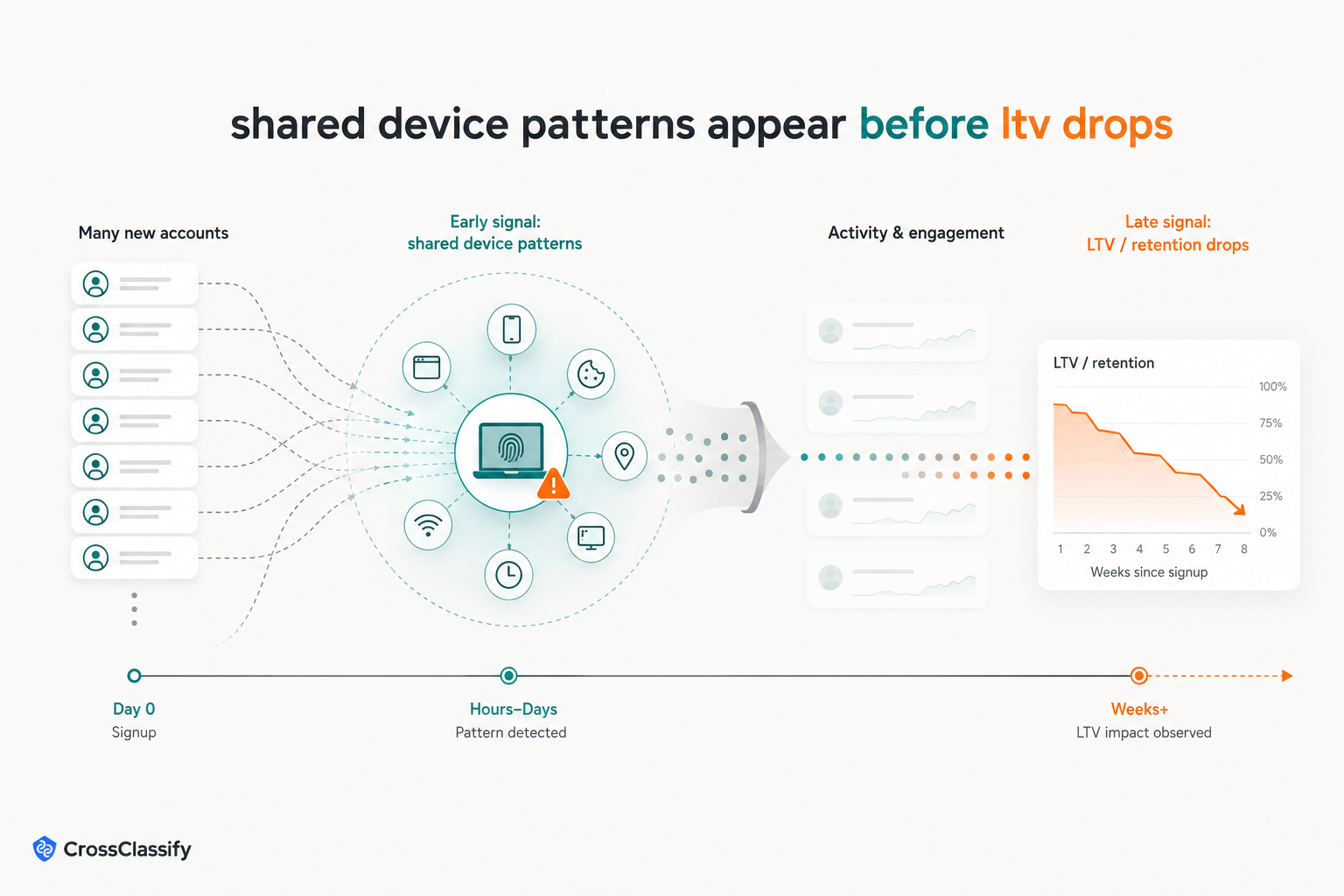
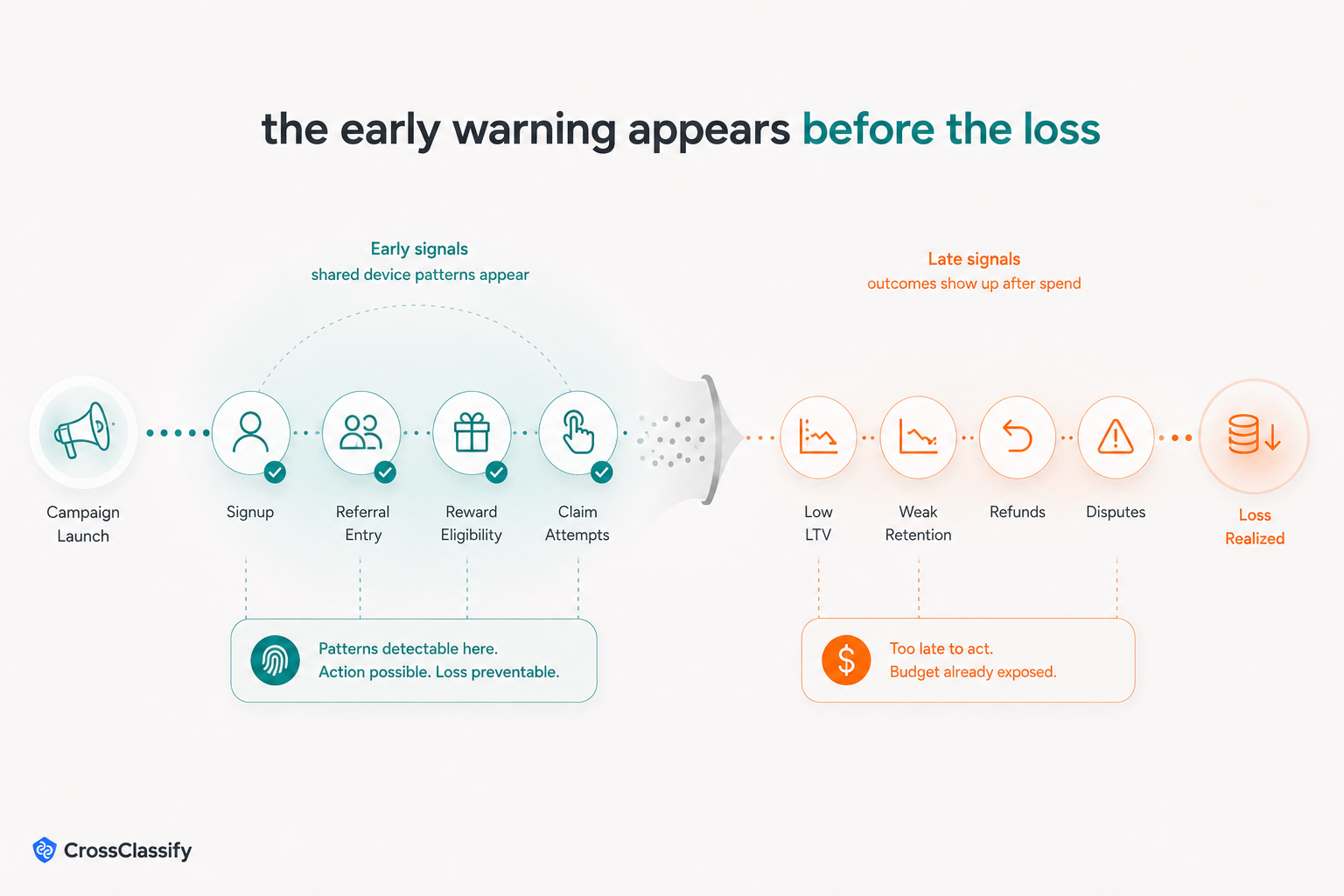
LTV is a late signal.
By the time a cohort shows weak retention, low repeat use, or poor payback, the campaign may already have spent its budget.
Shared device patterns often appear much earlier.
When many supposedly new users share similar device, browser, environment, or session characteristics, the business may be looking at multi accounting, fake signup abuse, referral farming, or organized bonus abuse.
That is why device intelligence should not be seen only as a fraud control. It can also be an early growth quality signal.
Why Device Patterns Matter Now
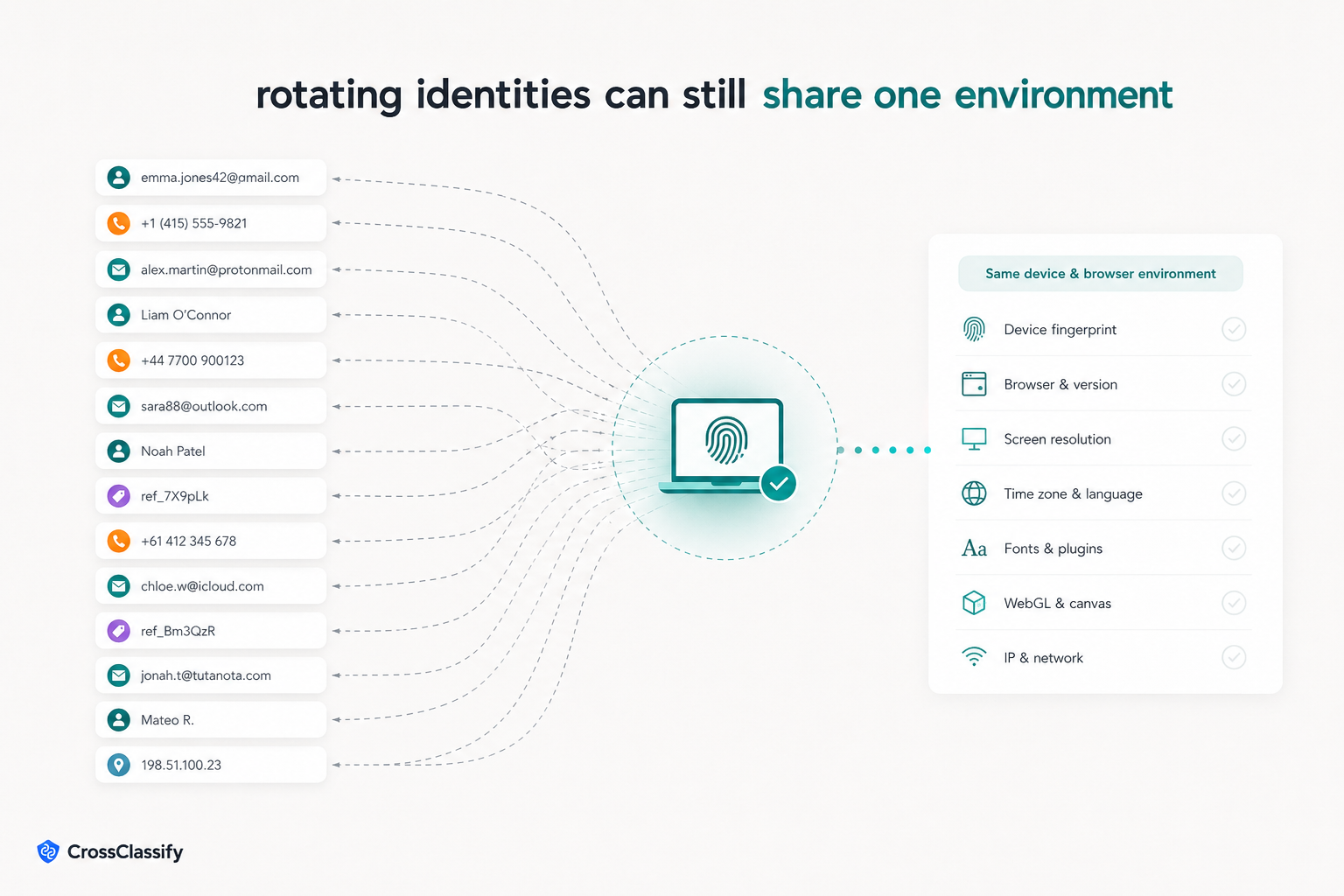
Fraudsters can rotate emails, phone numbers, names, IP addresses, referral codes, and payment clues. They can slow down activity to avoid simple velocity rules.
But repeated device and browser characteristics can still reveal hidden relationships across accounts.
This matters because bonus abuse is often coordinated. Research on promotion abuse describes it as group based fraud where spatial and temporal relationships can improve detection. (arXiv)
The Fraud Risks Behind Shared Devices
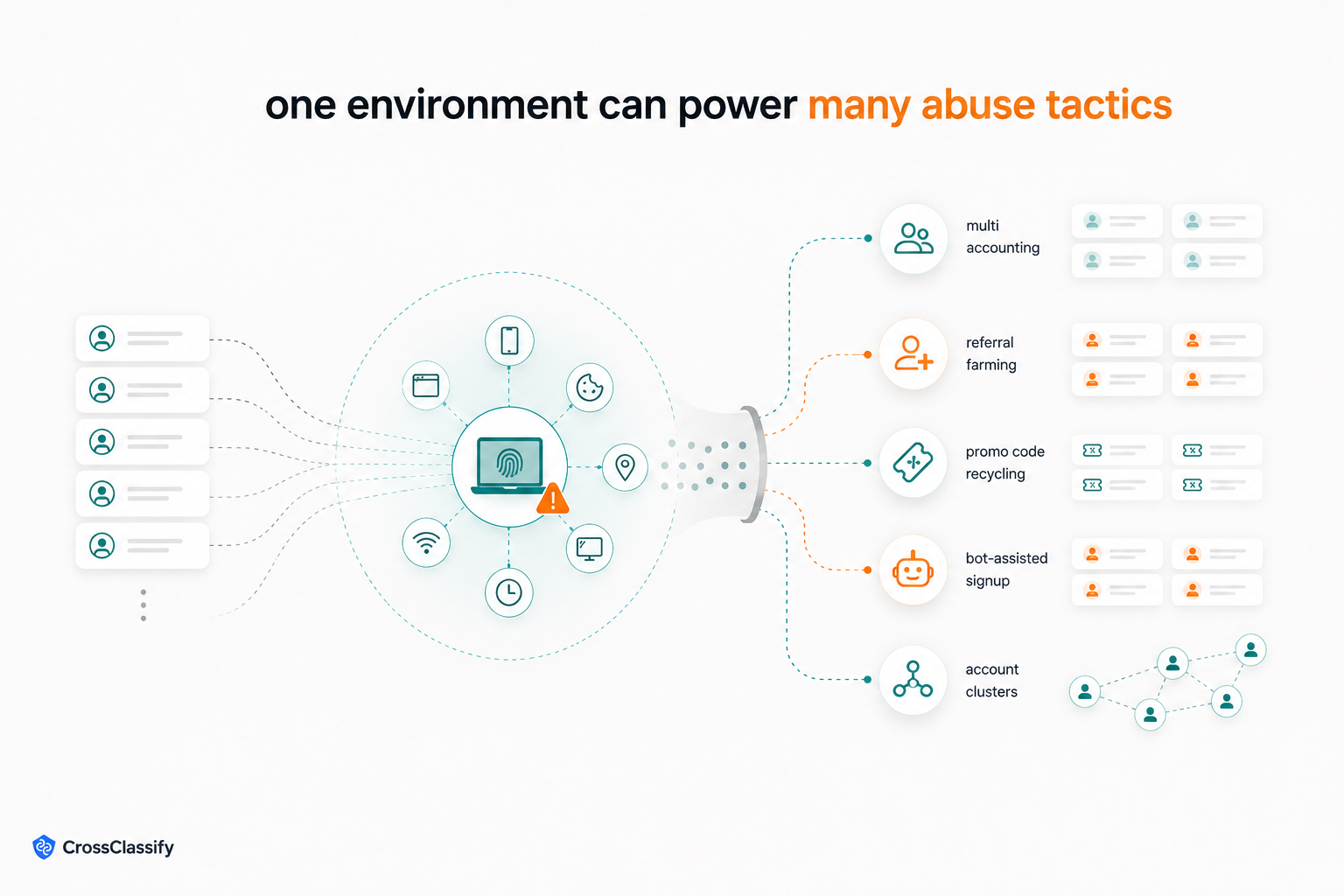
Shared device patterns can indicate:
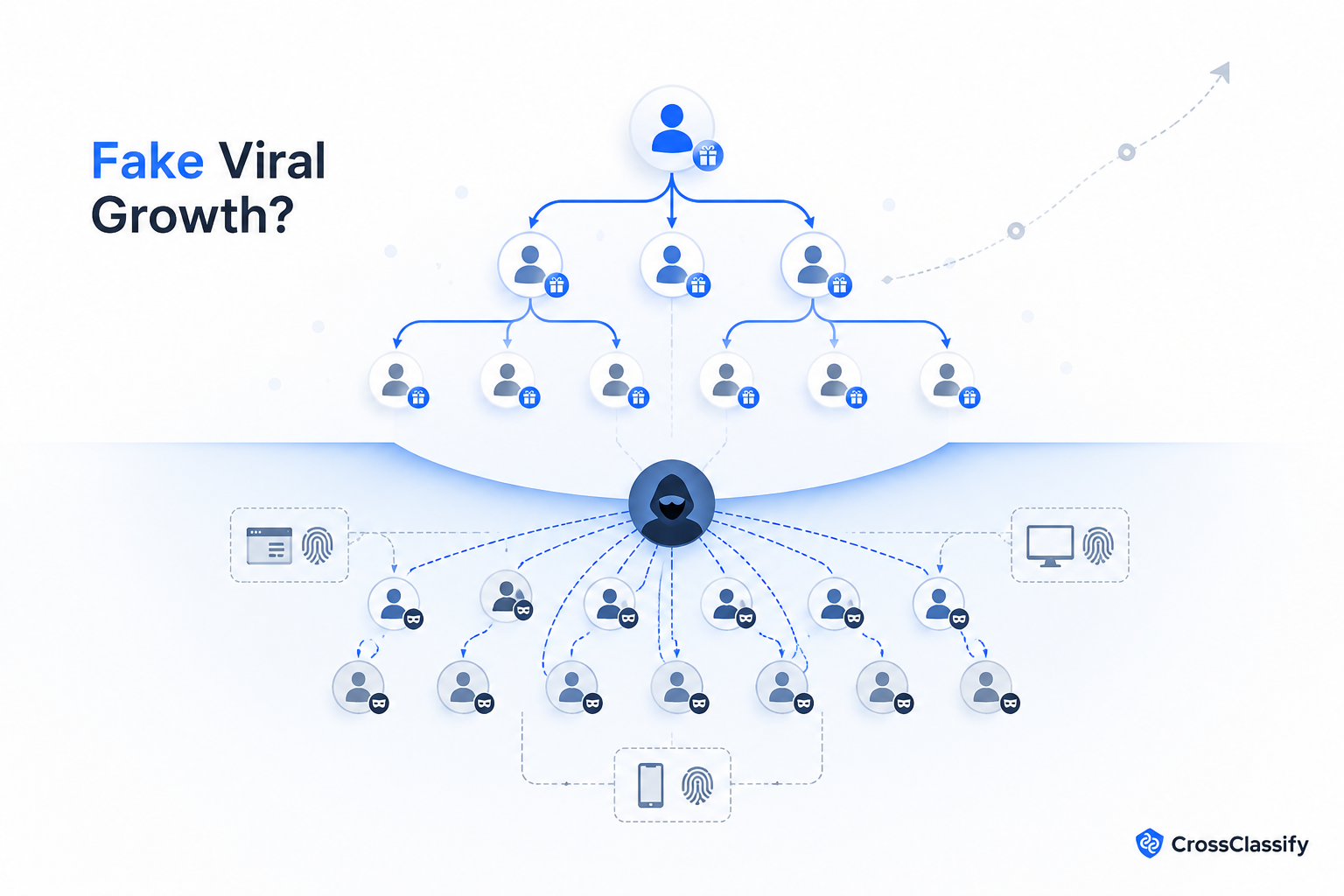
- Multi accounting. One user controls multiple accounts to claim the same reward.
- Referral farming. A user or group creates connected accounts to manufacture referral bonuses.
- Promo code recycling. Repeated accounts use the same or similar environments to claim codes.
- Bot assisted signup. Automation creates many accounts from controlled environments.
- Account clusters. Accounts that look different in profile data are connected through device or behavior patterns.
What Usually Goes Wrong
Companies often wait for financial or retention outcomes.
They look for low LTV, poor conversion to repeat use, suspicious withdrawal patterns, refund spikes, or support disputes.
Those are useful signals, but they arrive after value has already been exposed.
Shared device patterns can appear at signup, login, reward eligibility, referral entry, or claim attempts. If those signals are not connected to campaign monitoring, teams miss the early warning.
What a Better Path Looks Like
A better path uses device signals before reward approval.
Teams should monitor:
- Repeated devices across new accounts.
- Similar browser environments.
- Unusual device changes before claim.
- Device reuse across referral chains.
- Device clusters by campaign source.
- Device risk combined with behavior and timing.
- Device repetition followed by fast redemption.
The important point is combination. A shared device alone may not prove abuse. A shared device plus fast signup, referral loops, VPN use, and immediate reward claim is much stronger.
Where CrossClassify Fits Naturally
CrossClassify can help teams analyze device intelligence alongside behavior, bot, geo, and account relationship signals.
When repeated environments appear across accounts, device fingerprinting can help identify hidden relationships before campaign quality declines. This helps fraud and growth teams review suspicious clusters earlier.
CrossClassify does not replace business judgment. It gives teams better evidence for risk based decisions.
Practical Example
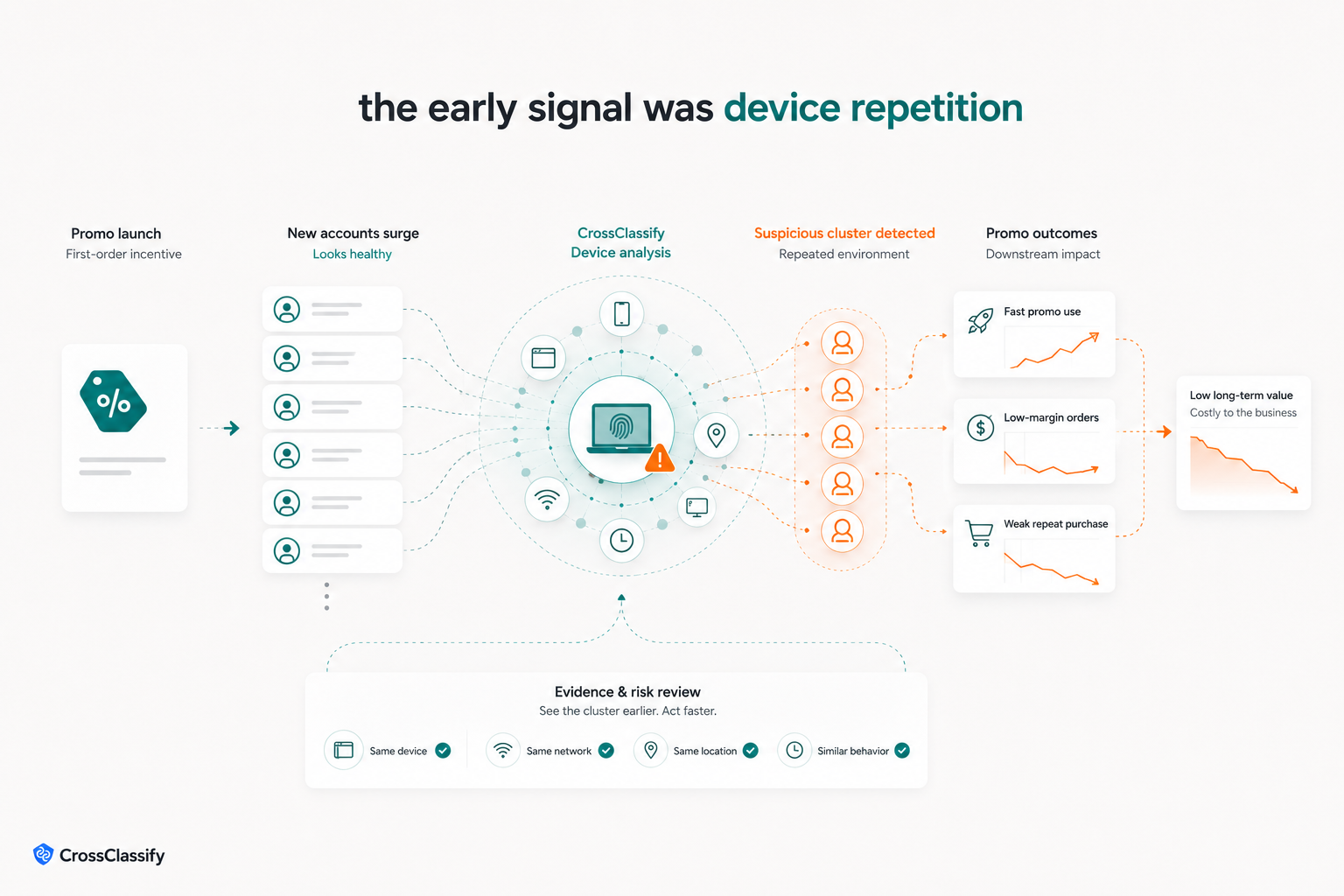
A marketplace launches a first order promo. New accounts come from different emails and different names. At first, the campaign looks healthy.
Device analysis shows many accounts share similar browser and device characteristics. Those accounts also use the promo quickly, place low margin orders, and show weak repeat purchase behavior.
The early signal was not LTV. It was device repetition.
Conclusion
Shared device patterns are one of the cleanest early signs of bonus abuse.
Retention and LTV matter, but they often confirm the problem after the damage is done. Device intelligence helps teams see connected accounts earlier, prioritize review, and protect campaign spend before fake users become expensive lessons.
See How to Stop Bonus Abuse Before It Drains Your Growth Budget
CrossClassify detects suspicious reward claims before promotions turn into losses

Explore CrossClassify today
Detect and prevent fraud in real time
Protect your accounts with AI-driven security
Try CrossClassify for FREE—3 months
Share in
Related articles


Frequently asked questions
Let's Get Started
Create your free
account today
Discover how to secure your app against fraud using CrossClassify
No credit card required