Last Updated on 02 Jul 2026
Bonus Abuse as a Growth Quality Problem: When Fake Accounts Distort Campaign Decisions
Share in
Introduction
Bonus abuse is often treated as a fraud team problem.
That framing is too narrow.
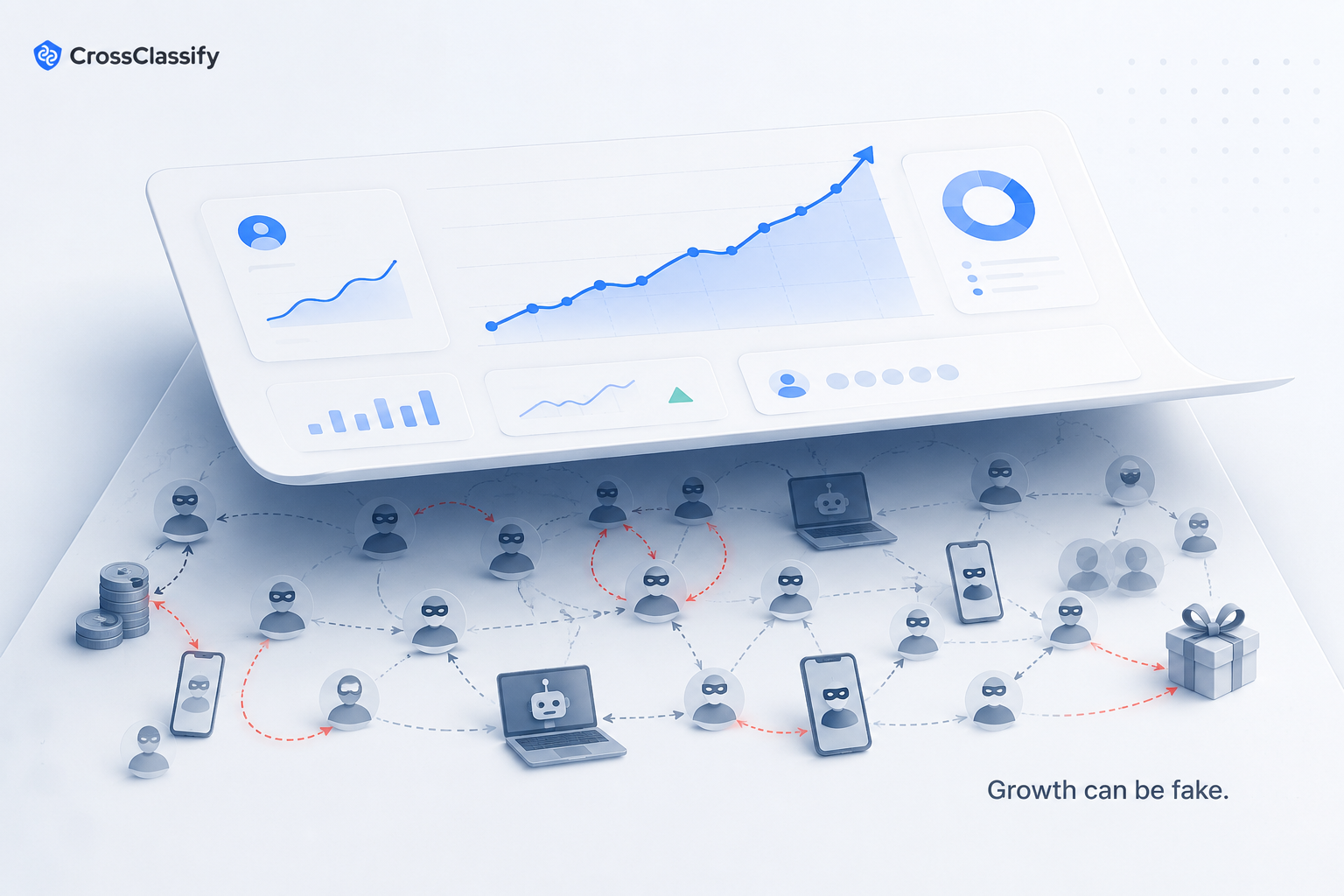
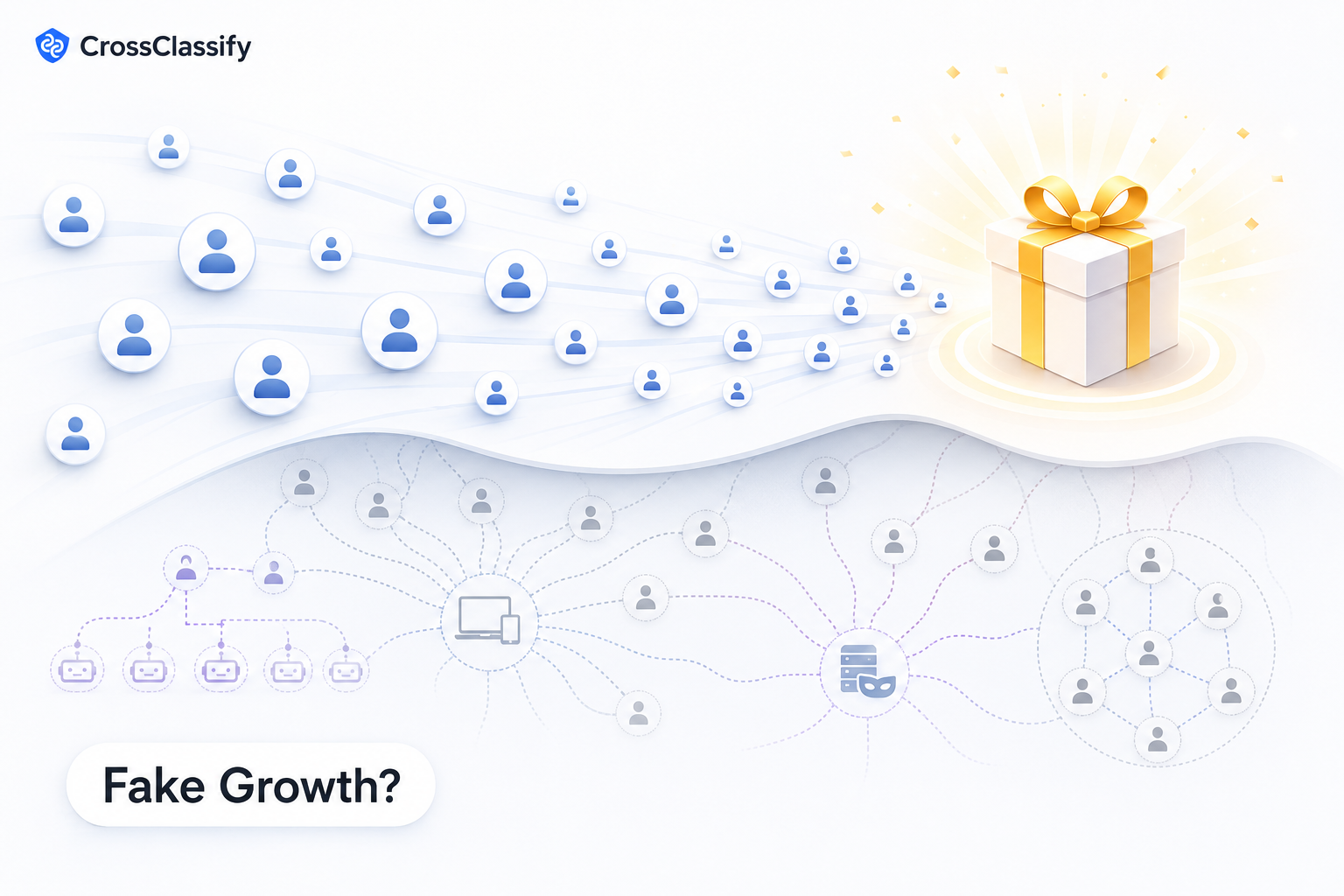
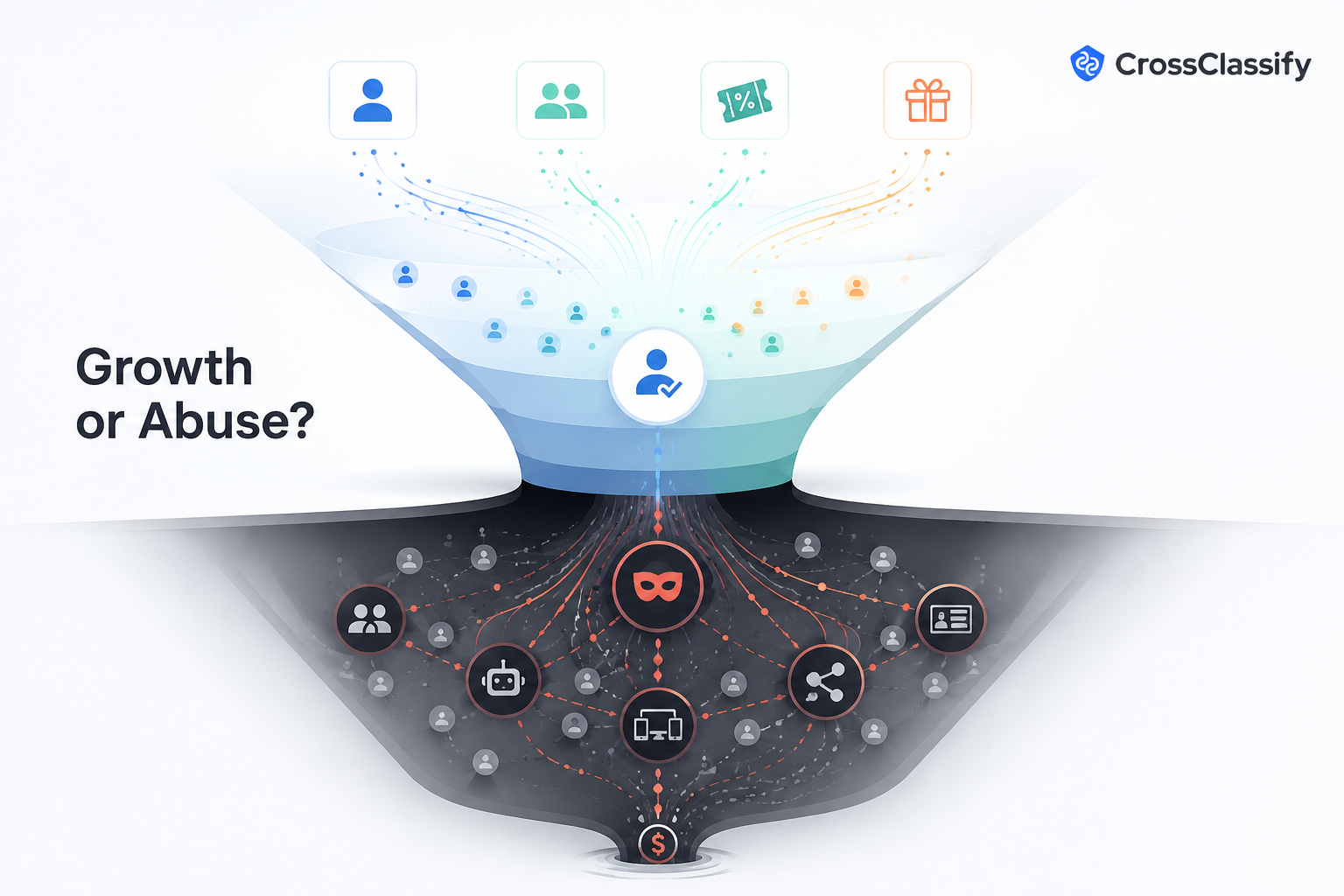
When fake accounts claim signup bonuses, referral rewards, promo codes, free credits, or loyalty incentives, they do not only create fraud loss. They also damage the quality of growth data.
The campaign may show more signups. The referral channel may look stronger. Activation may rise. Cost per acquisition may appear acceptable. But if the users are fake, repeated, automated, or connected, the business is learning the wrong lesson.
The real risk is that growth teams optimize toward the fraud.
Why Bonus Abuse Matters Now for Growth Teams
Modern growth teams are measured by acquisition, activation, referral performance, retention, CAC, LTV, and payback period.
Bonus abuse can distort all of these.
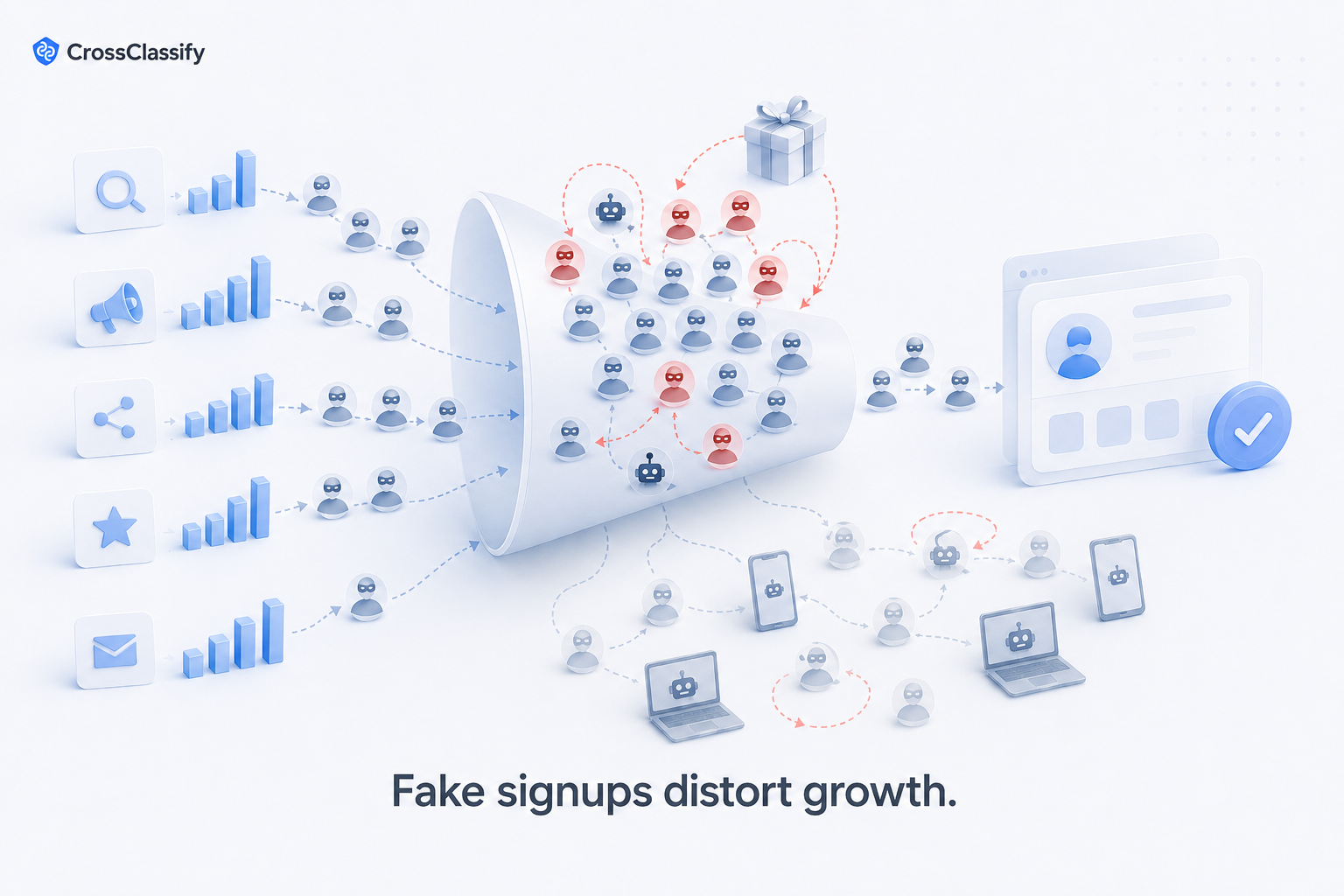
- A fake account can count as a signup.
- A repeated user can count as a new customer.
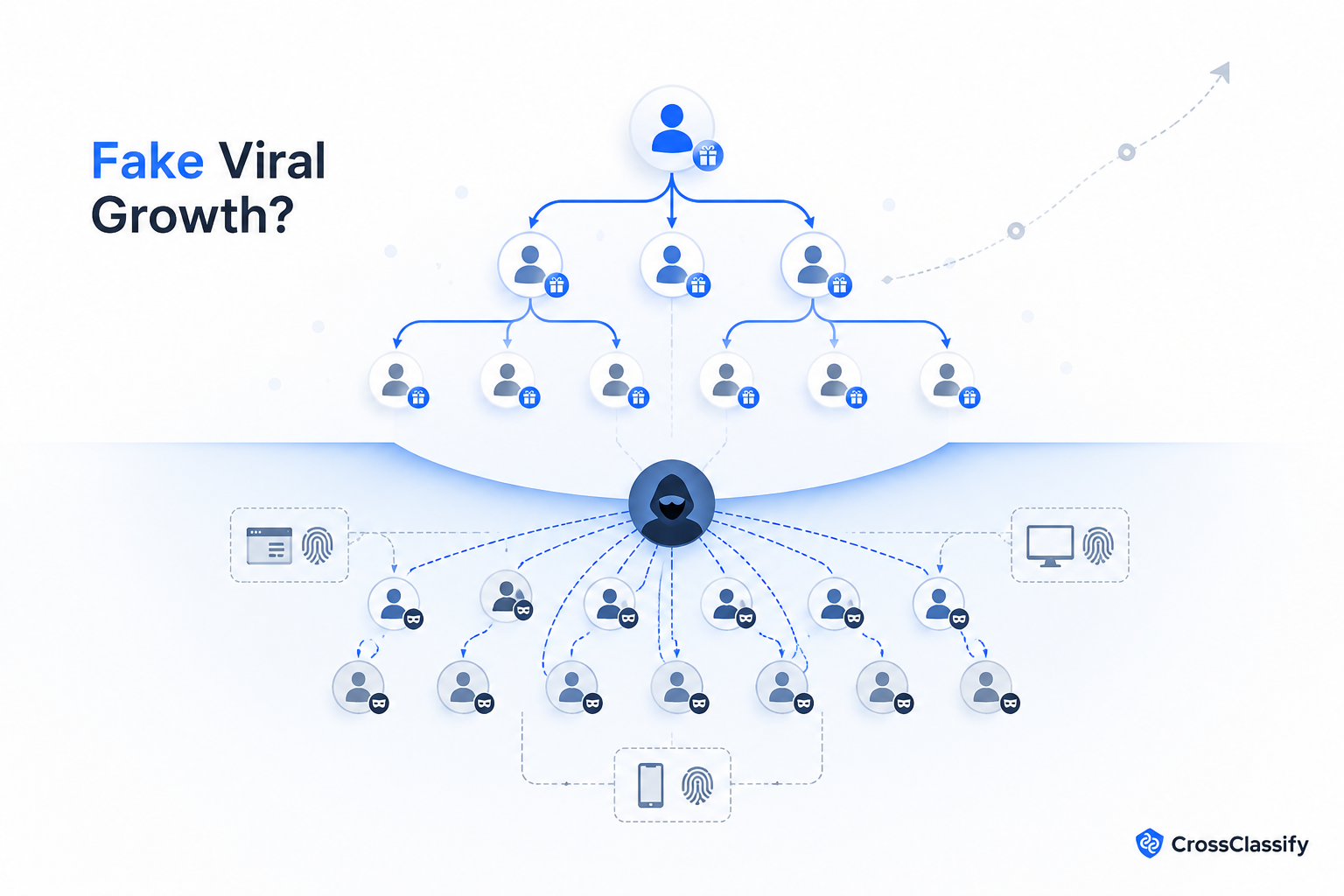
- A referral farm can count as organic growth.
- A bot can count as campaign traffic.
- A bonus hunter can count as activation.
If the business does not separate real users from abusive users, campaign decisions become weaker.
Promotion abuse is also increasingly described as group based, which means the account level view may not be enough. Recent research on promotion abuse found that abuse can involve coordinated patterns across users, transactions, space, and time, rather than isolated bad accounts. The PromoGuardian research on arXiv describes promotion abuse fraud as group based and shows why spatial and temporal relationships matter.
The Fraud and Identity Risks Behind Growth Quality Damage
Bonus abuse often starts with identity ambiguity.
The business does not know whether the user is genuinely new, whether the account is connected to other accounts, whether the device has appeared before, whether the session looks automated, or whether the user will become valuable after the reward.
This creates several risks:
- Fake acquisition. The company pays to acquire users who were never real prospects.
- False activation. A reward claim is counted as activation, even when the user has no intent to stay.
- Referral distortion. Referral campaigns appear to work because connected accounts keep inviting each other.
- Budget misallocation. Growth teams put more money into channels that attract abuse.
- Delayed learning. The retention or LTV gap appears after the campaign has already spent too much.
What Usually Goes Wrong
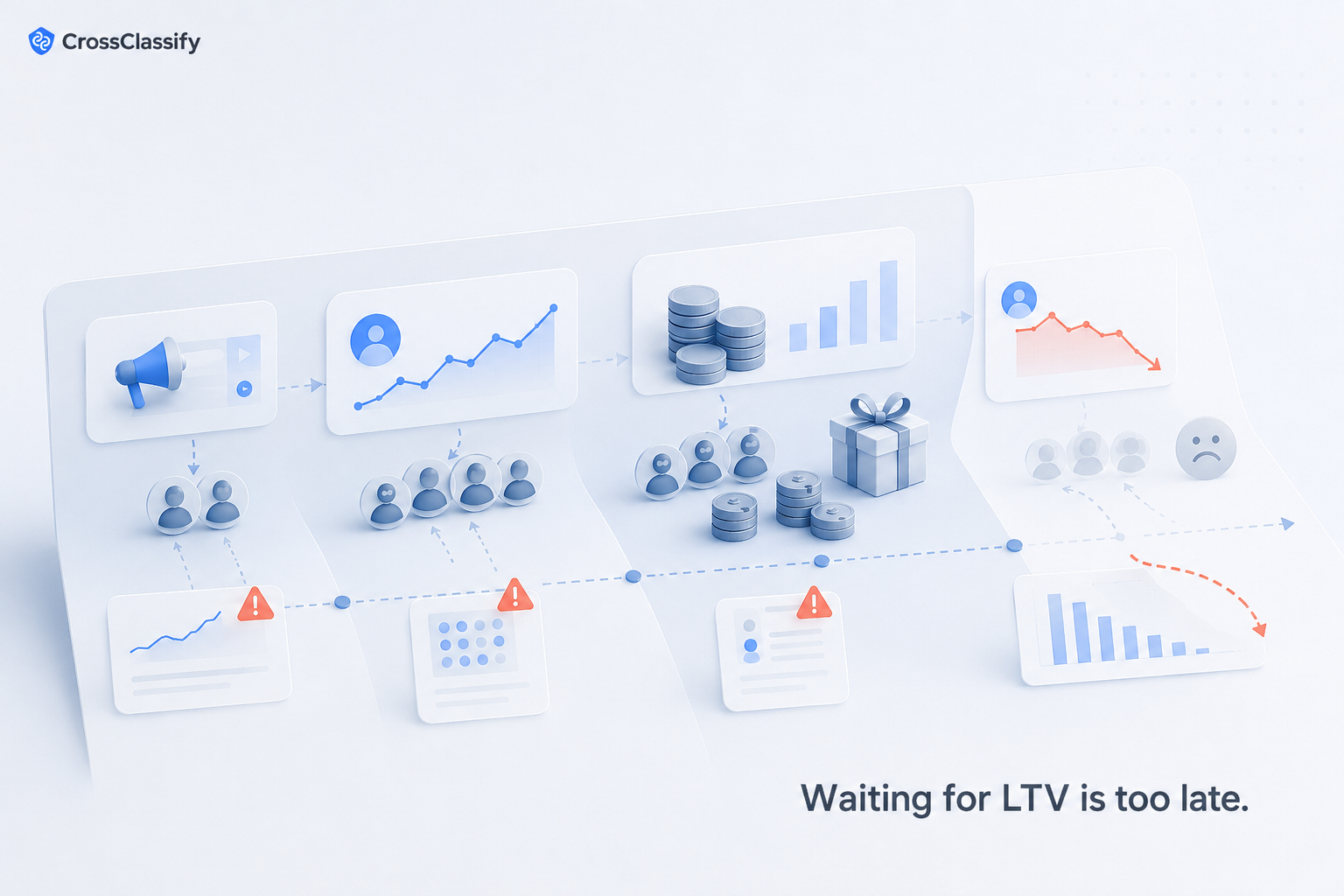
The biggest mistake is waiting for retention data to prove the problem.
By the time the LTV gap appears, the business may have already increased spend, expanded the offer, rewarded fake referrals, and trained the growth team to double down on the wrong traffic source.
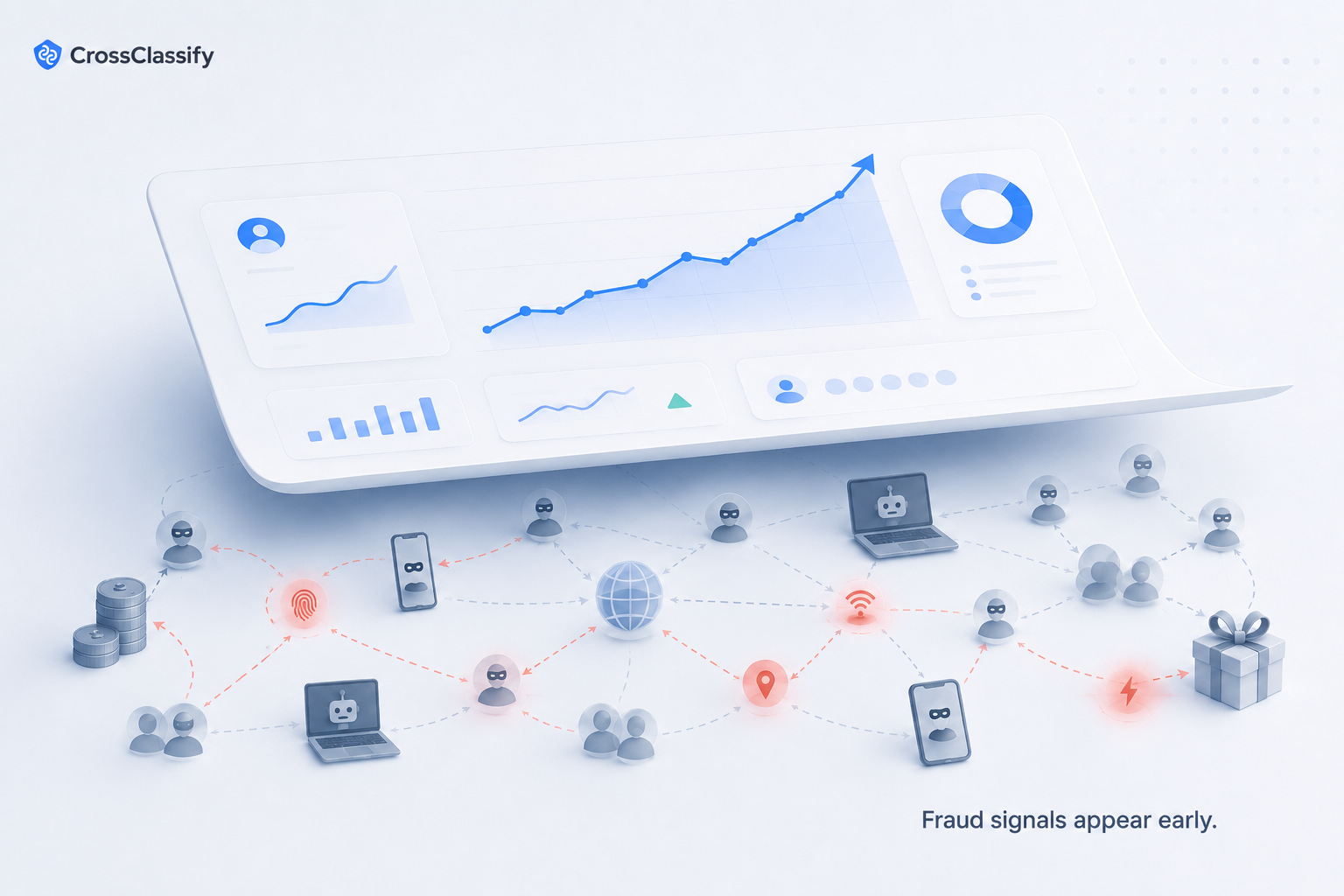
Fraud teams may already see the warning signs. Shared devices. Similar behavior. VPN patterns. Fast reward claims. Repeated account creation. But if those signals stay inside the fraud queue, growth teams keep optimizing based on polluted numbers.
Bonus abuse should become a shared growth quality metric, not only a fraud loss line item.
What a Better Path Looks Like
A better path connects fraud visibility with growth reporting.
Growth teams should not only ask:
- How many users signed up?
- How many claimed the bonus?
- How many referrals converted?
They should also ask:
- How many new users looked risky?
- Which channels produced repeated devices?
- Which referral cohorts had connected account patterns?
- Which users claimed value but showed weak retention?
- Which campaigns produced suspicious behavior before LTV dropped?
This turns fraud signals into business signals.
Where CrossClassify Fits Naturally
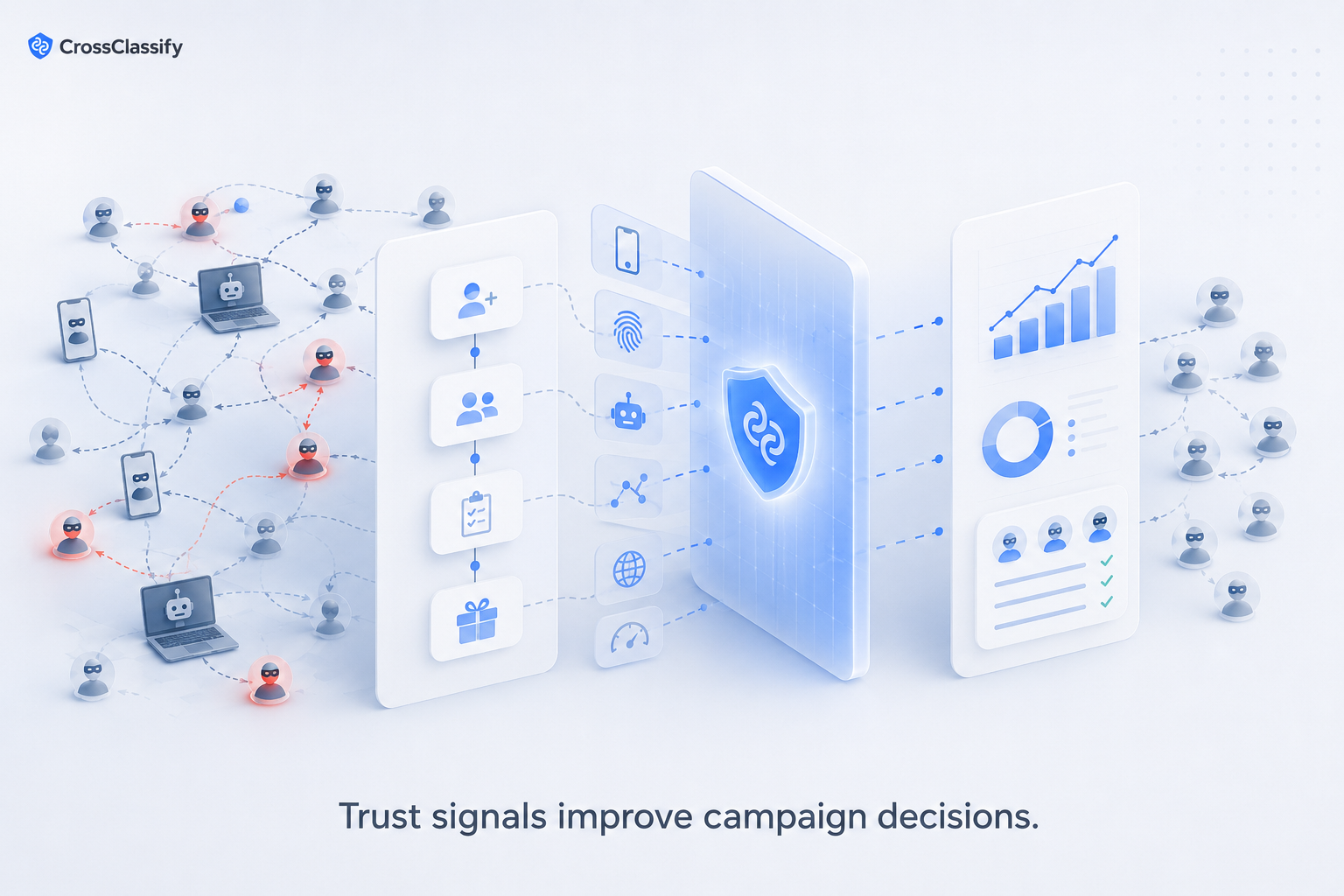
CrossClassify can help teams connect device intelligence, behavioral biometrics, bot detection, link analysis, geo signals, and risk scoring to signup, referral, claim, and redemption journeys.
When fake accounts are polluting campaign numbers, account opening fraud detection can help teams identify risky new accounts before they are counted as clean growth. This gives growth and fraud teams a shared view of acquisition quality.
CrossClassify is not a growth analytics platform. It helps teams understand whether the users behind growth metrics look legitimate, suspicious, automated, or connected.
Practical Example
A fintech launches a welcome bonus. Signups rise sharply from one paid channel. The campaign looks successful for two weeks.
The fraud team notices repeated devices, similar signup behavior, and fast reward withdrawals. The growth team sees low CAC and scales spend. One month later, the cohort has poor retention and weak LTV.
The problem was visible early, but only to the fraud team.
Conclusion
Bonus abuse is a growth quality problem because it teaches the business the wrong lesson.
If fake accounts inflate activation and referral metrics, teams may scale the exact channel that is draining budget. The strongest campaigns connect growth data with fraud signals early, before the LTV curve exposes what the device and behavior patterns already showed.
See How to Stop Bonus Abuse Before It Drains Your Growth Budget
CrossClassify detects suspicious reward claims before promotions turn into losses

Explore CrossClassify today
Detect and prevent fraud in real time
Protect your accounts with AI-driven security
Try CrossClassify for FREE—3 months
Share in
Related articles
Frequently asked questions
Let's Get Started
Create your free
account today
Discover how to secure your app against fraud using CrossClassify
No credit card required