Last Updated on 20 Jun 2026
Referral Bonus Abuse: How to Detect Referral Farming and Connected Accounts
Share in
Introduction
Referral campaigns work because trust spreads through people. A customer invites a friend. The friend signs up. Both receive a reward. The business gets a lower cost acquisition channel.
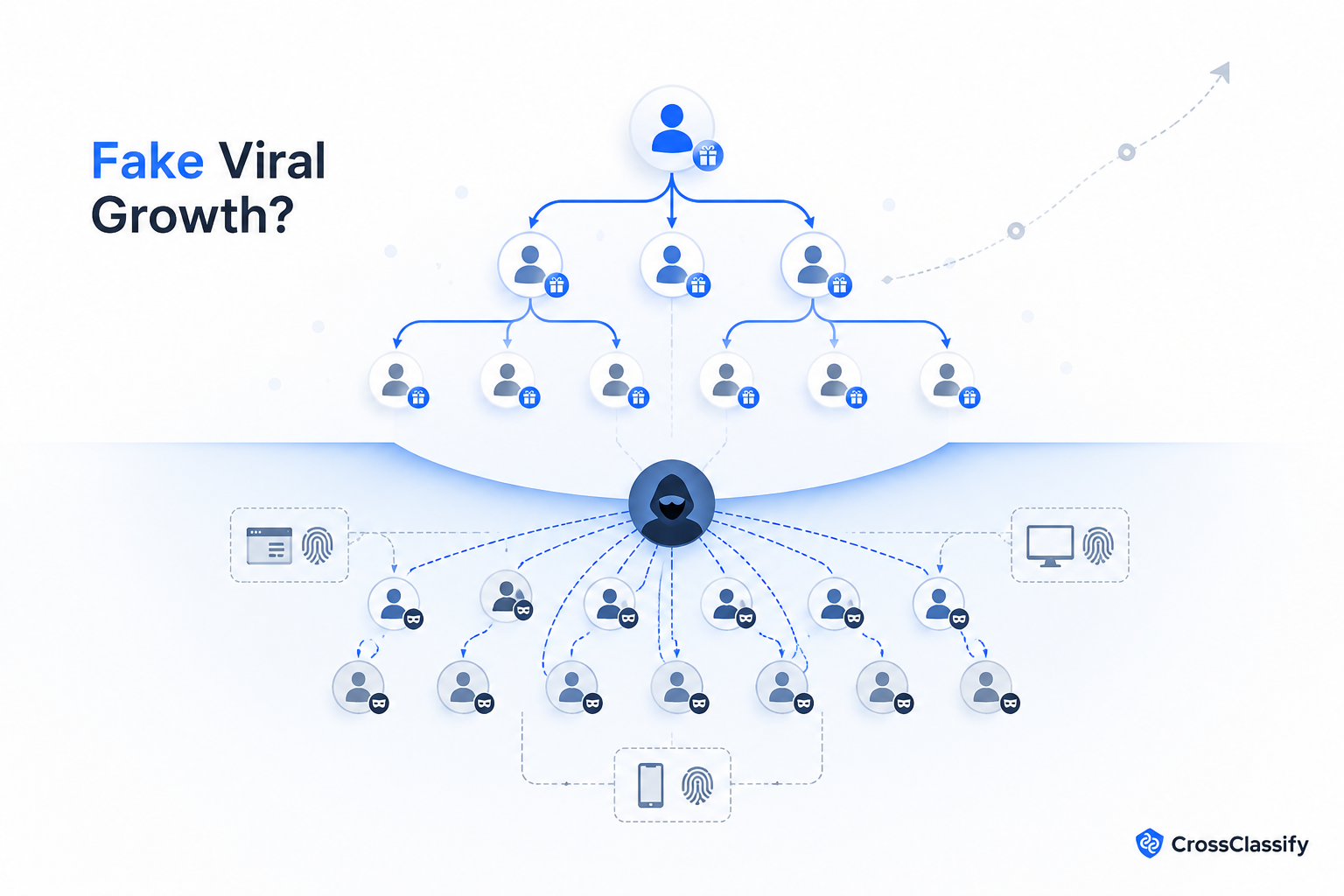
Referral bonus abuse breaks that logic. Instead of real users inviting real contacts, one person or group creates a network of controlled accounts to manufacture rewards.
The result can look like viral growth, but the business is paying for account relationships that do not represent genuine demand.
Why Referral Programs Matter Now
Referral programs are attractive because they can reduce acquisition cost and increase activation. They are common in fintech, marketplaces, ecommerce, gaming, betting, crypto, SaaS, delivery, loyalty, and digital wallet products.
But referral programs also create a business rule that fraudsters can exploit. If account A invites account B and both receive value, attackers only need to create accounts that appear separate enough to pass review.
As fraud and policy abuse rise across ecommerce, teams need to treat referral growth as both a marketing channel and a risk surface. MRC reports that 47 percent of merchants identify refund abuse as the top fraud attack overall, and 57 percent report increasing refund and policy abuse. (Merchant Risk Council)
The Fraud Risks Behind Referral Bonus Abuse
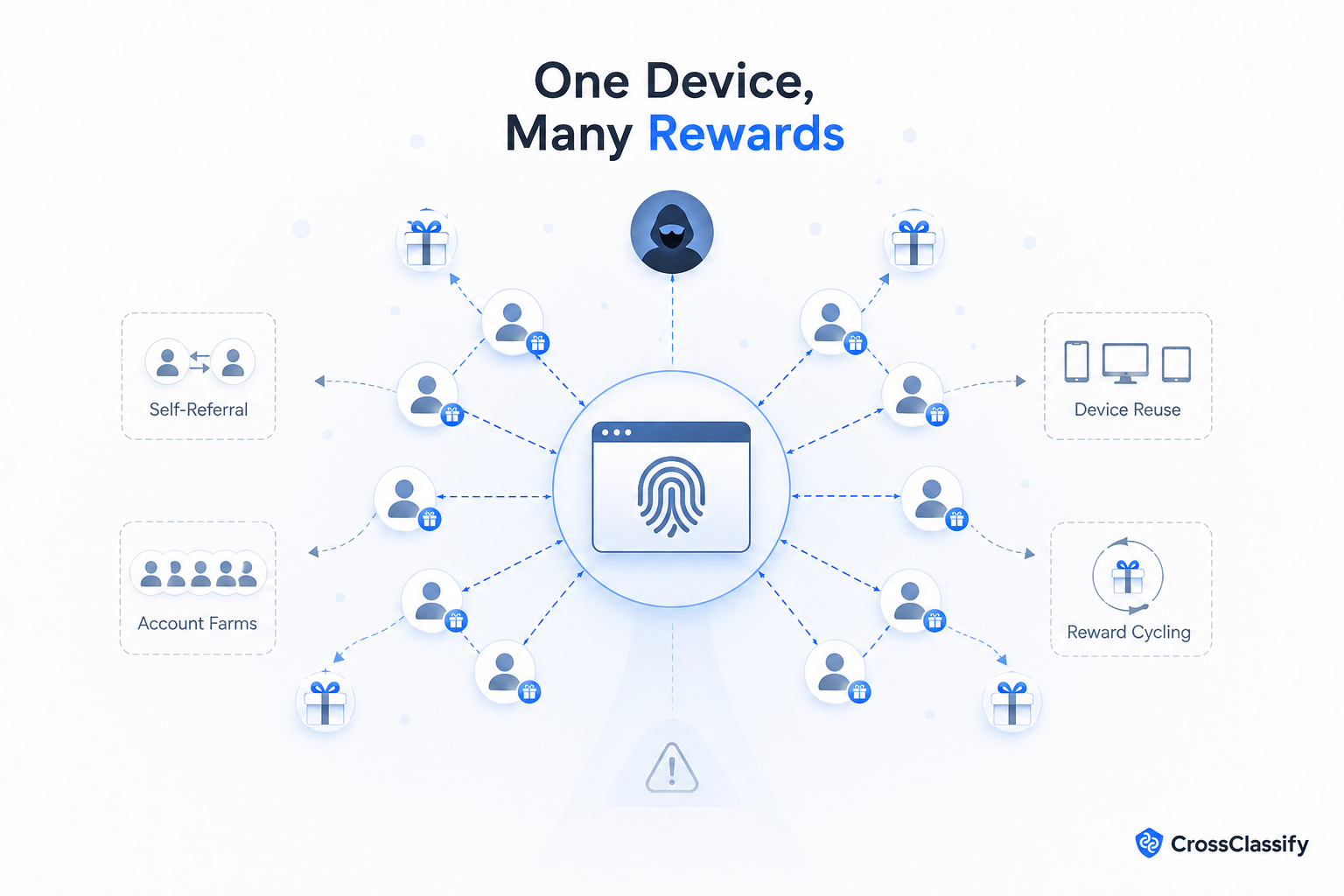
Referral farming can involve many abuse patterns:
- Self referral
A user creates another account and refers themselves. - Account farms
A group controls many accounts to claim rewards at scale. - Device reuse
Multiple referred users are created from the same device or browser environment. - Synthetic referral networks
Accounts appear unrelated but share behavior, timing, location, or device signals. - Reward cycling
Users claim rewards, withdraw value, abandon accounts, and repeat.
What Usually Goes Wrong Without Connected Account Visibility
Most referral dashboards show individual conversions. They may show referral code use, campaign source, reward status, and account count.
What they may not show is relationship risk.
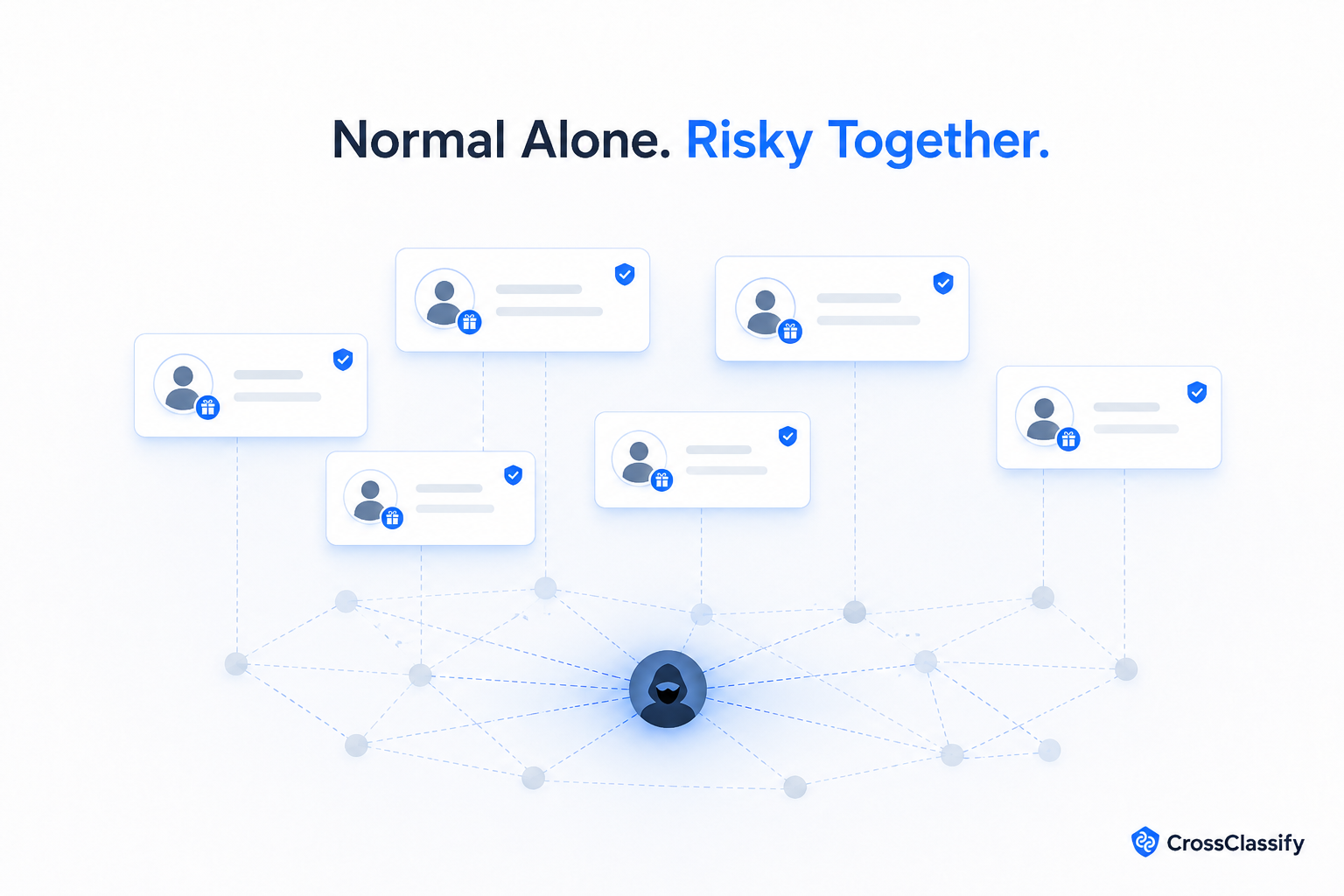
Without connected account visibility, teams review account by account. That creates blind spots. A single account may not look risky. Ten accounts may look suspicious only when their devices, sessions, referral timing, behavior patterns, and reward claims are connected.
This is why referral fraud prevention needs link analysis, not just individual account rules.
What a Better Referral Abuse Detection Path Looks Like
A better referral abuse workflow starts with relationship questions:
- Who invited whom?
- Do the accounts share device or browser characteristics?
- Are signups happening at unusual speed?
- Are rewards claimed and withdrawn quickly?
- Do accounts have similar behavior after activation?
- Are referrals clustered around specific campaigns, regions, traffic sources, or devices?
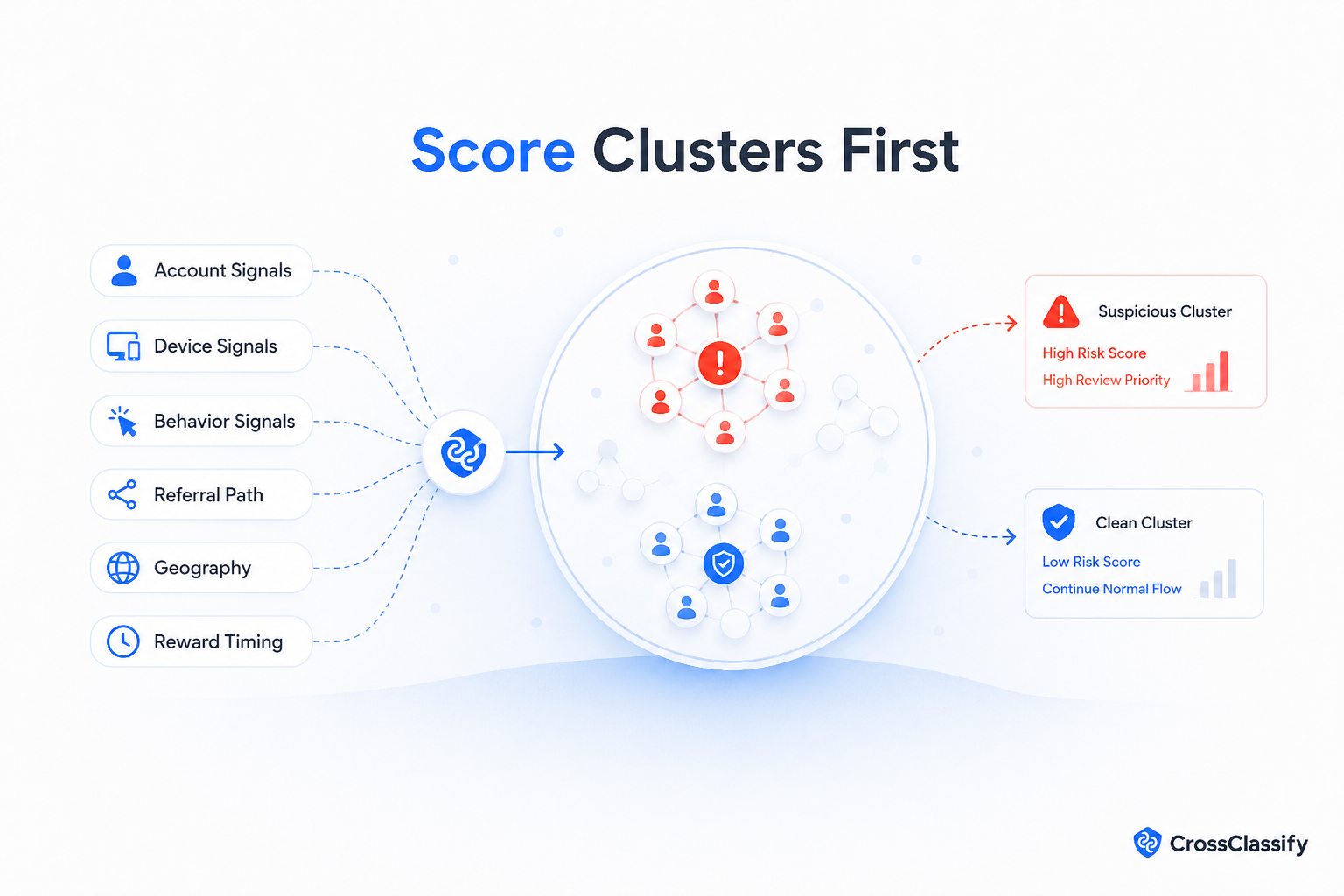
Map relationships
Teams should connect account, device, behavior, referral, and reward data.
Score referral clusters
A risky cluster should receive more attention than a single isolated account.
Preserve good referrals
The goal is not to make referral programs hard to use. It is to stop organized abuse while keeping real users engaged.
Where CrossClassify Fits Naturally
CrossClassify can support referral fraud prevention through device fingerprinting, behavioral biometrics, link analysis, bot detection, geo signals, and risk scoring.
When repeated accounts or suspicious browser patterns appear, device fingerprinting helps teams connect activity across users and sessions. This gives fraud teams a stronger view of referral farming before rewards are paid out.
CrossClassify is not referral program software. It helps businesses understand whether referral activity is likely genuine, suspicious, automated, or connected.
Practical Example
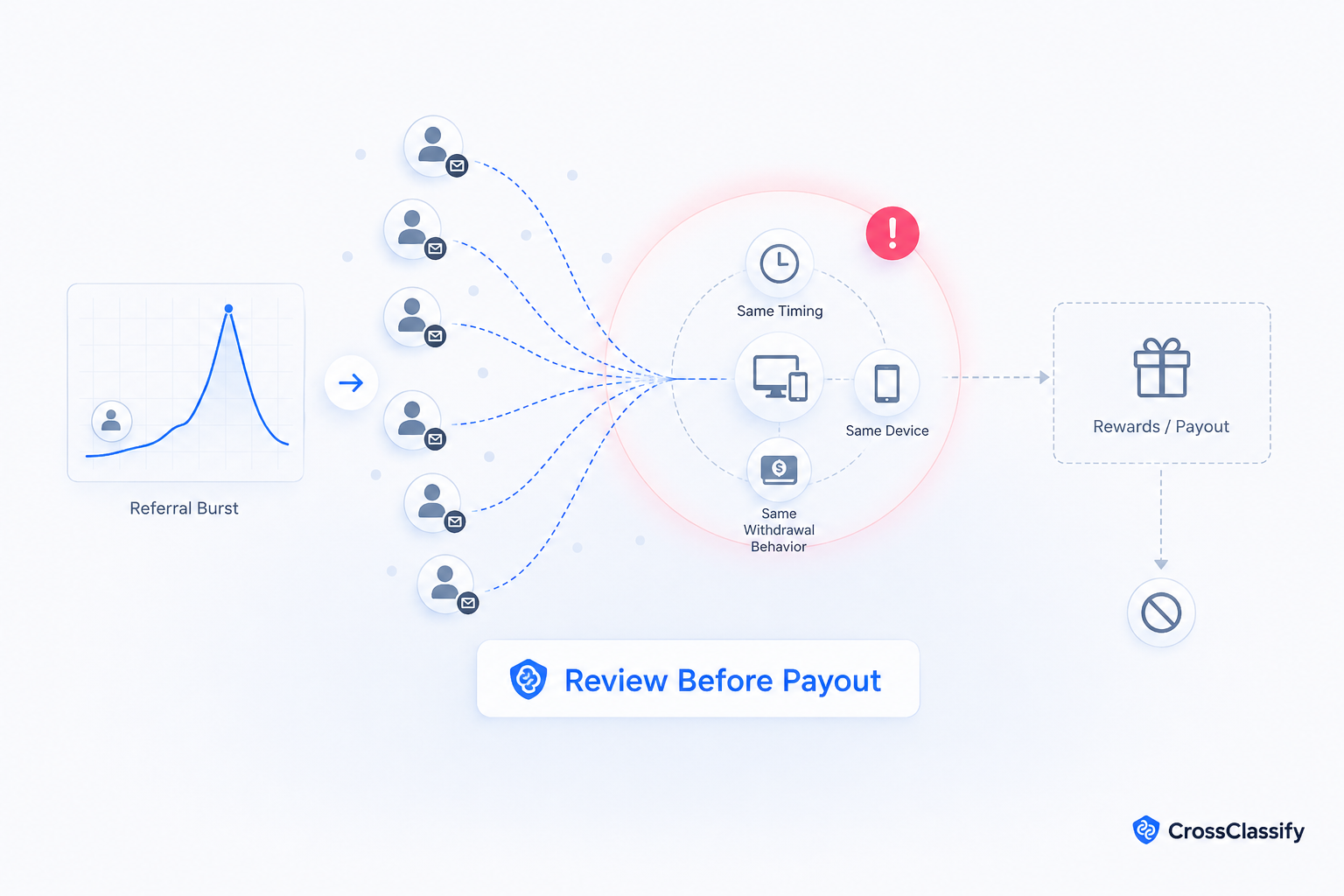
A crypto app gives both inviter and invitee a reward after account activation. A spike appears from one campaign. Each account has a different email, but many share similar devices, signup timing, and withdrawal behavior.
Referral bonus abuse detection can help identify the cluster and prioritize review before more rewards are approved.
Conclusion
Referral campaigns can be powerful, but they need fraud visibility. When companies treat each referral as isolated, referral farming becomes easier to miss.
By connecting accounts, devices, behavior, referral paths, and reward timing, teams can protect referral budgets and keep genuine growth signals clean.
See How to Stop Bonus Abuse Before It Drains Your Growth Budget
CrossClassify detects suspicious reward claims before promotions turn into losses

Explore CrossClassify today
Detect and prevent fraud in real time
Protect your accounts with AI-driven security
Try CrossClassify for FREE—3 months
Share in
Related articles


Frequently asked questions
Let's Get Started
Create your free
account today
Discover how to secure your app against fraud using CrossClassify
No credit card required