Last Updated on 08 Jul 2026
Referral Program Abuse Prevention: Stop Optimizing Toward Fake Referrals
Share in
Introduction
Referral programs are attractive because they feel efficient.
A real customer invites another real customer. Trust transfers. Acquisition cost drops. The business grows through its user base.
Referral abuse breaks that model.
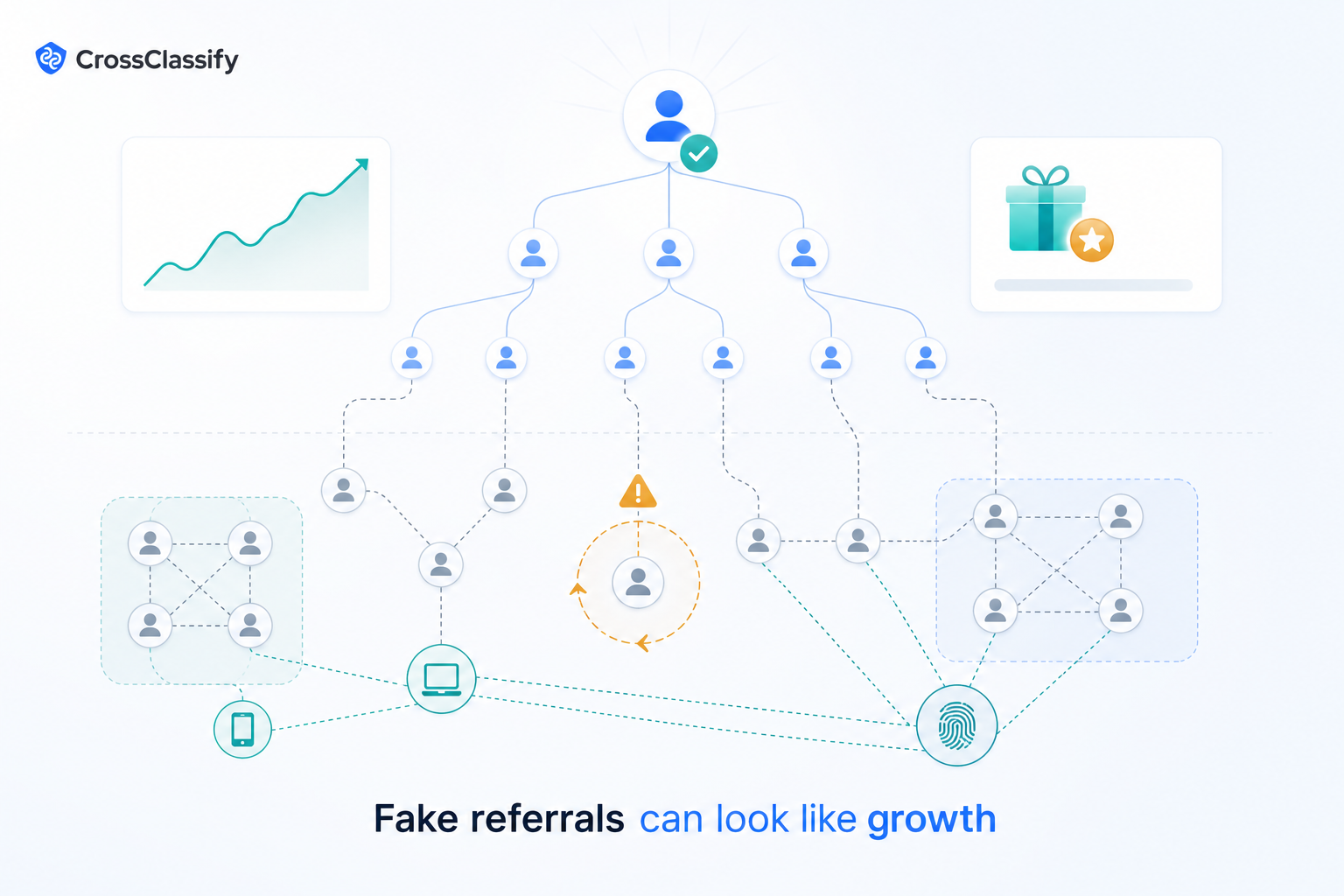
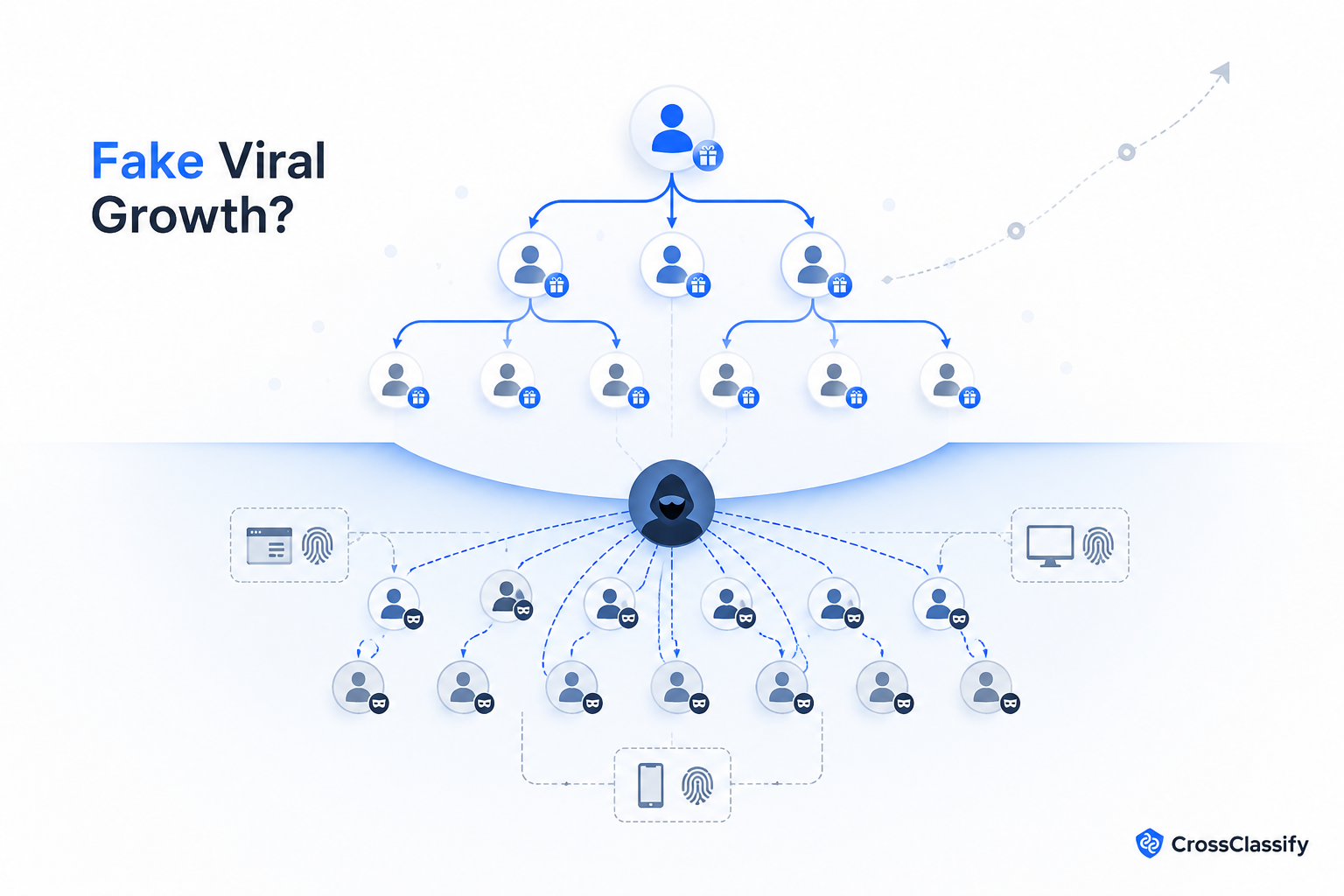
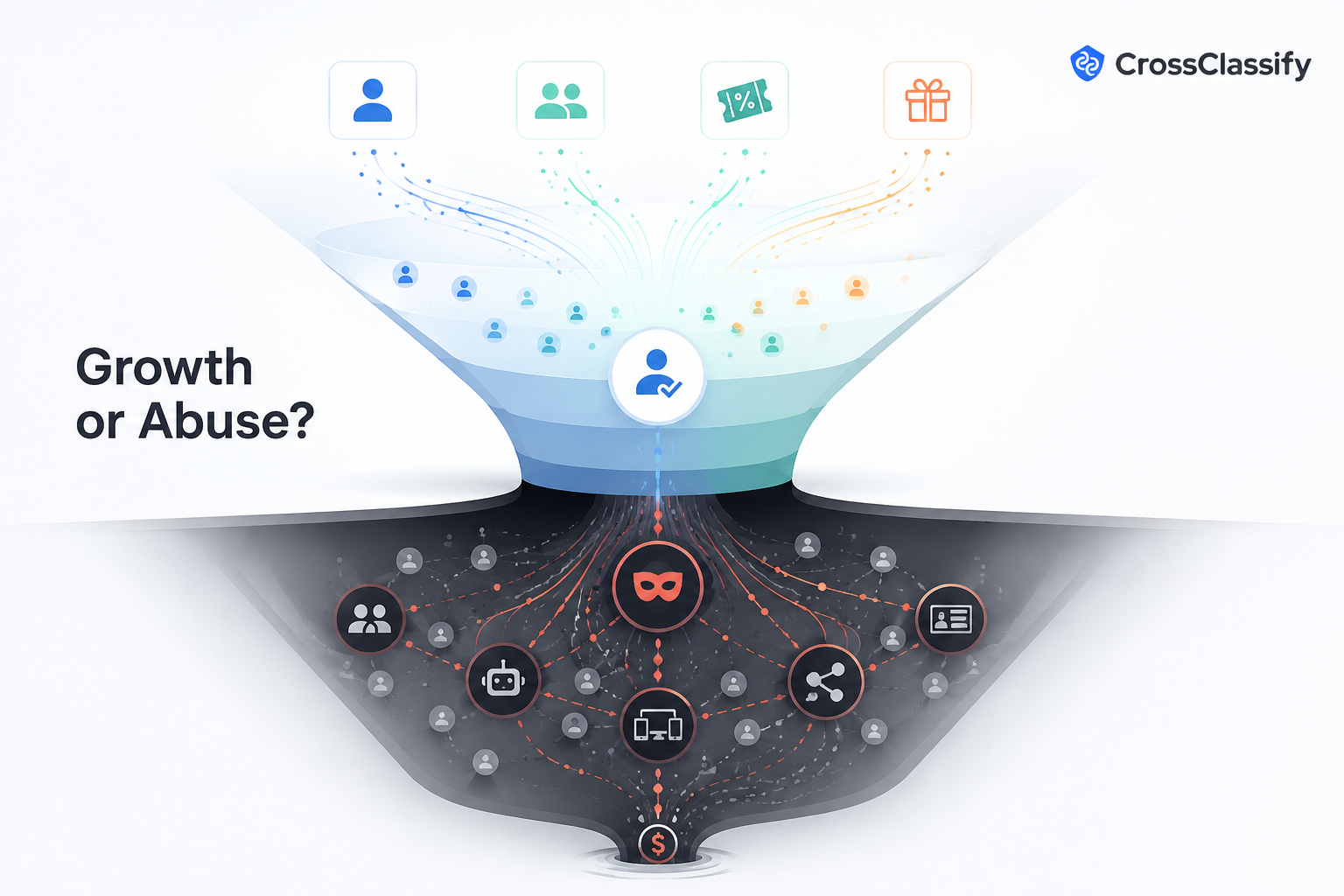
When users create fake accounts, refer themselves, control account networks, or coordinate reward claims, the program can look successful while paying for artificial growth.
The danger is that teams optimize toward fake referrals because the channel appears to be working.
Why Referral Programs Matter Now
Referral programs are used across fintech, ecommerce, SaaS, marketplaces, gaming, crypto, delivery, and loyalty products.
They can produce high quality growth, but only when the invited users are real and valuable.
Promotion abuse research shows that abuse can be group based, meaning detection needs more than account level checks. Relationship patterns matter. (arXiv)
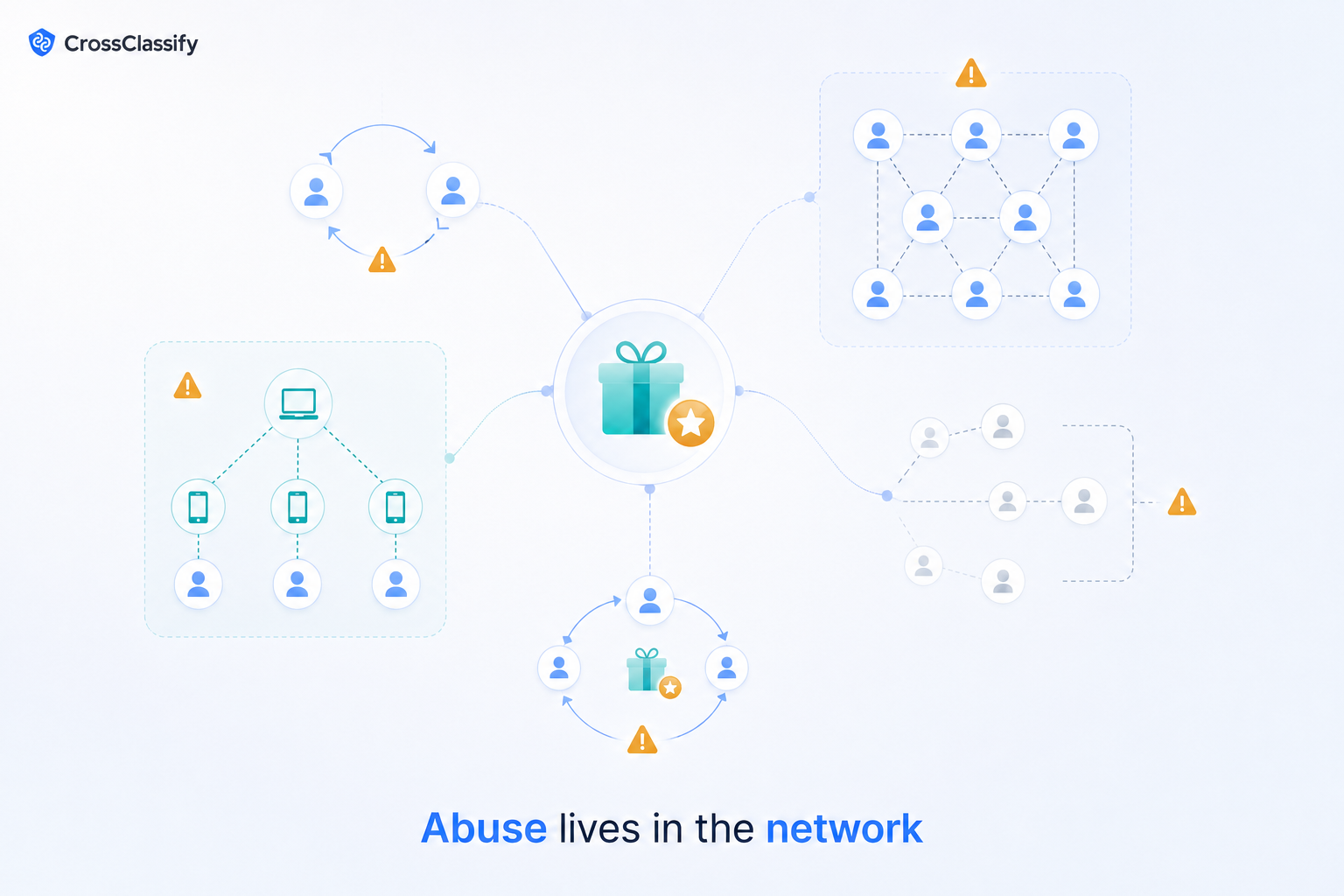
That is exactly why referral abuse is hard. The fraud is not always visible in a single account. It appears in the network.
The Fraud Risks Behind Fake Referrals
- Self referral - A user creates a second account and refers themselves.
- Referral farms - A person or group controls many accounts to collect rewards.
- Device connected referrals - Inviter and invitee accounts appear different but share device signals.
- Low intent invited users - Users sign up only to help someone claim rewards.
- Reward cycling - Fraudsters claim rewards, cash out, abandon accounts, and repeat.
What Usually Goes Wrong
Referral teams often measure:
- Number of invites
- Referral conversion
- Cost per referred user
- Activation rate
- Reward payout volume
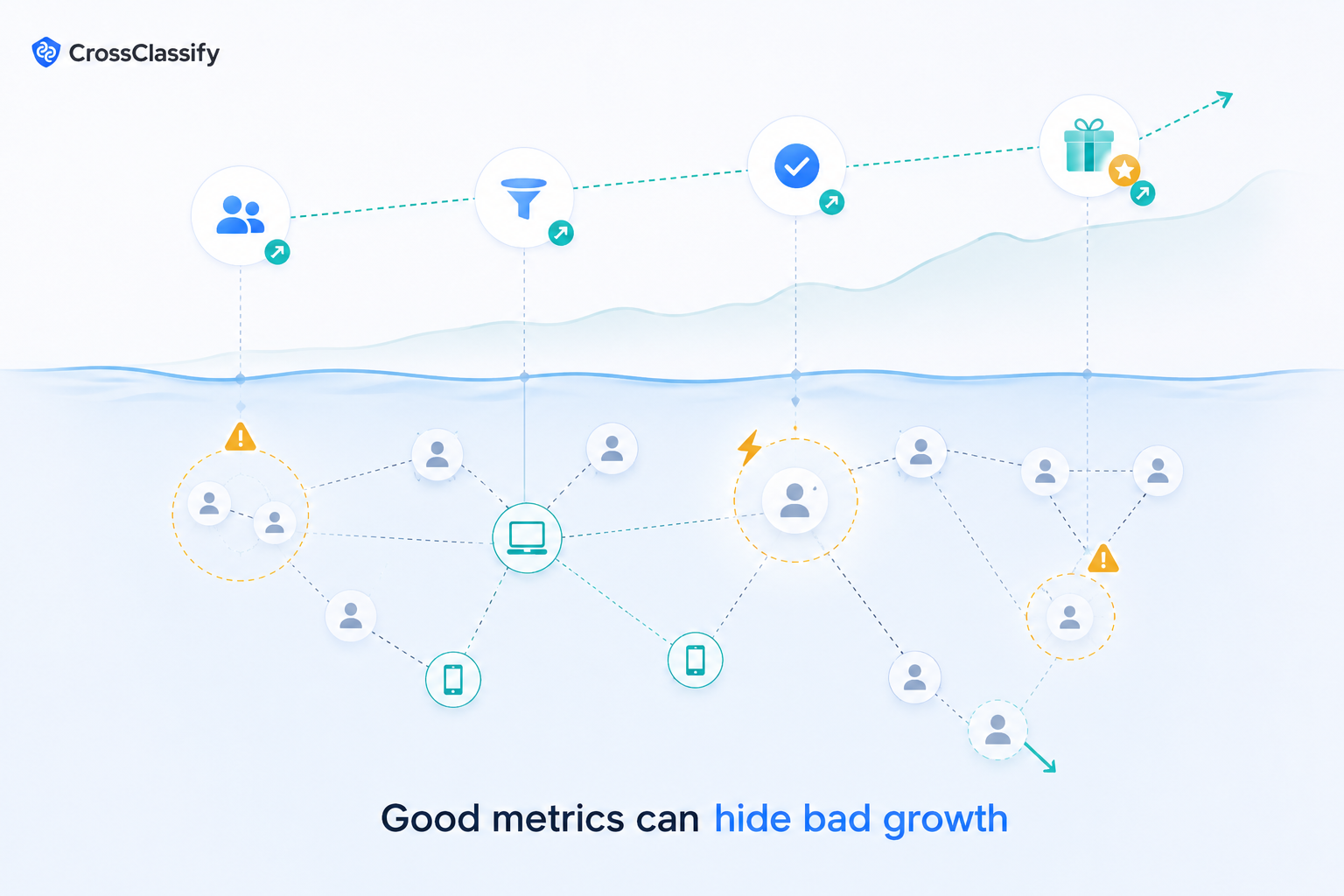
Those metrics are useful, but they may not show abuse.
The team also needs to know:
- How many referrals came from connected devices?
- How many referred users claimed value quickly?
- How many accounts had similar behavior?
- How many referrals retained after the reward?
- Which users generated suspicious referral clusters?
Without these questions, fake referrals can look like a successful growth loop.
What a Better Referral Protection Path Looks Like
A better path reviews referral quality, not just referral volume.
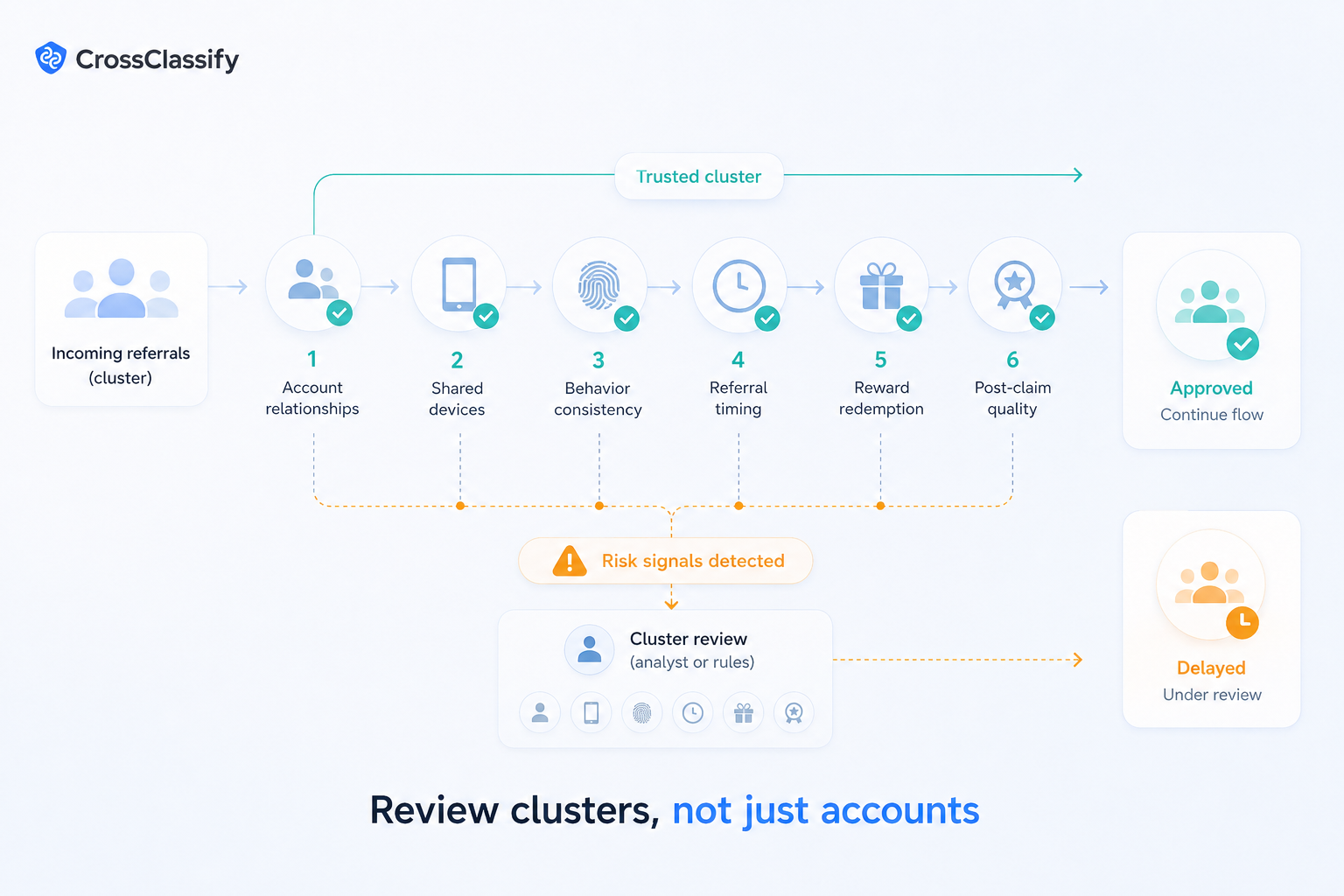
Teams should monitor account relationships, device patterns, behavior consistency, referral timing, reward redemption, post claim behavior, and cohort quality.
The goal is not to block every referral. The goal is to protect genuine referrals from being diluted by abuse.
Review clusters, not only accounts
Referral fraud is often visible at the cluster level.
Delay high risk rewards
If inviter and invitee accounts share multiple risk signals, rewards should be reviewed before release.
Feed fraud signals into growth review
Referral quality should be part of campaign decision making.
Where CrossClassify Fits Naturally
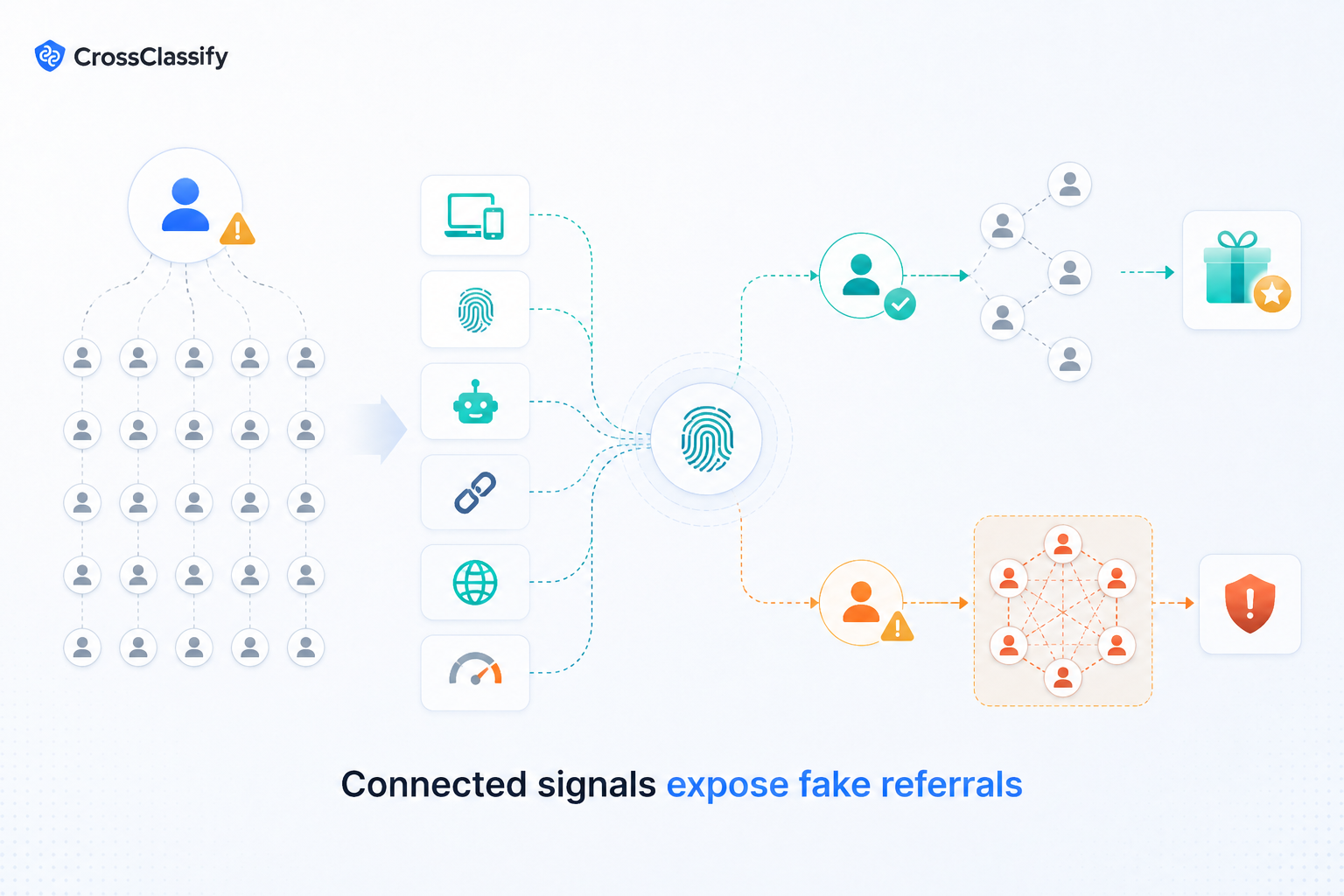
CrossClassify can help teams detect suspicious referral patterns through device intelligence, behavioral biometrics, bot detection, link analysis, geo signals, and fraud risk scoring.
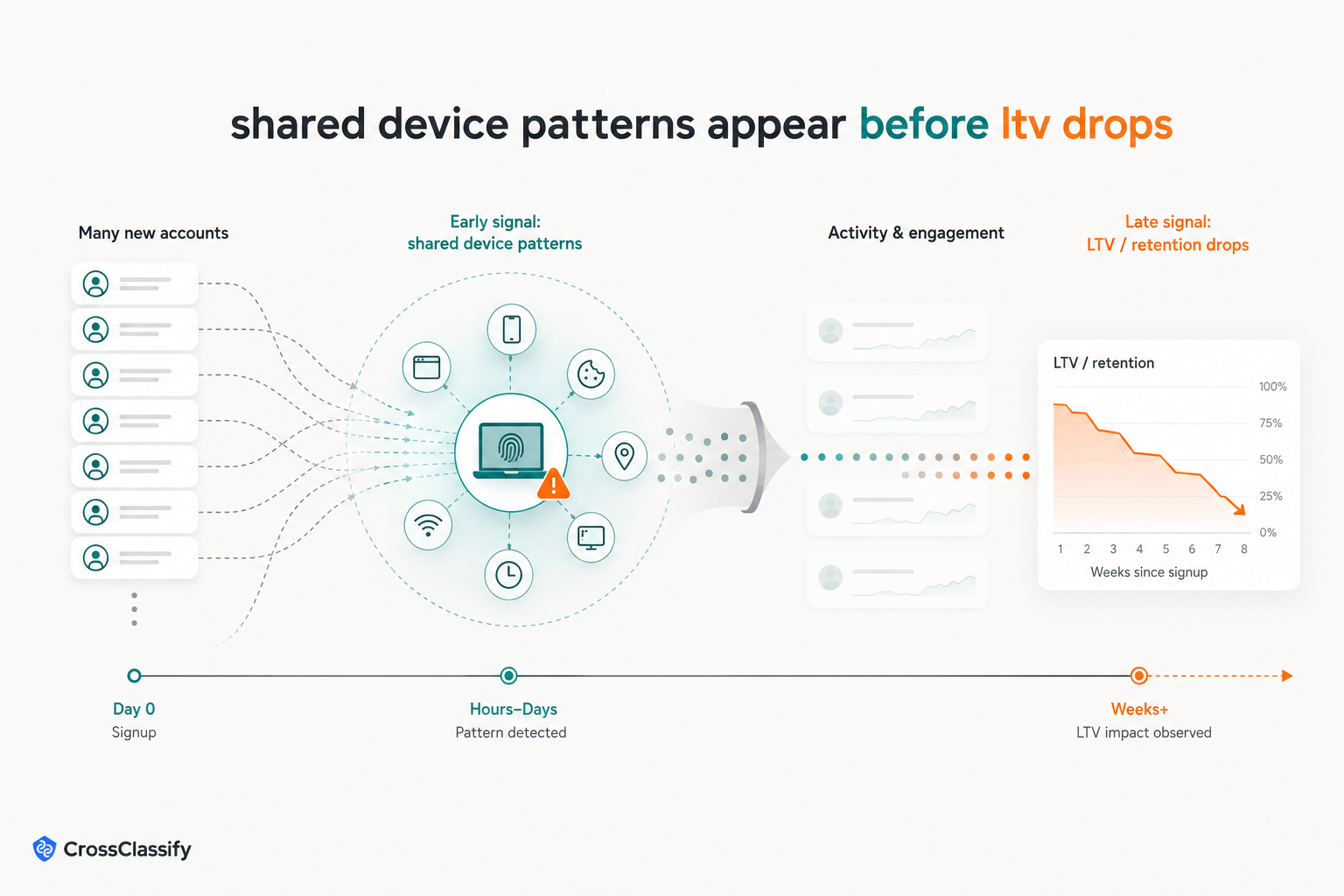
When teams need to identify connected accounts behind referral activity, device fingerprinting can help reveal repeated environments and suspicious account relationships. This helps protect referral campaigns without making every genuine user face extra friction.
Practical Example
A marketplace offers credit to both inviter and invitee. One referral source generates strong volume. The invited accounts claim rewards quickly but rarely return.
Device and behavior analysis shows many accounts are connected. The referral program was not producing network growth. It was rewarding a controlled account network.
Conclusion
Referral programs should reward real customer advocacy, not account farming.
Teams that combine referral metrics with device, behavior, bot, and relationship signals can avoid optimizing toward fake referrals and protect one of the most valuable growth channels.
See How to Stop Bonus Abuse Before It Drains Your Growth Budget
CrossClassify detects suspicious reward claims before promotions turn into losses

Explore CrossClassify today
Detect and prevent fraud in real time
Protect your accounts with AI-driven security
Try CrossClassify for FREE—3 months
Share in
Related articles
Frequently asked questions
Let's Get Started
Create your free
account today
Discover how to secure your app against fraud using CrossClassify
No credit card required