Last Updated on 13 Jul 2026
Post Claim Bonus Abuse Monitoring: What to Watch After the Reward Is Claimed
Share in
Introduction
Many teams treat reward approval as the end of the bonus abuse journey.
It is not.
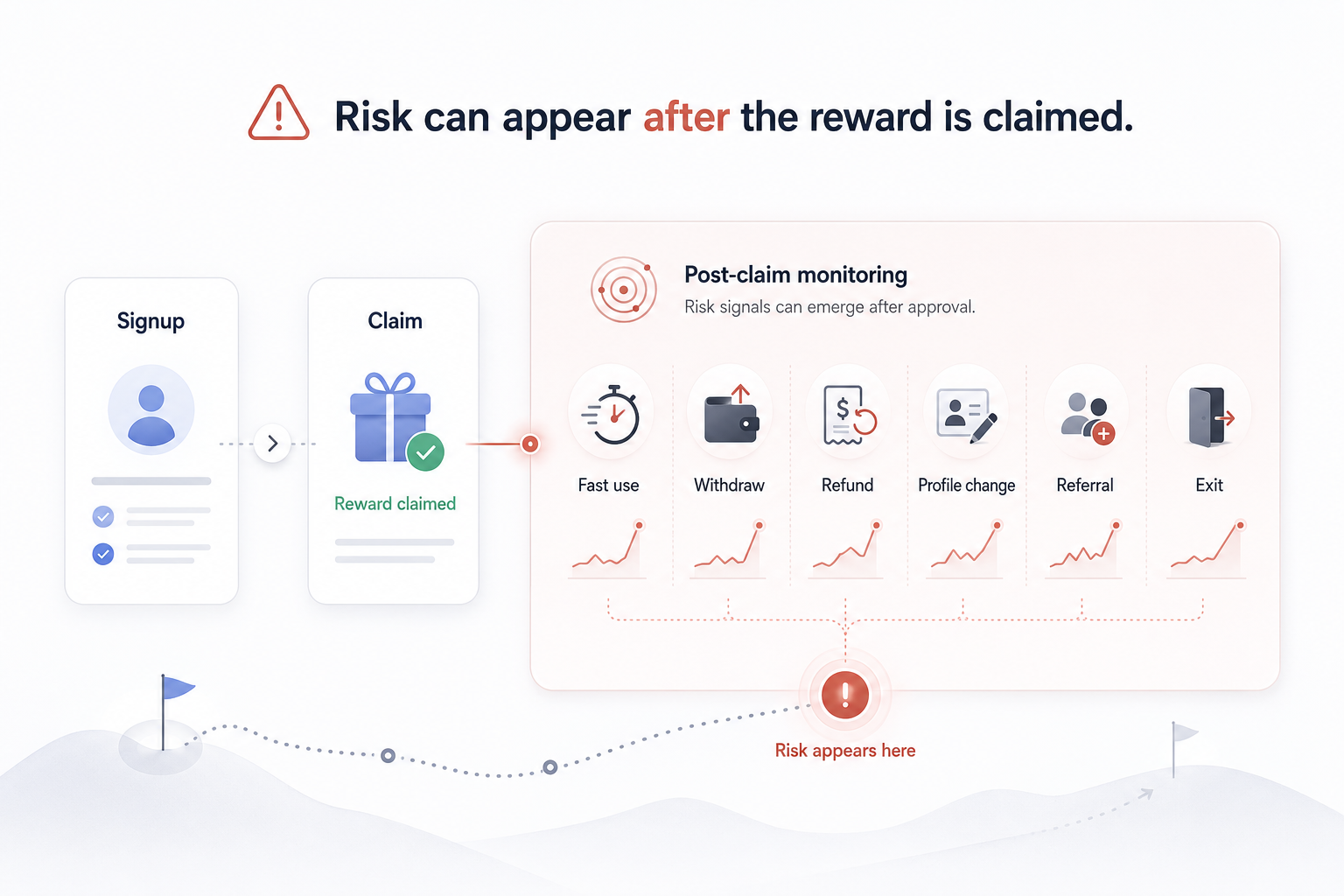
Some users look normal at signup, pass basic checks, claim the reward, and only become suspicious afterward. They may withdraw value, request refunds, transfer funds, change profile details, refer more accounts, or abandon the account immediately.
Post claim bonus abuse monitoring helps teams understand what happens after promotional value is released.
Why Post Claim Monitoring Matters Now
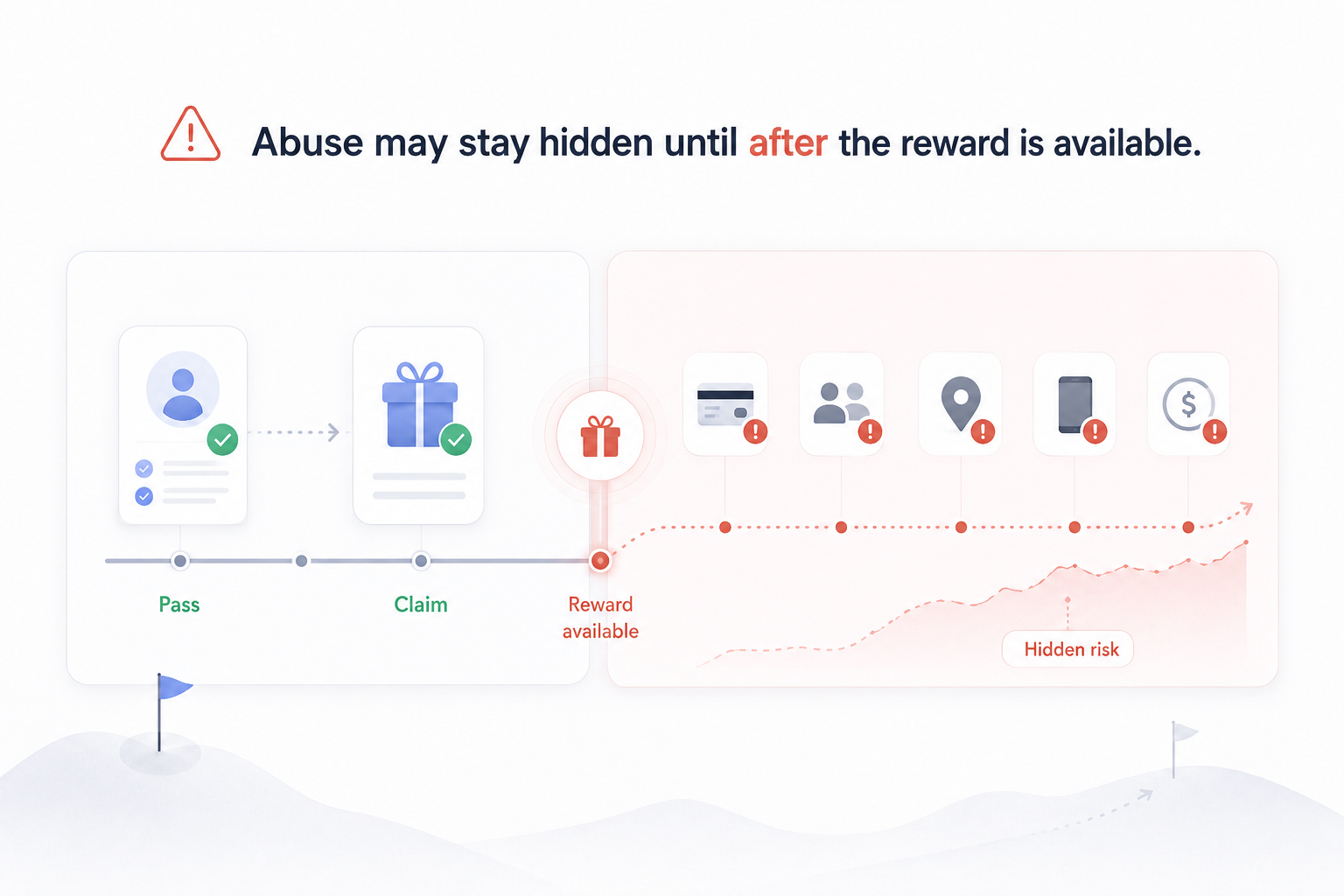
Promotional abuse is not always visible before the claim.
Some abuse patterns require time. A user may behave normally until the reward is available. A referral network may only become suspicious after several accounts claim value. A refund abuse pattern may appear after orders are placed.
MRC reporting on refund and policy abuse shows that post transaction behavior remains a serious concern for merchants, especially when customers exploit business rules after the initial conversion. (Wikipedia)
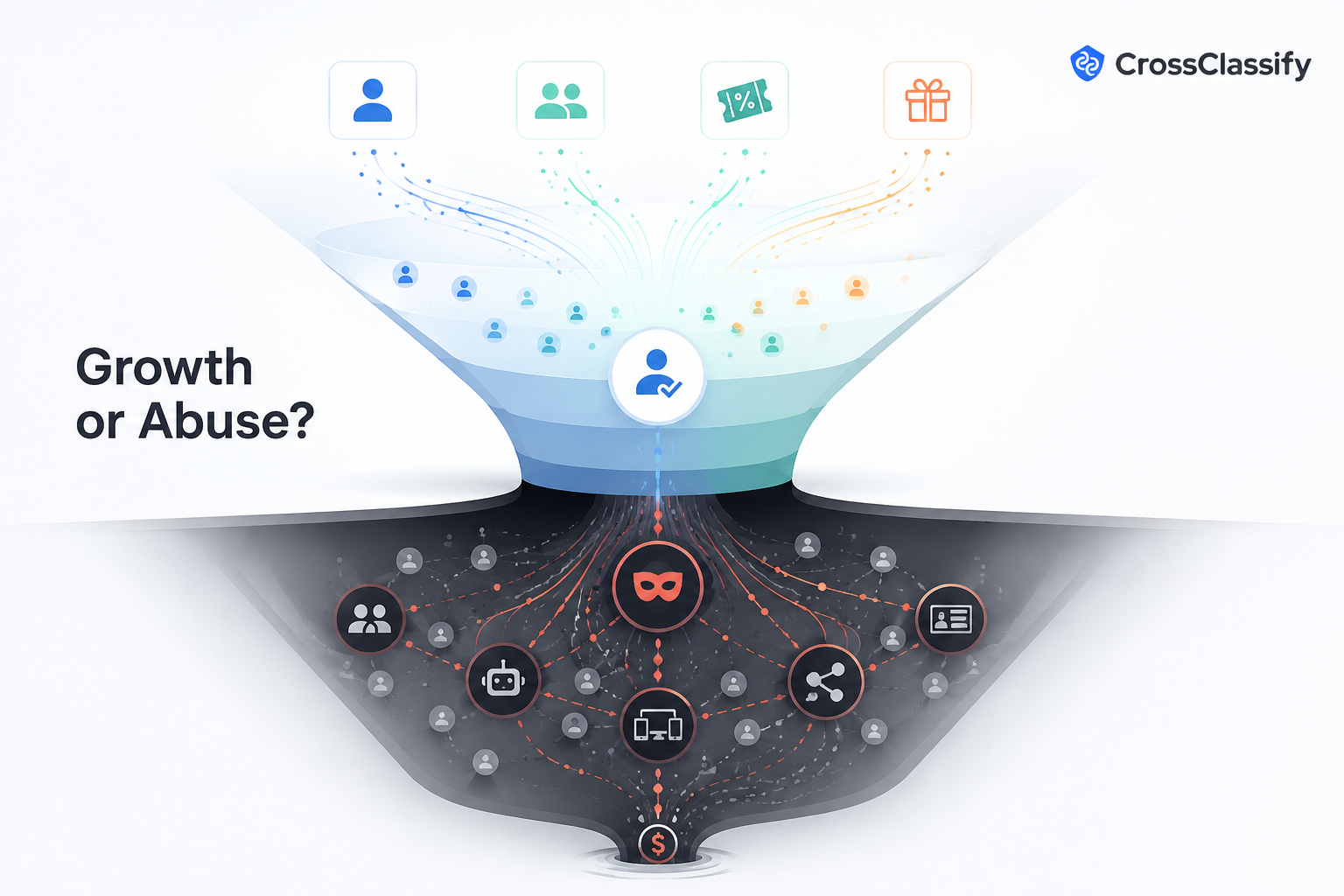
The Fraud Risks After Reward Approval
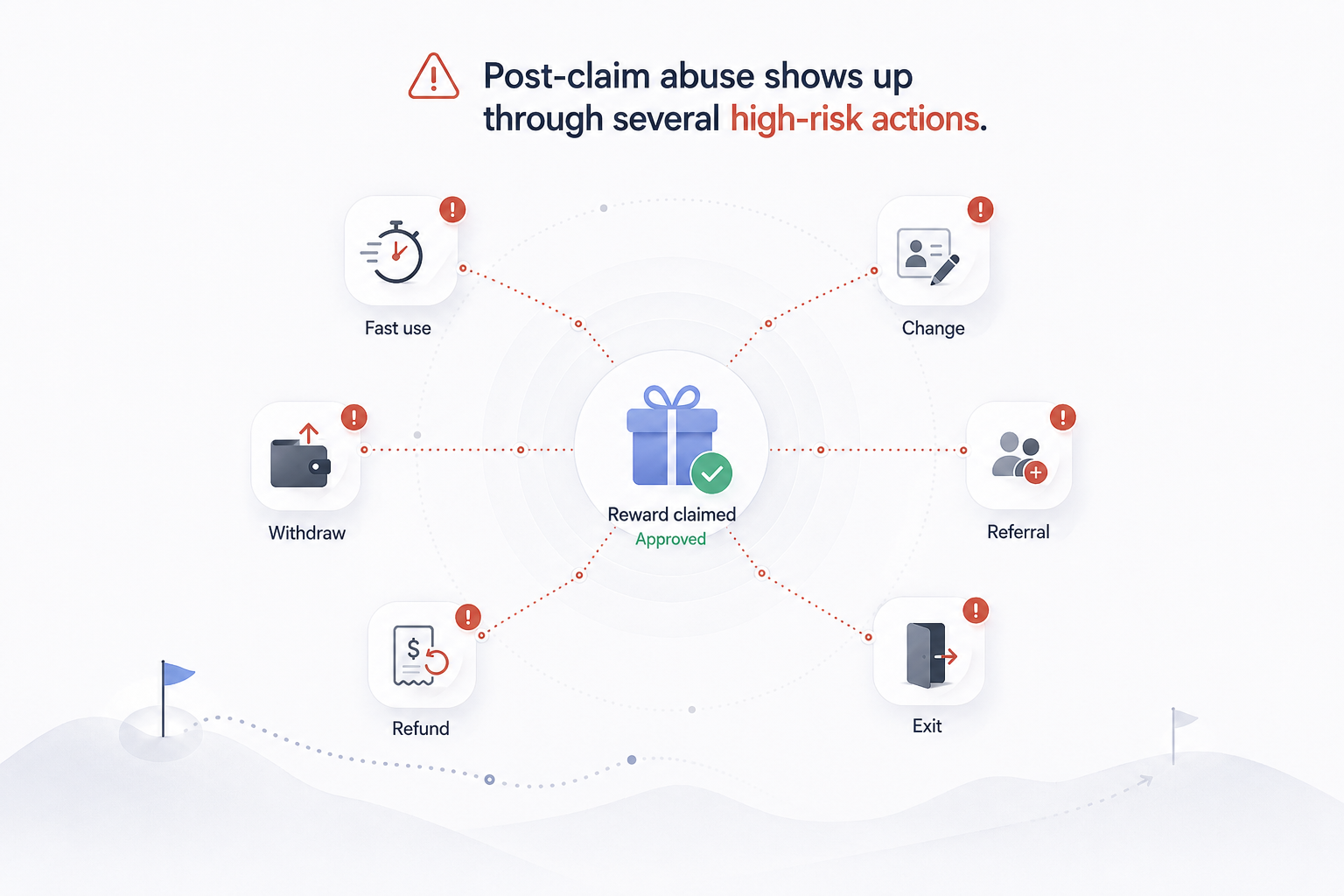
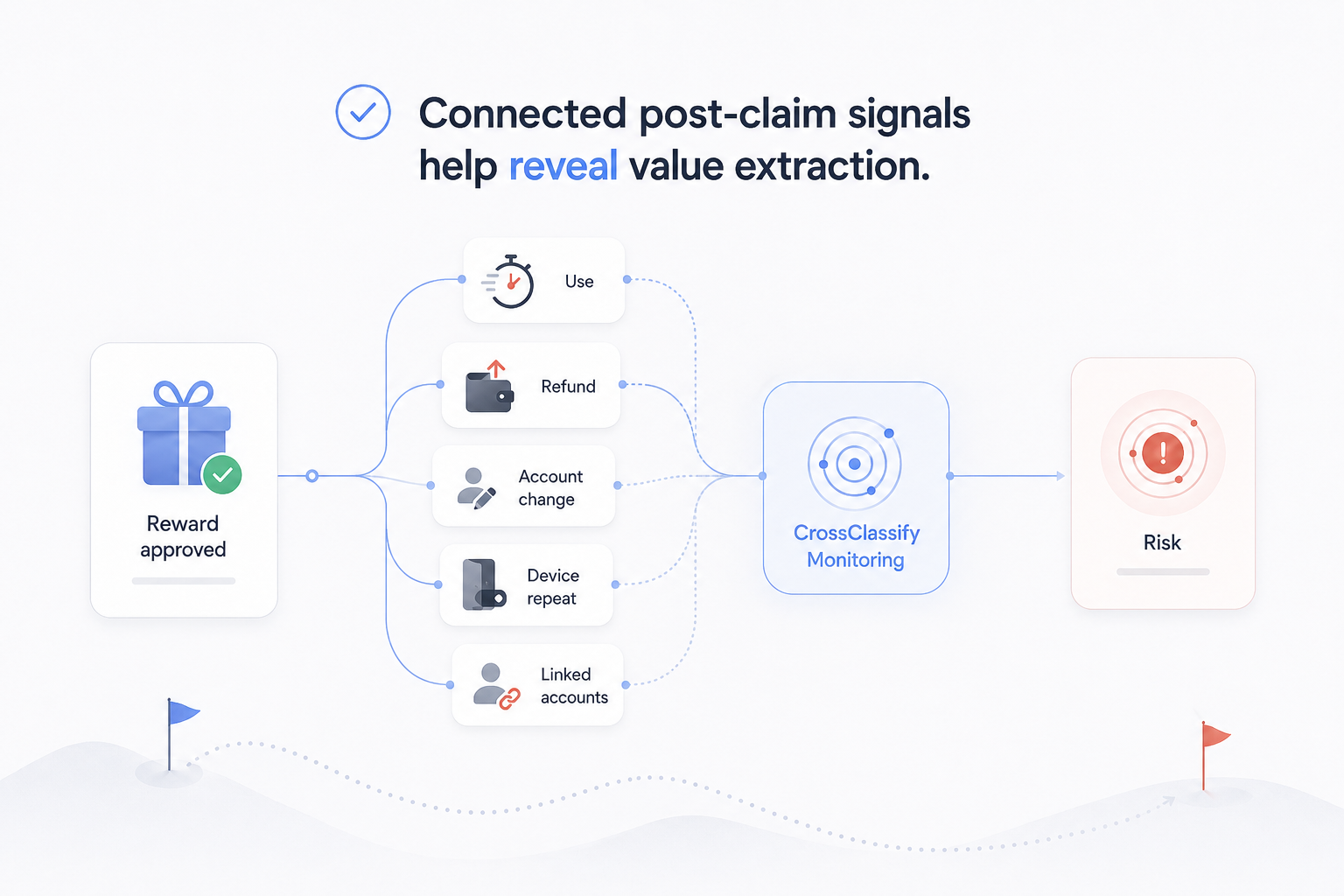
Fast redemption
A user claims value and uses it immediately without normal product engagement.
Withdrawal abuse
A user converts promotional value into cash or transferable balance.
Refund abuse
A user places an order with a reward, then requests a refund.
Account changes
A user changes email, phone, payout details, or profile information after receiving value.
Referral expansion
A user creates or invites more connected accounts after the first reward is approved.
Account abandonment
A user disappears after extracting value.
What Usually Goes Wrong
Teams often review risk before approval, then stop watching.
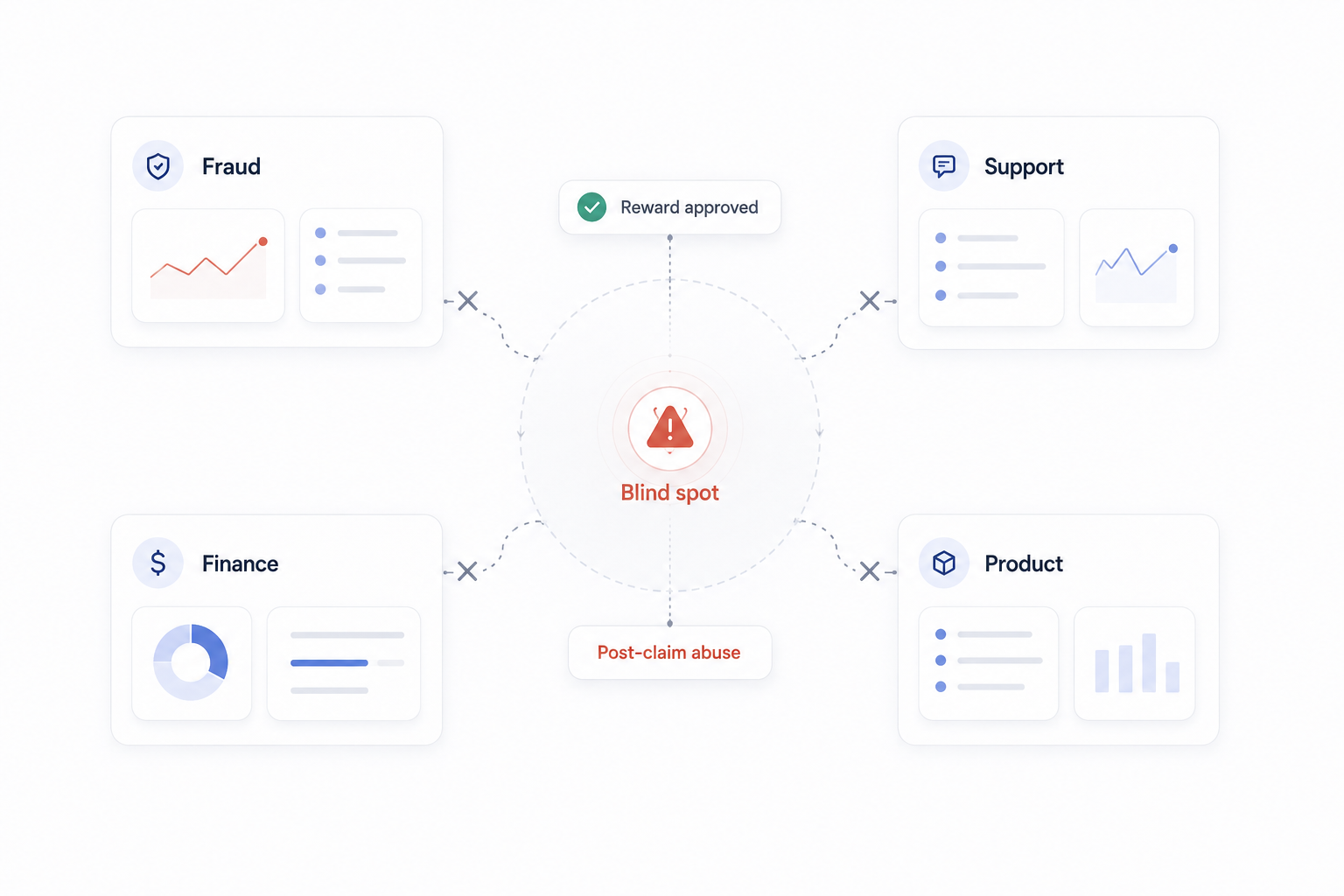
That creates a blind spot. A user who seemed acceptable before reward release can become high risk afterward.
Another mistake is separating fraud, support, and finance signals. Fraud may see device risk. Support may see reward disputes. Finance may see withdrawal or refund cost. Product may see low engagement. If those signals stay separate, post claim abuse is harder to understand.
What a Better Monitoring Path Looks Like
A better path tracks the full post claim journey.
Teams should watch:
- How quickly the reward is used
- Whether the user continues normal activity
- Whether withdrawals or transfers happen immediately
- Whether refunds increase after reward use
- Whether account details change after claim
- Whether the same user refers more accounts
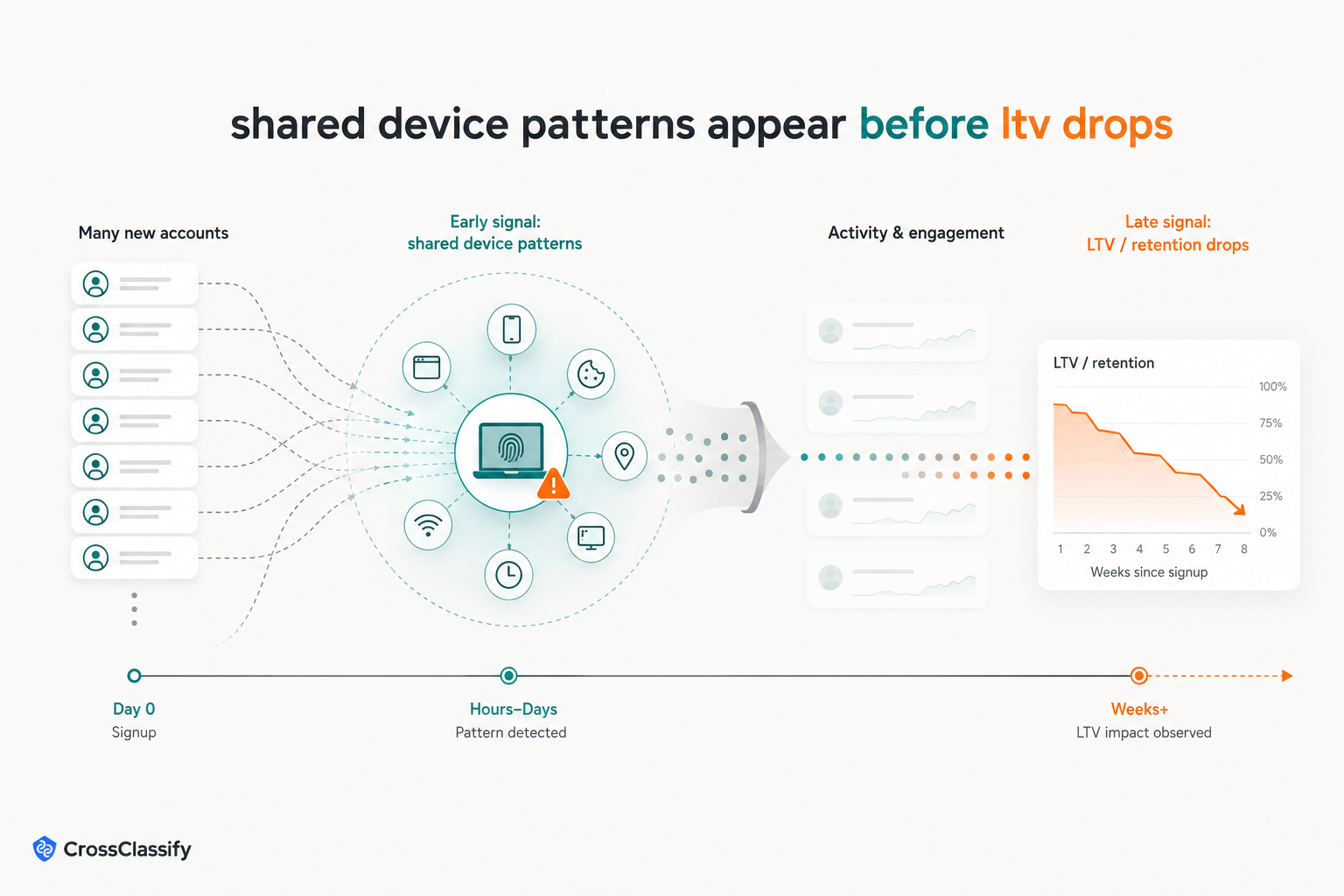
- Whether device or behavior patterns repeat
- Whether support disputes cluster around certain campaigns
The goal is to understand whether the reward created a real customer or only a value extraction event.
Where CrossClassify Fits Naturally
CrossClassify can help teams monitor suspicious post claim behavior by combining device intelligence, behavioral biometrics , account relationship signals, bot detection, geo analysis, and risk scoring.
For sensitive post login actions, account takeover protection can support risk visibility around profile changes, account access, payout changes, and other high value actions. This matters because bonus abuse does not always stop after the first claim.
Practical Example
An ecommerce company approves a first purchase discount. Some users place orders, request refunds, and create new accounts to repeat the cycle.
The signup looked normal. The abuse appeared after the claim.
Post claim monitoring helps the business connect reward use, refund behavior, repeated devices, and account relationships before the campaign continues leaking margin.
Conclusion
Bonus abuse monitoring should not stop when the reward is approved.
The post claim journey can reveal whether the user is becoming a customer or extracting value. Teams that monitor redemption, withdrawal, refund, account change, and referral behavior can detect abuse patterns earlier and protect campaign ROI.
See How to Stop Bonus Abuse Before It Drains Your Growth Budget
CrossClassify detects suspicious reward claims before promotions turn into losses

Explore CrossClassify today
Detect and prevent fraud in real time
Protect your accounts with AI-driven security
Try CrossClassify for FREE—3 months
Share in
Related articles
Frequently asked questions
Let's Get Started
Create your free
account today
Discover how to secure your app against fraud using CrossClassify
No credit card required