Last Updated on 12 Jun 2026
AI Agents for Fraud and Risk Teams: From Manual Review to Behavior Aware Decision Support
Share in

Introduction
Fraud and risk teams are overloaded.
They review suspicious signups, unusual logins, refund abuse, bot activity, account takeover attempts, fake accounts, duplicate accounts, payout changes, marketplace disputes, and abnormal behavior. Much of this work involves reading, comparing, summarizing, and deciding what needs escalation.
AI agents can help.
But they should not replace fraud judgment. They should support it.
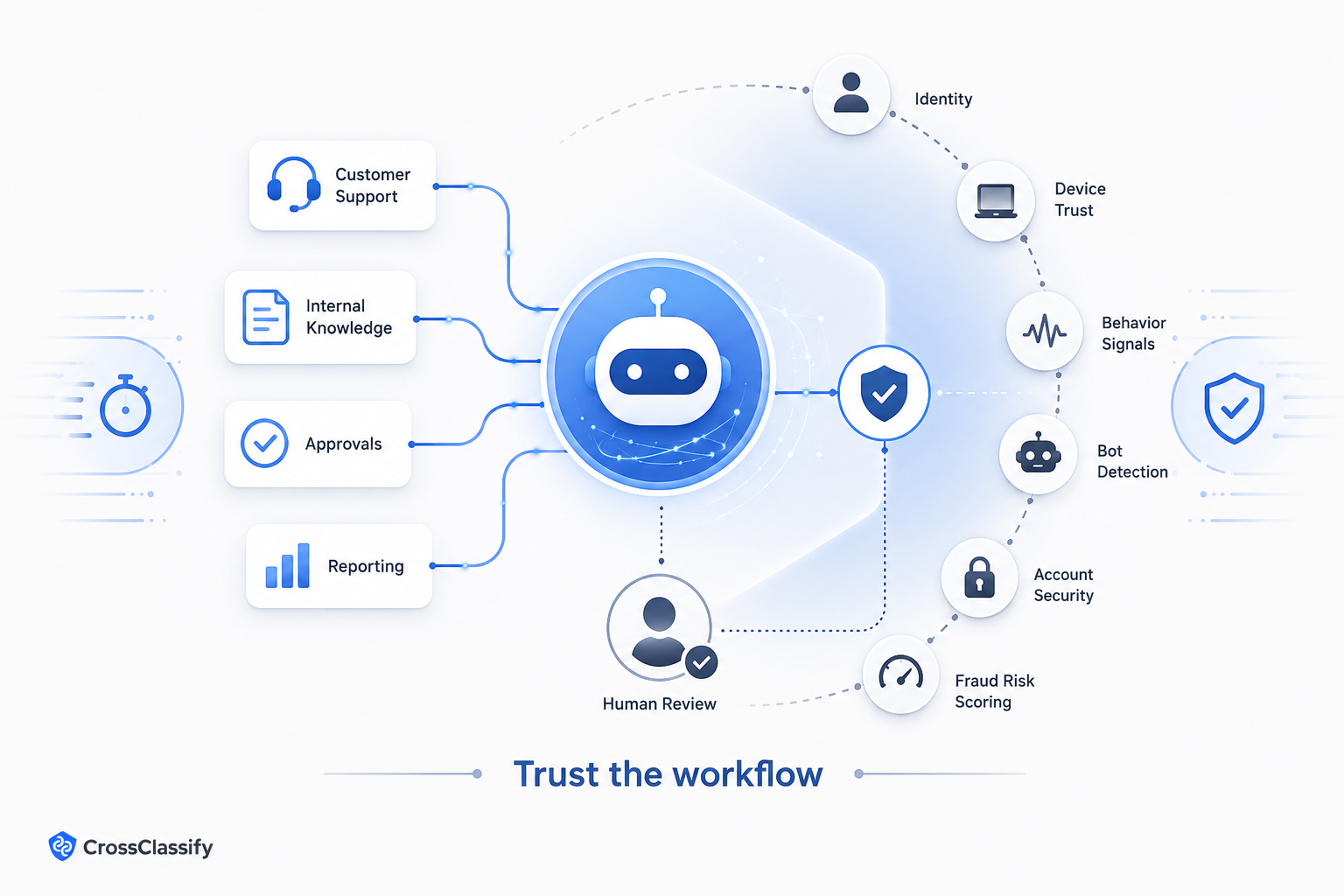
The best use of AI agents in fraud and risk teams is behavior aware decision support. The agent organizes evidence. The fraud platform provides signals. The human reviewer makes the final decision when risk is high.
Watch the Video Summary
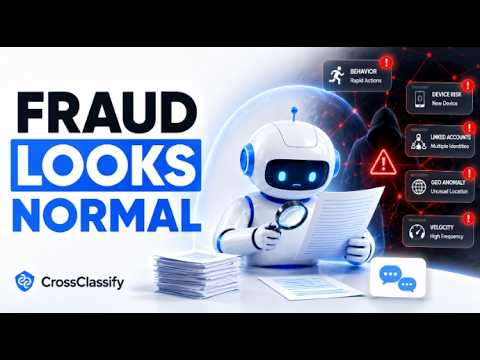
Can an AI Agent Actually Catch Fraud Just by Reading the Case?

Why fraud teams need AI support
Fraud review is often slow because the evidence is scattered.
A reviewer may need to check account history, device history, login events, IP changes, order history, payment attempts, support messages, previous decisions, linked accounts, and risk flags.
An AI agent can help by summarizing this evidence. It can identify what changed. It can compare current behavior with past behavior. It can prepare a short case narrative.
This saves time and helps teams focus on judgment.
What AI agents can do for fraud teams
AI agents can support fraud teams in several practical ways.
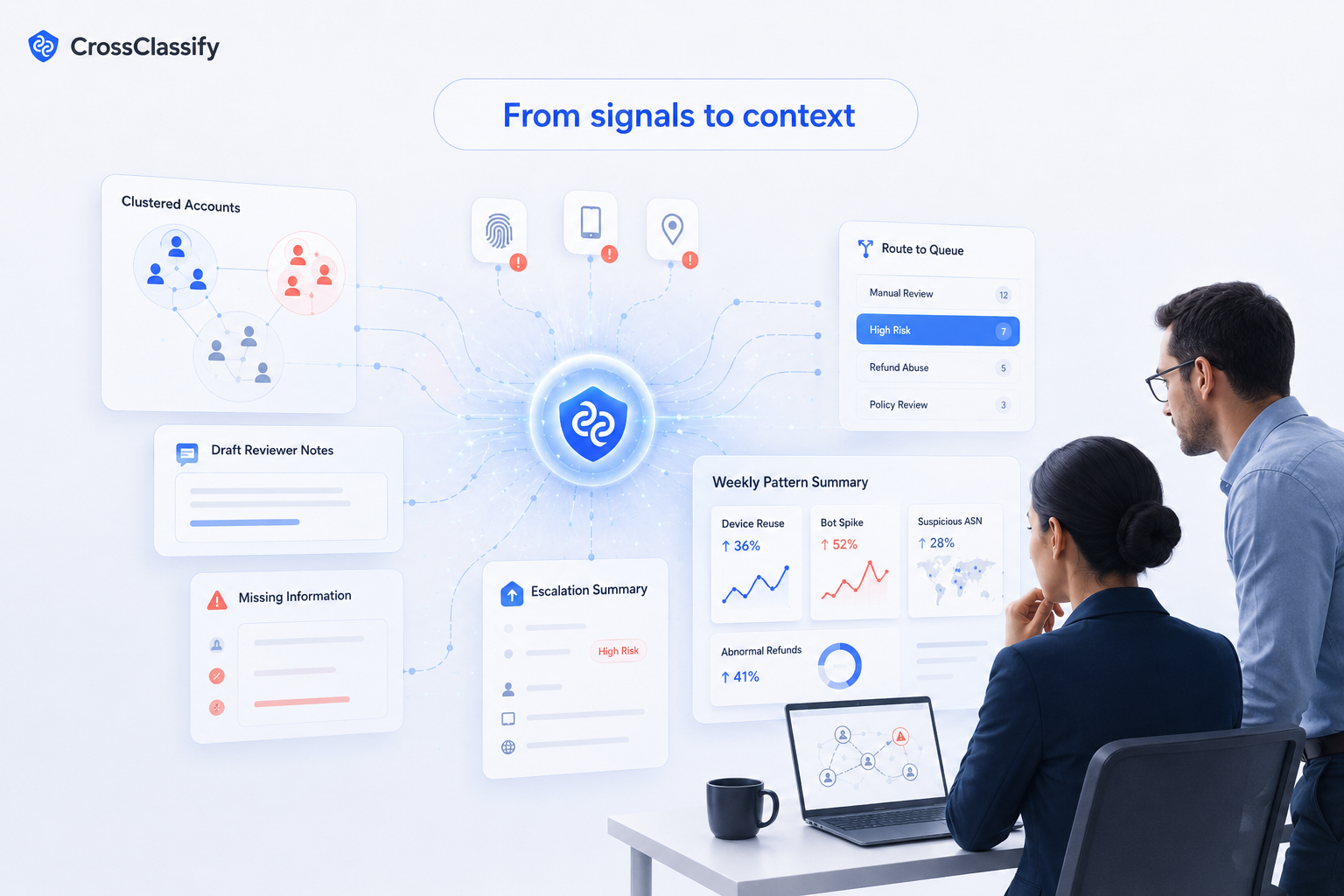
They can summarize suspicious cases. They can group related accounts. They can draft reviewer notes. They can prepare escalation summaries. They can identify missing information. They can explain why a case looks risky based on available signals. They can route cases to the right queue.
They can also help with trend reporting. For example, an agent can summarize common fraud patterns from the past week, such as repeated device reuse, bot traffic spikes, suspicious ASN patterns, account recovery attempts, or abnormal refund requests.
What AI agents should not do blindly
Fraud decisions are sensitive.
A false positive can block a real customer. A false negative can let fraud through. That is why AI agents should not blindly approve, reject, or accuse users.
Instead, they should provide structured context.
Good fraud support agents should say: here is what happened, here is what changed, here are the risk signals, here is what is missing, here are possible next steps, and here is why this case needs review.
Where things go wrong
The main mistake is asking an AI agent to decide without giving it reliable fraud signals.
Text alone is not enough. A fraudster may sound normal. A bot may mimic a standard flow. A stolen account may include correct personal details. A fake account may appear legitimate in one record but suspicious across devices, networks, and linked accounts.
Fraud review needs behavior and identity context.
Without that context, agents may produce confident but shallow summaries.

A better implementation path
Start by using AI agents for case summarization and report generation.
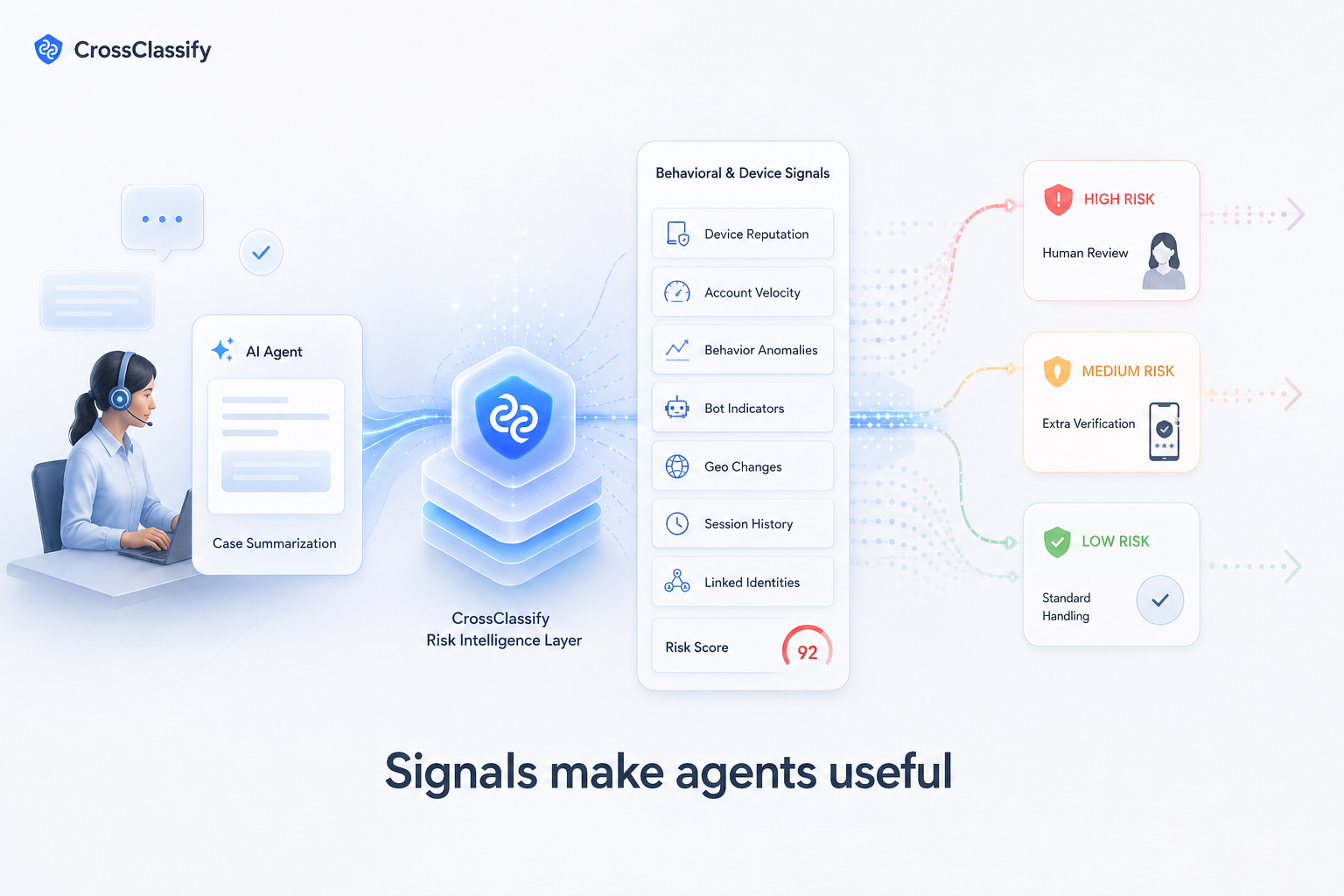
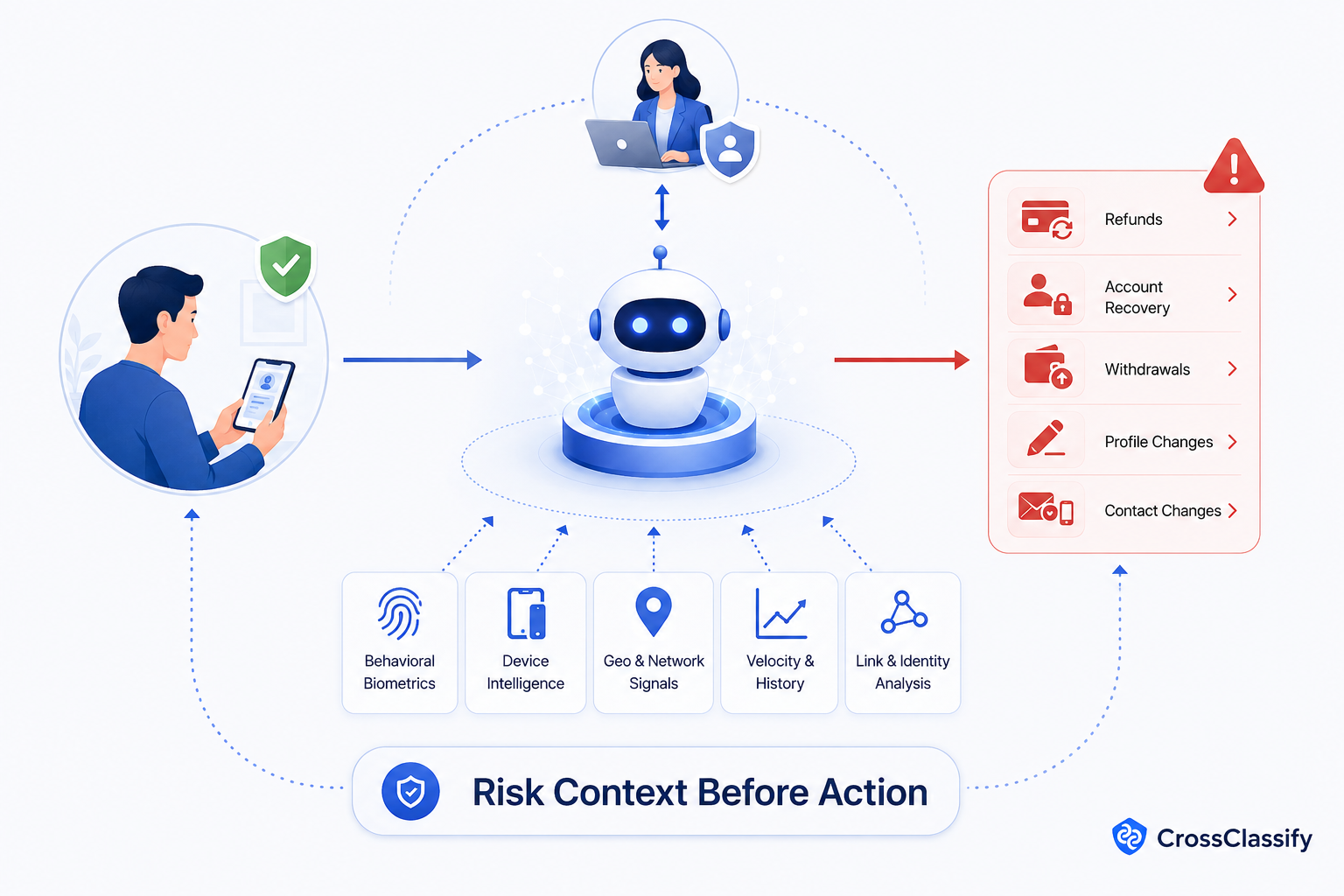
Next, connect them to structured risk signals. These may include device reputation, account velocity, behavior anomalies, bot indicators, geo changes, session history, linked identities, and risk scores.
Then define clear escalation rules. High risk cases should go to human review. Low risk cases may receive standard handling. Medium risk cases may require additional verification.
The agent should help explain the case, not hide the reasoning.
Where CrossClassify fits
This is one of the strongest CrossClassify fit areas.
CrossClassify can provide the underlying fraud and behavior signals that make an AI agent useful for risk teams. It detects account takeover, fake account creation, bots, suspicious devices, fraud rings, abnormal behavior, and account abuse using behavioral biometrics, device fingerprinting, network signals, link analysis, geo analysis, and fraud risk scoring.
AI agents can summarize and route. CrossClassify can help supply the risk intelligence behind the summary.
A company that wants agents for fraud review should not ask the agent to guess fraud from text. It should combine agent productivity with behavioral and device based risk signals.
Conclusion
AI agents can help fraud and risk teams work faster, but they should not become blind decision engines.
The best model is decision support. Agents summarize evidence. Risk systems detect suspicious behavior. Humans review sensitive cases.
That balance gives companies speed without losing control.
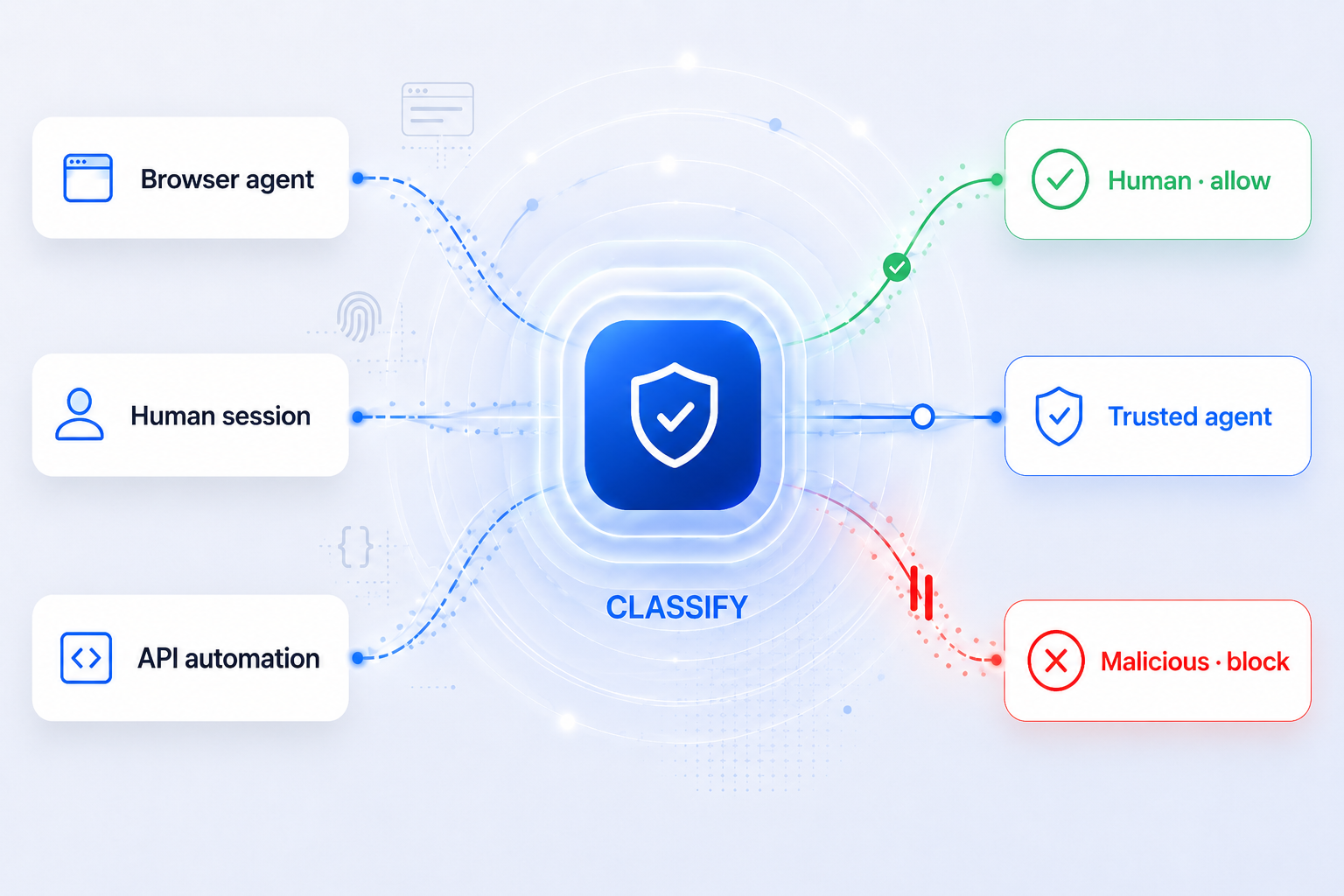
See How CrossClassify Secures the New AI Agent Attack Surface
Classify human sessions, trusted agents, and malicious automation before requests turn into risk
Explore CrossClassify today
Detect and prevent fraud in real time
Protect your accounts with AI-driven security
Try CrossClassify for FREE—3 months
Share in
Related articles
Frequently asked questions
Let's Get Started
Create your free
account today
Discover how to secure your app against fraud using CrossClassify
No credit card required