
01 · About the customer
About SharePad
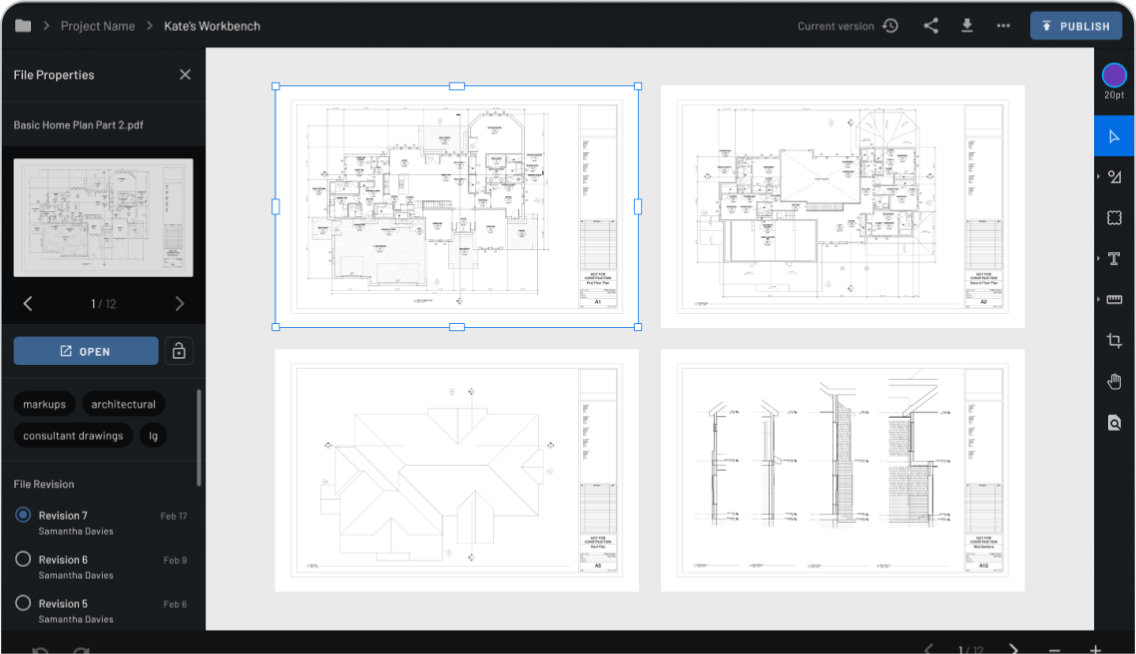
SharePad is a browser-based collaboration platform for large construction drawings. Architects, engineers, building managers and contractors can open substantial PDF plans, assemble project workbenches and share access with a link.
The product removes the delays of downloads, desktop installs and fragmented file versions. That makes collaboration faster across project teams—and makes continuous account and session context more important.
02 · The challenge
The product removed file friction—and made identity context more important
SharePad lets architects, engineers, building managers and contractors open massive PDF drawings, assemble master workbenches and share them with a link. That speed is the product advantage, but it also means access can move quickly across companies, devices and project teams.
Credentials and shared URLs alone could not explain whether access still matched the expected user, device and behavior. A compromised account or automated session could reach valuable plans and markups while looking superficially legitimate.
Before CrossClassify
With CrossClassify
03 · The solution
Protect the collaboration flow without turning it into a checkpoint
CrossClassify added behavioral, device and network context to SharePad sessions. Risk could be evaluated across sign-in, project access and collaboration activity instead of being reduced to a single authentication event.
The integration preserved SharePad’s fast, browser-based experience. Trusted users kept moving through large drawings and shared workbenches, while unusual device reuse, automation and behavioral shifts became visible for targeted action.
How it works
One continuous loop replaced the one-time trust decision.
04 · The results
A wider collaboration surface no longer meant a wider blind spot
SharePad gained a continuous risk layer around the workflows that make the platform useful: quick browser access, large drawing review and link-based collaboration across project teams.
Instead of adding blanket friction, the platform can reserve scrutiny for sessions whose device, network or behavior no longer fits the expected pattern—protecting project information without undermining the product’s speed.