Last Updated on 06 Jul 2026
Bonus Abuse Metrics: Why LTV, CAC, Retention, and Referral Data Can Mislead Growth Teams
Share in
Introduction
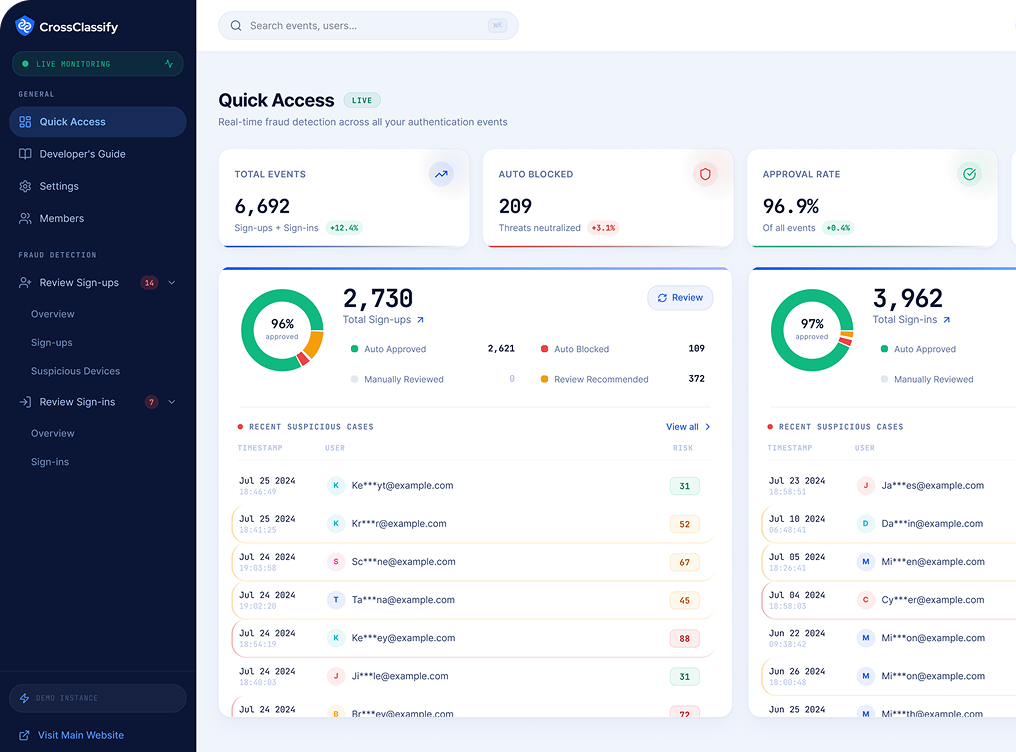
Growth teams rely on metrics to decide where to spend.
CAC, LTV, activation, retention, referral conversion, payback period, and campaign ROI guide budget decisions.
Bonus abuse makes those metrics less reliable.
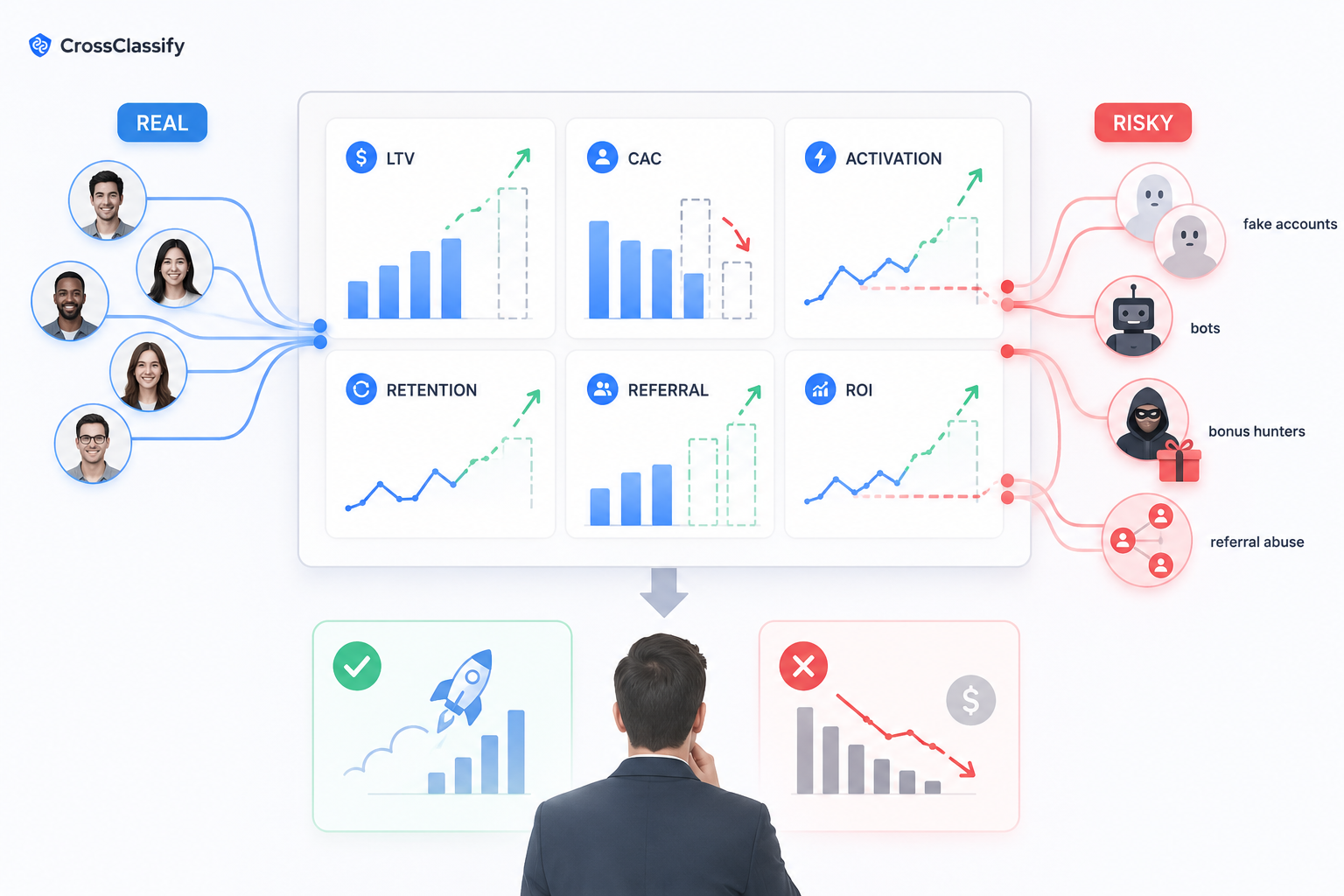
A fake account can lower apparent CAC. A reward claim can inflate activation. A referral farm can make a channel look viral. A bot can create traffic that looks like demand. A bonus hunter can look like a real customer until the reward is gone.
The danger is not only loss. The danger is bad decision making.
Why Bonus Abuse Metrics Matter Now
Companies use incentives to compete for attention. Signup bonuses, promo codes, referral rewards, cashback offers, free credits, and loyalty points all create measurable activity.
But activity is not the same as quality.
Automated traffic and bad bots remain a serious background problem for digital businesses. Imperva reported that automated traffic reached 51 percent of web traffic and bad bots reached 37 percent in its 2025 Bad Bot Report.
This means campaign metrics should be interpreted with more caution when promotions are easy to claim or repeat.
Which Metrics Become Misleading
Activation
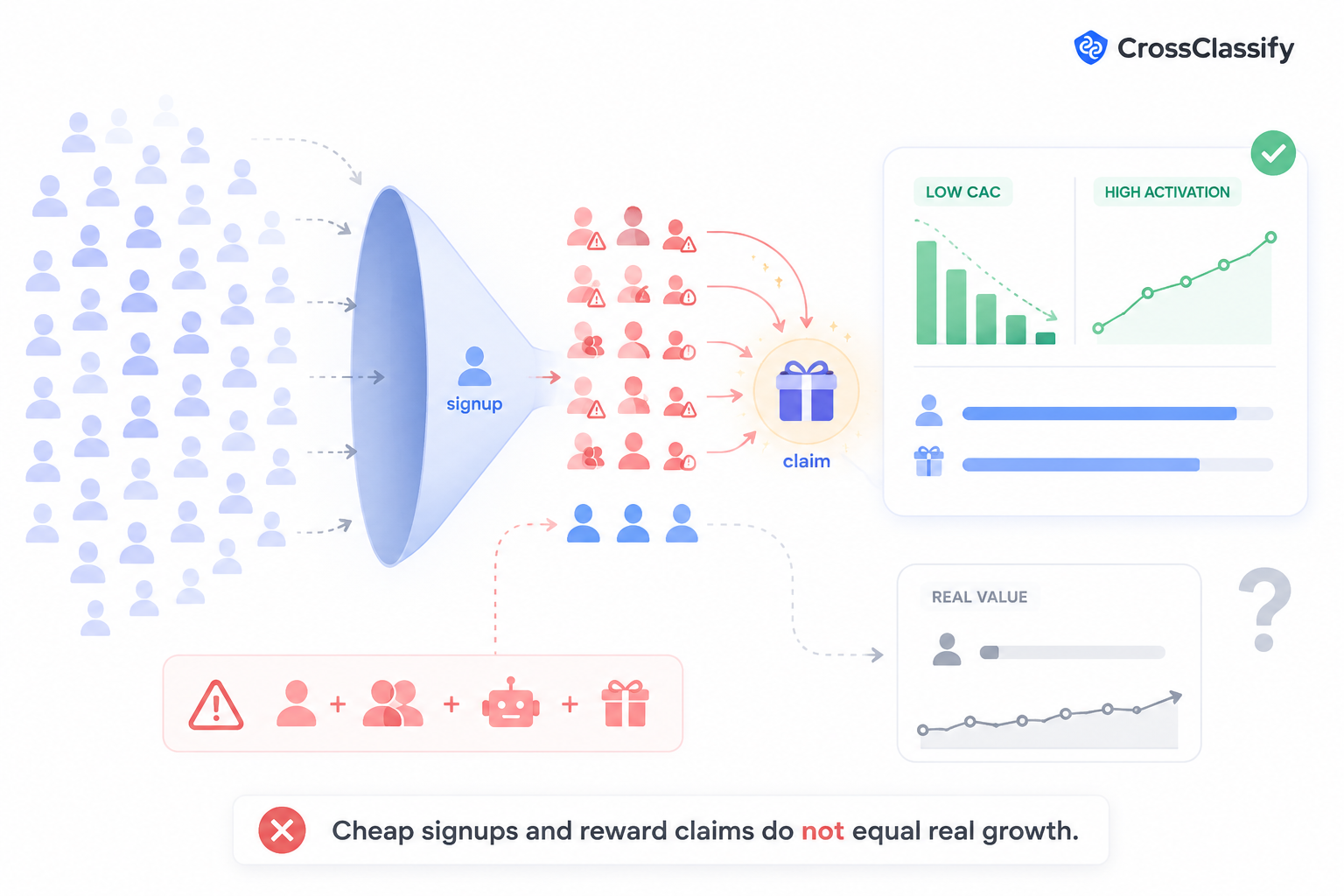
A bonus claim may be counted as activation, even if the user only came for the reward.
CAC
Fake accounts can make acquisition look cheaper if the campaign counts signups instead of qualified users.
LTV
LTV may drop later, but the early campaign read may already have pushed the team to scale spend.
Referral conversion
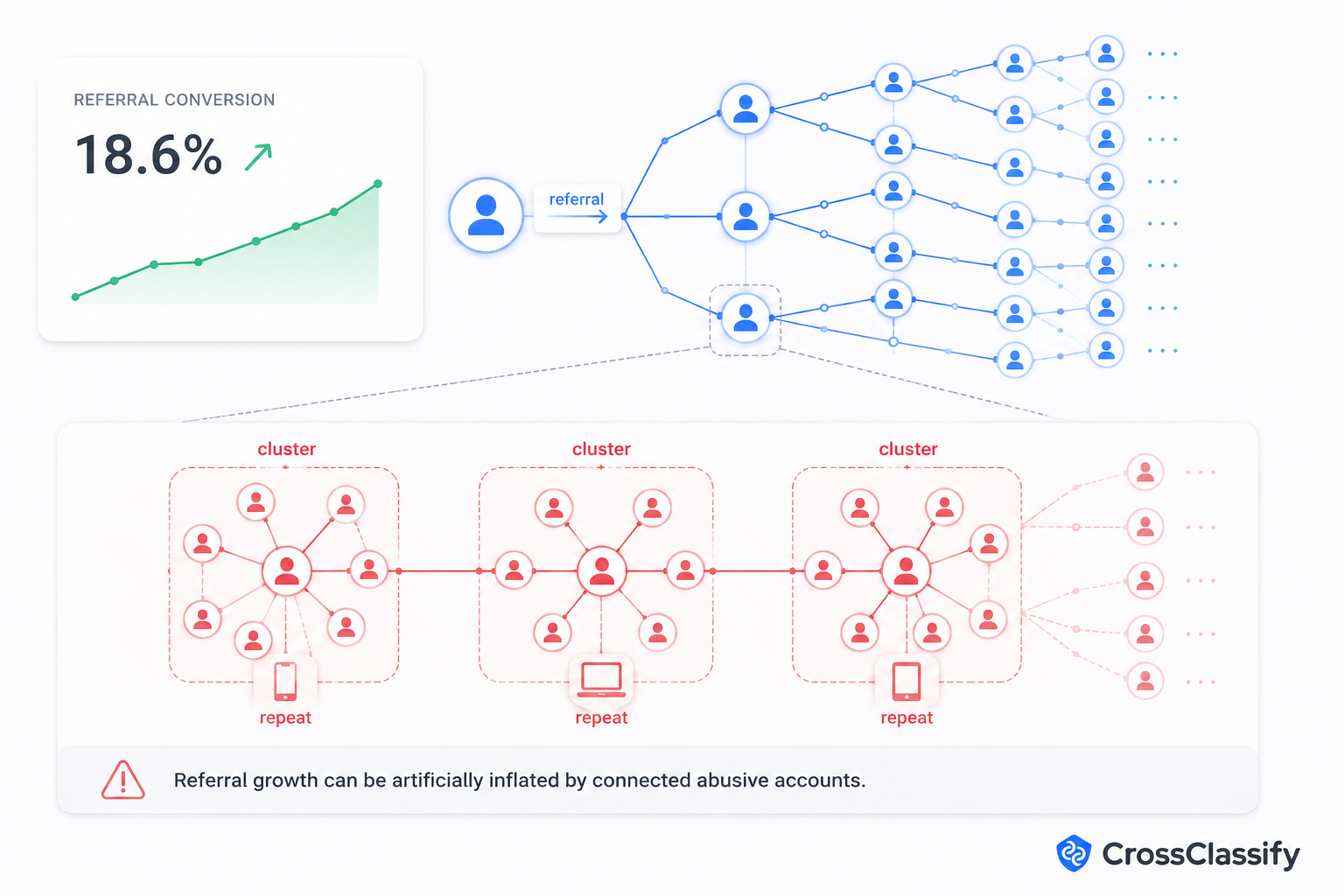
Referral farms can make the referral channel look stronger than it is.
Retention
Low retention may expose bonus abuse, but usually after rewards have already been claimed.
Campaign ROI
If abuse is not separated from real user activity, ROI may be overstated.
What Usually Goes Wrong
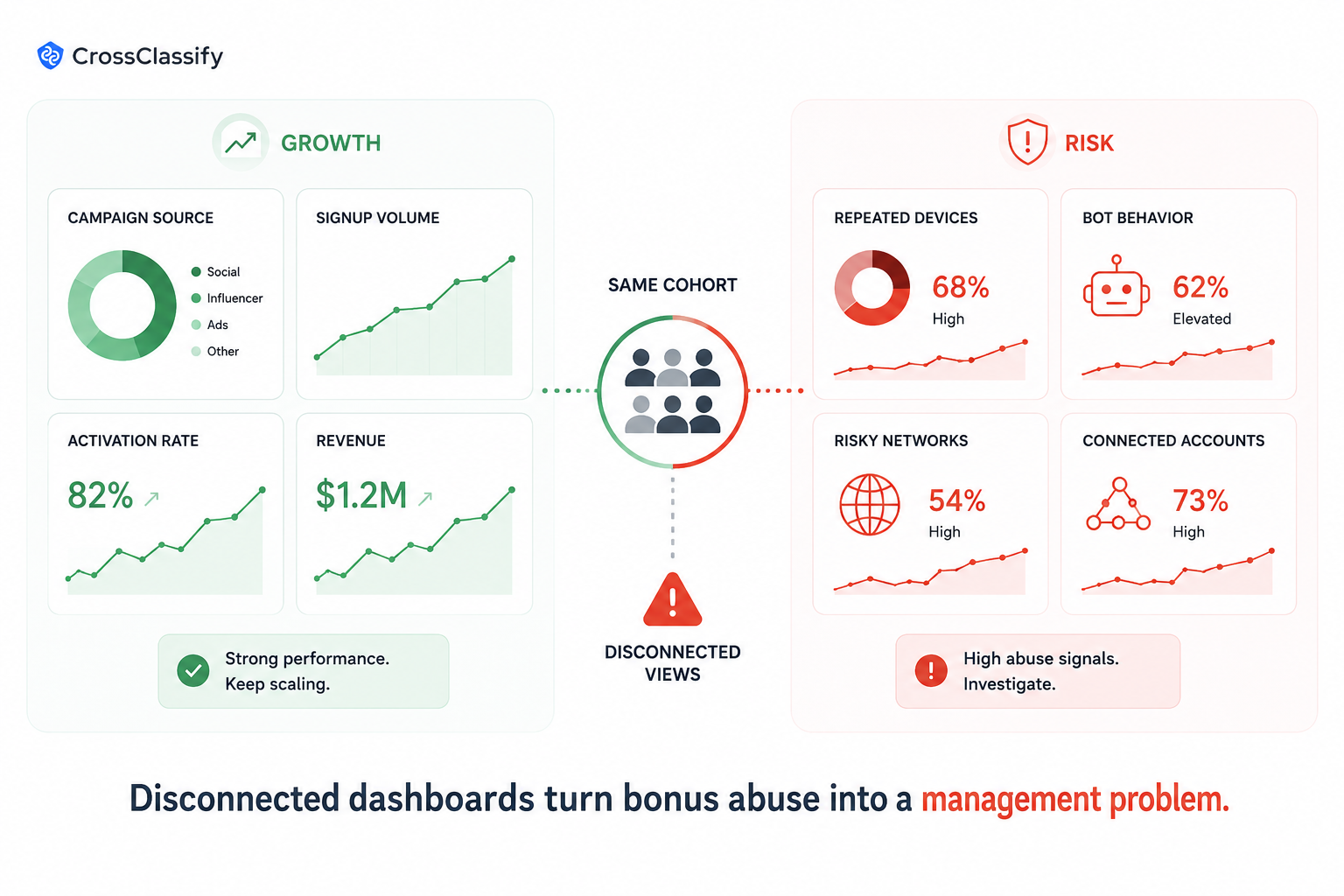
Growth and fraud teams often use different dashboards.
Growth sees campaign source, signup volume, activation, and revenue. Fraud sees suspicious devices, repeated accounts, bot behavior, risky networks, and referral clusters.
If those views are not connected, leadership may scale a campaign based on growth metrics while fraud teams investigate the same cohort as suspicious.
That is how bonus abuse becomes a management problem.
What a Better Metrics Framework Looks Like
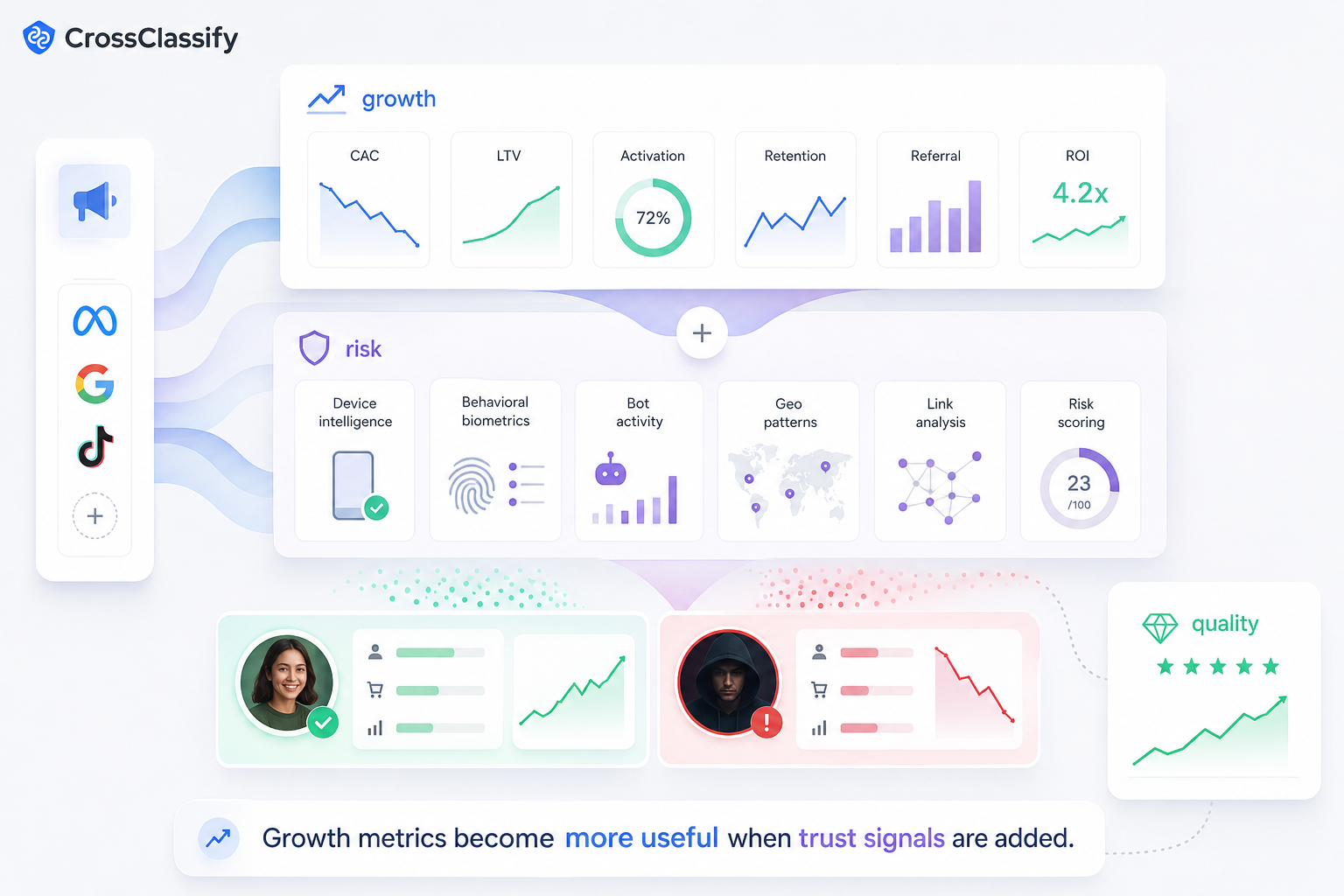
A better campaign review should combine growth metrics with fraud quality metrics.
Add questions like:
- What percentage of signups had risk signals?
- Which channels produced repeated devices?
- Which referral paths produced connected account clusters?
- Which accounts claimed rewards but did not retain?
- Which cohorts had high reward cost and low long term value?
- Which campaigns produced bot or VPN patterns?
- Which users had suspicious behavior before redemption?
These questions create a better view of campaign health.
Where CrossClassify Fits Naturally
CrossClassify can help teams add fraud and trust signals to campaign review by analyzing device intelligence, behavioral biometrics, bot activity, geo patterns, link analysis, and risk scoring.
When interaction patterns matter, behavioral biometrics can help teams understand whether user behavior looks natural, repeated, scripted, or abnormal. This helps growth and fraud teams interpret campaign metrics with more context.
CrossClassify does not replace analytics tools. It helps teams understand user quality behind the numbers.
Practical Example
A SaaS company launches a free credit offer. CAC looks attractive because signup volume increases. Activation looks strong because many users claim the credit.
After a month, retention is weak. The fraud team finds repeated device patterns and similar behavior across many accounts.
The issue was not only fraud loss. The campaign metrics were polluted from the start.
Conclusion
Bonus abuse can make weak growth look strong.
To avoid that, companies should connect fraud signals with growth metrics. LTV, CAC, activation, retention, and referral data are more useful when teams know which users are real, which users are risky, and which accounts may be connected.
See How to Stop Bonus Abuse Before It Drains Your Growth Budget
CrossClassify detects suspicious reward claims before promotions turn into losses

Explore CrossClassify today
Detect and prevent fraud in real time
Protect your accounts with AI-driven security
Try CrossClassify for FREE—3 months
Share in
Related articles


Frequently asked questions
Let's Get Started
Create your free
account today
Discover how to secure your app against fraud using CrossClassify
No credit card required