
01 · About the customer
About Helfie
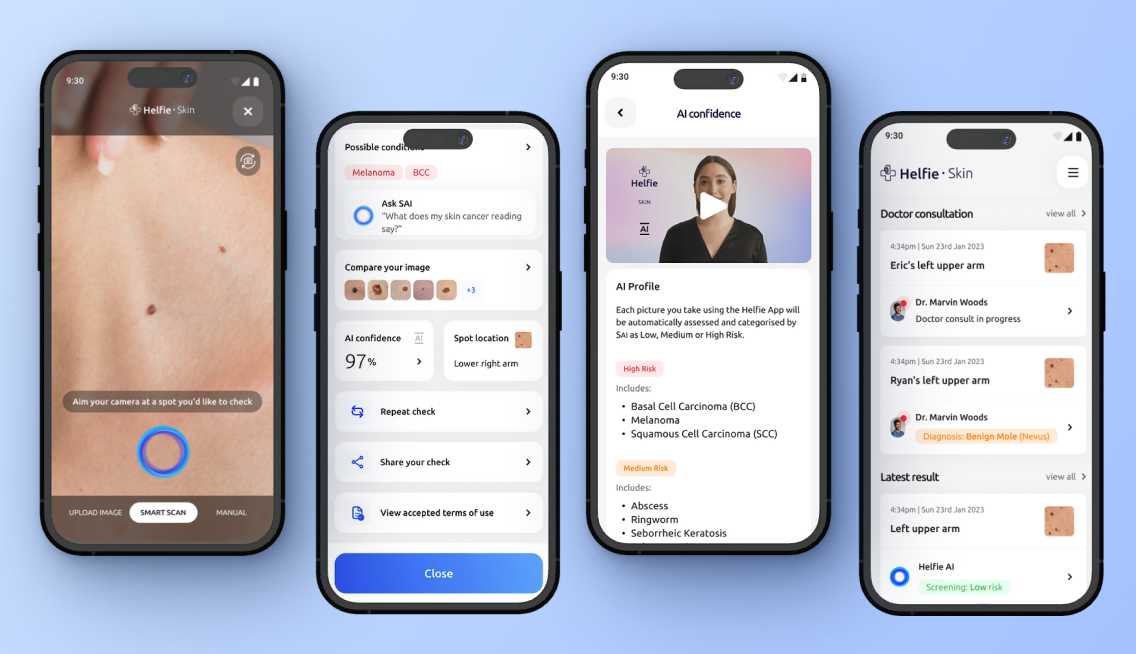
Helfie is a personal health intelligence platform that uses AI to make health checks more accessible through everyday devices. Its product experience depends on being quick, clear and easy to use.
That same accessibility raises the standard for account protection: deeper fraud detection has to protect sensitive journeys without turning every legitimate session into a security exercise.
02 · The challenge
Better detection could not come at the cost of more manual work
Helfie wanted deeper visibility into credential stuffing, account takeover and abnormal behavior after login. But a detection tool that simply generated more alerts would shift the problem to an already busy investigation queue.
The health platform needed to protect sensitive user journeys while preserving the fast, accessible experience at the center of its product.
“We wanted better post-login fraud detection, but we didn’t want to create another queue of alerts for our team. After adding CrossClassify, manual investigation time dropped by 58%, while we identified four times as many suspicious sessions in the first six weeks that our existing controls hadn’t surfaced.”
Before CrossClassify
With CrossClassify
03 · The solution
Score the session first. Escalate only what deserves attention.
CrossClassify combined behavioral biometrics, device intelligence and real-time risk scoring across Helfie sessions. Risk accumulated as the session evolved rather than being judged once at the login screen.
Helfie tuned which risk levels reached investigators, replacing broad anomaly alerts with a smaller queue of higher-confidence sessions and the evidence needed to review them quickly.
How it works
One continuous loop replaced the one-time trust decision.
04 · The results
A sharper queue changed both sides of the equation
During the first six weeks, Helfie identified four times as many suspicious sessions as its previous controls while reducing manual investigation time by 58%.
The outcome was not merely more detection. It was better operational leverage: more genuine risk surfaced, fewer analyst hours consumed and less friction for legitimate users.