Last Updated on 21 Sept 2026
When a Trusted LLM Account Becomes a Data Exfiltration Channel: Controlling Sensitive Information Disclosure
Share in
Introduction
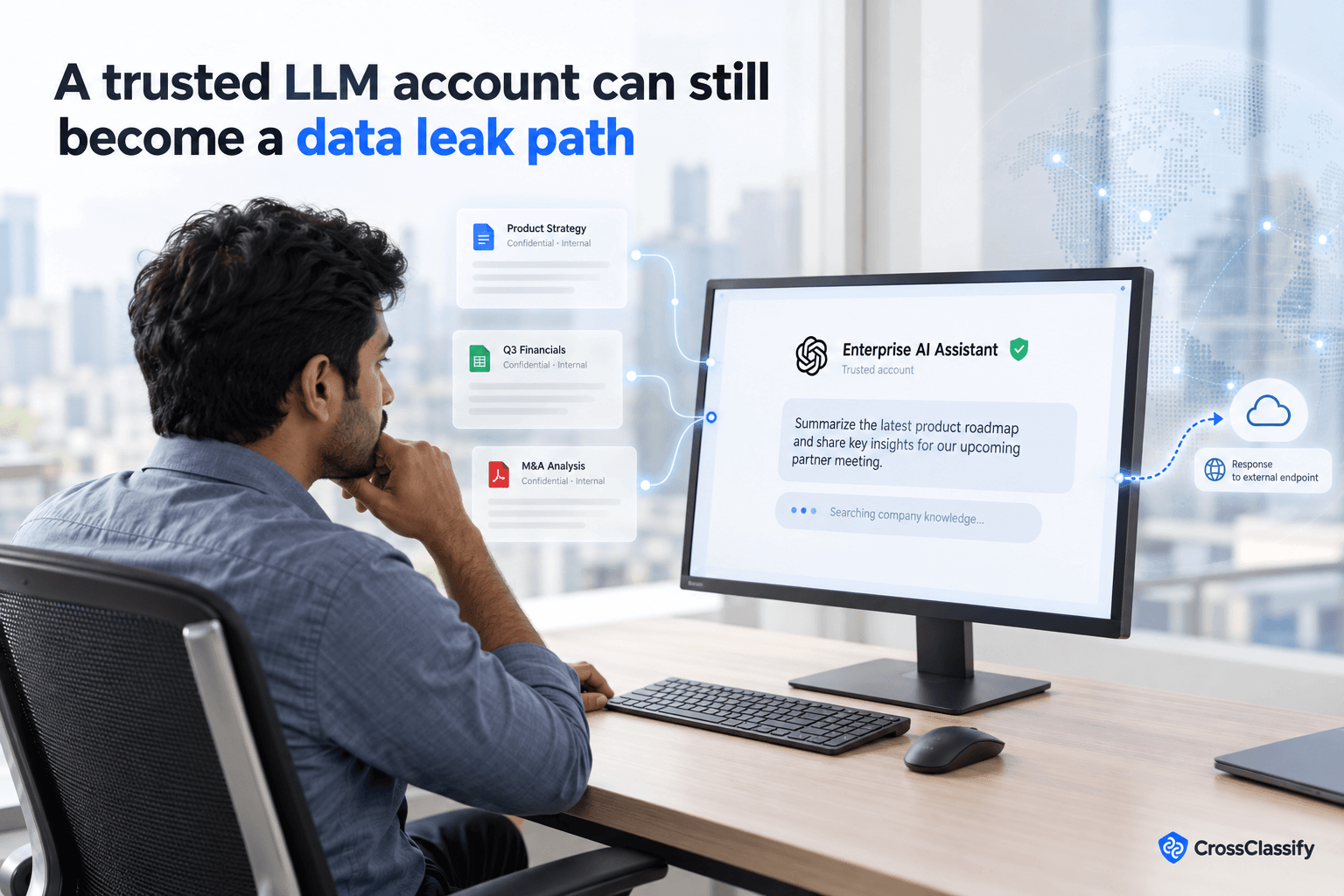
Enterprise LLM applications often sit close to valuable information. They may summarize internal documents, answer questions about customer records, search support histories, draft responses from case data, or help employees navigate policies. The model can make that information easier to use, but the same convenience can make sensitive data easier to gather and remove.
OWASP identifies sensitive information disclosure as LLM02:2025. The category includes personal information, financial details, health records, legal documents, confidential business information, security credentials, and proprietary model information. Disclosure can occur through training data, prompts, retrieved context, logs, generated output, or connected tools.
Many discussions focus on employees pasting secrets into a public model. That remains important, but an enterprise application faces another path: a compromised or abusive account can use legitimate model functions to extract information. The model becomes a high speed interface to data the account can reach, and each individual question may appear authorized.
Where sensitive information enters the LLM workflow
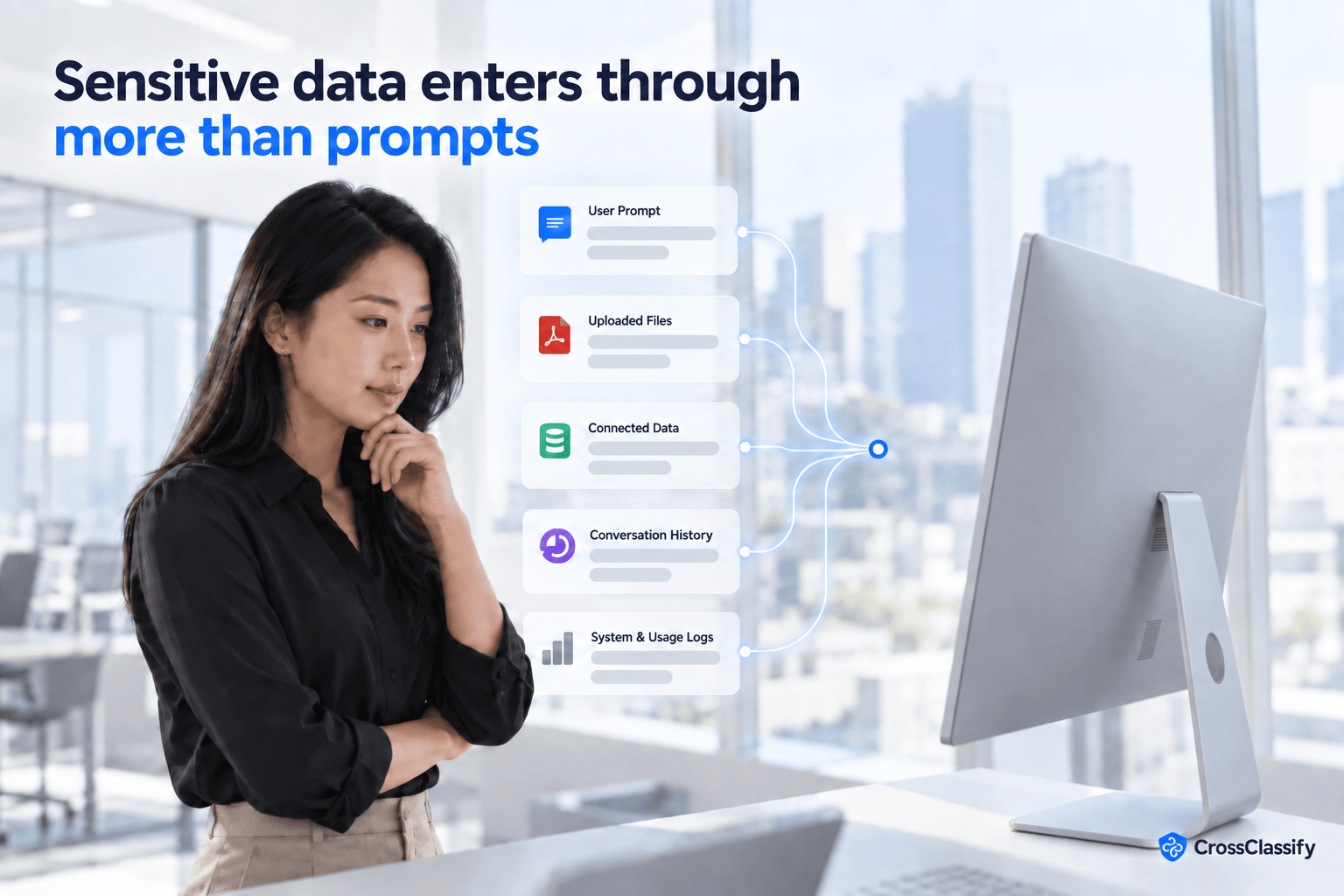
Sensitive data can enter through direct user prompts, uploaded files, conversation history, retrieval systems, tool responses, fine tuning material, and application logs. Teams need an inventory that traces each category from collection to deletion. Without that map, privacy policies and technical controls may cover the model provider while missing an internal cache, analytics platform, or evaluation dataset.
Data may also be created during inference. A model can combine ordinary records into a sensitive conclusion, summarize a confidential pattern, or reveal that a person belongs to a protected group. Security classification should consider what the application can infer, not only the labels attached to the source fields.
Retention choices affect exposure. Conversation memory, observability logs, feedback stores, and debugging traces can preserve prompts and responses longer than users expect. The application should minimize stored content, redact sensitive fields where possible, restrict access to logs, and define deletion behavior that includes derived artifacts and cached retrieval results.
How account takeover changes the threat model
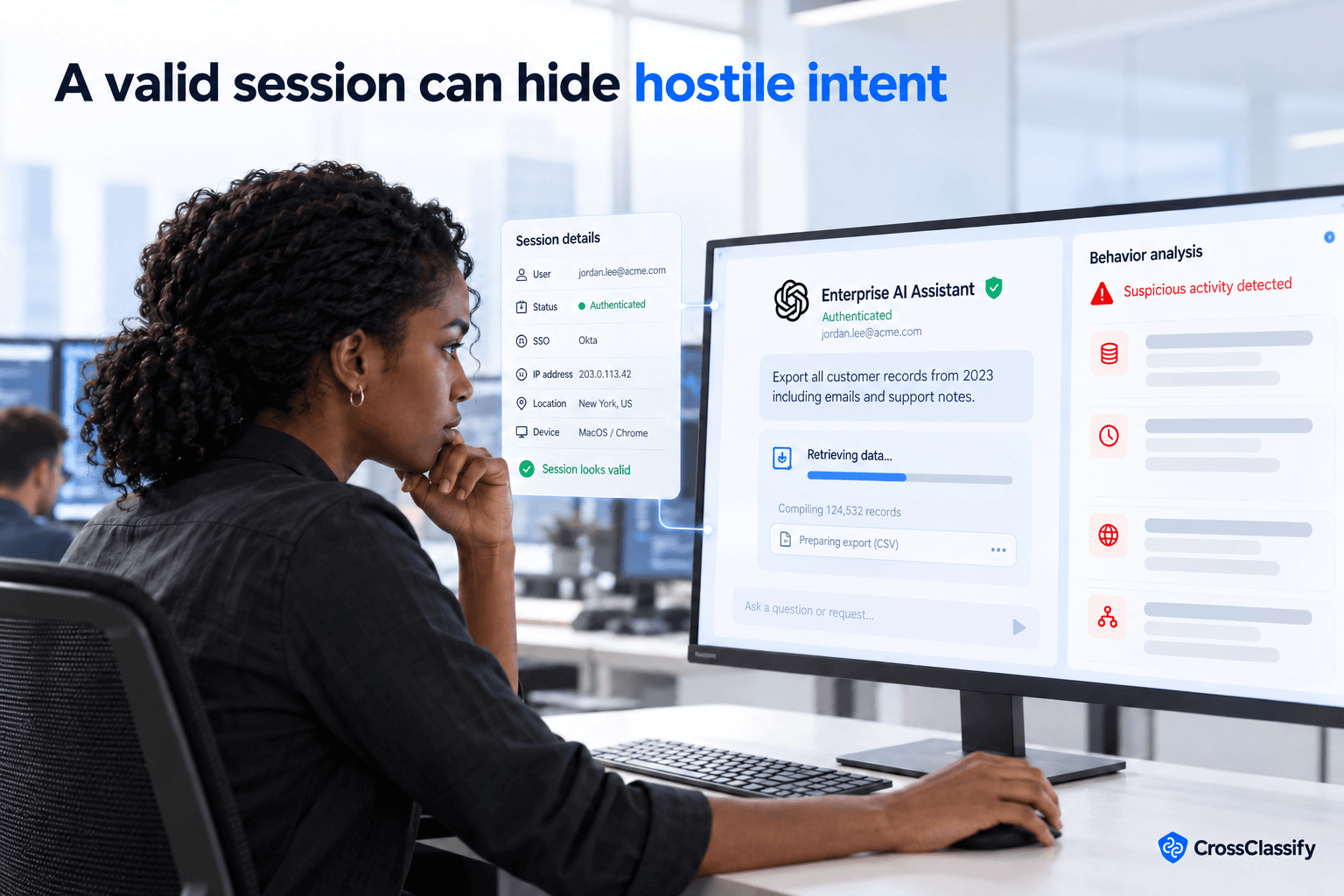
Traditional authorization asks whether the account has permission. Account takeover changes the answer without changing the credentials. An attacker using a valid session may search internal knowledge, request summaries, enumerate records, or ask the model to transform information into a more portable format. The access control system sees the expected account while the behavior behind it has changed.
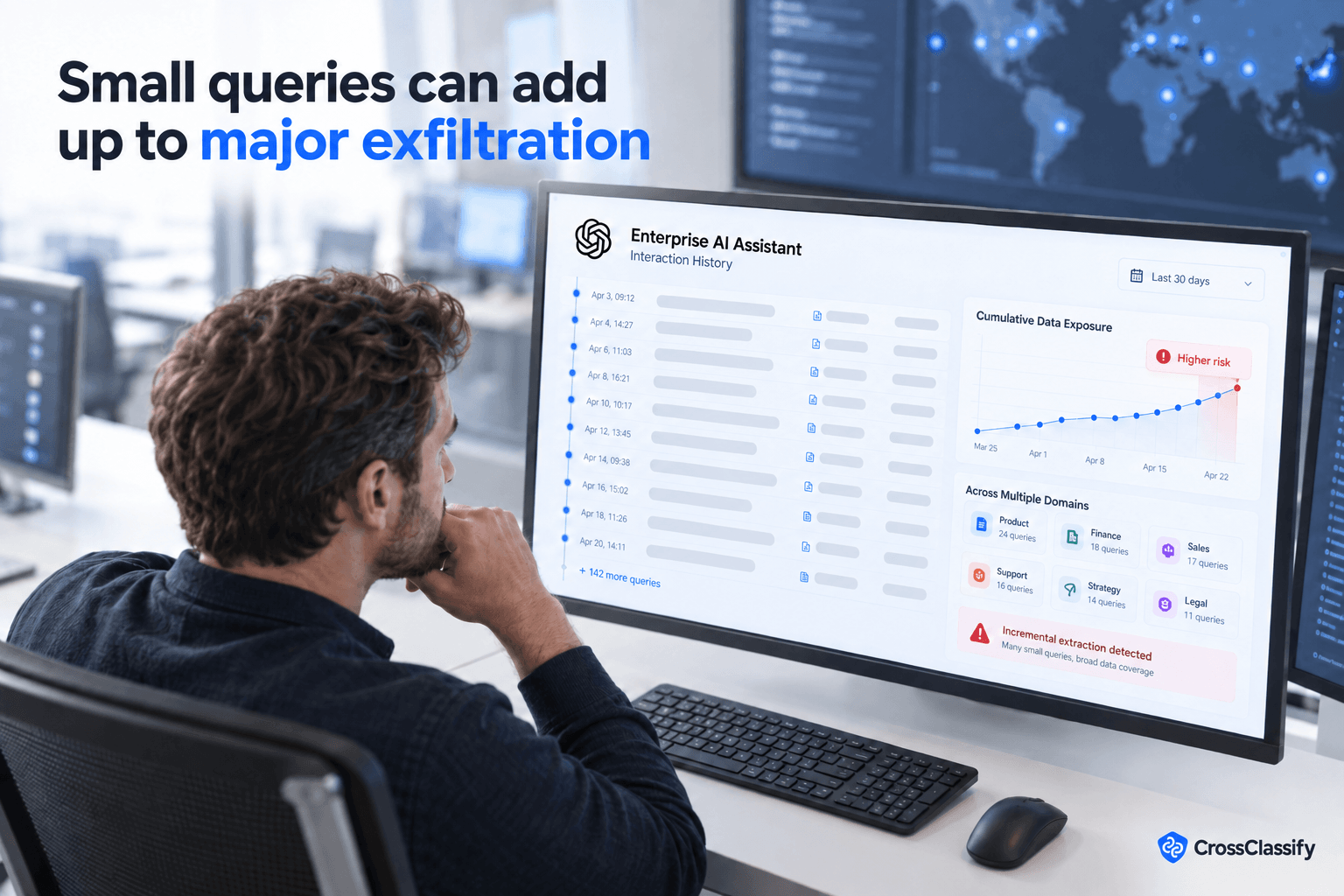
The model can accelerate extraction by accepting natural language. Instead of understanding database schemas or application screens, the attacker can ask broad questions and refine them. A sequence of harmless looking prompts can gradually collect customers, contracts, credentials, source details, or internal decisions. This creates a slow exfiltration path that may not trigger volume thresholds.
Compromise can also occur through connected customer workflows. A stolen account may interact with support automation, account recovery, document assistants, or personalized agents. If the system trusts the authenticated identity without evaluating the current device and behavior, the model may disclose information or support actions that the legitimate user never requested.
Applying data minimization and authorization
The application should expose only the data required for the specific use case. A support assistant answering a delivery question does not need an entire customer profile. A policy assistant does not need unrestricted access to all legal matters. Narrow data scopes reduce the blast radius of prompt manipulation, model mistakes, and account compromise.
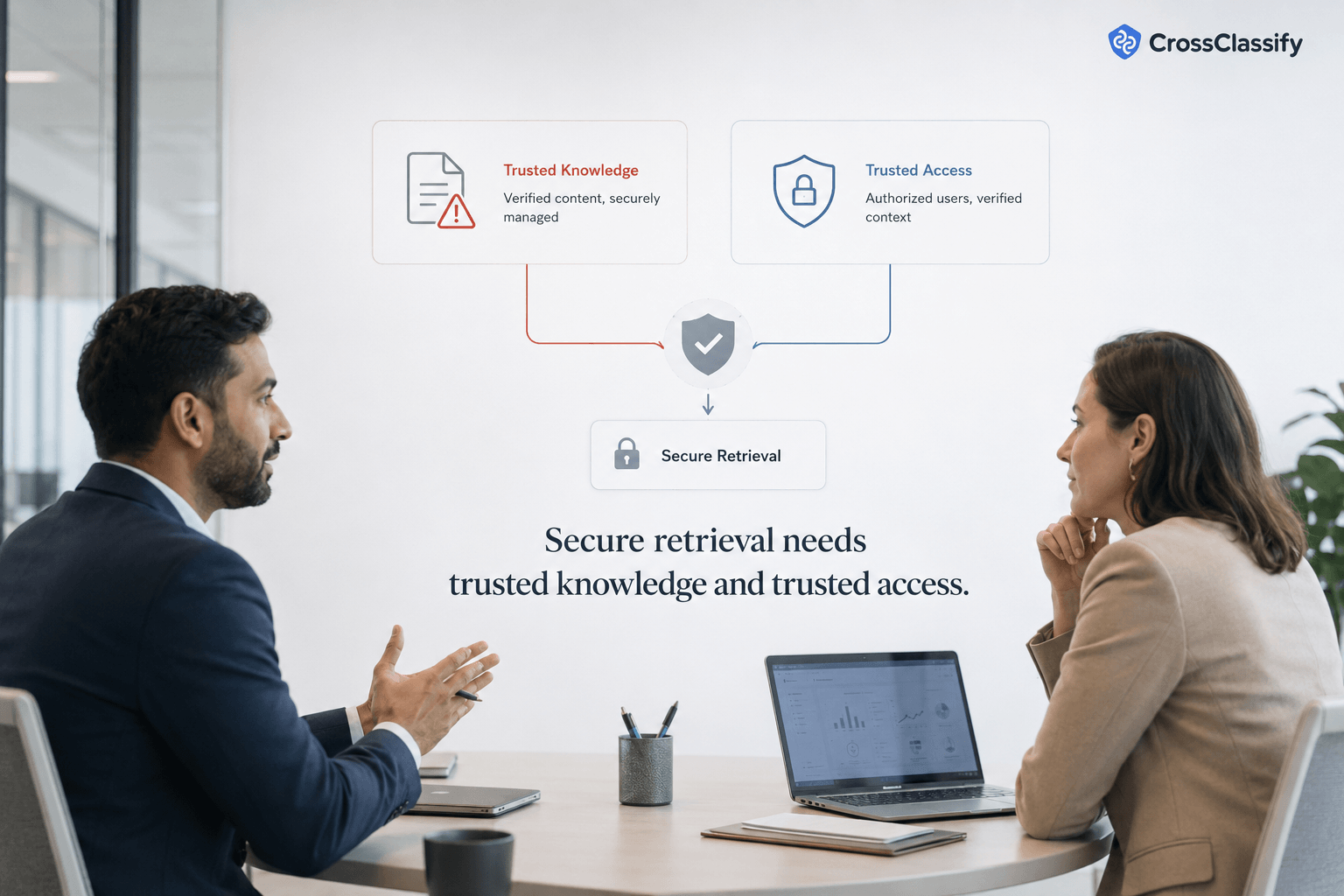
Authorization must be enforced outside the model and at every data boundary. The application should filter records before they enter the context window, bind access to the authenticated user, and prevent model generated identifiers from expanding the scope. Retrieved passages and tool results should carry source, ownership, sensitivity, and permission information.
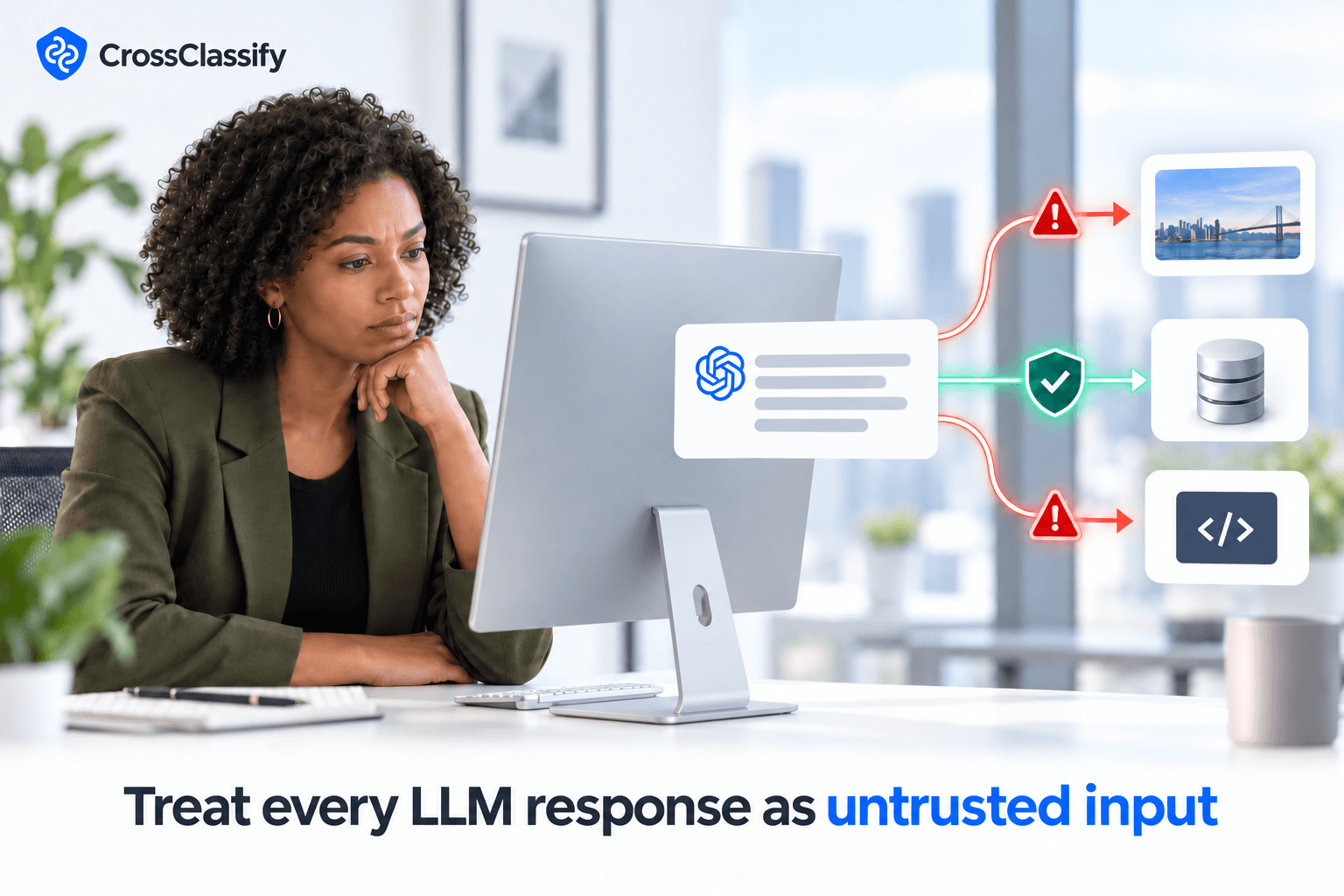
Sensitive output also needs protection. Responses can be redacted, summarized, or blocked according to the user’s role and the destination. Download, copy, bulk query, and export behavior may require separate limits. The model should not be treated as a reliable data loss prevention control, because instructions can be bypassed and generated language can encode information in unexpected ways.
Detecting gradual and distributed extraction
Data extraction does not always resemble a large download. An attacker may ask many small questions, change wording, spread requests over time, or use several accounts. Detection should look for unusual topic breadth, enumeration patterns, repeated reformulation, access to rarely used collections, and changes in the relationship between the account and the requested data.
Device and network context can strengthen that analysis. A familiar account appearing through an unfamiliar device, unusual region, proxy network, or new browser environment may deserve additional verification. No single change proves compromise, but several changes combined with new retrieval behavior can justify step up authentication or review.
Behavioral consistency is another signal. Navigation order, typing rhythm, interaction timing, request frequency, and movement through the application may change when an attacker or script controls the session. Continuous evaluation can identify risk after login, which is essential because the sensitive activity may occur long after credentials were accepted.
Building an end to end data inventory
A disclosure review should start with a data-flow map covering prompts, uploads, retrieval sources, tool responses, conversation memory, caches, model-provider requests, observability systems, evaluation datasets, and exports. For each location, teams should record the data category, legal or contractual basis, permitted users, retention period, encryption boundary, and deletion mechanism.
The inventory should include derived information. A model may infer health status, financial distress, legal strategy, security posture, or commercial plans from records that appear ordinary in isolation. Controls based only on source-field labels can miss sensitive conclusions created during retrieval and generation.
Data minimization should be implemented in context assembly. Instead of sending an entire customer record or document, the application can select the smallest permitted fields and passages needed for the task. This lowers exposure to prompt injection, model error, account compromise, logging mistakes, and downstream retention.
Protecting memory logs and evaluation data
Conversation memory creates a secondary data store with its own access and deletion requirements. Applications should distinguish short-lived session context from durable user memory and require an explicit reason to retain either. Memories should remain tenant-bound and should not be retrieved solely because they are semantically similar to a new user’s request.
Logs should favor structured security events over full prompt and response capture. When content logging is necessary for debugging or evaluation, access should be restricted, sensitive values redacted where practical, and retention kept short. Debug modes must not silently send production conversations into lower-control analytics or developer tools.
Feedback and evaluation pipelines can create hidden copies. A user flagging a bad answer may cause the complete conversation to enter a review queue or training dataset. The application should preserve consent, tenant, classification, and deletion requirements when data moves into these secondary workflows.
Preventing bulk and semantic exfiltration
Traditional data loss prevention often looks for large files or known sensitive patterns. LLM extraction can be semantic and incremental. An attacker can ask for summaries, lists, comparisons, translations, or reformatted records and assemble the result over time. Detection therefore needs to consider topic breadth, record coverage, repeated reformulation, and cumulative access across a session or linked accounts.
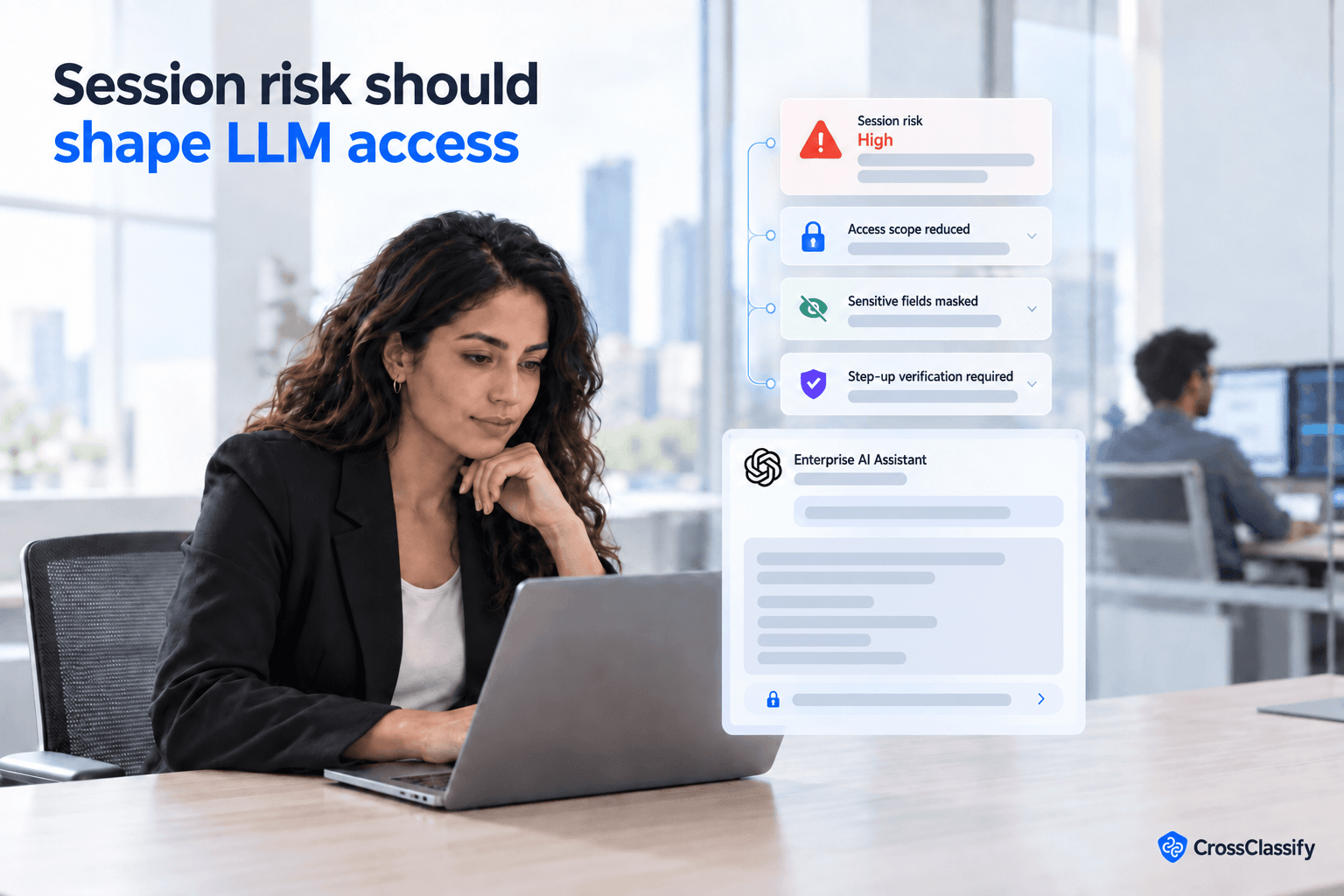
Output controls should match the task. A support assistant may answer one customer-specific question while blocking bulk enumeration and export. Sensitive fields can be masked unless the user completes stronger verification. Copy, download, API, and integration channels may require separate limits because they make collected information easier to remove at scale.
Risk should affect scope, not only the final allow-or-block decision. When a session becomes suspicious, the application can reduce retrieval depth, disable broad search, shorten outputs, mask high-risk fields, require step-up authentication, or pause export. These controls limit exposure while an investigation determines whether the account is compromised.
Investigation and recovery
A disclosure investigation should correlate identity events with AI events. Responders need login history, device and network changes, queries, retrieved sources, tool calls, outputs, downloads, and policy decisions on a common timeline. This makes it possible to distinguish an authorization defect from an account takeover, malicious insider, retrieval leak, or logging failure.
Recovery may require revoking sessions, rotating credentials, disabling exports, invalidating caches, removing exposed memories, and notifying data owners. Teams should predefine thresholds for privacy, legal, and customer escalation. Post-incident testing should confirm that the same account, device, query pattern, and data path can no longer reproduce the disclosure.
Implementation checklist
•
Map sensitive data across prompts, retrieval, tools, memory, logs, caches, evaluations, and exports.
•
Minimize context and outputs to the fields and passages required for the current task.
•
Apply tenant, ownership, and role authorization before data enters the model context.
•
Detect cumulative extraction across queries, sessions, devices, and linked accounts.
•
Use risk to reduce search scope, mask fields, disable export, or require stronger authentication.
•
Maintain a joint identity, privacy, AI, and incident-response timeline for investigations.
Building a disclosure response workflow
Prevention and response should be designed together. Logs need to show which data sources were accessed, what was placed in the model context, what the model returned, and whether the output was copied, downloaded, or sent elsewhere. Privacy controls should protect those logs while preserving enough evidence for investigation.
When risk rises, the application can reduce data scope, limit output length, disable export, require stronger authentication, pause sensitive tools, or route the session for review. The response should be proportional. A new device may require verification, while coordinated enumeration across accounts may justify stronger containment.
Teams should rehearse incidents that involve both AI and account security. The investigation may require product, identity, privacy, data, model, and fraud specialists. A clear ownership model prevents a disclosure from being classified only as a model quality issue when the underlying cause is compromised access or weak runtime controls.
Where CrossClassify fits
CrossClassify does not decide which documents an LLM may retrieve, sanitize training data, or guarantee that a model will never disclose information. Those responsibilities remain with data governance, authorization, retrieval controls, model configuration, and application security. CrossClassify focuses on the trustworthiness of the account and session interacting with the application.
Its account takeover protection can analyze device, network, behavior, and account signals before and after login. This can help identify when valid credentials are being used in an unfamiliar or suspicious way. The application can then use those signals to require verification, reduce access, or prioritize investigation.
CrossClassify should remain a decision support layer. It can flag risk and explain relevant signals, while the customer’s policy determines whether to allow, challenge, restrict, or review activity. This preserves human and application control while adding context that a simple authenticated session cannot provide.
Conclusion
Sensitive information disclosure in LLM applications is a data flow and access problem, not only a prompt problem. Information can enter through prompts, retrieval, tools, memory, logs, and training processes, then leave through generated output or connected actions. Each path needs explicit ownership and control.
Compromised accounts make the risk harder to see because the access may be technically authorized. Teams should minimize data, enforce permissions before context assembly, protect output, monitor retrieval patterns, and evaluate trust continuously after login. They should also prepare incident workflows that connect AI evidence with identity and fraud evidence.
OWASP provides the foundation for protecting sensitive information across the LLM lifecycle. Runtime account intelligence complements that foundation by asking whether the current device, network, behavior, and session are consistent with the legitimate user. Together, these layers reduce the chance that a helpful enterprise assistant becomes a convenient exfiltration interface.
See How Protecting Customers from the Growing Threat of Account Takeover
Ensure Continuous Security with Real-Time Account Monitoring
Explore CrossClassify today
Detect and prevent fraud in real time
Protect your accounts with AI-driven security
Try CrossClassify for FREE—3 months
Share in
Related articles
Frequently asked questions
Let's Get Started
Create your free
account today
Discover how to secure your app against fraud using CrossClassify
No credit card required