02 Feb 2026
Your fraud stack is blind without resilient device fingerprinting
Quick question.
If a bot can reset cookies, rotate IPs, spoof a browser, and still look like a brand new customer…
How confident are you that your fraud controls are actually stopping repeat offenders?
And how many of your “new users” are just the same attacker wearing a fresh mask?
This is why securing platforms with device fingerprinting matters.
Because the biggest fraud problems today are identity problems:
credential stuffing, account takeover, fake account creation, multi account abuse, synthetic identity, scripted automation.
And attackers love one thing: fragile device signals.
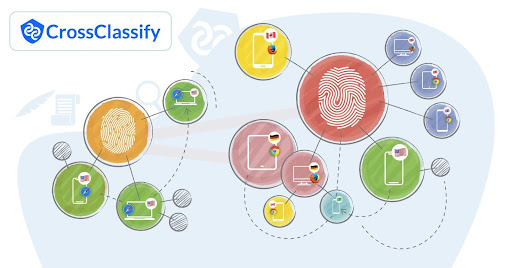
The recent NADER research calls this out directly: many device fingerprinting and device resolution approaches are brittle, highly sensitive to normal device configuration changes, and struggle to reliably match devices or detect device sharing. Their answer is also a clue for all of us: combine fingerprint similarity with link analysis across device and account relationships, and adapt to dynamic environments.
Now layer that reality on top of the numbers:
1) Credential stuffing is not “background noise”. A median of 19% of all authentication attempts were credential stuffing, and it can spike as high as 44% on a single day.
2) Bots are not “edge cases”. Cloudflare reports bots are 31.2% of application traffic on average.
3) Ecommerce fraud is not “small”. Juniper estimates ecommerce fraud grows from $44.3B in 2024 to $107B by 2029.
Neglect this and the consequences are predictable:
higher account takeover rates, more fake signups, more manual reviews, higher chargebacks, and a risk team that is always reacting.
So what does resilient device fingerprinting look like in practice?
1) Treat it as device resolution, not a single magic identifier.
2) Blend stable signals, behavioral signals, and consistency checks.
3) Use graph based link analysis to expose multi account rings and shared devices.
4) Design for drift, measure it, and adapt thresholds continuously.
5) Build privacy by design so security does not require creepy data collection.
If you’re building an enterprise device fingerprinting fraud prevention platform, you should read the NADER paper. I linked it in the comments.
Also, if you want a production ready device fingerprinting API that already focuses on spoofing detection, continuous monitoring, and device link analysis, CrossClassify has a dedicated solution.
The link to the research paper discussed (NADER) is here