Last Updated on 07 Jan 2026
Real-Time Freight Fraud Protection for Logistics Platforms
Share in
Key Notes
•
Freight fraud is accelerating fast Global logistics losses from cargo theft, double brokering, and digital fraud exceed USD 7 billion annually, with organized rings driving repeat attacks. Platforms without real-time controls face compounding financial and reputational damage as fraudsters scale faster than manual reviews.•
Account takeover is now a freight-critical risk In logistics platforms, a single compromised dashboard can redirect loads worth over USD 500,000, based on reported average cargo theft values. Preventing post-login abuse is as important as stopping bad sign-ups.•
Real-time risk signals outperform static checks Studies across digital fraud show behavioral and device-based signals reduce fraud losses by over 40 percent compared to rule-only systems. Freight platforms need continuous verification, not one-time trust decisions.
Introduction
Freight and transportation platforms operate at the intersection of high-value transactions, complex networks, and tight operational timelines, which makes them prime targets for sophisticated fraud. As global logistics volumes grow into the multi-trillion-dollar range, fraud has evolved from isolated thefts into coordinated digital abuse spanning fake carrier onboarding, account takeover, suspicious address manipulation, and document forgery. This article explores how modern freight fraud operates, why traditional controls fail under high-volume shipping conditions, and how a real-time, intelligence-driven trust layer can protect logistics platforms end to end. It highlights the role of account takeover prevention, account opening protection, behavioral biometrics, bot mitigation, and device fingerprinting in reducing transportation fraud risk. Finally, it explains how CrossClassify enables logistics companies to move from reactive investigations to proactive, real-time freight fraud prevention.
The Freight Economy and Its Expanding Risk Surface
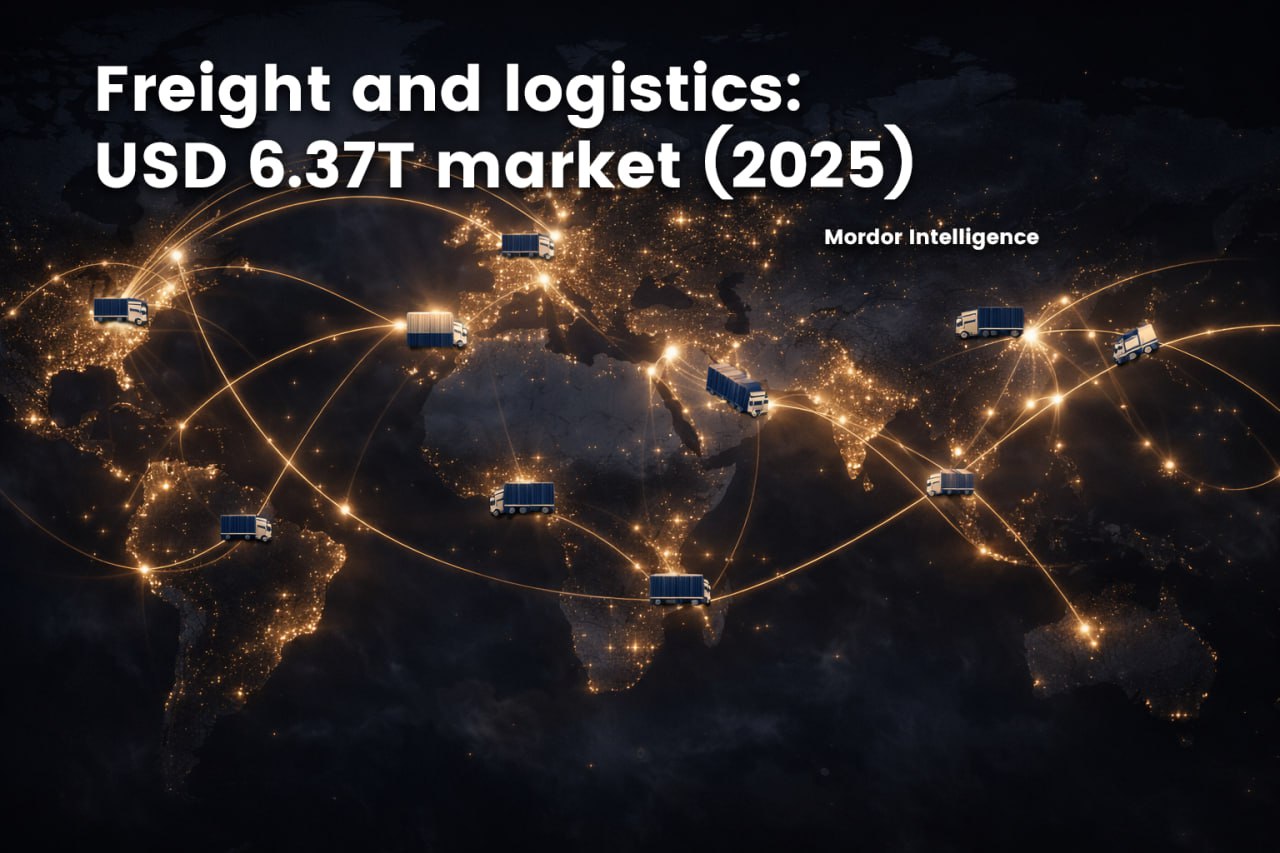
Freight and logistics platforms underpin a massive global economy that moves goods across borders, cities, and supply chains every second. With market valuations reaching into the trillions of dollars annually, even small fraud rates translate into enormous financial losses. Fraudsters are drawn to freight systems because shipments are high value, operational decisions are time-sensitive, and trust is often extended quickly to keep goods moving. As platforms digitize onboarding, dispatching, billing, and proof-of-delivery workflows, they also expand their attack surface.
Unlike traditional theft, modern freight fraud blends cyber abuse with operational manipulation. Criminal networks exploit platform features designed for speed and scale, such as self-service carrier onboarding and instant dashboard updates. High-volume shipping environments make manual verification impractical, allowing subtle anomalies to slip through unnoticed. This combination of scale, speed, and trust creates ideal conditions for organized fraud rings to thrive.
Cargo Theft and Organized Fraud Rings
Cargo theft has shifted from opportunistic crime to highly coordinated operations driven by data and digital access. Industry research estimates annualized global cargo theft losses at over USD 6.6 billion, with some regions reporting average theft values approaching USD 600,000 per incident. These numbers reveal that modern theft is not random but targeted, planned, and repeatable. Fraudsters study platforms, identify weak points, and reuse successful tactics across multiple victims.
What makes cargo theft particularly dangerous today is its connection to digital fraud. Theft is often enabled by fake carrier identities, compromised dispatcher accounts, or manipulated shipment data. Once fraudsters gain a foothold inside a platform, they can orchestrate diversions that appear legitimate on the surface. Without strong transportation fraud prevention controls, these activities blend into normal operations until the load is gone.
Fake Carrier Onboarding and Double Brokering
Onboarding abuse is one of the most costly fraud vectors in freight platforms. Criminals create fake carrier profiles, sometimes in large volumes, to infiltrate load boards and brokerage systems. Industry estimates suggest double brokering schemes alone cost between USD 500 million and USD 700 million annually. These losses are driven by identity reuse, document forgery, and coordinated account creation at scale.
Fake onboarding thrives when platforms rely on static checks and manual reviews. Fraudsters reuse devices, networks, and behavioral patterns, even when names and documents change. This is where advanced account opening protection becomes critical. By analyzing device fingerprinting, behavioral biometrics, and linked identities during signup, platforms can detect suspicious patterns before fraudulent carriers are approved. Preventing fake accounts early reduces downstream risks such as cargo theft and payment fraud.
Account Takeover in Freight Dashboards
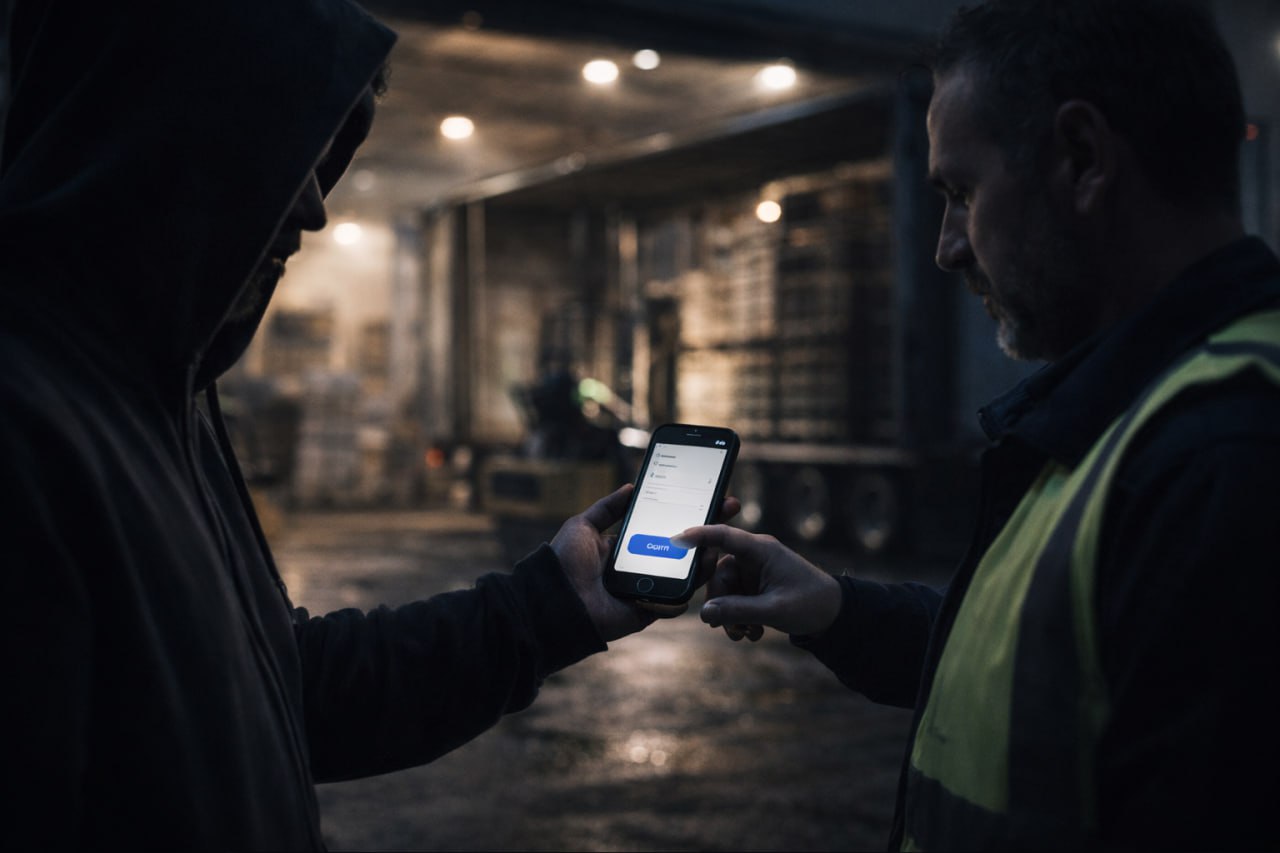
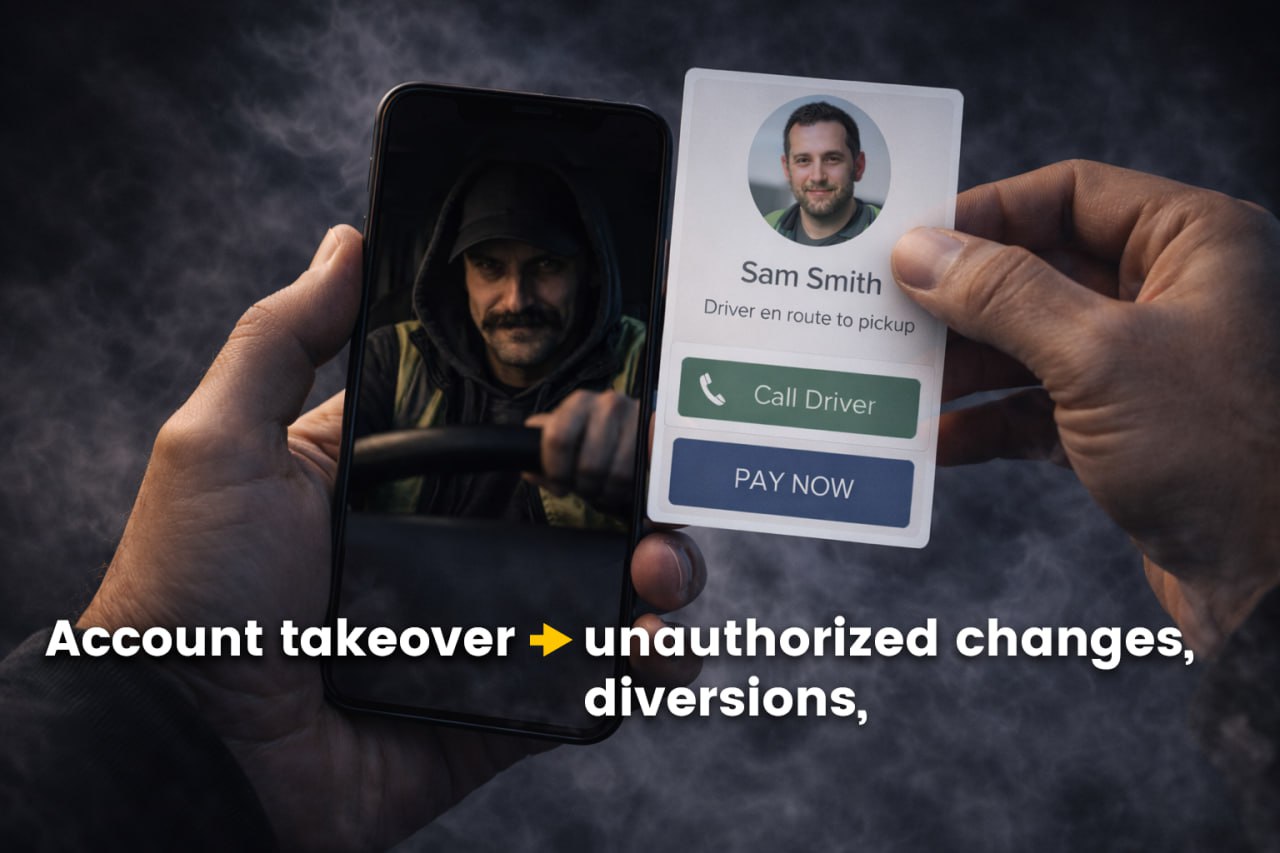
Account takeover is one of the most damaging threats facing logistics platforms today. Unlike consumer apps, freight dashboards control high-value actions such as route changes, carrier assignments, pickup instructions, and payout details. When attackers compromise a legitimate account, they inherit trust instantly. One unauthorized change can redirect an entire shipment or reroute payments within minutes.
Traditional login security is not enough in this environment. Even when credentials are valid, abnormal behavior often emerges after access is gained. This is why account takeover protection must focus on post-login activity, not just authentication. Continuous behavioral analysis, combined with device fingerprinting, allows platforms to detect when a trusted account starts acting unlike its historical patterns. Early detection can stop fraudulent changes before physical losses occur.
Suspicious Address Signals in High-Volume Shipping
Addresses are a silent but powerful fraud vector in freight operations. Fraudsters frequently exploit last-minute destination changes, warehouse substitutions, or subtle address edits to divert cargo. In high-volume shipping environments, these changes can appear routine, especially when operations teams are under pressure to move quickly. Yet many major thefts begin with a single suspicious address update.
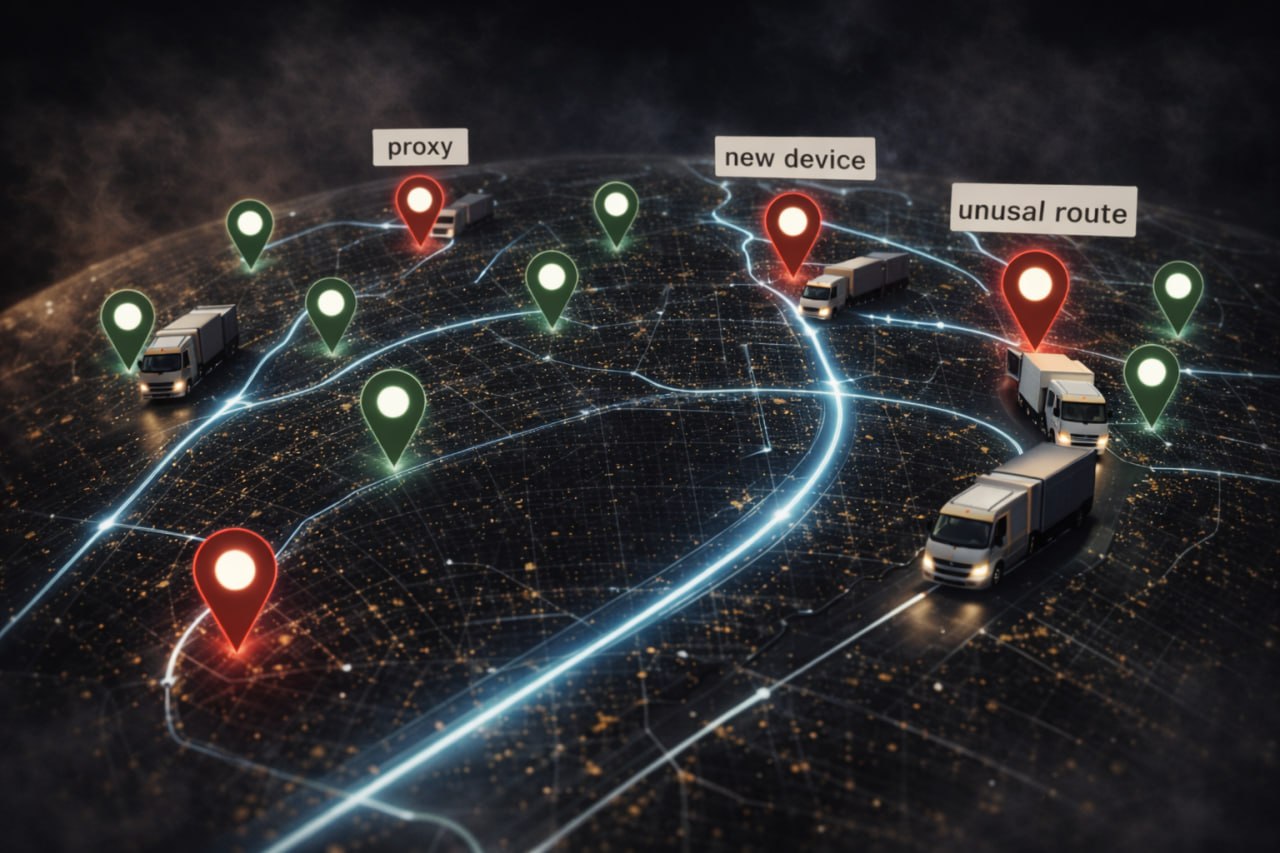
Real-time address risk signals are essential for modern logistics platforms. Instead of relying on after-the-fact audits, platforms must evaluate the context of every change. New devices, unusual routes, proxy usage, and abnormal timing patterns all contribute to risk. By combining these signals, platforms can flag high-risk address changes instantly and trigger step-up verification when needed.
GPS Spoofing and Data Manipulation
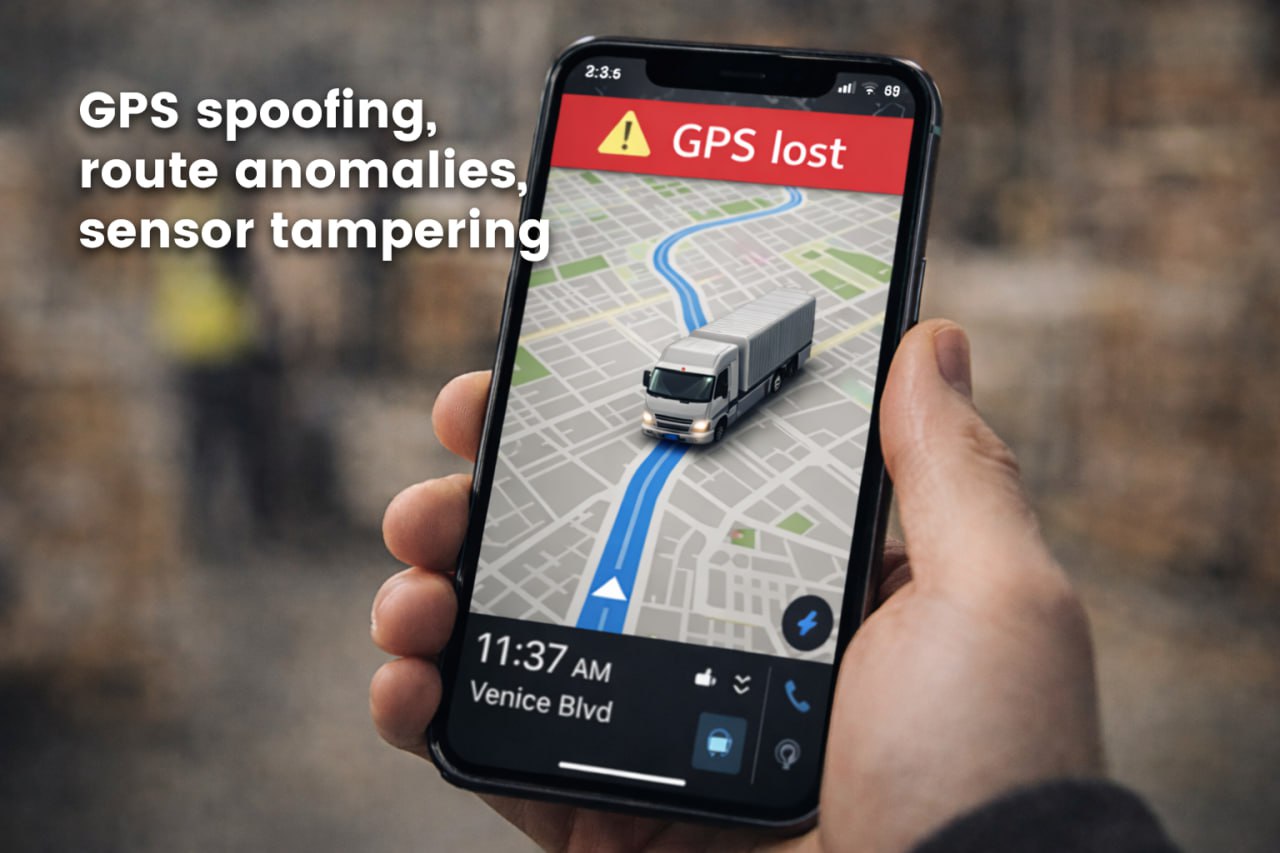
Location data has long been treated as a source of truth in freight operations, but that assumption no longer holds. GPS spoofing, telematics manipulation, and sensor tampering are increasingly accessible to organized fraud groups. Trucks may appear to follow approved routes while physically deviating elsewhere. At the same time, forged documents such as proof-of-delivery files and invoices can be generated with alarming realism.
This shift exposes the limitations of static verification. When platforms trust individual data points in isolation, fraudsters exploit the gaps between systems. Effective freight cyber security requires cross-checking behavioral, device, network, and shipment data continuously. Anomaly detection across these signals helps platforms identify inconsistencies that indicate manipulation, even when each individual input looks valid.
Building a Real-Time Trust Layer for Freight Platforms
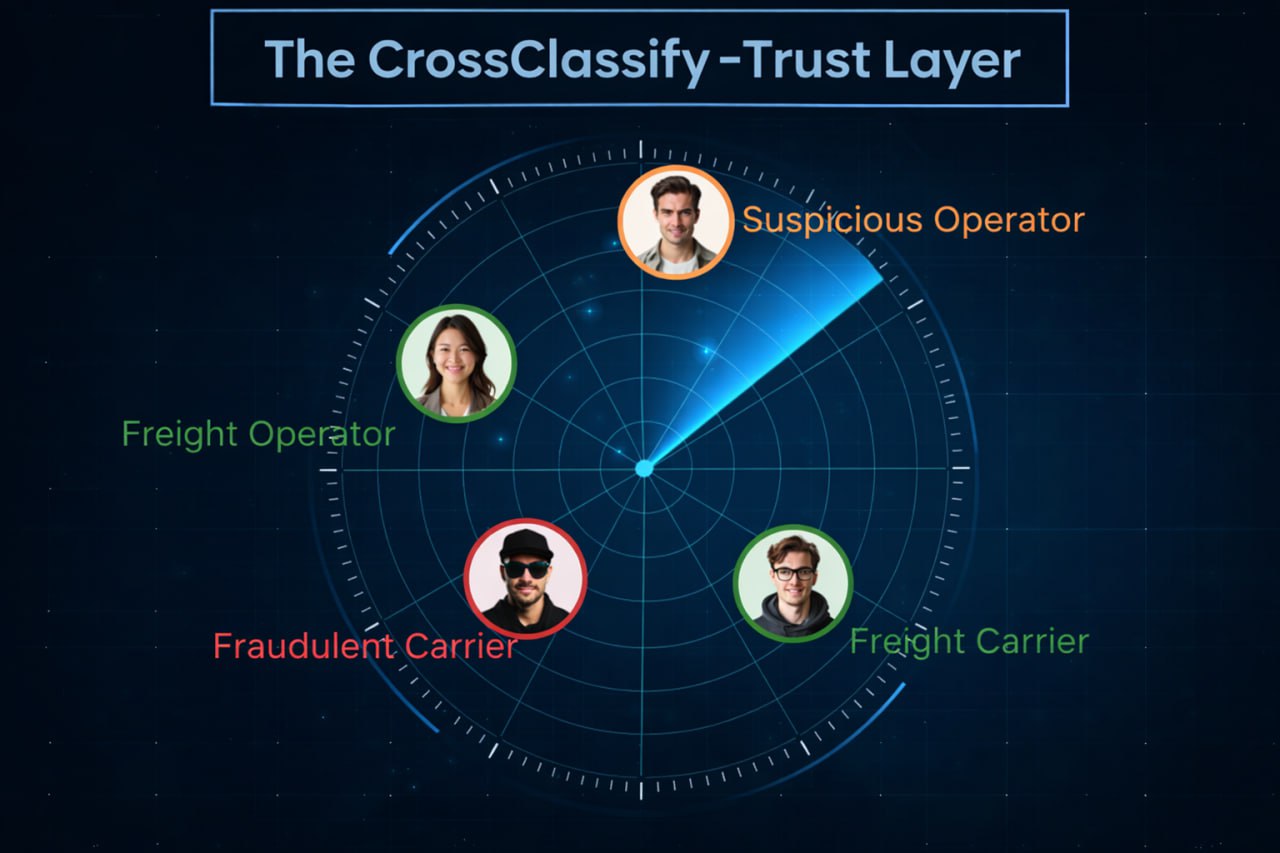
Modern transportation fraud prevention requires a layered, adaptive approach that operates in real time. Static rules and manual reviews cannot keep pace with high-volume logistics environments. Instead, platforms need a living trust layer that evaluates risk continuously across onboarding, login, and high-value actions.
Device fingerprinting identifies reused devices and hidden links across accounts, even when identities change. Behavioral biometrics analyze how users interact with the platform, detecting automation, coercion, or abnormal usage patterns. Link analysis exposes coordinated fraud rings by connecting devices, accounts, carriers, and shipments into meaningful graphs. Together, these capabilities allow platforms to move from reactive investigations to proactive prevention.
CrossClassify delivers this trust layer by integrating seamlessly into freight and transportation platforms. Its real-time risk scoring adapts to evolving threats while remaining explainable and actionable for operations teams. This approach aligns security with business velocity, protecting revenue without slowing down logistics workflows.
Explainable Risk Scoring and Operational Control
For fraud prevention to be effective in freight operations, decisions must be transparent and actionable. Security teams and operations managers need to understand why a transaction is risky and what steps to take next. Black-box decisions create friction and erode trust internally.
Explainable risk scoring solves this challenge by pairing every score with clear evidence. Signals such as new devices, linked identities, abnormal behavior, and route anomalies are presented in plain language. This empowers teams to block, challenge, or allow actions confidently and consistently. Over time, explainability also improves internal alignment between security, operations, and compliance teams.

Fast Integration Without Operational Disruption
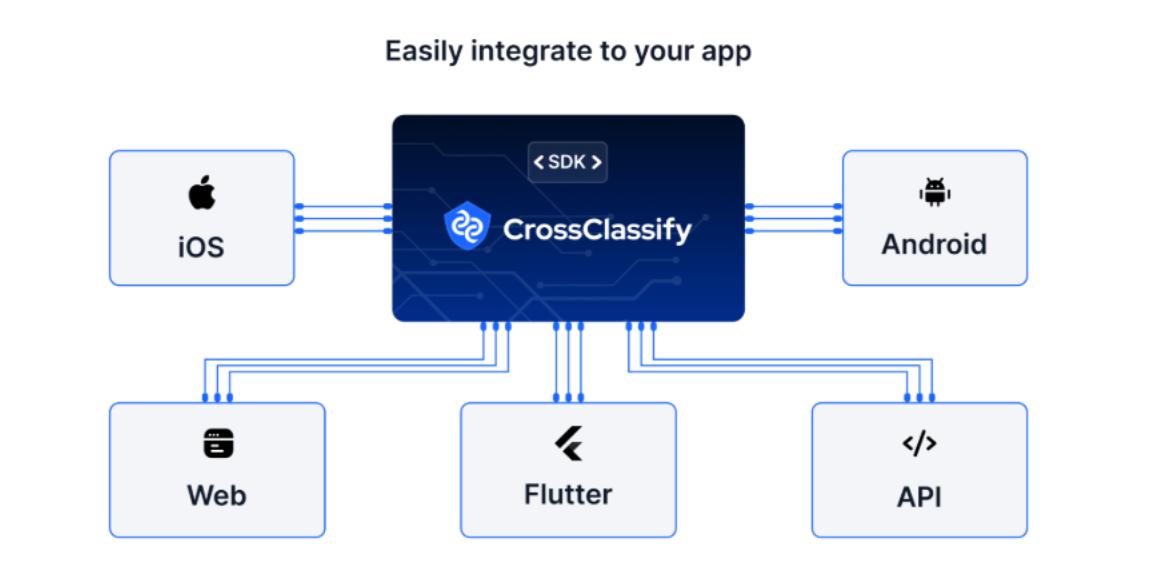
Freight platforms cannot afford long integration cycles or performance bottlenecks. Fraud prevention must fit naturally into existing systems and workflows. CrossClassify is designed for rapid deployment through web and mobile SDKs that capture key events without disrupting operations.
Once integrated, platforms receive real-time risk insights across account opening, login, and high-value freight actions. This enables continuous protection without adding manual overhead. By embedding fraud intelligence directly into decision points, logistics companies can scale securely as volumes grow.
Conclusion: Securing Trust in the Freight Industry
Trust is the foundation of every freight and transportation platform. As fraud becomes more organized, digital, and scalable, trust can no longer be assumed or granted once. It must be verified continuously through intelligent, real-time signals.
By combining account takeover protection, account opening defense, behavioral biometrics, bot and abuse mitigation, and device fingerprinting, logistics platforms can significantly reduce fraud losses and operational risk. The result is stronger freight cyber security, safer transactions, and more resilient supply chains. CrossClassify provides the real-time trust layer that modern freight platforms need to protect revenue, reputation, and long-term growth.
Explore CrossClassify today
Detect and prevent fraud in real time
Protect your accounts with AI-driven security
Try CrossClassify for FREE—3 months
Share in

Let's Get Started
Discover how to secure your app against fraud using CrossClassify
No credit card required